Commonwealth Educational
Media Centre for Asia
Understanding Open
Educational Resources
Sanjaya Mishra
Education Specialist, eLearning, COL
Principal Investigator, ROER4D
A Childhood riddle…
What is it that does not
get reduced after sharing
with someone else?
KNOWLEDGE
Role of Teachers
What teachers do?
– Explain
– Interpret
– Guide
– Share
– Write
– Counselling
– Assessing
– Facilitate
– Any other?
 What you do?
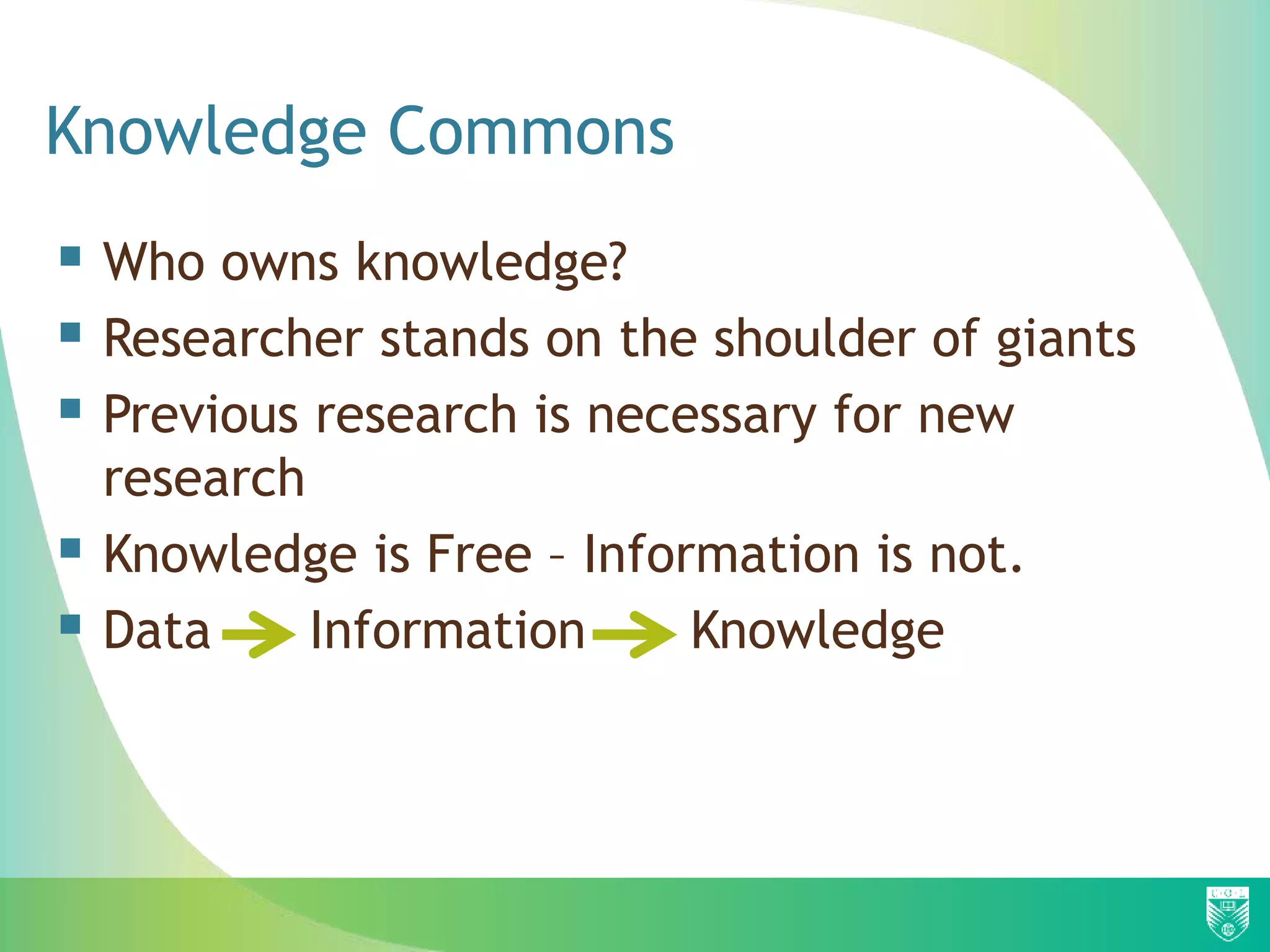
Knowledge Commons
 Who owns knowledge?
 Researcher stands on the shoulder of giants
 Previous research is necessary for new
research
 Knowledge is Free – Information is not.
 Data Information Knowledge
Knowledge Resources Formats
 Books
 Periodicals
 A/V Media
 Online Web Resources
– Text
– Audio
– Video
– Graphics
– Animation
Learning
Objects
Open…
 Learning
 Education
 Access
 Science
 Data
 Content
 Source
 Government
 Educational Resources
OER: History and Developments
 MIT OpenCourseWare, 2001
 UNESCO Forum on the Impact of Open
Courseware for Higher Education in
Developing Countries, 2002
 OLI-CMU, 2002
 OER Paris Declaration 2012
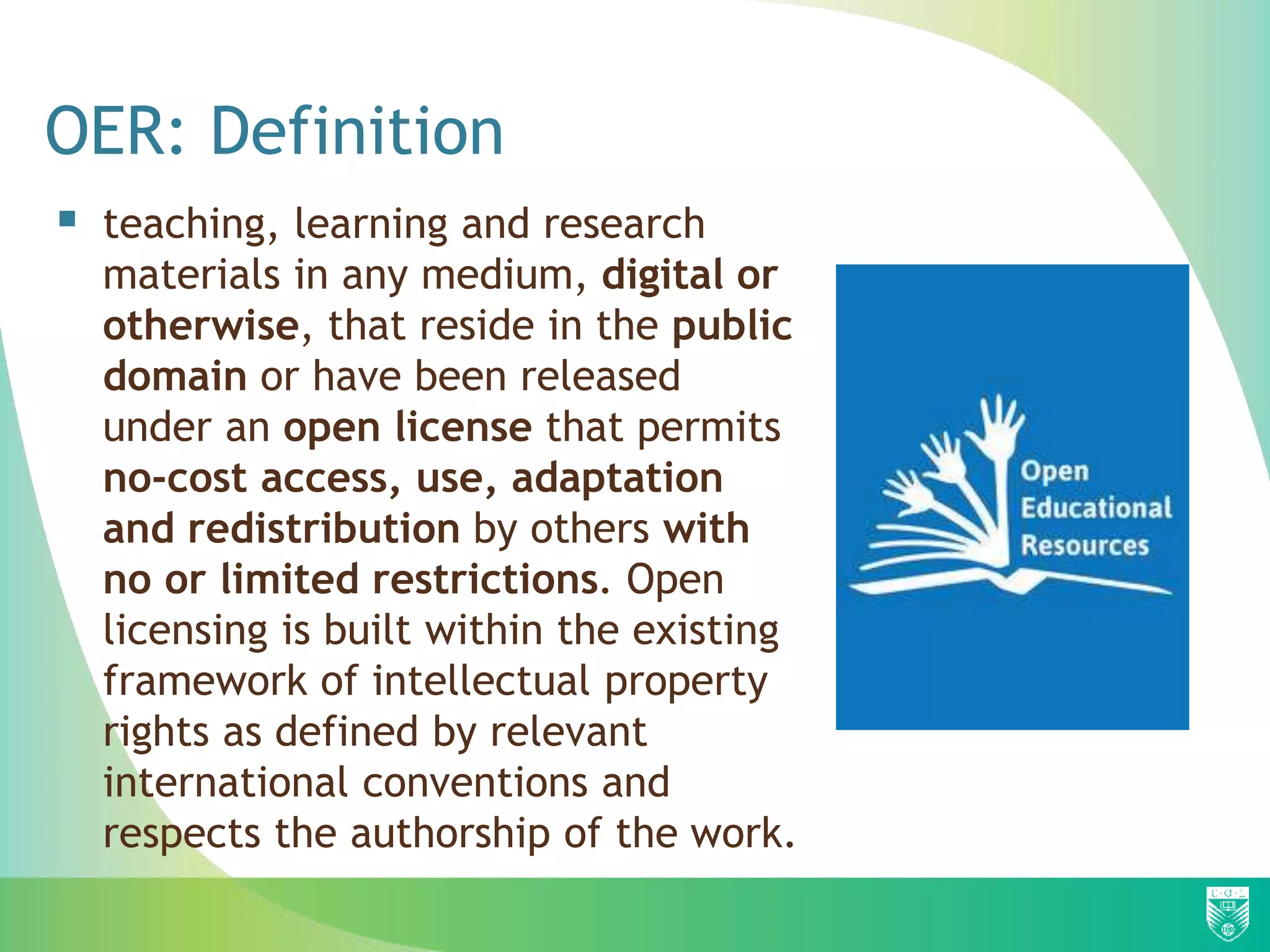
OER: Definition
 teaching, learning and research
materials in any medium, digital or
otherwise, that reside in the public
domain or have been released
under an open license that permits
no-cost access, use, adaptation
and redistribution by others with
no or limited restrictions. Open
licensing is built within the existing
framework of intellectual property
rights as defined by relevant
international conventions and
respects the authorship of the work.
What is “Open”?
 It’s about open license used to share
educational material
 Reuse
 Revise
 Remix
 Redistribute
 Retain
 No permission required as long as the open
license is respected
Defining the "Open" in Open Content
 Retain - the right to make, own, and control copies of the
content (e.g., download, duplicate, store, and manage)
 Reuse - the right to use the content in a wide range of
ways (e.g., in a class, in a study group, on a website, in a
video)
 Revise - the right to adapt, adjust, modify, or alter the
content itself (e.g., translate the content into another
language)
 Remix - the right to combine the original or revised
content with other open content to create something new
(e.g., incorporate the content into a mashup)
 Redistribute - the right to share copies of the original
content, your revisions, or your remixes with others (e.g.,
give a copy of the content to a friend)
http://www.opencontent.org/definition/
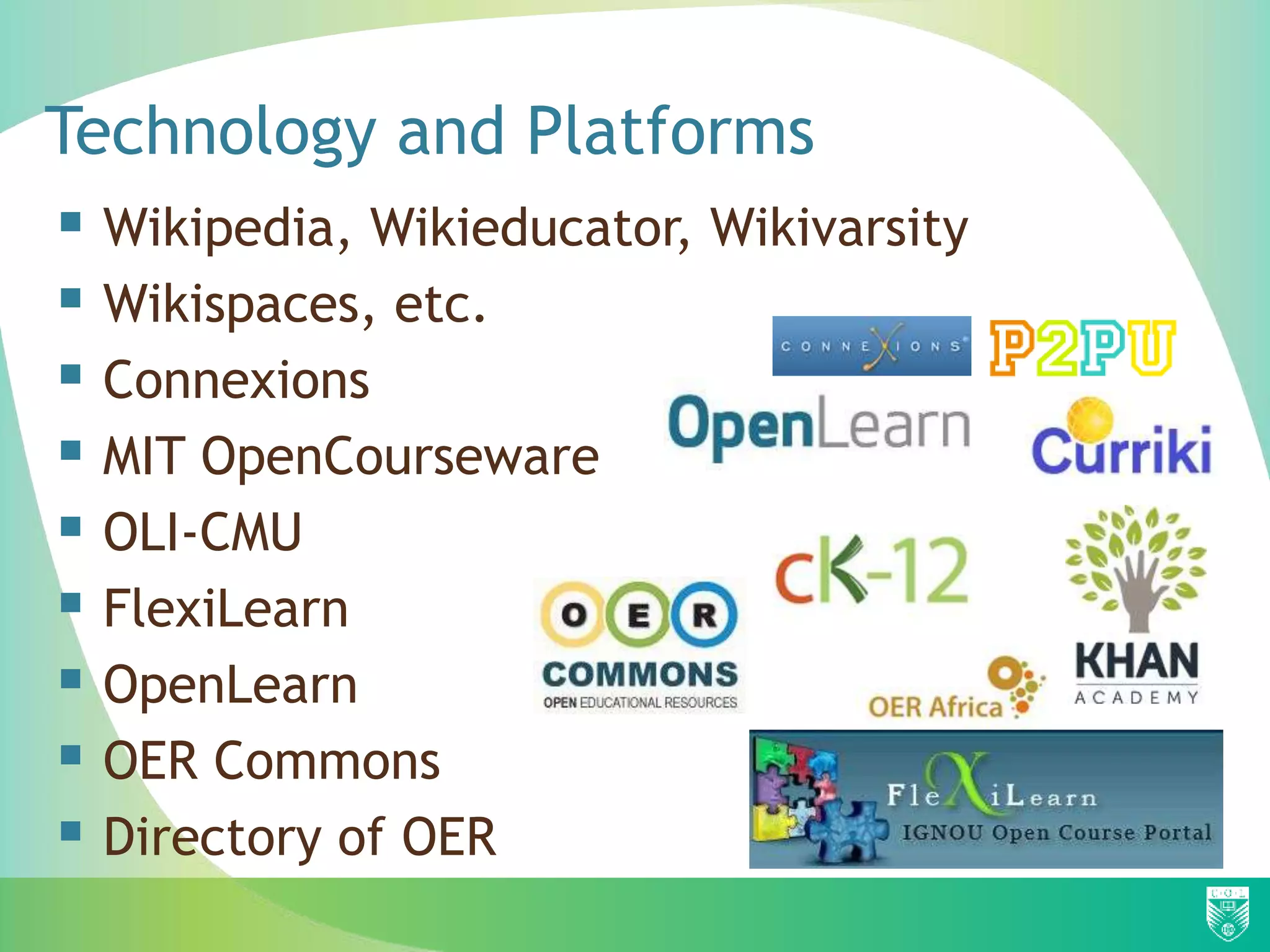
Technology and Platforms
 Wikipedia, Wikieducator, Wikivarsity
 Wikispaces, etc.
 Connexions
 MIT OpenCourseware
 OLI-CMU
 FlexiLearn
 OpenLearn
 OER Commons
 Directory of OER
OER Paris Declaration 2012:
Recommendations related to
Government
 Promote awareness and use of OER
 Bridge digital divide by developing infrastructure
(broadband, mobile, electricity)
 Develop national policy for OER
 Promote use of Open licencing frameworks
 Support capacity building initiatives on OER
 Encourage and support research on OER
 Adopt open standards and technologies for
interoperability
 Encourage open license for materials produced
using public funds
OER Paris Declaration 2012:
Recommendations related to
Institutions
 Promote awareness and use of OER
 Improve media and information literacy
 Develop institutional policies for OER
 Educate stakeholders on open licenses and
copyright
 Promote quality assurance and peer review of OER
 Develop strategic partnerships to avoid duplication
of work as well as technologies
 Encourage and support research on OER
 Develop tools to facilitate access to OER
OER Paris Declaration 2012:
Recommendations related to
Teachers
 Promote awareness and use of OER
 Develop and use OER
 Engage in peer review of OER
 Promote quality of OER
 Develop OER in local languages
 Contextualize OER
 Conduct research on OER
 Share learning materials prepared
THANK YOU

Understanding Open Educational Resources

  • 1.
    Commonwealth Educational Media Centrefor Asia Understanding Open Educational Resources Sanjaya Mishra Education Specialist, eLearning, COL Principal Investigator, ROER4D
  • 2.
    A Childhood riddle… Whatis it that does not get reduced after sharing with someone else? KNOWLEDGE
  • 3.
    Role of Teachers Whatteachers do? – Explain – Interpret – Guide – Share – Write – Counselling – Assessing – Facilitate – Any other?  What you do?
  • 4.
    Knowledge Commons  Whoowns knowledge?  Researcher stands on the shoulder of giants  Previous research is necessary for new research  Knowledge is Free – Information is not.  Data Information Knowledge
  • 5.
    Knowledge Resources Formats Books  Periodicals  A/V Media  Online Web Resources – Text – Audio – Video – Graphics – Animation Learning Objects
  • 6.
    Open…  Learning  Education Access  Science  Data  Content  Source  Government  Educational Resources
  • 7.
    OER: History andDevelopments  MIT OpenCourseWare, 2001  UNESCO Forum on the Impact of Open Courseware for Higher Education in Developing Countries, 2002  OLI-CMU, 2002  OER Paris Declaration 2012
  • 8.
    OER: Definition  teaching,learning and research materials in any medium, digital or otherwise, that reside in the public domain or have been released under an open license that permits no-cost access, use, adaptation and redistribution by others with no or limited restrictions. Open licensing is built within the existing framework of intellectual property rights as defined by relevant international conventions and respects the authorship of the work.
  • 9.
    What is “Open”? It’s about open license used to share educational material  Reuse  Revise  Remix  Redistribute  Retain  No permission required as long as the open license is respected
  • 10.
    Defining the "Open"in Open Content  Retain - the right to make, own, and control copies of the content (e.g., download, duplicate, store, and manage)  Reuse - the right to use the content in a wide range of ways (e.g., in a class, in a study group, on a website, in a video)  Revise - the right to adapt, adjust, modify, or alter the content itself (e.g., translate the content into another language)  Remix - the right to combine the original or revised content with other open content to create something new (e.g., incorporate the content into a mashup)  Redistribute - the right to share copies of the original content, your revisions, or your remixes with others (e.g., give a copy of the content to a friend) http://www.opencontent.org/definition/
  • 11.
    Technology and Platforms Wikipedia, Wikieducator, Wikivarsity  Wikispaces, etc.  Connexions  MIT OpenCourseware  OLI-CMU  FlexiLearn  OpenLearn  OER Commons  Directory of OER
  • 12.
    OER Paris Declaration2012: Recommendations related to Government  Promote awareness and use of OER  Bridge digital divide by developing infrastructure (broadband, mobile, electricity)  Develop national policy for OER  Promote use of Open licencing frameworks  Support capacity building initiatives on OER  Encourage and support research on OER  Adopt open standards and technologies for interoperability  Encourage open license for materials produced using public funds
  • 13.
    OER Paris Declaration2012: Recommendations related to Institutions  Promote awareness and use of OER  Improve media and information literacy  Develop institutional policies for OER  Educate stakeholders on open licenses and copyright  Promote quality assurance and peer review of OER  Develop strategic partnerships to avoid duplication of work as well as technologies  Encourage and support research on OER  Develop tools to facilitate access to OER
  • 14.
    OER Paris Declaration2012: Recommendations related to Teachers  Promote awareness and use of OER  Develop and use OER  Engage in peer review of OER  Promote quality of OER  Develop OER in local languages  Contextualize OER  Conduct research on OER  Share learning materials prepared
  • 15.