Twin space

          Cypriot team

Creator: Antonis Pilavas
 Introduction
 Geographic   location - Capital city
 Population
 European    Union
 Currency
 Languages
 Politicalsystem
 Rivers and caves
 Religion
 Sights
 Cities
 This presentation is made for the activity
  “Countries” of the European programme
  “Twin - Space”. (Copyright issues are
  concerned).
 In this presentation, we will have a look at
  Slovakia’s profile as a European country.
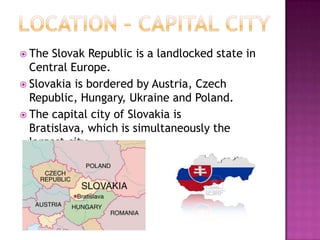
 The Slovak Republic is a landlocked state in
  Central Europe.
 Slovakia is bordered by Austria, Czech
  Republic, Hungary, Ukraine and Poland.
 The capital city of Slovakia is
  Bratislava, which is simultaneously the
  largest city.
 Slovakia
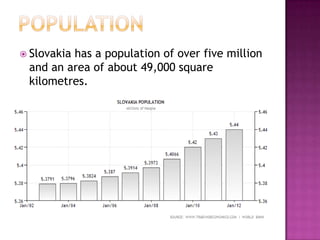
         has a population of over five million
 and an area of about 49,000 square
 kilometres.
 Slovakia is a high-income advanced economy
  with one of the fastest growth rates in the
  European Union.
 The country joined the European Union in
  2004 and the Eurozone on 1 January 2009.
 Slovakia together
  with Slovenia and Estonia are the only
  former Communist nations to be part of the
  European Union, Eurozone, Schengen
  Area and NATO simultaneously.
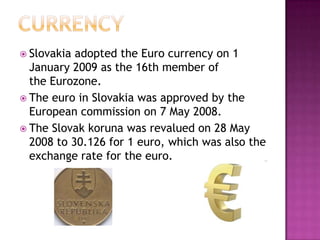
 Slovakia adopted the Euro currency on 1
  January 2009 as the 16th member of
  the Eurozone.
 The euro in Slovakia was approved by the
  European commission on 7 May 2008.
 The Slovak koruna was revalued on 28 May
  2008 to 30.126 for 1 euro, which was also the
  exchange rate for the euro.
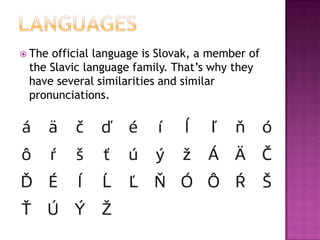
 Theofficial language is Slovak, a member of
 the Slavic language family. That’s why they
 have several similarities and similar
 pronunciations.
 Slovakia  is a parliamentary
  democratic republic with a multi-
  party system.
 The last parliamentary
  elections were held on 10 March
  2012 and two rounds
  of presidential elections took place
  on 21 March 2009 and 4 April 2009.
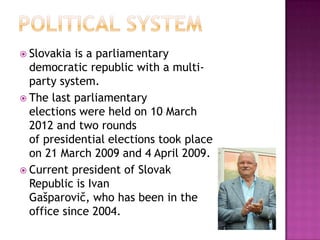
 Current president of Slovak
  Republic is Ivan
  Gašparovič, who has been in the
  office since 2004.
 Slovakia is a well renowned
  country for its rivers and caves.
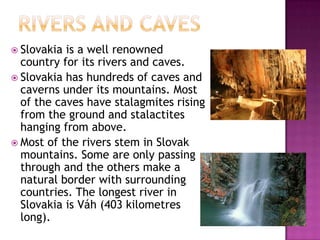
 Slovakia has hundreds of caves and
  caverns under its mountains. Most
  of the caves have stalagmites rising
  from the ground and stalactites
  hanging from above.
 Most of the rivers stem in Slovak
  mountains. Some are only passing
  through and the others make a
  natural border with surrounding
  countries. The longest river in
  Slovakia is Váh (403 kilometres
  long).
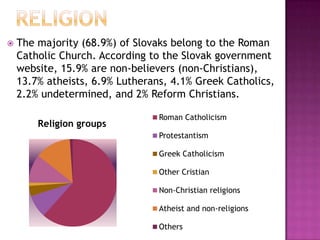
   The majority (68.9%) of Slovaks belong to the Roman
    Catholic Church. According to the Slovak government
    website, 15.9% are non-believers (non-Christians),
    13.7% atheists, 6.9% Lutherans, 4.1% Greek Catholics,
    2.2% undetermined, and 2% Reform Christians.

                                 Roman Catholicism
        Religion groups
                                 Protestantism

                                 Greek Catholicism

                                 Other Cristian

                                 Non-Christian religions

                                 Atheist and non-religions

                                 Others
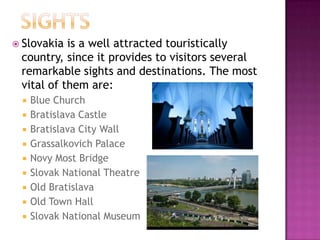
 Slovakia is a well attracted touristically
 country, since it provides to visitors several
 remarkable sights and destinations. The most
 vital of them are:
    Blue Church
    Bratislava Castle
    Bratislava City Wall
    Grassalkovich Palace
    Novy Most Bridge
    Slovak National Theatre
    Old Bratislava
    Old Town Hall
    Slovak National Museum
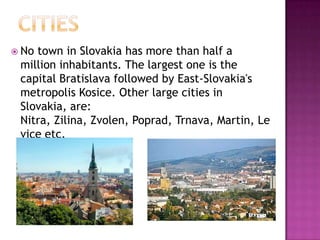
 Notown in Slovakia has more than half a
 million inhabitants. The largest one is the
 capital Bratislava followed by East-Slovakia's
 metropolis Kosice. Other large cities in
 Slovakia, are:
 Nitra, Zilina, Zvolen, Poprad, Trnava, Martin, Le
 vice etc.
Slovakia

Slovakia

  • 1.
    Twin space Cypriot team Creator: Antonis Pilavas
  • 2.
     Introduction  Geographic location - Capital city  Population  European Union  Currency  Languages  Politicalsystem  Rivers and caves  Religion  Sights  Cities
  • 3.
     This presentationis made for the activity “Countries” of the European programme “Twin - Space”. (Copyright issues are concerned).  In this presentation, we will have a look at Slovakia’s profile as a European country.
  • 4.
     The SlovakRepublic is a landlocked state in Central Europe.  Slovakia is bordered by Austria, Czech Republic, Hungary, Ukraine and Poland.  The capital city of Slovakia is Bratislava, which is simultaneously the largest city.
  • 5.
     Slovakia has a population of over five million and an area of about 49,000 square kilometres.
  • 6.
     Slovakia isa high-income advanced economy with one of the fastest growth rates in the European Union.  The country joined the European Union in 2004 and the Eurozone on 1 January 2009.  Slovakia together with Slovenia and Estonia are the only former Communist nations to be part of the European Union, Eurozone, Schengen Area and NATO simultaneously.
  • 7.
     Slovakia adoptedthe Euro currency on 1 January 2009 as the 16th member of the Eurozone.  The euro in Slovakia was approved by the European commission on 7 May 2008.  The Slovak koruna was revalued on 28 May 2008 to 30.126 for 1 euro, which was also the exchange rate for the euro.
  • 8.
     Theofficial languageis Slovak, a member of the Slavic language family. That’s why they have several similarities and similar pronunciations.
  • 9.
     Slovakia is a parliamentary democratic republic with a multi- party system.  The last parliamentary elections were held on 10 March 2012 and two rounds of presidential elections took place on 21 March 2009 and 4 April 2009.  Current president of Slovak Republic is Ivan Gašparovič, who has been in the office since 2004.
  • 10.
     Slovakia isa well renowned country for its rivers and caves.  Slovakia has hundreds of caves and caverns under its mountains. Most of the caves have stalagmites rising from the ground and stalactites hanging from above.  Most of the rivers stem in Slovak mountains. Some are only passing through and the others make a natural border with surrounding countries. The longest river in Slovakia is Váh (403 kilometres long).
  • 11.
    The majority (68.9%) of Slovaks belong to the Roman Catholic Church. According to the Slovak government website, 15.9% are non-believers (non-Christians), 13.7% atheists, 6.9% Lutherans, 4.1% Greek Catholics, 2.2% undetermined, and 2% Reform Christians. Roman Catholicism Religion groups Protestantism Greek Catholicism Other Cristian Non-Christian religions Atheist and non-religions Others
  • 12.
     Slovakia isa well attracted touristically country, since it provides to visitors several remarkable sights and destinations. The most vital of them are:  Blue Church  Bratislava Castle  Bratislava City Wall  Grassalkovich Palace  Novy Most Bridge  Slovak National Theatre  Old Bratislava  Old Town Hall  Slovak National Museum
  • 13.
     Notown inSlovakia has more than half a million inhabitants. The largest one is the capital Bratislava followed by East-Slovakia's metropolis Kosice. Other large cities in Slovakia, are: Nitra, Zilina, Zvolen, Poprad, Trnava, Martin, Le vice etc.