How Encryption for Strong
          Security Works
●   VPN
● Wi-Fi Protected Access
● TCP/IP


● Ethernet Packets and Protocols
VPN

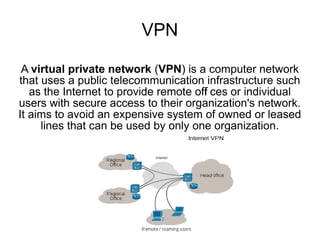
 A virtual private network (VPN) is a computer network
that uses a public telecommunication infrastructure such
   as the Internet to provide remote off ces or individual
                                       i
users with secure access to their organization's network.
It aims to avoid an expensive system of owned or leased
     lines that can be used by only one organization.
TCP/IP
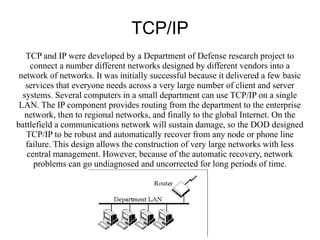
   TCP and IP were developed by a Department of Defense research project to
    connect a number different networks designed by different vendors into a
 network of networks. It was initially successful because it delivered a few basic
   services that everyone needs across a very large number of client and server
  systems. Several computers in a small department can use TCP/IP on a single
 LAN. The IP component provides routing from the department to the enterprise
  network, then to regional networks, and finally to the global Internet. On the
battlefield a communications network will sustain damage, so the DOD designed
   TCP/IP to be robust and automatically recover from any node or phone line
   failure. This design allows the construction of very large networks with less
   central management. However, because of the automatic recovery, network
     problems can go undiagnosed and uncorrected for long periods of time.
Ethernet Packets and Protocols
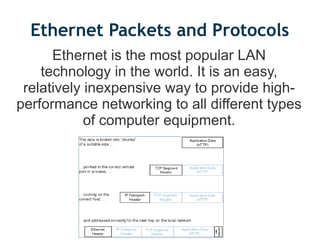
      Ethernet is the most popular LAN
    technology in the world. It is an easy,
 relatively inexpensive way to provide high-
performance networking to all different types
            of computer equipment.
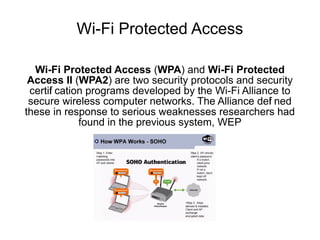
Wi-Fi Protected Access

  Wi-Fi Protected Access (WPA) and Wi-Fi Protected
 Access II (WPA2) are two security protocols and security
 certif cation programs developed by the Wi-Fi Alliance to
      i
 secure wireless computer networks. The Alliance def ned
                                                     i
these in response to serious weaknesses researchers had
             found in the previous system, WEP
●   Wikipedia
●   Wikipedia
●   http://www.yale.edu/pclt/COMM/TCPIP.HTM
●   http://www.wildpackets.com/resources/compen
    dium/ethernet/ethernet_packets

Slied13

  • 1.
    How Encryption forStrong Security Works ● VPN ● Wi-Fi Protected Access ● TCP/IP ● Ethernet Packets and Protocols
  • 2.
    VPN A virtualprivate network (VPN) is a computer network that uses a public telecommunication infrastructure such as the Internet to provide remote off ces or individual i users with secure access to their organization's network. It aims to avoid an expensive system of owned or leased lines that can be used by only one organization.
  • 3.
    TCP/IP TCP and IP were developed by a Department of Defense research project to connect a number different networks designed by different vendors into a network of networks. It was initially successful because it delivered a few basic services that everyone needs across a very large number of client and server systems. Several computers in a small department can use TCP/IP on a single LAN. The IP component provides routing from the department to the enterprise network, then to regional networks, and finally to the global Internet. On the battlefield a communications network will sustain damage, so the DOD designed TCP/IP to be robust and automatically recover from any node or phone line failure. This design allows the construction of very large networks with less central management. However, because of the automatic recovery, network problems can go undiagnosed and uncorrected for long periods of time.
  • 4.
    Ethernet Packets andProtocols Ethernet is the most popular LAN technology in the world. It is an easy, relatively inexpensive way to provide high- performance networking to all different types of computer equipment.
  • 5.
    Wi-Fi Protected Access Wi-Fi Protected Access (WPA) and Wi-Fi Protected Access II (WPA2) are two security protocols and security certif cation programs developed by the Wi-Fi Alliance to i secure wireless computer networks. The Alliance def ned i these in response to serious weaknesses researchers had found in the previous system, WEP
  • 6.
    Wikipedia ● Wikipedia ● http://www.yale.edu/pclt/COMM/TCPIP.HTM ● http://www.wildpackets.com/resources/compen dium/ethernet/ethernet_packets