 Classsroom Management is a systematic designing
of the class to create conditions in which effective
teaching and learning can ooccur.
 Classroom Management is the teacher’s ability to
manage classroom effectively and efficiently.
Definition
Six Elements for an Effective Classroom
Management
 1. Multidimensionality
 It refers to awide variety of activities that occur in a classroom within
the course of the day.
2. Simultaneity
 Classrooms are amazingly dynamics, with many events taking place
simultaneously throughout the day
 3. Immediacy
 It refer to the rapid pace at which events occur at the same time.
 4. Unpredictability
 It refer to the reality that some event occur unexpectedly and cannot
consistently be anticipated but require attention nonetheless.
 5. Publicness
 It refers to the fact that the classroom is ussually witnessed by a
significant number of students who are very likely to take not of how
teachers deal with these on going events.
 6. History
 It refers to the reality that over the course of the school year various
events will shape the evolving dynamics of the classroom behavior.
Components of Effective Classroom
Organization and Management
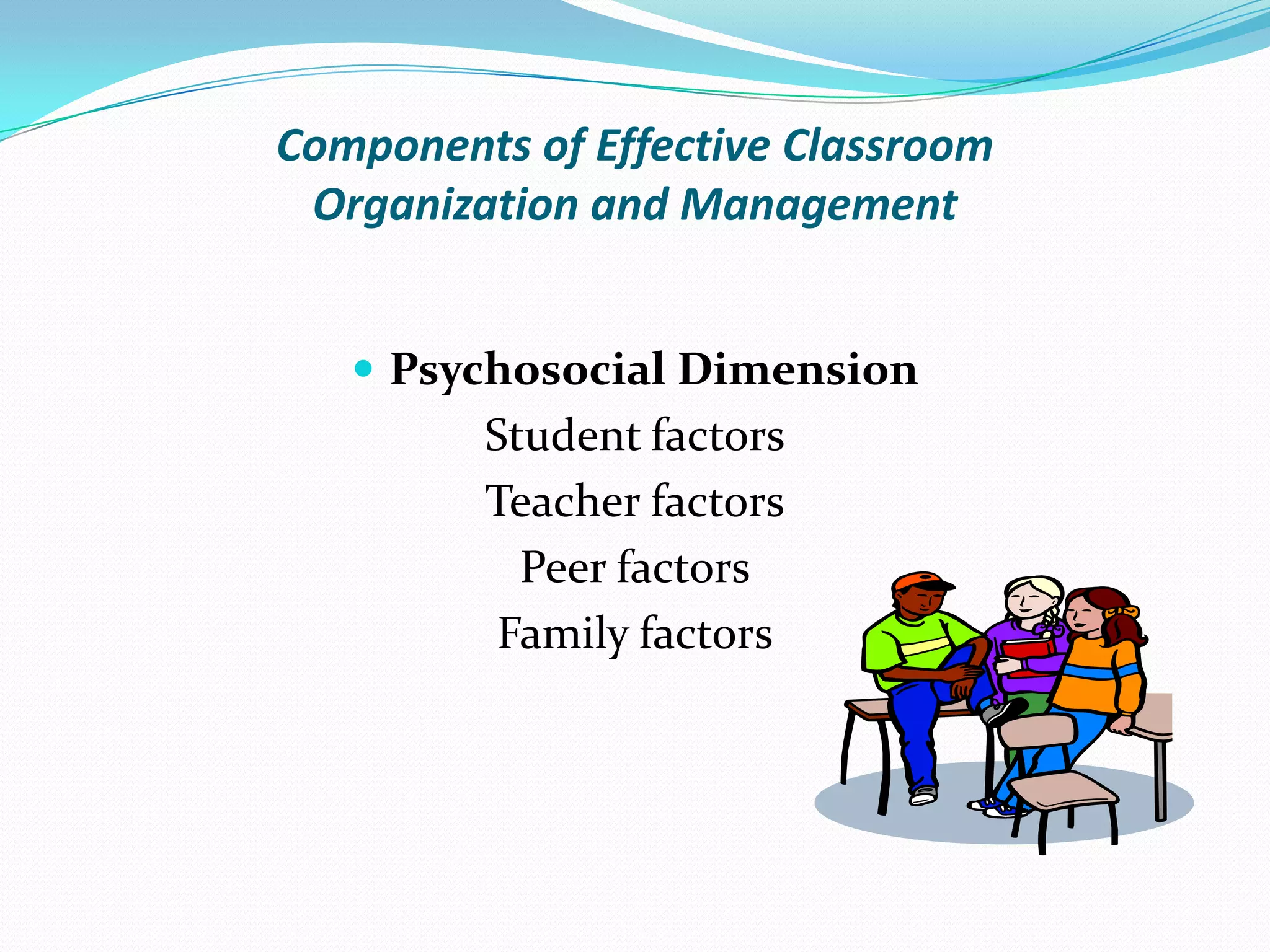
 Psychosocial Dimension
Student factors
Teacher factors
Peer factors
Family factors
Procedural Dimension
• Classroom rules
• Classroom procedures
Physical Dimension
• Classroom arrangement
• Accessibility
• Specialized equipment
Behavioral Dimension
• Creating and increasing desirable behaviors
• Decreasing undesirable behaviors
Instructional Dimension
• Scheduling
• Transitions
• Grouping
• Lesson plans
Organizational Dimension
• Personnel interactions
• work environment
• Administrative duties
• Instructional applications
• personal application
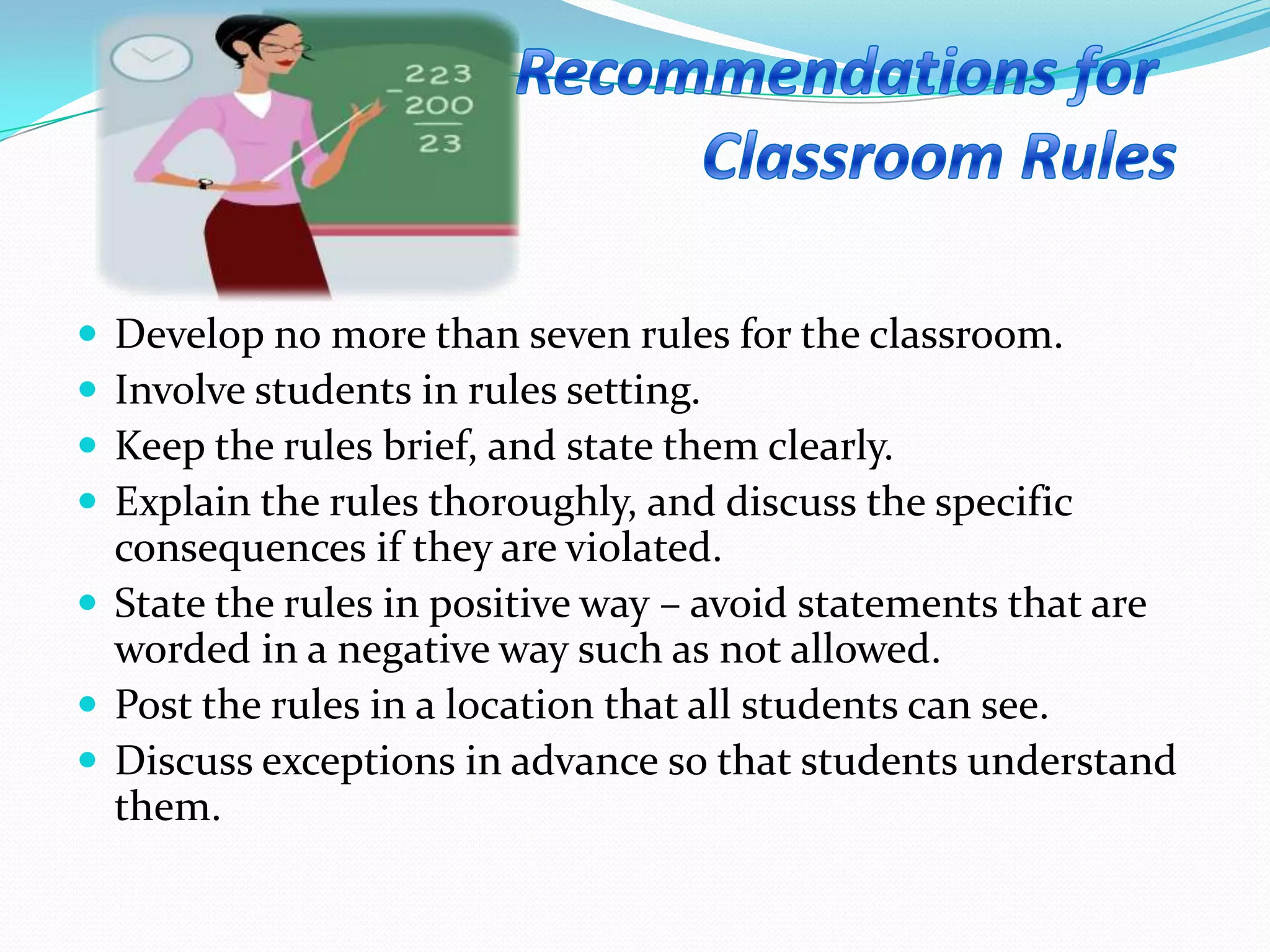
 Develop no more than seven rules for the classroom.
 Involve students in rules setting.
 Keep the rules brief, and state them clearly.
 Explain the rules thoroughly, and discuss the specific
consequences if they are violated.
 State the rules in positive way – avoid statements that are
worded in a negative way such as not allowed.
 Post the rules in a location that all students can see.
 Discuss exceptions in advance so that students understand
them.
 Teach the rules through modeling and practice and
verify that all have been learned.
 Review the rules in regular basis and when new
students join the class.
 Use reminders of rules as a preventive measure of
times when possible disruptions are anticipated.
 Build relationships by accumulating a psychological
accounts.
 Preserve your classroom momentum at all costs.
 Deliver interesting , fast-paced organized leaning
experiences particularly.
 Ones that actively engae students in the lesson.
 Be sure your rules and expectation are clear.
 IT is better than few rather than many rules.
 Avoid causing students to lose face in front of their
peers.
 Keep your eyes moving.
 Continually monitor what is happening in your
classroom
 Practice the principle of escalation.
 Use the power of silence.
 Dont overeact.
 Develop selective hearing.
 Divide and conquer.
 Never argue with the student in front of the class.
 Quite reprimands are much more effective than the
loud ones.
 When you discuss student’s misbehavior, make it clear that you
find the behavior not the student unacceptable.
 Understand the school’s student behavior code.
 Reinforce positive behaviors.
 Use praise effectively.
 Use contracting to reward good performance both
behavioral academics.
 When you use rewards they must be varried to be effective.
 Early in the year develop classroom routines.
 Be cautious of touching students when they are very angry.
 Be aware of concealment activities occationally employed by the
students
 Avoid branding the student a failure because of one mistake.
 Avoid punishing the whole class for misbehavior of one student.
 Always have a couple of sponge activities available which you can use
when the unexpected happen.
 Dont be too quick to send the students to the principal’s office or call
their parents.
 Dont send students out into the hallway as apunishment.
 For persistent, serious problems with the students use the private
teacher-students- conference.
 If you feel overwhelmed by the student’s challenging behavior dont be
afraid to consult other professionals.
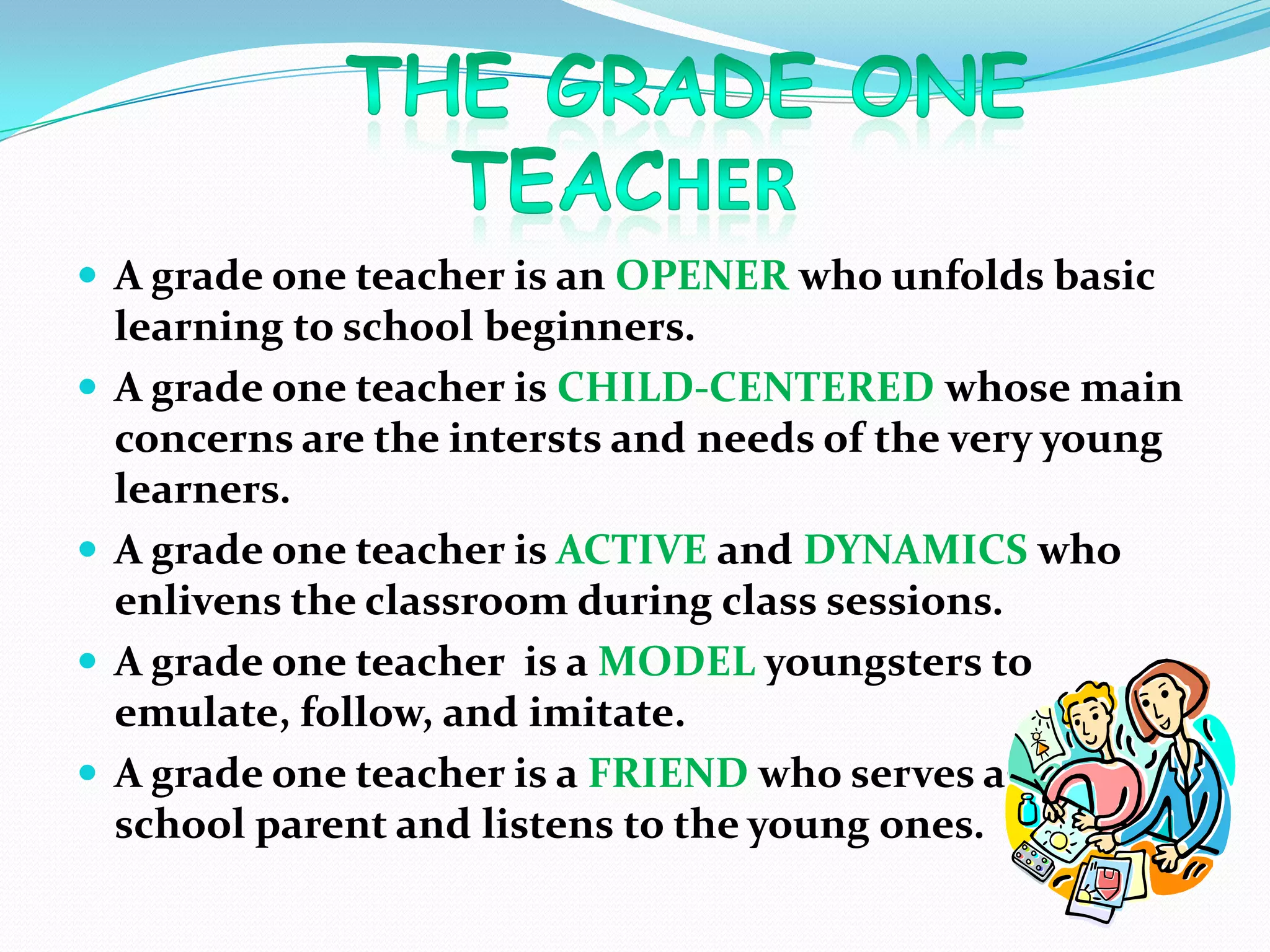
 A grade one teacher is an OPENER who unfolds basic
learning to school beginners.
 A grade one teacher is CHILD-CENTERED whose main
concerns are the intersts and needs of the very young
learners.
 A grade one teacher is ACTIVE and DYNAMICS who
enlivens the classroom during class sessions.
 A grade one teacher is a MODEL youngsters to
emulate, follow, and imitate.
 A grade one teacher is a FRIEND who serves as a
school parent and listens to the young ones.
 The more you read
 The better you get it
 The more you do it
 The better you get it
 The more you like it
 The better you get it
 The more you read it
 The more you read
 The smarter you grow

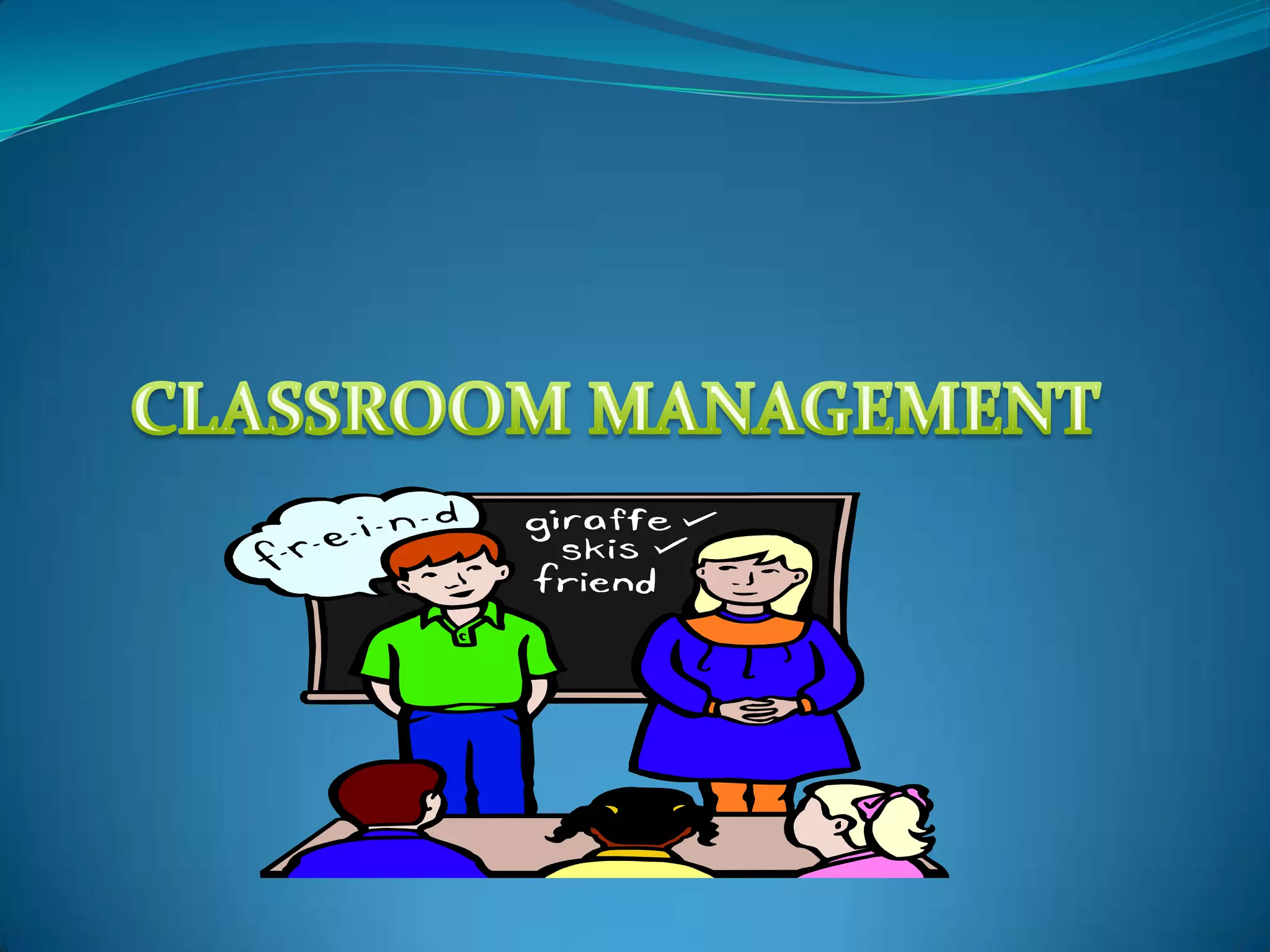
CLASSROOM MANAGEMENT

  • 2.
     Classsroom Managementis a systematic designing of the class to create conditions in which effective teaching and learning can ooccur.  Classroom Management is the teacher’s ability to manage classroom effectively and efficiently. Definition
  • 3.
    Six Elements foran Effective Classroom Management  1. Multidimensionality  It refers to awide variety of activities that occur in a classroom within the course of the day. 2. Simultaneity  Classrooms are amazingly dynamics, with many events taking place simultaneously throughout the day  3. Immediacy  It refer to the rapid pace at which events occur at the same time.
  • 4.
     4. Unpredictability It refer to the reality that some event occur unexpectedly and cannot consistently be anticipated but require attention nonetheless.  5. Publicness  It refers to the fact that the classroom is ussually witnessed by a significant number of students who are very likely to take not of how teachers deal with these on going events.  6. History  It refers to the reality that over the course of the school year various events will shape the evolving dynamics of the classroom behavior.
  • 5.
    Components of EffectiveClassroom Organization and Management  Psychosocial Dimension Student factors Teacher factors Peer factors Family factors
  • 6.
    Procedural Dimension • Classroomrules • Classroom procedures Physical Dimension • Classroom arrangement • Accessibility • Specialized equipment
  • 7.
    Behavioral Dimension • Creatingand increasing desirable behaviors • Decreasing undesirable behaviors Instructional Dimension • Scheduling • Transitions • Grouping • Lesson plans
  • 8.
    Organizational Dimension • Personnelinteractions • work environment • Administrative duties • Instructional applications • personal application
  • 9.
     Develop nomore than seven rules for the classroom.  Involve students in rules setting.  Keep the rules brief, and state them clearly.  Explain the rules thoroughly, and discuss the specific consequences if they are violated.  State the rules in positive way – avoid statements that are worded in a negative way such as not allowed.  Post the rules in a location that all students can see.  Discuss exceptions in advance so that students understand them.
  • 10.
     Teach therules through modeling and practice and verify that all have been learned.  Review the rules in regular basis and when new students join the class.  Use reminders of rules as a preventive measure of times when possible disruptions are anticipated.
  • 11.
     Build relationshipsby accumulating a psychological accounts.  Preserve your classroom momentum at all costs.  Deliver interesting , fast-paced organized leaning experiences particularly.  Ones that actively engae students in the lesson.  Be sure your rules and expectation are clear.  IT is better than few rather than many rules.
  • 12.
     Avoid causingstudents to lose face in front of their peers.  Keep your eyes moving.  Continually monitor what is happening in your classroom  Practice the principle of escalation.  Use the power of silence.  Dont overeact.  Develop selective hearing.  Divide and conquer.  Never argue with the student in front of the class.  Quite reprimands are much more effective than the loud ones.
  • 13.
     When youdiscuss student’s misbehavior, make it clear that you find the behavior not the student unacceptable.  Understand the school’s student behavior code.  Reinforce positive behaviors.  Use praise effectively.  Use contracting to reward good performance both behavioral academics.  When you use rewards they must be varried to be effective.  Early in the year develop classroom routines.
  • 14.
     Be cautiousof touching students when they are very angry.  Be aware of concealment activities occationally employed by the students  Avoid branding the student a failure because of one mistake.  Avoid punishing the whole class for misbehavior of one student.  Always have a couple of sponge activities available which you can use when the unexpected happen.  Dont be too quick to send the students to the principal’s office or call their parents.  Dont send students out into the hallway as apunishment.  For persistent, serious problems with the students use the private teacher-students- conference.  If you feel overwhelmed by the student’s challenging behavior dont be afraid to consult other professionals.
  • 15.
     A gradeone teacher is an OPENER who unfolds basic learning to school beginners.  A grade one teacher is CHILD-CENTERED whose main concerns are the intersts and needs of the very young learners.  A grade one teacher is ACTIVE and DYNAMICS who enlivens the classroom during class sessions.  A grade one teacher is a MODEL youngsters to emulate, follow, and imitate.  A grade one teacher is a FRIEND who serves as a school parent and listens to the young ones.
  • 16.
     The moreyou read  The better you get it  The better you get it  The more you do it  The more you do it  The better you get it  The better you get it  The more you like it  The more you like it
  • 17.
     The moreyou like it  The better you get it  The better you get it  The more you read it  The more you read  The smarter you grow