By: Ellen Del Aguila
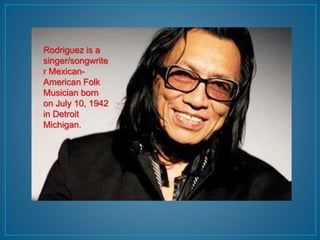
Rodriguez is a 
singer/songwrite 
r Mexican- 
American Folk 
Musician born 
on July 10, 1942 
in Detroit 
Michigan.
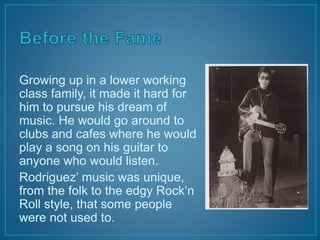
Growing up in a lower working 
class family, it made it hard for 
him to pursue his dream of 
music. He would go around to 
clubs and cafes where he would 
play a song on his guitar to 
anyone who would listen. 
Rodriguez’ music was unique, 
from the folk to the edgy Rock’n 
Roll style, that some people 
were not used to.
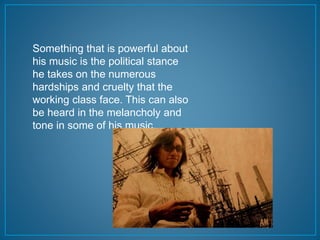
Something that is powerful about 
his music is the political stance 
he takes on the numerous 
hardships and cruelty that the 
working class face. This can also 
be heard in the melancholy and 
tone in some of his music.
He had a Glimpse of hope in 1966 when 
he released his very first single “I’ll Slip 
Away” through a small record label. For a 
couple years it went unnoticed, and he 
thought that maybe that was the extent of 
his music career.
Rodriguez finally got noticed and was 
signed by Sussex Records three years 
after the release of his single. He created 
two albums, Cold Fact in1970, and Coming 
From Reality in 1971. The success of the 
albums were disappointing and not at all 
what had been expected. Due to the 
publics lack of excitement and low album 
sale he was dropped from the label.
With a heavy heart and failed to 
make any kind of impact on North 
America he accepted the fact that 
his career as a musician was over. 
Although his does not mean he 
put his guitar down for good. 
In this time he even ran for Detroit 
City Council but they could not even 
spell his name right.
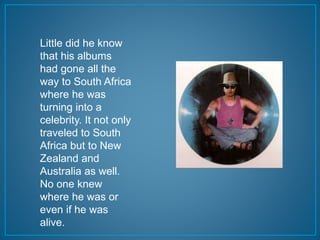
Little did he know 
that his albums 
had gone all the 
way to South Africa 
where he was 
turning into a 
celebrity. It not only 
traveled to South 
Africa but to New 
Zealand and 
Australia as well. 
No one knew 
where he was or 
even if he was 
alive.
There were many rumors of his 
death, including that he OD’d or even 
shot himself on stage. This was all 
because after decades of searching 
for Sixto no one knew where he was. 
He had essentially fallen off the face 
of the earth into the real world where 
he worked as a carpenter. He also 
went back to school and gained a 
degree in philosophy and degree in 
arts in philosophy at Wayne State 
University’s Monteith college in 1981.
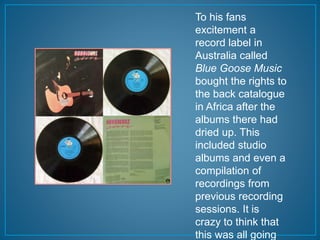
To his fans 
excitement a 
record label in 
Australia called 
Blue Goose Music 
bought the rights to 
the back catalogue 
in Africa after the 
albums there had 
dried up. This 
included studio 
albums and even a 
compilation of 
recordings from 
previous recording 
sessions. It is 
crazy to think that 
this was all going
After years of being in the dark about his 
escalating fame he was finally found when in 
1998 his daughter stumbled upon a website 
that was dedicated to him. After everyone 
discovered that he was indeed alive he was 
sent to South Africa to see all his fans and 
perform for them.
He was overwhelmed by the 
acceptance and fame he 
received when he got to 
South Africa. On hi first South 
Africa tour he had six 
concerts with packed 
audiences of more than one 
thousand dedicated fans. This 
is something he could never 
prepare himself, especially 
since he had already 
accepted the fact that there 
was no music career for him 
or his music.
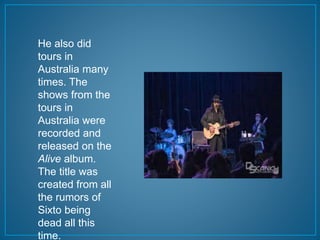
He also did 
tours in 
Australia many 
times. The 
shows from the 
tours in 
Australia were 
recorded and 
released on the 
Alive album. 
The title was 
created from all 
the rumors of 
Sixto being 
dead all this 
time.
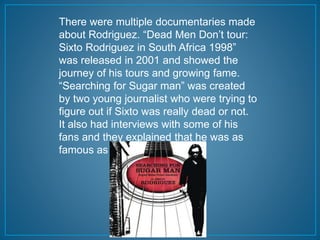
There were multiple documentaries made 
about Rodriguez. “Dead Men Don’t tour: 
Sixto Rodriguez in South Africa 1998” 
was released in 2001 and showed the 
journey of his tours and growing fame. 
“Searching for Sugar man” was created 
by two young journalist who were trying to 
figure out if Sixto was really dead or not. 
It also had interviews with some of his 
fans and they explained that he was as 
famous as Jimmy Hendrix.
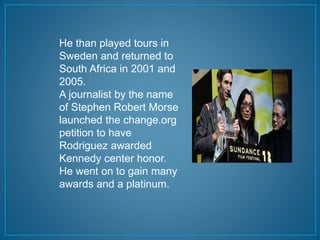
He than played tours in 
Sweden and returned to 
South Africa in 2001 and 
2005. 
A journalist by the name 
of Stephen Robert Morse 
launched the change.org 
petition to have 
Rodriguez awarded 
Kennedy center honor. 
He went on to gain many 
awards and a platinum.
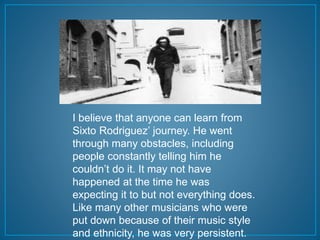
I believe that anyone can learn from 
Sixto Rodriguez’ journey. He went 
through many obstacles, including 
people constantly telling him he 
couldn’t do it. It may not have 
happened at the time he was 
expecting it to but not everything does. 
Like many other musicians who were 
put down because of their music style 
and ethnicity, he was very persistent.
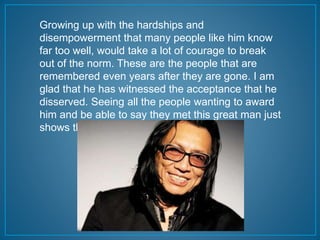
Growing up with the hardships and 
disempowerment that many people like him know 
far too well, would take a lot of courage to break 
out of the norm. These are the people that are 
remembered even years after they are gone. I am 
glad that he has witnessed the acceptance that he 
disserved. Seeing all the people wanting to award 
him and be able to say they met this great man just 
shows that he was noticed.
• "About Rodriguez." Rodriguez. N.p., 16 July 2012. Web. 
12 
Dec. 2014. 
• "Rodriguez: Forgotten In America, Exalted In Africa." 
NPR. NPR, 
n.d. Web. 12 Dec. 2014.

Sixto rodriguez

  • 1.
  • 2.
    Rodriguez is a singer/songwrite r Mexican- American Folk Musician born on July 10, 1942 in Detroit Michigan.
  • 3.
    Growing up ina lower working class family, it made it hard for him to pursue his dream of music. He would go around to clubs and cafes where he would play a song on his guitar to anyone who would listen. Rodriguez’ music was unique, from the folk to the edgy Rock’n Roll style, that some people were not used to.
  • 4.
    Something that ispowerful about his music is the political stance he takes on the numerous hardships and cruelty that the working class face. This can also be heard in the melancholy and tone in some of his music.
  • 5.
    He had aGlimpse of hope in 1966 when he released his very first single “I’ll Slip Away” through a small record label. For a couple years it went unnoticed, and he thought that maybe that was the extent of his music career.
  • 6.
    Rodriguez finally gotnoticed and was signed by Sussex Records three years after the release of his single. He created two albums, Cold Fact in1970, and Coming From Reality in 1971. The success of the albums were disappointing and not at all what had been expected. Due to the publics lack of excitement and low album sale he was dropped from the label.
  • 7.
    With a heavyheart and failed to make any kind of impact on North America he accepted the fact that his career as a musician was over. Although his does not mean he put his guitar down for good. In this time he even ran for Detroit City Council but they could not even spell his name right.
  • 8.
    Little did heknow that his albums had gone all the way to South Africa where he was turning into a celebrity. It not only traveled to South Africa but to New Zealand and Australia as well. No one knew where he was or even if he was alive.
  • 9.
    There were manyrumors of his death, including that he OD’d or even shot himself on stage. This was all because after decades of searching for Sixto no one knew where he was. He had essentially fallen off the face of the earth into the real world where he worked as a carpenter. He also went back to school and gained a degree in philosophy and degree in arts in philosophy at Wayne State University’s Monteith college in 1981.
  • 10.
    To his fans excitement a record label in Australia called Blue Goose Music bought the rights to the back catalogue in Africa after the albums there had dried up. This included studio albums and even a compilation of recordings from previous recording sessions. It is crazy to think that this was all going
  • 11.
    After years ofbeing in the dark about his escalating fame he was finally found when in 1998 his daughter stumbled upon a website that was dedicated to him. After everyone discovered that he was indeed alive he was sent to South Africa to see all his fans and perform for them.
  • 12.
    He was overwhelmedby the acceptance and fame he received when he got to South Africa. On hi first South Africa tour he had six concerts with packed audiences of more than one thousand dedicated fans. This is something he could never prepare himself, especially since he had already accepted the fact that there was no music career for him or his music.
  • 13.
    He also did tours in Australia many times. The shows from the tours in Australia were recorded and released on the Alive album. The title was created from all the rumors of Sixto being dead all this time.
  • 14.
    There were multipledocumentaries made about Rodriguez. “Dead Men Don’t tour: Sixto Rodriguez in South Africa 1998” was released in 2001 and showed the journey of his tours and growing fame. “Searching for Sugar man” was created by two young journalist who were trying to figure out if Sixto was really dead or not. It also had interviews with some of his fans and they explained that he was as famous as Jimmy Hendrix.
  • 15.
    He than playedtours in Sweden and returned to South Africa in 2001 and 2005. A journalist by the name of Stephen Robert Morse launched the change.org petition to have Rodriguez awarded Kennedy center honor. He went on to gain many awards and a platinum.
  • 16.
    I believe thatanyone can learn from Sixto Rodriguez’ journey. He went through many obstacles, including people constantly telling him he couldn’t do it. It may not have happened at the time he was expecting it to but not everything does. Like many other musicians who were put down because of their music style and ethnicity, he was very persistent.
  • 17.
    Growing up withthe hardships and disempowerment that many people like him know far too well, would take a lot of courage to break out of the norm. These are the people that are remembered even years after they are gone. I am glad that he has witnessed the acceptance that he disserved. Seeing all the people wanting to award him and be able to say they met this great man just shows that he was noticed.
  • 18.
    • "About Rodriguez."Rodriguez. N.p., 16 July 2012. Web. 12 Dec. 2014. • "Rodriguez: Forgotten In America, Exalted In Africa." NPR. NPR, n.d. Web. 12 Dec. 2014.