Beyond Technology
      Examining the Convergence
 of Technology, Learning, and the Soul
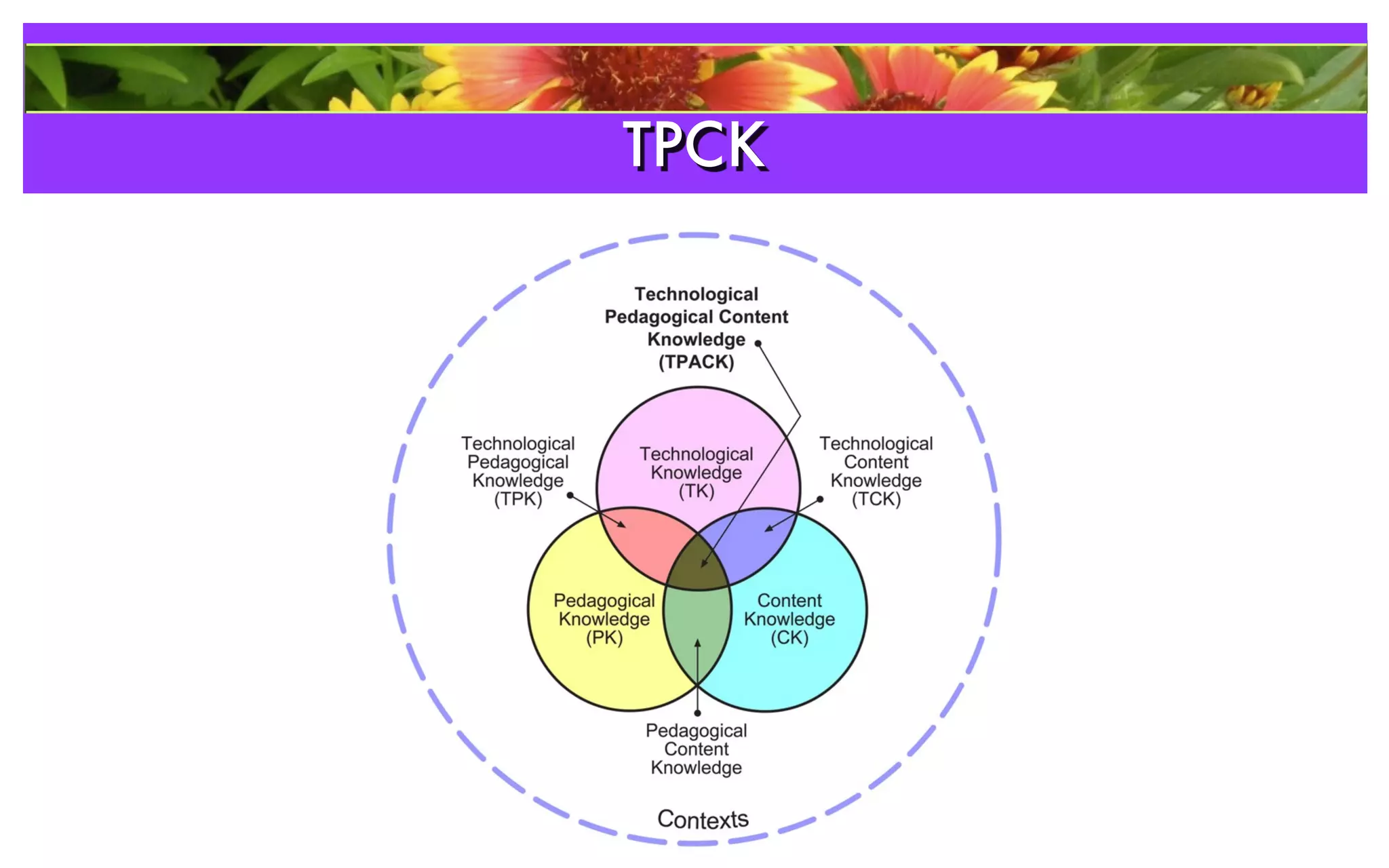
TPCK
References
What Else?
                   References
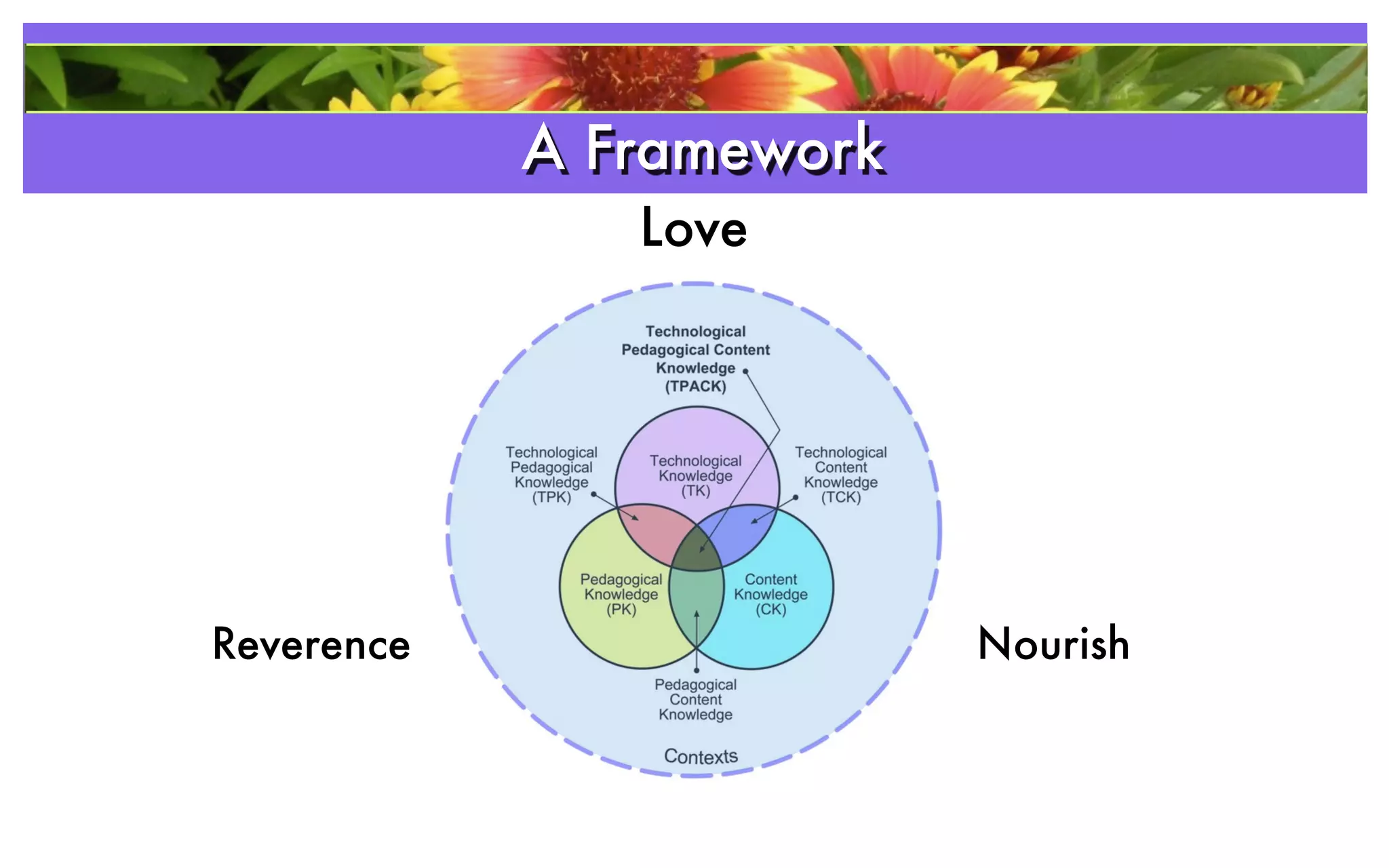
Technological, pedagogical, content knowledge
(TPCK)
These are the ways, means and techniques of teaching
In the words of Peggy Lee, “Is that all there is?”
There is something else
                                                     Palmer , 2007
References
With good relationships in place
all other instructional strategies
seem to work better
Marzano, R. (2011). Relating to students: It’s what you do that counts. Educational
Leadership. Vol. 68 No. 6 p. 82
References

Technique is what you use
until the teacher arrives
Palmer, P. (2007). The courage to teach: Exploring the inner landscape of a teacher’s life.
References
We must [define and] refine
who we are deep down in our
heart.
                       Baker, (2006)
What Else?
                 References
Purkey and Novak: Invitation theory
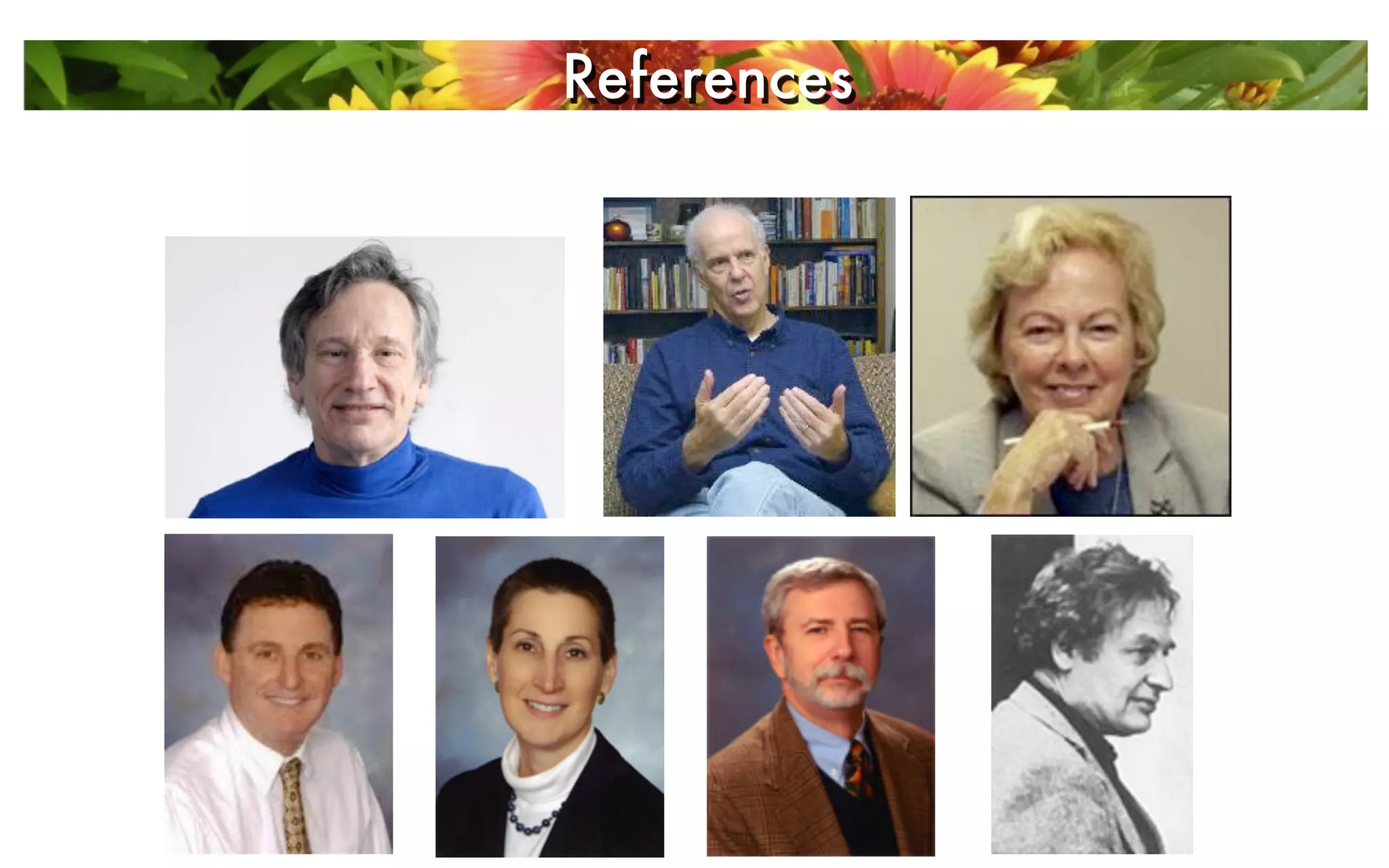
Palmer: The Courage to Teach
Noddings: The Courage to Care
Miller: Education and the Soul
NCATE: Dispositions
Character Education
Invitation Theory
Inviting is defined as attributes and behaviors that
encourage people to realize their relatively
boundless potential in all areas of worthwhile
human endeavor
                                     (Purkey & Novak, 1984)
Courage to Teach
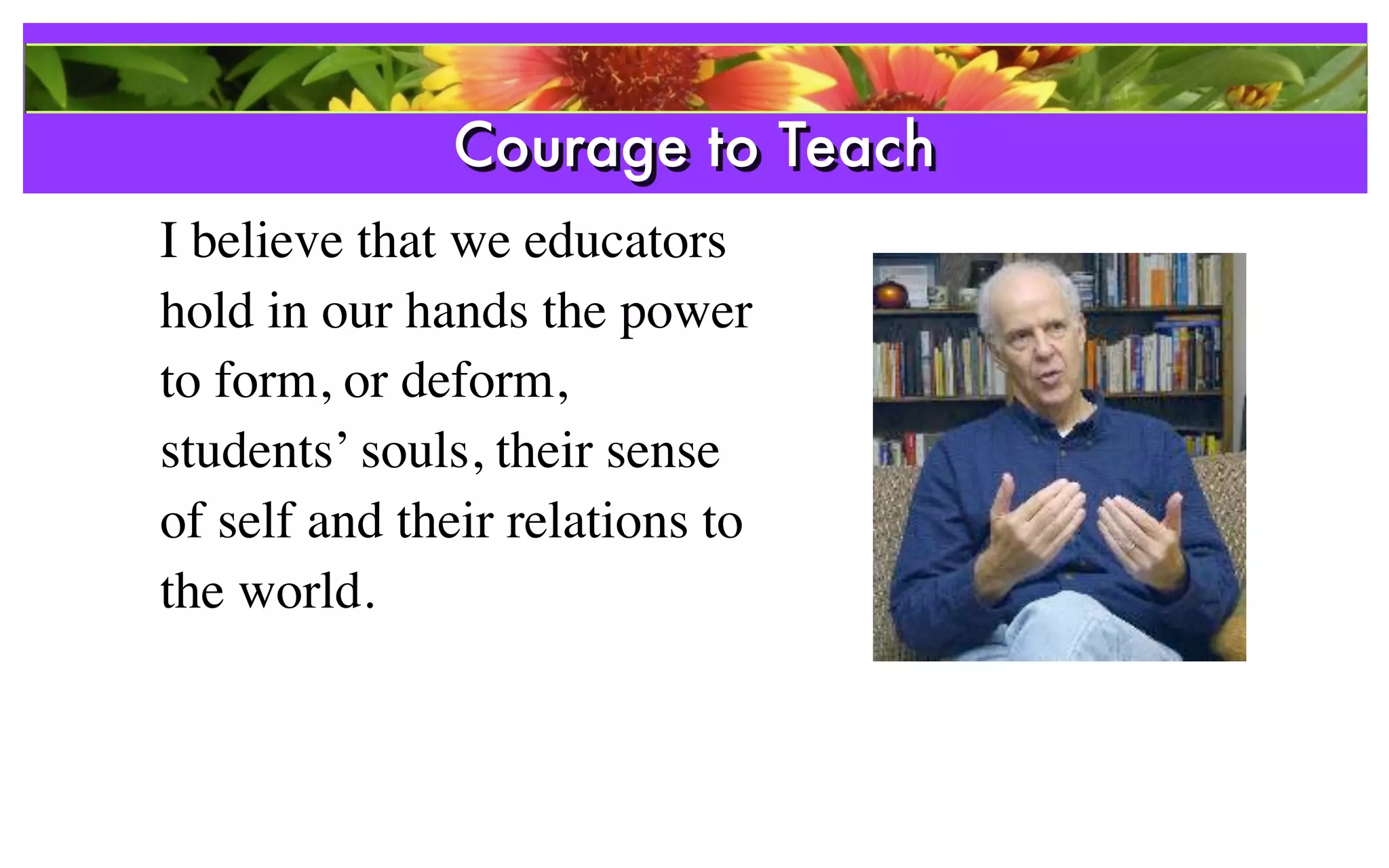
I believe that we educators
hold in our hands the power
to form, or deform,
students’ souls, their sense
of self and their relations to
the world.
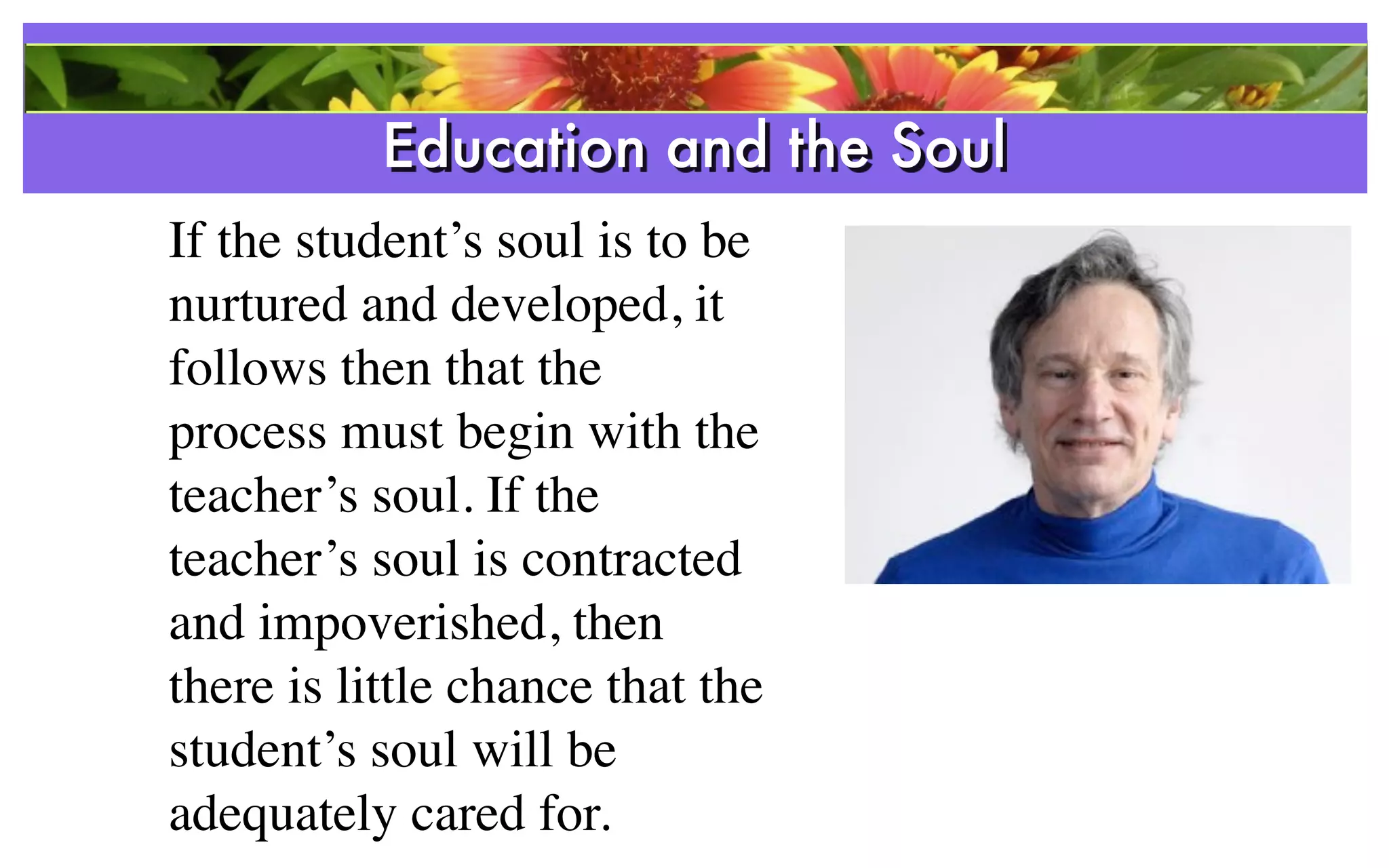
Courage to Care

The spiritual aspect of
self...gets almost no attention
in today’s public schools

We must be concerned with
the physical, emotional,
spiritual, and intellectual
aspects of self
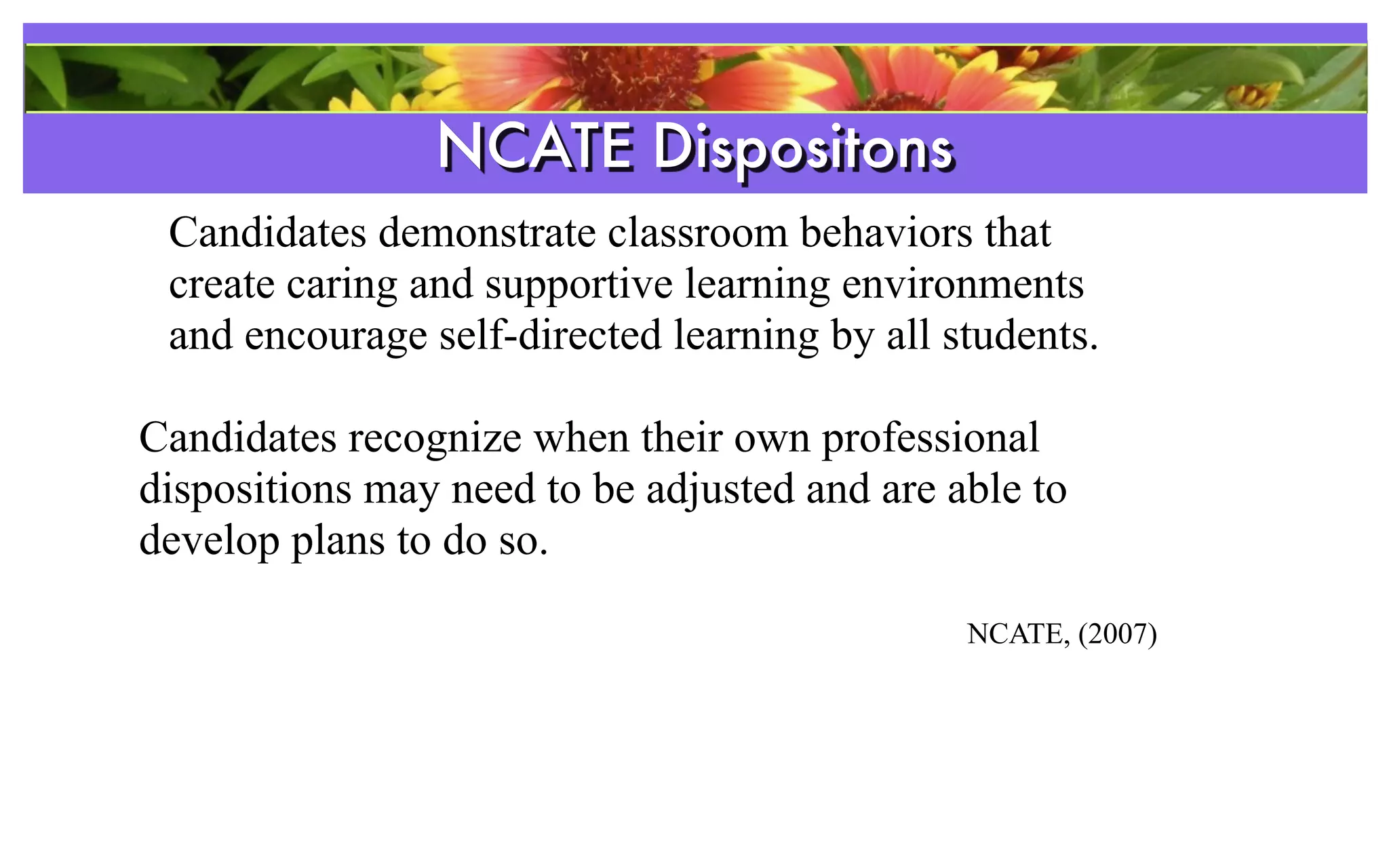
Education and the Soul
                 References
If the student’s soul is to be
nurtured and developed, it
follows then that the
process must begin with the
teacher’s soul. If the
teacher’s soul is contracted
and impoverished, then
there is little chance that the
student’s soul will be
adequately cared for.
NCATE Dispositons
                   References
 Candidates demonstrate classroom behaviors that
 create caring and supportive learning environments
 and encourage self-directed learning by all students.

Candidates recognize when their own professional
dispositions may need to be adjusted and are able to
develop plans to do so.

                                              NCATE, (2007)
Character Education
                  References
It is critical that teachers themselves reflect behavior
that fosters their students moral systems….behavior
that emphasizes caring, kindness, sharing, helpfulness,
and cooperation.

                                Ryan, Sweeder and Bednar, (2002)
A Framework
               Love


Reverence                 Nourish
Initial Ideas from Inivitation Theory
                References
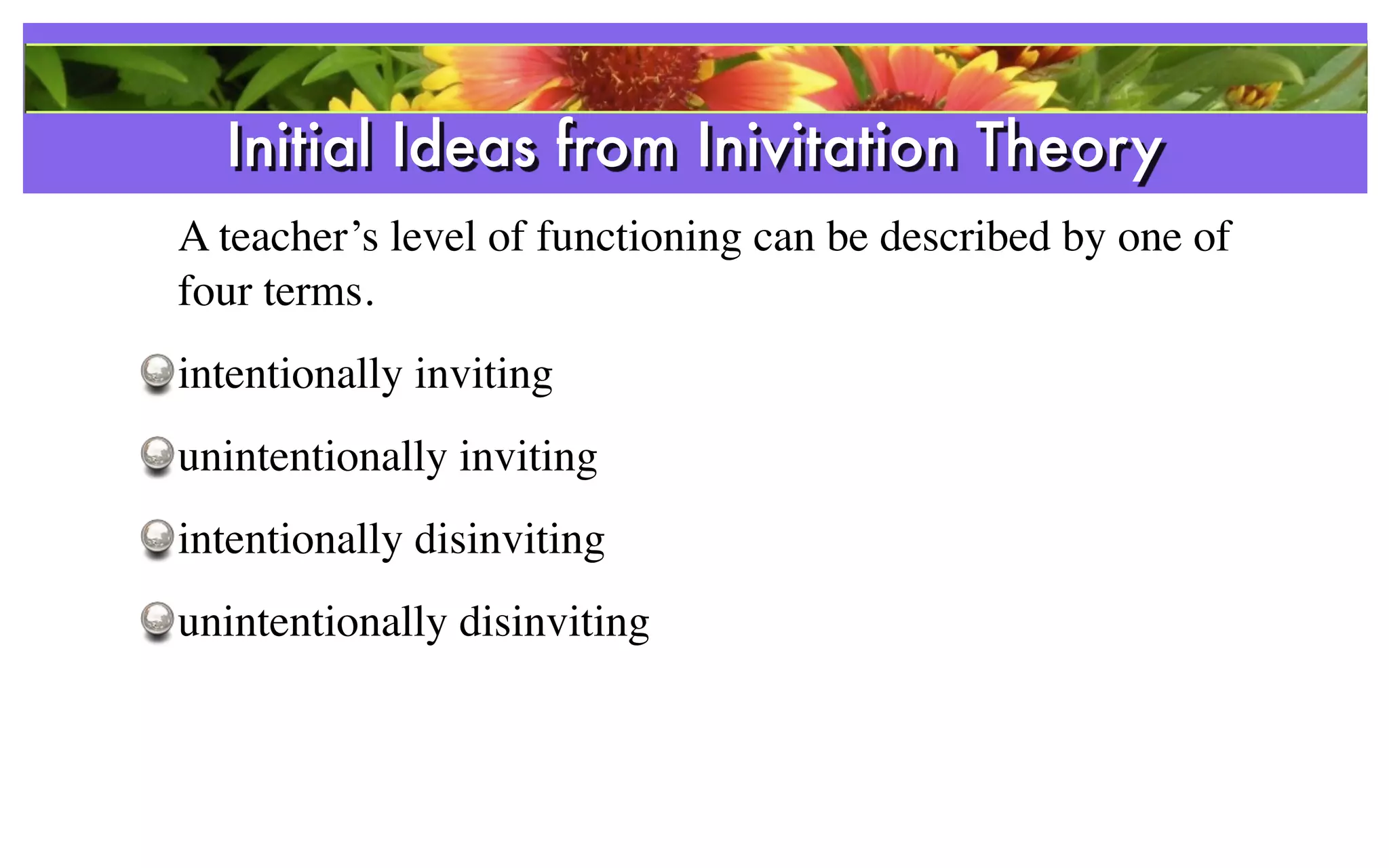
A teacher’s level of functioning can be described by one of
four terms.
intentionally inviting
unintentionally inviting
intentionally disinviting
unintentionally disinviting
Initial Ideas from Inivitation Theory
              References
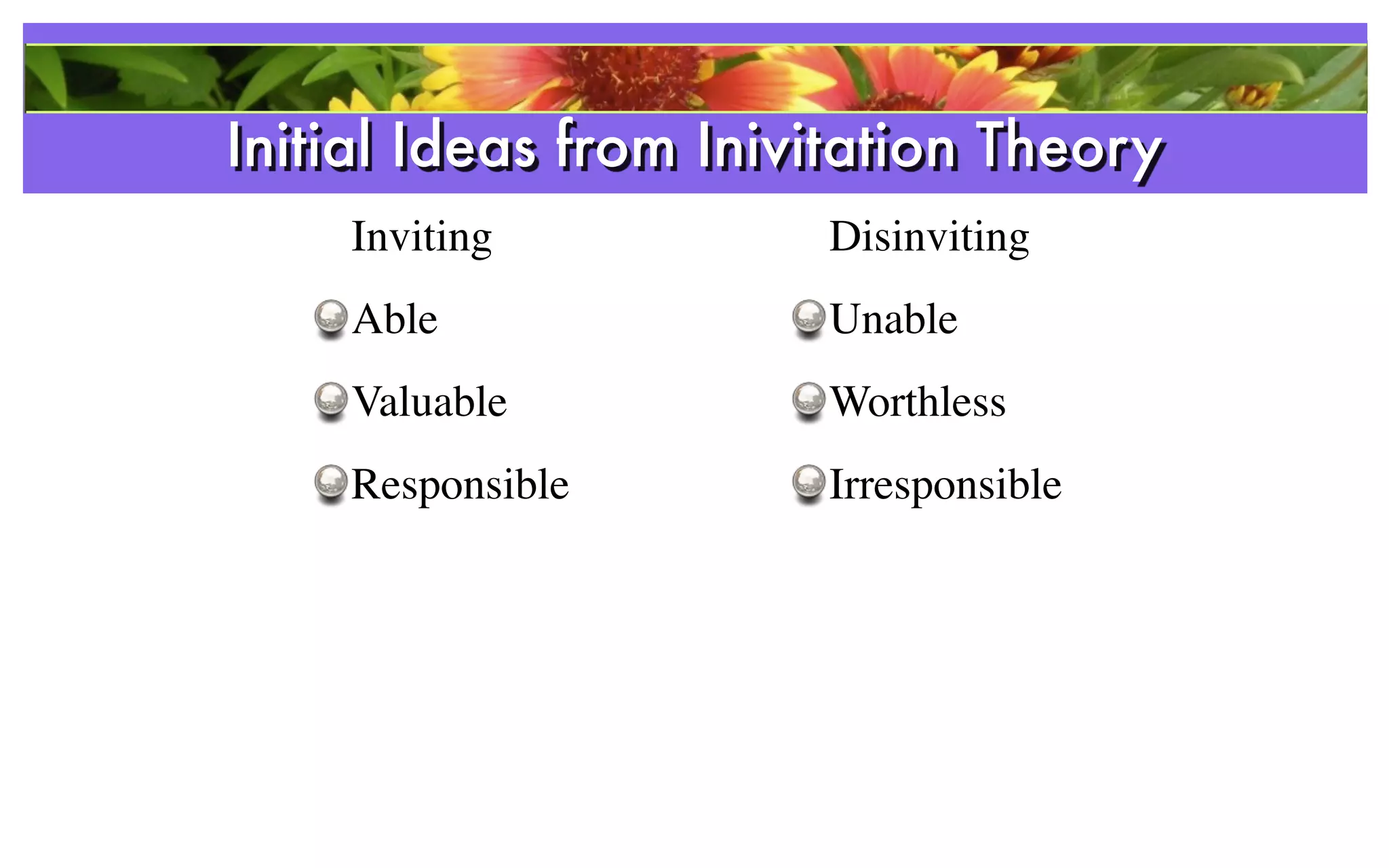
    Inviting           Disinviting
    Able               Unable
    Valuable           Worthless
    Responsible        Irresponsible
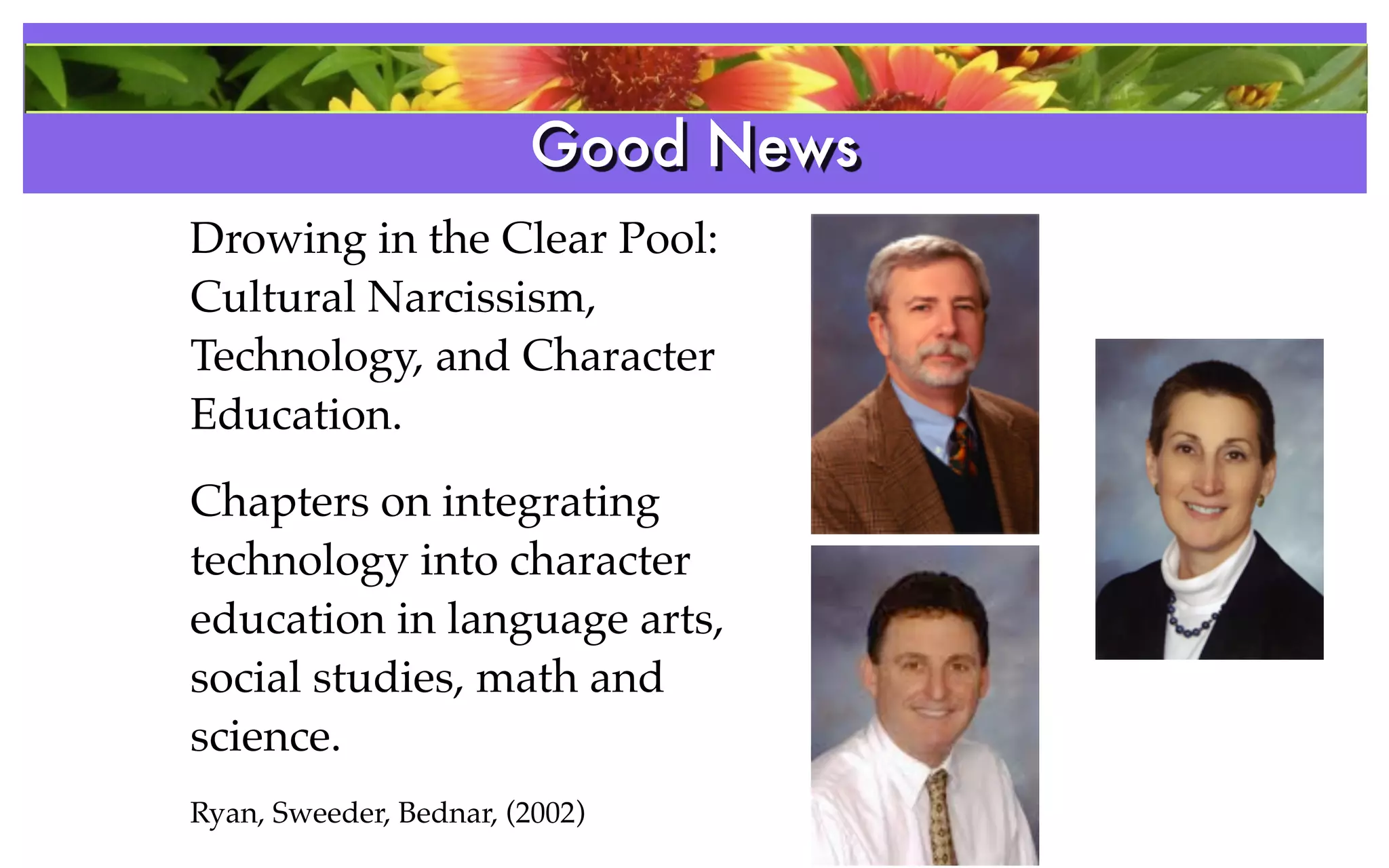
Good News
Three potential works
Ryan, Sweeder and Bednar: Character Education
Maddux, Johnson and Willis: Type II uses of technology
Gilbert: Technology and soul
Good News
Drowing in the Clear Pool:
Cultural Narcissism,
Technology, and Character
Education.
Chapters on integrating
technology into character
education in language arts,
social studies, math and
science.
Ryan, Sweeder, Bednar, (2002)
Type II Uses of Technology
  1. Generally stimulate relatively active intellectual
  involvement on the part of the user.
2. The user is in charge of almost all that happens.
3. The user is in control over most of the interaction
with the machine and has extensive options for input.
4. They are usually aimed at more creative tasks than
Type I uses.
5. The software is more complex and discovering all
its capabilities could take hours or even weeks.
Maddux, Johnson, and Willis (2001)(pp. 101-102)
Gilbert
Four questions
What do you most want to gain by the use of technology in
your class?
Does my use of technology encourage creative responses
from students?
How can educational technology help or hinder what matters
most to me in my class?
How can educational technology help or hinder what matters
most to my students and their personal development?
                                                  Gilbert, (2003)
And so...
The more deeply you understand other
people, the more you will appreciate them,
the more reverent you will feel about them.
To touch the soul of another human being is
to walk on holy ground.”
                                Covey, (1989, p. 258)
References
Baker, W. (2006). Knowing, Doing, and Being . Retrieved 3/7/11 from http://
speeches.byu.edu/reader/reader.php?id=11532&x=54&y=5

Gilbert, S. (2003). “Education, technology and the human spirit.” Syllabus Magazine,
February, 16(7) pp. 22-23

Maddux, C. D., Johnson, D. L., and Willis, J. W. (2001). Educational computing:
Learning with tomorrow’s technologies. Needham Heights, MA: Allyn & Bacon, (pp.
101-102)

Marzano, R. (2011). Relating to students: It’s what you do that counts. Educational
Leadership. Vol. 68 No. 6 p. 82

Miller, John P. (2000). Education and the soul: Toward a spiritual curriculum.
Albany:State University of New York Press. p. 121

Noddings, N. (2005). The courage to care:An alternative approach to education. New
References
Noddings, N. (2005). The courage to care:An alternative approach to education. New
York: Teachers College Press.

Palmer, P. (2007). The courage to teach: Exploring the inner landscape of a teacher’s
life.

Palmer, P. (1999). Washington Center Conference, May 1999, from Washington Center
News, Spring 2000, retrieved June 2003 from http://www.vcsu.edu/facultystaff-dev/
summer_institute/Summer_Institute_2003/PPalmer2000a.pdf

Purkey, W. W. & Novak, J. (1984). Inviting school success: A self-concept approach to
teaching and learning, ( 2nd ed). Belmont, CA: Wadsworth.

Ryan, F. J., Sweeder, J. J., & Bednar, M. R. (2002). Drowning in the clear pool:
Cultural naracissism, technology, and character education. New York: Peter Lang
Publishing, p. 87
References


The End
References
References

Sitte2011 a

  • 1.
    Beyond Technology Examining the Convergence of Technology, Learning, and the Soul
  • 2.
  • 3.
    What Else? References Technological, pedagogical, content knowledge (TPCK) These are the ways, means and techniques of teaching In the words of Peggy Lee, “Is that all there is?” There is something else Palmer , 2007
  • 4.
    References With good relationshipsin place all other instructional strategies seem to work better Marzano, R. (2011). Relating to students: It’s what you do that counts. Educational Leadership. Vol. 68 No. 6 p. 82
  • 5.
    References Technique is whatyou use until the teacher arrives Palmer, P. (2007). The courage to teach: Exploring the inner landscape of a teacher’s life.
  • 6.
    References We must [defineand] refine who we are deep down in our heart. Baker, (2006)
  • 7.
    What Else? References Purkey and Novak: Invitation theory Palmer: The Courage to Teach Noddings: The Courage to Care Miller: Education and the Soul NCATE: Dispositions Character Education
  • 8.
    Invitation Theory Inviting isdefined as attributes and behaviors that encourage people to realize their relatively boundless potential in all areas of worthwhile human endeavor (Purkey & Novak, 1984)
  • 9.
    Courage to Teach Ibelieve that we educators hold in our hands the power to form, or deform, students’ souls, their sense of self and their relations to the world.
  • 10.
    Courage to Care Thespiritual aspect of self...gets almost no attention in today’s public schools We must be concerned with the physical, emotional, spiritual, and intellectual aspects of self
  • 11.
    Education and theSoul References If the student’s soul is to be nurtured and developed, it follows then that the process must begin with the teacher’s soul. If the teacher’s soul is contracted and impoverished, then there is little chance that the student’s soul will be adequately cared for.
  • 12.
    NCATE Dispositons References Candidates demonstrate classroom behaviors that create caring and supportive learning environments and encourage self-directed learning by all students. Candidates recognize when their own professional dispositions may need to be adjusted and are able to develop plans to do so. NCATE, (2007)
  • 13.
    Character Education References It is critical that teachers themselves reflect behavior that fosters their students moral systems….behavior that emphasizes caring, kindness, sharing, helpfulness, and cooperation. Ryan, Sweeder and Bednar, (2002)
  • 14.
    A Framework Love Reverence Nourish
  • 15.
    Initial Ideas fromInivitation Theory References A teacher’s level of functioning can be described by one of four terms. intentionally inviting unintentionally inviting intentionally disinviting unintentionally disinviting
  • 16.
    Initial Ideas fromInivitation Theory References Inviting Disinviting Able Unable Valuable Worthless Responsible Irresponsible
  • 17.
    Good News Three potentialworks Ryan, Sweeder and Bednar: Character Education Maddux, Johnson and Willis: Type II uses of technology Gilbert: Technology and soul
  • 18.
    Good News Drowing inthe Clear Pool: Cultural Narcissism, Technology, and Character Education. Chapters on integrating technology into character education in language arts, social studies, math and science. Ryan, Sweeder, Bednar, (2002)
  • 19.
    Type II Usesof Technology 1. Generally stimulate relatively active intellectual involvement on the part of the user. 2. The user is in charge of almost all that happens. 3. The user is in control over most of the interaction with the machine and has extensive options for input. 4. They are usually aimed at more creative tasks than Type I uses. 5. The software is more complex and discovering all its capabilities could take hours or even weeks. Maddux, Johnson, and Willis (2001)(pp. 101-102)
  • 20.
    Gilbert Four questions What doyou most want to gain by the use of technology in your class? Does my use of technology encourage creative responses from students? How can educational technology help or hinder what matters most to me in my class? How can educational technology help or hinder what matters most to my students and their personal development? Gilbert, (2003)
  • 21.
    And so... The moredeeply you understand other people, the more you will appreciate them, the more reverent you will feel about them. To touch the soul of another human being is to walk on holy ground.” Covey, (1989, p. 258)
  • 22.
    References Baker, W. (2006).Knowing, Doing, and Being . Retrieved 3/7/11 from http:// speeches.byu.edu/reader/reader.php?id=11532&x=54&y=5 Gilbert, S. (2003). “Education, technology and the human spirit.” Syllabus Magazine, February, 16(7) pp. 22-23 Maddux, C. D., Johnson, D. L., and Willis, J. W. (2001). Educational computing: Learning with tomorrow’s technologies. Needham Heights, MA: Allyn & Bacon, (pp. 101-102) Marzano, R. (2011). Relating to students: It’s what you do that counts. Educational Leadership. Vol. 68 No. 6 p. 82 Miller, John P. (2000). Education and the soul: Toward a spiritual curriculum. Albany:State University of New York Press. p. 121 Noddings, N. (2005). The courage to care:An alternative approach to education. New
  • 23.
    References Noddings, N. (2005).The courage to care:An alternative approach to education. New York: Teachers College Press. Palmer, P. (2007). The courage to teach: Exploring the inner landscape of a teacher’s life. Palmer, P. (1999). Washington Center Conference, May 1999, from Washington Center News, Spring 2000, retrieved June 2003 from http://www.vcsu.edu/facultystaff-dev/ summer_institute/Summer_Institute_2003/PPalmer2000a.pdf Purkey, W. W. & Novak, J. (1984). Inviting school success: A self-concept approach to teaching and learning, ( 2nd ed). Belmont, CA: Wadsworth. Ryan, F. J., Sweeder, J. J., & Bednar, M. R. (2002). Drowning in the clear pool: Cultural naracissism, technology, and character education. New York: Peter Lang Publishing, p. 87
  • 24.
  • 25.
  • 26.

Editor's Notes

  • #2 \n
  • #3  This an excellent way to view and organize our attempts to integrate technology effectively.\n If we have this down will we have high quality teaching? Or is there more?\n What is the outer circle?\n\n
  • #4 \n
  • #5  Positive relationships between teachers and students are among the most commonly cited variables associated with effective instruction. If the relationship is strong, instructional strategies seem to be more effective. Conversely, a weak or negative relationship will mute or even negate the benefits of even the most effective instructional strategies.\n Marzano, R. (2011). Relating to students: It’s what you do that counts. Educational Leadership. Vol. 68 No. 6 p. 82\n\n
  • #6  Positive relationships between teachers and students are among the most commonly cited variables associated with effective instruction. If the relationship is strong, instructional strategies seem to be more effective. Conversely, a weak or negative relationship will mute or even negate the benefits of even the most effective instructional strategies.\n Marzano, R. (2011). Relating to students: It’s what you do that counts. Educational Leadership. Vol. 68 No. 6 p. 82\n\n
  • #7 \n
  • #8 \n
  • #9 Inviting is defined as attributes and behaviors that encourage people to realize their relatively boundless potential in all areas of worthwhile human endeavor (Purkey & Novak, 1984)\n
  • #10 Inviting is defined as attributes and behaviors that encourage people to realize their relatively boundless potential in all areas of worthwhile human endeavor (Purkey & Novak, 1984)\n
  • #11 \n
  • #12 Palmer (2003) speaks of the heart and soul being the core human reality.\nPalmer’s “wholesight”. He defines wholesight as a uniting of mind and heart. The mind is the world of fact and reason. The heart is the world of love and community. (1993, p. xxiii).\nI project the condition of my soul onto my students, my subject, and our way of being together.” He goes on to explain that a reflective teacher teaches holding a “mirror to the soul”, and feels that it is critical to know yourself before you start teaching.\n
  • #13 Palmer (2003) speaks of the heart and soul being the core human reality.\nPalmer’s “wholesight”. He defines wholesight as a uniting of mind and heart. The mind is the world of fact and reason. The heart is the world of love and community. (1993, p. xxiii).\nI project the condition of my soul onto my students, my subject, and our way of being together.” He goes on to explain that a reflective teacher teaches holding a “mirror to the soul”, and feels that it is critical to know yourself before you start teaching.\n
  • #14 Palmer (2003) speaks of the heart and soul being the core human reality.\nPalmer’s “wholesight”. He defines wholesight as a uniting of mind and heart. The mind is the world of fact and reason. The heart is the world of love and community. (1993, p. xxiii).\nI project the condition of my soul onto my students, my subject, and our way of being together.” He goes on to explain that a reflective teacher teaches holding a “mirror to the soul”, and feels that it is critical to know yourself before you start teaching.\n
  • #15 \n
  • #16 \n
  • #17 \n
  • #18 \n
  • #19 \n
  • #20 \n
  • #21 \n
  • #22 \n
  • #23 \n
  • #24 \n
  • #25 \n
  • #26 \n
  • #27 \n