ISO 9001:2008 Overview
ISO 9001 is an outline for a Quality
Management System
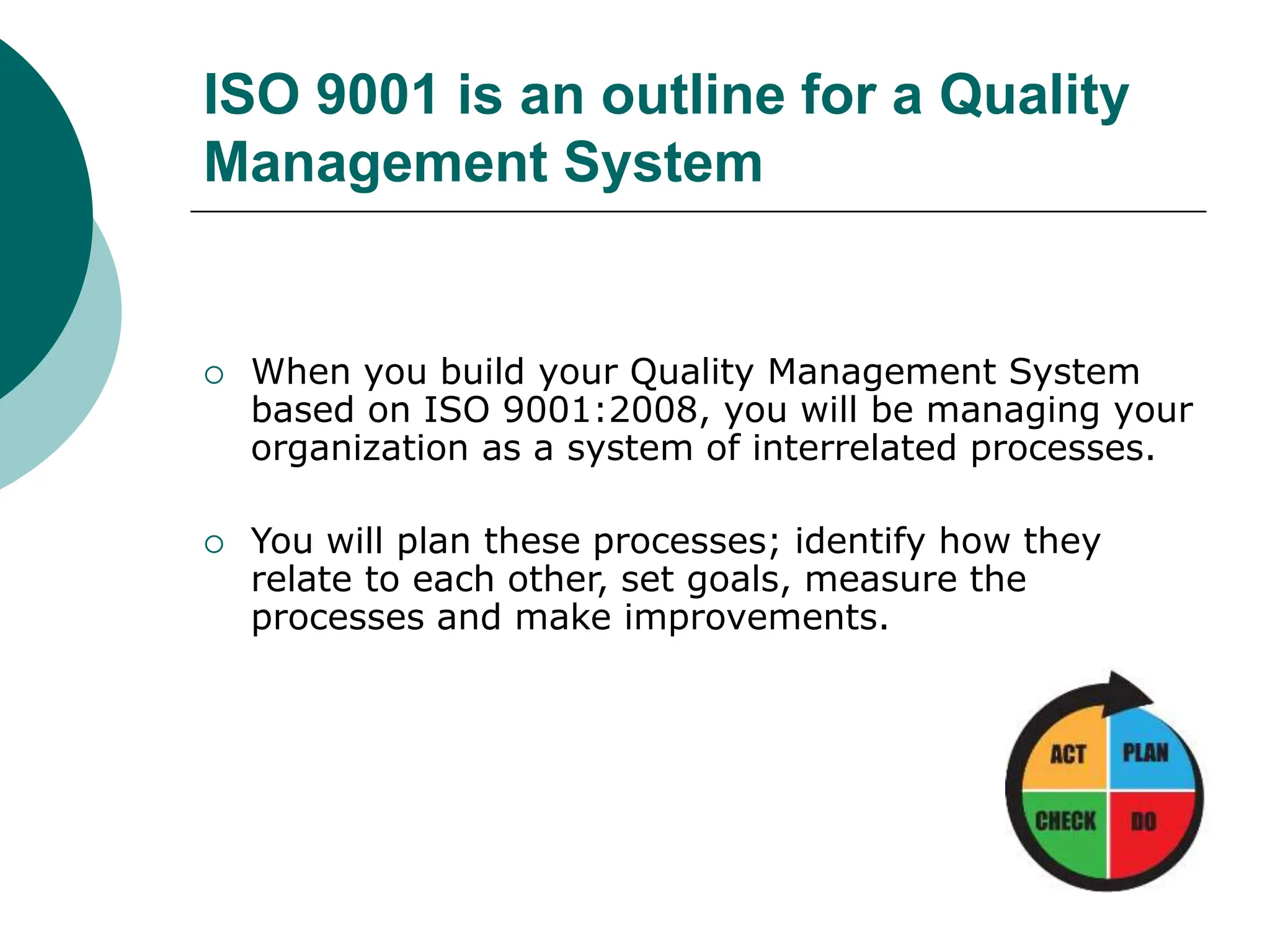
 When you build your Quality Management System
based on ISO 9001:2008, you will be managing your
organization as a system of interrelated processes.
 You will plan these processes; identify how they
relate to each other, set goals, measure the
processes and make improvements.
What is ISO 9001?
 ISO is the International Organization of
Standardization
 ISO is an organization that develops Standards for
use worldwide to help companies plug into the world
market.
 ISO 9001:2008 Outlines criteria for a good Quality
Management System (QMS)
Quality Management System Criteria
 An International Group of Business and Quality
Professionals determined criteria.
These criteria are basics of good business practice.
For example:
• Set quality goals
• Ensure customer requirements are understood and met
• Train employees
• Control your production processes
• Purchase from suppliers that can provide quality product
• Correct problems and make sure they do not happen again
 Once the quality system is in place a
Registration will come and audit.
If all the criteria are being followed, the company will be
ISO 9001 Registered.
 Registered companies put their Registration
mark in marketing materials.
Potential customers will know that you have a good
Quality Management System in Place.
The ISO 9001 Standard
 The standard outline the requirements for the Quality
Management System in sections 4 through 8 of ISO
9001. Take a look at the sections of the standard
outlined below.
The ISO 9001 Standard
 The requirements cover everything from how you
plan your processes, to how you carry them out,
measure them and improve them.
 The standard calls your production processes
"Product Realization". This is where you are actually
making your product or delivering your service
The Benefits of ISO 9001
 Having an effective Quality Management
System, (QMS) in place leads to many
improvements in an organization.
 ISO 9001 is a proven foundation for an
effective QMS. Whether you decide to Register
your organization, or just build an ISO 9001
QMS for the internal benefits, you will improve
your organization.
The Benefits of ISO 9001
 Internal Benefits include:
• Increased productivity
• Less scrap and rework
• Increased employee satisfaction
• Continual improvement
• Increased profits
 Marketing Benefits include:
• An internationally recognized QMS
• Increased opportunities in specific markets
• Increased customer satisfaction
What will ISO 9001 do for your
employees?
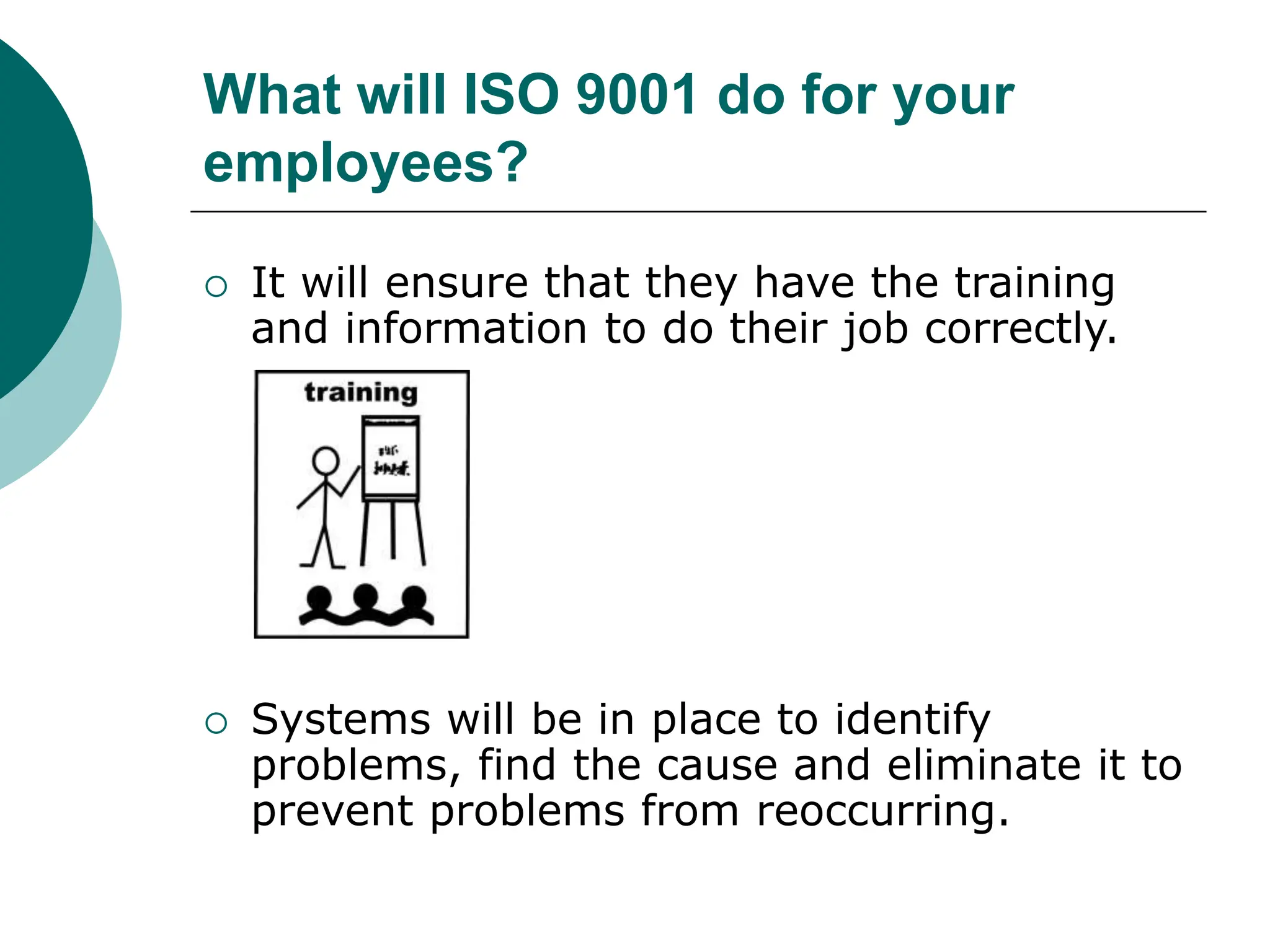
 It will ensure that they have the training
and information to do their job correctly.
 Systems will be in place to identify
problems, find the cause and eliminate it to
prevent problems from reoccurring.
ISO 9001 Requirements
You must identify your Key Processes:
• The processes that affect product or service quality.
• These processes are included in the QMS.
• This includes most of the processes in your
organization.
And use a "Process Management Approach":
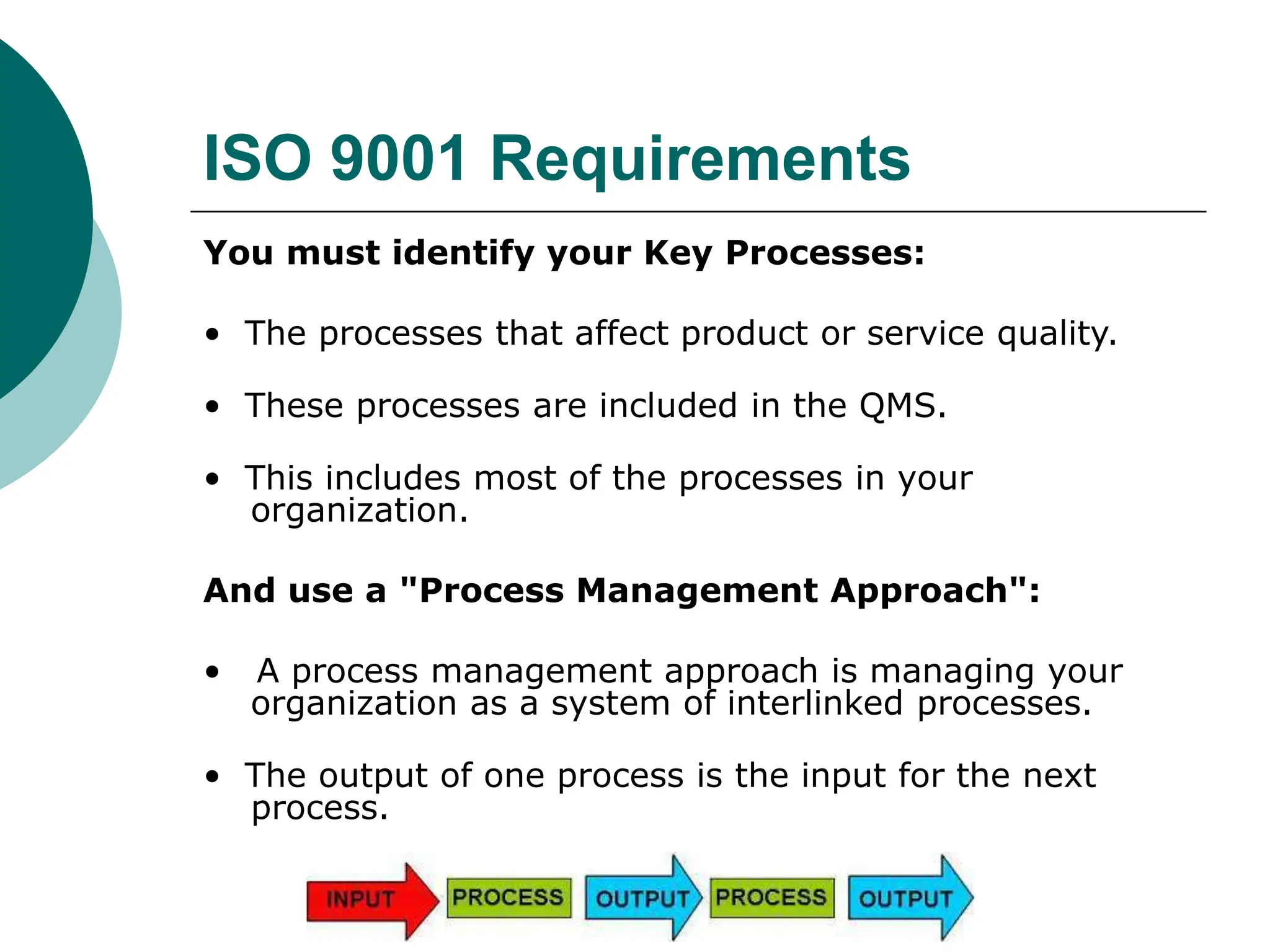
• A process management approach is managing your
organization as a system of interlinked processes.
• The output of one process is the input for the next
process.
ISO 9001 Requirements
Process Management Approach
• Requires that your processes are controlled
and managed for continual improvement.
The ISO 9001 Standard
• The standard is designed to follow a
process management approach.
But what does that really mean?
To find out, we will look at the specific requirements of ISO 9001.
General Requirements
Your organization has:
 Established a Quality Policy and Quality Goals, and
 Designed a Quality Management System to control
how processes are performed
The standard requires that your organization has a Quality
Management System in place that meets the requirements of the
standard
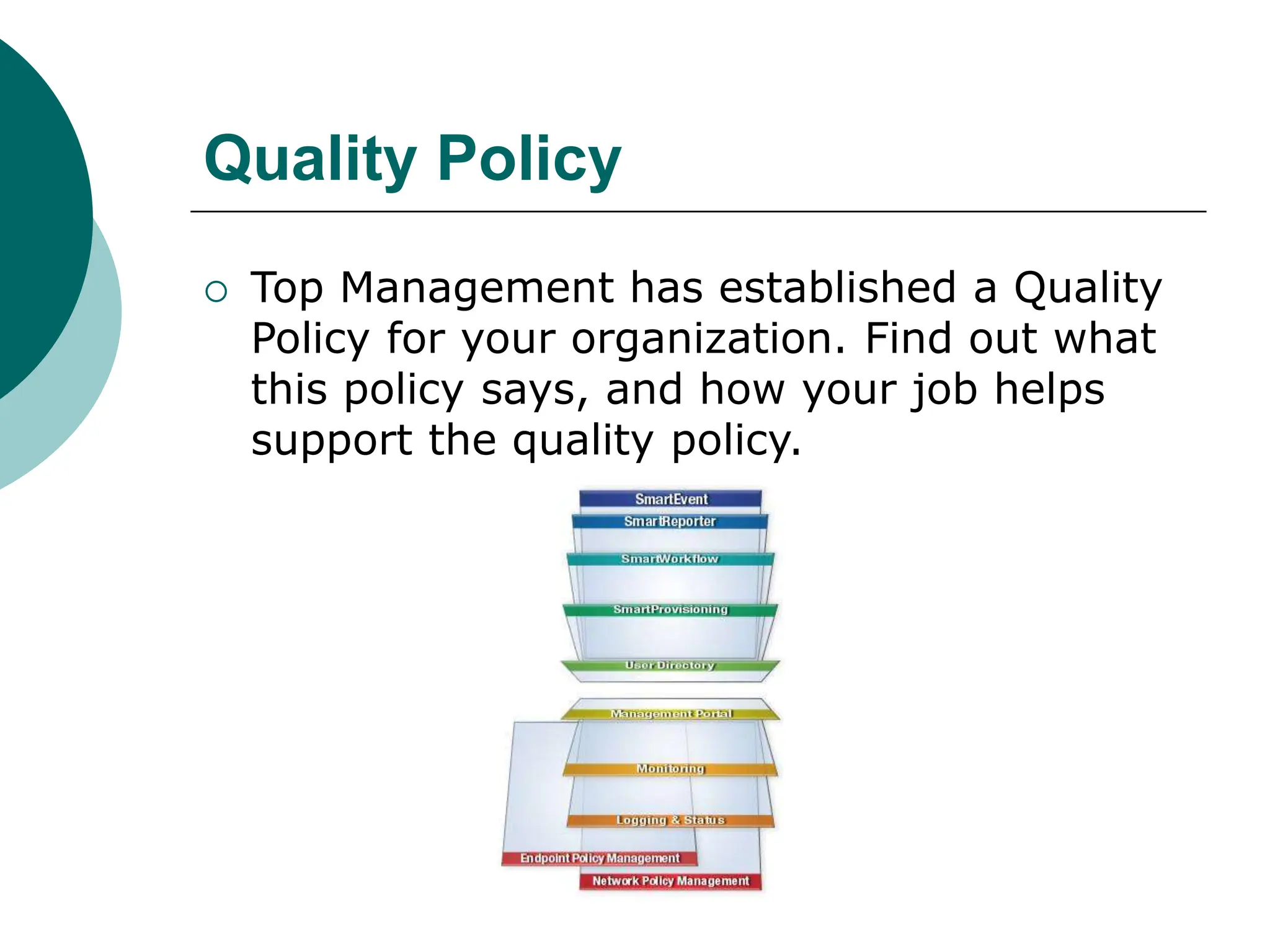
 Top Management has established a Quality
Policy for your organization. Find out what
this policy says, and how your job helps
support the quality policy.
Quality Policy
Quality Goals / Objectives
 Quality goals are established to
support the quality policy. They are
measurable, specific goals. As you
meet the goals, new goals can be
set.
Documented Quality Management
System
 The Quality Management System (QMS) is
documented in the:
• Quality Policy
• Quality Manual
• Procedures
• Work Instructions
• Records
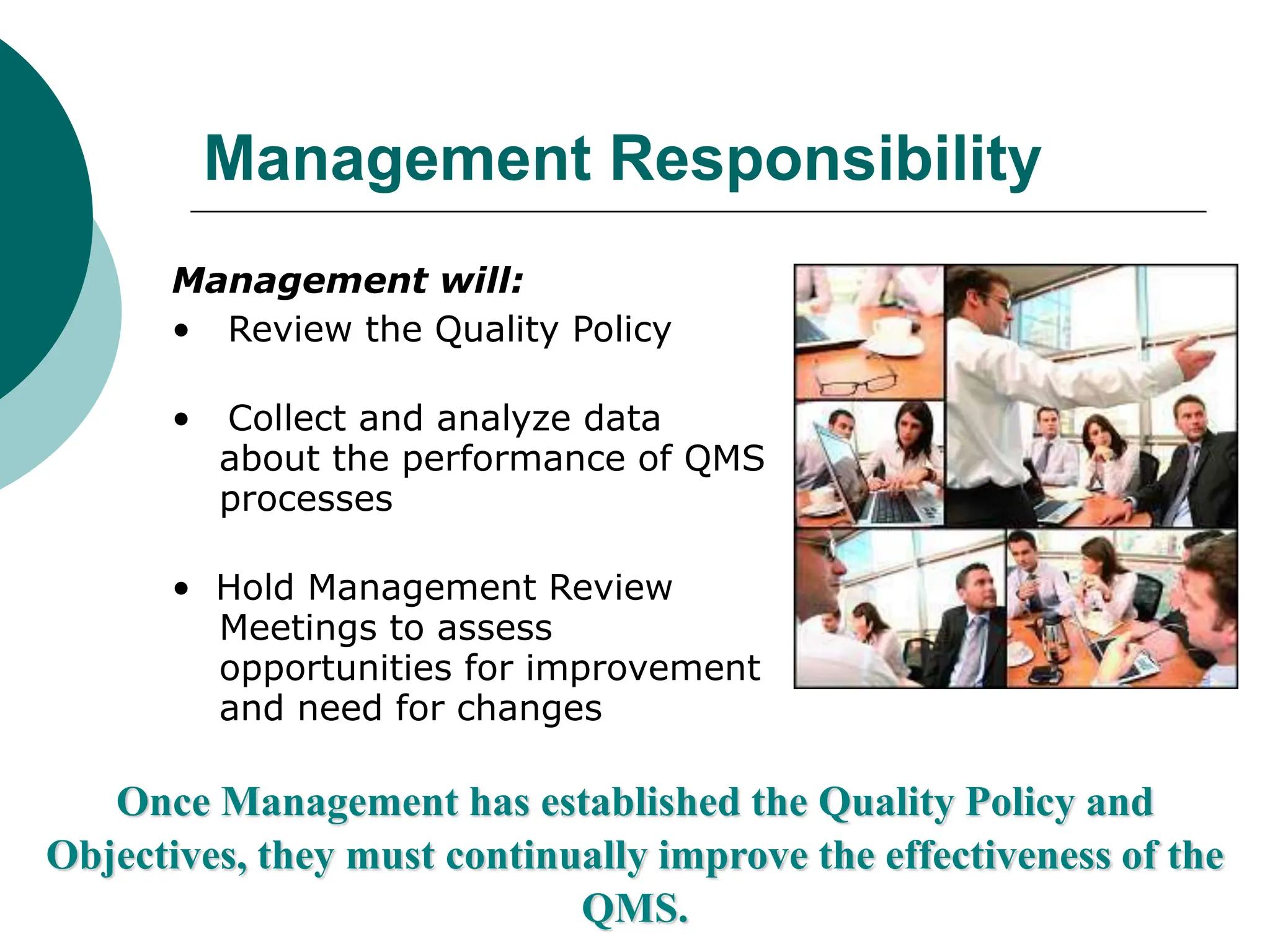
Management Responsibility
Management will:
• Review the Quality Policy
• Collect and analyze data
about the performance of QMS
processes
• Hold Management Review
Meetings to assess
opportunities for improvement
and need for changes
Once Management has established the Quality Policy and
Objectives, they must continually improve the effectiveness of the
QMS.
Management and the Customer
 Management must make sure that systems
have been established to determine and
meet customer requirements.
 It is up to each and every employee to
work to meet customer requirements.
Your organization must continue to
provide the resources necessary:
 To maintain the QMS
 To improve the effectiveness of the
QMS
 To enhance customer satisfaction by
meeting requirements
Human Resources
Employees are a resource
 Employees must be qualified and trained for the job
they are performing.
• Qualifications and training requirements have
been identified for your job.
• You need to complete all required training. This
may be on- the-job training, group training, or
individual training.
• Once you have completed training, the
effectiveness of the training must be evaluated. This is
in the form of a quiz, observation of your work,
performing to specifications or other ways of evaluating
your understanding
Other resources include the
infrastructure and the work
environment
 Infrastructure and work environment must be sufficient to
make quality product
The physical resources needed to make quality product
are considered infrastructure:
• The facility
• Equipment
• Layout
• Workspace
• Support services
Work environment includes factors such as:
• Heat
• Vibration
• Noise
• Humidity
• Light
• Cleanliness
Product Realization:
 The processes in your organization that
actually result in the product or service that
goes to your client.
These include:
• Design and Development
• Customer related processes
• Purchasing
• Production and Service
Product realization processes must
be planned
 There are things that need to be determined
as you set up your quality management
system and as you implement new
processes.
• How will the processes be controlled?
• What are the Quality objectives?
• What are the Documentation requirements?
• What are the Records requirements?
• What are acceptance criteria for the process?
Processes must be controlled
Consistency is achieved by:
• Training or qualifying employees to perform
the process
• Documenting the process
• Providing information on process
characteristics or product characteristics.
A well controlled process will be
performed consistently day to day,
employee to employee.
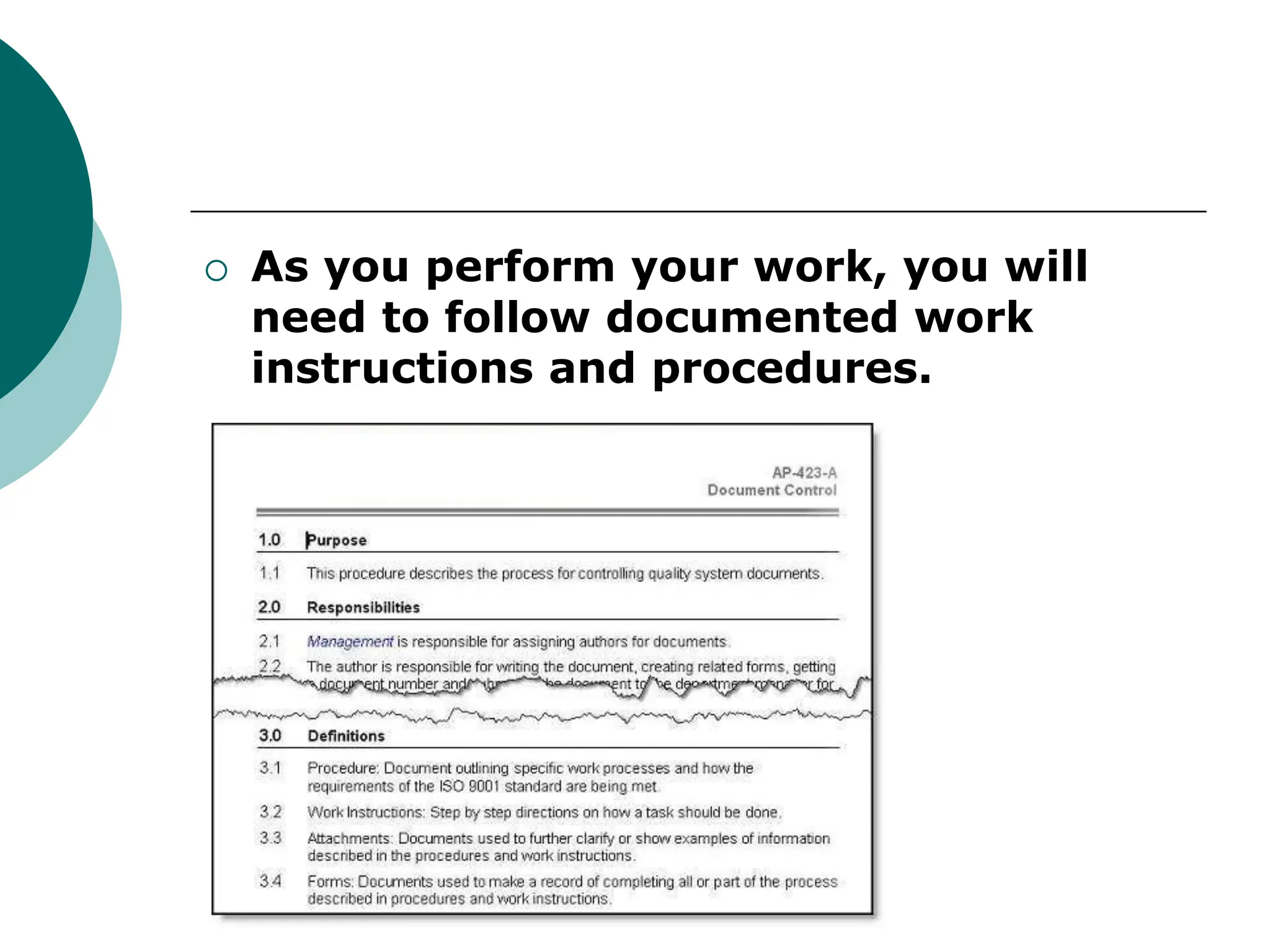
 As you perform your work, you will
need to follow documented work
instructions and procedures.
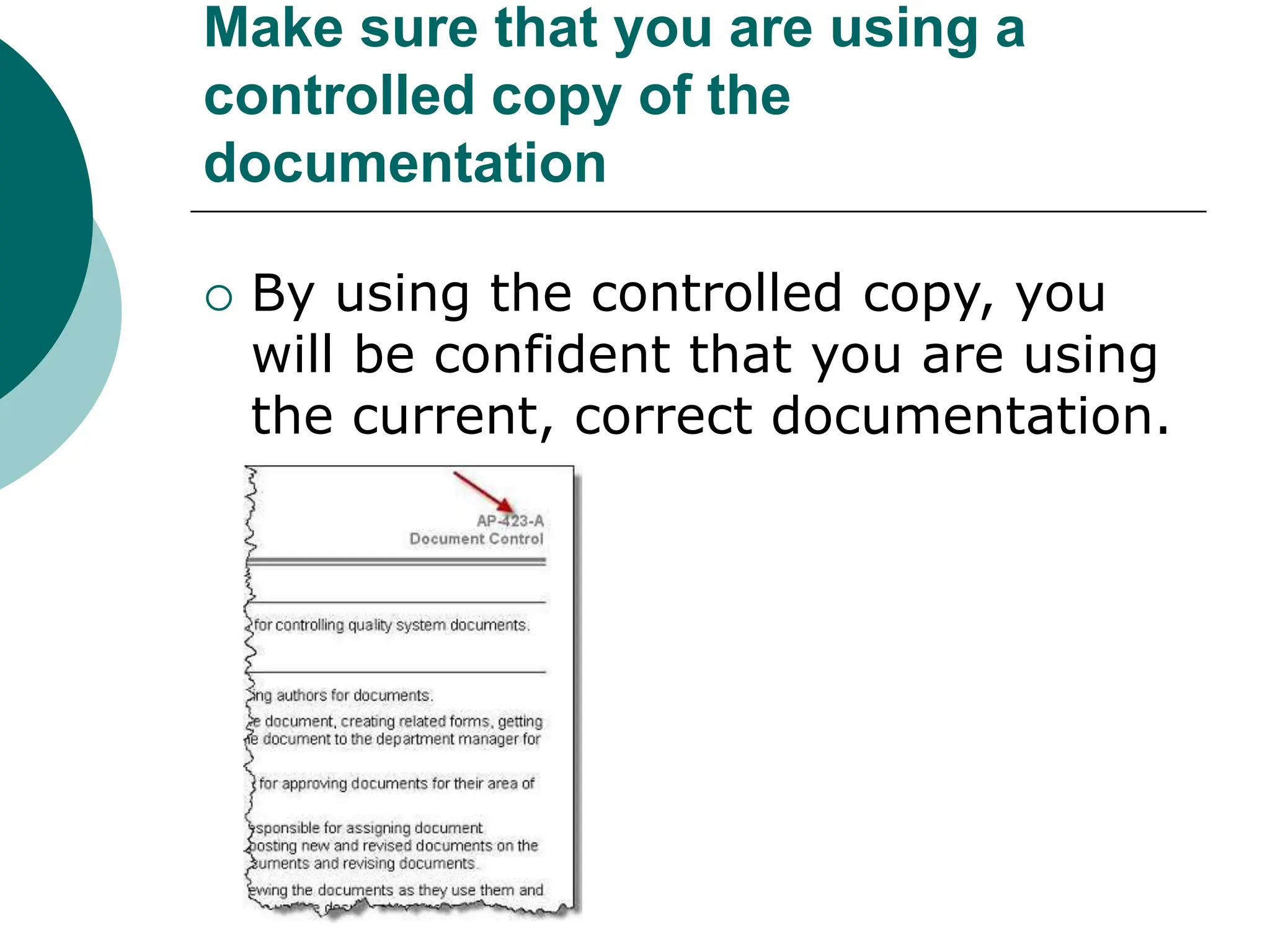
Make sure that you are using a
controlled copy of the
documentation
 By using the controlled copy, you
will be confident that you are using
the current, correct documentation.
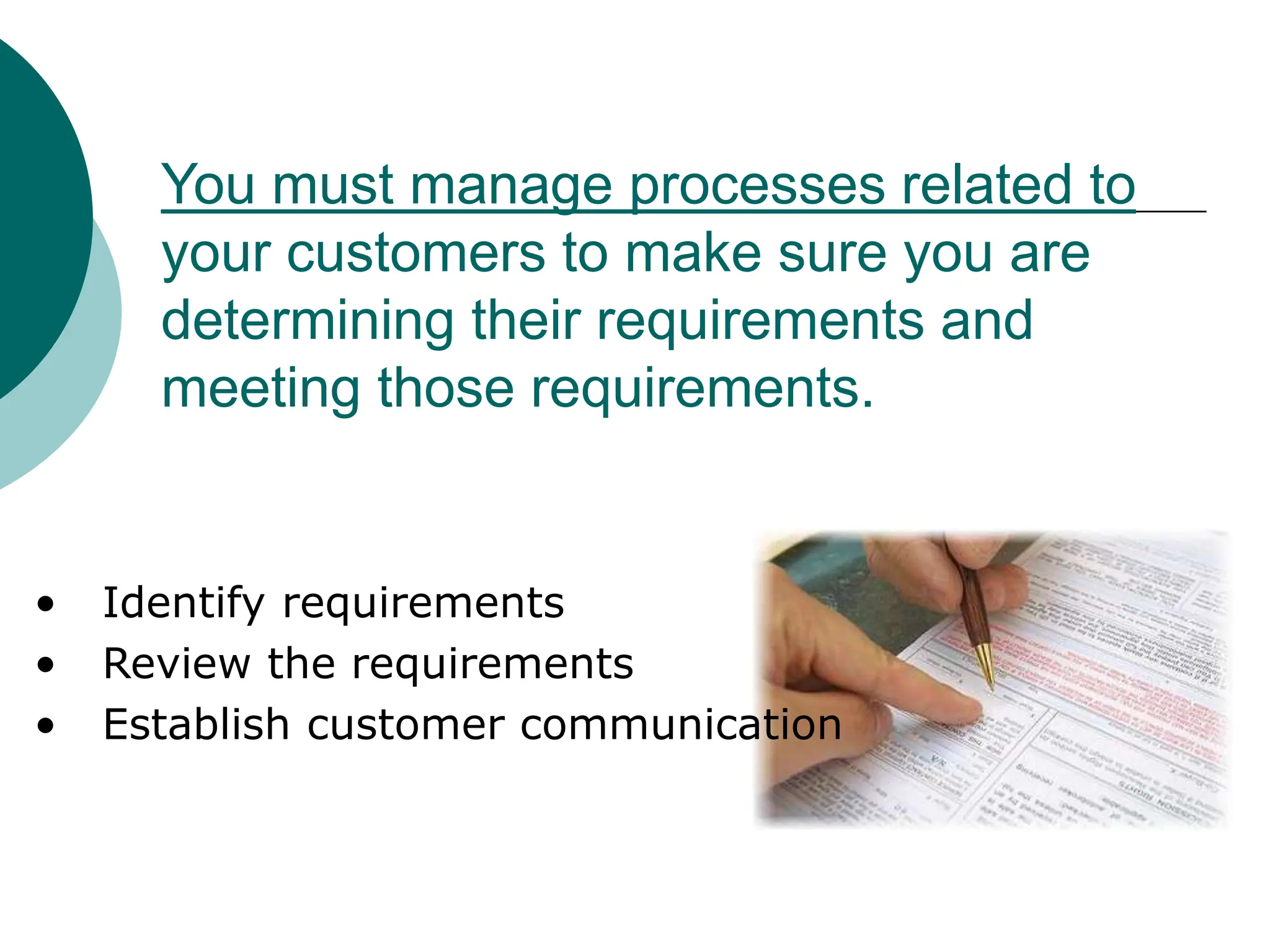
• Identify requirements
• Review the requirements
• Establish customer communication
You must manage processes related to
your customers to make sure you are
determining their requirements and
meeting those requirements.
Design and Development
 If you design product, you must
control your design and development
process. The process must include:
• Design and development planning
• Design and development inputs
• Design and development review
• Design and development verification
• Design and development validation
• Control of design and development changes
 The materials and services you use
to build your product must conform
to your requirements to allow you
to provide quality products.
 Purchasing will evaluate your
suppliers and determine the best
supplier to provide the materials
and services.
Purchasing
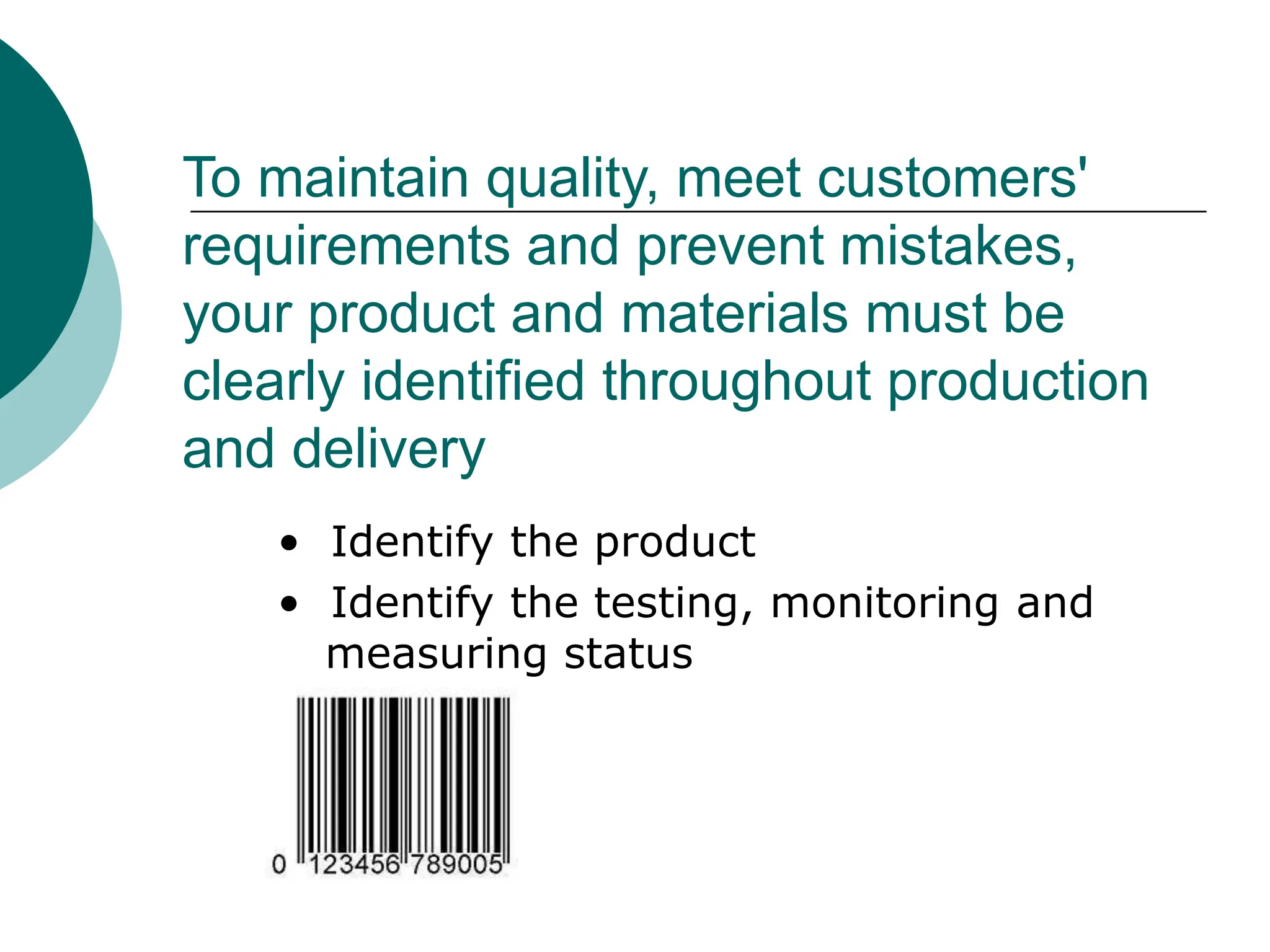
• Identify the product
• Identify the testing, monitoring and
measuring status
To maintain quality, meet customers'
requirements and prevent mistakes,
your product and materials must be
clearly identified throughout production
and delivery
Customer Property
 Customers may provide you with equipment or
material to use to produce product
 Customers may provide you with documents
containing information, or intellectual property
It is your responsibility to protect the customer's property
• Identify it
• Verify that it is suitable for use
• Protect it
• Record and report any lost, damaged or unsuitable product to
the customer
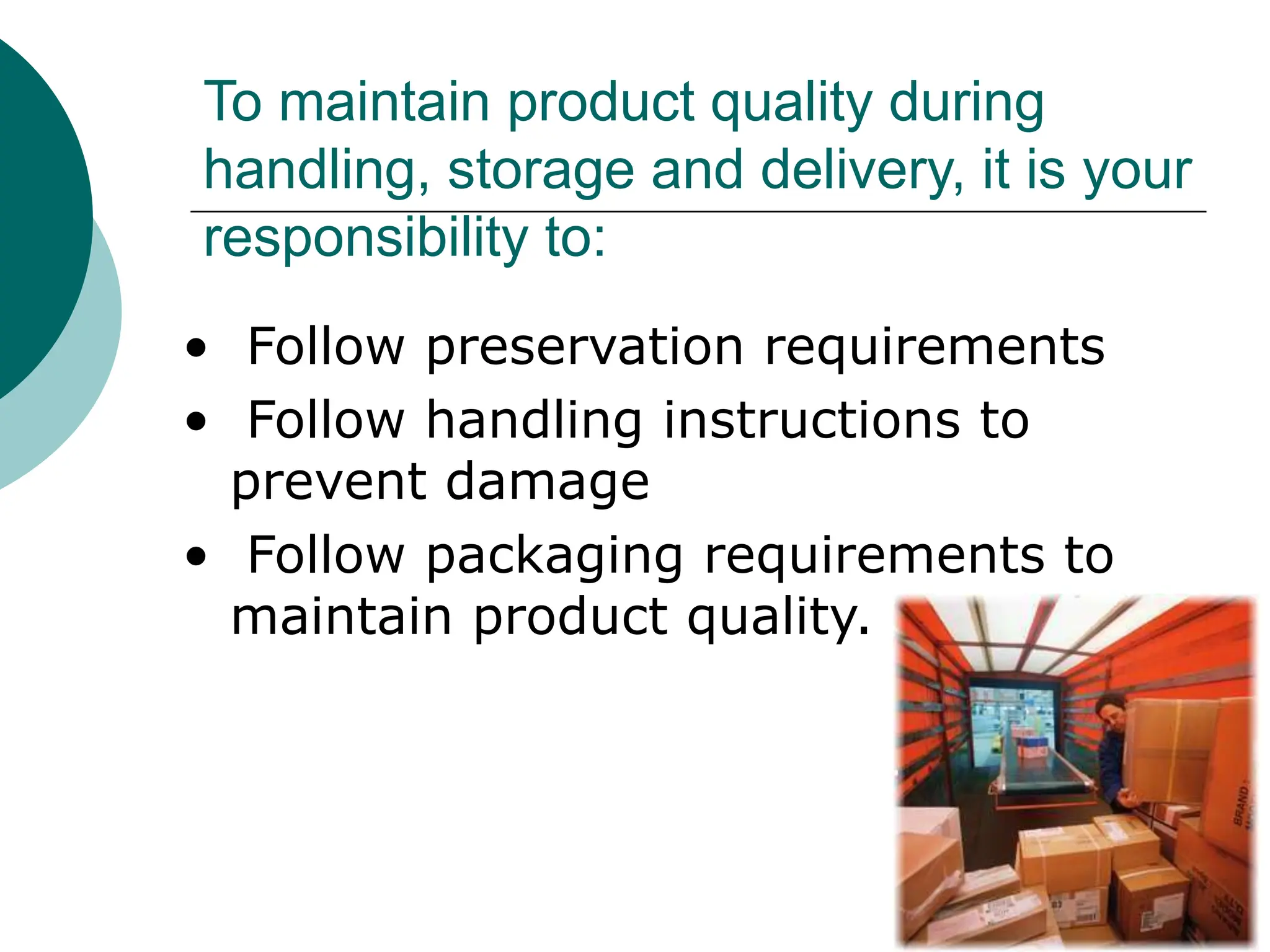
To maintain product quality during
handling, storage and delivery, it is your
responsibility to:
• Follow preservation requirements
• Follow handling instructions to
prevent damage
• Follow packaging requirements to
maintain product quality.
Work instructions identify
measuring and monitoring
requirements
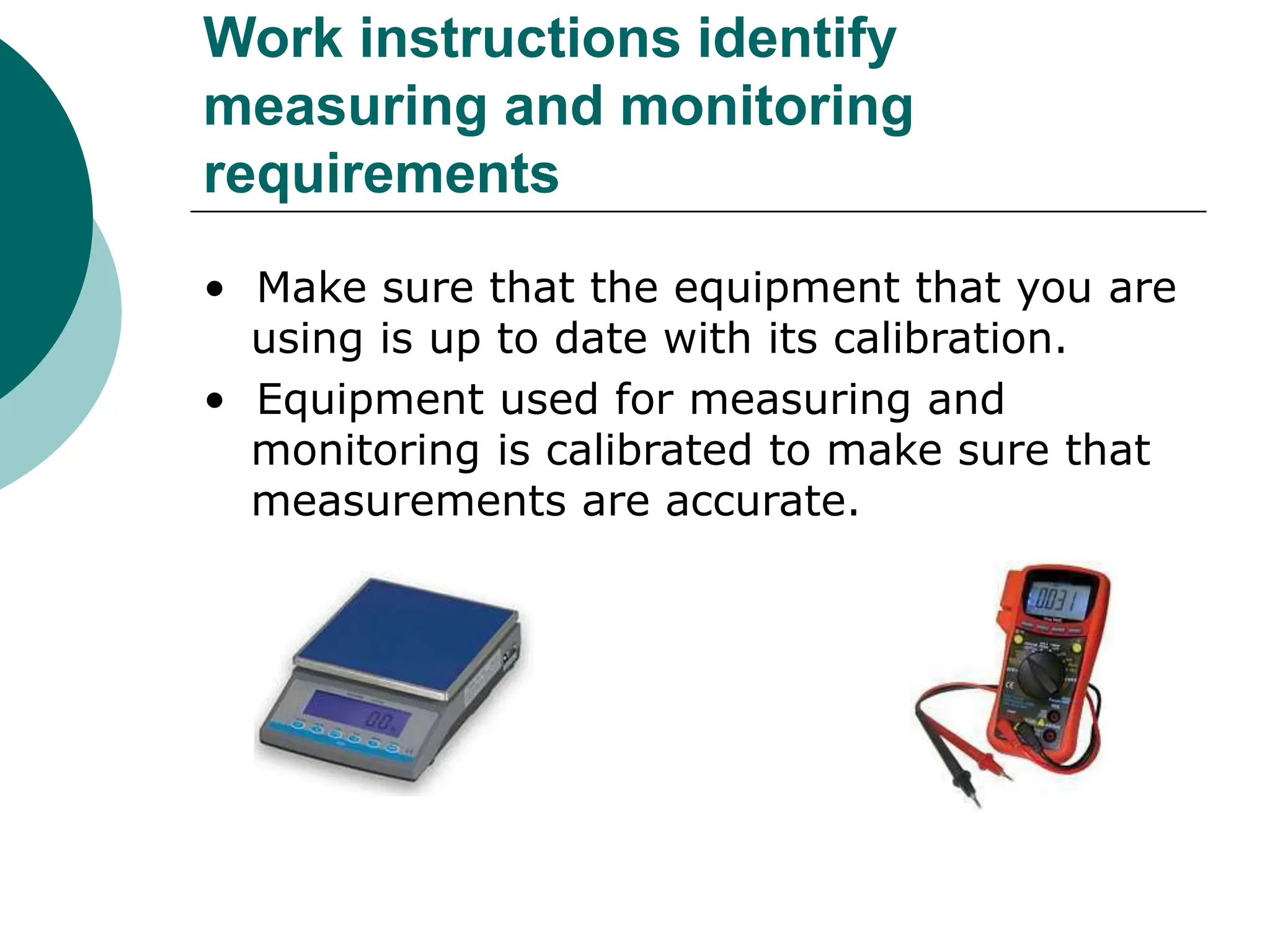
• Make sure that the equipment that you are
using is up to date with its calibration.
• Equipment used for measuring and
monitoring is calibrated to make sure that
measurements are accurate.
Customer Satisfaction
• How does the customer perceive your
performance in meeting requirements?
Measure, Analyze and Improve
To meet the requirement of continually
improving the QMS, your organization will
carry out inspection, testing,
measurement, analysis and improvement
processes.
Internal Audits
• Tells us the effectiveness of the QMS
• Allows us to fix problems with the QMS
• Allows us to make improvements to the
QMS
Internal Audits measure and monitor
how well the QMS is being followed.
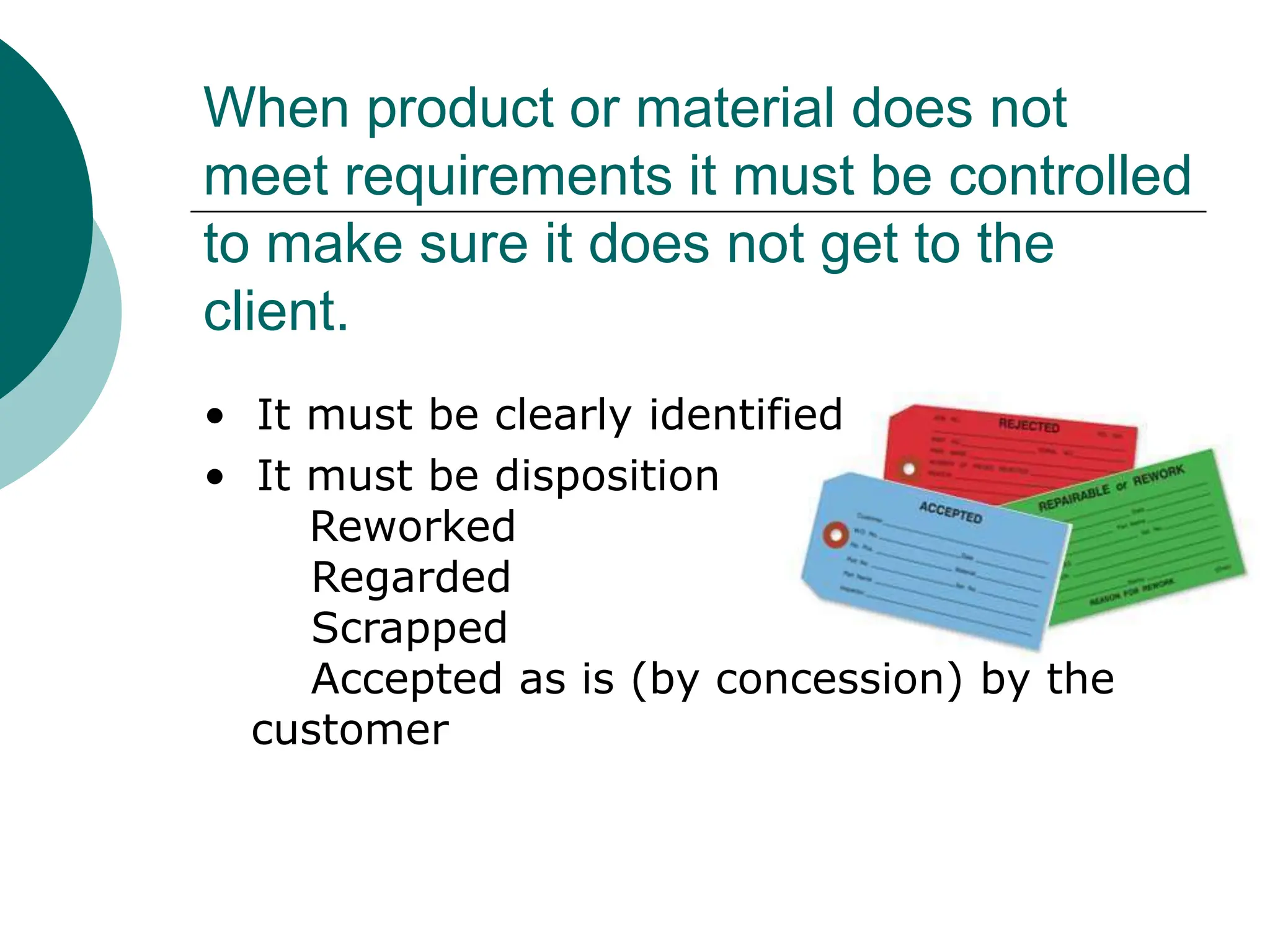
When product or material does not
meet requirements it must be controlled
to make sure it does not get to the
client.
• It must be clearly identified
• It must be disposition
Reworked
Regarded
Scrapped
Accepted as is (by concession) by the
customer

Sistem Management Mutu ISO 9001-2008 OVERVIEW

  • 1.
  • 2.
    ISO 9001 isan outline for a Quality Management System  When you build your Quality Management System based on ISO 9001:2008, you will be managing your organization as a system of interrelated processes.  You will plan these processes; identify how they relate to each other, set goals, measure the processes and make improvements.
  • 3.
    What is ISO9001?  ISO is the International Organization of Standardization  ISO is an organization that develops Standards for use worldwide to help companies plug into the world market.  ISO 9001:2008 Outlines criteria for a good Quality Management System (QMS)
  • 4.
    Quality Management SystemCriteria  An International Group of Business and Quality Professionals determined criteria. These criteria are basics of good business practice. For example: • Set quality goals • Ensure customer requirements are understood and met • Train employees • Control your production processes • Purchase from suppliers that can provide quality product • Correct problems and make sure they do not happen again
  • 5.
     Once thequality system is in place a Registration will come and audit. If all the criteria are being followed, the company will be ISO 9001 Registered.  Registered companies put their Registration mark in marketing materials. Potential customers will know that you have a good Quality Management System in Place.
  • 6.
    The ISO 9001Standard  The standard outline the requirements for the Quality Management System in sections 4 through 8 of ISO 9001. Take a look at the sections of the standard outlined below.
  • 7.
    The ISO 9001Standard  The requirements cover everything from how you plan your processes, to how you carry them out, measure them and improve them.  The standard calls your production processes "Product Realization". This is where you are actually making your product or delivering your service
  • 8.
    The Benefits ofISO 9001  Having an effective Quality Management System, (QMS) in place leads to many improvements in an organization.  ISO 9001 is a proven foundation for an effective QMS. Whether you decide to Register your organization, or just build an ISO 9001 QMS for the internal benefits, you will improve your organization.
  • 9.
    The Benefits ofISO 9001  Internal Benefits include: • Increased productivity • Less scrap and rework • Increased employee satisfaction • Continual improvement • Increased profits  Marketing Benefits include: • An internationally recognized QMS • Increased opportunities in specific markets • Increased customer satisfaction
  • 10.
    What will ISO9001 do for your employees?  It will ensure that they have the training and information to do their job correctly.  Systems will be in place to identify problems, find the cause and eliminate it to prevent problems from reoccurring.
  • 11.
    ISO 9001 Requirements Youmust identify your Key Processes: • The processes that affect product or service quality. • These processes are included in the QMS. • This includes most of the processes in your organization. And use a "Process Management Approach": • A process management approach is managing your organization as a system of interlinked processes. • The output of one process is the input for the next process.
  • 12.
    ISO 9001 Requirements ProcessManagement Approach • Requires that your processes are controlled and managed for continual improvement. The ISO 9001 Standard • The standard is designed to follow a process management approach. But what does that really mean? To find out, we will look at the specific requirements of ISO 9001.
  • 13.
    General Requirements Your organizationhas:  Established a Quality Policy and Quality Goals, and  Designed a Quality Management System to control how processes are performed The standard requires that your organization has a Quality Management System in place that meets the requirements of the standard
  • 14.
     Top Managementhas established a Quality Policy for your organization. Find out what this policy says, and how your job helps support the quality policy. Quality Policy
  • 15.
    Quality Goals /Objectives  Quality goals are established to support the quality policy. They are measurable, specific goals. As you meet the goals, new goals can be set.
  • 16.
    Documented Quality Management System The Quality Management System (QMS) is documented in the: • Quality Policy • Quality Manual • Procedures • Work Instructions • Records
  • 17.
    Management Responsibility Management will: •Review the Quality Policy • Collect and analyze data about the performance of QMS processes • Hold Management Review Meetings to assess opportunities for improvement and need for changes Once Management has established the Quality Policy and Objectives, they must continually improve the effectiveness of the QMS.
  • 18.
    Management and theCustomer  Management must make sure that systems have been established to determine and meet customer requirements.  It is up to each and every employee to work to meet customer requirements.
  • 19.
    Your organization mustcontinue to provide the resources necessary:  To maintain the QMS  To improve the effectiveness of the QMS  To enhance customer satisfaction by meeting requirements
  • 20.
    Human Resources Employees area resource  Employees must be qualified and trained for the job they are performing. • Qualifications and training requirements have been identified for your job. • You need to complete all required training. This may be on- the-job training, group training, or individual training. • Once you have completed training, the effectiveness of the training must be evaluated. This is in the form of a quiz, observation of your work, performing to specifications or other ways of evaluating your understanding
  • 21.
    Other resources includethe infrastructure and the work environment  Infrastructure and work environment must be sufficient to make quality product The physical resources needed to make quality product are considered infrastructure: • The facility • Equipment • Layout • Workspace • Support services Work environment includes factors such as: • Heat • Vibration • Noise • Humidity • Light • Cleanliness
  • 22.
    Product Realization:  Theprocesses in your organization that actually result in the product or service that goes to your client. These include: • Design and Development • Customer related processes • Purchasing • Production and Service
  • 23.
    Product realization processesmust be planned  There are things that need to be determined as you set up your quality management system and as you implement new processes. • How will the processes be controlled? • What are the Quality objectives? • What are the Documentation requirements? • What are the Records requirements? • What are acceptance criteria for the process?
  • 24.
    Processes must becontrolled Consistency is achieved by: • Training or qualifying employees to perform the process • Documenting the process • Providing information on process characteristics or product characteristics. A well controlled process will be performed consistently day to day, employee to employee.
  • 25.
     As youperform your work, you will need to follow documented work instructions and procedures.
  • 26.
    Make sure thatyou are using a controlled copy of the documentation  By using the controlled copy, you will be confident that you are using the current, correct documentation.
  • 27.
    • Identify requirements •Review the requirements • Establish customer communication You must manage processes related to your customers to make sure you are determining their requirements and meeting those requirements.
  • 28.
    Design and Development If you design product, you must control your design and development process. The process must include: • Design and development planning • Design and development inputs • Design and development review • Design and development verification • Design and development validation • Control of design and development changes
  • 29.
     The materialsand services you use to build your product must conform to your requirements to allow you to provide quality products.  Purchasing will evaluate your suppliers and determine the best supplier to provide the materials and services. Purchasing
  • 30.
    • Identify theproduct • Identify the testing, monitoring and measuring status To maintain quality, meet customers' requirements and prevent mistakes, your product and materials must be clearly identified throughout production and delivery
  • 31.
    Customer Property  Customersmay provide you with equipment or material to use to produce product  Customers may provide you with documents containing information, or intellectual property It is your responsibility to protect the customer's property • Identify it • Verify that it is suitable for use • Protect it • Record and report any lost, damaged or unsuitable product to the customer
  • 32.
    To maintain productquality during handling, storage and delivery, it is your responsibility to: • Follow preservation requirements • Follow handling instructions to prevent damage • Follow packaging requirements to maintain product quality.
  • 33.
    Work instructions identify measuringand monitoring requirements • Make sure that the equipment that you are using is up to date with its calibration. • Equipment used for measuring and monitoring is calibrated to make sure that measurements are accurate.
  • 34.
    Customer Satisfaction • Howdoes the customer perceive your performance in meeting requirements? Measure, Analyze and Improve To meet the requirement of continually improving the QMS, your organization will carry out inspection, testing, measurement, analysis and improvement processes.
  • 35.
    Internal Audits • Tellsus the effectiveness of the QMS • Allows us to fix problems with the QMS • Allows us to make improvements to the QMS Internal Audits measure and monitor how well the QMS is being followed.
  • 36.
    When product ormaterial does not meet requirements it must be controlled to make sure it does not get to the client. • It must be clearly identified • It must be disposition Reworked Regarded Scrapped Accepted as is (by concession) by the customer