Ryan HessTonisha MorrisSandra NasilowskiPhil SamponaSimulation
IntroductionCompanies Using SimulationPhilSimulation Program
What is SimulationA simulation is the process of creating a model in which the purpose is to control the behavior of a systemCan be used for predictions (i.e. forecast)Simulation can be used to predict the way in which the system will evolve and respond to its surroundings, so that you can identify any necessary changes that will help make the system perform the way that you want it to.For example: Dr Greenberg and his flight
AdvantagesThe main advantage is real world systems (feedback)This allows the designer to determine the correctness and efficiency of a design before the system is actually constructed.Simulations permit system designers to study a problem at several different levels of abstractionCan be used as an effective means for teaching or demonstrating concepts to students.
DisadvantagesExpensive to build a simulation model. Expensive to conduct simulation. Sometimes it is difficult to interpret the simulation results. Simulation Errors
Oil CompaniesEli Lilly & other drug companiesR&DCosts of symptom variationsPlant capacityShareholder Value Award ProgramEmployeesEmployee stock options
Allen CommunicationLeading provider of research and analysis for the IT industryCompany SnapshotCompany: Leading Independent IT AnalystCompany Industry: IT Market ResearchLearner Population: Sales RepresentativesNumber of Learners: 4,000 (75 locations worldwide)
Client ParametersSimulation Solution Improve individual/ team efficienciesCourse that engages all audience members(ex. Account Executives, Account Partners, Sales Specialists, Sales Managers)Needed an end product that could be repurposed at a later date to train team members who didn’t attend the gathering
Simulation SolutionNeeded a simulation approach that would impact learnersAllen Communication worked to capture the client’s culture and attitude in real-world scenarios.Developed a simulation solution that provided depth and connection required for a sales audience
The CourseSimulation delivered a real-life replication for an 18 month sales cycle. Pauses were provided at key points in the decision making process, requiring learners to make decisions on next steps that would affect the outcomes of the remainder of the simulation.Learners worked through 20 decisions in teams of five, competing against other teams for the best “score.”
MetricsLearning metrics are extremely importantTransposed all decisions learners could make into values, enabling a method of tracking metrics.Each metric was tracked per decision point and at the selection level and each available answer was assigned a particular weight or rank.
ASPEN PlusWhat is ASPEN?A process engineering modeling tool used in design, optimization, and performance modeling of chemical plants.
How is it used?Inputs:ChemicalsFlow RatesTemperaturesThermodynamic Data on Specialty ChemicalsReactions
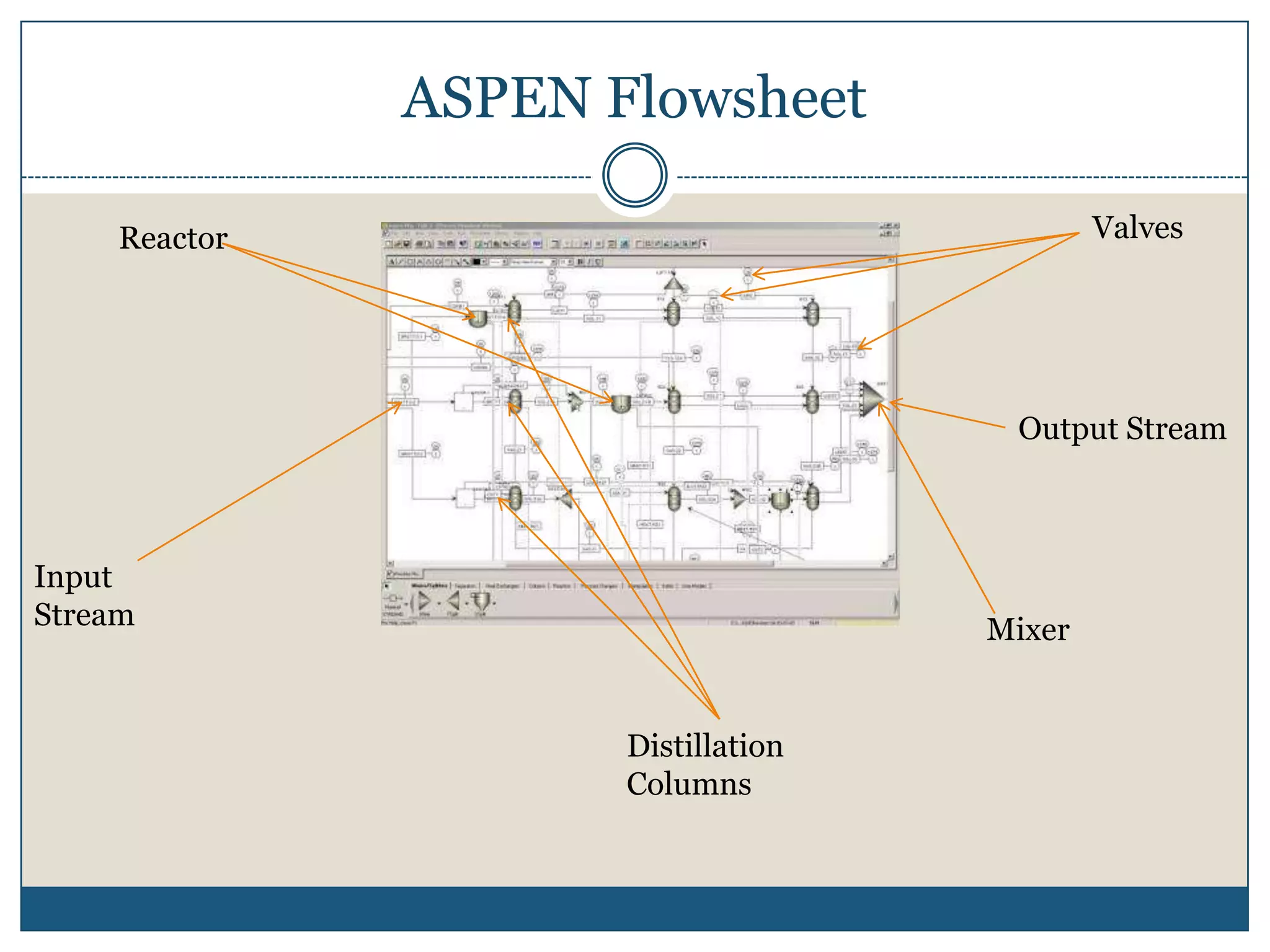
ASPEN FlowsheetValvesReactorOutput StreamInput StreamMixerDistillation Columns
What does it tell you?OutputsChemicals after reactionsFlow Rates of all chemicals (reacted and non-reacted)Temperatures
How is it used for optimization?Allows you to change different variables while running a single simulation.Ex: Cooling water flow rateAllows you to simulate to achieve maximum yield in reactions.Ex: Catalyst Flow Rates

Simulation Presentation

  • 1.
    Ryan HessTonisha MorrisSandraNasilowskiPhil SamponaSimulation
  • 2.
  • 3.
    What is SimulationAsimulation is the process of creating a model in which the purpose is to control the behavior of a systemCan be used for predictions (i.e. forecast)Simulation can be used to predict the way in which the system will evolve and respond to its surroundings, so that you can identify any necessary changes that will help make the system perform the way that you want it to.For example: Dr Greenberg and his flight
  • 4.
    AdvantagesThe main advantageis real world systems (feedback)This allows the designer to determine the correctness and efficiency of a design before the system is actually constructed.Simulations permit system designers to study a problem at several different levels of abstractionCan be used as an effective means for teaching or demonstrating concepts to students.
  • 5.
    DisadvantagesExpensive to builda simulation model. Expensive to conduct simulation. Sometimes it is difficult to interpret the simulation results. Simulation Errors
  • 6.
    Oil CompaniesEli Lilly& other drug companiesR&DCosts of symptom variationsPlant capacityShareholder Value Award ProgramEmployeesEmployee stock options
  • 7.
    Allen CommunicationLeading providerof research and analysis for the IT industryCompany SnapshotCompany: Leading Independent IT AnalystCompany Industry: IT Market ResearchLearner Population: Sales RepresentativesNumber of Learners: 4,000 (75 locations worldwide)
  • 8.
    Client ParametersSimulation SolutionImprove individual/ team efficienciesCourse that engages all audience members(ex. Account Executives, Account Partners, Sales Specialists, Sales Managers)Needed an end product that could be repurposed at a later date to train team members who didn’t attend the gathering
  • 9.
    Simulation SolutionNeeded asimulation approach that would impact learnersAllen Communication worked to capture the client’s culture and attitude in real-world scenarios.Developed a simulation solution that provided depth and connection required for a sales audience
  • 10.
    The CourseSimulation delivereda real-life replication for an 18 month sales cycle. Pauses were provided at key points in the decision making process, requiring learners to make decisions on next steps that would affect the outcomes of the remainder of the simulation.Learners worked through 20 decisions in teams of five, competing against other teams for the best “score.”
  • 11.
    MetricsLearning metrics areextremely importantTransposed all decisions learners could make into values, enabling a method of tracking metrics.Each metric was tracked per decision point and at the selection level and each available answer was assigned a particular weight or rank.
  • 12.
    ASPEN PlusWhat isASPEN?A process engineering modeling tool used in design, optimization, and performance modeling of chemical plants.
  • 13.
    How is itused?Inputs:ChemicalsFlow RatesTemperaturesThermodynamic Data on Specialty ChemicalsReactions
  • 14.
    ASPEN FlowsheetValvesReactorOutput StreamInputStreamMixerDistillation Columns
  • 15.
    What does ittell you?OutputsChemicals after reactionsFlow Rates of all chemicals (reacted and non-reacted)Temperatures
  • 16.
    How is itused for optimization?Allows you to change different variables while running a single simulation.Ex: Cooling water flow rateAllows you to simulate to achieve maximum yield in reactions.Ex: Catalyst Flow Rates