MR ZARKOVIC
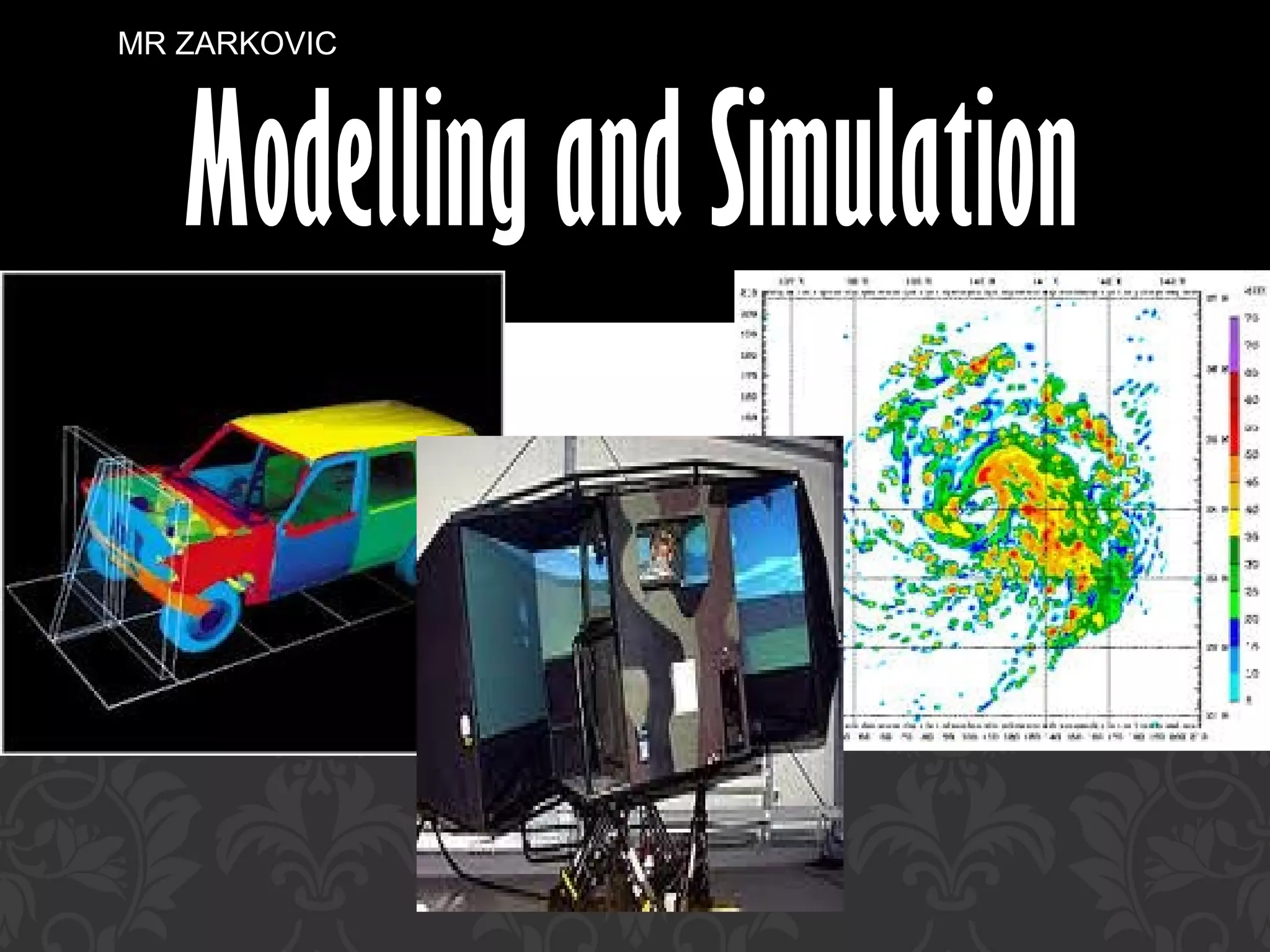
1. A model is an artificial re-creation of an
object and should behave in the same
way as the real thing e.g. a model of a
sports car built for testing a wind tunnel
2. A simulation is when the model is used
to carry out an activity that mimics real
life – when designers use a model to
stimulate what will happen when the
bridge is actually used.
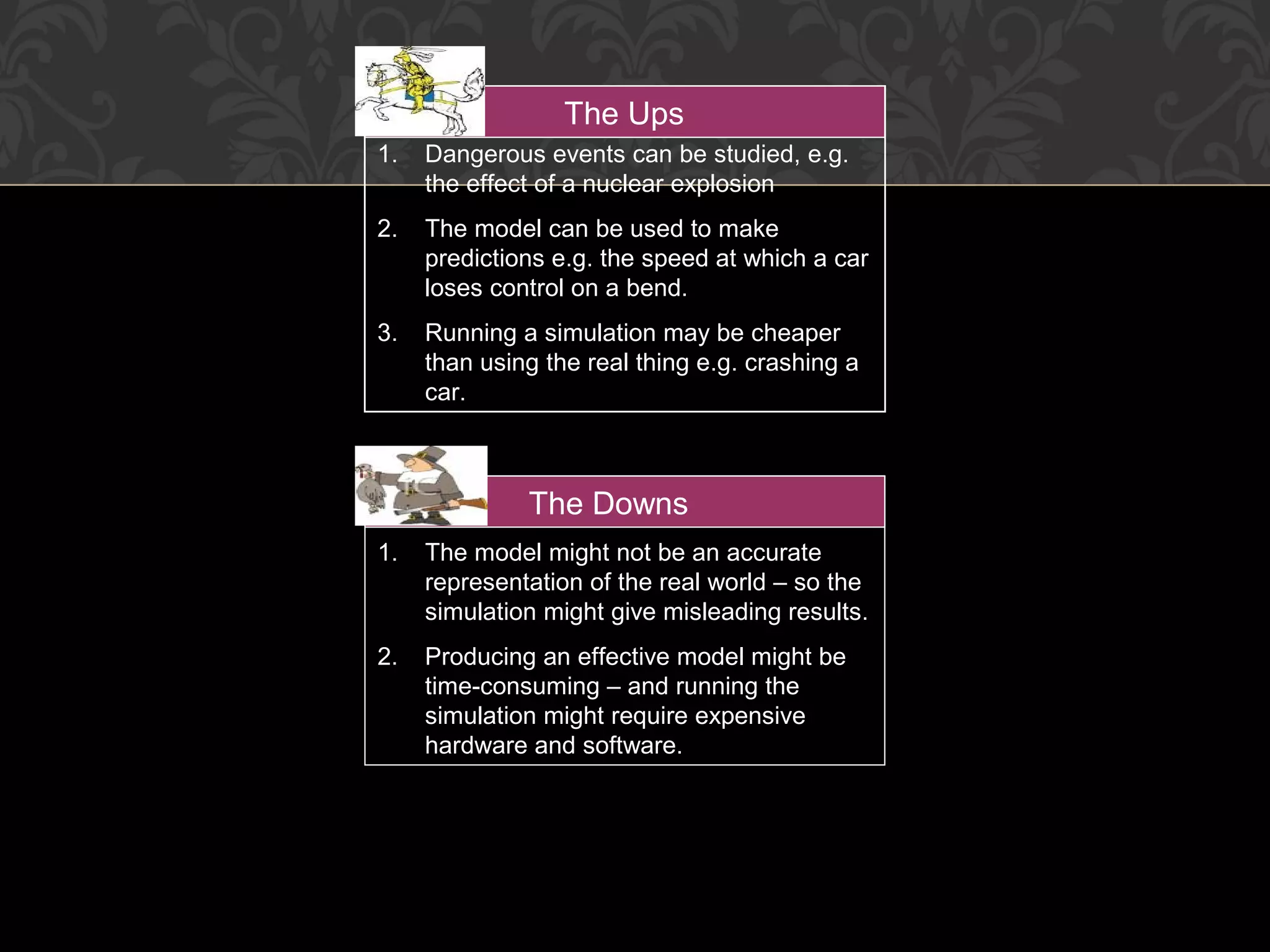
3. A computer model is created using
programmed instructions and equations
e.g. a computer model of the way an
aircraft behaves when in flight.
1.any model or simulation is only as
good as the rules, programmes and
equations it is based on.
2.Its important to test the model,
using situations where the actual
results are known.
3.In this way the model and
simulation can be improved.
Limitations of modelling
1. Dangerous events can be studied, e.g.
the effect of a nuclear explosion
2. The model can be used to make
predictions e.g. the speed at which a car
loses control on a bend.
3. Running a simulation may be cheaper
than using the real thing e.g. crashing a
car.
The Ups
1. The model might not be an accurate
representation of the real world – so the
simulation might give misleading results.
2. Producing an effective model might be
time-consuming – and running the
simulation might require expensive
hardware and software.
The Downs
1. Spreadsheets use formulas to try to describe the rules that a real world object
seems to follow. Input values can then be processed using these formulas to
produce output values.
2. Spreadsheets can be used to carry out a what-if analysis. This is when the user
changes input values to see the effect on the output of the model. So companies
can ask questions like, “what would be the effect on profits if I invested this much
money on new machinery?”
3. The output can be in the form of graphs and charts to make the predictions of the
model easier to understand.
Three Reasons why Spreadsheets make Good Models
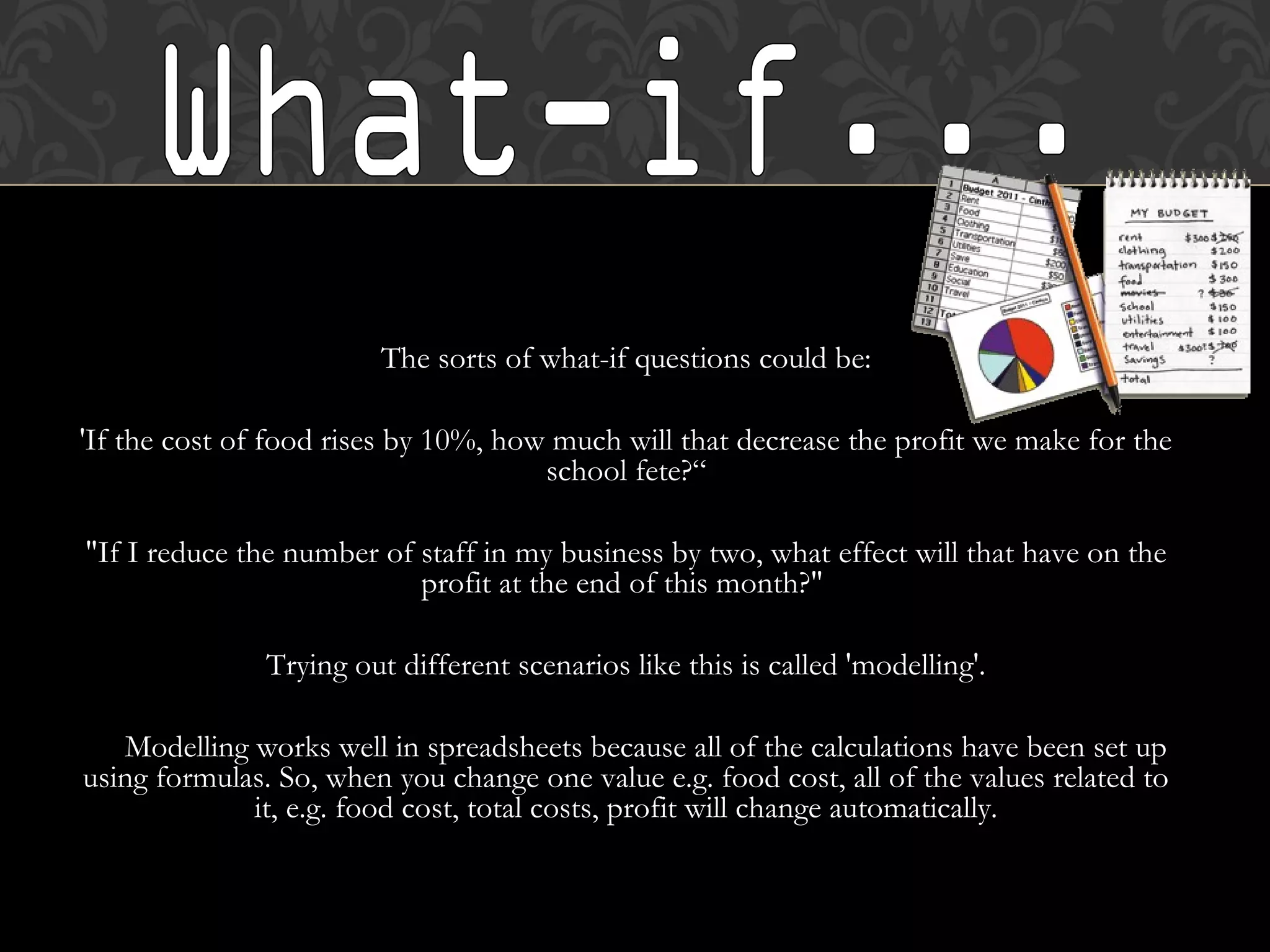
The sorts of what-if questions could be:
'If the cost of food rises by 10%, how much will that decrease the profit we make for the
school fete?“
"If I reduce the number of staff in my business by two, what effect will that have on the
profit at the end of this month?"
Trying out different scenarios like this is called 'modelling'.
Modelling works well in spreadsheets because all of the calculations have been set up
using formulas. So, when you change one value e.g. food cost, all of the values related to
it, e.g. food cost, total costs, profit will change automatically.
A model has 4 main characteristics that allow in to manipulate numbers and
text. These features allow the model to recalculate values when a number
changes. These featured are:
• variables – is an identifier associated with a particular cell. Within the cell
there will be a particular value.
•Formulae – is the way that a calculation is represented in a spreadsheet.. It
uses numbers, and mathematical operations
•Rules – set of procedures that must be followed. Can also be a sequence of
events required for the calculation to work.
•Functions – used to represent a formula that is too complex or too long to
expect an ordinary user to enter.
e.g. SUM: add a range of cells and gives the total.
MAX: gives maximum value from a list
A computer simulation is a special type of computer model which recreates a system,
that might exist outside the computer.
Often used to train people how to deal with situations that are too difficult, expensive or
dangerous to recreate and practise for real.
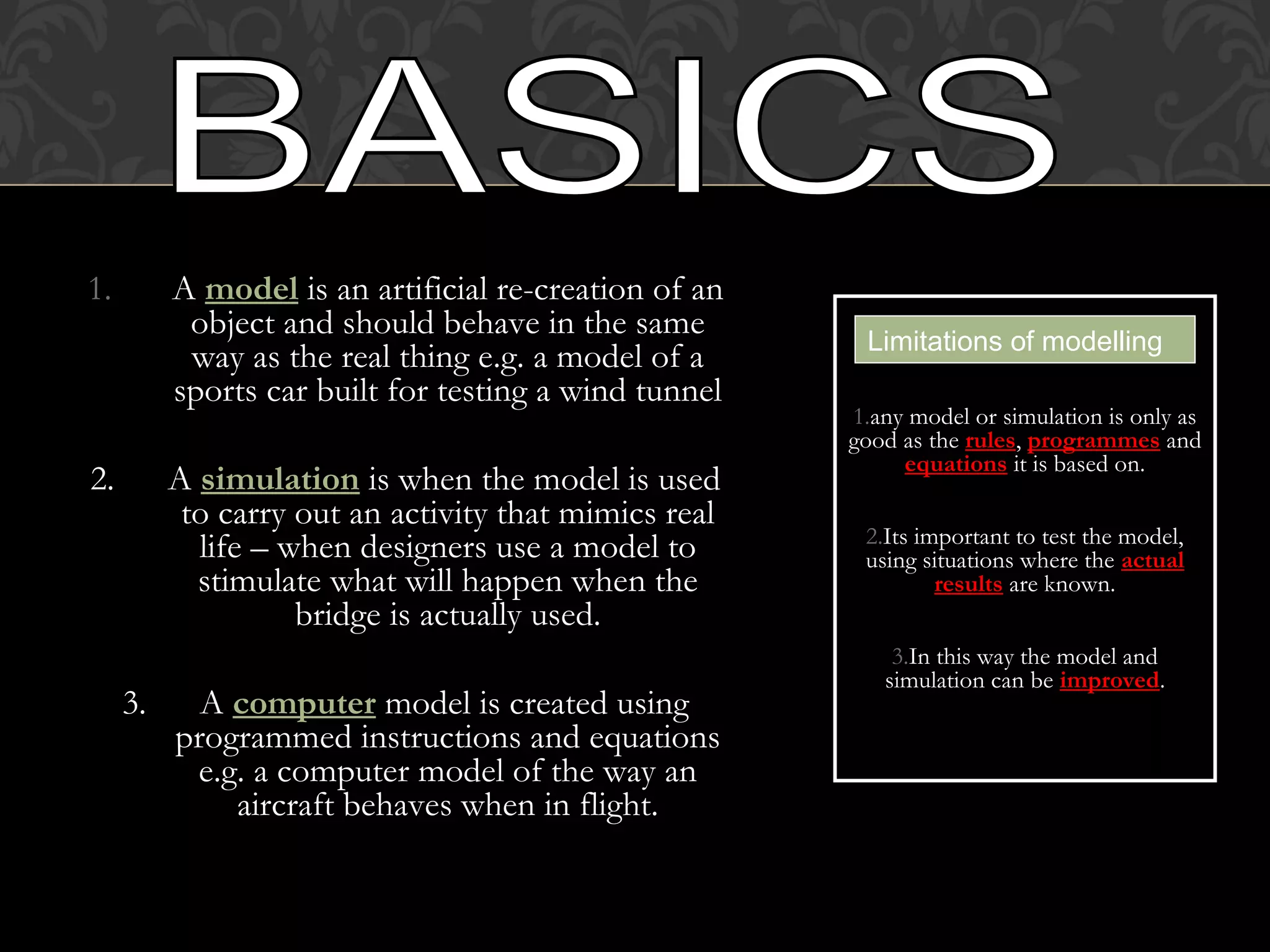
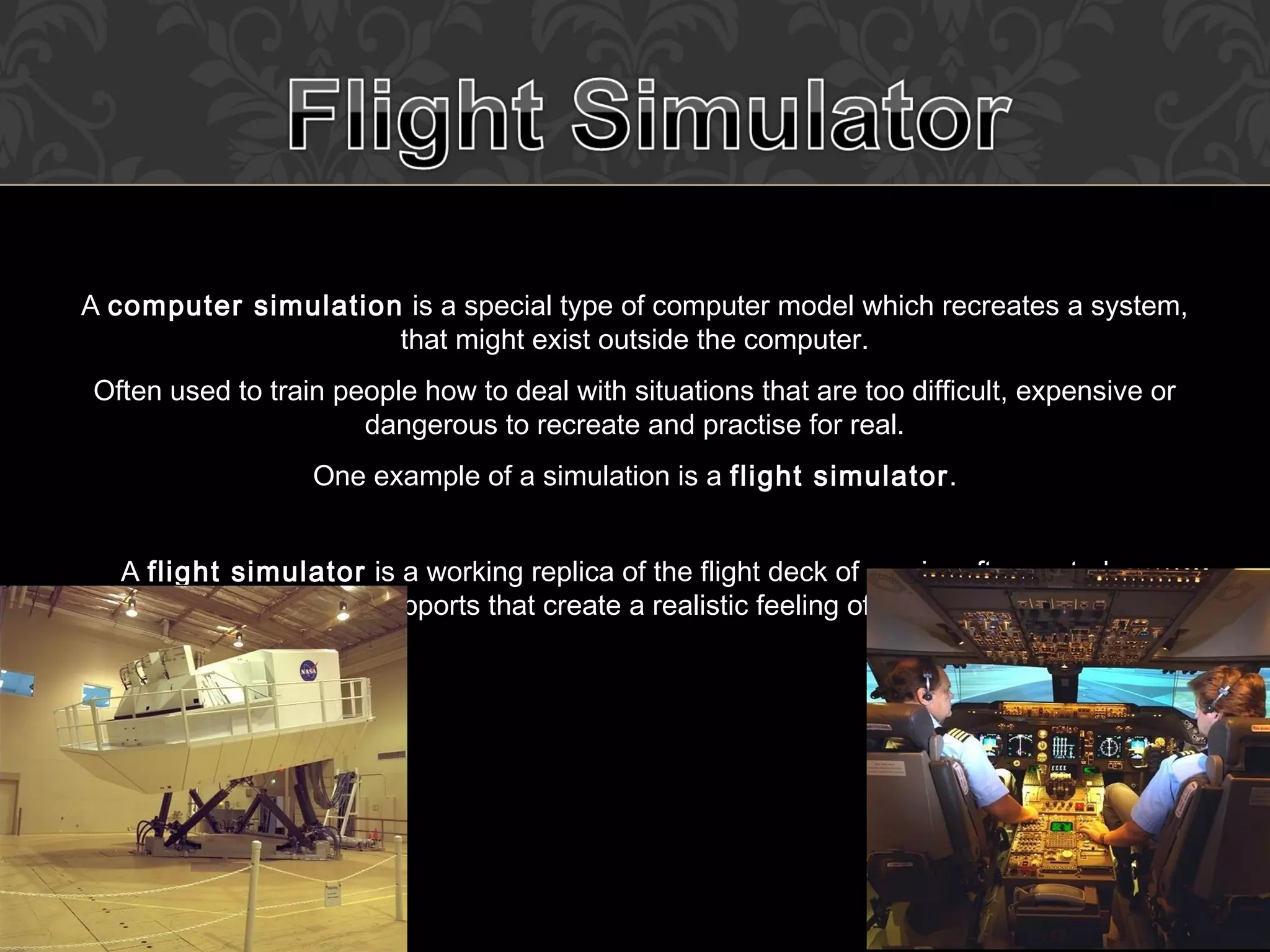
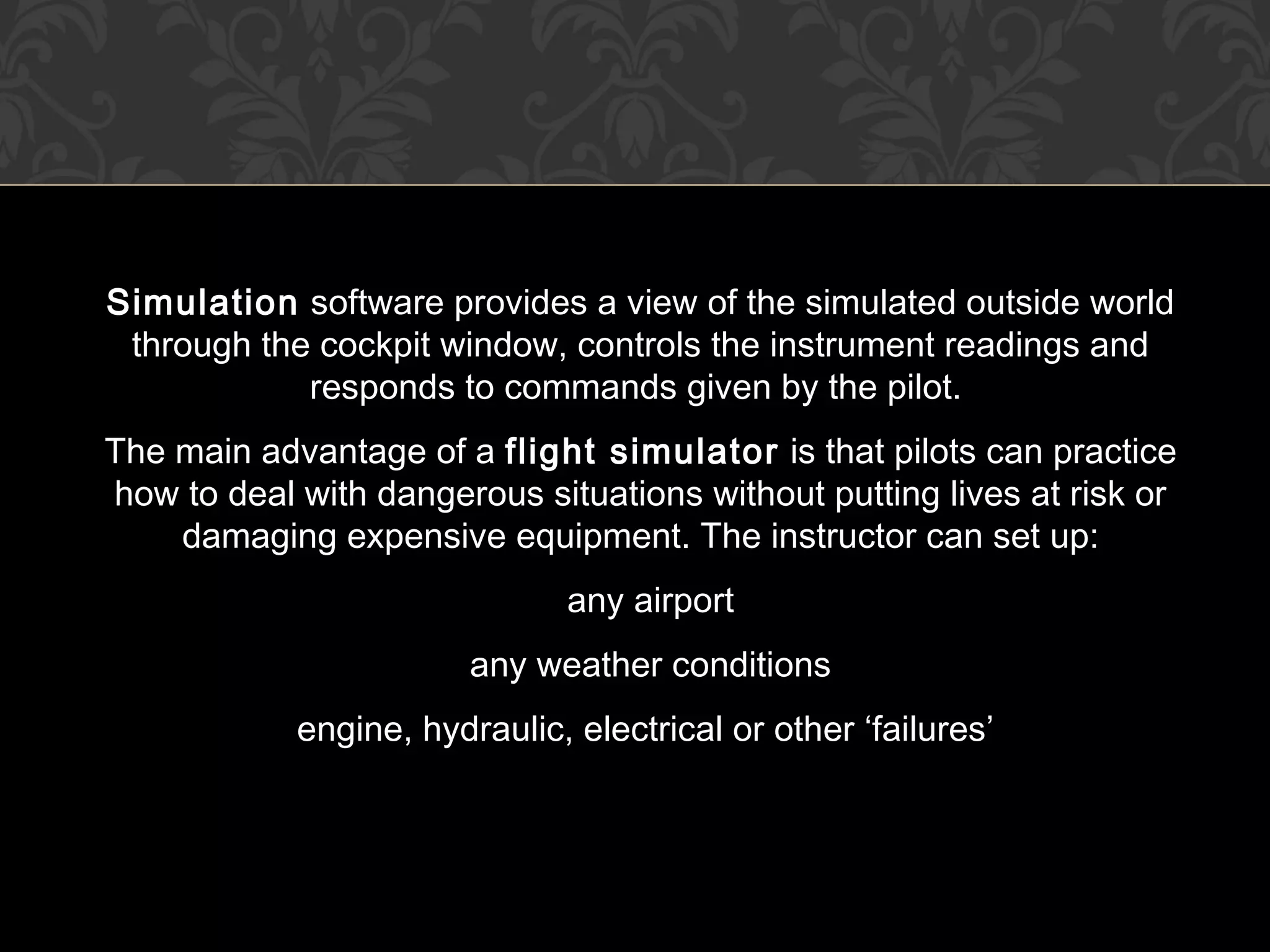
One example of a simulation is a flight simulator.
A flight simulator is a working replica of the flight deck of an aircraft mounted on
hydraulic supports that create a realistic feeling of movement.
Simulation software provides a view of the simulated outside world
through the cockpit window, controls the instrument readings and
responds to commands given by the pilot.
The main advantage of a flight simulator is that pilots can practice
how to deal with dangerous situations without putting lives at risk or
damaging expensive equipment. The instructor can set up:
any airport
any weather conditions
engine, hydraulic, electrical or other ‘failures’

SIMULATION AND MODELLING

  • 1.
  • 2.
    1. A modelis an artificial re-creation of an object and should behave in the same way as the real thing e.g. a model of a sports car built for testing a wind tunnel 2. A simulation is when the model is used to carry out an activity that mimics real life – when designers use a model to stimulate what will happen when the bridge is actually used. 3. A computer model is created using programmed instructions and equations e.g. a computer model of the way an aircraft behaves when in flight. 1.any model or simulation is only as good as the rules, programmes and equations it is based on. 2.Its important to test the model, using situations where the actual results are known. 3.In this way the model and simulation can be improved. Limitations of modelling
  • 3.
    1. Dangerous eventscan be studied, e.g. the effect of a nuclear explosion 2. The model can be used to make predictions e.g. the speed at which a car loses control on a bend. 3. Running a simulation may be cheaper than using the real thing e.g. crashing a car. The Ups 1. The model might not be an accurate representation of the real world – so the simulation might give misleading results. 2. Producing an effective model might be time-consuming – and running the simulation might require expensive hardware and software. The Downs
  • 4.
    1. Spreadsheets useformulas to try to describe the rules that a real world object seems to follow. Input values can then be processed using these formulas to produce output values. 2. Spreadsheets can be used to carry out a what-if analysis. This is when the user changes input values to see the effect on the output of the model. So companies can ask questions like, “what would be the effect on profits if I invested this much money on new machinery?” 3. The output can be in the form of graphs and charts to make the predictions of the model easier to understand. Three Reasons why Spreadsheets make Good Models
  • 5.
    The sorts ofwhat-if questions could be: 'If the cost of food rises by 10%, how much will that decrease the profit we make for the school fete?“ "If I reduce the number of staff in my business by two, what effect will that have on the profit at the end of this month?" Trying out different scenarios like this is called 'modelling'. Modelling works well in spreadsheets because all of the calculations have been set up using formulas. So, when you change one value e.g. food cost, all of the values related to it, e.g. food cost, total costs, profit will change automatically.
  • 6.
    A model has4 main characteristics that allow in to manipulate numbers and text. These features allow the model to recalculate values when a number changes. These featured are: • variables – is an identifier associated with a particular cell. Within the cell there will be a particular value. •Formulae – is the way that a calculation is represented in a spreadsheet.. It uses numbers, and mathematical operations •Rules – set of procedures that must be followed. Can also be a sequence of events required for the calculation to work. •Functions – used to represent a formula that is too complex or too long to expect an ordinary user to enter. e.g. SUM: add a range of cells and gives the total. MAX: gives maximum value from a list
  • 7.
    A computer simulationis a special type of computer model which recreates a system, that might exist outside the computer. Often used to train people how to deal with situations that are too difficult, expensive or dangerous to recreate and practise for real. One example of a simulation is a flight simulator. A flight simulator is a working replica of the flight deck of an aircraft mounted on hydraulic supports that create a realistic feeling of movement.
  • 8.
    Simulation software providesa view of the simulated outside world through the cockpit window, controls the instrument readings and responds to commands given by the pilot. The main advantage of a flight simulator is that pilots can practice how to deal with dangerous situations without putting lives at risk or damaging expensive equipment. The instructor can set up: any airport any weather conditions engine, hydraulic, electrical or other ‘failures’