Downloaded 12 times
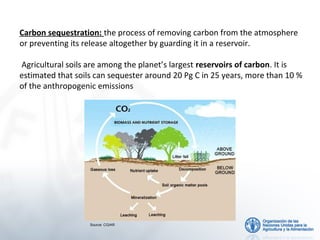

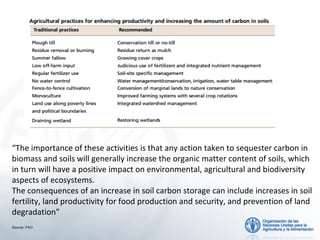
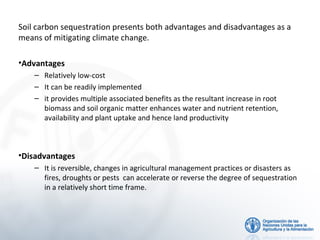
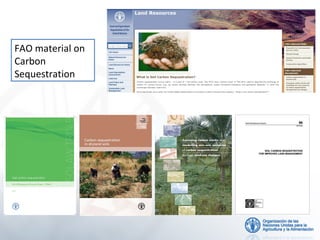

Soil organic matter plays an important role in carbon sequestration. Agricultural soils are among the largest reservoirs of carbon, estimated to be able to sequester 20 petagrams of carbon in 25 years. Soils contain about three times as much carbon as vegetation and twice as much as the atmosphere. Carbon storage in soils depends on the balance between input of dead plant material and losses from decomposition; management practices that increase soil organic matter like no-till farming can sequester more carbon in biomass and soils. Doing so provides benefits like increased soil fertility and productivity while helping mitigate climate change. However, carbon sequestration through soil is reversible if agricultural practices or disasters cause stored carbon to re-enter the atmosphere


