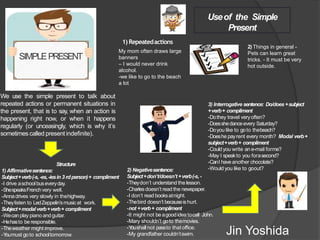
SIMPLEPRESENT
We use the simple present to talk about
repeated actions or permanent situations in
the present, that is to say, when an action is
happening right now, or when it happens
regularly (or unceasingly, which is why it’s
sometimes called present indefinite).
Structure
1)Affirmativesentence:
Subject+verb(-s,-es,-iesin 3 rdperson)+ compliment
-I drive aschoolbuseveryday.
-ShespeaksFrenchvery well.
-Annadrives very slowly in thehighway.
-Theylisten to LedZeppelin’smusicat work.
Subject+modalverb+verb+ compliment
-Wecanplay piano andguitar.
-Hehasto beresponsible.
-Theweather might improve.
-Youmust goto schooltomorrow.
2) Negativesentence:
Subject+don’t/doesn’t+verb(-s, -
-Theydon’t understand the lesson.
-Charlesdoesn’t read the newspaper.
-I don’t read booksatnight.
-Thebird doesn’t becauseishurt.
-not +verb+ compliment
-It might not be agoodidea tocall John.
-Mary shouldn’t goto themovies.
-Youshall not passto that office.
-My grandfather couldn’tswim.
3) Interrogative sentence: Do/does+subject
+verb+ compliment
-Dothey travel veryoften?
-Doesshedanceevery Saturday?
-Doyou like to goto thebeach?
-Doeshe payrent every month? Modal verb+
subject+verb+ compliment
-Couldyou write ane-mail forme?
-May I speakto you forasecond?
-CanI haveanother chocolate?
-Would you like to goout?
Useof the Simple
Present
1) Repeatedactions
My mom often draws large
banners
– I would never drink
alcohol.
-we like to go to the beach
a lot
2) Things in general -
Pets can learn great
tricks. - It must be very
hot outside.
Jin Yoshida

Simple present

  • 1.
    SIMPLEPRESENT We use thesimple present to talk about repeated actions or permanent situations in the present, that is to say, when an action is happening right now, or when it happens regularly (or unceasingly, which is why it’s sometimes called present indefinite). Structure 1)Affirmativesentence: Subject+verb(-s,-es,-iesin 3 rdperson)+ compliment -I drive aschoolbuseveryday. -ShespeaksFrenchvery well. -Annadrives very slowly in thehighway. -Theylisten to LedZeppelin’smusicat work. Subject+modalverb+verb+ compliment -Wecanplay piano andguitar. -Hehasto beresponsible. -Theweather might improve. -Youmust goto schooltomorrow. 2) Negativesentence: Subject+don’t/doesn’t+verb(-s, - -Theydon’t understand the lesson. -Charlesdoesn’t read the newspaper. -I don’t read booksatnight. -Thebird doesn’t becauseishurt. -not +verb+ compliment -It might not be agoodidea tocall John. -Mary shouldn’t goto themovies. -Youshall not passto that office. -My grandfather couldn’tswim. 3) Interrogative sentence: Do/does+subject +verb+ compliment -Dothey travel veryoften? -Doesshedanceevery Saturday? -Doyou like to goto thebeach? -Doeshe payrent every month? Modal verb+ subject+verb+ compliment -Couldyou write ane-mail forme? -May I speakto you forasecond? -CanI haveanother chocolate? -Would you like to goout? Useof the Simple Present 1) Repeatedactions My mom often draws large banners – I would never drink alcohol. -we like to go to the beach a lot 2) Things in general - Pets can learn great tricks. - It must be very hot outside. Jin Yoshida