SIMPLE PAST 
The past simple or simple past is a verbal 
tense used to describe an action in the past 
that has finished. 
For example: 
- She cleaned her house. 
- You broke the window. 
- He visited his father.
Grammatical Rules 
For regular verbs just add “ed”. For irregular 
verbs, use the past form (Irregular Verbs List). 
It applies to all subjects (I, you, he, she, it, we, 
they). 
• want → wanted 
• learn → learned 
• stay → stayed 
• walk → walked 
• show → showed
EXCEPTIONS 
For Verbs that end with"e", just add “d” 
at the end. 
Examples: 
• change → changed 
• believe → believed
If the verb ends in a short vowel and a 
consonant (except "y" or "w"), double 
the final consonant. 
Examples: 
• stop → stopped 
• commit →committed
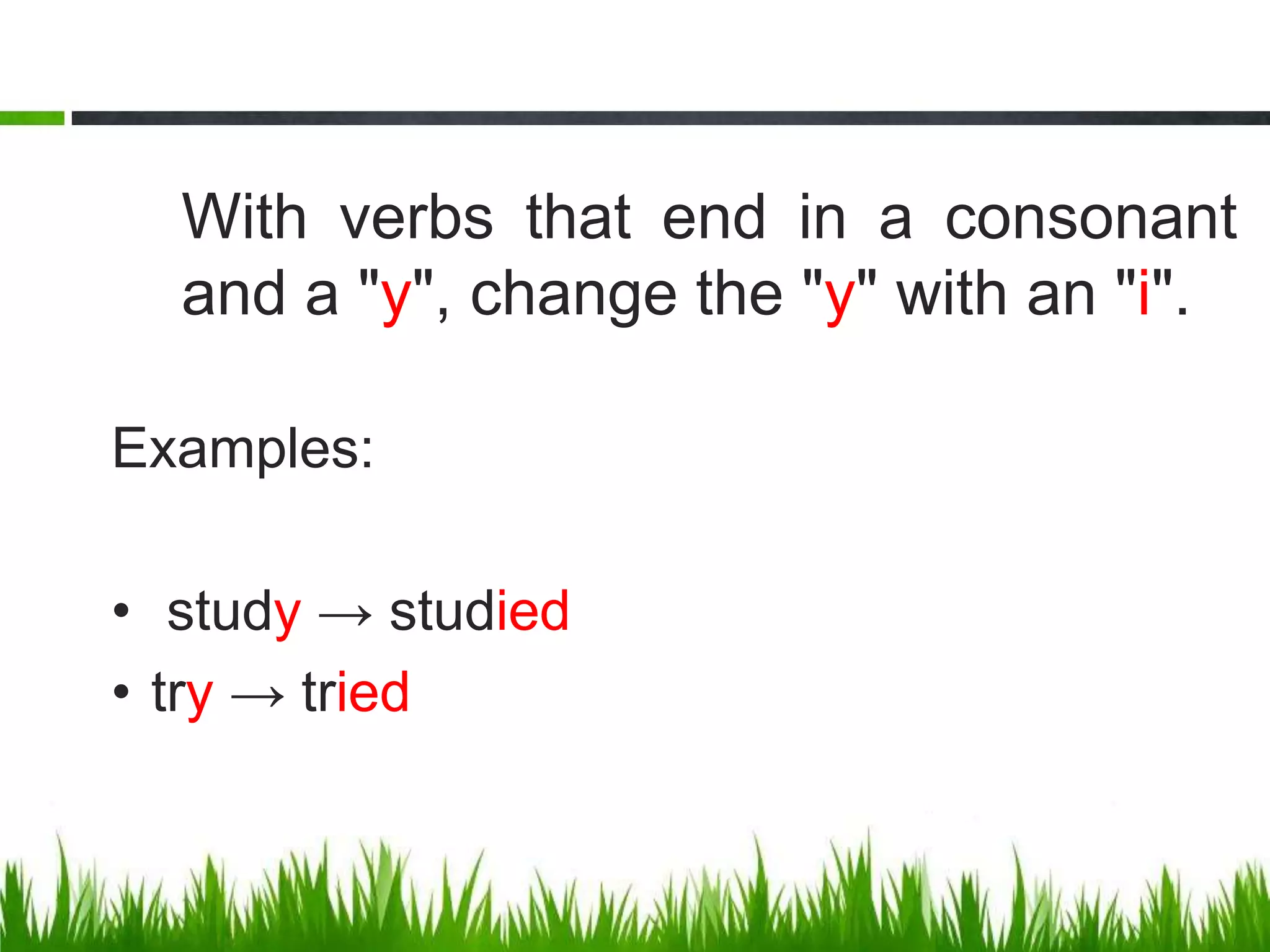
With verbs that end in a consonant 
and a "y", change the "y" with an "i". 
Examples: 
• study → studied 
• try → tried
IRREGULAR VERBS 
Note: There are many irregular verbs in English. 
Unfortunately, there is no established standard to form 
them. Therefore irregular verbs Forms must be memorized. 
VERB PAST MEANING 
to go went ir 
to buy bought comprar 
to have had tener 
to be was (I, he, she, it) 
were (you, we, they) 
ser o estar
STRUCTURE 
1. Affirmative Sentences 
SUBJECT + VERB IN PAST + COMPLEMENT 
Examples: 
• She was a doctor. 
• The keys were in the drawer. 
• I wanted to dance. 
• He learned English.
2. Negative Sentences 
SUBJECT + DID NOT + VERB IN INFINITIVE + 
COMPLEMENT 
Examples: 
• The car did not start. 
• I did not go to work. 
• She did not call me. 
• We did not study.
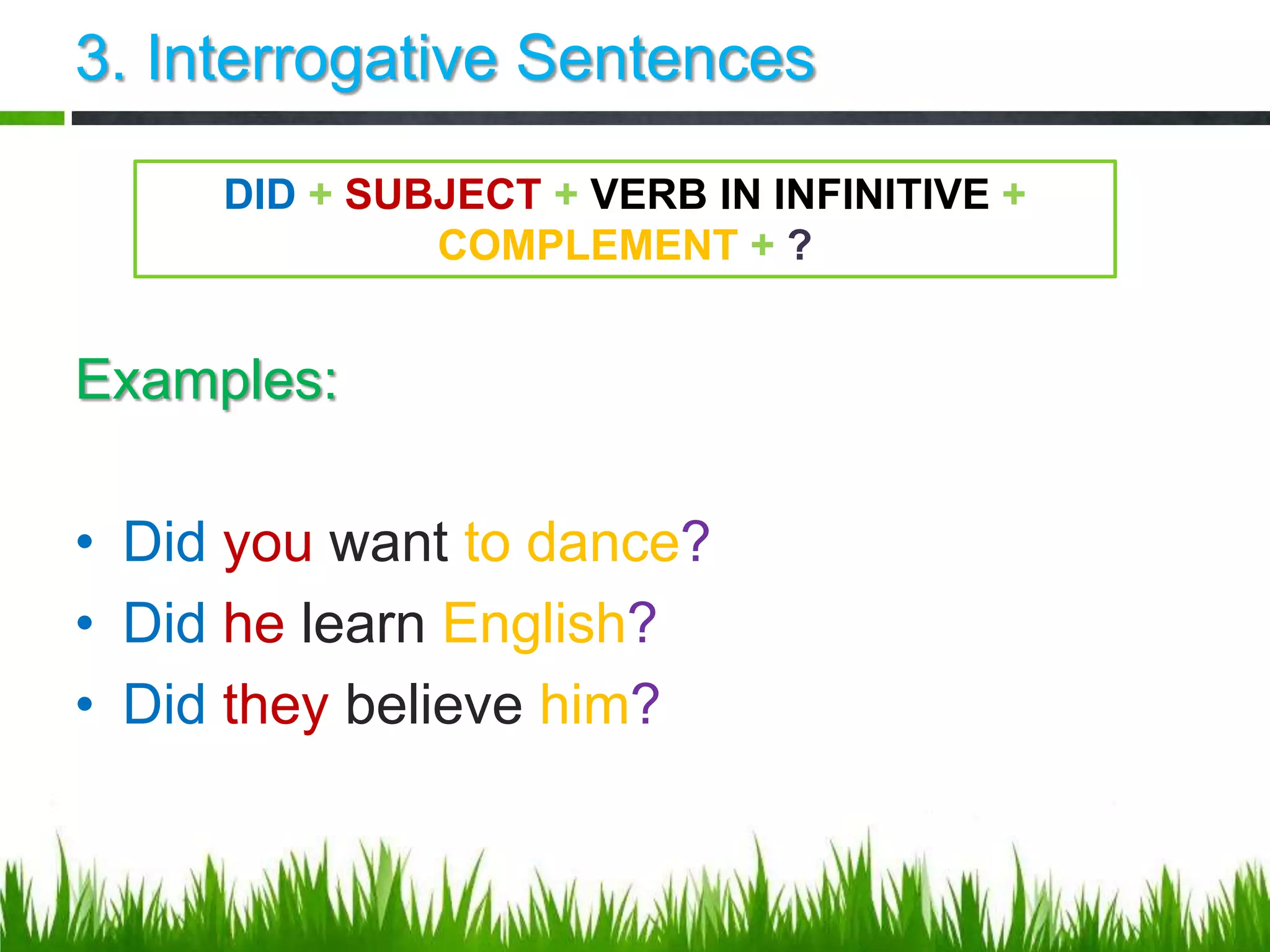
3. Interrogative Sentences 
DID + SUBJECT + VERB IN INFINITIVE + 
Examples: 
COMPLEMENT + ? 
• Did you want to dance? 
• Did he learn English? 
• Did they believe him?

Simple Past-Pasado Simple

  • 2.
    SIMPLE PAST Thepast simple or simple past is a verbal tense used to describe an action in the past that has finished. For example: - She cleaned her house. - You broke the window. - He visited his father.
  • 3.
    Grammatical Rules Forregular verbs just add “ed”. For irregular verbs, use the past form (Irregular Verbs List). It applies to all subjects (I, you, he, she, it, we, they). • want → wanted • learn → learned • stay → stayed • walk → walked • show → showed
  • 4.
    EXCEPTIONS For Verbsthat end with"e", just add “d” at the end. Examples: • change → changed • believe → believed
  • 5.
    If the verbends in a short vowel and a consonant (except "y" or "w"), double the final consonant. Examples: • stop → stopped • commit →committed
  • 6.
    With verbs thatend in a consonant and a "y", change the "y" with an "i". Examples: • study → studied • try → tried
  • 7.
    IRREGULAR VERBS Note:There are many irregular verbs in English. Unfortunately, there is no established standard to form them. Therefore irregular verbs Forms must be memorized. VERB PAST MEANING to go went ir to buy bought comprar to have had tener to be was (I, he, she, it) were (you, we, they) ser o estar
  • 8.
    STRUCTURE 1. AffirmativeSentences SUBJECT + VERB IN PAST + COMPLEMENT Examples: • She was a doctor. • The keys were in the drawer. • I wanted to dance. • He learned English.
  • 9.
    2. Negative Sentences SUBJECT + DID NOT + VERB IN INFINITIVE + COMPLEMENT Examples: • The car did not start. • I did not go to work. • She did not call me. • We did not study.
  • 10.
    3. Interrogative Sentences DID + SUBJECT + VERB IN INFINITIVE + Examples: COMPLEMENT + ? • Did you want to dance? • Did he learn English? • Did they believe him?