SIMPLE PAST
TENSE
A presentation for LM-1001 by N. Valdelomar
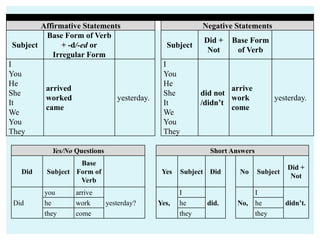
FORM
Affirmative Statements Negative Statements
Subject
Base Form of Verb
+ -d/-ed or
Irregular Form
Subject
Did +
Not
Base Form
of Verb
I
You
He
She
It
We
You
They
arrived
worked
came
yesterday.
I
You
He
She
It
We
You
They
did not
/didn’t
arrive
work
come
yesterday.
Yes/No Questions Short Answers
Did Subject
Base
Form of
Verb
Yes Subject Did No Subject
Did +
Not
Did
you arrive
yesterday? Yes,
I
did. No,
I
didn’t.
he work he he
they come they they
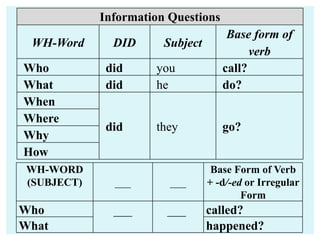
Information Questions
WH-Word DID Subject
Base form of
verb
Who did you call?
What did he do?
When
did they go?
Where
Why
How
WH-WORD
(SUBJECT) ___ ___
Base Form of Verb
+ -d/-ed or Irregular
Form
Who ___ ___ called?
What happened?
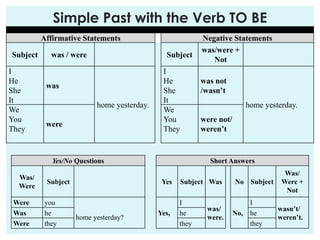
FORM
Affirmative Statements Negative Statements
Subject was / were Subject
was/were +
Not
I
He
She
It
was
home yesterday.
I
He
She
It
was not
/wasn’t
home yesterday.
We
You
They
were
We
You
They
were not/
weren’t
Yes/No Questions Short Answers
Was/
Were
Subject Yes Subject Was No Subject
Was/
Were +
Not
Were you
home yesterday?
Yes,
I
was/
were.
No,
I
wasn’t/
weren’t.
Was he he he
Were they they they
Simple Past with the Verb TO BE
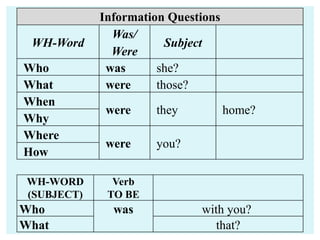
Information Questions
WH-Word
Was/
Were
Subject
Who was she?
What were those?
When
were they home?
Why
Where
were you?
How
WH-WORD
(SUBJECT)
Verb
TO BE
Who was with you?
What that?
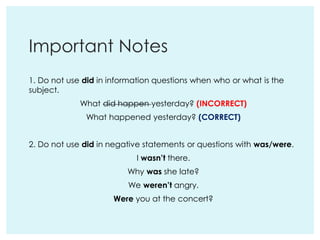
Important Notes
1. Do not use did in information questions when who or what is the
subject.
What did happen yesterday? (INCORRECT)
What happened yesterday? (CORRECT)
2. Do not use did in negative statements or questions with was/were.
I wasn’t there.
Why was she late?
We weren’t angry.
Were you at the concert?
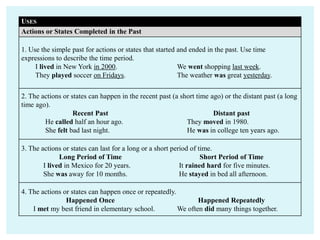
USES
Actions or States Completed in the Past
1. Use the simple past for actions or states that started and ended in the past. Use time
expressions to describe the time period.
I lived in New York in 2000.
They played soccer on Fridays.
We went shopping last week.
The weather was great yesterday.
2. The actions or states can happen in the recent past (a short time ago) or the distant past (a long
time ago).
Recent Past
He called half an hour ago.
She felt bad last night.
Distant past
They moved in 1980.
He was in college ten years ago.
3. The actions or states can last for a long or a short period of time.
Long Period of Time
I lived in Mexico for 20 years.
She was away for 10 months.
Short Period of Time
It rained hard for five minutes.
He stayed in bed all afternoon.
4. The actions or states can happen once or repeatedly.
Happened Once
I met my best friend in elementary school.
Happened Repeatedly
We often did many things together.
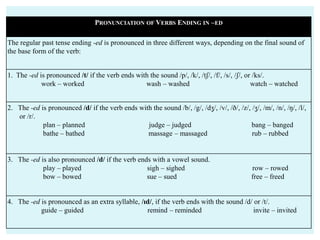
PRONUNCIATION OF VERBS ENDING IN –ED
The regular past tense ending -ed is pronounced in three different ways, depending on the final sound of
the base form of the verb:
1. The -ed is pronounced /t/ if the verb ends with the sound /p/, /k/, /tʃ/, /f/, /s/, /ʃ/, or /ks/.
work – worked wash – washed watch – watched
2. The -ed is pronounced /d/ if the verb ends with the sound /b/, /g/, /dʒ/, /v/, /ð/, /z/, /ʒ/, /m/, /n/, /ŋ/, /l/,
or /r/.
plan – planned judge – judged bang – banged
bathe – bathed massage – massaged rub – rubbed
3. The -ed is also pronounced /d/ if the verb ends with a vowel sound.
play – played sigh – sighed row – rowed
bow – bowed sue – sued free – freed
4. The -ed is pronounced as an extra syllable, /ɪd/, if the verb ends with the sound /d/ or /t/.
guide – guided remind – reminded invite – invited
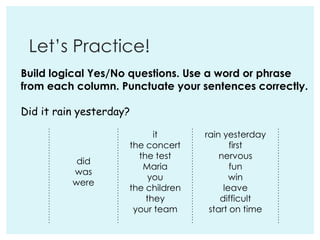
Let’s Practice!
did
was
were
it
the concert
the test
Maria
you
the children
they
your team
rain yesterday
first
nervous
fun
win
leave
difficult
start on time
Build logical Yes/No questions. Use a word or phrase
from each column. Punctuate your sentences correctly.
Did it rain yesterday?

Simple Past Tense.pdf

  • 1.
    SIMPLE PAST TENSE A presentationfor LM-1001 by N. Valdelomar
  • 2.
    FORM Affirmative Statements NegativeStatements Subject Base Form of Verb + -d/-ed or Irregular Form Subject Did + Not Base Form of Verb I You He She It We You They arrived worked came yesterday. I You He She It We You They did not /didn’t arrive work come yesterday. Yes/No Questions Short Answers Did Subject Base Form of Verb Yes Subject Did No Subject Did + Not Did you arrive yesterday? Yes, I did. No, I didn’t. he work he he they come they they
  • 3.
    Information Questions WH-Word DIDSubject Base form of verb Who did you call? What did he do? When did they go? Where Why How WH-WORD (SUBJECT) ___ ___ Base Form of Verb + -d/-ed or Irregular Form Who ___ ___ called? What happened?
  • 4.
    FORM Affirmative Statements NegativeStatements Subject was / were Subject was/were + Not I He She It was home yesterday. I He She It was not /wasn’t home yesterday. We You They were We You They were not/ weren’t Yes/No Questions Short Answers Was/ Were Subject Yes Subject Was No Subject Was/ Were + Not Were you home yesterday? Yes, I was/ were. No, I wasn’t/ weren’t. Was he he he Were they they they Simple Past with the Verb TO BE
  • 5.
    Information Questions WH-Word Was/ Were Subject Who wasshe? What were those? When were they home? Why Where were you? How WH-WORD (SUBJECT) Verb TO BE Who was with you? What that?
  • 6.
    Important Notes 1. Donot use did in information questions when who or what is the subject. What did happen yesterday? (INCORRECT) What happened yesterday? (CORRECT) 2. Do not use did in negative statements or questions with was/were. I wasn’t there. Why was she late? We weren’t angry. Were you at the concert?
  • 7.
    USES Actions or StatesCompleted in the Past 1. Use the simple past for actions or states that started and ended in the past. Use time expressions to describe the time period. I lived in New York in 2000. They played soccer on Fridays. We went shopping last week. The weather was great yesterday. 2. The actions or states can happen in the recent past (a short time ago) or the distant past (a long time ago). Recent Past He called half an hour ago. She felt bad last night. Distant past They moved in 1980. He was in college ten years ago. 3. The actions or states can last for a long or a short period of time. Long Period of Time I lived in Mexico for 20 years. She was away for 10 months. Short Period of Time It rained hard for five minutes. He stayed in bed all afternoon. 4. The actions or states can happen once or repeatedly. Happened Once I met my best friend in elementary school. Happened Repeatedly We often did many things together.
  • 8.
    PRONUNCIATION OF VERBSENDING IN –ED The regular past tense ending -ed is pronounced in three different ways, depending on the final sound of the base form of the verb: 1. The -ed is pronounced /t/ if the verb ends with the sound /p/, /k/, /tʃ/, /f/, /s/, /ʃ/, or /ks/. work – worked wash – washed watch – watched 2. The -ed is pronounced /d/ if the verb ends with the sound /b/, /g/, /dʒ/, /v/, /ð/, /z/, /ʒ/, /m/, /n/, /ŋ/, /l/, or /r/. plan – planned judge – judged bang – banged bathe – bathed massage – massaged rub – rubbed 3. The -ed is also pronounced /d/ if the verb ends with a vowel sound. play – played sigh – sighed row – rowed bow – bowed sue – sued free – freed 4. The -ed is pronounced as an extra syllable, /ɪd/, if the verb ends with the sound /d/ or /t/. guide – guided remind – reminded invite – invited
  • 9.
    Let’s Practice! did was were it the concert thetest Maria you the children they your team rain yesterday first nervous fun win leave difficult start on time Build logical Yes/No questions. Use a word or phrase from each column. Punctuate your sentences correctly. Did it rain yesterday?