About Sikkim
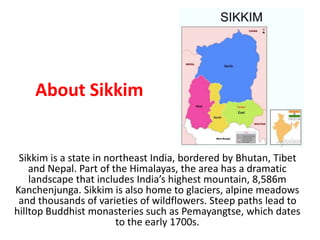
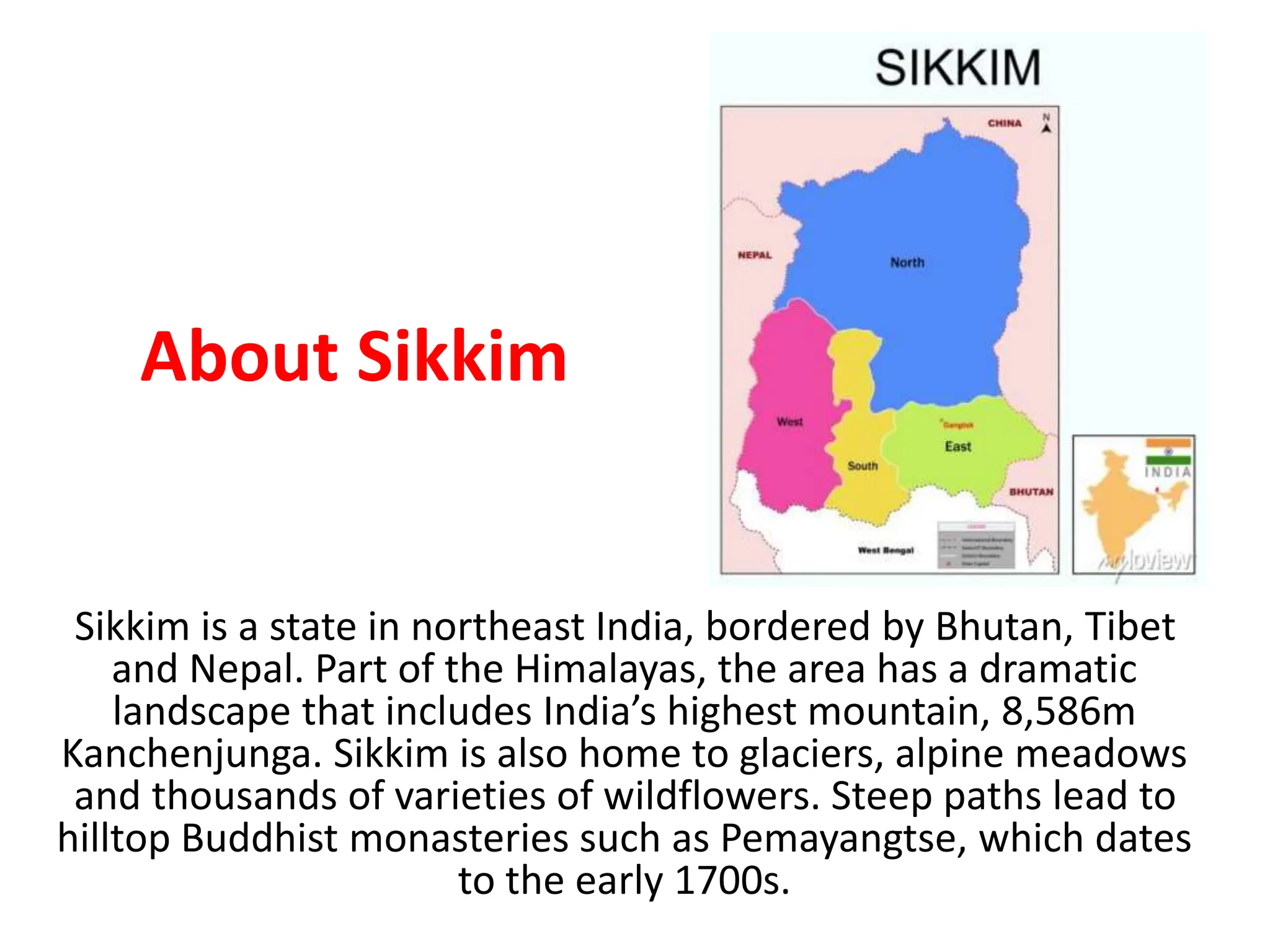
Sikkim is a state in northeast India, bordered by Bhutan, Tibet
and Nepal. Part of the Himalayas, the area has a dramatic
landscape that includes India’s highest mountain, 8,586m
Kanchenjunga. Sikkim is also home to glaciers, alpine meadows
and thousands of varieties of wildflowers. Steep paths lead to
hilltop Buddhist monasteries such as Pemayangtse, which dates
to the early 1700s.
Language
The official languages of the state are
• English,
• Sikkim Nepali,
• Sikkimese (Bhutia) and
• Lepcha
• Additional official languages
include Gurung, Limbu, Magar, Mukhia, Newar, R
ai, Sherpa and Tamang for the purpose of
preservation of culture and tradition in the state.
Climate
The state has five seasons:
• Winter
• Summer
• Spring
• Autumn and
• monsoon season.
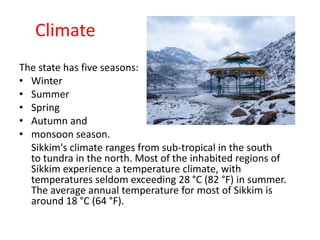
Sikkim's climate ranges from sub-tropical in the south
to tundra in the north. Most of the inhabited regions of
Sikkim experience a temperature climate, with
temperatures seldom exceeding 28 °C (82 °F) in summer.
The average annual temperature for most of Sikkim is
around 18 °C (64 °F).
Culture
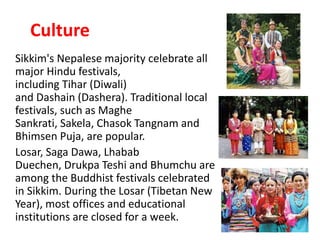
Sikkim's Nepalese majority celebrate all
major Hindu festivals,
including Tihar (Diwali)
and Dashain (Dashera). Traditional local
festivals, such as Maghe
Sankrati, Sakela, Chasok Tangnam and
Bhimsen Puja, are popular.
Losar, Saga Dawa, Lhabab
Duechen, Drukpa Teshi and Bhumchu are
among the Buddhist festivals celebrated
in Sikkim. During the Losar (Tibetan New
Year), most offices and educational
institutions are closed for a week.
Food
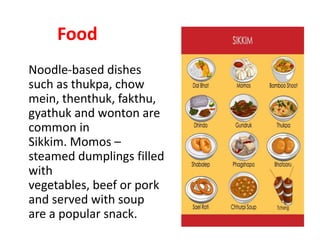
Noodle-based dishes
such as thukpa, chow
mein, thenthuk, fakthu,
gyathuk and wonton are
common in
Sikkim. Momos –
steamed dumplings filled
with
vegetables, beef or pork
and served with soup
are a popular snack.
Festival
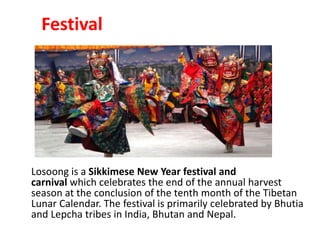
Losoong is a Sikkimese New Year festival and
carnival which celebrates the end of the annual harvest
season at the conclusion of the tenth month of the Tibetan
Lunar Calendar. The festival is primarily celebrated by Bhutia
and Lepcha tribes in India, Bhutan and Nepal.
Agriculture
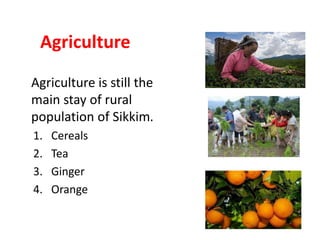
Agriculture is still the
main stay of rural
population of Sikkim.
1. Cereals
2. Tea
3. Ginger
4. Orange
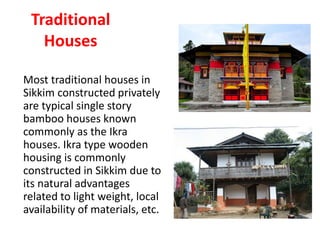
Traditional
Houses
Most traditional houses in
Sikkim constructed privately
are typical single story
bamboo houses known
commonly as the Ikra
houses. Ikra type wooden
housing is commonly
constructed in Sikkim due to
its natural advantages
related to light weight, local
availability of materials, etc.
People
The majority of Sikkim's
residents are of Nepali ethnic
origin. The native
Sikkimese consist of the Bhutias,
who migrated from the Kham
district of Tibet in the 14th
century, and the Lepchas, who
are believed to pre-date the
Bhutias and are the oldest
known
inhabitants. Tibetans reside
mostly in the northern and
eastern reaches of the state.
Migrant resident communities
include Bengalis, Biharis and Ma
rwaris, who are prominent in
commerce in South Sikkim and
Gangtok.]
Prepared by
Lavanya
Class- 5 ‘b’
Roll no- 26
Topic- Sikkim

About Sikkim.pptx

  • 1.
    About Sikkim Sikkim isa state in northeast India, bordered by Bhutan, Tibet and Nepal. Part of the Himalayas, the area has a dramatic landscape that includes India’s highest mountain, 8,586m Kanchenjunga. Sikkim is also home to glaciers, alpine meadows and thousands of varieties of wildflowers. Steep paths lead to hilltop Buddhist monasteries such as Pemayangtse, which dates to the early 1700s.
  • 2.
    Language The official languagesof the state are • English, • Sikkim Nepali, • Sikkimese (Bhutia) and • Lepcha • Additional official languages include Gurung, Limbu, Magar, Mukhia, Newar, R ai, Sherpa and Tamang for the purpose of preservation of culture and tradition in the state.
  • 3.
    Climate The state hasfive seasons: • Winter • Summer • Spring • Autumn and • monsoon season. Sikkim's climate ranges from sub-tropical in the south to tundra in the north. Most of the inhabited regions of Sikkim experience a temperature climate, with temperatures seldom exceeding 28 °C (82 °F) in summer. The average annual temperature for most of Sikkim is around 18 °C (64 °F).
  • 4.
    Culture Sikkim's Nepalese majoritycelebrate all major Hindu festivals, including Tihar (Diwali) and Dashain (Dashera). Traditional local festivals, such as Maghe Sankrati, Sakela, Chasok Tangnam and Bhimsen Puja, are popular. Losar, Saga Dawa, Lhabab Duechen, Drukpa Teshi and Bhumchu are among the Buddhist festivals celebrated in Sikkim. During the Losar (Tibetan New Year), most offices and educational institutions are closed for a week.
  • 5.
    Food Noodle-based dishes such asthukpa, chow mein, thenthuk, fakthu, gyathuk and wonton are common in Sikkim. Momos – steamed dumplings filled with vegetables, beef or pork and served with soup are a popular snack.
  • 6.
    Festival Losoong is aSikkimese New Year festival and carnival which celebrates the end of the annual harvest season at the conclusion of the tenth month of the Tibetan Lunar Calendar. The festival is primarily celebrated by Bhutia and Lepcha tribes in India, Bhutan and Nepal.
  • 7.
    Agriculture Agriculture is stillthe main stay of rural population of Sikkim. 1. Cereals 2. Tea 3. Ginger 4. Orange
  • 8.
    Traditional Houses Most traditional housesin Sikkim constructed privately are typical single story bamboo houses known commonly as the Ikra houses. Ikra type wooden housing is commonly constructed in Sikkim due to its natural advantages related to light weight, local availability of materials, etc.
  • 9.
    People The majority ofSikkim's residents are of Nepali ethnic origin. The native Sikkimese consist of the Bhutias, who migrated from the Kham district of Tibet in the 14th century, and the Lepchas, who are believed to pre-date the Bhutias and are the oldest known inhabitants. Tibetans reside mostly in the northern and eastern reaches of the state. Migrant resident communities include Bengalis, Biharis and Ma rwaris, who are prominent in commerce in South Sikkim and Gangtok.]
  • 10.
    Prepared by Lavanya Class- 5‘b’ Roll no- 26 Topic- Sikkim