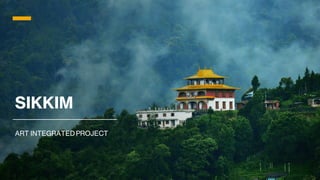
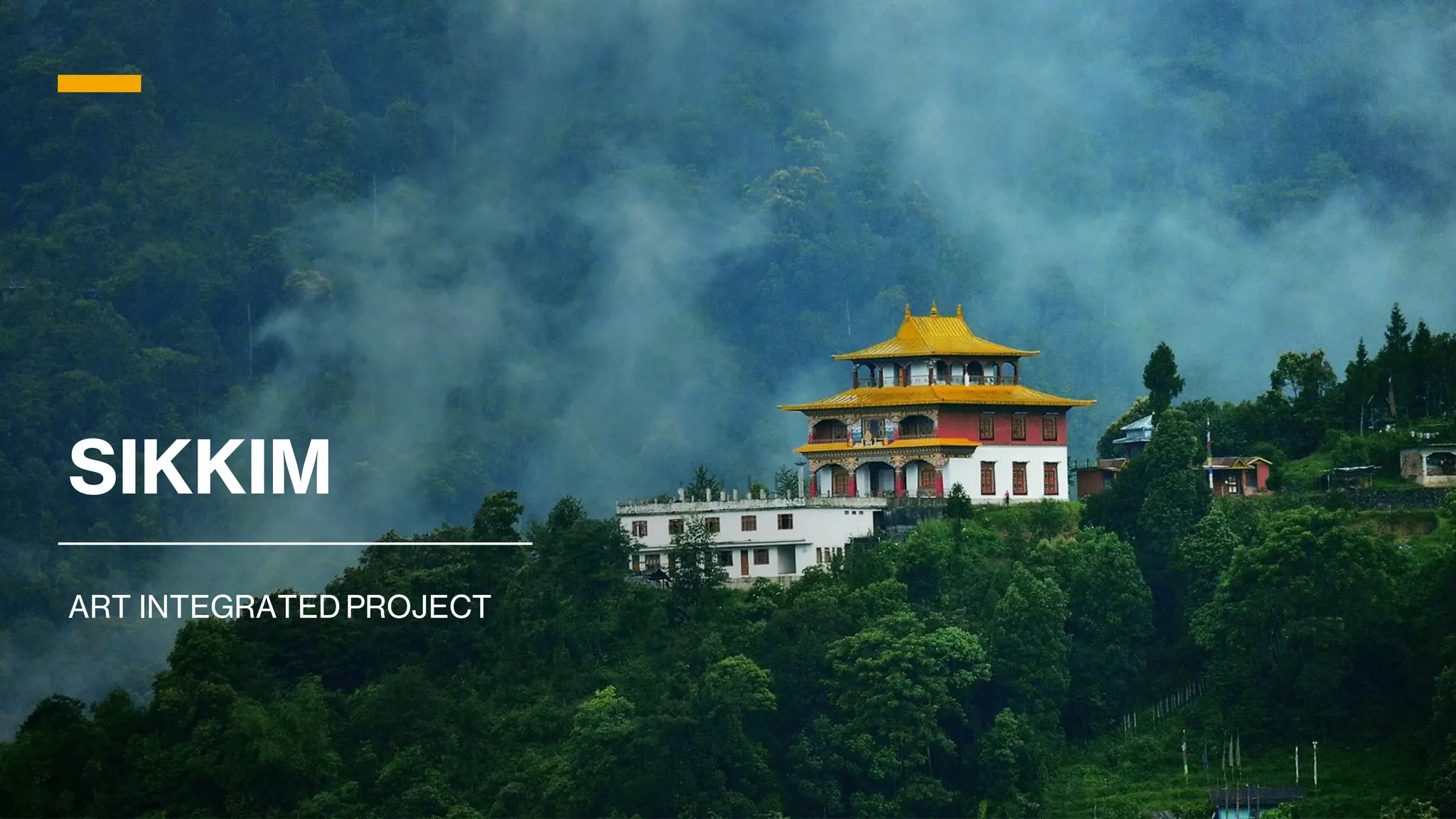
SIKKIM
ART INTEGRATED PROJECT
NAME – YUVRAJ
CLASS – 9 'A'
SUBJECT – S.S.T
INDEX
1. ACKNOWLEDGEMENT
2. ABOUT SIKKIM
3. SIKKIM MAP
4. SIKKIM PEOPLE AND CULTURE
5. SIKKIM'S LANGUAGE
6. SIKKIM'S DISTRICT
7. MINERALS FOUND IN SIKKIM
8. SIKKIM'S LAND
ACKNOWLEDGEMENT
• I WOULD LIKE TO EXPRESS MY SPECIAL THANKS OF GRATITUDE TO
MY TEACHER (MSS. MEENA SINGH). WHO GAVE ME THIS GOLDEN
OPPORTUNITY TO DO THIS WONDERFUL PROJECT, WHICH ALSO
HELPED ME IN DOING A LOT OF RESEARCH AND I CAME TO KNOW
ABOUT SO MANY NEW THINGS. I AM NOT DOING THIS PROJECT
FOR MARKS BUT TO ENCHANCE MY KNOWLEDGE. THANK YOU ONCE
AGAIN MAM.
ABOUT SIKKIM
• Sikkim is a State in Northeast India. It is one of the fastest
growing, multiethnic and multilingual Indian state. It borders
Tibet in the north and northeast, Bhutan in the east, Nepal in
the west and West Bengal in the south. Sikkim is also located
close to India's Siliguri corridor near Bangladesh. Sikkim is
least populous and second smallest among the Indian states.
Sikkim is notable for its biodiversity, including alpine and
subtropical climates, as well as being a host to Kanchenjunga,
the highest peak in India and third highest on Earth.
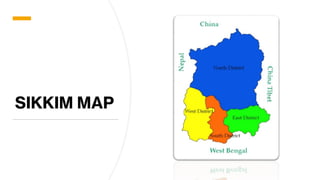
SIKKIM MAP
SIKKIM PEOPLE AND CULTURE
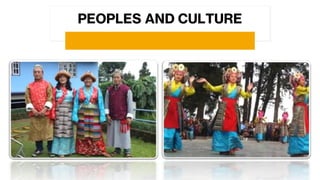
• Sikkim is a unique blend of different customs, religion and traditions of
different communities. Since the ancient times, Sikkim was occupied by three
tribes, namely, the Lepchas, the bhutias and the Nepalese. They continue to
form the people’s group and culture in Sikkim even today. The Nepalese
population dominates a considerable portion of the Sikkim’s population and
that is why Nepali is also the most common language among all the others in
Sikkim. Recently, people have flocked over from the entire country and many
Bengalis, Punjabis and biharis have settled in to set up travel and construction
businesses. A fusion of many cultures hence can be spotted but the state has
remained exceptionally friendly and peaceful.
PEOPLES AND CULTURE
SIKKIM'S
LANGUAGE
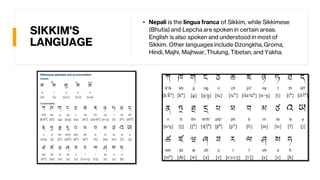
• Nepali is the lingua franca of Sikkim, while Sikkimese
(Bhutia) and Lepcha are spoken in certain areas.
English is also spoken and understood in most of
Sikkim. Other languages include Dzongkha, Groma,
Hindi, Majhi, Majhwar, Thulung, Tibetan, and Yakha.
SIKKIM'S DISTRICT
• Sikkim has four districts – East Sikkim, West Sikkim, North Sikkim
and South Sikkim. The district capitals are Gangtok, Gyalshing,
Mangan and Namchi respectively. These four districts are further
divided into subdivisions; Pakyong, Rangpo and Rongli are the
subdivisions of the East district, Soreng, Dentam are the subdivision
of the West district, Chungthang, Kabi, and Dzongu are the
subdivision of the North district and Ravongla, Jorethang are the
subdivision of the South district.
MINERALS FOUND IN SIKKIM
• Sikkim Zinc, Lead, Copper, Dolomite, Coal, Quartzite,
Graphics, Talc The state has good resource of all the
minerals, Commercial exploitation of some of these minerals
have been made by the Sikkim Mining Corporation. Tripura
Kaolin, Iron Ore, Limestone, Coal, Natural Gas Tripura has
substantial reserves of natural gas.
SIKKIM'S LAND
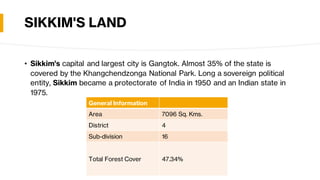
• Sikkim's capital and largest city is Gangtok. Almost 35% of the state is
covered by the Khangchendzonga National Park. Long a sovereign political
entity, Sikkim became a protectorate of India in 1950 and an Indian state in
1975.
General Information
Area 7096 Sq. Kms.
District 4
Sub-division 16
Total Forest Cover 47.34%
MADE BY YUVRAJ
CLASS – 9'A'

S.s.t project (class 9)

  • 1.
  • 2.
    NAME – YUVRAJ CLASS– 9 'A' SUBJECT – S.S.T
  • 3.
    INDEX 1. ACKNOWLEDGEMENT 2. ABOUTSIKKIM 3. SIKKIM MAP 4. SIKKIM PEOPLE AND CULTURE 5. SIKKIM'S LANGUAGE 6. SIKKIM'S DISTRICT 7. MINERALS FOUND IN SIKKIM 8. SIKKIM'S LAND
  • 4.
    ACKNOWLEDGEMENT • I WOULDLIKE TO EXPRESS MY SPECIAL THANKS OF GRATITUDE TO MY TEACHER (MSS. MEENA SINGH). WHO GAVE ME THIS GOLDEN OPPORTUNITY TO DO THIS WONDERFUL PROJECT, WHICH ALSO HELPED ME IN DOING A LOT OF RESEARCH AND I CAME TO KNOW ABOUT SO MANY NEW THINGS. I AM NOT DOING THIS PROJECT FOR MARKS BUT TO ENCHANCE MY KNOWLEDGE. THANK YOU ONCE AGAIN MAM.
  • 5.
    ABOUT SIKKIM • Sikkimis a State in Northeast India. It is one of the fastest growing, multiethnic and multilingual Indian state. It borders Tibet in the north and northeast, Bhutan in the east, Nepal in the west and West Bengal in the south. Sikkim is also located close to India's Siliguri corridor near Bangladesh. Sikkim is least populous and second smallest among the Indian states. Sikkim is notable for its biodiversity, including alpine and subtropical climates, as well as being a host to Kanchenjunga, the highest peak in India and third highest on Earth.
  • 6.
  • 7.
    SIKKIM PEOPLE ANDCULTURE • Sikkim is a unique blend of different customs, religion and traditions of different communities. Since the ancient times, Sikkim was occupied by three tribes, namely, the Lepchas, the bhutias and the Nepalese. They continue to form the people’s group and culture in Sikkim even today. The Nepalese population dominates a considerable portion of the Sikkim’s population and that is why Nepali is also the most common language among all the others in Sikkim. Recently, people have flocked over from the entire country and many Bengalis, Punjabis and biharis have settled in to set up travel and construction businesses. A fusion of many cultures hence can be spotted but the state has remained exceptionally friendly and peaceful.
  • 8.
  • 9.
    SIKKIM'S LANGUAGE • Nepali isthe lingua franca of Sikkim, while Sikkimese (Bhutia) and Lepcha are spoken in certain areas. English is also spoken and understood in most of Sikkim. Other languages include Dzongkha, Groma, Hindi, Majhi, Majhwar, Thulung, Tibetan, and Yakha.
  • 10.
    SIKKIM'S DISTRICT • Sikkimhas four districts – East Sikkim, West Sikkim, North Sikkim and South Sikkim. The district capitals are Gangtok, Gyalshing, Mangan and Namchi respectively. These four districts are further divided into subdivisions; Pakyong, Rangpo and Rongli are the subdivisions of the East district, Soreng, Dentam are the subdivision of the West district, Chungthang, Kabi, and Dzongu are the subdivision of the North district and Ravongla, Jorethang are the subdivision of the South district.
  • 11.
    MINERALS FOUND INSIKKIM • Sikkim Zinc, Lead, Copper, Dolomite, Coal, Quartzite, Graphics, Talc The state has good resource of all the minerals, Commercial exploitation of some of these minerals have been made by the Sikkim Mining Corporation. Tripura Kaolin, Iron Ore, Limestone, Coal, Natural Gas Tripura has substantial reserves of natural gas.
  • 12.
    SIKKIM'S LAND • Sikkim'scapital and largest city is Gangtok. Almost 35% of the state is covered by the Khangchendzonga National Park. Long a sovereign political entity, Sikkim became a protectorate of India in 1950 and an Indian state in 1975. General Information Area 7096 Sq. Kms. District 4 Sub-division 16 Total Forest Cover 47.34%
  • 14.