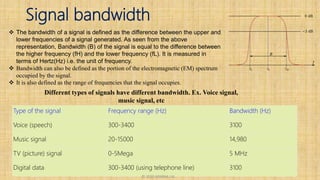
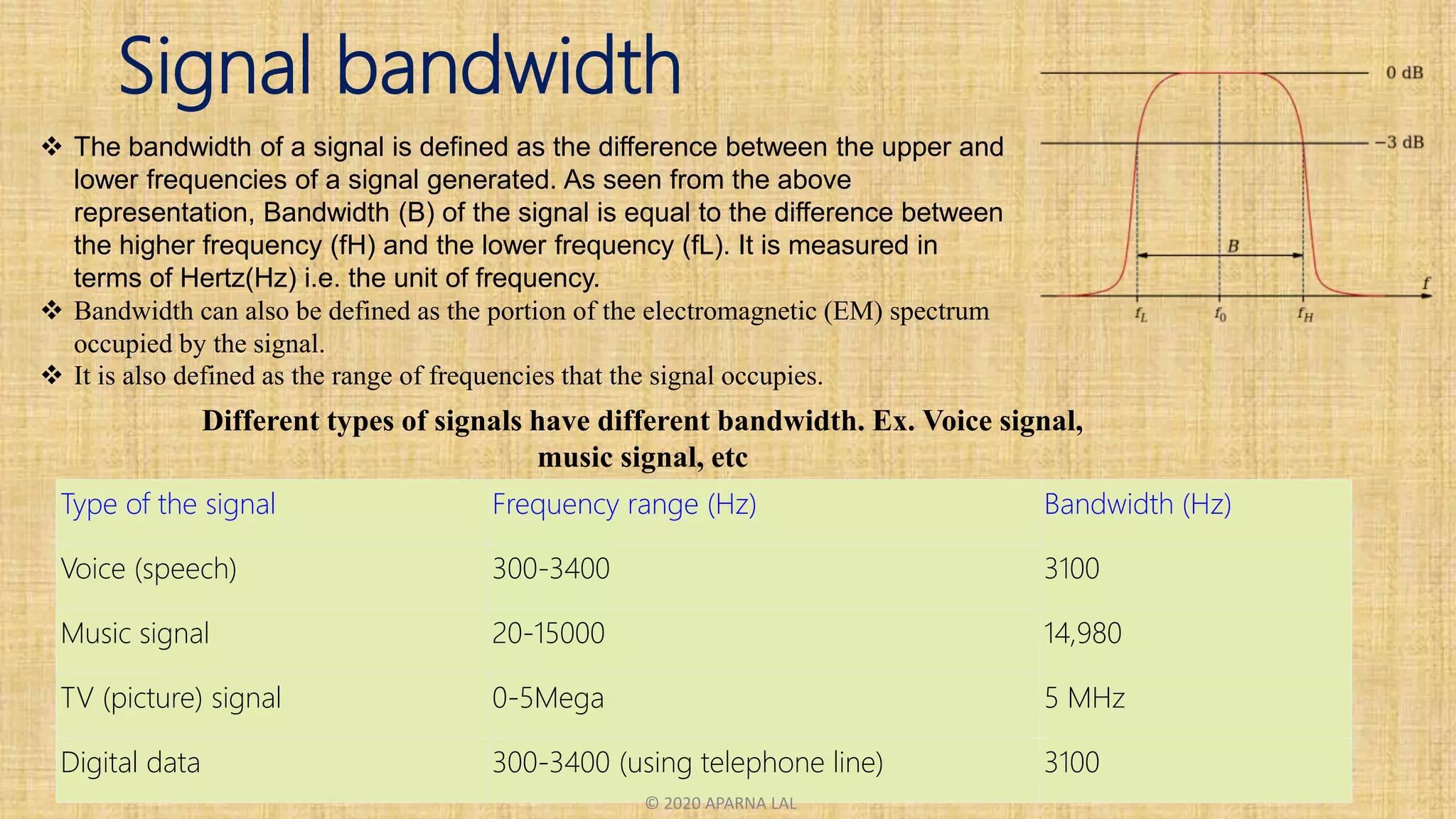
 The bandwidth of a signal is defined as the difference between the upper and
lower frequencies of a signal generated. As seen from the above
representation, Bandwidth (B) of the signal is equal to the difference between
the higher frequency (fH) and the lower frequency (fL). It is measured in
terms of Hertz(Hz) i.e. the unit of frequency.
 Bandwidth can also be defined as the portion of the electromagnetic (EM) spectrum
occupied by the signal.
 It is also defined as the range of frequencies that the signal occupies.
Signal bandwidth
Type of the signal Frequency range (Hz) Bandwidth (Hz)
Voice (speech) 300-3400 3100
Music signal 20-15000 14,980
TV (picture) signal 0-5Mega 5 MHz
Digital data 300-3400 (using telephone line) 3100
Different types of signals have different bandwidth. Ex. Voice signal,
music signal, etc
© 2020 APARNA LAL
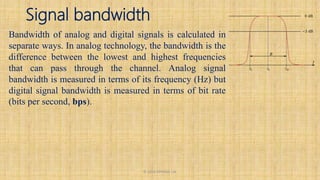
Bandwidth of analog and digital signals is calculated in
separate ways. In analog technology, the bandwidth is the
difference between the lowest and highest frequencies
that can pass through the channel. Analog signal
bandwidth is measured in terms of its frequency (Hz) but
digital signal bandwidth is measured in terms of bit rate
(bits per second, bps).
Signal bandwidth
© 2020 APARNA LAL
Channel bandwidth
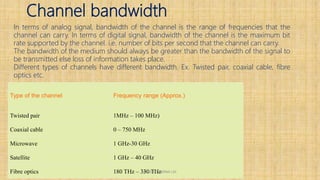
Type of the channel Frequency range (Approx.)
Twisted pair 1MHz – 100 MHz)
Coaxial cable 0 – 750 MHz
Microwave 1 GHz-30 GHz
Satellite 1 GHz – 40 GHz
Fibre optics 180 THz – 330 THz
In terms of analog signal, bandwidth of the channel is the range of frequencies that the
channel can carry. In terms of digital signal, bandwidth of the channel is the maximum bit
rate supported by the channel. i.e. number of bits per second that the channel can carry.
The bandwidth of the medium should always be greater than the bandwidth of the signal to
be transmitted else loss of information takes place.
Different types of channels have different bandwidth. Ex. Twisted pair, coaxial cable, fibre
optics etc.
© 2020 APARNA LAL
Bit Rate
It is defined as no of bits transmitted or sent in one second. It is expressed in bits per
second.
Bit rate = 1/ Bit interval
Baud Rate
The baud rate is the rate at which information is transferred in a communication channel.
© 2020 APARNA LAL

signal and channel bandwidth

  • 1.
     The bandwidthof a signal is defined as the difference between the upper and lower frequencies of a signal generated. As seen from the above representation, Bandwidth (B) of the signal is equal to the difference between the higher frequency (fH) and the lower frequency (fL). It is measured in terms of Hertz(Hz) i.e. the unit of frequency.  Bandwidth can also be defined as the portion of the electromagnetic (EM) spectrum occupied by the signal.  It is also defined as the range of frequencies that the signal occupies. Signal bandwidth Type of the signal Frequency range (Hz) Bandwidth (Hz) Voice (speech) 300-3400 3100 Music signal 20-15000 14,980 TV (picture) signal 0-5Mega 5 MHz Digital data 300-3400 (using telephone line) 3100 Different types of signals have different bandwidth. Ex. Voice signal, music signal, etc © 2020 APARNA LAL
  • 2.
    Bandwidth of analogand digital signals is calculated in separate ways. In analog technology, the bandwidth is the difference between the lowest and highest frequencies that can pass through the channel. Analog signal bandwidth is measured in terms of its frequency (Hz) but digital signal bandwidth is measured in terms of bit rate (bits per second, bps). Signal bandwidth © 2020 APARNA LAL
  • 3.
    Channel bandwidth Type ofthe channel Frequency range (Approx.) Twisted pair 1MHz – 100 MHz) Coaxial cable 0 – 750 MHz Microwave 1 GHz-30 GHz Satellite 1 GHz – 40 GHz Fibre optics 180 THz – 330 THz In terms of analog signal, bandwidth of the channel is the range of frequencies that the channel can carry. In terms of digital signal, bandwidth of the channel is the maximum bit rate supported by the channel. i.e. number of bits per second that the channel can carry. The bandwidth of the medium should always be greater than the bandwidth of the signal to be transmitted else loss of information takes place. Different types of channels have different bandwidth. Ex. Twisted pair, coaxial cable, fibre optics etc. © 2020 APARNA LAL
  • 4.
    Bit Rate It isdefined as no of bits transmitted or sent in one second. It is expressed in bits per second. Bit rate = 1/ Bit interval Baud Rate The baud rate is the rate at which information is transferred in a communication channel. © 2020 APARNA LAL