Water Flow in


     Alex Vlachos, Valve
        July 28, 2010
Outline
• Goals & Technical Constraints

• How Artists Create Flow Maps

• Flowing Normal Maps in Left 4 Dead 2

• Flowing Color Maps in Portal 2
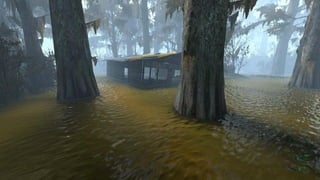
Left 4 Dead 2
Goals
• Visual
   – Solve repeating texture artifacts
   – Flow around obstacles
   – Vary water speed and bump strength
• Technical
   – Work with existing reflective surfaces
   – Min hardware ps2.0b (6-year-old hardware) & Xbox 360
• Gameplay…
Gameplay
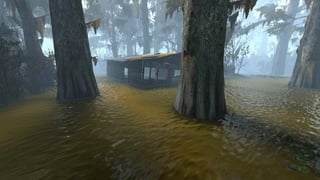
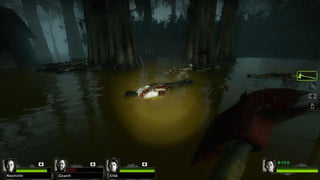
• Early Left 4 Dead 2 playtests showed players were confused and
  got lost often in the swamps
   – Soft non-directional lighting
   – Trees provided too much cover
• My theory was that water flow would improve gameplay by
  highlighting the correct path
• We tested this theory through playtesting
• In practice, we found testers took 17% fewer wrong turns and
  decreased the time it took to traverse the level!
Technical Constraints
• Already at perf limits on the Xbox 360 & low-end PC

• Already at memory limits on the Xbox 360

• Our water shader had limited instructions left for our
  low end hardware ps2.0b
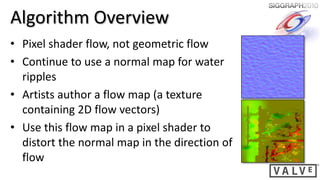
Algorithm Overview
• Pixel shader flow, not geometric flow
• Continue to use a normal map for water
  ripples
• Artists author a flow map (a texture
  containing 2D flow vectors)
• Use this flow map in a pixel shader to
  distort the normal map in the direction of
  flow
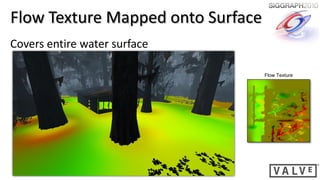
Flow Texture Mapped onto Surface
Covers entire water surface

                                   Flow Texture
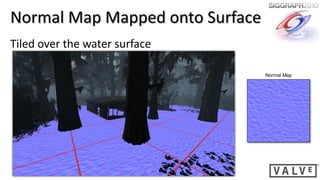
Normal Map Mapped onto Surface
Tiled over the water surface

                                 Normal Map
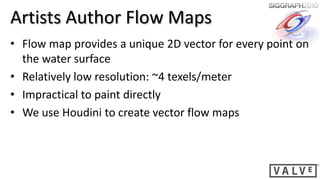
Artists Author Flow Maps
• Flow map provides a unique 2D vector for every point on
  the water surface
• Relatively low resolution: ~4 texels/meter
• Impractical to paint directly
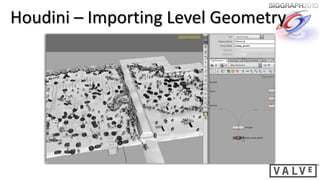
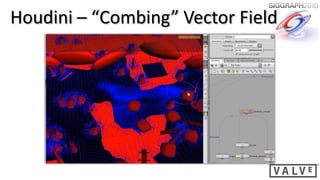
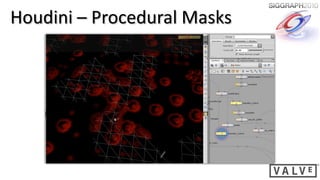
• We use Houdini to create vector flow maps
Houdini – Importing Level Geometry
Houdini – “Combing” Vector Field
Houdini – Procedural Masks
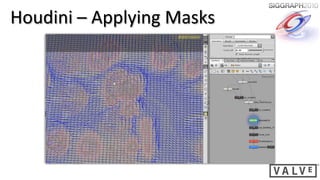
Houdini – Applying Masks
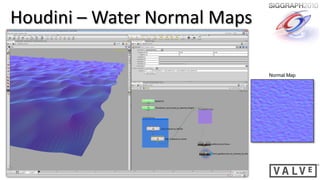
Houdini – Water Normal Maps

                              Normal Map
Left 4 Dead 2
• Wanted to replace our scrolling normal maps with
  flowing normal maps

• Keep the rest of the water shader the same

• This algorithm ultimately provides a new per-pixel
  normal generated from the normal map and flow map
Related Work
• Nelson Max and Barry Becker 1995. Flow visualization
  using moving textures. In Proceedings of the
  ICASW/LaRC Symposium on Visualizing Time-Varying
  Data, 77–87.

• Building on aspects of their algorithm and applying their
  approach to flowing normal maps
Flow Visualization
• Inputs: flow field & noise texture

• Distort a noise texture to visualize a flow field

• The UV is offset by the 2D flow vector scaled by time
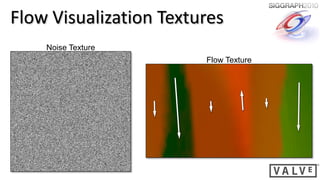
Flow Visualization Textures
    Noise Texture
                        Flow Texture
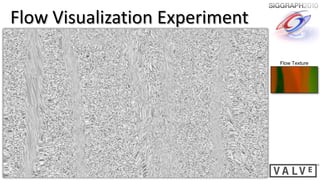
Flow Visualization Experiment

                                Flow Texture
Max & Becker’s Observation
• The beginning of the distortion looks convincing

• Only distort a small amount

• In general, distortion looks reasonable for the
  first 1/3 of uv space
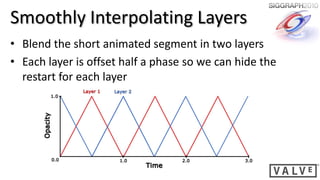
Smoothly Interpolating Layers
• Blend the short animated segment in two layers
• Each layer is offset half a phase so we can hide the
  restart for each layer
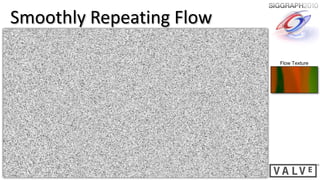
Smoothly Repeating Flow

                          Flow Texture
A Great Start
• We now have a method to flow a normal map

• We want to apply this to a larger surface

• But applying this to a large surface means tiling our
  normal map which will cause artifacts…
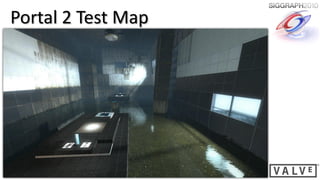
Portal 2 Test Map
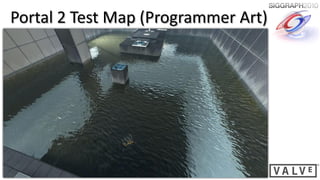
Portal 2 Test Map (Programmer Art)
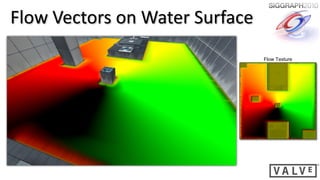
Flow Vectors on Water Surface
                                Flow Texture
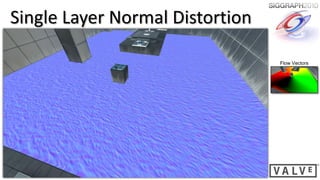
Single Layer Normal Distortion

                                 Flow Vectors
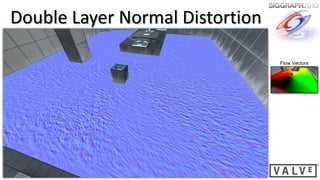
Double Layer Normal Distortion

                                 Flow Vectors
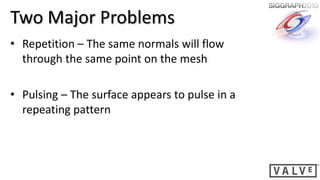
Two Major Problems
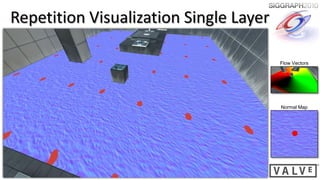
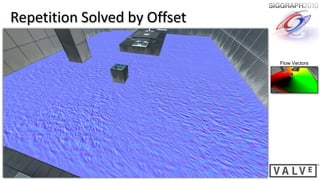
• Repetition – The same normals will flow
  through the same point on the mesh

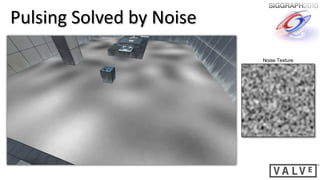
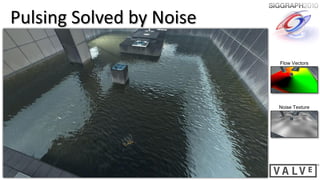
• Pulsing – The surface appears to pulse in a
  repeating pattern
Repetition Visualization Single Layer

                                        Flow Vectors


                                        Normal Map
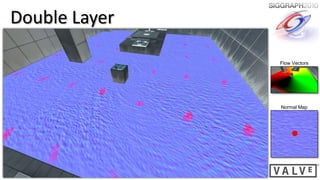
Double Layer

               Flow Vectors


               Normal Map
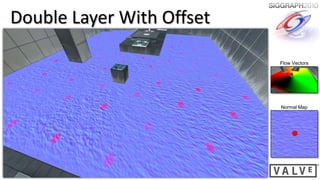
Double Layer With Offset

                           Flow Vectors


                           Normal Map
Repetition Solved by Offset

                              Flow Vectors
Pulsing Solved by Noise
                          Noise Texture
Pulsing Solved by Noise

                          Flow Vectors


                          Noise Texture
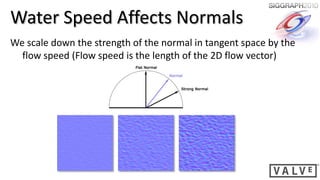
Water Speed Affects Normals
We scale down the strength of the normal in tangent space by the
  flow speed (Flow speed is the length of the 2D flow vector)
Performance
Compared to scrolling two normal maps:
• Additional texture fetches: 2 - flow & noise
• Additional arithmetic pixel shader instructions: 21
Water Flow in Portal 2
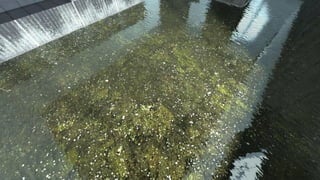
• Wanted to also flow debris in dirty water

• Needed to modify our algorithm to support flowing a
  color map
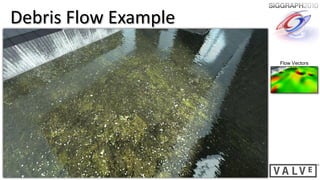
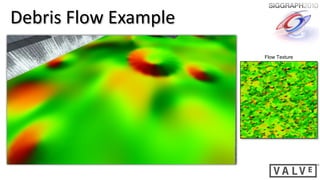
Debris Flow Example

                      Flow Vectors
Debris Flow Example
                      Flow Texture
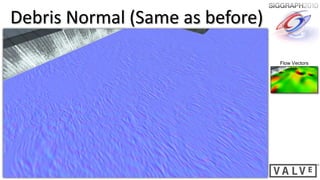
Debris Normal (Same as before)

                                 Flow Vectors
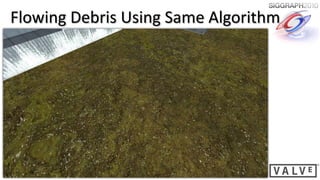
Flowing Debris Using Same Algorithm
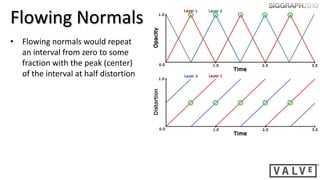
Flowing Normals
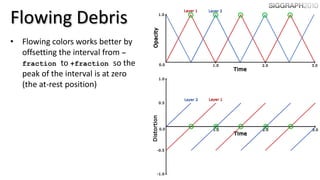
• Flowing normals would repeat
  an interval from zero to some
  fraction with the peak (center)
  of the interval at half distortion
Flowing Debris
• Flowing colors works better by
  offsetting the interval from –
  fraction to +fraction so the
  peak of the interval is at zero
  (the at-rest position)
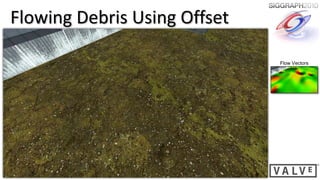
Flowing Debris Using Offset

                              Flow Vectors
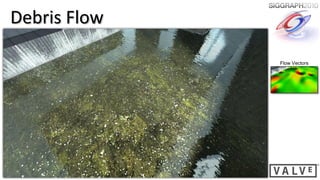
Debris Flow

              Flow Vectors
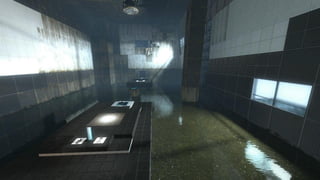
Portal 2 Test Map
Left 4 Dead 2
Future Work
• Flow height maps and use tessellation hardware
• Multiple frequencies of normal maps
• Render dynamic flow vectors per-frame so animated
  objects cause flow changes
• Use flow map with our physics simulation to have
  objects flow on the water surface using the same data
Summary
•   Use an artist-authored flow map
•   Flow the normals in two layers and combine
•   Use noise to reduce pulsing artifact
•   Offset each phase of animation to reduce repetition
•   Flowing debris uses an offset distortion range that favors
    less distortion than the normal flow
Thank You!

Water textures created by Alireza Razmpoosh

            Alex Vlachos, Valve
         alex@valvesoftware.com

SIGGRAPH 2010 Water Flow in Portal 2

  • 1.
    Water Flow in Alex Vlachos, Valve July 28, 2010
  • 2.
    Outline • Goals &Technical Constraints • How Artists Create Flow Maps • Flowing Normal Maps in Left 4 Dead 2 • Flowing Color Maps in Portal 2
  • 3.
  • 6.
    Goals • Visual – Solve repeating texture artifacts – Flow around obstacles – Vary water speed and bump strength • Technical – Work with existing reflective surfaces – Min hardware ps2.0b (6-year-old hardware) & Xbox 360 • Gameplay…
  • 7.
    Gameplay • Early Left4 Dead 2 playtests showed players were confused and got lost often in the swamps – Soft non-directional lighting – Trees provided too much cover • My theory was that water flow would improve gameplay by highlighting the correct path • We tested this theory through playtesting • In practice, we found testers took 17% fewer wrong turns and decreased the time it took to traverse the level!
  • 8.
    Technical Constraints • Alreadyat perf limits on the Xbox 360 & low-end PC • Already at memory limits on the Xbox 360 • Our water shader had limited instructions left for our low end hardware ps2.0b
  • 9.
    Algorithm Overview • Pixelshader flow, not geometric flow • Continue to use a normal map for water ripples • Artists author a flow map (a texture containing 2D flow vectors) • Use this flow map in a pixel shader to distort the normal map in the direction of flow
  • 10.
    Flow Texture Mappedonto Surface Covers entire water surface Flow Texture
  • 11.
    Normal Map Mappedonto Surface Tiled over the water surface Normal Map
  • 12.
    Artists Author FlowMaps • Flow map provides a unique 2D vector for every point on the water surface • Relatively low resolution: ~4 texels/meter • Impractical to paint directly • We use Houdini to create vector flow maps
  • 13.
    Houdini – ImportingLevel Geometry
  • 14.
  • 15.
  • 16.
  • 17.
    Houdini – WaterNormal Maps Normal Map
  • 18.
    Left 4 Dead2 • Wanted to replace our scrolling normal maps with flowing normal maps • Keep the rest of the water shader the same • This algorithm ultimately provides a new per-pixel normal generated from the normal map and flow map
  • 19.
    Related Work • NelsonMax and Barry Becker 1995. Flow visualization using moving textures. In Proceedings of the ICASW/LaRC Symposium on Visualizing Time-Varying Data, 77–87. • Building on aspects of their algorithm and applying their approach to flowing normal maps
  • 20.
    Flow Visualization • Inputs:flow field & noise texture • Distort a noise texture to visualize a flow field • The UV is offset by the 2D flow vector scaled by time
  • 21.
    Flow Visualization Textures Noise Texture Flow Texture
  • 22.
  • 23.
    Max & Becker’sObservation • The beginning of the distortion looks convincing • Only distort a small amount • In general, distortion looks reasonable for the first 1/3 of uv space
  • 24.
    Smoothly Interpolating Layers •Blend the short animated segment in two layers • Each layer is offset half a phase so we can hide the restart for each layer
  • 25.
  • 26.
    A Great Start •We now have a method to flow a normal map • We want to apply this to a larger surface • But applying this to a large surface means tiling our normal map which will cause artifacts…
  • 27.
  • 28.
    Portal 2 TestMap (Programmer Art)
  • 29.
    Flow Vectors onWater Surface Flow Texture
  • 30.
    Single Layer NormalDistortion Flow Vectors
  • 31.
    Double Layer NormalDistortion Flow Vectors
  • 32.
    Two Major Problems •Repetition – The same normals will flow through the same point on the mesh • Pulsing – The surface appears to pulse in a repeating pattern
  • 33.
    Repetition Visualization SingleLayer Flow Vectors Normal Map
  • 34.
    Double Layer Flow Vectors Normal Map
  • 35.
    Double Layer WithOffset Flow Vectors Normal Map
  • 36.
    Repetition Solved byOffset Flow Vectors
  • 37.
    Pulsing Solved byNoise Noise Texture
  • 38.
    Pulsing Solved byNoise Flow Vectors Noise Texture
  • 39.
    Water Speed AffectsNormals We scale down the strength of the normal in tangent space by the flow speed (Flow speed is the length of the 2D flow vector)
  • 40.
    Performance Compared to scrollingtwo normal maps: • Additional texture fetches: 2 - flow & noise • Additional arithmetic pixel shader instructions: 21
  • 41.
    Water Flow inPortal 2 • Wanted to also flow debris in dirty water • Needed to modify our algorithm to support flowing a color map
  • 42.
  • 43.
  • 44.
    Debris Normal (Sameas before) Flow Vectors
  • 45.
    Flowing Debris UsingSame Algorithm
  • 46.
    Flowing Normals • Flowingnormals would repeat an interval from zero to some fraction with the peak (center) of the interval at half distortion
  • 47.
    Flowing Debris • Flowingcolors works better by offsetting the interval from – fraction to +fraction so the peak of the interval is at zero (the at-rest position)
  • 48.
    Flowing Debris UsingOffset Flow Vectors
  • 49.
    Debris Flow Flow Vectors
  • 50.
  • 51.
  • 52.
    Future Work • Flowheight maps and use tessellation hardware • Multiple frequencies of normal maps • Render dynamic flow vectors per-frame so animated objects cause flow changes • Use flow map with our physics simulation to have objects flow on the water surface using the same data
  • 53.
    Summary • Use an artist-authored flow map • Flow the normals in two layers and combine • Use noise to reduce pulsing artifact • Offset each phase of animation to reduce repetition • Flowing debris uses an offset distortion range that favors less distortion than the normal flow
  • 54.
    Thank You! Water texturescreated by Alireza Razmpoosh Alex Vlachos, Valve alex@valvesoftware.com