SHIPPING HAZARDOUS
MATERIALS
What Are Hazardous Materials?
“HAZARDOUS MATERIALS are any substances or materials,
including environmentally hazardous substances, which have been
determined to be capable of posing an unreasonable risk to health,
safety or property when transported in commerce, and have been so
designated.” (171.8)
The term "Hazardous Materials" includes all of the following:
(1) Hazardous Substances
(2) Hazardous Wastes
(3) Marine Pollutants
(4) Elevated Temperature Material
(5) Materials identified in 172.101
(6) Materials meeting the definitions contained in Part 173.
Hazardous Materials Regulations
Hazardous materials are regulated in order to:
• Prevent accidents, leaks and spills
• Help emergency responders
• Ensure that HAZMAT employees are aware of the hazards of
materials they handle
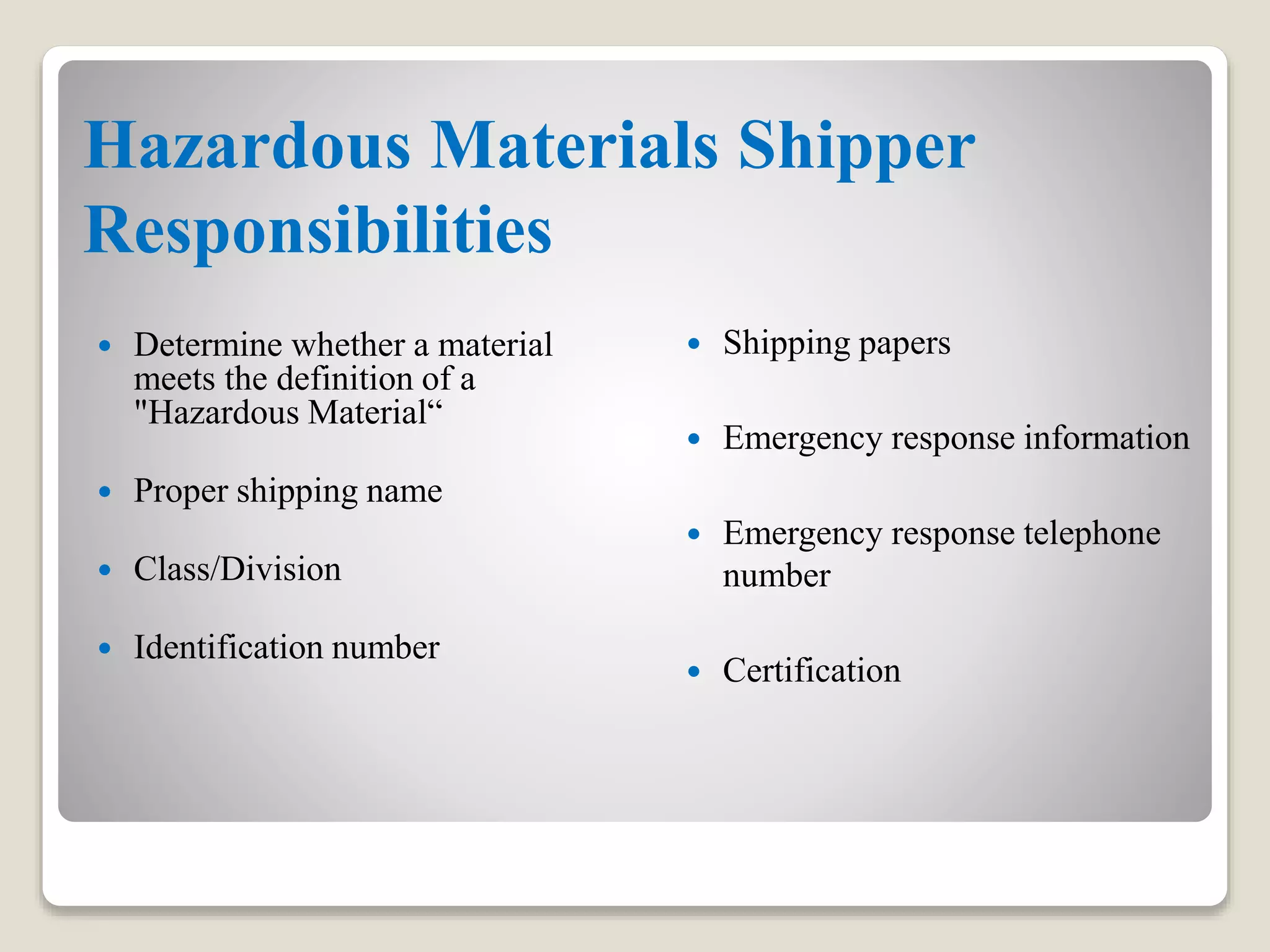
Hazardous Materials Shipper
Responsibilities
 Shipping papers
 Emergency response information
 Emergency response telephone
number
 Certification
 Determine whether a material
meets the definition of a
"Hazardous Material“
 Proper shipping name
 Class/Division
 Identification number
Hazardous Materials Shipper
Responsibilities
 Hazard warning warning
 Packaging
 Marking
 Employee training
 Incident reporting
 Compatibility
 Blocking and bracin
 Placarding
 Security plan
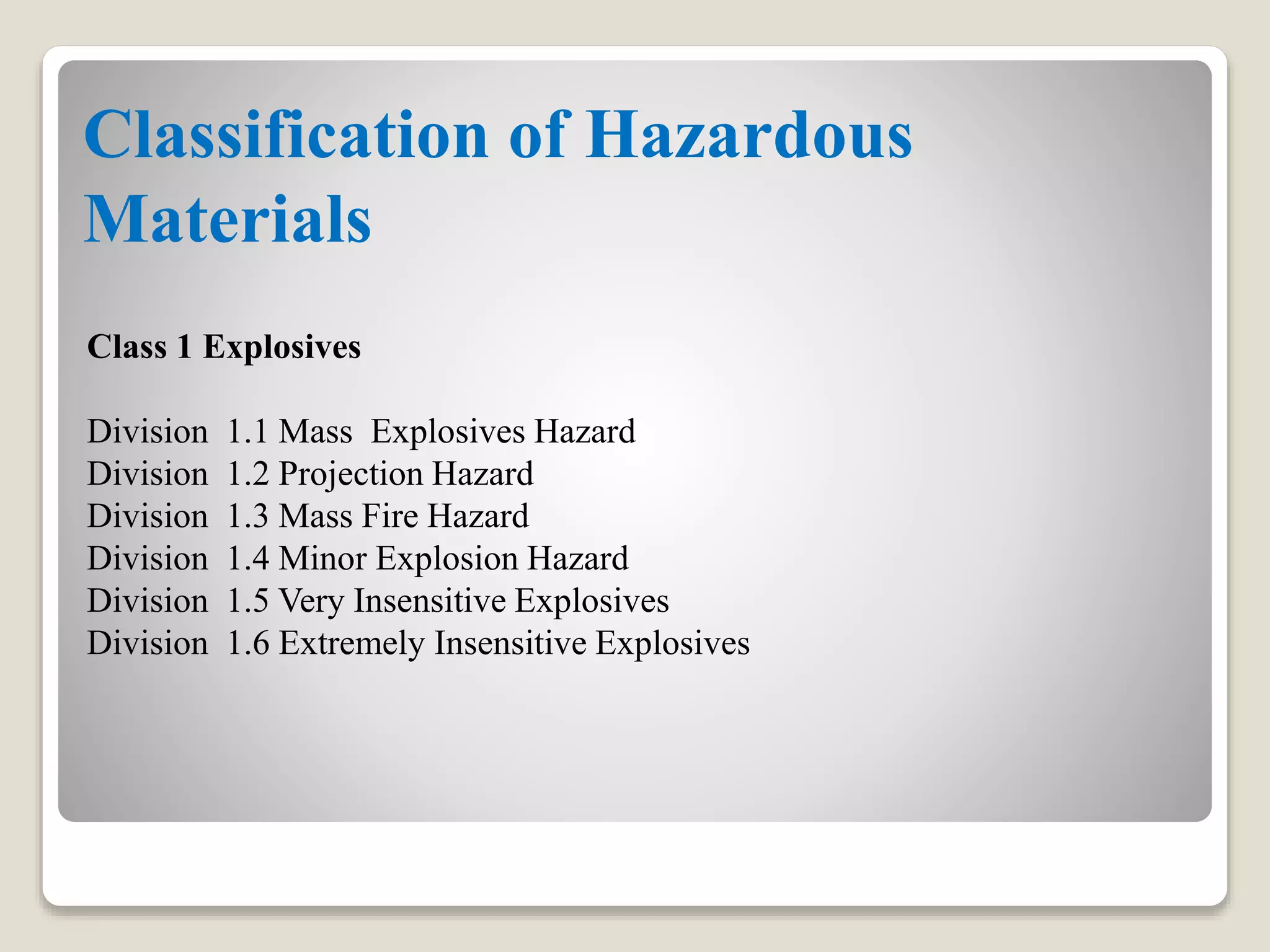
Classification of Hazardous
Materials
Class 1 Explosives
Division 1.1 Mass Explosives Hazard
Division 1.2 Projection Hazard
Division 1.3 Mass Fire Hazard
Division 1.4 Minor Explosion Hazard
Division 1.5 Very Insensitive Explosives
Division 1.6 Extremely Insensitive Explosives
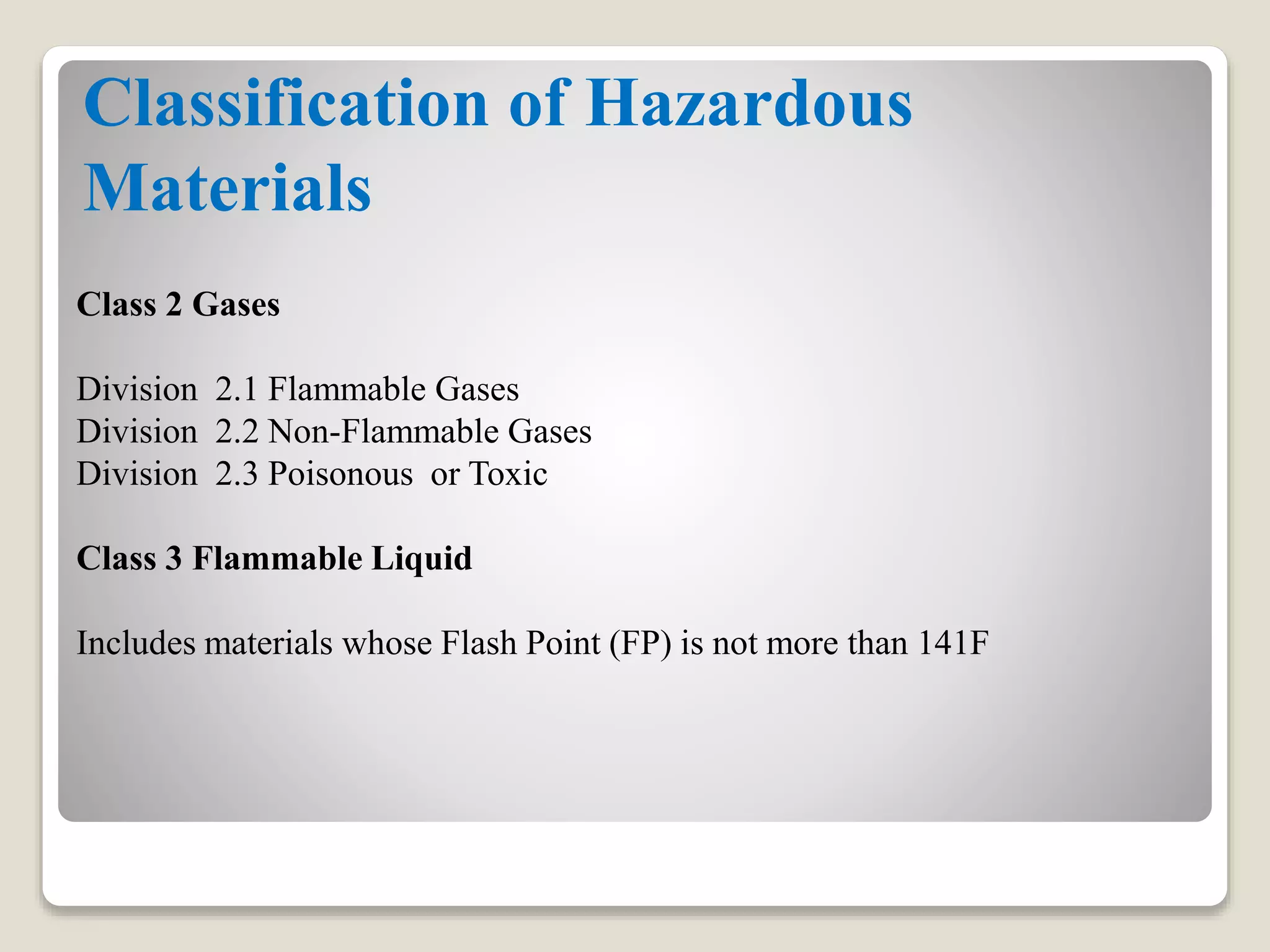
Classification of Hazardous
Materials
Class 2 Gases
Division 2.1 Flammable Gases
Division 2.2 Non-Flammable Gases
Division 2.3 Poisonous or Toxic
Class 3 Flammable Liquid
Includes materials whose Flash Point (FP) is not more than 141F
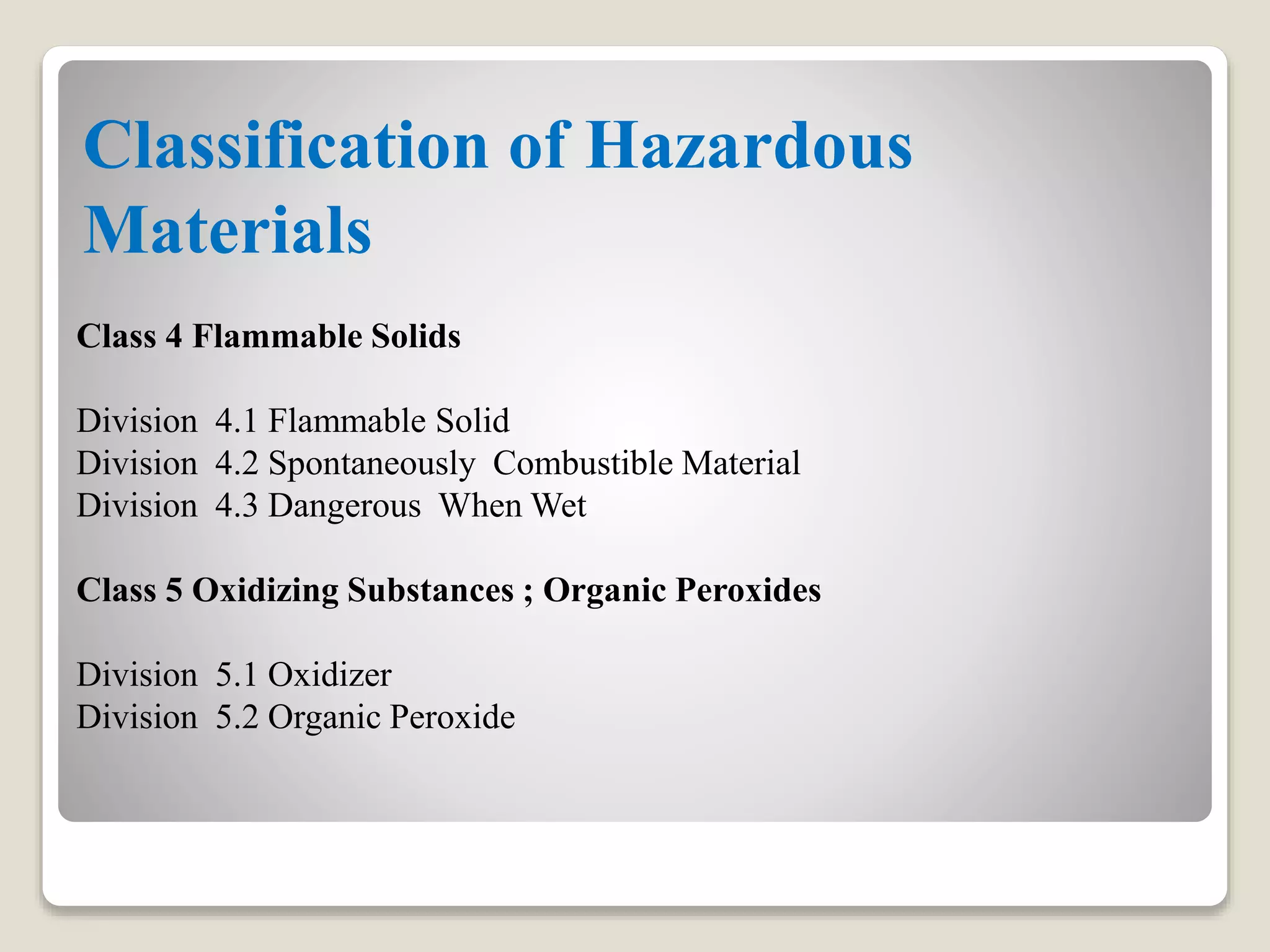
Classification of Hazardous
Materials
Class 4 Flammable Solids
Division 4.1 Flammable Solid
Division 4.2 Spontaneously Combustible Material
Division 4.3 Dangerous When Wet
Class 5 Oxidizing Substances ; Organic Peroxides
Division 5.1 Oxidizer
Division 5.2 Organic Peroxide
Classification of Hazardous
Materials
Class 6 Poisonous (TOXIC) And Infection Substances
Division 6.1 Poisonous (TOXIC) Material
Division 6.2 Infections Substance
Class 7 Radioactive Material
Class 8 Corrosives
Class 9 Micellaneous Danerous Goods
Hazardous Materials Tranining
• General awareness/familiarization
• Function-specific training
• Safety training
• Security Training
• Modal specific requirements
Email: info@WEtrainConsulting.com
Website: www. wetrainconsulting.com

Shipping hazardous materials

  • 1.
  • 2.
    What Are HazardousMaterials? “HAZARDOUS MATERIALS are any substances or materials, including environmentally hazardous substances, which have been determined to be capable of posing an unreasonable risk to health, safety or property when transported in commerce, and have been so designated.” (171.8) The term "Hazardous Materials" includes all of the following: (1) Hazardous Substances (2) Hazardous Wastes (3) Marine Pollutants (4) Elevated Temperature Material (5) Materials identified in 172.101 (6) Materials meeting the definitions contained in Part 173.
  • 3.
    Hazardous Materials Regulations Hazardousmaterials are regulated in order to: • Prevent accidents, leaks and spills • Help emergency responders • Ensure that HAZMAT employees are aware of the hazards of materials they handle
  • 4.
    Hazardous Materials Shipper Responsibilities Shipping papers  Emergency response information  Emergency response telephone number  Certification  Determine whether a material meets the definition of a "Hazardous Material“  Proper shipping name  Class/Division  Identification number
  • 5.
    Hazardous Materials Shipper Responsibilities Hazard warning warning  Packaging  Marking  Employee training  Incident reporting  Compatibility  Blocking and bracin  Placarding  Security plan
  • 6.
    Classification of Hazardous Materials Class1 Explosives Division 1.1 Mass Explosives Hazard Division 1.2 Projection Hazard Division 1.3 Mass Fire Hazard Division 1.4 Minor Explosion Hazard Division 1.5 Very Insensitive Explosives Division 1.6 Extremely Insensitive Explosives
  • 7.
    Classification of Hazardous Materials Class2 Gases Division 2.1 Flammable Gases Division 2.2 Non-Flammable Gases Division 2.3 Poisonous or Toxic Class 3 Flammable Liquid Includes materials whose Flash Point (FP) is not more than 141F
  • 8.
    Classification of Hazardous Materials Class4 Flammable Solids Division 4.1 Flammable Solid Division 4.2 Spontaneously Combustible Material Division 4.3 Dangerous When Wet Class 5 Oxidizing Substances ; Organic Peroxides Division 5.1 Oxidizer Division 5.2 Organic Peroxide
  • 9.
    Classification of Hazardous Materials Class6 Poisonous (TOXIC) And Infection Substances Division 6.1 Poisonous (TOXIC) Material Division 6.2 Infections Substance Class 7 Radioactive Material Class 8 Corrosives Class 9 Micellaneous Danerous Goods
  • 10.
    Hazardous Materials Tranining •General awareness/familiarization • Function-specific training • Safety training • Security Training • Modal specific requirements
  • 11.