Advanced Lung/ECMO Service
Joseph Shiber, MD, FACP, FACEP, FCCM
Associate Professor of EM, Neurology, and Surgery
ECMO Program Director
Program Started July 2017
 Total 28 patients referred
 26 patients evaluated
 1 patient’s family declined Trx to UF and 1 pt we declined due to >550 Lbs.
 All Jacksonville area hospitals have made referrals
 2 from Georgia
 7 patients placed on ECMO
 5 V-V: 3 blunt chest trauma and 2 Flu
 2 V-A: both cardiac arrests from severe hypoxia (one arrived in arrest)
Milestones
 We had two patients on ECMO at same time
 We cannulated two patients back-to-back
 We exchanged a circuit on a patient w/ clotted oxygenator
 Accomplished E-CPR
 Still able to Treat and Salvage ~75% of severe ARDS Pt’s w/o ECMO
 One referral for potential V-A : 18 y/o VF arrest
 Survival to D/C >80%
Three Phases of our Development
 Phase 1: Be able to rescue pt’s at UF Health
 Phase 2: Be able to receive pt’s from Jacksonville who need us
 Phase 3: Be able to go rescue pt’s in N Florida and SE GA
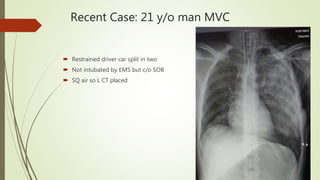
Recent Case: 21 y/o man MVC
 Restrained driver car split in two
 Not intubated by EMS but c/o SOB
 SQ air so L CT placed
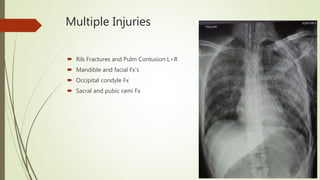
Multiple Injuries
 Rib Fractures and Pulm Contusion L>R
 Mandible and facial Fx’s
 Occipital condyle Fx
 Sacral and pubic rami Fx
To OR for massive hemothorax
 Left Thoracotomy: L LL repair
 6.88/97/49
 Chest Re-opened for additional repair and packed
 Re-opened again for CARDIAC ARREST and L LL Lobectomy
 6.94/115/38 (while being bagged for prolonged period)
 ECMO Consult Paged Out from PACU
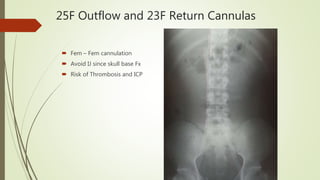
25F Outflow and 23F Return Cannulas
 Fem – Fem cannulation
 Avoid IJ since skull base Fx
 Risk of Thrombosis and ICP
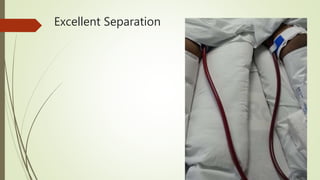
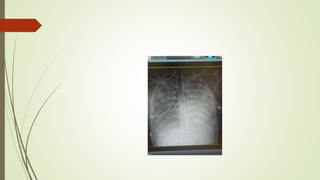
Excellent Separation
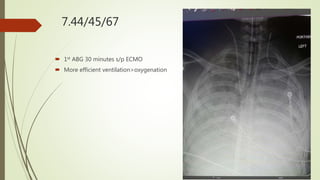
7.44/45/67
 1st ABG 30 minutes s/p ECMO
 More efficient ventilation>oxygenation
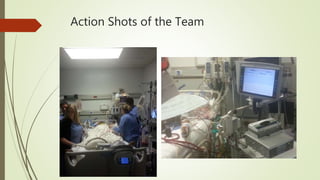
Action Shots of the Team
ICU Course
 No heparin for 48 hrs as L Chest STILL OPEN
 Closed at bedside s/p packs removed
 PO2 steadily improved and APRV weaned “Drop & Stretch”
 REST SETTINGS 35% FiO2
 Coughing and suctioning old blood from lung injury
 CXR improving daily
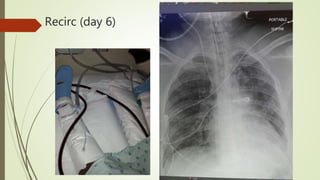
Recirc (day 6)
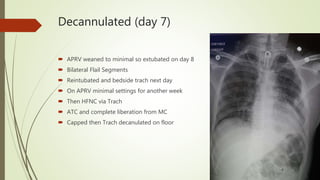
Decannulated (day 7)
 APRV weaned to minimal so extubated on day 8
 Bilateral Flail Segments
 Reintubated and bedside trach next day
 On APRV minimal settings for another week
 Then HFNC via Trach
 ATC and complete liberation from MC
 Capped then Trach decanulated on floor
Summary
 We are rescuing Pt’s who would have previously died
 ARDS, Blunt Chest Injuries, Flu, Cardiac Arrest
 Survival BETTER than National Averages ~50-60%
 Organ SUPPORT/REST allows for RECOVERY
 We are ready to move on to Phase 3
 Planning + Teamwork = Success
Thank You to all of the ECMO Team!
 David Skarupa & Brian Yorkgitis
 Trauma/ACS Division
 Bennita Young
 Chuck Jerabek
 Travis Peistrup
 Amber Mason
 SICU Nursing
 Respiratory Therapy
Questions & Comments
Shiber-ecmo
Shiber-ecmo

Shiber-ecmo

  • 1.
    Advanced Lung/ECMO Service JosephShiber, MD, FACP, FACEP, FCCM Associate Professor of EM, Neurology, and Surgery ECMO Program Director
  • 2.
    Program Started July2017  Total 28 patients referred  26 patients evaluated  1 patient’s family declined Trx to UF and 1 pt we declined due to >550 Lbs.  All Jacksonville area hospitals have made referrals  2 from Georgia  7 patients placed on ECMO  5 V-V: 3 blunt chest trauma and 2 Flu  2 V-A: both cardiac arrests from severe hypoxia (one arrived in arrest)
  • 3.
    Milestones  We hadtwo patients on ECMO at same time  We cannulated two patients back-to-back  We exchanged a circuit on a patient w/ clotted oxygenator  Accomplished E-CPR  Still able to Treat and Salvage ~75% of severe ARDS Pt’s w/o ECMO  One referral for potential V-A : 18 y/o VF arrest  Survival to D/C >80%
  • 4.
    Three Phases ofour Development  Phase 1: Be able to rescue pt’s at UF Health  Phase 2: Be able to receive pt’s from Jacksonville who need us  Phase 3: Be able to go rescue pt’s in N Florida and SE GA
  • 5.
    Recent Case: 21y/o man MVC  Restrained driver car split in two  Not intubated by EMS but c/o SOB  SQ air so L CT placed
  • 6.
    Multiple Injuries  RibFractures and Pulm Contusion L>R  Mandible and facial Fx’s  Occipital condyle Fx  Sacral and pubic rami Fx
  • 7.
    To OR formassive hemothorax  Left Thoracotomy: L LL repair  6.88/97/49  Chest Re-opened for additional repair and packed  Re-opened again for CARDIAC ARREST and L LL Lobectomy  6.94/115/38 (while being bagged for prolonged period)  ECMO Consult Paged Out from PACU
  • 8.
    25F Outflow and23F Return Cannulas  Fem – Fem cannulation  Avoid IJ since skull base Fx  Risk of Thrombosis and ICP
  • 9.
  • 10.
    7.44/45/67  1st ABG30 minutes s/p ECMO  More efficient ventilation>oxygenation
  • 11.
  • 12.
    ICU Course  Noheparin for 48 hrs as L Chest STILL OPEN  Closed at bedside s/p packs removed  PO2 steadily improved and APRV weaned “Drop & Stretch”  REST SETTINGS 35% FiO2  Coughing and suctioning old blood from lung injury  CXR improving daily
  • 13.
  • 14.
    Decannulated (day 7) APRV weaned to minimal so extubated on day 8  Bilateral Flail Segments  Reintubated and bedside trach next day  On APRV minimal settings for another week  Then HFNC via Trach  ATC and complete liberation from MC  Capped then Trach decanulated on floor
  • 15.
    Summary  We arerescuing Pt’s who would have previously died  ARDS, Blunt Chest Injuries, Flu, Cardiac Arrest  Survival BETTER than National Averages ~50-60%  Organ SUPPORT/REST allows for RECOVERY  We are ready to move on to Phase 3  Planning + Teamwork = Success
  • 16.
    Thank You toall of the ECMO Team!  David Skarupa & Brian Yorkgitis  Trauma/ACS Division  Bennita Young  Chuck Jerabek  Travis Peistrup  Amber Mason  SICU Nursing  Respiratory Therapy
  • 17.