Wide Shot
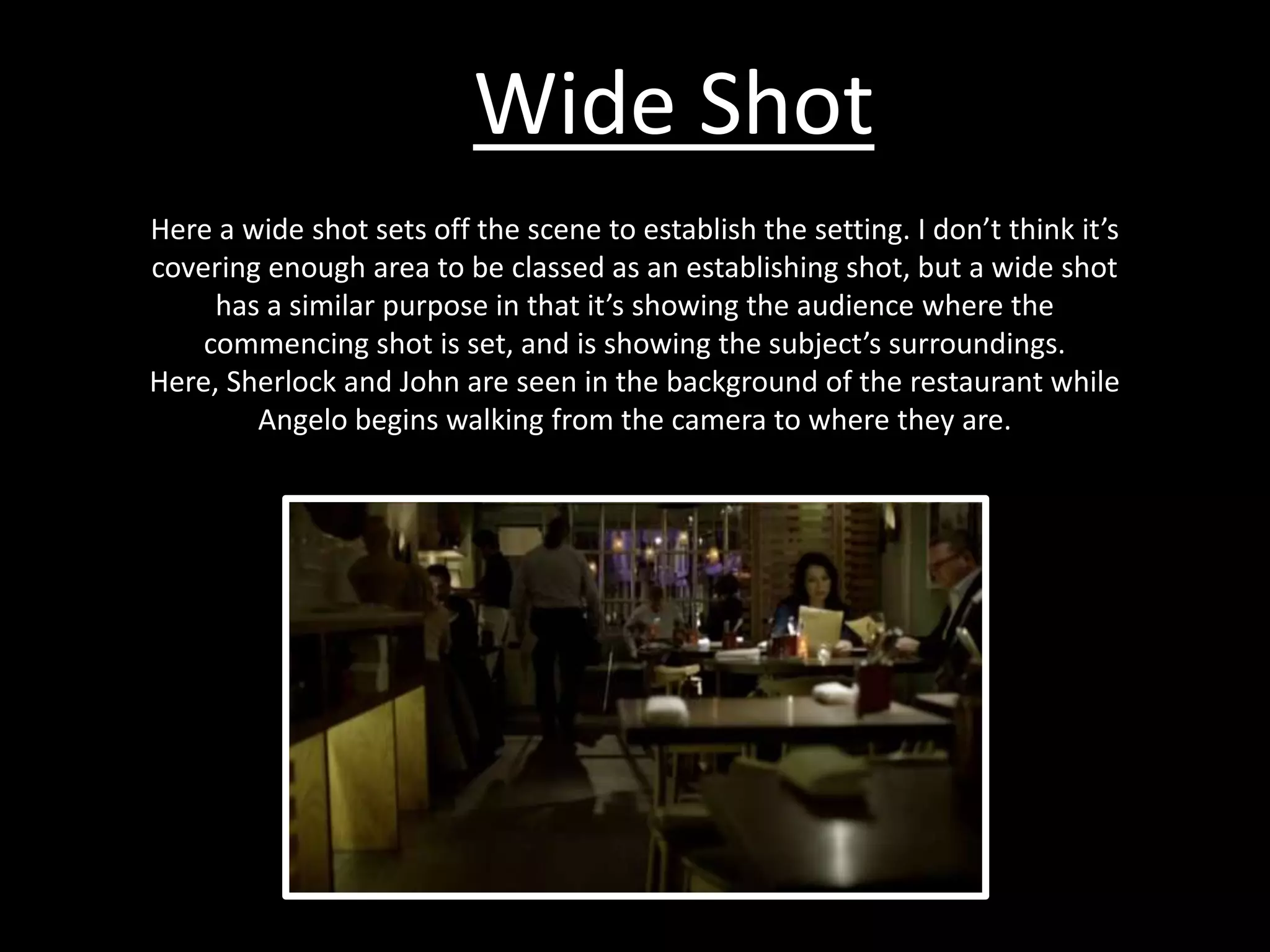
Here a wide shot sets off the scene to establish the setting. I don’t think it’s
covering enough area to be classed as an establishing shot, but a wide shot
has a similar purpose in that it’s showing the audience where the
commencing shot is set, and is showing the subject’s surroundings.
Here, Sherlock and John are seen in the background of the restaurant while
Angelo begins walking from the camera to where they are.
Medium Close Up
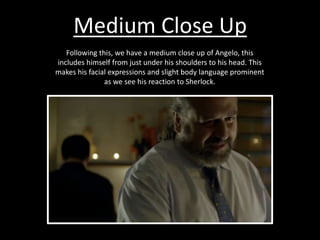
Following this, we have a medium close up of Angelo, this
includes himself from just under his shoulders to his head. This
makes his facial expressions and slight body language prominent
as we see his reaction to Sherlock.
Medium Shot
(Which breaks the 180 degree rule!!)
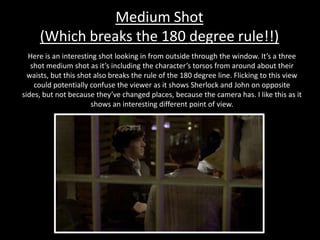
Here is an interesting shot looking in from outside through the window. It’s a three
shot medium shot as it’s including the character’s torsos from around about their
waists, but this shot also breaks the rule of the 180 degree line. Flicking to this view
could potentially confuse the viewer as it shows Sherlock and John on opposite
sides, but not because they’ve changed places, because the camera has. I like this as it
shows an interesting different point of view.
Close-up
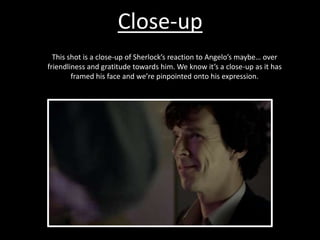
This shot is a close-up of Sherlock’s reaction to Angelo’s maybe… over
friendliness and gratitude towards him. We know it’s a close-up as it has
framed his face and we’re pinpointed onto his expression.
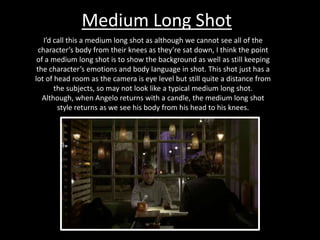
Medium Long Shot
I’d call this a medium long shot as although we cannot see all of the
character’s body from their knees as they’re sat down, I think the point
of a medium long shot is to show the background as well as still keeping
the character’s emotions and body language in shot. This shot just has a
lot of head room as the camera is eye level but still quite a distance from
the subjects, so may not look like a typical medium long shot.
Although, when Angelo returns with a candle, the medium long shot
style returns as we see his body from his head to his knees.

Sherlock shots

  • 1.
    Wide Shot Here awide shot sets off the scene to establish the setting. I don’t think it’s covering enough area to be classed as an establishing shot, but a wide shot has a similar purpose in that it’s showing the audience where the commencing shot is set, and is showing the subject’s surroundings. Here, Sherlock and John are seen in the background of the restaurant while Angelo begins walking from the camera to where they are.
  • 2.
    Medium Close Up Followingthis, we have a medium close up of Angelo, this includes himself from just under his shoulders to his head. This makes his facial expressions and slight body language prominent as we see his reaction to Sherlock.
  • 3.
    Medium Shot (Which breaksthe 180 degree rule!!) Here is an interesting shot looking in from outside through the window. It’s a three shot medium shot as it’s including the character’s torsos from around about their waists, but this shot also breaks the rule of the 180 degree line. Flicking to this view could potentially confuse the viewer as it shows Sherlock and John on opposite sides, but not because they’ve changed places, because the camera has. I like this as it shows an interesting different point of view.
  • 4.
    Close-up This shot isa close-up of Sherlock’s reaction to Angelo’s maybe… over friendliness and gratitude towards him. We know it’s a close-up as it has framed his face and we’re pinpointed onto his expression.
  • 5.
    Medium Long Shot I’dcall this a medium long shot as although we cannot see all of the character’s body from their knees as they’re sat down, I think the point of a medium long shot is to show the background as well as still keeping the character’s emotions and body language in shot. This shot just has a lot of head room as the camera is eye level but still quite a distance from the subjects, so may not look like a typical medium long shot. Although, when Angelo returns with a candle, the medium long shot style returns as we see his body from his head to his knees.