Ultrasound
Elastography
Dr Manoj K S MD RD DNB RD
Consultant Radiologist
KIMS HOSPITAL
PIONEER METRO SCANS
Perspective counts
Perspective alters
Perspective matters
Physics
Practical
Cases
Pathology
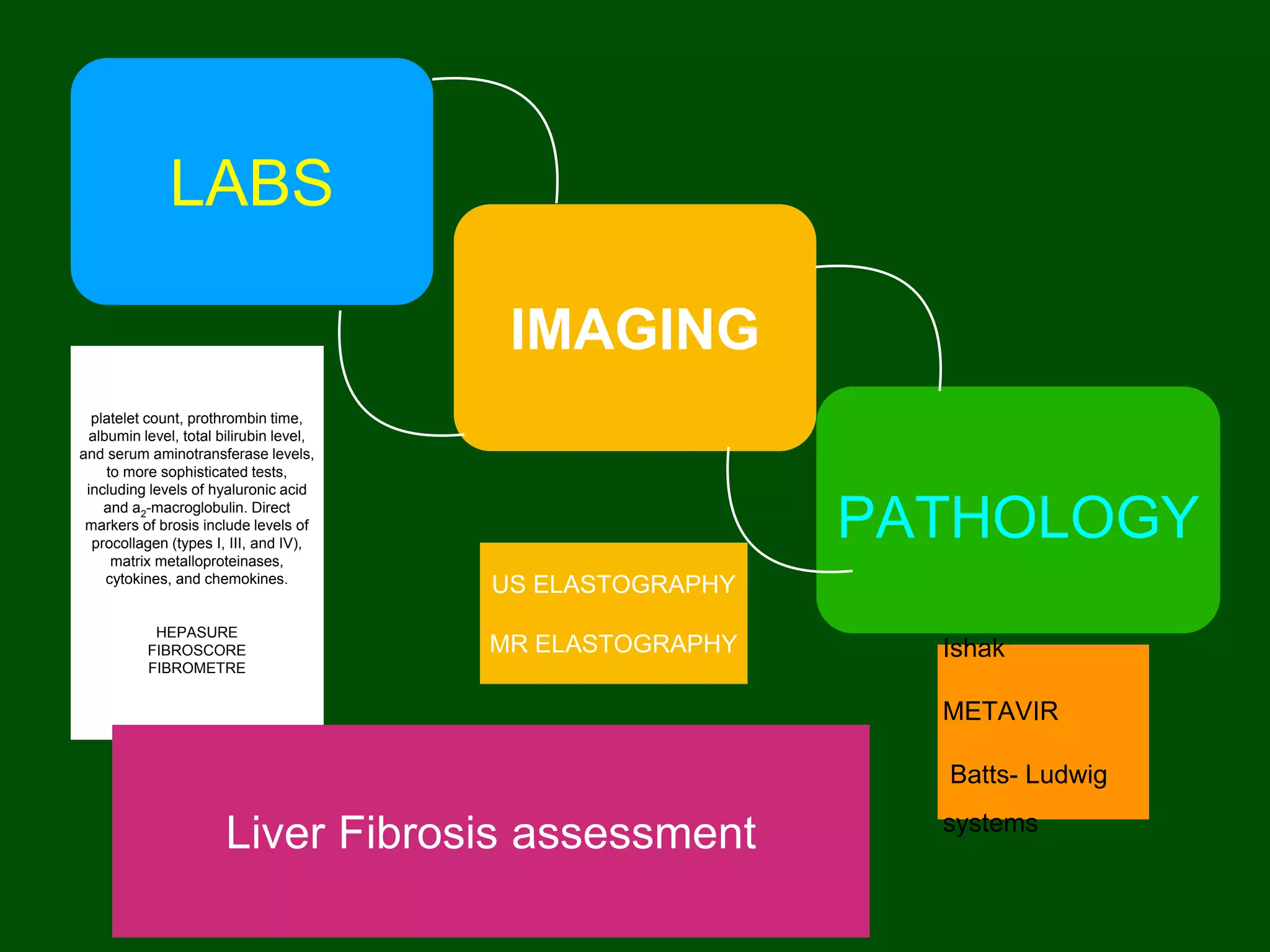
LABS
IMAGING
PATHOLOGY
platelet count, prothrombin time,
albumin level, total bilirubin level,
and serum aminotransferase levels,
to more sophisticated tests,
including levels of hyaluronic acid
and a2-macroglobulin. Direct
markers of brosis include levels of
procollagen (types I, III, and IV),
matrix metalloproteinases,
cytokines, and chemokines.
HEPASURE
FIBROSCORE
FIBROMETRE
US ELASTOGRAPHY
MR ELASTOGRAPHY Ishak
METAVIR
Batts- Ludwig
systems
Liver Fibrosis assessment
Lab Tests
Palpation as age old technique to assess liver/tissue stiffness
ELASTOGRAPHY
The elasticity of a material describes its
tendency to resume its original size and shape
after being subjected to a deforming force or
stress.
The change in size or shape is known as the
strain.
The force acting on unit area is known as the
stress.
Elastography refers to an imaging technique
that images and/or quantifies elasticity
(mechanical properties) of biologic tissues
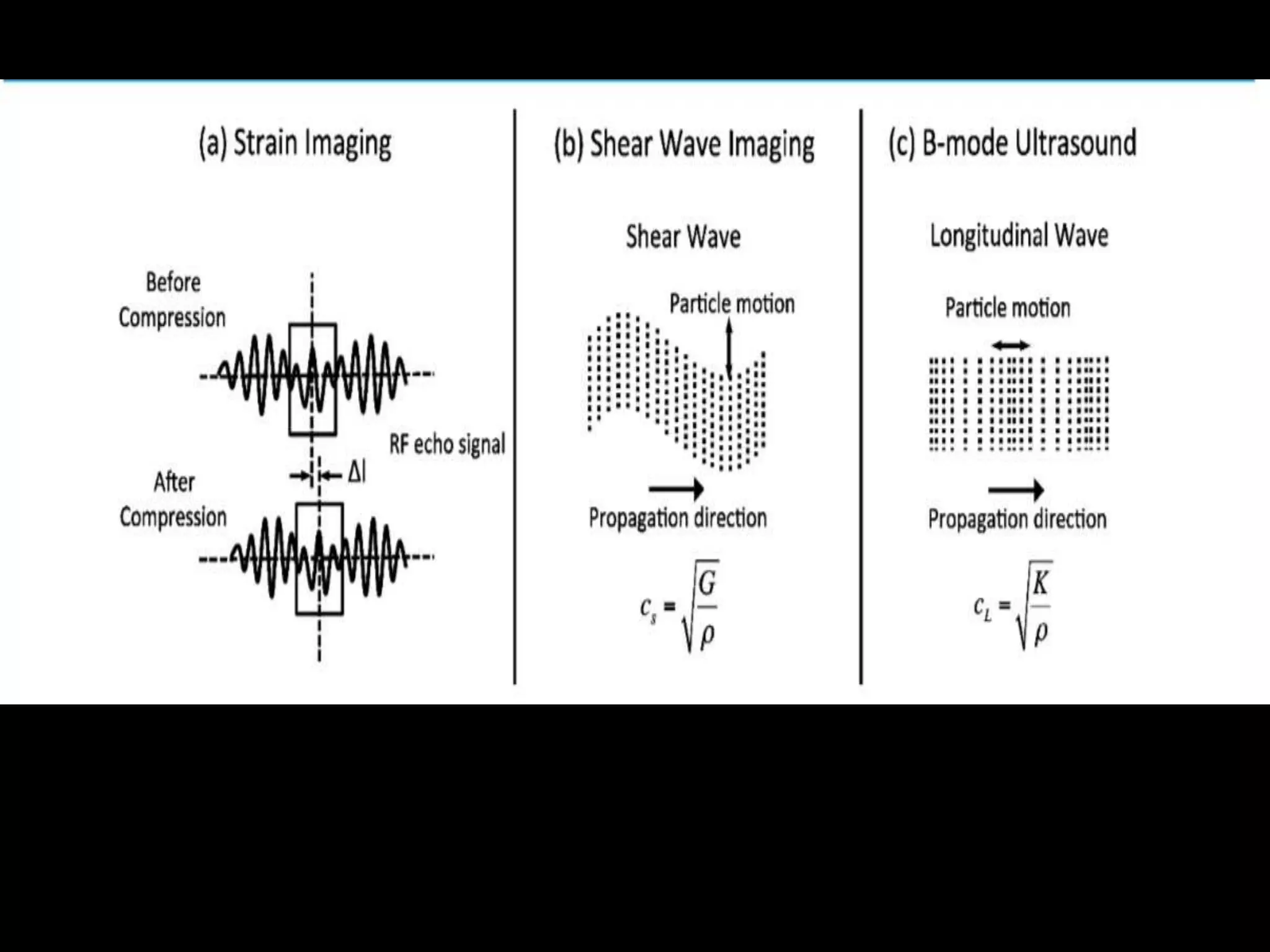
Ultrasound creates the propagation of a
transient density deformation.
In soft tissues, it travels at speeds in the range
of 1350 – 1600 ms–1, whereas shear
deformation travels much slower, in the range
of 1 – 10 ms–1 .
This speed difference means that ultrasound
may be used to measure tissue displacements
at precise phases of shear deformation.
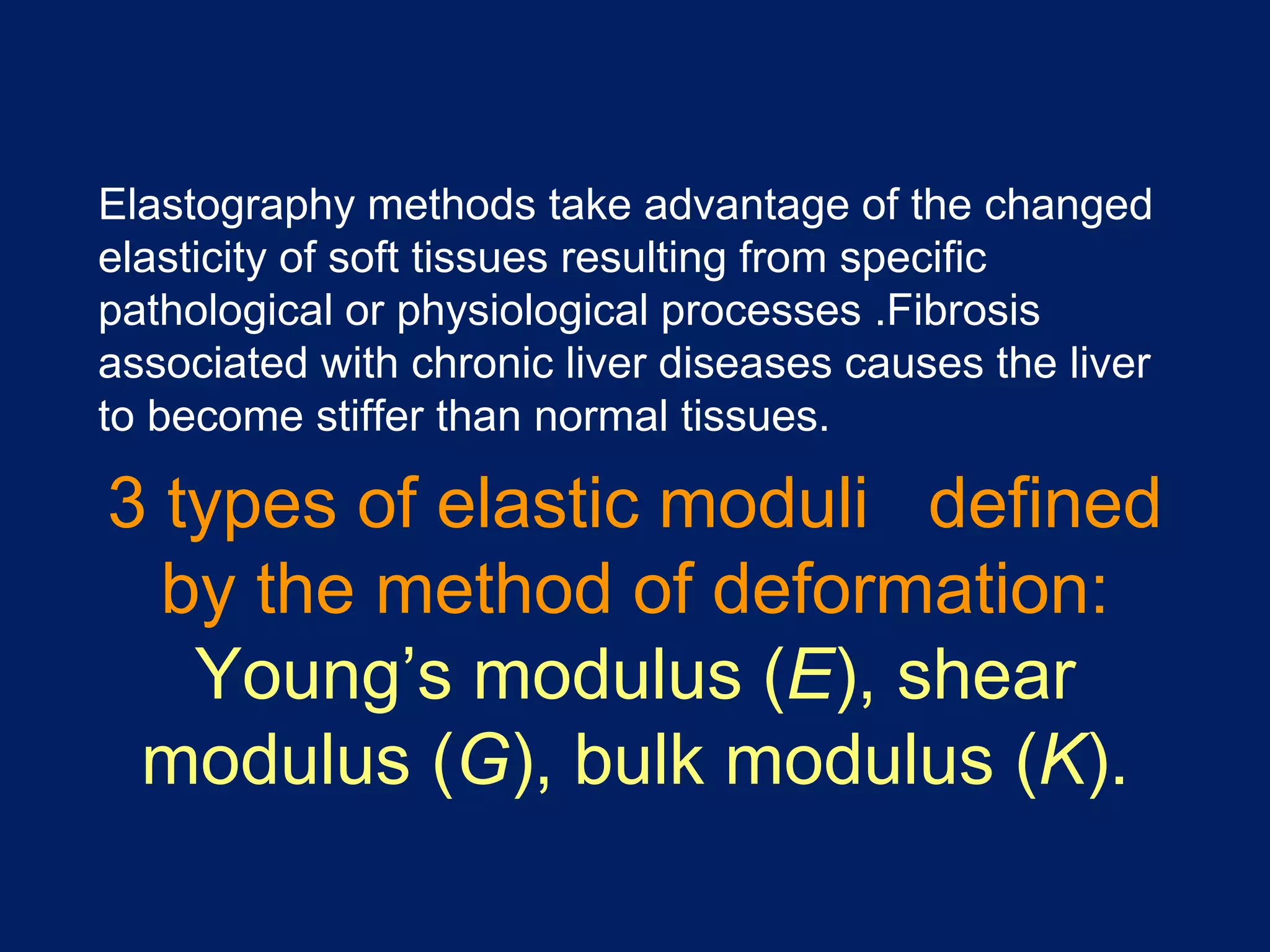
Elastography methods take advantage of the changed
elasticity of soft tissues resulting from specific
pathological or physiological processes .Fibrosis
associated with chronic liver diseases causes the liver
to become stiffer than normal tissues.
3 types of elastic moduli defined
by the method of deformation:
Young’s modulus (E), shear
modulus (G), bulk modulus (K).
Young’s modulus (E), shear modulus (G), bulk modulus (K).
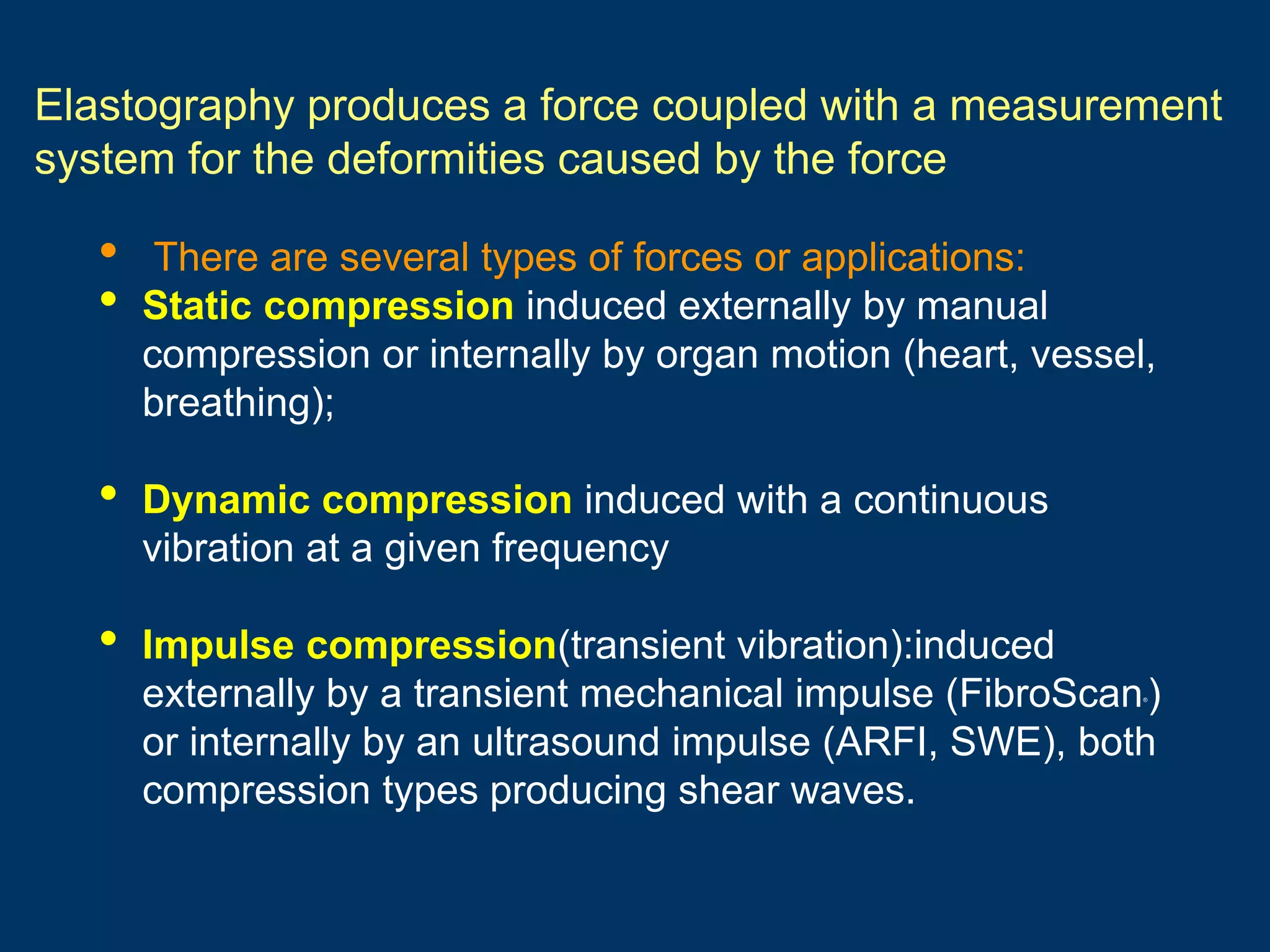
Elastography produces a force coupled with a measurement
system for the deformities caused by the force
• There are several types of forces or applications:
• Static compression induced externally by manual
compression or internally by organ motion (heart, vessel,
breathing);
• Dynamic compression induced with a continuous
vibration at a given frequency
• Impulse compression(transient vibration):induced
externally by a transient mechanical impulse (FibroScan®
)
or internally by an ultrasound impulse (ARFI, SWE), both
compression types producing shear waves.
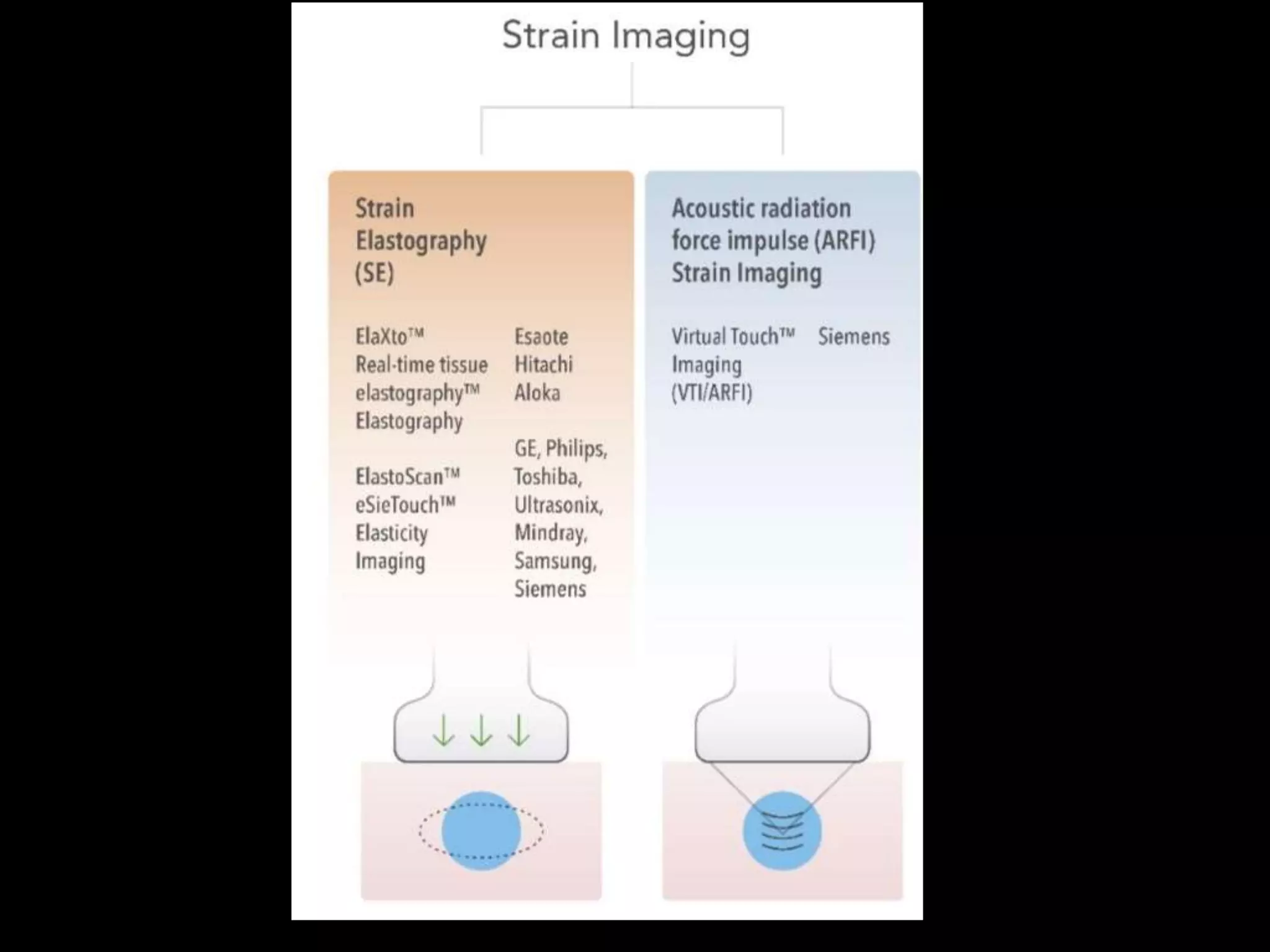
Strain elastography can be further subdivided :
I The operator exerts manual compression on the tissue
with the ultrasound transducer. Manual compression
works fairly well for superficial organs such as the breast
and thyroid but is challenging for assessing elasticity in
deeper located organs such as the liver.
II In excitation method, the ultrasound transducer is held
steady, and tissue displacement is generated by internal
physiologic motion (e.g. cardiovascular, respiratory).
Since this method is not dependent on superficially
applied compression, it may be used to assess deeper
located organs
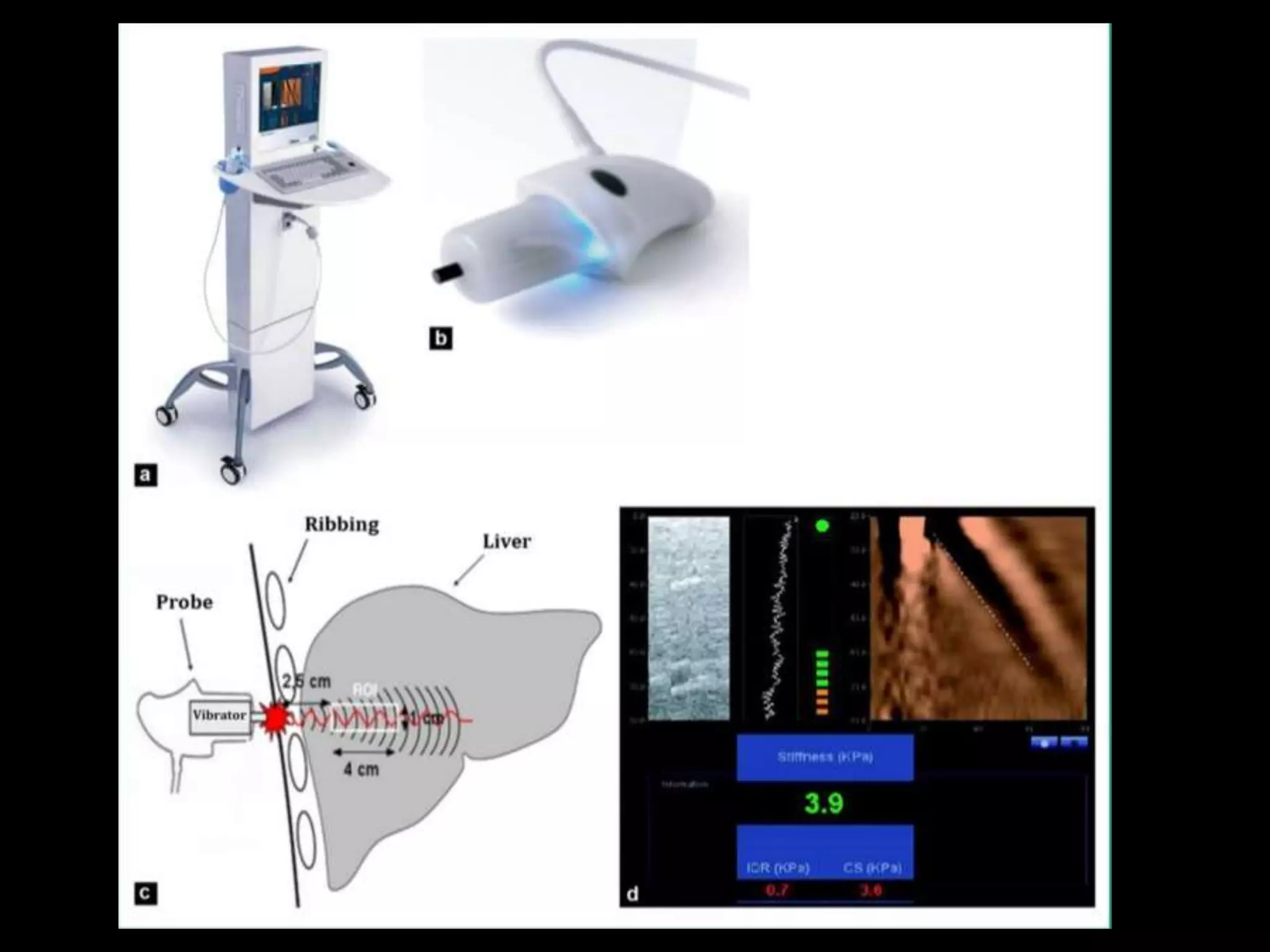
1D Transient Elastography
• The Fibroscanprobe is a single device that contains both an
ultrasound transducer and a mechanical vibrating device.
Although 1D-TE is an US-based technique, it is used without
direct B-mode image guidance.
• The operator selects the imaging area using time-motion
ultrasound (based on multiple A-mode lines in time at different
proximal locations assembled to form a low quality image) to
locate a liver portion 2.5 – 6.5 cm below the skin surface and
free of large vascular structures.
• The mechanical vibrating device then exerts a controlled
vibrating external “punch” on the body surface to generate
shear waves which propagate through the tissue.
• The same probe then uses A-mode US to measure the shear
wave speed and Young’s modulus E is calculated .
Measurements assess a tissue volume of approximately 1 cm
wide x 4 cm long, which is >100 times larger than the average
volume of a biopsy sample
Transient elastography (TE):
An automated movement of a piston, which is also
a disc-shaped ultrasound transduc- er, applies a
single cycle 50 Hz push to the body surface with
con- trolled applied force.
The transient shear deformation created in this
way, propagates into the tissue.
Its near constant speed for about 4 cm in the liver
(before being rendered non-detectable due to
attenuation) is measured by a straight line
automatically fitted to the displacement M-mode
Criteria for validation
(1) at least 10 valid measurements,
(2) ratio of number of valid
measurements to the total number of
measurements is ≥ 60%,
(3) interquartile range (IQR), which
reflects the variability of measurements,
is less than 30% of the median value of
liver stiffness measurements
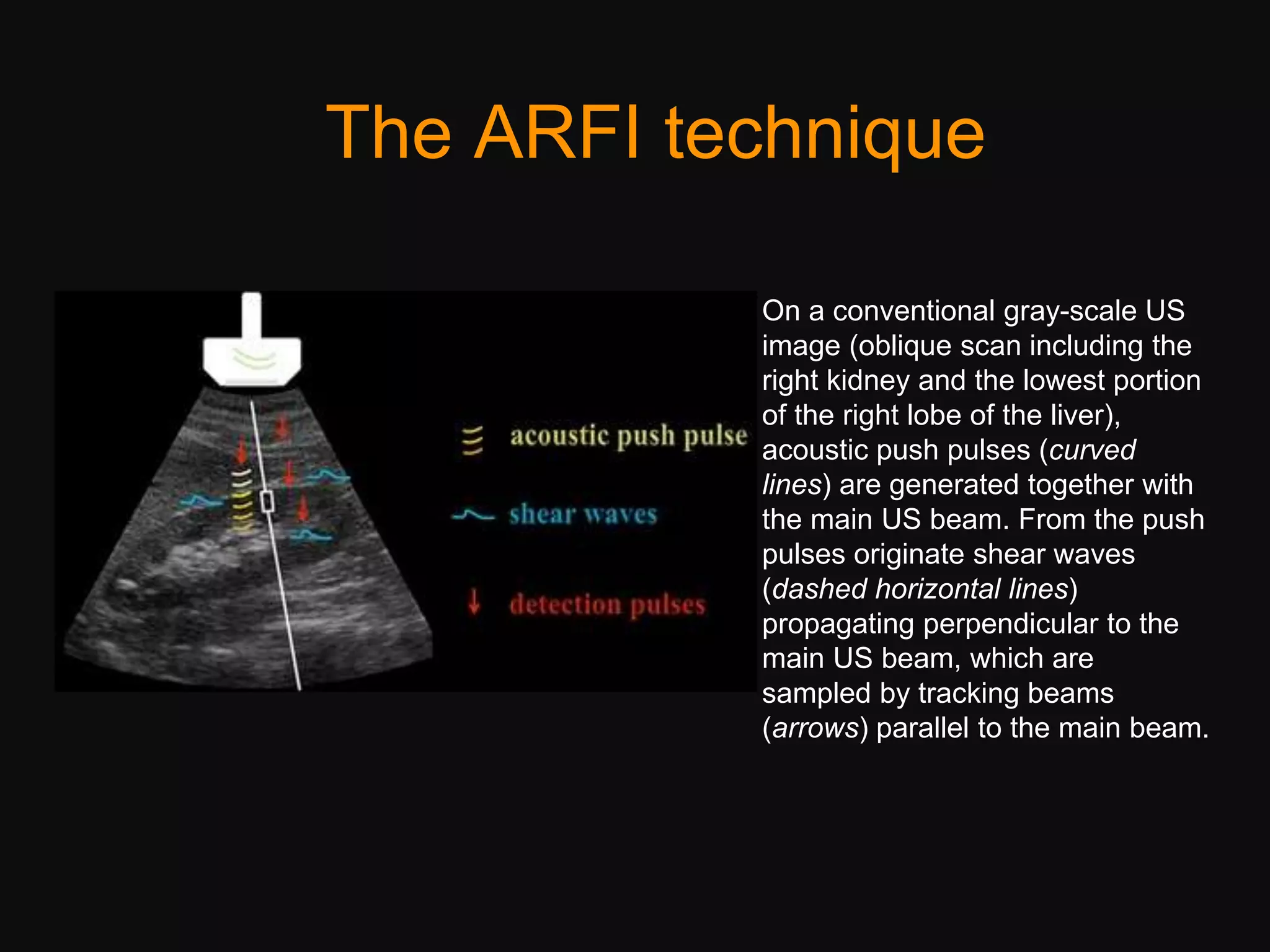
The ARFI technique
On a conventional gray-scale US
image (oblique scan including the
right kidney and the lowest portion
of the right lobe of the liver),
acoustic push pulses (curved
lines) are generated together with
the main US beam. From the push
pulses originate shear waves
(dashed horizontal lines)
propagating perpendicular to the
main US beam, which are
sampled by tracking beams
(arrows) parallel to the main beam.
Point shear wave elastography
In this technique, ARFI is used to induce tissue displacement in
the normal direction in a single focal location, similar to ARFI
strain imaging.
Unlike ARFI strain imaging, the tissue displacement itself is not
measured.
Instead, a portion of the longitudinal waves generated by ARFI is
intra-converted to shear waves through the absorption of
acoustic energy .
The speed of the shear waves perpendicular to the plane of
excitation cs are measured, which are either directly reported or
converted Young’s modulus E and reported to provide a
quantitative estimate of tissue elasticity
Point shear wave elastography
ARFI is used to induce tissue displacement in the normal
direction in a single focal location, similar to ARFI strain
imaging. Unlike ARFI strain imaging, the tissue
displacement itself is not measured.
Instead, a portion of the longitudinal waves generated by
ARFI is intra-converted to shear waves through the
absorption of acoustic energy .
The speed of the shear waves perpendicular to the plane of
excitation cs are measured, which are either directly reported
or converted Young’s modulus E and reported to provide a
quantitative estimate of tissue elasticity .
2D Shear Wave Elastography®
(SWE)
It is based on the generation of a radiation force in the tissue to
create the shear wave. The ultrasound probe of the device
produces a very localized radiation force deep in the tissue of
interest. This acoustic radiation force/push induces a shear wave,
which then propagates from this focal point.
Several focal points are then generated almost simultaneously, in
a line perpendicular to the sur- face of the patient’s skin.
This creates a conical shear wave front, which sweeps the image
plane, on both sides of the focal point. The progression of the
shear wave is captured by the very rapid acquisition of ultrasound
images (up to 20,000 images per second), called UltraFastTM
Imaging.
Shear Wave Elastography®
(SWE)
The acquisition takes only a few milliseconds, thus the patient or
operator movement does not impact the result. A high- speed
acquisition is necessary to capture the shear wave as it moves at
a speed in the order of 1 to 10 m/s.
A comparison of two consecutive ultrasound images allows the
measurement of displacements induced by the shear wave and
creates a ‘‘movie’’ showing the propagation of the shear wave
whose local speed is intrinsically linked to elasticity.
The propagation speed of the shear wave is then estimated from
the movie that is created and a two-dimensional color map is
displayed, for which each color codes either the shear wave
speed in meters per second (m/s), or the elasticity of the medium
in kilopascals (kPa).
Shear Wave Elastography®
This color map is accompanied by an anatomic reference gray
scale (or B-mode) image. This quantitative imaging technique
is a real-time imaging mode.
Quantitative measurements can be performed in the color
window by positioning one or more ROI (regions of interest)
The ROI are variable in size (from 3 mm2
to 700 mm2
).
Measurements can be performed retrospectively from the
saved image or cineloop. The measurements provided are the
mean, standard deviation, and minimum and maximum
elastography values. Results are given in m/s or kPa
Pathophysiology
correlation
METAVIR 2
METAVIR 4
BRIDGING FIBROSIS
NODULE
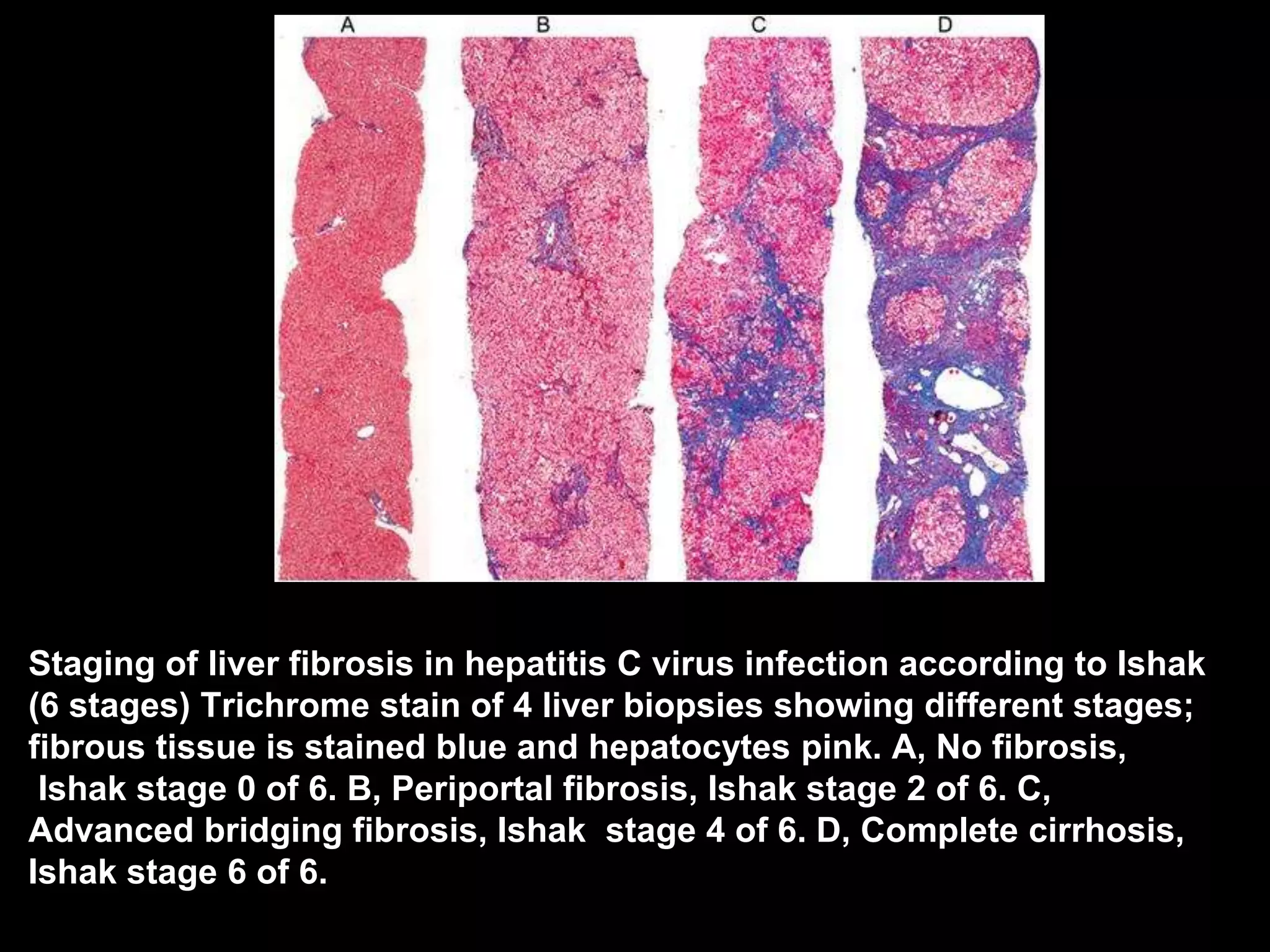
Staging of liver fibrosis in hepatitis C virus infection according to Ishak
(6 stages) Trichrome stain of 4 liver biopsies showing different stages;
fibrous tissue is stained blue and hepatocytes pink. A, No fibrosis,
Ishak stage 0 of 6. B, Periportal fibrosis, Ishak stage 2 of 6. C,
Advanced bridging fibrosis, Ishak stage 4 of 6. D, Complete cirrhosis,
Ishak stage 6 of 6.
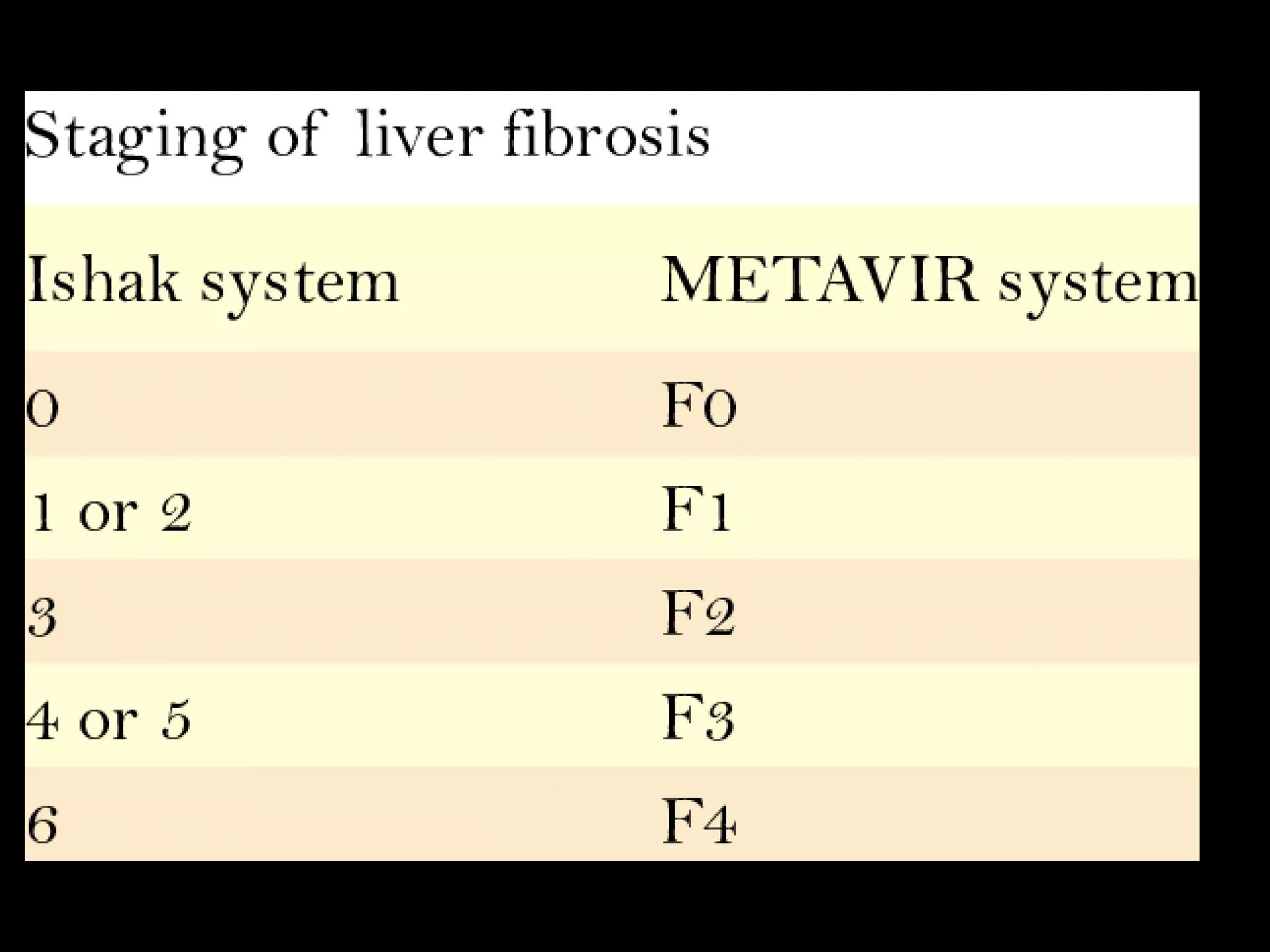
Diagram of the comparison of the various staging systems for liver fibrosis
•Portal Pressure Measurements
• Safest and most reproducible is Hepatic Venous Pressure
Gradient
• HVPG = WHVP-FHVP
• WHVP is the wedged hepatic venous pressure and
reflects sinusoidal pressure
• FVHP is the Free Hepatic Venous Pressure and reflects
the Systemic blood pressure (internal 0)
• Normal HVPG is 3 to 5 mm Hg
Why staging important in
management
• Prognostication – assess urgency for treatment
• Surveillance in cirrhotic patients (HCC,varices)
• Baseline for treatment response
• Tailoring of treatment algorithms (eg in HCV)
• Drug reimbursement
The main clinical indication for liver elastography
is staging of chronic liver disease and the main
objective of determining the presence or absence
of advanced fibrosis
For the clinician, the most important question in a
patient with chronic liver disease is whether or not
the patient has cirrhosis
Regression of liver fibrosis over 5 years of treatment with disoproxil fumarate (TDF),
Practical
How to Perform SWE
• An intercoastal approach to right lobe of liver is preferred .Patient should
raise the right arm above head to increase the intercoastal spaces
• Optimize the B mode image – Best acoustic window
• Measurements should be taken in breathhold in a neutral brething position
• Measurements should be taken in the right lobe of liver
• Take measurements 2 cm deep to the capsule
• Avoid large vessels and bile ducts
• ARFI pulse should be perpendicular to liver capsule
Best Practice for Performance of US-based
Elastography
Fasting for 4–6 hours
Specific positioning
Supine or slight (30°) left lateral decubitus position
Right arm elevated above the head Shallow breath hold
ROI placement in the right lobe of liver (typically segment VII or
VIII) about 2 cm beneath the Glisson capsule, perpendicular to
the liver capsule
ROI placement to avoid large liver vessels and/or bile ducts
and rib shadows
Ten measurements obtained in the same location
Cases
Normal
NAFLD
FATTY LIVER
Early fibrosis
Shear wave Elastography of Liver

Shear wave Elastography of Liver

  • 1.
    Ultrasound Elastography Dr Manoj KS MD RD DNB RD Consultant Radiologist KIMS HOSPITAL PIONEER METRO SCANS
  • 2.
  • 5.
  • 6.
    LABS IMAGING PATHOLOGY platelet count, prothrombintime, albumin level, total bilirubin level, and serum aminotransferase levels, to more sophisticated tests, including levels of hyaluronic acid and a2-macroglobulin. Direct markers of brosis include levels of procollagen (types I, III, and IV), matrix metalloproteinases, cytokines, and chemokines. HEPASURE FIBROSCORE FIBROMETRE US ELASTOGRAPHY MR ELASTOGRAPHY Ishak METAVIR Batts- Ludwig systems Liver Fibrosis assessment
  • 7.
  • 8.
    Palpation as ageold technique to assess liver/tissue stiffness
  • 9.
  • 10.
    The elasticity ofa material describes its tendency to resume its original size and shape after being subjected to a deforming force or stress. The change in size or shape is known as the strain. The force acting on unit area is known as the stress. Elastography refers to an imaging technique that images and/or quantifies elasticity (mechanical properties) of biologic tissues
  • 11.
    Ultrasound creates thepropagation of a transient density deformation. In soft tissues, it travels at speeds in the range of 1350 – 1600 ms–1, whereas shear deformation travels much slower, in the range of 1 – 10 ms–1 . This speed difference means that ultrasound may be used to measure tissue displacements at precise phases of shear deformation.
  • 12.
    Elastography methods takeadvantage of the changed elasticity of soft tissues resulting from specific pathological or physiological processes .Fibrosis associated with chronic liver diseases causes the liver to become stiffer than normal tissues. 3 types of elastic moduli defined by the method of deformation: Young’s modulus (E), shear modulus (G), bulk modulus (K).
  • 13.
    Young’s modulus (E),shear modulus (G), bulk modulus (K).
  • 15.
    Elastography produces aforce coupled with a measurement system for the deformities caused by the force • There are several types of forces or applications: • Static compression induced externally by manual compression or internally by organ motion (heart, vessel, breathing); • Dynamic compression induced with a continuous vibration at a given frequency • Impulse compression(transient vibration):induced externally by a transient mechanical impulse (FibroScan® ) or internally by an ultrasound impulse (ARFI, SWE), both compression types producing shear waves.
  • 17.
    Strain elastography canbe further subdivided : I The operator exerts manual compression on the tissue with the ultrasound transducer. Manual compression works fairly well for superficial organs such as the breast and thyroid but is challenging for assessing elasticity in deeper located organs such as the liver. II In excitation method, the ultrasound transducer is held steady, and tissue displacement is generated by internal physiologic motion (e.g. cardiovascular, respiratory). Since this method is not dependent on superficially applied compression, it may be used to assess deeper located organs
  • 19.
    1D Transient Elastography •The Fibroscanprobe is a single device that contains both an ultrasound transducer and a mechanical vibrating device. Although 1D-TE is an US-based technique, it is used without direct B-mode image guidance. • The operator selects the imaging area using time-motion ultrasound (based on multiple A-mode lines in time at different proximal locations assembled to form a low quality image) to locate a liver portion 2.5 – 6.5 cm below the skin surface and free of large vascular structures. • The mechanical vibrating device then exerts a controlled vibrating external “punch” on the body surface to generate shear waves which propagate through the tissue. • The same probe then uses A-mode US to measure the shear wave speed and Young’s modulus E is calculated . Measurements assess a tissue volume of approximately 1 cm wide x 4 cm long, which is >100 times larger than the average volume of a biopsy sample
  • 22.
    Transient elastography (TE): Anautomated movement of a piston, which is also a disc-shaped ultrasound transduc- er, applies a single cycle 50 Hz push to the body surface with con- trolled applied force. The transient shear deformation created in this way, propagates into the tissue. Its near constant speed for about 4 cm in the liver (before being rendered non-detectable due to attenuation) is measured by a straight line automatically fitted to the displacement M-mode
  • 23.
    Criteria for validation (1)at least 10 valid measurements, (2) ratio of number of valid measurements to the total number of measurements is ≥ 60%, (3) interquartile range (IQR), which reflects the variability of measurements, is less than 30% of the median value of liver stiffness measurements
  • 24.
    The ARFI technique Ona conventional gray-scale US image (oblique scan including the right kidney and the lowest portion of the right lobe of the liver), acoustic push pulses (curved lines) are generated together with the main US beam. From the push pulses originate shear waves (dashed horizontal lines) propagating perpendicular to the main US beam, which are sampled by tracking beams (arrows) parallel to the main beam.
  • 25.
    Point shear waveelastography In this technique, ARFI is used to induce tissue displacement in the normal direction in a single focal location, similar to ARFI strain imaging. Unlike ARFI strain imaging, the tissue displacement itself is not measured. Instead, a portion of the longitudinal waves generated by ARFI is intra-converted to shear waves through the absorption of acoustic energy . The speed of the shear waves perpendicular to the plane of excitation cs are measured, which are either directly reported or converted Young’s modulus E and reported to provide a quantitative estimate of tissue elasticity
  • 26.
    Point shear waveelastography ARFI is used to induce tissue displacement in the normal direction in a single focal location, similar to ARFI strain imaging. Unlike ARFI strain imaging, the tissue displacement itself is not measured. Instead, a portion of the longitudinal waves generated by ARFI is intra-converted to shear waves through the absorption of acoustic energy . The speed of the shear waves perpendicular to the plane of excitation cs are measured, which are either directly reported or converted Young’s modulus E and reported to provide a quantitative estimate of tissue elasticity .
  • 27.
    2D Shear WaveElastography® (SWE) It is based on the generation of a radiation force in the tissue to create the shear wave. The ultrasound probe of the device produces a very localized radiation force deep in the tissue of interest. This acoustic radiation force/push induces a shear wave, which then propagates from this focal point. Several focal points are then generated almost simultaneously, in a line perpendicular to the sur- face of the patient’s skin. This creates a conical shear wave front, which sweeps the image plane, on both sides of the focal point. The progression of the shear wave is captured by the very rapid acquisition of ultrasound images (up to 20,000 images per second), called UltraFastTM Imaging.
  • 28.
    Shear Wave Elastography® (SWE) Theacquisition takes only a few milliseconds, thus the patient or operator movement does not impact the result. A high- speed acquisition is necessary to capture the shear wave as it moves at a speed in the order of 1 to 10 m/s. A comparison of two consecutive ultrasound images allows the measurement of displacements induced by the shear wave and creates a ‘‘movie’’ showing the propagation of the shear wave whose local speed is intrinsically linked to elasticity. The propagation speed of the shear wave is then estimated from the movie that is created and a two-dimensional color map is displayed, for which each color codes either the shear wave speed in meters per second (m/s), or the elasticity of the medium in kilopascals (kPa).
  • 29.
    Shear Wave Elastography® Thiscolor map is accompanied by an anatomic reference gray scale (or B-mode) image. This quantitative imaging technique is a real-time imaging mode. Quantitative measurements can be performed in the color window by positioning one or more ROI (regions of interest) The ROI are variable in size (from 3 mm2 to 700 mm2 ). Measurements can be performed retrospectively from the saved image or cineloop. The measurements provided are the mean, standard deviation, and minimum and maximum elastography values. Results are given in m/s or kPa
  • 32.
  • 37.
  • 38.
  • 39.
  • 40.
  • 42.
    Staging of liverfibrosis in hepatitis C virus infection according to Ishak (6 stages) Trichrome stain of 4 liver biopsies showing different stages; fibrous tissue is stained blue and hepatocytes pink. A, No fibrosis, Ishak stage 0 of 6. B, Periportal fibrosis, Ishak stage 2 of 6. C, Advanced bridging fibrosis, Ishak stage 4 of 6. D, Complete cirrhosis, Ishak stage 6 of 6.
  • 43.
    Diagram of thecomparison of the various staging systems for liver fibrosis
  • 46.
    •Portal Pressure Measurements •Safest and most reproducible is Hepatic Venous Pressure Gradient • HVPG = WHVP-FHVP • WHVP is the wedged hepatic venous pressure and reflects sinusoidal pressure • FVHP is the Free Hepatic Venous Pressure and reflects the Systemic blood pressure (internal 0) • Normal HVPG is 3 to 5 mm Hg
  • 47.
    Why staging importantin management • Prognostication – assess urgency for treatment • Surveillance in cirrhotic patients (HCC,varices) • Baseline for treatment response • Tailoring of treatment algorithms (eg in HCV) • Drug reimbursement
  • 48.
    The main clinicalindication for liver elastography is staging of chronic liver disease and the main objective of determining the presence or absence of advanced fibrosis For the clinician, the most important question in a patient with chronic liver disease is whether or not the patient has cirrhosis
  • 50.
    Regression of liverfibrosis over 5 years of treatment with disoproxil fumarate (TDF),
  • 56.
  • 57.
    How to PerformSWE • An intercoastal approach to right lobe of liver is preferred .Patient should raise the right arm above head to increase the intercoastal spaces • Optimize the B mode image – Best acoustic window • Measurements should be taken in breathhold in a neutral brething position • Measurements should be taken in the right lobe of liver • Take measurements 2 cm deep to the capsule • Avoid large vessels and bile ducts • ARFI pulse should be perpendicular to liver capsule
  • 60.
    Best Practice forPerformance of US-based Elastography Fasting for 4–6 hours Specific positioning Supine or slight (30°) left lateral decubitus position Right arm elevated above the head Shallow breath hold ROI placement in the right lobe of liver (typically segment VII or VIII) about 2 cm beneath the Glisson capsule, perpendicular to the liver capsule ROI placement to avoid large liver vessels and/or bile ducts and rib shadows Ten measurements obtained in the same location
  • 67.
  • 79.
  • 81.
  • 83.
  • 85.

Editor's Notes

  • #21 Transient elastography is the Fibroscan, done without imaging guidance. This is a ultrasound machine, but its not really an ultrasound machine as it doesn't give grey scale images of liver. You are placing the probe over an area you think the liver might be and take the stiffness readings. This is used by physicians rather than radiologists. 10 valid measurements are taken.