SharePoint 2010 Goes SocialAndy HopkinsPartner / Principal Consultantandrew.hopkins@chrysalisbts.com
Social DemographicsUse ratings and comments in ecommerce?Participate in a consumer social network?Read blogs and/or Wikipedia?Watch YouTube videos or podcasts?Author a blog?Author a blog with your name on it?Posted a video on YouTube?Created or edited a Wikipedia entry? Do this with SharePoint in your org?
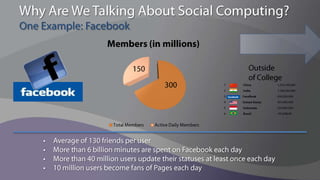
Why Are We Talking About Social Computing?One Example: Facebook2/3Outsideof CollegeAverage of 130 friends per userMore than 6 billion minutes are spent on Facebook each dayMore than 40 million users update their statuses at least once each day 10 million users become fans of Pages each day
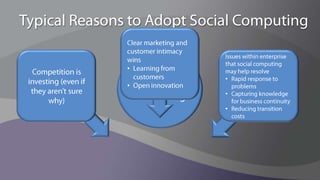
Typical Reasons to Adopt Social ComputingClear marketing and customer intimacy winsLearning from customers
Open innovationWhy Adopt Social Computing?Competition is investing (even if they aren’t sure why)Issues within enterprise  that social computing may help resolveRapid response to problems
Capturing knowledge for business continuity
Reducing transition costsThe Real Reason to Adopt Social ComputingIt IS the way people get things done in today’s networked economyYou can ignore it, but that won’t make it go away
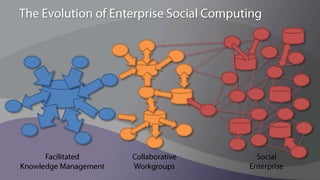
The Evolution of Enterprise Social ComputingFacilitatedKnowledge ManagementCollaborativeWorkgroupsSocialEnterprise
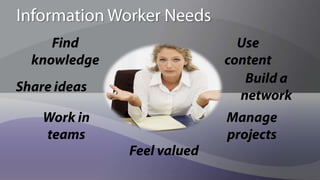
Information Worker NeedsFind knowledgeUsecontentBuild a networkShare ideasWork in teamsManage projectsFeel valued
IT NeedsReduce islandsControl costsProvide solutionsEnsure complianceDo more with lessMaintain security
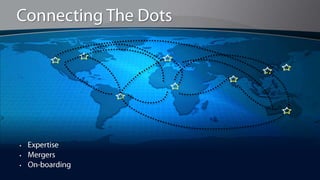
Connecting The DotsExpertiseMergersOn-boarding
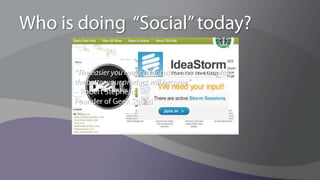
Who is doing “Social” today?“The easier you make it for customers to complain,the better your product will become." – Robert Stephens Founder of Geek Squad
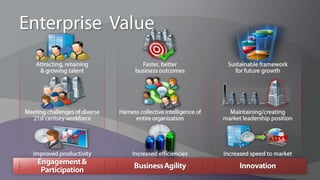
Enterprise  ValueAttracting, retaining & growing talentFaster, better business outcomesSustainable framework for future growthHarness collective intelligence of entire organizationMaintaining/creating market leadership positionMeeting challenges of diverse 21st century workforceEngagement & ParticipationBusiness AgilityInnovationIncreased efficienciesImproved productivityIncreased speed to market
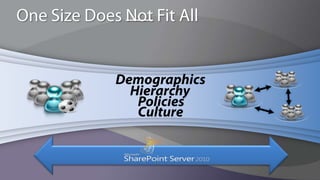
One Size Does Not Fit AllDemographicsHierarchyPoliciesCulture
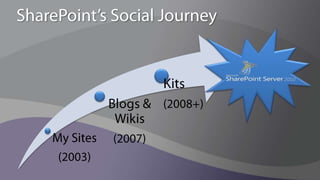
SharePoint’s Social Journey
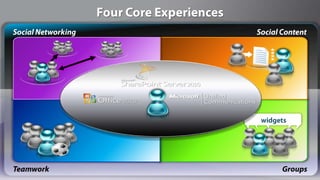
Four Core ExperiencesSocial NetworkingSocial ContentTeamworkGroupswidgets
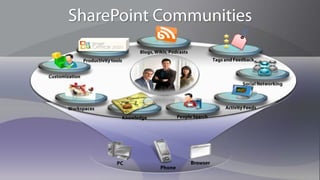
SharePoint CommunitiesTags and FeedbackBlogs, Wikis, PodcastsProductivity toolsCustomizationSocial NetworkingPeople SearchKnowledgeActivity FeedsWorkspacesPCPhoneBrowser
Benefits of Social ComputingRealized benefits:Faster, better innovationIncreased collaborationImproved knowledge managementEasier discovery of information and expertsIncreased relevancy of informationFaster on-boardingStrong ROI:Lower travel costsReduced email storage expensesDecreased recruiting and retention costsLower IT support expensesReduced printing budgetsDecreased premium content subscription fees

Share point 2010 Goes Social

  • 1.
    SharePoint 2010 GoesSocialAndy HopkinsPartner / Principal Consultantandrew.hopkins@chrysalisbts.com
  • 2.
    Social DemographicsUse ratingsand comments in ecommerce?Participate in a consumer social network?Read blogs and/or Wikipedia?Watch YouTube videos or podcasts?Author a blog?Author a blog with your name on it?Posted a video on YouTube?Created or edited a Wikipedia entry? Do this with SharePoint in your org?
  • 3.
    Why Are WeTalking About Social Computing?One Example: Facebook2/3Outsideof CollegeAverage of 130 friends per userMore than 6 billion minutes are spent on Facebook each dayMore than 40 million users update their statuses at least once each day 10 million users become fans of Pages each day
  • 4.
    Typical Reasons toAdopt Social ComputingClear marketing and customer intimacy winsLearning from customers
  • 5.
    Open innovationWhy AdoptSocial Computing?Competition is investing (even if they aren’t sure why)Issues within enterprise that social computing may help resolveRapid response to problems
  • 6.
    Capturing knowledge forbusiness continuity
  • 7.
    Reducing transition costsTheReal Reason to Adopt Social ComputingIt IS the way people get things done in today’s networked economyYou can ignore it, but that won’t make it go away
  • 8.
    The Evolution ofEnterprise Social ComputingFacilitatedKnowledge ManagementCollaborativeWorkgroupsSocialEnterprise
  • 9.
    Information Worker NeedsFindknowledgeUsecontentBuild a networkShare ideasWork in teamsManage projectsFeel valued
  • 10.
    IT NeedsReduce islandsControlcostsProvide solutionsEnsure complianceDo more with lessMaintain security
  • 11.
  • 12.
    Who is doing“Social” today?“The easier you make it for customers to complain,the better your product will become." – Robert Stephens Founder of Geek Squad
  • 13.
    Enterprise ValueAttracting,retaining & growing talentFaster, better business outcomesSustainable framework for future growthHarness collective intelligence of entire organizationMaintaining/creating market leadership positionMeeting challenges of diverse 21st century workforceEngagement & ParticipationBusiness AgilityInnovationIncreased efficienciesImproved productivityIncreased speed to market
  • 14.
    One Size DoesNot Fit AllDemographicsHierarchyPoliciesCulture
  • 15.
  • 16.
    Four Core ExperiencesSocialNetworkingSocial ContentTeamworkGroupswidgets
  • 17.
    SharePoint CommunitiesTags andFeedbackBlogs, Wikis, PodcastsProductivity toolsCustomizationSocial NetworkingPeople SearchKnowledgeActivity FeedsWorkspacesPCPhoneBrowser
  • 18.
    Benefits of SocialComputingRealized benefits:Faster, better innovationIncreased collaborationImproved knowledge managementEasier discovery of information and expertsIncreased relevancy of informationFaster on-boardingStrong ROI:Lower travel costsReduced email storage expensesDecreased recruiting and retention costsLower IT support expensesReduced printing budgetsDecreased premium content subscription fees

Editor's Notes

  • #12 Value of Business CommunitiesNow that we understand some of the challenges and trends around Enterprise Collaboration and Business Communities, let’s look at some of the Benefits you can derive from investing in a Community Platform.Engagement & Participation – Employee engagement and performance levels are critical factors in the long-term sustainability of any corporation. International research by Hewitt Associates indicates that companies with high levels of staff engagement have an average Total Shareholder Return of over 20%. For those with indifferent or destructive levels of employee engagement, average Total Shareholder Return is half that – less than 10%.Attracting, retaining & growing talent – Companies spend millions of dollars every year on recruiting the best candidates, keeping valuable employees, and grooming the their business leaders of tomorrow. An environment where employees feel engaged and valued is one that people want to join and stay at.Meeting challenges of diverse 21st century workforce – The 21st century workforce is the most diverse workforce ever. With globalization trends and demographic shifts, enterprises are facing increasing challenges catering to these diverse workstyles, disparate technology attitudes and different communication preferences. Communities help employees feel a sense of connectedness and belonging regardless of their age, race, or workstyle.Improved productivity – It’s a widely accepted corollary that happier employees  higher performing employees. Engaged employees tend to be more productive, profitable, reliable, and stay longer with their company than less engaged employees according to a Gallup study (http://gmj.gallup.com/content/24880/Gallup-Study-Engaged-Employees-Inspire-Company.aspx).Business Agility – The average life expectancy of a Fortune 500 company is just 40 to 50 years—and shrinking. Only those institutions that can adapt and respond quickly to shifts in market dynamics are likely to survive in the long term.Faster, better business outcomes – Business communities empower people at all levels of the organization to make decisions quickly through efficient communication with the right people, and easy access to the right information in order to drive the best possible outcomes.Harness collective intelligence of entire organization – One of the greatest assets of any company are its people. Maximizing the value of this asset is critical to staying ahead of the competition and paving the way for future growth. Communities create an environment where people are encouraged share their knowledge, connect with others and contribute to the overall IP of the organization.Increased efficiencies – An agile organization is a lean organization. Creating an infrastructure that supports horizontal decision making (versus top-down processes) and transparent knowledge sharing is a good way to reduce bureaucracy and redundancy.Innovation – The collaborative exchange of ideas is the single most critical element of long-term, sustainable innovation.Sustainable framework for future growth – Chances are, your next big business success will be the result of an idea from your employee(s). A community platform helps to create a framework for this innovation pipeline where your people can post, share and rate ideas with each other.Maintaining/creating market leadership position – Establishing an environment that fosters innovation at all levels and groups in an organization is a key competitive differentiator.Increased speed to market – The more efficient your innovation pipeline is, the more you’ll be able to reap the rewards of first-mover advantage.
  • #18 A few general observations which so far we have seen apply in every successful social solution.