What is biotechnology?
• Biotechnology = bios (life) + logos (study of or
essence)
– Literally ‘the study of tools from living things’
• CLASSIC: The word "biotechnology" was first used in
1917 to describe processes using living organisms to
make a product or run a process, such as industrial
fermentations. (robert Bud, The Uses of Life: A
History of Biotechnology)
• LAYMAN: Biotechnology began when humans began
to plant their own crops, domesticate animals,
ferment juice into wine, make cheese, and leaven
bread (Acess Excellence)
What is biotechnology?
• GENENTECH: Biotechnology is the process of
harnessing 'nature's own' biochemical tools to make
possible new products and processes and provide
solutions to society's ills (G. Kirk Raab, Former
President and CEO of Genentech)
• WEBSTER’S: The aspect of technology concerned
with the application of living organisms to meet the
needs and ends of man.
• WALL STREET: Biotechnology is the application of
genetic engineering and DNA technology to produce
therapeutic and medical diagnostic products and
processes. Biotech companies have one thing in
common - the use of genetic engineering and
manipulation of organisms at a molecular level.
What is biotechnology?
• Using scientific methods with organisms to produce
new products or new forms of organisms
• Any technique that uses living organisms or
substances from those organisms or substances from
those organisms to make or modify a product, to
improve plants or animals, or to develop
microorganisms for specific uses
What is biotechnology?
• Biotechnology is a multidisciplinarian in nature,
involving input from
•
•
•
•
•
•
•
•
•
•

Engineering
Computer Science
Cell and Molecular Biology
Microbiology
Genetics
Physiology
Biochemistry
Immunology
Virology
Recombinant DNA Technology  Genetic manipulation
of bacteria, viruses, fungi, plants and animals, often for
the development of specific products
History of Biotechnology
• The term “biotecnology" was coined in 1919
by Karl Ereky, an Hungarian engineer
• Traditional biotechnology has been used for
thousands of years to produce improved food
and health care products. Today, modern
biotechnology enables us to develop improved
products more safely and more rapidly than
ever before.
• Biotechnology in one form or another has
flourished since prehistoric times.
What are the stages of biotechnology?
• Ancient Biotechnology
• early history as related to food and shelter,
including domestication
• Classical Biotechnology
• built on ancient biotechnology
• fermentation promoted food production
• medicine
• Modern Biotechnology
• manipulates genetic information in organism
• genetic engineering
Ancient biotechnology
Fermented foods and beverages
• Long history of fermented foods since people
began to settle (9000 BC) (fervere –to boil)
• Often discovered by accident!
• Improved flavor and texture
• Deliberate contamination with bacteria or
fungi (molds)
• Examples:

•Bread
•Yogurt
•Sour cream
•Cheese
•Wine
•Beer
•Sauerkraut
Ancient biotechnology
Fermented foods and beverages
• Dough not baked immediately would undergo
spontaneous fermentation  would rise 
Eureka!!
• Uncooked fermented dough could be used to
ferment a new batch  no longer reliant on
“chance fermentation”
• 1866 – Louis Pasteur published his findings on
the direct link between yeast and sugars  CO2 +
ethanol (anaerobic process)
• 1915 – Production of baker’s yeast –
Saccharomyces cerevisiae
Classical biotechnology
Industry today exploits early discoveries of the fermentation
process for production of huge numbers of products
•Different types of beer
•Vinegar
•Glycerol
•Acetone
•Butanol
•Lactic acid
•Citric acid
•Antibiotics – WWII (Bioreactor developed for large
scale production, e.g. penicilin made by fermentation
of penicillium)
•Today many different antibiotics are produced by
microorganisms
•Cephalosporins, bacitracin, neomycin,
tetracycline……..)
Classical biotechnology
Chemical transformations to produce therapeutic
products
• Substrate  + Microbial Enzyme  Product
• Examples:
• Cholesterol  Steroids (cortisone, estrogen,
progesterone) (hydroxylation reaction  -OH
group added to cholesterol ring)
Classical biotechnology
Microbial synthesis of other commercially valuable
products
• Amino acids to improve food taste, quality or
preservation
• Enzymes (cellulase, collagenase, diastase,
glucose isomerase, invertase, lipase, pectinase,
protease)
• Vitamins
• Pigments
Modern biotechnology
• Cell biology
• Structure, organization and reproduction
• Biochemistry
• Synthesis of organic compounds
• Cell extracts for fermentation (enzymes
versus whole cells)
• Genetics

• Resurrection of Gregor Mendel’s findings  1866 
1900s
• Theory of Inheritance (ratios dependent on traits of
parents)
• Theory of Transmission factors
• W.H. Sutton – 1902
• Chromosomes = inheritance factors
• T.H. Morgan – Drosophila melanogaster
Modern biotechnology
Molecular Biology
• Beadle and Tatum (Neurospora crassa)
• One gene, one enzyme hypothesis
• Charles Yanofsky  colinearity
between mutations in genes and amino
acid sequence (E. coli)
• Genes determine structure of proteins
• Hershey and Chase – 1952
• T2 bacteriophage – 32P DNA, not 35S protein
is the material that encodes genetic
information
Modern biotechnology
• Watson, Crick, Franklin and Wilkins (1953)
• X-ray crystallography
• 1962 – Nobel Prize awarded to three men
• Chargaff – DNA base ratios
• Structural model of DNA developed

• DNA Revolution – Promise and Controversy!!!
• Scientific foundation of modern biotechnology
• based on knowledge of DNA, its replication,
repair and use of enzymes to carry out in vitro
splicing DNA fragments
Modern biotechnology
• Breaking the Genetic Code – Finding the Central
Dogma
• An “RNA Club” organized by George Gamow (1954)
assembled to determine the role of RNA in protein
synthesis
• Vernon Ingram’s research on sickle cell anemia (1956)
tied together inheritable diseases with protein structure
• Link made between amino acids and DNA

• Radioactive tagging experiments demonstrate
intermediate between DNA and protein = RNA
• RNA movement tracked from nucleus to cytoplasm  site of
protein synthesis
Modern biotechnology
• DNA



Transcription

RNA



Protein

Translation

Genetic code determined for all 20 amino acids by
Marshal Nirenberg and Heinrich Matthaei and Gobind
Khorana – Nobel Prize – 1968
• 3 base sequence = codon
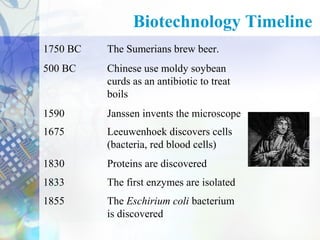
Biotechnology Timeline
1750 BC

The Sumerians brew beer.

500 BC

Chinese use moldy soybean
curds as an antibiotic to treat
boils

1590

Janssen invents the microscope

1675

Leeuwenhoek discovers cells
(bacteria, red blood cells)

1830

Proteins are discovered

1833

The first enzymes are isolated

1855

The Eschirium coli bacterium
is discovered
Biotechnology Timeline
1859

Charles Darwin publishes On
the Origin of Species

1864

Louis Pasteur shows all living
things are produced by other
living things

1865

The age of genetics begins

1902

Walter Sutton coins the term
‘gene’ - proposed that
chromosomes carry genes
Biotechnology Timeline
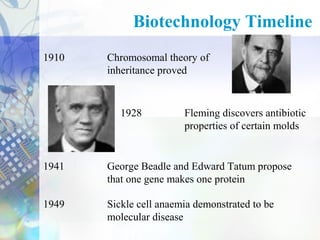
1910

Chromosomal theory of
inheritance proved

1928

Fleming discovers antibiotic
properties of certain molds

1941

George Beadle and Edward Tatum propose
that one gene makes one protein

1949

Sickle cell anaemia demonstrated to be
molecular disease
Biotechnology Timeline
1952

The ‘Waring Blender’
experiment

1953
unravelled

The double helix is

1967

The genetic code is cracked

1973

Recombinant DNA
technology begins

1975

First international conference
on recombinant DNA
technology
Biotechnology Timeline
1975

DNA sequencing discovered

1975

Monoclonal antibody
technology introduced

1978

Genentech Inc. established

1978

Genentech use genetic engineering to produce
human insulin in E.coli - 1980 IPO of $89

1978

Kary Mullis discovers PCR
Biotechnology Timeline
1989

The Human Genome Project begins

1990

First use of gene therapy

1990

First product of recombinant
DNA technology introduced
into US food chain

1993

FDA announces that
transgenic food is safe

1994

The FLAVRSAVR tomato first genetically engineered
whole food
Biotechnology Timeline
1996

First mammal cloned from adult
cells

1990s

First conviction using genetic
fingerprinting

1996

Development of Affymetrix
GeneChip

1997

First artificial chromosome
History of Biotechnology
1998

Human embryonic stem cells
grown

1999

Celera announces completion
of Drosophilia genome
sequence

2000

90% of Human Genome
sequence published on web

2001

Human genome project
complete
GM Crops World-wide
 Over

30 GM Crops.

 Including the following: maize, wheat, soya beans,
papaya,
raspberries, tomatoes, canola, potatoes,
peppers, cabbage, cucumber, squash, cotton,
grapes, carrots and chicory.
Trees, turf, flowers
GLOBAL AREA OF GM CROPS
Global Arear of GM Crops, 1996 to 2001
60
50

39.9

40

1
2
3

27.8

30

4

20
10

44.2

50

11

5

1.7

6

0
1

2

3

4

5

YEARS

30 FOLD INCREASE SINCE 1996
Source: Clive James, ISAAA

6
Where are we with GM crops world
wide?
 GM crop planting globally increased by 11% in
2000 and >10% in 2001. It has slowed down due
to slow development of new markets and lack of
products with consumer benefit
 More developing countries are commericalising
and investing in crop biotech
 China wants to be the Asian centre of excellence
 Between 1997 and 1999 China approved 26
applications for commercialisation of GMOs, 59
for environmental releases and 73 for field trials
India

increasing investment
in genomics and biotech ($85
million on genomics in next 5
years)
Genetic Engineering Example:
 Researchers at Jawaharlal Nehru University in India have developed a genetically
engineered potato that produces about one-third to one-half more protein than
usual, including substantial amounts of all the essential amino acids.
 Protein deficiency is widespread in India and potato is the staple food of the
poorest people.
 The “protato” was developed by a coalition of Indian charities, scientists,
government institutes and industry as part of a 15-year campaign against
childhood mortality.
 The campaign aims to eliminate childhood mortality by providing children with
clean water, better food and vaccines.
 The protato includes a gene from the amaranth plant, a high-protein grain that is
native to South America and widely sold in Western health-food stores.
 The protato has passed preliminary field trials and tests for allergens and toxins.
 Final approval from the Indian Government is probably at least five years away.
Number of health-biotechnology papers
published by developing countries
Blooming Biotech
South Korea
China
India
Brazil
South Africa
Cuba
Egypt
0

50

100

150

1991

200

250

300

350

2002

Source: The Economist – Dec 11, 2004; Institute for Scientific Information; Science Matrix
24-Jan-06

BINASIA - INDIA

31
Number of health-biotechnology patents
(Major developing countries) issued by US in 2003

India
South Korea
China
Brazil
Cuba
South Africa
Egypt

0

5

10

15

20

25

30

35

Source: The Economist – Dec 11, 2004; Institute for Scientific Information; United States Patent and Trademark Office
24-Jan-06

BINASIA - INDIA

32
Agriculture Biotechnology - Crops
Focus :
- Improved Productivity

- Drought, Salinity Tolerance
- Reduced Yield due to Pests/Diseases
- Nutritional Enhancement

Crops :
- Rice, Wheat, Cotton, Mustard , Chickpea, Potato

Pigeonpea, Mungbean, Sugarcane

Strategy :
- Transgenics & Marker based Molecular Breeding

- Cloning and Characterization of New Genes and
Promoters
24-Jan-06

BINASIA - INDIA

33
Crops
Wheat Rust: Durable resistance to leaf and stripe rusts using
molecular marker technology in bread wheat (DWR,DWR-RS,
PAU, ARI & NCL)
Rice: Salinity and dehydration stress tolerance: Cloning of
responsive genes, their promoters and development of
transgenics (ICGEB, UDSC, IARI, BI, UOH)
Sugarcane: 12,956 EST’s generated and deposited in genbank.
9000 genomic clones and several thousand cDNA clones
developed from high sugar and red-rot resistant lines
Crop Improvement for Better Nutrition in rice, sweet potato and
cassava using AmA1 Gene
Use of molecular marker technology approach in wheat quality
breeding
24-Jan-06

BINASIA - INDIA

34
Transgenic Research in India
Target Crops/ Vegetables
Cotton, Corn, Mustard, Rice, Soybean, Potato,
Tobacco, Coffee, Tomato, Brinjal, Cauliflower, Pea,
Cabbage, Banana, Muskmelon, Pigeonpea, Chickpea,
Bell-pepper, Blackgram, Chilli, Watermelon etc.
Transgenes Employed
Bt. toxin genes, Herbicide tolerant genes (CP4 EPSPS,
Bar gene), Xa21, ctx-B and tcp of V.cholera, Chitinase,
Glucanase, ACC synthase, RIP, Protease Inhibitor,
Lectin, Ama-1, OXDC gene, Rabies glycoprotein gene,
Bar, Barnase, Barstar, GNA gene, Vip-3 gene, Bacterial
Blight Resistance gene, Osmotin etc.

24-Jan-06

BINASIA - INDIA

35
Transgenic Crops under Trial
• Under green house trial
: 19
• Under limited field trial
: 3
(Rice, Mungbean, Mustard)
• Large scale field trial
: 1
(Cotton)
• Released for commercial production : 1
(Cotton)
24-Jan-06

BINASIA - INDIA

36
Plant Biotechnology
– Areas : Forestry, Horticulture & Plantation Crops
– Status
• 57 regeneration systems documented
• Protocols standardized for 20 plant species, 10 technologies
transferred to industry – Eucalyptus, Bamboo, Teak, Sugarcane,
Potato, Black pepper, Coffee, Citrus
• Ongoing R&D - Transgenics
– Tomato, Grapes, Banana - shelf life
– Chilli, Pepper, Ginger, Cardamom – Disease resistance
– Populus, leucaena - reduced lignin
• Germplasm characterization – Teak, Eucalyptus, Casurina
– International Solanaceae Genome initiative launched
• India to sequence chromosome 5 of tomato
• Functional genomics of tomato – nutritional quality, shelf life,
disease resistance
– Production and demonstration of quality planting material of Bamboo
24-Jan-06

BINASIA - INDIA

37
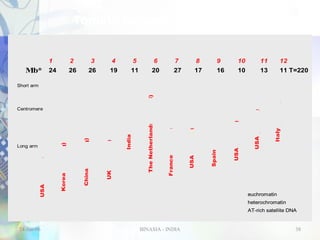
Tomato Genome Sequencing
1

2

4

5

6

7

8

9

10

11

12

26

Mb* 24

3
26

19

11

20

27

17

16

10

13

11 T=220

24-Jan-06

Italy (funded)

USA (funded)

USA (funded)

Spain (funded)

USA (funded)

France (funded)

India (?)

UK (pending)

China (pending)

USA (funded)

Long arm

Korea (pending)

Centromere

The Netherlands (funded)

Short arm

euchromatin

Eu
Japan
India

heterochromatin
AT-rich satellite DNA

BINASIA - INDIA

38
Animal Biotechnology
– Diagnostics for Peste-des-Petitis
Ruminants (PPR) detection
commercialized
– Reconstituted Bovine collagen for wound
and burn healing commercialized
– Multicentric programme on buffalo
genomics launched : Characterisation of
traits of economic importance
– Multicentric programme on bovine
tuberculosis
– Programme on animal nutrition
24-Jan-06

BINASIA - INDIA

39
Aquaculture & Marine
Bacterial immunostimulant for shrimp health management developed
Bioreactor system developed for water quality management in prawn hatchery
New source of insulin from carp adipose tissue
Quality agar extracted from seaweed (Gelidiella acerosa)
Efficacy of DNA-based vaccine for Aeromonas infection in carps under
evaluation
Shrimp Genomics launched – Comparative and functional genomics
Diagnostics and vaccines transferred to industry
• Immunodiagnostic kit for detection of bacterial pathogens in finfish and
shellfish
• Combi kit for simultaneous detection of White Spot Shrimp Virus and
Monodon Baculo Virus
• Heat killed whole cell vibrio vaccine, shows immune response in shrimp
• Immunodot detection kit for white spot shrimp virus
Technology ready for transfer
• Bioreactor technology in shrimp hatcheries through bacterial
conservation for denitrification
24-Jan-06

BINASIA - INDIA

40
Seribiotechnology
• Improved quality and productivity in silk
– Silkworm genome sequencing
– Over 400 molecular markers generated
– India participating in International Consortium on Lepidopteran
Genomics: More than 10,000 ESTs of muga silkworm and mori
silkworm characterized

• Three high yielding hybrids of silkworm released to farmers
• Network projects initiated for use of molecular markers in breeding
of disease-resistant silkworm and pest- and disease-resistant
mulberry
• Molecular characteriztion of non-mulberry silkworm (Tasar, muga,
eri)
• Spider silk
– Biophysical properties of spider silk proteins produced by
Indian species
– Sourcing of spider silk genes and expression in Bombyx mori
– Prospecting of Indian spiders venom for therapeutic purposes
– Application of nanobiotechnology to spider silk
24-Jan-06

BINASIA - INDIA

41
Medicinal & Aromatic Plants
• Four national gene banks established - about 3500 accessions
• Two specialized germplasm banks set up for plants used in Indian
System of Medicines
• Production of high value therapeutic compounds in cell culture
(Podophyllotoxin, guggulsterones Z&E, camptothecin and azadirachtin)
• Isolation and characterization of new thereapeutic leads (for anticancer,
antiamoebic, antidiabetic, bioenhancers, immunomodulatory).
• Clinical trial of standardized herbal preparations - Terminalia arjuna – left
ventricular dysfunction
• Five technologies transferred to industry; several other leads under
discussion with industry
• Herbals for veterinary health care - priorities identified
• Functional genomics of selected medicinal and aromatic plants
• Plants as bioreactor for production of biomolecules (antigens for cholera,
rabies), antibodies for therapeutics and industrial enzymes

24-Jan-06

BINASIA - INDIA

42
Biofertilizers

24-Jan-06

• 23,000 ha demonstrated for use of
biofertilizers; 50,000 farmers benefited
• 10 packages for Integrated Nutrient
Management developed for specific
cropping system of varied agroclimatic
zones
• A network project on development of
efficient strains of biofertilisers launched at
11 centres
• Liquid biofertilizer technology
– being developed
BINASIA - INDIA

43
Biopesticides
• Technology Development and Demonstration
– 24 Integrated Pest Management technology
packages developed; 7 transferred to industry
– Over 150,000 ha covered in different
agroclimatic zones; 65,000 farmers benefited
– Insect sex pheromones successfully
synthesized and field-tested for the mass
trapping of brinjal shoot and fruit borer
– More than 615 plant extracts prospected as
source of pesticides; 11 promising leads short
listed for further investigation
• Product Development
– ‘Bioprahar’: biopesticide (for cabbage and
cauliflower) developed by ICGEB, launched
commercially (2004)
24-Jan-06

BINASIA - INDIA

44
Bioprospecting
– Bioprospecting of genes / molecules –
• 96 stress related genes identified, characterized and
cloned, salt resistance gene transferred to rice and mung
bean, field trials of transgenic rice being conducted
• Product development –
– Microbial biofertilizers for coastal region
– Biopesticide for bollworm (Helicoverpa)
– SOD antioxidant – skin cream
– Over 4000 plant species from Western Himalayas and
Western ghats screened for natural dyes; nine short listed as
potential sources
– Network project on lac biotechnology initiated
– Chemical and genetic profiling, conservation –
6 endangered medicinal plant species
24-Jan-06

BINASIA - INDIA

45
Microbial Diversity
– Arid Zones : 48 Saline tolerant algal species, screened for pigment
production, soil conditioning and nitrogen fixation
– Cold Habitats : > 100 bacterial species isolated from soil and water
samples from Antarctica
– Hot Springs and sulfur springs : > 150 Actinomycetes species isolated,
potential rifamycin producer identified
– Hydrocarbon contaminated Sites : 12 oil refineries screened, > 350
bacteria species isolated, thermophilic Bacterial consortium developed for
enhancing Oil recovery from Oil wells
– Marine Sources: > 500 Bacterial isolates screened for secondary
metabolites, benzoate and phenol degraders identified
– Forest Belts: Virgin ecosystems, novel entomopathogenic and keratinolytic
fungi Isolated and identified
– Enhancement of Oil Recovery from dead Oil wells - Bacterial Consortium
developed which on being injected in sick oil wells under high pressure
leads to oil recovery, tested in 25 Oil Wells of ONGC, helped in extraction
of 4500 cubic meters of oil worth US$675000
24-Jan-06

BINASIA - INDIA

46
Environment Biotechnology
• Conservation of endangered animals – especially big
cats – through embryo transfer technology and tissue
banking
• Use of lichens as indicators of environmental pollution
• Bioremediation of degraded ecosystems
• Green technologies to treat industrial effluents (paper
& pulp, dyes, distilleries, tanneries etc)
• Bioscrubber for removal of obnoxious industrial
emissions
• 14 technology packages developed; 5 under use by
industry
• Programme on microbial approaches to combat global
warming
24-Jan-06

BINASIA - INDIA

47
Medical Biotechnology
•
•
•
•
•
•
•
24-Jan-06

Vaccines
Diagnostics
Therapeutics
Stem Cell Technology
Biomedical Engineering
Nanomedicines
Clinical Trials and Clinical Research
BINASIA - INDIA

48
Vaccines
• Rabies
: DNA vaccine, phase III animal
trials
completed.
• Cholera
: Recombinant oral vaccine, Phase
II
trial.
• Malaria
: Phase I clinical trials initiated.
• Rotavirus : Phase I clinical trials underway
• JEV
: Vaccine technology transferred to
industry
• HIV/AIDS
: DNA candidate for subtype ‘C’
developed
• Anthrax
: Phase III clinical trials initiated.
• Infectious Bovine Rhinotracheitis : Commercialised
(cattle)
24-Jan-06

BINASIA - INDIA

49
Diagnostics
Transferred to the
Industries & Launched
in the Market :
Western Blot for HIV-I & II :
HIV/AIDS
Naked Eye Agglutination :
HIV/AIDS
System (NEVA)
ELISA
: Hepatitis ‘C’
ELISA
: Leishmaniasis
ELISA
: Alpha-feto
Protein
(Pregnant
Women)

Transferred, yet to be
launched :
IgM Mac ELISA
Encephalitis

: Dengue
Japanese

West Nile
IgM – ELISA
: Hepatitis ‘A’
Urine Based ELISA : Reproductive

Under Development &
Negotiations
for Transfer :
DAT
: Toxoplasmosis
Haemagglutination Assay :
Leishmaniasis
IFA
: Rabies
Species Specific Tests : Snake
Bites
PCR Assay
: Tuberculosis
Multiplex PCR : STD
PCR
: Leptospirosis
In-vitro Assay : Anti-Inflammatory
Drugs
Immunochromatogrpahy/ :
Tuberculosis
/ ELISA Assay
PCR Assay
: Typhoid

Hormones
24-Jan-06

BINASIA - INDIA

50
Biotech Products in Indian market
•
•
•
•
•
•
•
•
•
•
•
•
24-Jan-06

r DNA Hep ‘B’ vaccine
Recombinant streptokinase
Erythropoietin
α, β, γ – interferon
Haemophilus influenzae B vaccine
Human insulin
Human Growth Hormone
Human Interleukin
Streptokinase
Granulocyte Colony Stimulating Factor
Follicle Stimulating Hormone
Tissue Plasminogen Activator
BINASIA - INDIA

51
Indian Biotechnology Industry
Number of biotech companies
: 300
Global ranking in terms biotech companies : 11
Investment growth in last 5 years
: 50 % per
annum
Annual Turnover (Apr 04 – Mar 05) : US $ 1.07 Billion
Annual increase
: 37 %
Percentage of global business
(2004-05)
: 1.6 %
(2003-04)
: 1.5 %
(2002-03)
: 1.2 %
Exports
: 43 %
Major areas : Biopharma, Bioservices, Bioindustries,
Bioagriculture, bioinformatics, Biosupplies
24-Jan-06

BINASIA - INDIA

52

Sharda bt ppt

  • 2.
    What is biotechnology? •Biotechnology = bios (life) + logos (study of or essence) – Literally ‘the study of tools from living things’ • CLASSIC: The word "biotechnology" was first used in 1917 to describe processes using living organisms to make a product or run a process, such as industrial fermentations. (robert Bud, The Uses of Life: A History of Biotechnology) • LAYMAN: Biotechnology began when humans began to plant their own crops, domesticate animals, ferment juice into wine, make cheese, and leaven bread (Acess Excellence)
  • 3.
    What is biotechnology? •GENENTECH: Biotechnology is the process of harnessing 'nature's own' biochemical tools to make possible new products and processes and provide solutions to society's ills (G. Kirk Raab, Former President and CEO of Genentech) • WEBSTER’S: The aspect of technology concerned with the application of living organisms to meet the needs and ends of man. • WALL STREET: Biotechnology is the application of genetic engineering and DNA technology to produce therapeutic and medical diagnostic products and processes. Biotech companies have one thing in common - the use of genetic engineering and manipulation of organisms at a molecular level.
  • 4.
    What is biotechnology? •Using scientific methods with organisms to produce new products or new forms of organisms • Any technique that uses living organisms or substances from those organisms or substances from those organisms to make or modify a product, to improve plants or animals, or to develop microorganisms for specific uses
  • 5.
    What is biotechnology? •Biotechnology is a multidisciplinarian in nature, involving input from • • • • • • • • • • Engineering Computer Science Cell and Molecular Biology Microbiology Genetics Physiology Biochemistry Immunology Virology Recombinant DNA Technology  Genetic manipulation of bacteria, viruses, fungi, plants and animals, often for the development of specific products
  • 6.
    History of Biotechnology •The term “biotecnology" was coined in 1919 by Karl Ereky, an Hungarian engineer • Traditional biotechnology has been used for thousands of years to produce improved food and health care products. Today, modern biotechnology enables us to develop improved products more safely and more rapidly than ever before. • Biotechnology in one form or another has flourished since prehistoric times.
  • 7.
    What are thestages of biotechnology? • Ancient Biotechnology • early history as related to food and shelter, including domestication • Classical Biotechnology • built on ancient biotechnology • fermentation promoted food production • medicine • Modern Biotechnology • manipulates genetic information in organism • genetic engineering
  • 8.
    Ancient biotechnology Fermented foodsand beverages • Long history of fermented foods since people began to settle (9000 BC) (fervere –to boil) • Often discovered by accident! • Improved flavor and texture • Deliberate contamination with bacteria or fungi (molds) • Examples: •Bread •Yogurt •Sour cream •Cheese •Wine •Beer •Sauerkraut
  • 9.
    Ancient biotechnology Fermented foodsand beverages • Dough not baked immediately would undergo spontaneous fermentation  would rise  Eureka!! • Uncooked fermented dough could be used to ferment a new batch  no longer reliant on “chance fermentation” • 1866 – Louis Pasteur published his findings on the direct link between yeast and sugars  CO2 + ethanol (anaerobic process) • 1915 – Production of baker’s yeast – Saccharomyces cerevisiae
  • 10.
    Classical biotechnology Industry todayexploits early discoveries of the fermentation process for production of huge numbers of products •Different types of beer •Vinegar •Glycerol •Acetone •Butanol •Lactic acid •Citric acid •Antibiotics – WWII (Bioreactor developed for large scale production, e.g. penicilin made by fermentation of penicillium) •Today many different antibiotics are produced by microorganisms •Cephalosporins, bacitracin, neomycin, tetracycline……..)
  • 11.
    Classical biotechnology Chemical transformationsto produce therapeutic products • Substrate  + Microbial Enzyme  Product • Examples: • Cholesterol  Steroids (cortisone, estrogen, progesterone) (hydroxylation reaction  -OH group added to cholesterol ring)
  • 12.
    Classical biotechnology Microbial synthesisof other commercially valuable products • Amino acids to improve food taste, quality or preservation • Enzymes (cellulase, collagenase, diastase, glucose isomerase, invertase, lipase, pectinase, protease) • Vitamins • Pigments
  • 13.
    Modern biotechnology • Cellbiology • Structure, organization and reproduction • Biochemistry • Synthesis of organic compounds • Cell extracts for fermentation (enzymes versus whole cells) • Genetics • Resurrection of Gregor Mendel’s findings  1866  1900s • Theory of Inheritance (ratios dependent on traits of parents) • Theory of Transmission factors • W.H. Sutton – 1902 • Chromosomes = inheritance factors • T.H. Morgan – Drosophila melanogaster
  • 14.
    Modern biotechnology Molecular Biology •Beadle and Tatum (Neurospora crassa) • One gene, one enzyme hypothesis • Charles Yanofsky  colinearity between mutations in genes and amino acid sequence (E. coli) • Genes determine structure of proteins • Hershey and Chase – 1952 • T2 bacteriophage – 32P DNA, not 35S protein is the material that encodes genetic information
  • 15.
    Modern biotechnology • Watson,Crick, Franklin and Wilkins (1953) • X-ray crystallography • 1962 – Nobel Prize awarded to three men • Chargaff – DNA base ratios • Structural model of DNA developed • DNA Revolution – Promise and Controversy!!! • Scientific foundation of modern biotechnology • based on knowledge of DNA, its replication, repair and use of enzymes to carry out in vitro splicing DNA fragments
  • 16.
    Modern biotechnology • Breakingthe Genetic Code – Finding the Central Dogma • An “RNA Club” organized by George Gamow (1954) assembled to determine the role of RNA in protein synthesis • Vernon Ingram’s research on sickle cell anemia (1956) tied together inheritable diseases with protein structure • Link made between amino acids and DNA • Radioactive tagging experiments demonstrate intermediate between DNA and protein = RNA • RNA movement tracked from nucleus to cytoplasm  site of protein synthesis
  • 17.
    Modern biotechnology • DNA  Transcription RNA  Protein Translation Geneticcode determined for all 20 amino acids by Marshal Nirenberg and Heinrich Matthaei and Gobind Khorana – Nobel Prize – 1968 • 3 base sequence = codon
  • 18.
    Biotechnology Timeline 1750 BC TheSumerians brew beer. 500 BC Chinese use moldy soybean curds as an antibiotic to treat boils 1590 Janssen invents the microscope 1675 Leeuwenhoek discovers cells (bacteria, red blood cells) 1830 Proteins are discovered 1833 The first enzymes are isolated 1855 The Eschirium coli bacterium is discovered
  • 19.
    Biotechnology Timeline 1859 Charles Darwinpublishes On the Origin of Species 1864 Louis Pasteur shows all living things are produced by other living things 1865 The age of genetics begins 1902 Walter Sutton coins the term ‘gene’ - proposed that chromosomes carry genes
  • 20.
    Biotechnology Timeline 1910 Chromosomal theoryof inheritance proved 1928 Fleming discovers antibiotic properties of certain molds 1941 George Beadle and Edward Tatum propose that one gene makes one protein 1949 Sickle cell anaemia demonstrated to be molecular disease
  • 21.
    Biotechnology Timeline 1952 The ‘WaringBlender’ experiment 1953 unravelled The double helix is 1967 The genetic code is cracked 1973 Recombinant DNA technology begins 1975 First international conference on recombinant DNA technology
  • 22.
    Biotechnology Timeline 1975 DNA sequencingdiscovered 1975 Monoclonal antibody technology introduced 1978 Genentech Inc. established 1978 Genentech use genetic engineering to produce human insulin in E.coli - 1980 IPO of $89 1978 Kary Mullis discovers PCR
  • 23.
    Biotechnology Timeline 1989 The HumanGenome Project begins 1990 First use of gene therapy 1990 First product of recombinant DNA technology introduced into US food chain 1993 FDA announces that transgenic food is safe 1994 The FLAVRSAVR tomato first genetically engineered whole food
  • 24.
    Biotechnology Timeline 1996 First mammalcloned from adult cells 1990s First conviction using genetic fingerprinting 1996 Development of Affymetrix GeneChip 1997 First artificial chromosome
  • 25.
    History of Biotechnology 1998 Humanembryonic stem cells grown 1999 Celera announces completion of Drosophilia genome sequence 2000 90% of Human Genome sequence published on web 2001 Human genome project complete
  • 26.
    GM Crops World-wide Over 30 GM Crops.  Including the following: maize, wheat, soya beans, papaya, raspberries, tomatoes, canola, potatoes, peppers, cabbage, cucumber, squash, cotton, grapes, carrots and chicory. Trees, turf, flowers
  • 27.
    GLOBAL AREA OFGM CROPS Global Arear of GM Crops, 1996 to 2001 60 50 39.9 40 1 2 3 27.8 30 4 20 10 44.2 50 11 5 1.7 6 0 1 2 3 4 5 YEARS 30 FOLD INCREASE SINCE 1996 Source: Clive James, ISAAA 6
  • 28.
    Where are wewith GM crops world wide?  GM crop planting globally increased by 11% in 2000 and >10% in 2001. It has slowed down due to slow development of new markets and lack of products with consumer benefit  More developing countries are commericalising and investing in crop biotech  China wants to be the Asian centre of excellence  Between 1997 and 1999 China approved 26 applications for commercialisation of GMOs, 59 for environmental releases and 73 for field trials
  • 29.
    India increasing investment in genomicsand biotech ($85 million on genomics in next 5 years)
  • 30.
    Genetic Engineering Example: Researchers at Jawaharlal Nehru University in India have developed a genetically engineered potato that produces about one-third to one-half more protein than usual, including substantial amounts of all the essential amino acids.  Protein deficiency is widespread in India and potato is the staple food of the poorest people.  The “protato” was developed by a coalition of Indian charities, scientists, government institutes and industry as part of a 15-year campaign against childhood mortality.  The campaign aims to eliminate childhood mortality by providing children with clean water, better food and vaccines.  The protato includes a gene from the amaranth plant, a high-protein grain that is native to South America and widely sold in Western health-food stores.  The protato has passed preliminary field trials and tests for allergens and toxins.  Final approval from the Indian Government is probably at least five years away.
  • 31.
    Number of health-biotechnologypapers published by developing countries Blooming Biotech South Korea China India Brazil South Africa Cuba Egypt 0 50 100 150 1991 200 250 300 350 2002 Source: The Economist – Dec 11, 2004; Institute for Scientific Information; Science Matrix 24-Jan-06 BINASIA - INDIA 31
  • 32.
    Number of health-biotechnologypatents (Major developing countries) issued by US in 2003 India South Korea China Brazil Cuba South Africa Egypt 0 5 10 15 20 25 30 35 Source: The Economist – Dec 11, 2004; Institute for Scientific Information; United States Patent and Trademark Office 24-Jan-06 BINASIA - INDIA 32
  • 33.
    Agriculture Biotechnology -Crops Focus : - Improved Productivity - Drought, Salinity Tolerance - Reduced Yield due to Pests/Diseases - Nutritional Enhancement Crops : - Rice, Wheat, Cotton, Mustard , Chickpea, Potato Pigeonpea, Mungbean, Sugarcane Strategy : - Transgenics & Marker based Molecular Breeding - Cloning and Characterization of New Genes and Promoters 24-Jan-06 BINASIA - INDIA 33
  • 34.
    Crops Wheat Rust: Durableresistance to leaf and stripe rusts using molecular marker technology in bread wheat (DWR,DWR-RS, PAU, ARI & NCL) Rice: Salinity and dehydration stress tolerance: Cloning of responsive genes, their promoters and development of transgenics (ICGEB, UDSC, IARI, BI, UOH) Sugarcane: 12,956 EST’s generated and deposited in genbank. 9000 genomic clones and several thousand cDNA clones developed from high sugar and red-rot resistant lines Crop Improvement for Better Nutrition in rice, sweet potato and cassava using AmA1 Gene Use of molecular marker technology approach in wheat quality breeding 24-Jan-06 BINASIA - INDIA 34
  • 35.
    Transgenic Research inIndia Target Crops/ Vegetables Cotton, Corn, Mustard, Rice, Soybean, Potato, Tobacco, Coffee, Tomato, Brinjal, Cauliflower, Pea, Cabbage, Banana, Muskmelon, Pigeonpea, Chickpea, Bell-pepper, Blackgram, Chilli, Watermelon etc. Transgenes Employed Bt. toxin genes, Herbicide tolerant genes (CP4 EPSPS, Bar gene), Xa21, ctx-B and tcp of V.cholera, Chitinase, Glucanase, ACC synthase, RIP, Protease Inhibitor, Lectin, Ama-1, OXDC gene, Rabies glycoprotein gene, Bar, Barnase, Barstar, GNA gene, Vip-3 gene, Bacterial Blight Resistance gene, Osmotin etc. 24-Jan-06 BINASIA - INDIA 35
  • 36.
    Transgenic Crops underTrial • Under green house trial : 19 • Under limited field trial : 3 (Rice, Mungbean, Mustard) • Large scale field trial : 1 (Cotton) • Released for commercial production : 1 (Cotton) 24-Jan-06 BINASIA - INDIA 36
  • 37.
    Plant Biotechnology – Areas: Forestry, Horticulture & Plantation Crops – Status • 57 regeneration systems documented • Protocols standardized for 20 plant species, 10 technologies transferred to industry – Eucalyptus, Bamboo, Teak, Sugarcane, Potato, Black pepper, Coffee, Citrus • Ongoing R&D - Transgenics – Tomato, Grapes, Banana - shelf life – Chilli, Pepper, Ginger, Cardamom – Disease resistance – Populus, leucaena - reduced lignin • Germplasm characterization – Teak, Eucalyptus, Casurina – International Solanaceae Genome initiative launched • India to sequence chromosome 5 of tomato • Functional genomics of tomato – nutritional quality, shelf life, disease resistance – Production and demonstration of quality planting material of Bamboo 24-Jan-06 BINASIA - INDIA 37
  • 38.
    Tomato Genome Sequencing 1 2 4 5 6 7 8 9 10 11 12 26 Mb*24 3 26 19 11 20 27 17 16 10 13 11 T=220 24-Jan-06 Italy (funded) USA (funded) USA (funded) Spain (funded) USA (funded) France (funded) India (?) UK (pending) China (pending) USA (funded) Long arm Korea (pending) Centromere The Netherlands (funded) Short arm euchromatin Eu Japan India heterochromatin AT-rich satellite DNA BINASIA - INDIA 38
  • 39.
    Animal Biotechnology – Diagnosticsfor Peste-des-Petitis Ruminants (PPR) detection commercialized – Reconstituted Bovine collagen for wound and burn healing commercialized – Multicentric programme on buffalo genomics launched : Characterisation of traits of economic importance – Multicentric programme on bovine tuberculosis – Programme on animal nutrition 24-Jan-06 BINASIA - INDIA 39
  • 40.
    Aquaculture & Marine Bacterialimmunostimulant for shrimp health management developed Bioreactor system developed for water quality management in prawn hatchery New source of insulin from carp adipose tissue Quality agar extracted from seaweed (Gelidiella acerosa) Efficacy of DNA-based vaccine for Aeromonas infection in carps under evaluation Shrimp Genomics launched – Comparative and functional genomics Diagnostics and vaccines transferred to industry • Immunodiagnostic kit for detection of bacterial pathogens in finfish and shellfish • Combi kit for simultaneous detection of White Spot Shrimp Virus and Monodon Baculo Virus • Heat killed whole cell vibrio vaccine, shows immune response in shrimp • Immunodot detection kit for white spot shrimp virus Technology ready for transfer • Bioreactor technology in shrimp hatcheries through bacterial conservation for denitrification 24-Jan-06 BINASIA - INDIA 40
  • 41.
    Seribiotechnology • Improved qualityand productivity in silk – Silkworm genome sequencing – Over 400 molecular markers generated – India participating in International Consortium on Lepidopteran Genomics: More than 10,000 ESTs of muga silkworm and mori silkworm characterized • Three high yielding hybrids of silkworm released to farmers • Network projects initiated for use of molecular markers in breeding of disease-resistant silkworm and pest- and disease-resistant mulberry • Molecular characteriztion of non-mulberry silkworm (Tasar, muga, eri) • Spider silk – Biophysical properties of spider silk proteins produced by Indian species – Sourcing of spider silk genes and expression in Bombyx mori – Prospecting of Indian spiders venom for therapeutic purposes – Application of nanobiotechnology to spider silk 24-Jan-06 BINASIA - INDIA 41
  • 42.
    Medicinal & AromaticPlants • Four national gene banks established - about 3500 accessions • Two specialized germplasm banks set up for plants used in Indian System of Medicines • Production of high value therapeutic compounds in cell culture (Podophyllotoxin, guggulsterones Z&E, camptothecin and azadirachtin) • Isolation and characterization of new thereapeutic leads (for anticancer, antiamoebic, antidiabetic, bioenhancers, immunomodulatory). • Clinical trial of standardized herbal preparations - Terminalia arjuna – left ventricular dysfunction • Five technologies transferred to industry; several other leads under discussion with industry • Herbals for veterinary health care - priorities identified • Functional genomics of selected medicinal and aromatic plants • Plants as bioreactor for production of biomolecules (antigens for cholera, rabies), antibodies for therapeutics and industrial enzymes 24-Jan-06 BINASIA - INDIA 42
  • 43.
    Biofertilizers 24-Jan-06 • 23,000 hademonstrated for use of biofertilizers; 50,000 farmers benefited • 10 packages for Integrated Nutrient Management developed for specific cropping system of varied agroclimatic zones • A network project on development of efficient strains of biofertilisers launched at 11 centres • Liquid biofertilizer technology – being developed BINASIA - INDIA 43
  • 44.
    Biopesticides • Technology Developmentand Demonstration – 24 Integrated Pest Management technology packages developed; 7 transferred to industry – Over 150,000 ha covered in different agroclimatic zones; 65,000 farmers benefited – Insect sex pheromones successfully synthesized and field-tested for the mass trapping of brinjal shoot and fruit borer – More than 615 plant extracts prospected as source of pesticides; 11 promising leads short listed for further investigation • Product Development – ‘Bioprahar’: biopesticide (for cabbage and cauliflower) developed by ICGEB, launched commercially (2004) 24-Jan-06 BINASIA - INDIA 44
  • 45.
    Bioprospecting – Bioprospecting ofgenes / molecules – • 96 stress related genes identified, characterized and cloned, salt resistance gene transferred to rice and mung bean, field trials of transgenic rice being conducted • Product development – – Microbial biofertilizers for coastal region – Biopesticide for bollworm (Helicoverpa) – SOD antioxidant – skin cream – Over 4000 plant species from Western Himalayas and Western ghats screened for natural dyes; nine short listed as potential sources – Network project on lac biotechnology initiated – Chemical and genetic profiling, conservation – 6 endangered medicinal plant species 24-Jan-06 BINASIA - INDIA 45
  • 46.
    Microbial Diversity – AridZones : 48 Saline tolerant algal species, screened for pigment production, soil conditioning and nitrogen fixation – Cold Habitats : > 100 bacterial species isolated from soil and water samples from Antarctica – Hot Springs and sulfur springs : > 150 Actinomycetes species isolated, potential rifamycin producer identified – Hydrocarbon contaminated Sites : 12 oil refineries screened, > 350 bacteria species isolated, thermophilic Bacterial consortium developed for enhancing Oil recovery from Oil wells – Marine Sources: > 500 Bacterial isolates screened for secondary metabolites, benzoate and phenol degraders identified – Forest Belts: Virgin ecosystems, novel entomopathogenic and keratinolytic fungi Isolated and identified – Enhancement of Oil Recovery from dead Oil wells - Bacterial Consortium developed which on being injected in sick oil wells under high pressure leads to oil recovery, tested in 25 Oil Wells of ONGC, helped in extraction of 4500 cubic meters of oil worth US$675000 24-Jan-06 BINASIA - INDIA 46
  • 47.
    Environment Biotechnology • Conservationof endangered animals – especially big cats – through embryo transfer technology and tissue banking • Use of lichens as indicators of environmental pollution • Bioremediation of degraded ecosystems • Green technologies to treat industrial effluents (paper & pulp, dyes, distilleries, tanneries etc) • Bioscrubber for removal of obnoxious industrial emissions • 14 technology packages developed; 5 under use by industry • Programme on microbial approaches to combat global warming 24-Jan-06 BINASIA - INDIA 47
  • 48.
    Medical Biotechnology • • • • • • • 24-Jan-06 Vaccines Diagnostics Therapeutics Stem CellTechnology Biomedical Engineering Nanomedicines Clinical Trials and Clinical Research BINASIA - INDIA 48
  • 49.
    Vaccines • Rabies : DNAvaccine, phase III animal trials completed. • Cholera : Recombinant oral vaccine, Phase II trial. • Malaria : Phase I clinical trials initiated. • Rotavirus : Phase I clinical trials underway • JEV : Vaccine technology transferred to industry • HIV/AIDS : DNA candidate for subtype ‘C’ developed • Anthrax : Phase III clinical trials initiated. • Infectious Bovine Rhinotracheitis : Commercialised (cattle) 24-Jan-06 BINASIA - INDIA 49
  • 50.
    Diagnostics Transferred to the Industries& Launched in the Market : Western Blot for HIV-I & II : HIV/AIDS Naked Eye Agglutination : HIV/AIDS System (NEVA) ELISA : Hepatitis ‘C’ ELISA : Leishmaniasis ELISA : Alpha-feto Protein (Pregnant Women) Transferred, yet to be launched : IgM Mac ELISA Encephalitis : Dengue Japanese West Nile IgM – ELISA : Hepatitis ‘A’ Urine Based ELISA : Reproductive Under Development & Negotiations for Transfer : DAT : Toxoplasmosis Haemagglutination Assay : Leishmaniasis IFA : Rabies Species Specific Tests : Snake Bites PCR Assay : Tuberculosis Multiplex PCR : STD PCR : Leptospirosis In-vitro Assay : Anti-Inflammatory Drugs Immunochromatogrpahy/ : Tuberculosis / ELISA Assay PCR Assay : Typhoid Hormones 24-Jan-06 BINASIA - INDIA 50
  • 51.
    Biotech Products inIndian market • • • • • • • • • • • • 24-Jan-06 r DNA Hep ‘B’ vaccine Recombinant streptokinase Erythropoietin α, β, γ – interferon Haemophilus influenzae B vaccine Human insulin Human Growth Hormone Human Interleukin Streptokinase Granulocyte Colony Stimulating Factor Follicle Stimulating Hormone Tissue Plasminogen Activator BINASIA - INDIA 51
  • 52.
    Indian Biotechnology Industry Numberof biotech companies : 300 Global ranking in terms biotech companies : 11 Investment growth in last 5 years : 50 % per annum Annual Turnover (Apr 04 – Mar 05) : US $ 1.07 Billion Annual increase : 37 % Percentage of global business (2004-05) : 1.6 % (2003-04) : 1.5 % (2002-03) : 1.2 % Exports : 43 % Major areas : Biopharma, Bioservices, Bioindustries, Bioagriculture, bioinformatics, Biosupplies 24-Jan-06 BINASIA - INDIA 52