1
INTRODUCTION
1.1 Introduction
Any sound that is undesirable or unwanted may be defined as noise. Noise is a result of human
activity from road vehicles, air traffic and railways, work processes, and personal activities.
Noise may be a particularly unpleasant sound or just a sound in the wrong place at the wrong
time. A sound that is pleasant to one person may be noise to another. It depends on the
circumstances. Music may be a noise to a person who is disturbed by it because they are trying to
sleep, study for an exam, and if it does not suit their taste in music.
When a series of similar impulses follow each other at regular intervals the sound that is
produced has a musical quality and is generally more tolerable than sounds with different
frequencies and amplitudes and which occur at irregular intervals. In other words the more
complex the sound the more likely it will be a noise.
Noise is an environmental stressor and levels are rising. At low levels noise can be annoying;
this is the most common effect of noise. Noise can be frustrating and harmful to our wellbeing.
People feel resentment from intrusions into their physical privacy, the space for our thoughts and
emotions which we have marked out as our own. At higher levels noise can be undesirable
because it interferes with hearing and speech and at even higher levels it can damage hearing.
Sound waves can travel in air or water, and hearing occurs when the sound waves stimulate the
organs of hearing. Noise can vary according to intensity, frequency, duration, intermittence or
continuation. Characteristics like volume, tone, duration and repetition determine if a sound is a
problem.
2
1.2 Sound is measured in decibels (dB).
Below 80 to 85 dB is generally considered to be safe, but ongoing low-level noise may be
stressful for some individuals. The World Health Organisation’s (WHO) industrial noise
exposure limit recommedation is 75 dB. The noise threshold for pain is about 120 dB.
Noise pollution affects both health and behavior. Unwanted sound (noise) can damage
psychological health. Noise pollution can cause trouble, hypertension, high stress levels, tinnitus,
hearing loss, sleep disturbances, and other harmful effects. Furthermore, stress and hypertension
are the leading causes to health problems.
Sound becomes unwanted when it either interferes with normal activities such as sleeping,
conversation, or disrupts or diminishes one’s quality of life.
Chronic exposure to noise may cause noise-induced hearing loss. Older males exposed to
significant occupational noise demonstrate more significantly reduced hearing sensitivity than
their non-exposed peers, though differences in hearing sensitivity decrease with time and the two
groups are indistinguishable by age 79. A comparison of Maaban tribesmen, who were
insignificantly exposed to transportation or industrial noise, to a typical U.S. population showed
that chronic exposure to moderately high levels of environmental noise contributes to hearing
loss.
High noise levels can contribute to cardiovascular effects and exposure to moderately high levels
during a single eight-hour period causes a statistical rise in blood pressure of five to ten points
and an increase in stress, and vasoconstriction leading to the increased blood pressure noted
above, as well as to increased incidence of coronary artery disease. Noise pollution also is a
cause of annoyance. A 2005 study by Spanish researchers found that in urban areas households
are willing to pay approximately four Euros per decibel per year for noise reduction
Noise may be continuous or intermittent. Noise may be of high frequency or of low frequency
which is undesired for a normal hearing. For example, the typical cry of a child produces sound,
which is mostly unfavorable to normal hearing. Since it is unwanted sound, we call it noise. The
discrimination and differentiation between sound and noise also depends upon the habit and
3
interest of the person/species receiving it, the ambient conditions and impact of the sound
generated during that particular duration of time. There could be instances that, excellently
rendered musical concert for example, may be felt as noise and exceptional music as well during
the course of the concert! Sounds of frequencies less than 20 HZ are called infrasonics and
greater than 20,0000 HZ are called ultrasonics. Since noise is also a sound, the terms noise and
sound are synonymously used.
4
LITERATURE REVIEW
2.1 Sources of noise
Probably the single largest sources of noise are airports. As listed above, a jet taking off can
sound as loud as 150dB(A) if your house is directly under its flight path. Jack Saporito, executive
director of the Alliance of Residents Concerning O’Hare (AreCO), says that when a jet
passes over your house, "your windows rattle, the hairs on the back of your neck stand up, your
blood pressure goes up." Conversations stop when a jet screams by, as does teaching in a nearby
school or sleeping in nearby homes.
At a busy airport like O’Hare, aircraft can take off as often as every 15-22 seconds, and the
noise can be bothersome more than 15 miles away from the airport. Newer, quieter aircraft are
being phased in, but air traffic is increasing at such a rapid rate — according to the Federal
Aviation Administration, there will be at least 36 percent more flights in 2007 than today —
that airport noise pollution will increase even with the use of quieter planes.
Highways and railways are also large sources of noise for people who live nearby. The Federal
Highway Administration says that the level of highway traffic noise depends on the volume of
traffic, its speed, and the number of trucks it contains; increases in any of these factors increase
traffic noise. Vehicle noise comes from the engine, exhaust, and tires; faulty equipment, such as
defective mufflers, increases vehicle noise, as does having to climb a steep grade. Locomotive
diesel engines are probably the loudest noise source, but idling engines and blowing whistles
produce the most railway noise complaints, according to Greg Zak, noise advisor for the Illinois
EPA.
We are also subjected to noise at work and play. Anyone who operates heavy machinery, in a
factory or on a farm, may experience dangerously high levels of noise. Les Blomberg, executive
director of the Noise Pollution Clearinghouse, says that "20 to 30 percent of the population
regularly exposed to levels permitted by the Occupational Health and Safety Administration [90
dB(A) in an eight-hour workday] will suffer hearing loss." That’s a conservative estimate;
the National Institute for Occupational Safety and Health recommends lowering this permissible
exposure level to 85 dB(A). A study reported by the BBC last summer found that even office
workers exposed to low-level noises such as overheard gossip and computer keyboard clatter had
5
their short-term memory and math skills reduced by up to 60 percent due to these noisy
distractions.
Weekend warriors mowing their lawns with gas-powered mowers endanger their own hearing
unless they wear ear protection, as do those who wield snow-and leafblowers. We all know that
rock concerts can be bad for your ears, as can personal stereos played at maximum volume for
extended periods. But did you know that the average health club pumps up the volume to 110 or
even 120dB(A)? That movies in state-of-the-art theaters can clock in at up to 118dB(A)? That
some toy phones ring at between 123 and 129dB(A)?
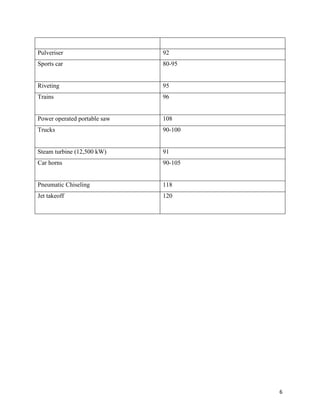
Table 1 Typical noise levels of some point sources
Source Noise level dB(A)
Air compressors 95-104
diesel generator 95
Quiet garden 30
Ticking clock 30
Lathe Machine 87
Computer rooms 55-60
Milling machine 112
Type institute 60
Oxy-acetylene cutting 96
Printing press 80
6
Pulveriser 92
Sports car 80-95
Riveting 95
Trains 96
Power operated portable saw 108
Trucks 90-100
Steam turbine (12,500 kW) 91
Car horns 90-105
Pneumatic Chiseling 118
Jet takeoff 120
7
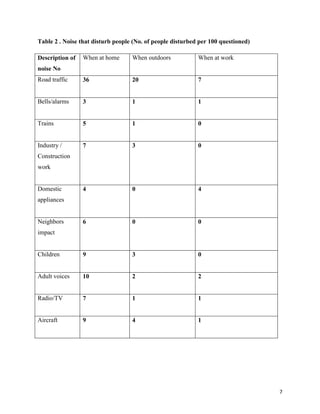
Table 2 . Noise that disturb people (No. of people disturbed per 100 questioned)
Description of
noise No
When at home When outdoors When at work
Road traffic 36 20 7
Bells/alarms 3 1 1
Trains 5 1 0
Industry /
Construction
work
7 3 0
Domestic
appliances
4 0 4
Neighbors
impact
6 0 0
Children 9 3 0
Adult voices 10 2 2
Radio/TV 7 1 1
Aircraft 9 4 1
8
2.2 Impacts of noise
Why bother about noise?
Often neglected, noise induces a severe impact on humans and on living organisms. Some of the
adverse effects are summarized below.
Annoyance: It creates annoyance to the receptors due to sound level fluctuations. The periodic
sound due to its irregular occurrences causes displeasure to hearing And causes annoyance.
Physiological effects: The physiological features like breathing amplitude, blood pressure, heart-
beat rate, pulse rate, blood cholesterol are affected.
Loss of hearing: Long exposure to high sound levels cause loss of hearing. This is mostly
unnoticed, but has an adverse impact on hearing function.
Human performance: The working performance of workers/human will be affected as they'll
be losing their concentration.
Nervous system: It causes pain, ringing in the ears, feeling of tiredness, thereby effecting the
functioning of human system.
Sleeplessness: It affects the sleeping there by inducing the people to become restless and loose
concentration and presence of mind during their activities.
Damage to material : The buildings and materials may get damaged by exposure to infrasonic /
ultrasonic waves and even get collapsed.
2.3 Human health effects
Noise health effects are both health and behavioral in nature. The unwanted sound is called
noise. This unwanted sound can damage physiological and psychological health. Noise pollution
can cause annoyance and aggression, hypertension, high stress levels, tinnitus, hearing loss, sleep
9
disturbances, and other harmful effects. Furthermore, stress and hypertension are the leading
causes to health problems, whereas tinnitus can lead to forgetfulness, severe depression and at
times panic attacks.
Chronic exposure to noise may cause noise-induced hearing loss. Older males exposed to
significant occupational noise demonstrate significantly reduced hearing sensitivity than their
non-exposed peers, though differences in hearing sensitivity decrease with time and the two
groups are indistinguishable by age 79. A comparison of Maaban tribesmen, who were
insignificantly exposed to transportation or industrial noise, to a typical U.S. population showed
that chronic exposure to moderately high levels of environmental noise contributes to hearing
loss.
High noise levels can contribute to cardiovascular effects and exposure to moderately high levels
during a single eight hour period causes a statistical rise in blood pressure of five to ten points
and an increase in stress and vasoconstriction leading to the increased blood pressure noted
above as well as to increased incidence of coronary artery disease.
Noise pollution is also a cause of annoyance. A 2005 study by Spanish researchers found that in
urban areas households are willing to pay approximately four Euros per decibel per year for
noise reduction.
2.4 Noise exposure and performance
There is good evidence, largely from laboratory studies, that noise exposure impairs
performance9. Performance may be impaired if speech is played while a subject reads and
remembers verbal material, although this effect is not found with non-speech noise10. The
effects of ‘irrelevant speech’ are independent of the intensity and meaning of the speech. The
susceptibility of complex mental tasks to disruption by ‘irrelevant speech’ suggests that reading,
with its reliance on memory, may also be impaired. Perceived control over and predictability of
noise has been found to be important in determining effects and after-effects of noise exposure.
Glass and Singer11 found that tasks performed during noise were unimpaired but tasks that were
carried out after noise had been switched off were impaired, this being reduced when subjects
were given perceived control over the noise. Indeed, even anticipation of a loud noise exposure
10
in the absence of real exposure may impair performance and an expectation of control counters
this effect. Noise exposure may also slow rehearsal in memory, influence processes of selectivity
in memory, and choice of strategies for carrying out tasks1.
2.5 Noise and cardiovascular disease
Physiological responses to noise exposure
Noise exposure causes a number of predictable short-term physiological responses mediated
through the autonomic nervous system. Exposure tonoise causes physiological activation
including increase in heart rate and blood pressure, peripheral vasoconstriction and thus
increased peripheral vascular resistance. There is rapid habituation to brief noise exposure but
Habituation to prolonged noise is less certain8.
Occupational studies: noise and high blood pressure
The strongest evidence for the effect of noise on the cardiovascular system comes from studies
of blood pressure in occupational settings13 (Table 1). Many occupational studies have
suggested that individuals chronically exposed to continuous noise at levels of at least 85 dB
have higher blood pressure than those not exposed to noise14,15. In many of these studies, noise
exposure has also been an indicator of exposure to other factors, both physical and psychosocial,
which are also associated with high blood pressure. Unless these other risk factors are controlled,
spurious associations between noise and blood pressure may arise. A recent pioneering
longitudinal industrial noise study has shown that noise levels predicted raised systolic and
diastolic pressure in those doing complex but not simple jobs16, and predicts increased mortality
risk. Occupational noise exposure has also recently been linked to greater risk of death from
motor vehicle injury17. One possibility is that the effects of noise on blood pressure are mediated
through an intermediate psychological response such as noise annoyance18 although this has not
been convincingly proved.
Noise and cardiovascular disease in the community
Aircraft noise exposure around Schiphol Airport, Amsterdam has been related to more medical
treatment for heart trouble and hypertension, more cardiovascular drug use and higher blood
pressure, even after adjustment for age, sex, smoking, levels of at least 55 dBA or maximum
11
levels above 72 dBA around height/weight and socio-economic differences19. The evidence of
the effects of noise on coronary risk factors has not been especially consistent: effects of noise
have been shown on systolic bloodpressure (but not diastolic pressure), total cholesterol, total
triglycerides20, blood viscosity, platelet count and glucose level21. However, a recent Swedish
study found that the prevalence of hypertension was higher among people exposed to time-
weighted energy averaged aircraft noise Arlanda airport, Stockholm22. In summary, there is
some evidence from community studies that environmental noise is related to hypertension and
there is also evidence that environmental noise may be a minor risk factor
for coronary heart disease . A sudden intense exposure to noise may stimulate catecholamine
secretion and precipitate cardiac dysrhythmias. However, neither studies in coronary care units
of the effect of speech noise nor studies of noise from low altitude military flights on patients on
continuous cardiac monitoring have detected changes in cardiac rhythm attributable to noise.
Noise annoyance
The most widespread and well documented subjective response to noise is annoyance, which
may include fear and mild anger, related to a belief that one is being avoidably harmed41. Noise
is also seen as intrusive into personal privacy, while its meaning for any individual is important
in determining whether that person will be annoyed by it42. Annoyance reactions are often
associated with the degree of interference that any noise causes in everyday activities, which
probably precedes and leads on to annoyance43. In both traffic and aircraft noise studies, noise
levels have been found to be associated with annoyance in a dose–response relationship44,45.
Overall, it seems that conversation, watching television or listening to the radio (all involving
speech communication) are the activities most disturbed by aircraft noise while traffic noise, if
present at night, is most disturbing for sleep.
2.6 Noise and psychiatric disorder
It has been postulated that noise exposure creates annoyance which then leads on to more serious
psychological effects. This pathway remains unconfirmed; rather it seems that noise causes
annoyance and, independently, mental ill-health also increases annoyance. A more complex
model28 incorporates the interaction between the person and their environment. In this model,
the person readjusts their behaviour in noisy conditions to reduce exposure. An important
12
addition is the inclusion of the appraisal of noise (in terms of danger, loss of environmental
quality, meaning of the noise, challenges for environmental control, etc.) and coping (the ability
to alter behaviour to deal with the stressor). This model emphasizes that dealing with noise is not
a passive process.
2.7 Noise and common mental disorder
Early studies found associations between the level of aircraft noise and psychiatric hospital
admission rates both in London34 and Los Angeles35, but this has not been convincingly
confirmed by more recent studies36. In community studies such as the West London Survey of
Psychiatric Morbidity37, no overall relationship was found between aircraft noise and the
prevalence of psychiatric morbidity using various indices of noise exposure. In longitudinal
analyses in the Caerphilly Study, no association was found between road traffic noise and
psychiatric disorder, even after adjustment for socio-demographic factors and baseline
psychiatric disorder, although there was a small non-linear association of noise with increased
anxiety scores38.
2.8 Noise and non-auditory health effects in children
It is likely that children represent a group which is particularly vulnerable to the non-auditory
health effects of noise. They have less cognitive capacity to understand and anticipate stressors
and lack well-developed coping strategies54,55. Moreover, in view of the fact that children are
still developing both physically and cognitively, there is a possible risk that exposure to an
environmental stressor such as noise may have irreversible negative consequences for this group.
Cognition
Studies of children exposed to environmental noise have consistently found effects on cognitive
performance. The studies which are most informative in terms of the effects of noise on
cognition have been field studies focusing on primary school children. This article will focus on
these studies. For details of noise effects on pre-school children and of laboratory studies of
acute noise exposure, see Ref. 56. The effects of noise have not been found uniformly across all
cognitive functions. The research evidence suggests that chronic exposure to noise affects
13
cognitive functions involving central processing and language comprehension. The effects which
have been found can be summarized as follows. Deficits have been found in sustained attention
and visual attention57–62. Relatedly, according to teachers’ reports, noise-exposed children have
difficulties in concentrating in comparison with children from quieter schools .
2.9 Environmental effects
Noise can have a detrimental effect on animals by causing stress, increasing risk of mortality by
changing the delicate balance in predator/prey detection and avoidance, and by interfering with
their use of sounds in communication especially in relation to reproduction and in navigation.
Acoustic overexposure can lead to temporary or permanent loss of hearing.
An impact of noise on animal life is the reduction of usable habitat that noisy areas may cause,
which in the case of endangered species may be part of the path to extinction. One of the best
known cases of damage caused by noise pollution is the death of certain species of beached
whales, brought on by the loud sound of military sonar.
Noise also makes species communicate louder, which is called Lombard vocal response.
Scientists and researchers have conducted experiments that show whales' song length is longer
when submarine-detectors are on. If creatures don't "speak" loud enough, their voice will be
masked by anthropogenic sounds. These unheard voices might be warnings, finding of prey, or
preparations of net-bubbling. When one species begins speaking louder, it will mask other
species' voice, causing the whole ecosystem to eventually speak louder.
European Robins living in urban environments are more likely to sing at night in places with
high levels of noise pollution during the day, suggesting that they sing at night because it is
quieter, and their message can propagate through the environment more clearly. Interestingly, the
same study showed that daytime noise was a stronger predictor of nocturnal singing than night-
time Light pollution, to which the phenomenon is often attributed.
Zebra finches become less faithful to their partners when exposed to traffic noise. This could
alter a population's evolutionary trajectory by selecting traits, sapping resources normally
devoted to other activities and thus lead to profound genetic and evolutionary consequences.
14
METHODOLOGY
3.1 Noise measurement instruments
Noise measurement is an important diagnostic tool in noise control technology. The Objective of
noise measurement is to make accurate measurement which give us a Purposeful act of
comparing noises under different conditions for assessment of adverse impacts of noise and
adopting suitable control techniques for noise reduction.
A sound level meter consists basically of a microphone and an electronic circuit including an
attenuator, amplifier, weighting networks or filters and a display unit. The microphone converts
the sound signal to an equivalent electrical signal. The signal is passed through a weighting
network which provides a conversion and gives the sound pressure level in dB. The instructions
laid down by the noise level meter manufacturers shall be followed while using the instruments.
Relatively steady sounds are easily measured using the "fast" response and unsteady sounds
using "slow" response. When measuring long-term noise exposure, the noise level is not always
steady and may vary considerably, in an irregular way over the measurement period. This
uncertainty can be solved by measuring the continuous equivalent level, which is defined as, the
constant sound pressure level which would have produced the same total energy as the actual
level over the given time. It is denoted as Leq. The display of Leq facility is also available in
certain models of sound level meters. This is the desired parameter for assessment of ambient
noise levels.
15
Sound measuring instruments
Sr . NO Equipment Specification/Area of usage
1. Sound level meter Type-0 : Laboratory reference
standard
Type-1: Lab use and field use in
specified controlled
environment
Type-2: General field use
(Commonly used)
Type-3: Noise survey
2. Impulse meters For measurement of impulse
noise levels e.g. hammer
blows, punch press strokes etc.
3. Frequency analyzers For detailed design and
engineering purpose using a set
of
filters.
4. Graphic recorders Attached to sound level meter.
Plots the SPL as a function
of time on a moving paper chart.
5. Noise dosimeters Used to find out the noise levels in
a working environment.
Attached to the worker
6. Calibrators For checking the accuracy of
sound level meters.
16
3.2 Control of Noise Pollution
Noise generation is associated with most of our daily activities. A healthy human ear responds to
a very wide range of SPL from - the threshold of hearing at zero dB, uncomfortable at 100-120
dB and painful at 130-140 dB(3). Due to the various adverse impacts of noise on humans and
environment (See LO-5), noise should be controlled. The technique or the combination of
techniques to be employed for noise control depend upon the extent of the noise reduction
required, nature of the equipment used and the economy aspects of the available techniques. The
various steps involved in the noise management strategy is illustrated at Fig 4. Reduction in the
noise exposure time or isolation of species from the sources form part of the noise control
techniques besides providing personal ear protection, engineered control for noise reduction at
source and/or diversion in the trajectory of sound waves.
The techniques employed for noise control can be broadly classified as
Control at source
Control in the transmission path
Using protective equipment.
3.3 Noise Control at Source
The noise pollution can be controlled at the source of generation itself by employing techniques
like-
· Reducing the noise levels from domestic sectors: The domestic noise coming from radio,
tape recorders, television sets, mixers, washing machines, cooking operations can be minimised
by their selective and judicious operation. By usage of carpets or any absorbing material, the
noise generated from felling of items in house can be minimised.
· Maintenance of automobiles: Regular servicing and tuning of vehicles will reduce the noise
levels. Fixing of silencers to automobiles, two wheelers etc., will reduce the noise levels.
17
· Control over vibrations: The vibrations of materials may be controlled using proper
foundations, rubber padding etc. to reduce the noise levels caused by vibrations.
· Low voice speaking: Speaking at low voices enough for communication reduces the excess
noise levels.
· Prohibition on usage of loud speakers: By not permitting the usage of loud speakers in the
habitant zones except for important meetings / functions. Now-a-days, the urban Administration
of the metro cities in India, is becoming stringent on usage of loudspeakers.
· Selection of machinery: Optimum selection of machinery tools or equipment reduces excess
noise levels. For example selection of chairs, or selection of certain machinery/equipment which
generate less noise (Sound) due to its superior technology etc. is also an important factor in noise
minimisation strategy.
· Maintenance of machines: Proper lubrication and maintenance of machines, vehicles etc. will
reduce noise levels. For example, it is a common experience that, many parts of a vehicle will
become loose while on a rugged path of journey. If these loose parts are not properly fitted, they
will generate noise and cause annoyance to the driver/passenger. Similarly is the case of
machines. Proper handling and regularmaintenance is essential not only for noise control but also
to improve the life of machine.
3.4 Control in the transmission path
The change in the transmission path will increase the length of travel for the wave and get
absorbed/refracted/radiated in the surrounding environment. The available techniques are briefly
discussed below.
Installation of barriers: Installation of barriers between noise source and receiver can attenuate
the noise levels. For a barrier to be effective, its lateral width should extend beyond the line-of-
sight at least as much as the height (See Fig. 5). It may be noted that, the frequencies, represented
on the X-axis of the graph in Fig. 5, are the centre frequencies of the octave band. The barrier
18
may be either close to the source or receiver, subject to the condition that, R <<D or in other
words, to increase the traverse length for the sound wave. It should also be noted that, the
presence of the barrier itself can reflect sound back towards the source. At very large distances,
the barrier becomes less effective because of the possibility of refractive atmospheric effects
Design of building: The design of the building incorporating the use of suitable noise absorbing
material for wall/door/window/ceiling will reduce the noise levels. The approximate reduction of
outside noise levels using typical exterior wall construction is given at Table 6. The reduction in
noise levels for various frequencies and the A-weighted scale are shown. Variations in spectrum
shape may change this A-weighted value by as much as +/- 3 dB.
· Installation of panels or enclosures: A sound source may be enclosed within a paneled
structure such as room as a means of reducing the noise levels at the receiver. The actual
difference between the sound pressure levels inside and outside an enclosure depends not only on
the transmission loss of the enclosure panels but also on the acoustic absorption within the
enclosure and the details of the panel penetrations which may include windows or doors.
19
3.5Using protection equipment
Before employing the use of protective equipment, please recall the Fig. 4, wherein the various
steps involved in the noise management strategy are illustrated. Protective equipment usage is
the ultimate step in noise control technology, i.e. after noise reduction at source and/or after the
diversion or engineered control of transmission path of noise.
(a) & (b) Noise level attenuation by shrubs and trees
The first step in the technique of using protective equipment is to gauge the intensity of the
problem, identification of the sufferer and his exposure to the noise levels. For the Regulatory
standards pertaining to time of exposure vs. maximum noise levels permitted in a workspace
environment, please refer to LO-8.The usage of protective equipment and the worker's exposure
to the high noise levels can be minimized by –
Job rotation: By rotating the job between the workers working at a particular noisesource or
isolating a person, the adverse impacts can be reduced.

Exposure reduction: Regulations prescribe that, noise level of 90 dB (A) for more than 8 hr
continuous exposure is prohibited. Persons who are working under such conditions will be
20
exposed to occupational health hazards. The schedule of the workers should be planned in such a
way that, they should not be over exposed to the high noise levels.

Hearing protection: Equipment like earmuffs, ear plugs etc. are the commonly used devices
for hearing protection. Attenuation provided by ear-muffs vary widely in respect to their size,
shape, seal material etc. Literature survey shows that, an average noise attenuation up to 32 dB
can be achieved using earmuffs.
Roadway noise can be reduced by the use of noise barriers, limitation of vehicle speeds,
alteration of roadway surface texture, limitation of heavy vehicles, use of traffic controls that
smooth vehicle flow to reduce braking and acceleration, and tire design. An important factor in
applying these strategies is a computer model for roadway noise, that is capable of addressing
local topography, meteorology, traffic operations, and hypothetical mitigation. Costs of building-
in mitigation can be modest, provided these solutions are sought in the planning stage of a
roadway project.
Aircraft noise can be reduced by using quieter jet engines. Altering flight paths and time of day
runway has benefitted residents near airports. Industrial noise has been addressed since the 1930
3.6 Application in Environmental Impact Assessment (EIA) studies
The EIA study will be carried out to evaluate and assess the impacts of any proposed (or
existing) activity on the environment. Noise is one of the environmental attributes, on which the
likely impacts due to the proposed (or existing) activity need to studied. The likely steps to be
carried out while conducting noise level studies for an EIA project are summarised below. The
EIA wiil be carried out for either proposed or existing activities. The sequential steps involved
will be same for both the activities.

The likely activities that generate noise from the proposed activity are to be identified

The typical sound (noise) levels of the noise generating sources are to be assessed either from
literature or from a similar source
21

The likely exposure time of a worker at a noise generating source is to be assessed from the
plant / utility records

The workspace environment noise levels are to be checked with OSHA standards (Table 1.8).
If the noise exposure levels are higher, suitable noise control measures like personal protective
equipment, installation of barriers, enclosures etc., need to be suggested

The EIA will usually be carried out in an impact circle of radius 3 Km to 25 Km or even more
depending on the objective and the likely activities of the proposed project. The representative
baseline (or back ground) status of the ambient noise levels need to be collected by monitoring at
various stations in the study zone

The ambient noise levels are to be analysed for the prescribed parameters like, Leq, Ldn etc.,
and compared with the ambient noise level standards (Table 1.7) for the study region. If these
values are higher than the prescribed limits, the likely causes for the high values need to be
assessed

The likely impact of the noise levels from the proposed activity on the local environment
keeping in view the baseline status of noise levels need to be predicted · If the predicted impact
is adverse, suitable measures for attenuating the noise levels like, green belt development, in-
plant control measures etc., need to be suggested.

The objective of the EIA study is to make ensure that, the local environment, say noise, will
not get affected by the noise levels emanated from the proposed activity. If the ambient noise
levels are high, then control measures be suggested to the project proponent to ensure that,
ambient noise levels will not increase due to the proposed activity.
22
CONCLUSION
Whether knowingly or unknowingly, everyone of us contribute to noise pollution, because most
of our day-to-day activities generate some noise. Often neglected, noise pollution adversely
affects the human being leading to irritation, loss of concentration, loss of hearing. identify the
sources of noise pollution. Once identified, the reason(s) for increased noise levels to be
assessed. Now, efforts shall be made to reduce the undesired noise levelsfrom (unwanted) noise
generating sources. This leads to marginal reduction of noise levels. It is still un-bearable
scientific methods of noise control shall be employed. The statutory Regulations have prescribed
the noise level exposure limits. The public may complain to the statutory Board for violation of
noise level limits by any noise generator.
Suitable action will be taken to attenuate the noise levels and controlling pollution. It is advisable
that suitable noise control measures be taken and reduce the interference of Statutory Board. It is
high time that everyone should do this bit in curbing the noise pollution, which is otherwise
becoming as effective as SLOW POISONING.
23
REFERENCES
1. Civil and Environmental Research ,Environmental Noise Pollution Monitoring and Impacts
On Human Health in Dehradun City, Uttarakhand, India.
2. Stephen A Stansfeld and Mark P Matheson Department of Psychiatry, Medical Sciences
Building, Queen Mary, University of London, Noise pollution: non-auditory effects on
health
3. http://en.wikipedia.org/wiki/Noise_pollution
4. en.wikipedia.org/wiki/Health_effects_from_noise‎
5. eschooltoday.com/pollution/noise-pollution/what-is-noise-pollution.html‎
6. www.noisecontrol.com/the-common-causes-of-noise-pollution/‎
7. www.infoplease.com‎›‎... ›‎Environmental‎Studies‎
8. discovery.bits-pilani.ac.in/.../coursematerial%5Cetzc362%5Cnoice_pollut..

SHALLOW FOUNDATION..

  • 1.
    1 INTRODUCTION 1.1 Introduction Any soundthat is undesirable or unwanted may be defined as noise. Noise is a result of human activity from road vehicles, air traffic and railways, work processes, and personal activities. Noise may be a particularly unpleasant sound or just a sound in the wrong place at the wrong time. A sound that is pleasant to one person may be noise to another. It depends on the circumstances. Music may be a noise to a person who is disturbed by it because they are trying to sleep, study for an exam, and if it does not suit their taste in music. When a series of similar impulses follow each other at regular intervals the sound that is produced has a musical quality and is generally more tolerable than sounds with different frequencies and amplitudes and which occur at irregular intervals. In other words the more complex the sound the more likely it will be a noise. Noise is an environmental stressor and levels are rising. At low levels noise can be annoying; this is the most common effect of noise. Noise can be frustrating and harmful to our wellbeing. People feel resentment from intrusions into their physical privacy, the space for our thoughts and emotions which we have marked out as our own. At higher levels noise can be undesirable because it interferes with hearing and speech and at even higher levels it can damage hearing. Sound waves can travel in air or water, and hearing occurs when the sound waves stimulate the organs of hearing. Noise can vary according to intensity, frequency, duration, intermittence or continuation. Characteristics like volume, tone, duration and repetition determine if a sound is a problem.
  • 2.
    2 1.2 Sound ismeasured in decibels (dB). Below 80 to 85 dB is generally considered to be safe, but ongoing low-level noise may be stressful for some individuals. The World Health Organisation’s (WHO) industrial noise exposure limit recommedation is 75 dB. The noise threshold for pain is about 120 dB. Noise pollution affects both health and behavior. Unwanted sound (noise) can damage psychological health. Noise pollution can cause trouble, hypertension, high stress levels, tinnitus, hearing loss, sleep disturbances, and other harmful effects. Furthermore, stress and hypertension are the leading causes to health problems. Sound becomes unwanted when it either interferes with normal activities such as sleeping, conversation, or disrupts or diminishes one’s quality of life. Chronic exposure to noise may cause noise-induced hearing loss. Older males exposed to significant occupational noise demonstrate more significantly reduced hearing sensitivity than their non-exposed peers, though differences in hearing sensitivity decrease with time and the two groups are indistinguishable by age 79. A comparison of Maaban tribesmen, who were insignificantly exposed to transportation or industrial noise, to a typical U.S. population showed that chronic exposure to moderately high levels of environmental noise contributes to hearing loss. High noise levels can contribute to cardiovascular effects and exposure to moderately high levels during a single eight-hour period causes a statistical rise in blood pressure of five to ten points and an increase in stress, and vasoconstriction leading to the increased blood pressure noted above, as well as to increased incidence of coronary artery disease. Noise pollution also is a cause of annoyance. A 2005 study by Spanish researchers found that in urban areas households are willing to pay approximately four Euros per decibel per year for noise reduction Noise may be continuous or intermittent. Noise may be of high frequency or of low frequency which is undesired for a normal hearing. For example, the typical cry of a child produces sound, which is mostly unfavorable to normal hearing. Since it is unwanted sound, we call it noise. The discrimination and differentiation between sound and noise also depends upon the habit and
  • 3.
    3 interest of theperson/species receiving it, the ambient conditions and impact of the sound generated during that particular duration of time. There could be instances that, excellently rendered musical concert for example, may be felt as noise and exceptional music as well during the course of the concert! Sounds of frequencies less than 20 HZ are called infrasonics and greater than 20,0000 HZ are called ultrasonics. Since noise is also a sound, the terms noise and sound are synonymously used.
  • 4.
    4 LITERATURE REVIEW 2.1 Sourcesof noise Probably the single largest sources of noise are airports. As listed above, a jet taking off can sound as loud as 150dB(A) if your house is directly under its flight path. Jack Saporito, executive director of the Alliance of Residents Concerning O’Hare (AreCO), says that when a jet passes over your house, "your windows rattle, the hairs on the back of your neck stand up, your blood pressure goes up." Conversations stop when a jet screams by, as does teaching in a nearby school or sleeping in nearby homes. At a busy airport like O’Hare, aircraft can take off as often as every 15-22 seconds, and the noise can be bothersome more than 15 miles away from the airport. Newer, quieter aircraft are being phased in, but air traffic is increasing at such a rapid rate — according to the Federal Aviation Administration, there will be at least 36 percent more flights in 2007 than today — that airport noise pollution will increase even with the use of quieter planes. Highways and railways are also large sources of noise for people who live nearby. The Federal Highway Administration says that the level of highway traffic noise depends on the volume of traffic, its speed, and the number of trucks it contains; increases in any of these factors increase traffic noise. Vehicle noise comes from the engine, exhaust, and tires; faulty equipment, such as defective mufflers, increases vehicle noise, as does having to climb a steep grade. Locomotive diesel engines are probably the loudest noise source, but idling engines and blowing whistles produce the most railway noise complaints, according to Greg Zak, noise advisor for the Illinois EPA. We are also subjected to noise at work and play. Anyone who operates heavy machinery, in a factory or on a farm, may experience dangerously high levels of noise. Les Blomberg, executive director of the Noise Pollution Clearinghouse, says that "20 to 30 percent of the population regularly exposed to levels permitted by the Occupational Health and Safety Administration [90 dB(A) in an eight-hour workday] will suffer hearing loss." That’s a conservative estimate; the National Institute for Occupational Safety and Health recommends lowering this permissible exposure level to 85 dB(A). A study reported by the BBC last summer found that even office workers exposed to low-level noises such as overheard gossip and computer keyboard clatter had
  • 5.
    5 their short-term memoryand math skills reduced by up to 60 percent due to these noisy distractions. Weekend warriors mowing their lawns with gas-powered mowers endanger their own hearing unless they wear ear protection, as do those who wield snow-and leafblowers. We all know that rock concerts can be bad for your ears, as can personal stereos played at maximum volume for extended periods. But did you know that the average health club pumps up the volume to 110 or even 120dB(A)? That movies in state-of-the-art theaters can clock in at up to 118dB(A)? That some toy phones ring at between 123 and 129dB(A)? Table 1 Typical noise levels of some point sources Source Noise level dB(A) Air compressors 95-104 diesel generator 95 Quiet garden 30 Ticking clock 30 Lathe Machine 87 Computer rooms 55-60 Milling machine 112 Type institute 60 Oxy-acetylene cutting 96 Printing press 80
  • 6.
    6 Pulveriser 92 Sports car80-95 Riveting 95 Trains 96 Power operated portable saw 108 Trucks 90-100 Steam turbine (12,500 kW) 91 Car horns 90-105 Pneumatic Chiseling 118 Jet takeoff 120
  • 7.
    7 Table 2 .Noise that disturb people (No. of people disturbed per 100 questioned) Description of noise No When at home When outdoors When at work Road traffic 36 20 7 Bells/alarms 3 1 1 Trains 5 1 0 Industry / Construction work 7 3 0 Domestic appliances 4 0 4 Neighbors impact 6 0 0 Children 9 3 0 Adult voices 10 2 2 Radio/TV 7 1 1 Aircraft 9 4 1
  • 8.
    8 2.2 Impacts ofnoise Why bother about noise? Often neglected, noise induces a severe impact on humans and on living organisms. Some of the adverse effects are summarized below. Annoyance: It creates annoyance to the receptors due to sound level fluctuations. The periodic sound due to its irregular occurrences causes displeasure to hearing And causes annoyance. Physiological effects: The physiological features like breathing amplitude, blood pressure, heart- beat rate, pulse rate, blood cholesterol are affected. Loss of hearing: Long exposure to high sound levels cause loss of hearing. This is mostly unnoticed, but has an adverse impact on hearing function. Human performance: The working performance of workers/human will be affected as they'll be losing their concentration. Nervous system: It causes pain, ringing in the ears, feeling of tiredness, thereby effecting the functioning of human system. Sleeplessness: It affects the sleeping there by inducing the people to become restless and loose concentration and presence of mind during their activities. Damage to material : The buildings and materials may get damaged by exposure to infrasonic / ultrasonic waves and even get collapsed. 2.3 Human health effects Noise health effects are both health and behavioral in nature. The unwanted sound is called noise. This unwanted sound can damage physiological and psychological health. Noise pollution can cause annoyance and aggression, hypertension, high stress levels, tinnitus, hearing loss, sleep
  • 9.
    9 disturbances, and otherharmful effects. Furthermore, stress and hypertension are the leading causes to health problems, whereas tinnitus can lead to forgetfulness, severe depression and at times panic attacks. Chronic exposure to noise may cause noise-induced hearing loss. Older males exposed to significant occupational noise demonstrate significantly reduced hearing sensitivity than their non-exposed peers, though differences in hearing sensitivity decrease with time and the two groups are indistinguishable by age 79. A comparison of Maaban tribesmen, who were insignificantly exposed to transportation or industrial noise, to a typical U.S. population showed that chronic exposure to moderately high levels of environmental noise contributes to hearing loss. High noise levels can contribute to cardiovascular effects and exposure to moderately high levels during a single eight hour period causes a statistical rise in blood pressure of five to ten points and an increase in stress and vasoconstriction leading to the increased blood pressure noted above as well as to increased incidence of coronary artery disease. Noise pollution is also a cause of annoyance. A 2005 study by Spanish researchers found that in urban areas households are willing to pay approximately four Euros per decibel per year for noise reduction. 2.4 Noise exposure and performance There is good evidence, largely from laboratory studies, that noise exposure impairs performance9. Performance may be impaired if speech is played while a subject reads and remembers verbal material, although this effect is not found with non-speech noise10. The effects of ‘irrelevant speech’ are independent of the intensity and meaning of the speech. The susceptibility of complex mental tasks to disruption by ‘irrelevant speech’ suggests that reading, with its reliance on memory, may also be impaired. Perceived control over and predictability of noise has been found to be important in determining effects and after-effects of noise exposure. Glass and Singer11 found that tasks performed during noise were unimpaired but tasks that were carried out after noise had been switched off were impaired, this being reduced when subjects were given perceived control over the noise. Indeed, even anticipation of a loud noise exposure
  • 10.
    10 in the absenceof real exposure may impair performance and an expectation of control counters this effect. Noise exposure may also slow rehearsal in memory, influence processes of selectivity in memory, and choice of strategies for carrying out tasks1. 2.5 Noise and cardiovascular disease Physiological responses to noise exposure Noise exposure causes a number of predictable short-term physiological responses mediated through the autonomic nervous system. Exposure tonoise causes physiological activation including increase in heart rate and blood pressure, peripheral vasoconstriction and thus increased peripheral vascular resistance. There is rapid habituation to brief noise exposure but Habituation to prolonged noise is less certain8. Occupational studies: noise and high blood pressure The strongest evidence for the effect of noise on the cardiovascular system comes from studies of blood pressure in occupational settings13 (Table 1). Many occupational studies have suggested that individuals chronically exposed to continuous noise at levels of at least 85 dB have higher blood pressure than those not exposed to noise14,15. In many of these studies, noise exposure has also been an indicator of exposure to other factors, both physical and psychosocial, which are also associated with high blood pressure. Unless these other risk factors are controlled, spurious associations between noise and blood pressure may arise. A recent pioneering longitudinal industrial noise study has shown that noise levels predicted raised systolic and diastolic pressure in those doing complex but not simple jobs16, and predicts increased mortality risk. Occupational noise exposure has also recently been linked to greater risk of death from motor vehicle injury17. One possibility is that the effects of noise on blood pressure are mediated through an intermediate psychological response such as noise annoyance18 although this has not been convincingly proved. Noise and cardiovascular disease in the community Aircraft noise exposure around Schiphol Airport, Amsterdam has been related to more medical treatment for heart trouble and hypertension, more cardiovascular drug use and higher blood pressure, even after adjustment for age, sex, smoking, levels of at least 55 dBA or maximum
  • 11.
    11 levels above 72dBA around height/weight and socio-economic differences19. The evidence of the effects of noise on coronary risk factors has not been especially consistent: effects of noise have been shown on systolic bloodpressure (but not diastolic pressure), total cholesterol, total triglycerides20, blood viscosity, platelet count and glucose level21. However, a recent Swedish study found that the prevalence of hypertension was higher among people exposed to time- weighted energy averaged aircraft noise Arlanda airport, Stockholm22. In summary, there is some evidence from community studies that environmental noise is related to hypertension and there is also evidence that environmental noise may be a minor risk factor for coronary heart disease . A sudden intense exposure to noise may stimulate catecholamine secretion and precipitate cardiac dysrhythmias. However, neither studies in coronary care units of the effect of speech noise nor studies of noise from low altitude military flights on patients on continuous cardiac monitoring have detected changes in cardiac rhythm attributable to noise. Noise annoyance The most widespread and well documented subjective response to noise is annoyance, which may include fear and mild anger, related to a belief that one is being avoidably harmed41. Noise is also seen as intrusive into personal privacy, while its meaning for any individual is important in determining whether that person will be annoyed by it42. Annoyance reactions are often associated with the degree of interference that any noise causes in everyday activities, which probably precedes and leads on to annoyance43. In both traffic and aircraft noise studies, noise levels have been found to be associated with annoyance in a dose–response relationship44,45. Overall, it seems that conversation, watching television or listening to the radio (all involving speech communication) are the activities most disturbed by aircraft noise while traffic noise, if present at night, is most disturbing for sleep. 2.6 Noise and psychiatric disorder It has been postulated that noise exposure creates annoyance which then leads on to more serious psychological effects. This pathway remains unconfirmed; rather it seems that noise causes annoyance and, independently, mental ill-health also increases annoyance. A more complex model28 incorporates the interaction between the person and their environment. In this model, the person readjusts their behaviour in noisy conditions to reduce exposure. An important
  • 12.
    12 addition is theinclusion of the appraisal of noise (in terms of danger, loss of environmental quality, meaning of the noise, challenges for environmental control, etc.) and coping (the ability to alter behaviour to deal with the stressor). This model emphasizes that dealing with noise is not a passive process. 2.7 Noise and common mental disorder Early studies found associations between the level of aircraft noise and psychiatric hospital admission rates both in London34 and Los Angeles35, but this has not been convincingly confirmed by more recent studies36. In community studies such as the West London Survey of Psychiatric Morbidity37, no overall relationship was found between aircraft noise and the prevalence of psychiatric morbidity using various indices of noise exposure. In longitudinal analyses in the Caerphilly Study, no association was found between road traffic noise and psychiatric disorder, even after adjustment for socio-demographic factors and baseline psychiatric disorder, although there was a small non-linear association of noise with increased anxiety scores38. 2.8 Noise and non-auditory health effects in children It is likely that children represent a group which is particularly vulnerable to the non-auditory health effects of noise. They have less cognitive capacity to understand and anticipate stressors and lack well-developed coping strategies54,55. Moreover, in view of the fact that children are still developing both physically and cognitively, there is a possible risk that exposure to an environmental stressor such as noise may have irreversible negative consequences for this group. Cognition Studies of children exposed to environmental noise have consistently found effects on cognitive performance. The studies which are most informative in terms of the effects of noise on cognition have been field studies focusing on primary school children. This article will focus on these studies. For details of noise effects on pre-school children and of laboratory studies of acute noise exposure, see Ref. 56. The effects of noise have not been found uniformly across all cognitive functions. The research evidence suggests that chronic exposure to noise affects
  • 13.
    13 cognitive functions involvingcentral processing and language comprehension. The effects which have been found can be summarized as follows. Deficits have been found in sustained attention and visual attention57–62. Relatedly, according to teachers’ reports, noise-exposed children have difficulties in concentrating in comparison with children from quieter schools . 2.9 Environmental effects Noise can have a detrimental effect on animals by causing stress, increasing risk of mortality by changing the delicate balance in predator/prey detection and avoidance, and by interfering with their use of sounds in communication especially in relation to reproduction and in navigation. Acoustic overexposure can lead to temporary or permanent loss of hearing. An impact of noise on animal life is the reduction of usable habitat that noisy areas may cause, which in the case of endangered species may be part of the path to extinction. One of the best known cases of damage caused by noise pollution is the death of certain species of beached whales, brought on by the loud sound of military sonar. Noise also makes species communicate louder, which is called Lombard vocal response. Scientists and researchers have conducted experiments that show whales' song length is longer when submarine-detectors are on. If creatures don't "speak" loud enough, their voice will be masked by anthropogenic sounds. These unheard voices might be warnings, finding of prey, or preparations of net-bubbling. When one species begins speaking louder, it will mask other species' voice, causing the whole ecosystem to eventually speak louder. European Robins living in urban environments are more likely to sing at night in places with high levels of noise pollution during the day, suggesting that they sing at night because it is quieter, and their message can propagate through the environment more clearly. Interestingly, the same study showed that daytime noise was a stronger predictor of nocturnal singing than night- time Light pollution, to which the phenomenon is often attributed. Zebra finches become less faithful to their partners when exposed to traffic noise. This could alter a population's evolutionary trajectory by selecting traits, sapping resources normally devoted to other activities and thus lead to profound genetic and evolutionary consequences.
  • 14.
    14 METHODOLOGY 3.1 Noise measurementinstruments Noise measurement is an important diagnostic tool in noise control technology. The Objective of noise measurement is to make accurate measurement which give us a Purposeful act of comparing noises under different conditions for assessment of adverse impacts of noise and adopting suitable control techniques for noise reduction. A sound level meter consists basically of a microphone and an electronic circuit including an attenuator, amplifier, weighting networks or filters and a display unit. The microphone converts the sound signal to an equivalent electrical signal. The signal is passed through a weighting network which provides a conversion and gives the sound pressure level in dB. The instructions laid down by the noise level meter manufacturers shall be followed while using the instruments. Relatively steady sounds are easily measured using the "fast" response and unsteady sounds using "slow" response. When measuring long-term noise exposure, the noise level is not always steady and may vary considerably, in an irregular way over the measurement period. This uncertainty can be solved by measuring the continuous equivalent level, which is defined as, the constant sound pressure level which would have produced the same total energy as the actual level over the given time. It is denoted as Leq. The display of Leq facility is also available in certain models of sound level meters. This is the desired parameter for assessment of ambient noise levels.
  • 15.
    15 Sound measuring instruments Sr. NO Equipment Specification/Area of usage 1. Sound level meter Type-0 : Laboratory reference standard Type-1: Lab use and field use in specified controlled environment Type-2: General field use (Commonly used) Type-3: Noise survey 2. Impulse meters For measurement of impulse noise levels e.g. hammer blows, punch press strokes etc. 3. Frequency analyzers For detailed design and engineering purpose using a set of filters. 4. Graphic recorders Attached to sound level meter. Plots the SPL as a function of time on a moving paper chart. 5. Noise dosimeters Used to find out the noise levels in a working environment. Attached to the worker 6. Calibrators For checking the accuracy of sound level meters.
  • 16.
    16 3.2 Control ofNoise Pollution Noise generation is associated with most of our daily activities. A healthy human ear responds to a very wide range of SPL from - the threshold of hearing at zero dB, uncomfortable at 100-120 dB and painful at 130-140 dB(3). Due to the various adverse impacts of noise on humans and environment (See LO-5), noise should be controlled. The technique or the combination of techniques to be employed for noise control depend upon the extent of the noise reduction required, nature of the equipment used and the economy aspects of the available techniques. The various steps involved in the noise management strategy is illustrated at Fig 4. Reduction in the noise exposure time or isolation of species from the sources form part of the noise control techniques besides providing personal ear protection, engineered control for noise reduction at source and/or diversion in the trajectory of sound waves. The techniques employed for noise control can be broadly classified as Control at source Control in the transmission path Using protective equipment. 3.3 Noise Control at Source The noise pollution can be controlled at the source of generation itself by employing techniques like- · Reducing the noise levels from domestic sectors: The domestic noise coming from radio, tape recorders, television sets, mixers, washing machines, cooking operations can be minimised by their selective and judicious operation. By usage of carpets or any absorbing material, the noise generated from felling of items in house can be minimised. · Maintenance of automobiles: Regular servicing and tuning of vehicles will reduce the noise levels. Fixing of silencers to automobiles, two wheelers etc., will reduce the noise levels.
  • 17.
    17 · Control overvibrations: The vibrations of materials may be controlled using proper foundations, rubber padding etc. to reduce the noise levels caused by vibrations. · Low voice speaking: Speaking at low voices enough for communication reduces the excess noise levels. · Prohibition on usage of loud speakers: By not permitting the usage of loud speakers in the habitant zones except for important meetings / functions. Now-a-days, the urban Administration of the metro cities in India, is becoming stringent on usage of loudspeakers. · Selection of machinery: Optimum selection of machinery tools or equipment reduces excess noise levels. For example selection of chairs, or selection of certain machinery/equipment which generate less noise (Sound) due to its superior technology etc. is also an important factor in noise minimisation strategy. · Maintenance of machines: Proper lubrication and maintenance of machines, vehicles etc. will reduce noise levels. For example, it is a common experience that, many parts of a vehicle will become loose while on a rugged path of journey. If these loose parts are not properly fitted, they will generate noise and cause annoyance to the driver/passenger. Similarly is the case of machines. Proper handling and regularmaintenance is essential not only for noise control but also to improve the life of machine. 3.4 Control in the transmission path The change in the transmission path will increase the length of travel for the wave and get absorbed/refracted/radiated in the surrounding environment. The available techniques are briefly discussed below. Installation of barriers: Installation of barriers between noise source and receiver can attenuate the noise levels. For a barrier to be effective, its lateral width should extend beyond the line-of- sight at least as much as the height (See Fig. 5). It may be noted that, the frequencies, represented on the X-axis of the graph in Fig. 5, are the centre frequencies of the octave band. The barrier
  • 18.
    18 may be eitherclose to the source or receiver, subject to the condition that, R <<D or in other words, to increase the traverse length for the sound wave. It should also be noted that, the presence of the barrier itself can reflect sound back towards the source. At very large distances, the barrier becomes less effective because of the possibility of refractive atmospheric effects Design of building: The design of the building incorporating the use of suitable noise absorbing material for wall/door/window/ceiling will reduce the noise levels. The approximate reduction of outside noise levels using typical exterior wall construction is given at Table 6. The reduction in noise levels for various frequencies and the A-weighted scale are shown. Variations in spectrum shape may change this A-weighted value by as much as +/- 3 dB. · Installation of panels or enclosures: A sound source may be enclosed within a paneled structure such as room as a means of reducing the noise levels at the receiver. The actual difference between the sound pressure levels inside and outside an enclosure depends not only on the transmission loss of the enclosure panels but also on the acoustic absorption within the enclosure and the details of the panel penetrations which may include windows or doors.
  • 19.
    19 3.5Using protection equipment Beforeemploying the use of protective equipment, please recall the Fig. 4, wherein the various steps involved in the noise management strategy are illustrated. Protective equipment usage is the ultimate step in noise control technology, i.e. after noise reduction at source and/or after the diversion or engineered control of transmission path of noise. (a) & (b) Noise level attenuation by shrubs and trees The first step in the technique of using protective equipment is to gauge the intensity of the problem, identification of the sufferer and his exposure to the noise levels. For the Regulatory standards pertaining to time of exposure vs. maximum noise levels permitted in a workspace environment, please refer to LO-8.The usage of protective equipment and the worker's exposure to the high noise levels can be minimized by – Job rotation: By rotating the job between the workers working at a particular noisesource or isolating a person, the adverse impacts can be reduced.  Exposure reduction: Regulations prescribe that, noise level of 90 dB (A) for more than 8 hr continuous exposure is prohibited. Persons who are working under such conditions will be
  • 20.
    20 exposed to occupationalhealth hazards. The schedule of the workers should be planned in such a way that, they should not be over exposed to the high noise levels.  Hearing protection: Equipment like earmuffs, ear plugs etc. are the commonly used devices for hearing protection. Attenuation provided by ear-muffs vary widely in respect to their size, shape, seal material etc. Literature survey shows that, an average noise attenuation up to 32 dB can be achieved using earmuffs. Roadway noise can be reduced by the use of noise barriers, limitation of vehicle speeds, alteration of roadway surface texture, limitation of heavy vehicles, use of traffic controls that smooth vehicle flow to reduce braking and acceleration, and tire design. An important factor in applying these strategies is a computer model for roadway noise, that is capable of addressing local topography, meteorology, traffic operations, and hypothetical mitigation. Costs of building- in mitigation can be modest, provided these solutions are sought in the planning stage of a roadway project. Aircraft noise can be reduced by using quieter jet engines. Altering flight paths and time of day runway has benefitted residents near airports. Industrial noise has been addressed since the 1930 3.6 Application in Environmental Impact Assessment (EIA) studies The EIA study will be carried out to evaluate and assess the impacts of any proposed (or existing) activity on the environment. Noise is one of the environmental attributes, on which the likely impacts due to the proposed (or existing) activity need to studied. The likely steps to be carried out while conducting noise level studies for an EIA project are summarised below. The EIA wiil be carried out for either proposed or existing activities. The sequential steps involved will be same for both the activities.  The likely activities that generate noise from the proposed activity are to be identified  The typical sound (noise) levels of the noise generating sources are to be assessed either from literature or from a similar source
  • 21.
    21  The likely exposuretime of a worker at a noise generating source is to be assessed from the plant / utility records  The workspace environment noise levels are to be checked with OSHA standards (Table 1.8). If the noise exposure levels are higher, suitable noise control measures like personal protective equipment, installation of barriers, enclosures etc., need to be suggested  The EIA will usually be carried out in an impact circle of radius 3 Km to 25 Km or even more depending on the objective and the likely activities of the proposed project. The representative baseline (or back ground) status of the ambient noise levels need to be collected by monitoring at various stations in the study zone  The ambient noise levels are to be analysed for the prescribed parameters like, Leq, Ldn etc., and compared with the ambient noise level standards (Table 1.7) for the study region. If these values are higher than the prescribed limits, the likely causes for the high values need to be assessed  The likely impact of the noise levels from the proposed activity on the local environment keeping in view the baseline status of noise levels need to be predicted · If the predicted impact is adverse, suitable measures for attenuating the noise levels like, green belt development, in- plant control measures etc., need to be suggested.  The objective of the EIA study is to make ensure that, the local environment, say noise, will not get affected by the noise levels emanated from the proposed activity. If the ambient noise levels are high, then control measures be suggested to the project proponent to ensure that, ambient noise levels will not increase due to the proposed activity.
  • 22.
    22 CONCLUSION Whether knowingly orunknowingly, everyone of us contribute to noise pollution, because most of our day-to-day activities generate some noise. Often neglected, noise pollution adversely affects the human being leading to irritation, loss of concentration, loss of hearing. identify the sources of noise pollution. Once identified, the reason(s) for increased noise levels to be assessed. Now, efforts shall be made to reduce the undesired noise levelsfrom (unwanted) noise generating sources. This leads to marginal reduction of noise levels. It is still un-bearable scientific methods of noise control shall be employed. The statutory Regulations have prescribed the noise level exposure limits. The public may complain to the statutory Board for violation of noise level limits by any noise generator. Suitable action will be taken to attenuate the noise levels and controlling pollution. It is advisable that suitable noise control measures be taken and reduce the interference of Statutory Board. It is high time that everyone should do this bit in curbing the noise pollution, which is otherwise becoming as effective as SLOW POISONING.
  • 23.
    23 REFERENCES 1. Civil andEnvironmental Research ,Environmental Noise Pollution Monitoring and Impacts On Human Health in Dehradun City, Uttarakhand, India. 2. Stephen A Stansfeld and Mark P Matheson Department of Psychiatry, Medical Sciences Building, Queen Mary, University of London, Noise pollution: non-auditory effects on health 3. http://en.wikipedia.org/wiki/Noise_pollution 4. en.wikipedia.org/wiki/Health_effects_from_noise‎ 5. eschooltoday.com/pollution/noise-pollution/what-is-noise-pollution.html‎ 6. www.noisecontrol.com/the-common-causes-of-noise-pollution/‎ 7. www.infoplease.com‎›‎... ›‎Environmental‎Studies‎ 8. discovery.bits-pilani.ac.in/.../coursematerial%5Cetzc362%5Cnoice_pollut..