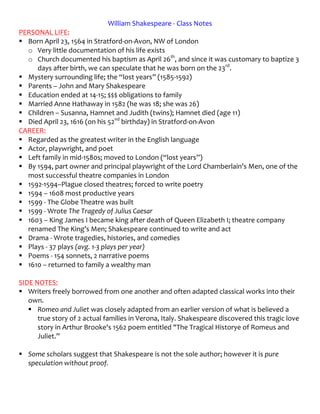
William	Shakespeare	-	Class	Notes	
PERSONAL	LIFE:	
§ Born	April	23,	1564	in	Stratford-on-Avon,	NW	of	London	
o Very	little	documentation	of	his	life	exists	
o Church	documented	his	baptism	as	April	26th
,	and	since	it	was	customary	to	baptize	3	
days	after	birth,	we	can	speculate	that	he	was	born	on	the	23rd
.	
§ Mystery	surrounding	life;	the	“lost	years”	(1585-1592)		
§ Parents	–	John	and	Mary	Shakespeare	
§ Education	ended	at	14-15;	$$$	obligations	to	family	
§ Married	Anne	Hathaway	in	1582	(he	was	18;	she	was	26)	
§ Children	–	Susanna,	Hamnet	and	Judith	(twins);	Hamnet	died	(age	11)	
§ Died	April	23,	1616	(on	his	52nd
	birthday)	in	Stratford-on-Avon	
CAREER:	
§ Regarded	as	the	greatest	writer	in	the	English	language	
§ Actor,	playwright,	and	poet	
§ Left	family	in	mid-1580s;	moved	to	London	(“lost	years”)	
§ By	1594,	part	owner	and	principal	playwright	of	the	Lord	Chamberlain’s	Men,	one	of	the	
most	successful	theatre	companies	in	London	
§ 1592-1594–Plague	closed	theatres;	forced	to	write	poetry	
§ 1594	–	1608	most	productive	years	
§ 1599	-	The	Globe	Theatre	was	built	
§ 1599	-	Wrote	The	Tragedy	of	Julius	Caesar	
§ 1603	–	King	James	I	became	king	after	death	of	Queen	Elizabeth	I;	theatre	company	
renamed	The	King’s	Men;	Shakespeare	continued	to	write	and	act		
§ Drama	-	Wrote	tragedies,	histories,	and	comedies		
§ Plays	-	37	plays	(avg.	1-3	plays	per	year)	
§ Poems	-	154	sonnets,	2	narrative	poems	
§ 1610	–	returned	to	family	a	wealthy	man	
	
SIDE	NOTES:	
§ Writers	freely	borrowed	from	one	another	and	often	adapted	classical	works	into	their	
own.	
§ Romeo	and	Juliet	was	closely	adapted	from	an	earlier	version	of	what	is	believed	a	
true	story	of	2	actual	families	in	Verona,	Italy.	Shakespeare	discovered	this	tragic	love	
story	in	Arthur	Brooke's	1562	poem	entitled	"The	Tragical	Historye	of	Romeus	and	
Juliet.”	
	
§ Some	scholars	suggest	that	Shakespeare	is	not	the	sole	author;	however	it	is	pure	
speculation	without	proof.
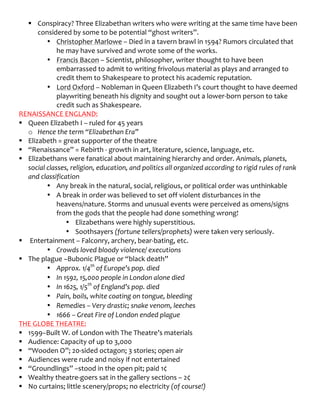
§ Conspiracy?	Three	Elizabethan	writers	who	were	writing	at	the	same	time	have	been	
considered	by	some	to	be	potential	“ghost	writers”.	
• Christopher	Marlowe	–	Died	in	a	tavern	brawl	in	1594?	Rumors	circulated	that	
he	may	have	survived	and	wrote	some	of	the	works.	
• Francis	Bacon	–	Scientist,	philosopher,	writer	thought	to	have	been	
embarrassed	to	admit	to	writing	frivolous	material	as	plays	and	arranged	to	
credit	them	to	Shakespeare	to	protect	his	academic	reputation.		
• Lord	Oxford	–	Nobleman	in	Queen	Elizabeth	I’s	court	thought	to	have	deemed	
playwriting	beneath	his	dignity	and	sought	out	a	lower-born	person	to	take	
credit	such	as	Shakespeare.	
RENAISSANCE	ENGLAND:	
§ Queen	Elizabeth	I	–	ruled	for	45	years		
o Hence	the	term	“Elizabethan	Era”	
§ Elizabeth	=	great	supporter	of	the	theatre	
§ “Renaissance”	=	Rebirth	-	growth	in	art,	literature,	science,	language,	etc.	
§ Elizabethans	were	fanatical	about	maintaining	hierarchy	and	order.	Animals,	planets,	
social	classes,	religion,	education,	and	politics	all	organized	according	to	rigid	rules	of	rank	
and	classification	
• Any	break	in	the	natural,	social,	religious,	or	political	order	was	unthinkable	
• A	break	in	order	was	believed	to	set	off	violent	disturbances	in	the	
heavens/nature.	Storms	and	unusual	events	were	perceived	as	omens/signs	
from	the	gods	that	the	people	had	done	something	wrong!	
• Elizabethans	were	highly	superstitious.	
• Soothsayers	(fortune	tellers/prophets)	were	taken	very	seriously.	
§ 	Entertainment	–	Falconry,	archery,	bear-bating,	etc.	
• Crowds	loved	bloody	violence/	executions	
§ The	plague	–Bubonic	Plague	or	“black	death”	
• Approx.	1/4th
	of	Europe’s	pop.	died	
• In	1592,	15,000	people	in	London	alone	died		
• In	1625,	1/5th
	of	England’s	pop.	died	
• Pain,	boils,	white	coating	on	tongue,	bleeding	
• Remedies	–	Very	drastic;	snake	venom,	leeches	
• 1666	–	Great	Fire	of	London	ended	plague		
THE	GLOBE	THEATRE:	
§ 1599–Built	W.	of	London	with	The	Theatre’s	materials	
§ Audience:	Capacity	of	up	to	3,000	
§ “Wooden	O”;	20-sided	octagon;	3	stories;	open	air		
§ Audiences	were	rude	and	noisy	if	not	entertained		
§ “Groundlings”	–stood	in	the	open	pit;	paid	1¢		
§ Wealthy	theatre-goers	sat	in	the	gallery	sections	–	2¢	
§ No	curtains;	little	scenery/props;	no	electricity	(of	course!)
§ Elaborate	clothing	and	carefully-crafted	dialogue	were	relied	upon	to	establish	setting,	
tone,	etc.		
§ Daytime	performances	only	(needed	natural	light!)	
§ Flags:	Black=tragedy;		red=history;		white=comedy	
§ Actors	not	well	respected;	low	social	status	for	actors	
§ Boys	played	female	roles	(until	late	17th
	century)	
§ 10%	of	London	attended	one	or	more	plays	per	week	
§ 1613	–	Globe	burned	from	cannon	during	Henry	VIII	
§ 1614	–	Globe	rebuilt	
§ 1644	–	Globe	dismantled	(Puritanical	entertainment	ban)	
§ For	over	300	years,	the	theatre	of	one	of	the	most	influential	playwrights	of	all	time	
existed	only	in	historical	documents	and	memory	
§ 1988	–	(on	what	would	have	been	Shakespeare’s	424th
	bday)	Reconstruction	began	using	
traditional	16th
	century	carpentry	and	materials	to	replicate	original		
§ 1996	–	Reconstruction	completed;	Queen	Elizabeth	II	attended	dedication	event;	Henry	
V	performed	first	
§ It	stands	today	in	its	original	location	and	hosts	several	of	Shakespeare’s	plays	each	year

Shakespeare Bio. Notes

  • 1.
    William Shakespeare - Class Notes PERSONAL LIFE: § Born April 23, 1564 in Stratford-on-Avon, NW of London o Very little documentation of his life exists oChurch documented his baptism as April 26th , and since it was customary to baptize 3 days after birth, we can speculate that he was born on the 23rd . § Mystery surrounding life; the “lost years” (1585-1592) § Parents – John and Mary Shakespeare § Education ended at 14-15; $$$ obligations to family § Married Anne Hathaway in 1582 (he was 18; she was 26) § Children – Susanna, Hamnet and Judith (twins); Hamnet died (age 11) § Died April 23, 1616 (on his 52nd birthday) in Stratford-on-Avon CAREER: § Regarded as the greatest writer in the English language § Actor, playwright, and poet § Left family in mid-1580s; moved to London (“lost years”) § By 1594, part owner and principal playwright of the Lord Chamberlain’s Men, one of the most successful theatre companies in London § 1592-1594–Plague closed theatres; forced to write poetry § 1594 – 1608 most productive years § 1599 - The Globe Theatre was built § 1599 - Wrote The Tragedy of Julius Caesar § 1603 – King James I became king after death of Queen Elizabeth I; theatre company renamed The King’s Men; Shakespeare continued to write and act § Drama - Wrote tragedies, histories, and comedies § Plays - 37 plays (avg. 1-3 plays per year) § Poems - 154 sonnets, 2 narrative poems § 1610 – returned to family a wealthy man SIDE NOTES: § Writers freely borrowed from one another and often adapted classical works into their own. § Romeo and Juliet was closely adapted from an earlier version of what is believed a true story of 2 actual families in Verona, Italy. Shakespeare discovered this tragic love story in Arthur Brooke's 1562 poem entitled "The Tragical Historye of Romeus and Juliet.” § Some scholars suggest that Shakespeare is not the sole author; however it is pure speculation without proof.
  • 2.
    § Conspiracy? Three Elizabethan writers who were writing at the same time have been considered by some to be potential “ghost writers”. • Christopher Marlowe – Died in a tavern brawl in 1594? Rumors circulated that he may have survived and wrote some of the works. •Francis Bacon – Scientist, philosopher, writer thought to have been embarrassed to admit to writing frivolous material as plays and arranged to credit them to Shakespeare to protect his academic reputation. • Lord Oxford – Nobleman in Queen Elizabeth I’s court thought to have deemed playwriting beneath his dignity and sought out a lower-born person to take credit such as Shakespeare. RENAISSANCE ENGLAND: § Queen Elizabeth I – ruled for 45 years o Hence the term “Elizabethan Era” § Elizabeth = great supporter of the theatre § “Renaissance” = Rebirth - growth in art, literature, science, language, etc. § Elizabethans were fanatical about maintaining hierarchy and order. Animals, planets, social classes, religion, education, and politics all organized according to rigid rules of rank and classification • Any break in the natural, social, religious, or political order was unthinkable • A break in order was believed to set off violent disturbances in the heavens/nature. Storms and unusual events were perceived as omens/signs from the gods that the people had done something wrong! • Elizabethans were highly superstitious. • Soothsayers (fortune tellers/prophets) were taken very seriously. § Entertainment – Falconry, archery, bear-bating, etc. • Crowds loved bloody violence/ executions § The plague –Bubonic Plague or “black death” • Approx. 1/4th of Europe’s pop. died • In 1592, 15,000 people in London alone died • In 1625, 1/5th of England’s pop. died • Pain, boils, white coating on tongue, bleeding • Remedies – Very drastic; snake venom, leeches • 1666 – Great Fire of London ended plague THE GLOBE THEATRE: § 1599–Built W. of London with The Theatre’s materials § Audience: Capacity of up to 3,000 § “Wooden O”; 20-sided octagon; 3 stories; open air § Audiences were rude and noisy if not entertained § “Groundlings” –stood in the open pit; paid 1¢ § Wealthy theatre-goers sat in the gallery sections – 2¢ § No curtains; little scenery/props; no electricity (of course!)
  • 3.
    § Elaborate clothing and carefully-crafted dialogue were relied upon to establish setting, tone, etc. § Daytime performances only (needed natural light!) §Flags: Black=tragedy; red=history; white=comedy § Actors not well respected; low social status for actors § Boys played female roles (until late 17th century) § 10% of London attended one or more plays per week § 1613 – Globe burned from cannon during Henry VIII § 1614 – Globe rebuilt § 1644 – Globe dismantled (Puritanical entertainment ban) § For over 300 years, the theatre of one of the most influential playwrights of all time existed only in historical documents and memory § 1988 – (on what would have been Shakespeare’s 424th bday) Reconstruction began using traditional 16th century carpentry and materials to replicate original § 1996 – Reconstruction completed; Queen Elizabeth II attended dedication event; Henry V performed first § It stands today in its original location and hosts several of Shakespeare’s plays each year