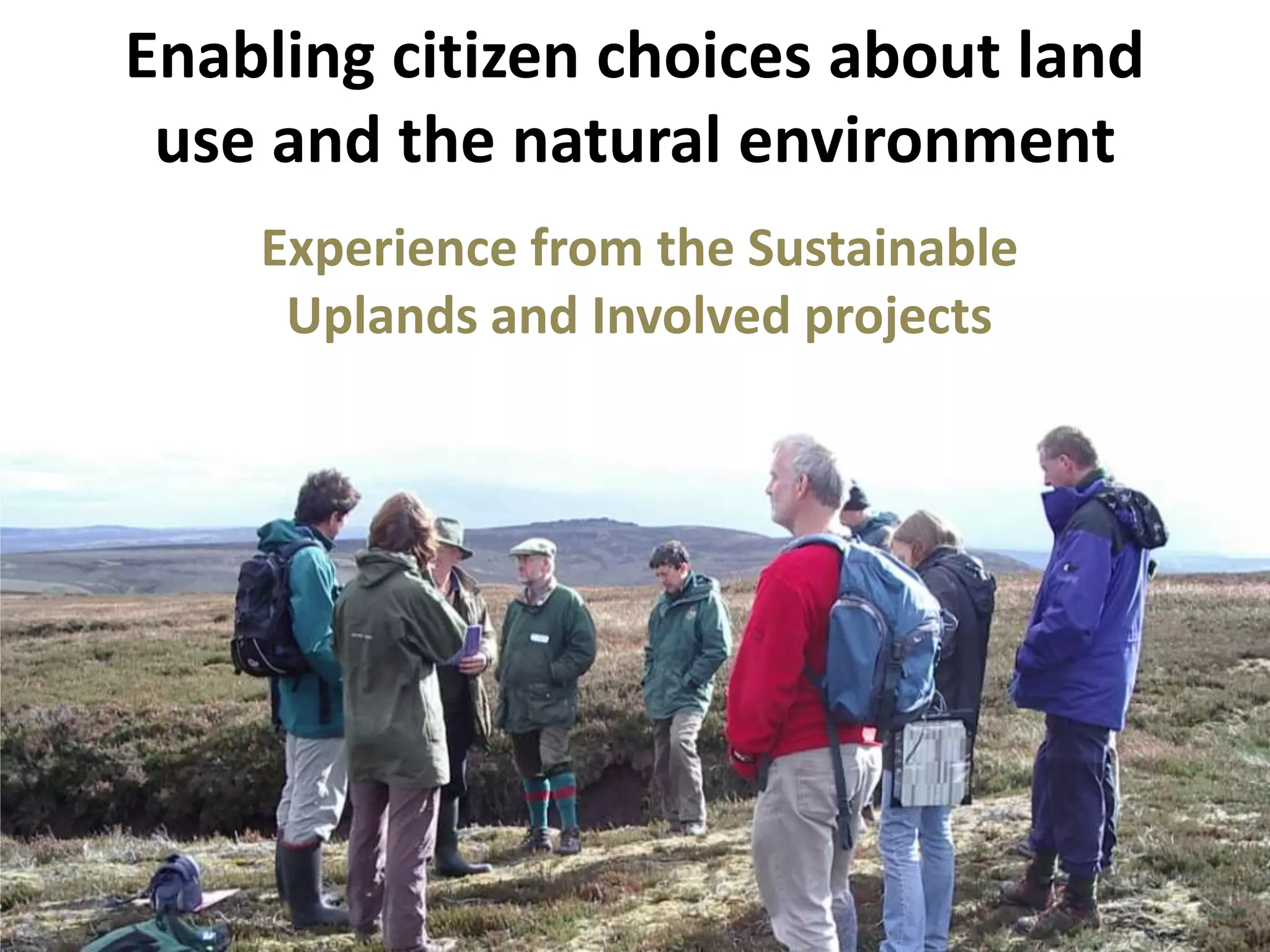
Enabling citizen choices about land use and the natural environmentExperience from the Sustainable Uplands and Involved projects
PlanIntroductionWhat can published literature tell us?New research on citizen engagement in land use and environmental decisionsCase Study: Lessons from the Sustainable Uplands project
1. Introduction
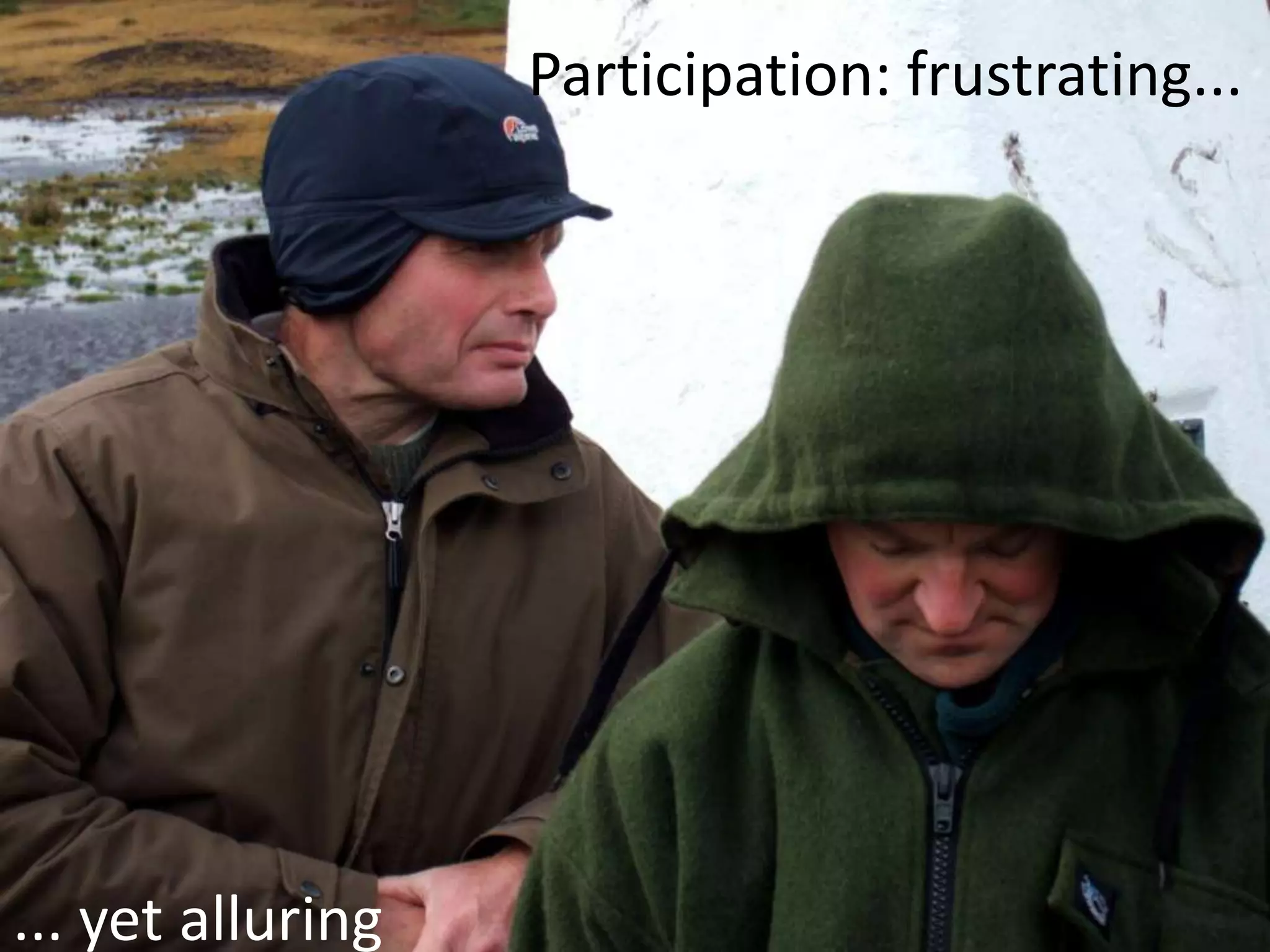
Participation: frustrating...... yet alluring
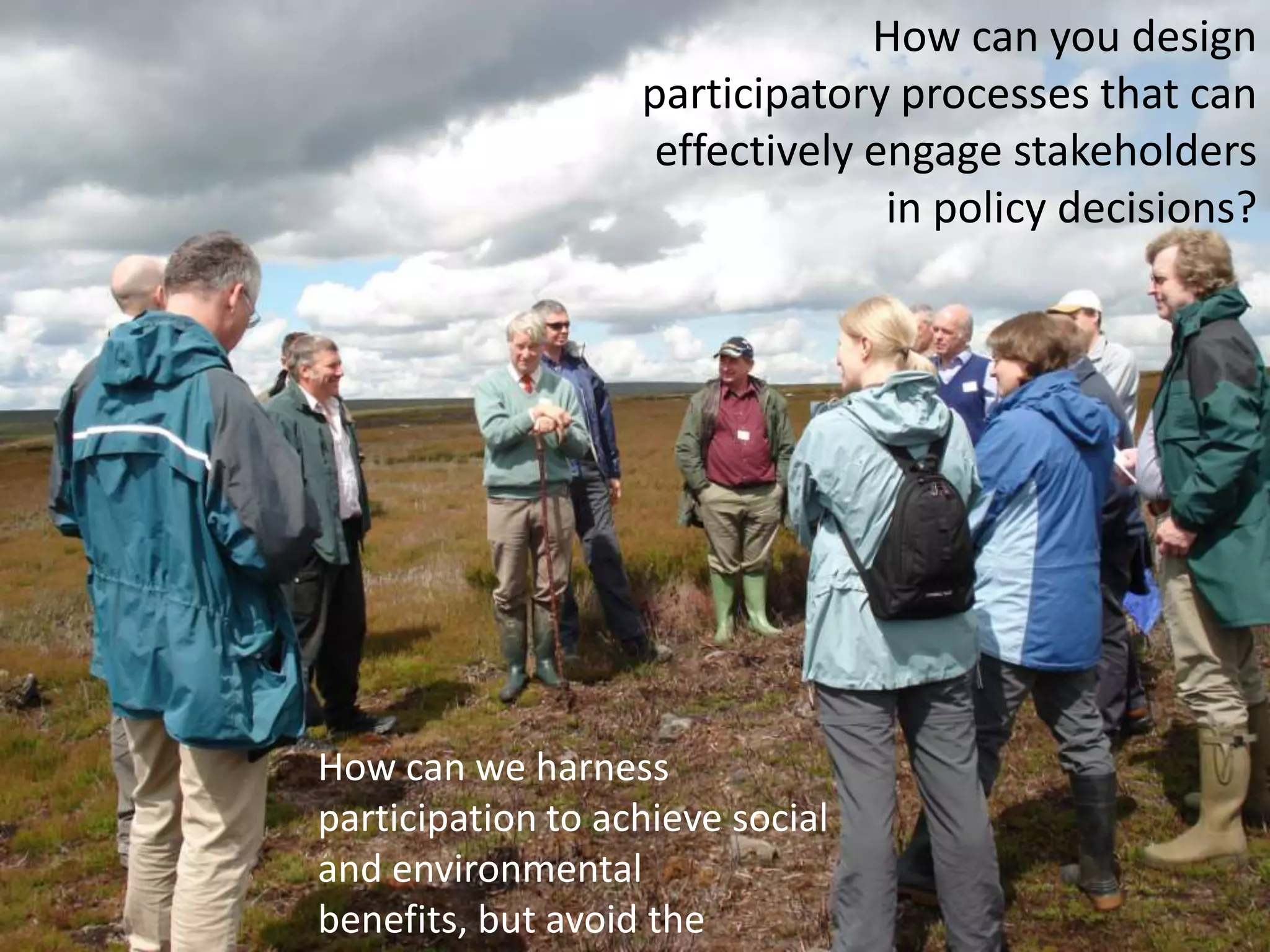
	How can you design participatory processes that can effectively engage stakeholders in policy decisions?How can we harness participation to achieve social and environmental benefits, but avoid the pitfalls?
2. What can published literature tell us?
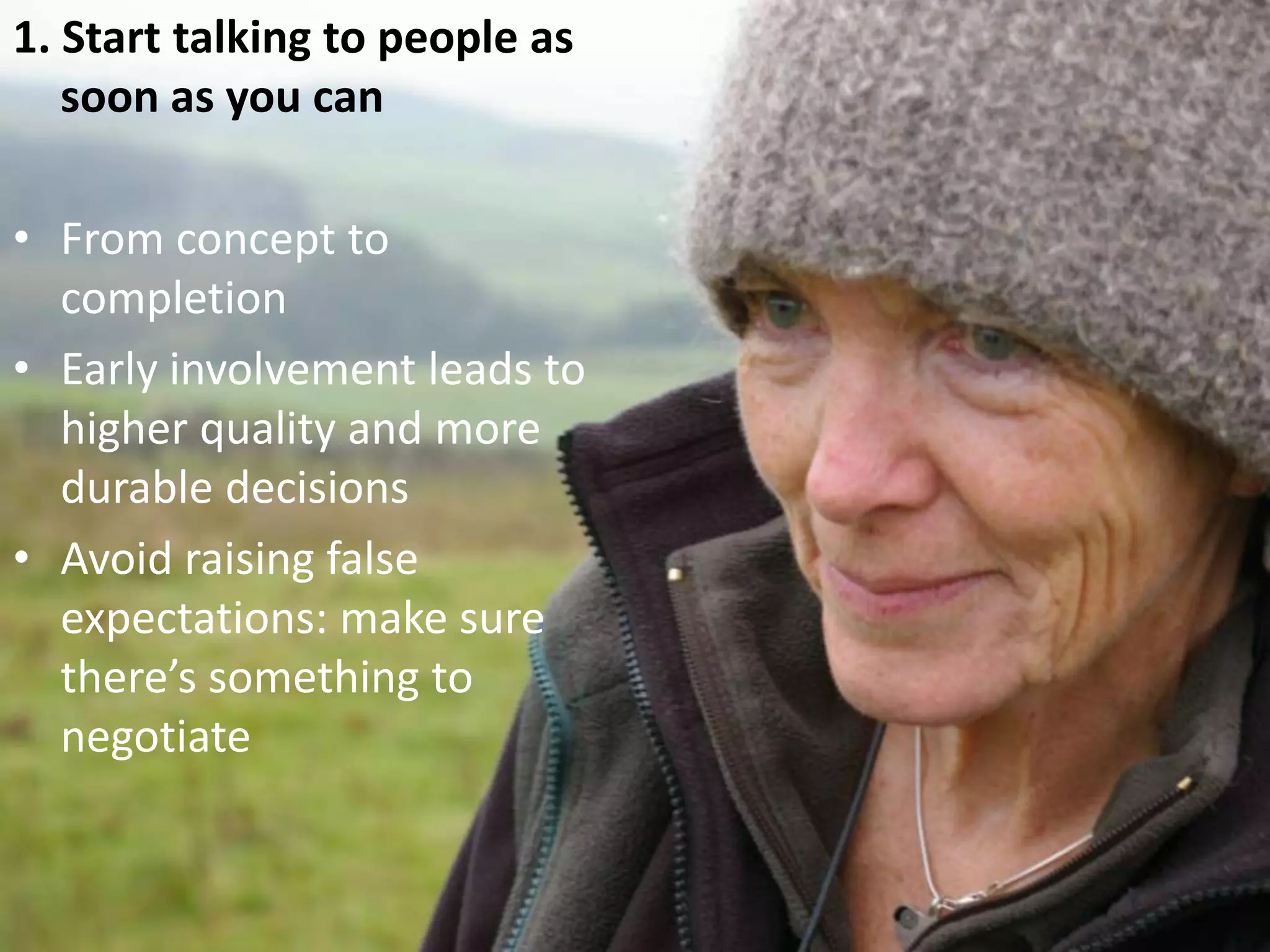
1. Start talking to people as soon as you canFrom concept to completionEarly involvement leads to higher quality and more durable decisionsAvoid raising false expectations: make sure there’s something to negotiate
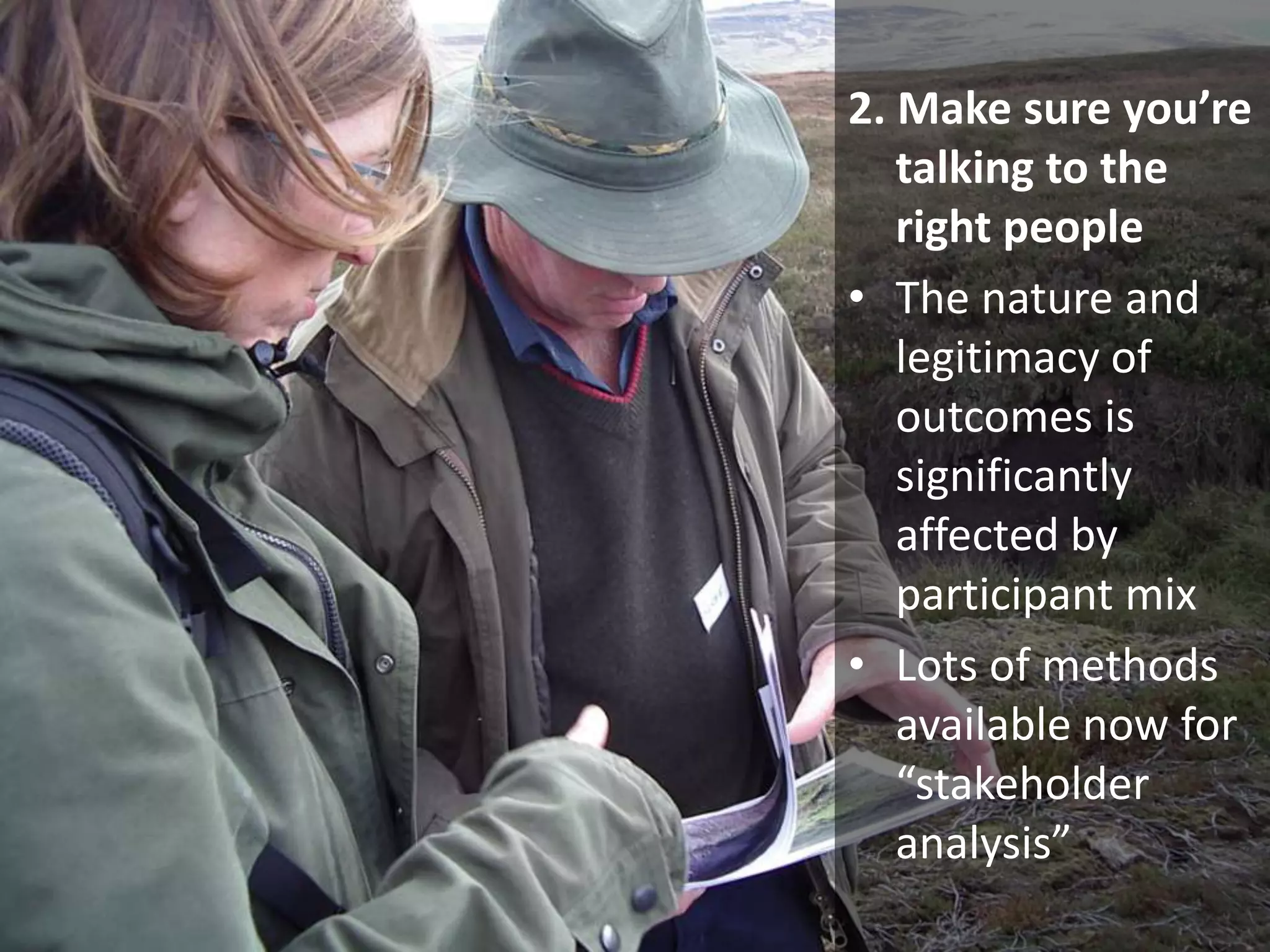
2. Make sure you’re talking to the right peopleThe nature and legitimacy of outcomes is significantly affected by participant mix
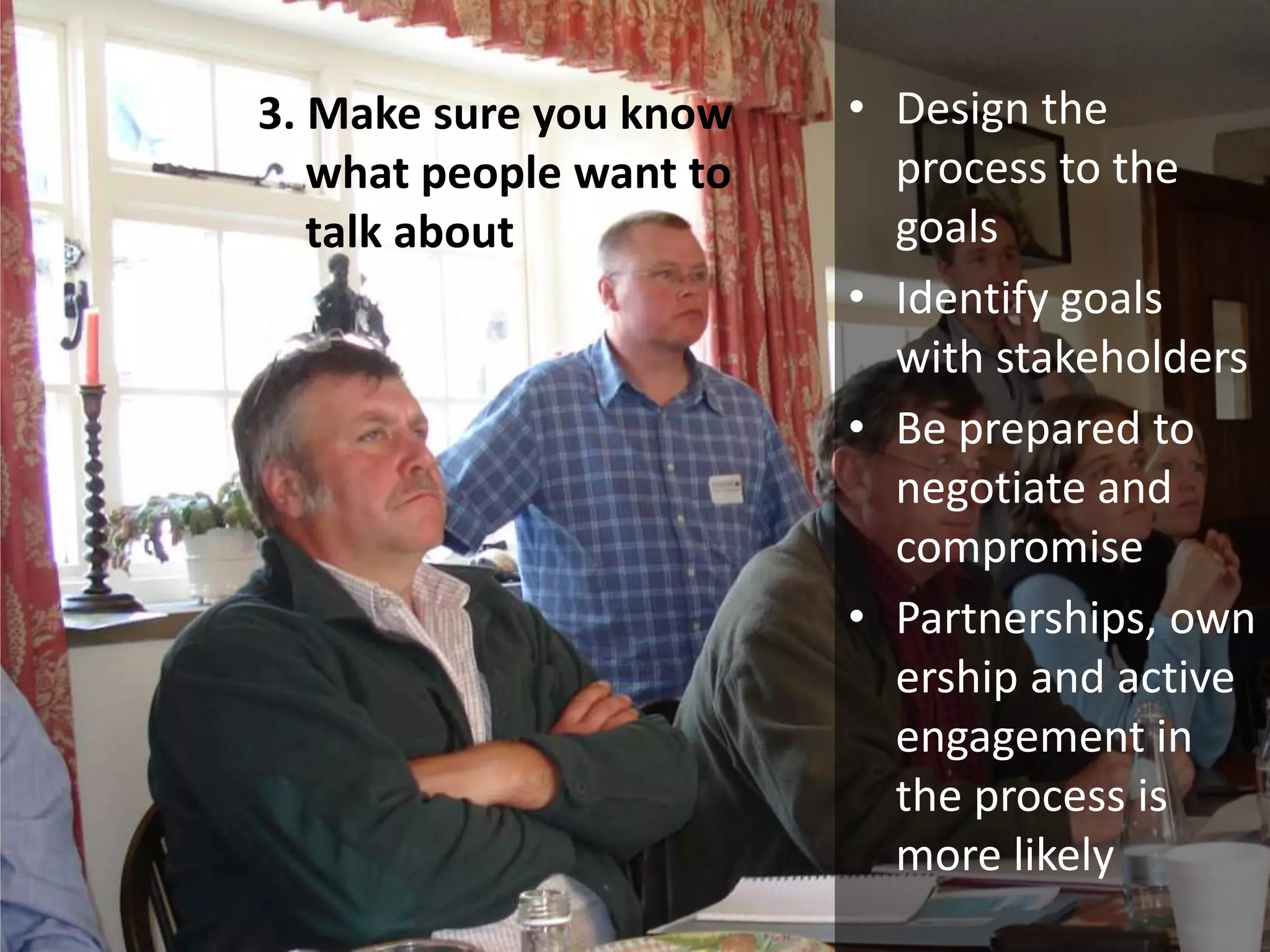
Lots of methods available now for “stakeholder analysis” Design the process to the goals
Identify goals with stakeholders
Be prepared to negotiate and compromise
Partnerships, ownership and active engagement in the process is more likely3. Make sure you know what people want to talk about
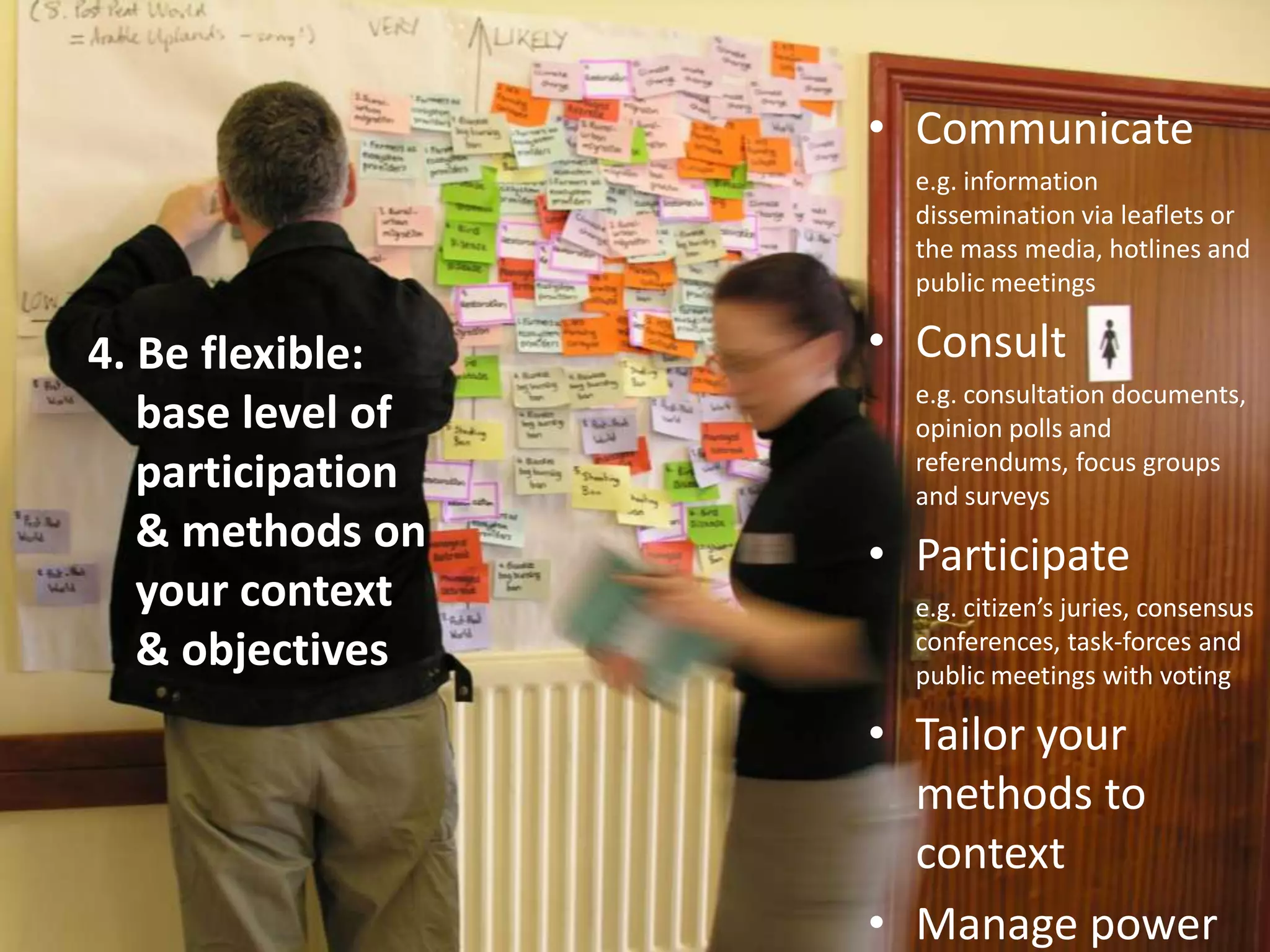
Communicate 	e.g. information dissemination via leaflets or the mass media, hotlines and public meetingsConsulte.g. consultation documents, opinion polls and referendums, focus groups and surveysParticipate e.g. citizen’s juries, consensus conferences, task-forces and public meetings with votingTailor your methods to context
Manage power4. Be flexible: base level of participation & methods on your context & objectives
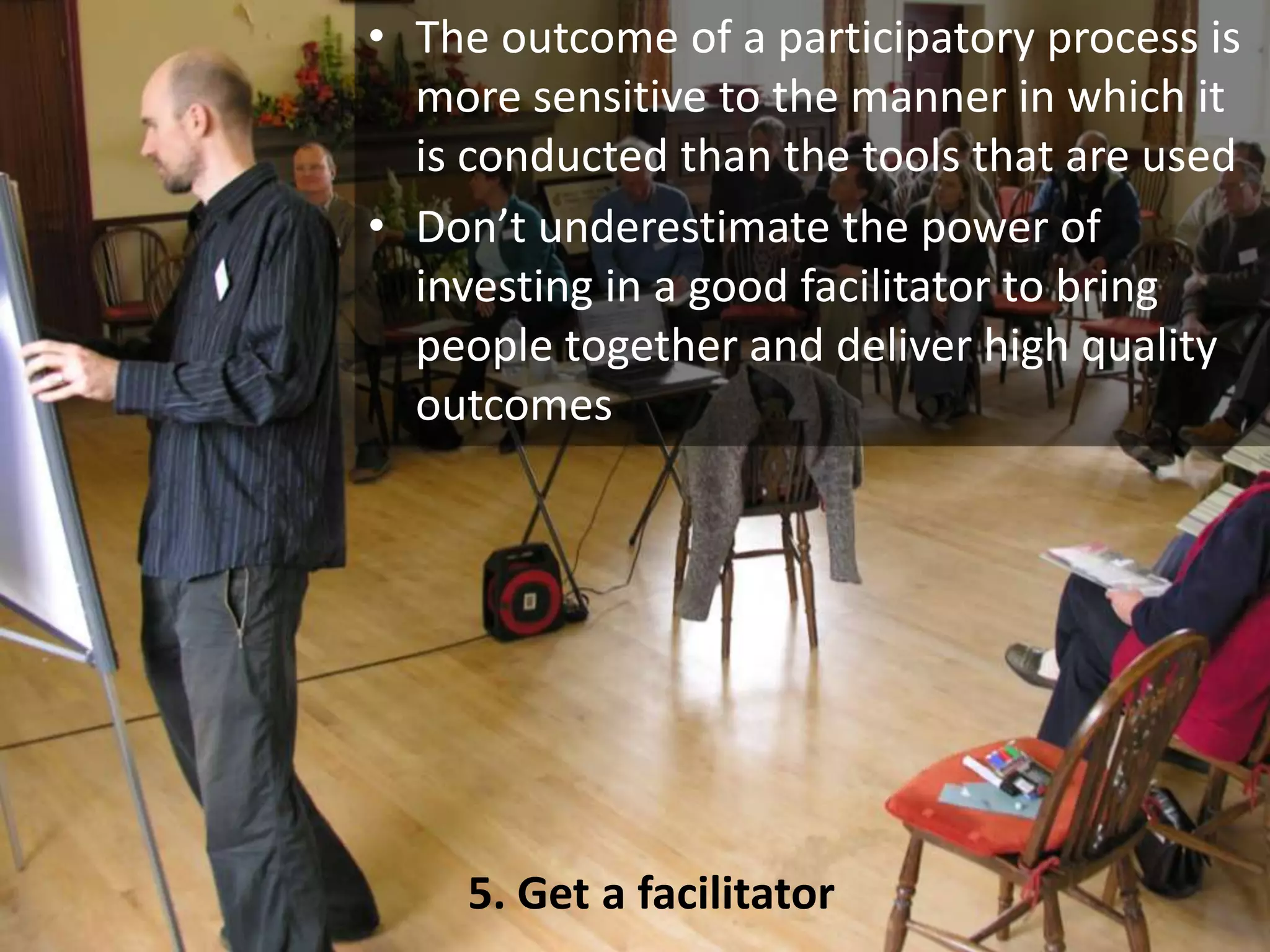
The outcome of a participatory process is more sensitive to the manner in which it is conducted than the tools that are used
Don’t underestimate the power of investing in a good facilitator to bring people together and deliver high quality outcomes5. Get a facilitator
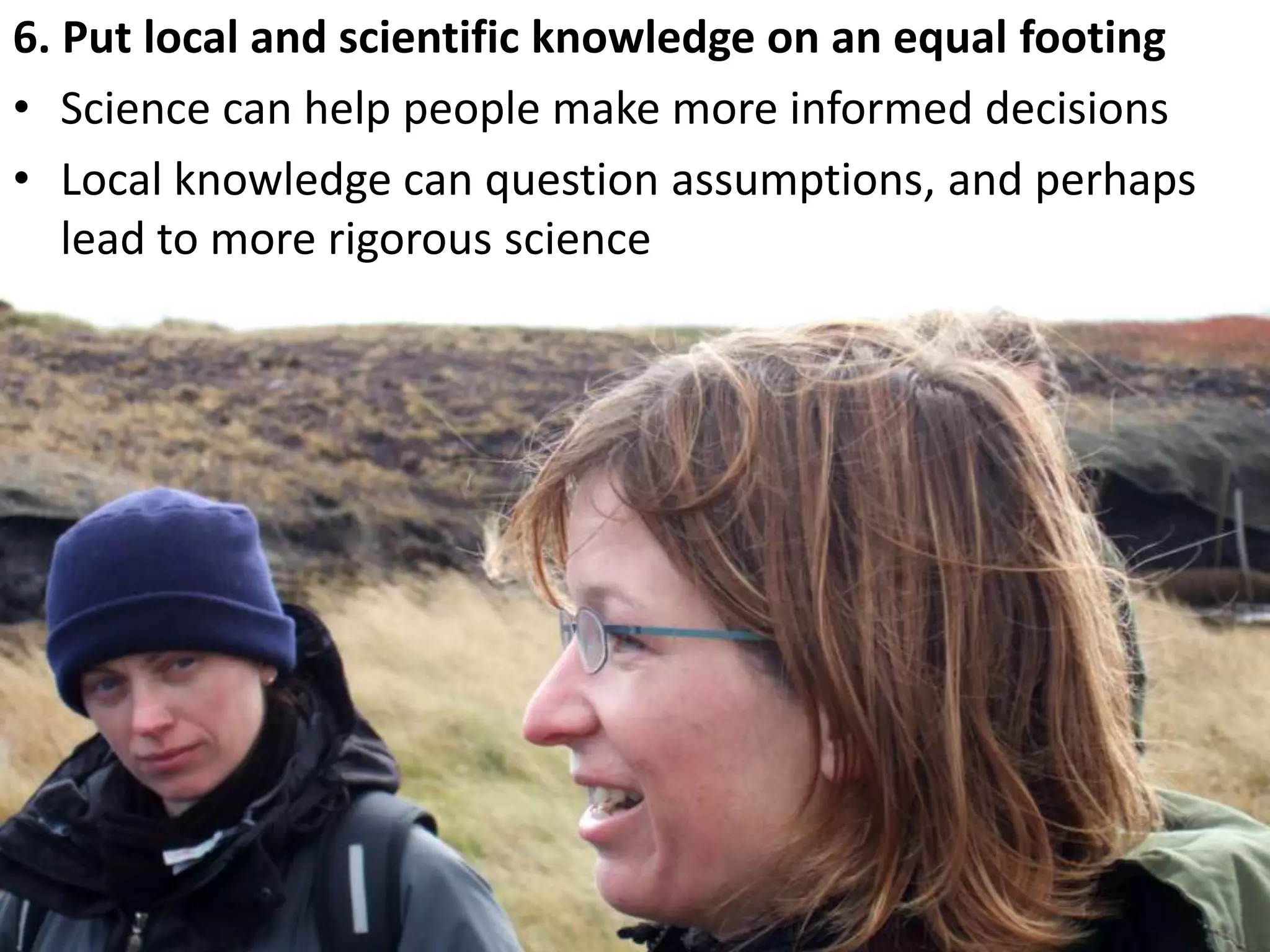
6. Put local and scientific knowledge on an equal footingScience can help people make more informed decisions
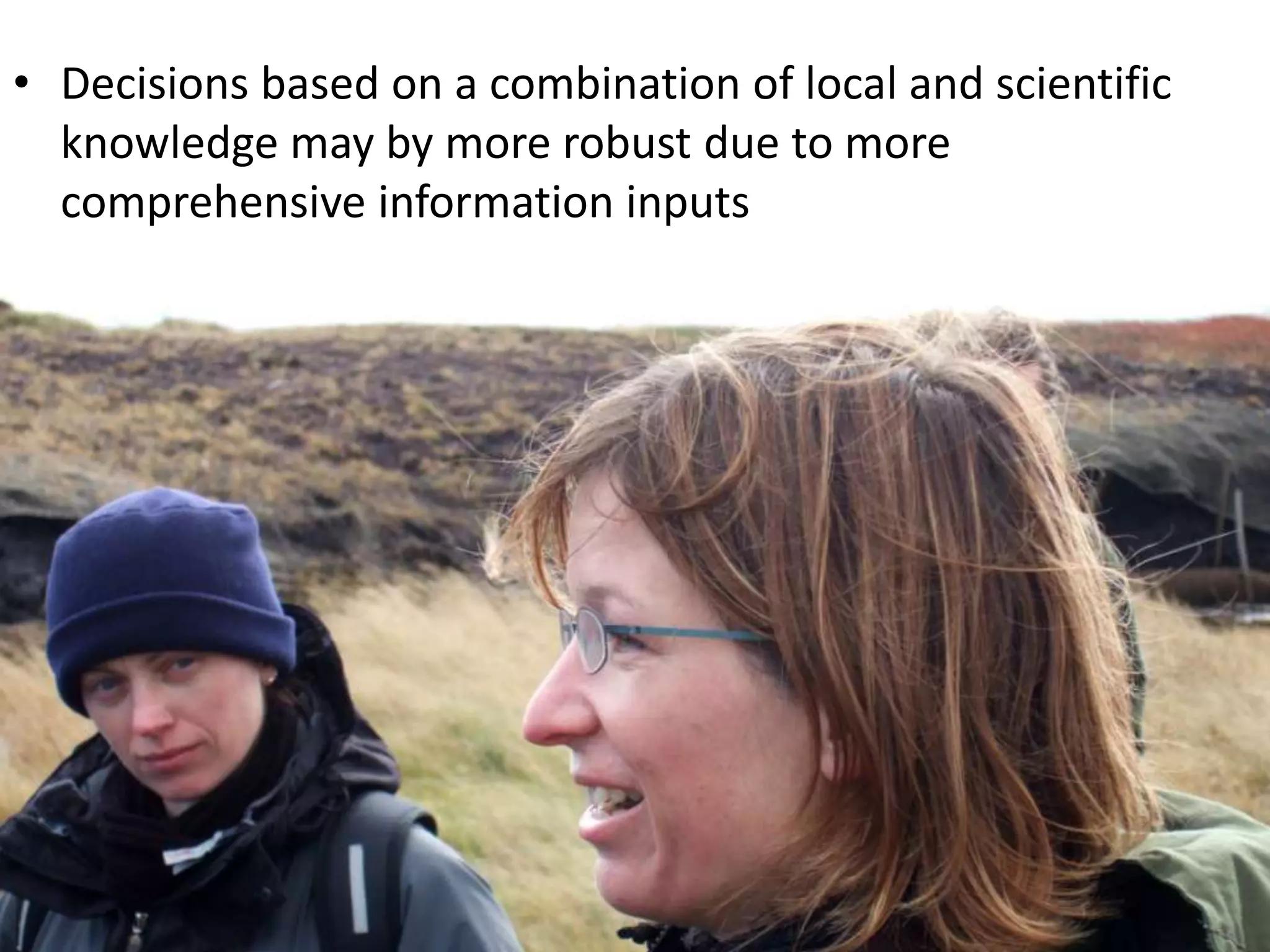
Local knowledge can question assumptions, and perhaps lead to more rigorous scienceDecisions based on a combination of local and scientific knowledge may by more robust due to more comprehensive information inputs3. New research…
The projectsEcopag: quantitative analysis of 2-300 case studiesInvolved: in-depth interviews with those who led and participated in environmental management projects/programmes5 projects/programmes in Spain & 5 in PortugalAlong continuum from less-more participatoryStudying a replicated participatory process in these plus 10 other countriesRole of process versus context?
Emerging lessonsLow levels of participation may lead to simple solutions: easily implemented and accepted but ineffectiveHigh levels of participation may lead to deeper understanding, learning and more complex solutions: more effective but harder to applyPolicy makers with actual decision-making power, need to be included in the process for short-termimpact In some cases, their presence created a power imbalance that limited active participation & generation of new ideasBut if decision-makers not part of process, immediate implementation of findings is less likely
Emerging lessonsIf land managers are well represented, outcomes are generally economically and practically feasible, and there are more social benefits (social learning, better functioning social networks, increased trust)Involvement of this group increases likelihood that process outcomes are implemented in longer termTo get participation of land managers, the process needs to be brought to their local context and communication tailored appropriately
4. Case Study: Sustainable Uplands
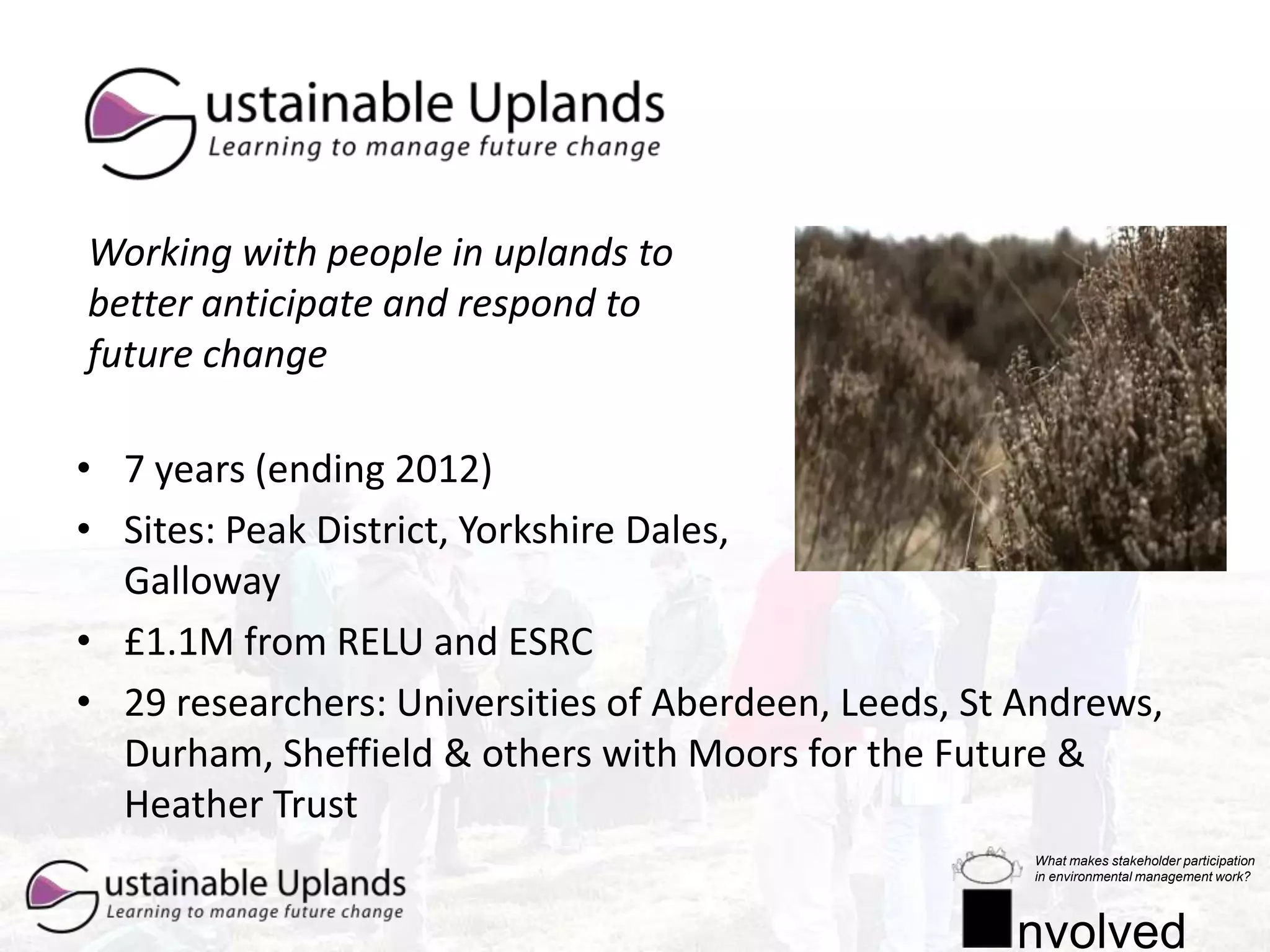
Working with people in uplands to better anticipate and respond to future change7 years (ending 2012)Sites: Peak District, Yorkshire Dales, 		        Galloway£1.1M from RELU and ESRC29 researchers: Universities of Aberdeen, Leeds, St Andrews, Durham, Sheffield & others with Moors for the Future & Heather Trust
Inputs to policy processes e.g. via Defra’suplands policy review, CRC’s upland inquiry, Foresight, NEA, Scottish Government Rural Land Use Study, IUCN peatland programme and consultation responses
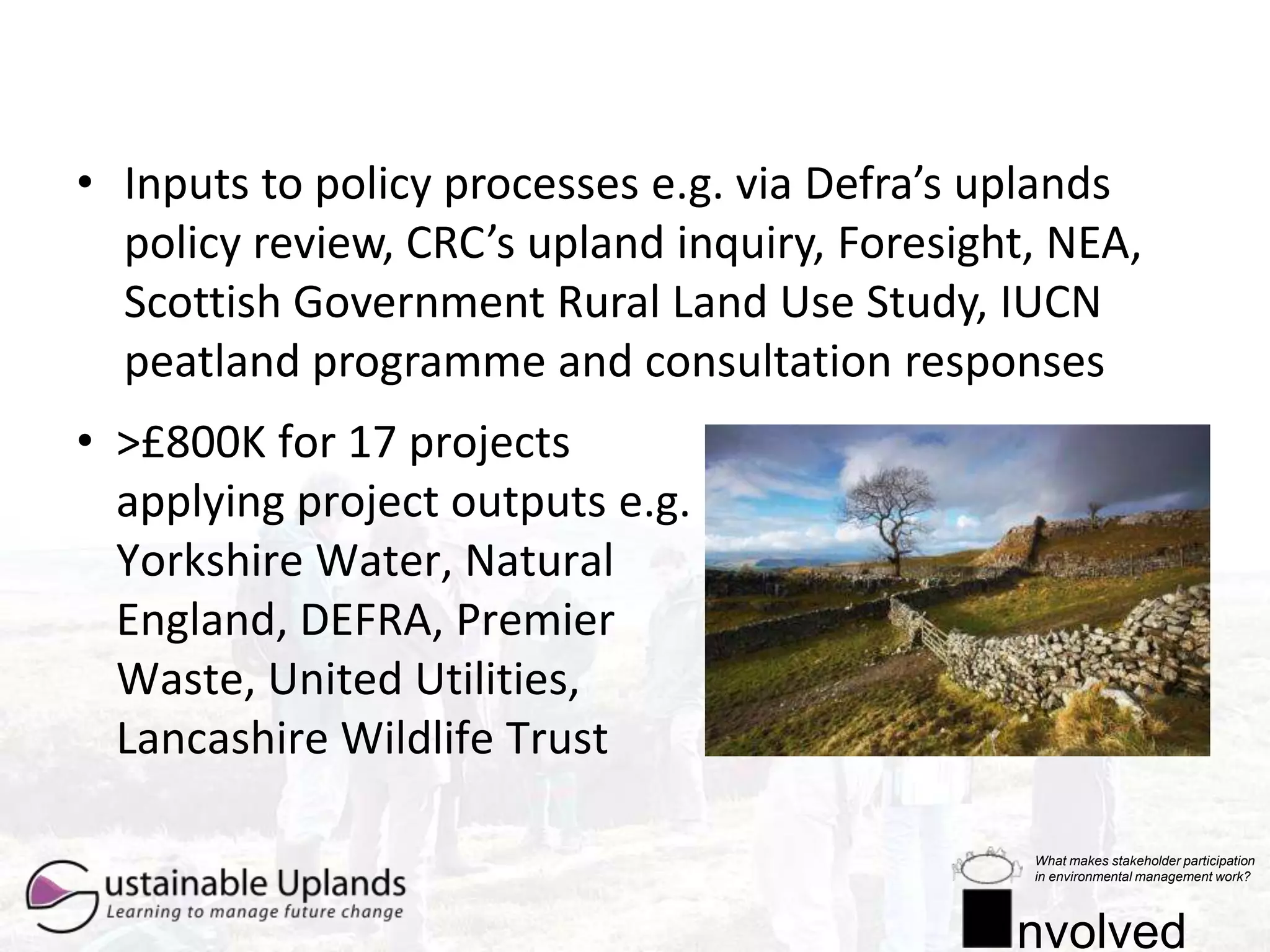
>£800K for 17 projects applying project outputs e.g. Yorkshire Water, Natural England, DEFRA, Premier Waste, United Utilities, Lancashire Wildlife TrustKey messagesWorth investing to find out who wants what & tailoring the process from the outset (but you could short-cut our approach to stakeholder analysis)Tailor outputs to multiple learning preferences: use a variety of techniques & technologies to unpack “black boxes”Know your stakeholders to get timing right

Enabling citizen choices about land use and the natural environment

  • 1.
    Enabling citizen choicesabout land use and the natural environmentExperience from the Sustainable Uplands and Involved projects
  • 2.
    PlanIntroductionWhat can publishedliterature tell us?New research on citizen engagement in land use and environmental decisionsCase Study: Lessons from the Sustainable Uplands project
  • 3.
  • 4.
  • 5.
    How can youdesign participatory processes that can effectively engage stakeholders in policy decisions?How can we harness participation to achieve social and environmental benefits, but avoid the pitfalls?
  • 6.
    2. What canpublished literature tell us?
  • 7.
    1. Start talkingto people as soon as you canFrom concept to completionEarly involvement leads to higher quality and more durable decisionsAvoid raising false expectations: make sure there’s something to negotiate
  • 8.
    2. Make sureyou’re talking to the right peopleThe nature and legitimacy of outcomes is significantly affected by participant mix
  • 9.
    Lots of methodsavailable now for “stakeholder analysis” Design the process to the goals
  • 10.
  • 11.
    Be prepared tonegotiate and compromise
  • 12.
    Partnerships, ownership andactive engagement in the process is more likely3. Make sure you know what people want to talk about
  • 13.
    Communicate e.g. informationdissemination via leaflets or the mass media, hotlines and public meetingsConsulte.g. consultation documents, opinion polls and referendums, focus groups and surveysParticipate e.g. citizen’s juries, consensus conferences, task-forces and public meetings with votingTailor your methods to context
  • 14.
    Manage power4. Beflexible: base level of participation & methods on your context & objectives
  • 15.
    The outcome ofa participatory process is more sensitive to the manner in which it is conducted than the tools that are used
  • 16.
    Don’t underestimate thepower of investing in a good facilitator to bring people together and deliver high quality outcomes5. Get a facilitator
  • 17.
    6. Put localand scientific knowledge on an equal footingScience can help people make more informed decisions
  • 18.
    Local knowledge canquestion assumptions, and perhaps lead to more rigorous scienceDecisions based on a combination of local and scientific knowledge may by more robust due to more comprehensive information inputs3. New research…
  • 19.
    The projectsEcopag: quantitativeanalysis of 2-300 case studiesInvolved: in-depth interviews with those who led and participated in environmental management projects/programmes5 projects/programmes in Spain & 5 in PortugalAlong continuum from less-more participatoryStudying a replicated participatory process in these plus 10 other countriesRole of process versus context?
  • 20.
    Emerging lessonsLow levelsof participation may lead to simple solutions: easily implemented and accepted but ineffectiveHigh levels of participation may lead to deeper understanding, learning and more complex solutions: more effective but harder to applyPolicy makers with actual decision-making power, need to be included in the process for short-termimpact In some cases, their presence created a power imbalance that limited active participation & generation of new ideasBut if decision-makers not part of process, immediate implementation of findings is less likely
  • 21.
    Emerging lessonsIf landmanagers are well represented, outcomes are generally economically and practically feasible, and there are more social benefits (social learning, better functioning social networks, increased trust)Involvement of this group increases likelihood that process outcomes are implemented in longer termTo get participation of land managers, the process needs to be brought to their local context and communication tailored appropriately
  • 22.
    4. Case Study:Sustainable Uplands
  • 23.
    Working with peoplein uplands to better anticipate and respond to future change7 years (ending 2012)Sites: Peak District, Yorkshire Dales, Galloway£1.1M from RELU and ESRC29 researchers: Universities of Aberdeen, Leeds, St Andrews, Durham, Sheffield & others with Moors for the Future & Heather Trust
  • 24.
    Inputs to policyprocesses e.g. via Defra’suplands policy review, CRC’s upland inquiry, Foresight, NEA, Scottish Government Rural Land Use Study, IUCN peatland programme and consultation responses
  • 25.
    >£800K for 17projects applying project outputs e.g. Yorkshire Water, Natural England, DEFRA, Premier Waste, United Utilities, Lancashire Wildlife TrustKey messagesWorth investing to find out who wants what & tailoring the process from the outset (but you could short-cut our approach to stakeholder analysis)Tailor outputs to multiple learning preferences: use a variety of techniques & technologies to unpack “black boxes”Know your stakeholders to get timing right
  • 26.
    Key messagesA sharedphilosophy: Different expertise, but compatible ways of viewing/constructing knowledge & compatible values/beliefsWorking in partnership: learning from and with stakeholders as equals to make a difference
  • 27.
    Please take oneDVDsCardsfor www.ouruplands.co.ukRELU Policy & Practice NotesFollow up? Possible sessions on:Stakeholder analysisOther participatory methodsFacilitation (see handout)
  • 28.
    www.see.leeds.ac.uk/sustainableuplandswww.ouruplands.co.uk Follow us on: www.twitter.com/reluuplandsEmail: sustainableuplands@see.leeds.ac.uk
  • 29.
    Contactwww.see.leeds.ac.uk/sustainableuplandsFollow us on:www.twitter.com/reluuplandsEmail: sustainableuplands@see.leeds.ac.ukCall or text on: 0797 428 6778