Cancer: A Metabolic Disease with Metabolic
Solutions
Thomas N. Seyfried
Boston College
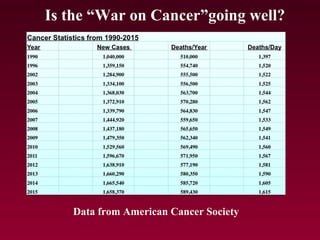
Is the “War on Cancer”going well?
Data from American Cancer Society
Is cancer a nuclear
genetic disease or a
mitochondrial metabolic
disease?
Provocative Question
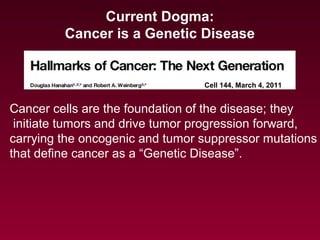
Current Dogma:
Cancer is a Genetic Disease
Cancer cells are the foundation of the disease; they
initiate tumors and drive tumor progression forward,
carrying the oncogenic and tumor suppressor mutations
that define cancer as a “Genetic Disease”.
Cell 144, March 4, 2011
Evidence that challenges the
somatic mutation theory of cancer
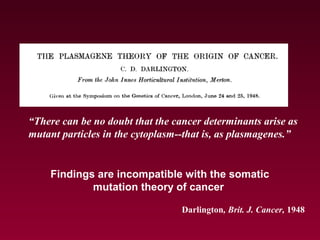
Darlington, Brit. J. Cancer, 1948
“There can be no doubt that the cancer determinants arise as
mutant particles in the cytoplasm--that is, as plasmagenes.”
Findings are incompatible with the somatic
mutation theory of cancer
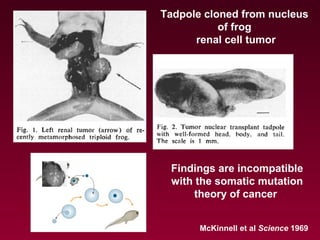
Tadpole cloned from nucleus
of frog
renal cell tumor
McKinnell et al Science 1969
Findings are incompatible
with the somatic mutation
theory of cancer
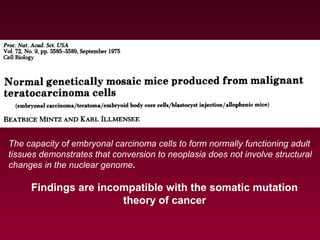
The capacity of embryonal carcinoma cells to form normally functioning adult
tissues demonstrates that conversion to neoplasia does not involve structural
changes in the nuclear genome.
Findings are incompatible with the somatic mutation
theory of cancer
Findings are
incompatible with the
somatic mutation
theory of cancer.
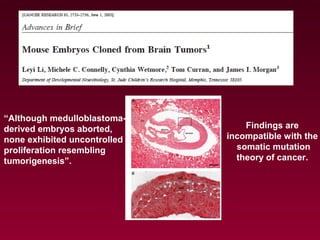
“Although medulloblastoma-
derived embryos aborted,
none exhibited uncontrolled
proliferation resembling
tumorigenesis”.
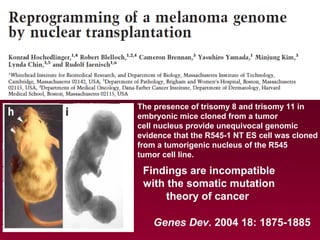
The presence of trisomy 8 and trisomy 11 in
embryonic mice cloned from a tumor
cell nucleus provide unequivocal genomic
evidence that the R545-1 NT ES cell was cloned
from a tumorigenic nucleus of the R545
tumor cell line.
Genes Dev. 2004 18: 1875-1885
Findings are incompatible
with the somatic mutation
theory of cancer
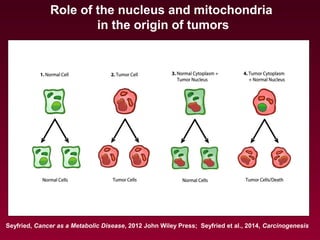
Role of the nucleus and mitochondria
in the origin of tumors
Seyfried, Cancer as a Metabolic Disease, 2012 John Wiley Press; Seyfried et al., 2014, Carcinogenesis
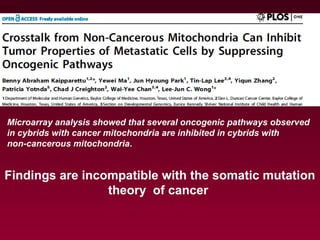
Microarray analysis showed that several oncogenic pathways observed
in cybrids with cancer mitochondria are inhibited in cybrids with
non-cancerous mitochondria.
Findings are incompatible with the somatic mutation
theory of cancer
If somatic mutations are not the origin of
cancer, then how do cancer cells arise?
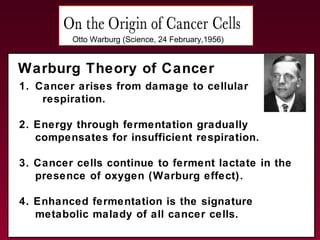
Warburg Theory of Cancer
1. Cancer arises from damage to cellular
respiration.
2. Energy through fermentation gradually
compensates for insufficient respiration.
3. Cancer cells continue to ferment lactate in the
presence of oxygen (Warburg effect).
4. Enhanced fermentation is the signature
metabolic malady of all cancer cells.
Otto Warburg (Science, 24 February,1956)
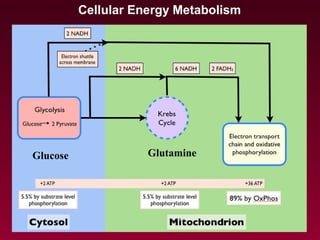
Cellular Energy Metabolism
Glucose Glutamine
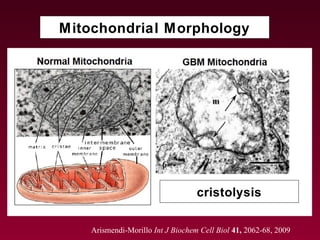
Mitochondrial Morphology
Arismendi-Morillo Int J Biochem Cell Biol 41, 2062-68, 2009
cristolysis
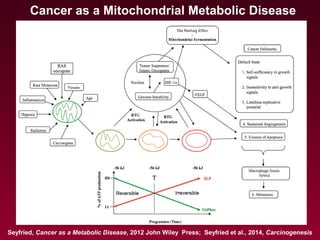
Cancer as a Mitochondrial Metabolic Disease
Seyfried, Cancer as a Metabolic Disease, 2012 John Wiley Press; Seyfried et al., 2014, Carcinogenesis
If all cancers are a type of mitochondrial
metabolic disease, then what therapies
might be effective for managing tumors?
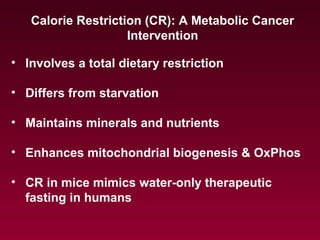
Calorie Restriction (CR): A Metabolic Cancer
Intervention
• Involves a total dietary restriction
• Differs from starvation
• Maintains minerals and nutrients
• Enhances mitochondrial biogenesis & OxPhos
• CR in mice mimics water-only therapeutic
fasting in humans
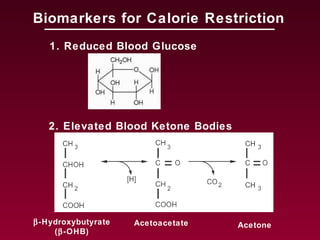
β-Hydroxybutyrate
(β-OHB)
AcetoneAcetoacetate
2. Elevated Blood Ketone Bodies
Biomarkers for Calorie Restriction
1. Reduced Blood Glucose
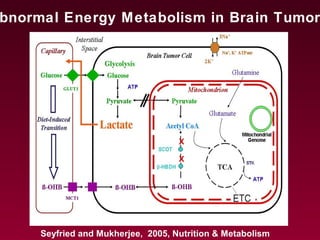
bnormal Energy Metabolism in Brain Tumor
X
X
Seyfried and Mukherjee, 2005, Nutrition & Metabolism
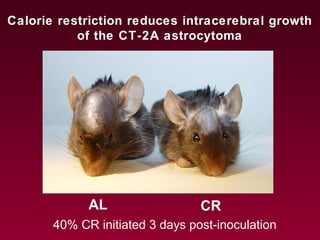
Calorie restriction reduces intracerebral growth
of the CT-2A astrocytoma
AL CR
40% CR initiated 3 days post-inoculation
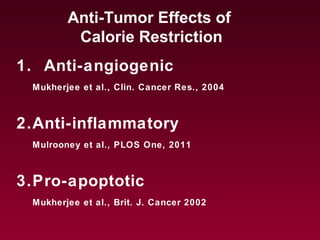
1. Anti-angiogenic
Mukherjee et al., Clin. Cancer Res., 2004
2.Anti-inflammatory
Mulrooney et al., PLOS One, 2011
3.Pro-apoptotic
Mukherjee et al., Brit. J. Cancer 2002
Anti-Tumor Effects of
Calorie Restriction
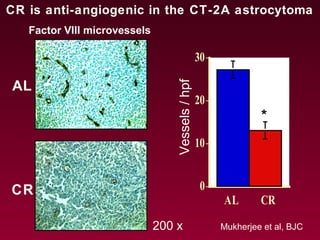
AL
CR
CR is anti-angiogenic in the CT-2A astrocytoma
Mukherjee et al, BJC
0
10
20
30
AL CR
Vessels/hpf
*
200 x
Factor VIII microvessels
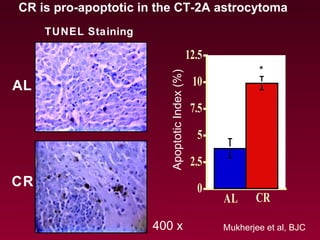
CR is pro-apoptotic in the CT-2A astrocytoma
AL
CR 0
2.5
5
7.5
10
12.5
AL CR
ApoptoticIndex(%)
Mukherjee et al, BJC
*
400 x
*
TUNEL Staining
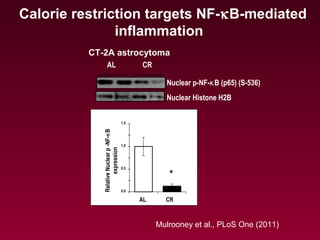
AL CR
Nuclear p-NF-κB (p65) (S-536)
Nuclear Histone H2B
AL
RelativeNuclearp-NF-κB
expression
CR
0.0
0.5
1.0
1.5
*
Calorie restriction targets NF-κB-mediated
inflammation
Mulrooney et al., PLoS One (2011)
CT-2A astrocytoma
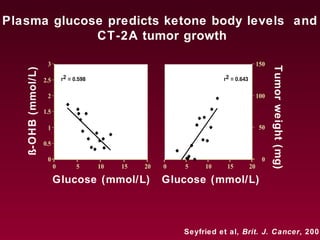
Glucose (mmol/L)
0
0.5
1
1.5
2
2.5
3
0 5 10 15 20
r2 = 0.598
0
50
100
150
0 5 10 15 20
r2 = 0.643
ß-OHB(mmol/L)
Tumorweight(mg)
Glucose (mmol/L)
Plasma glucose predicts ketone body levels and
CT-2A tumor growth
Seyfried et al, Brit. J. Cancer, 2003
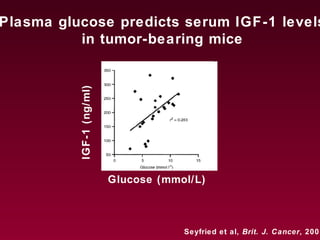
Glucose (mmol/L)
IGF-1(ng/ml)
Plasma glucose predicts serum IGF-1 levels
in tumor-bearing mice
Seyfried et al, Brit. J. Cancer, 2003
Can CR influence invasion in the VM
mouse model of GBM?
Research Question
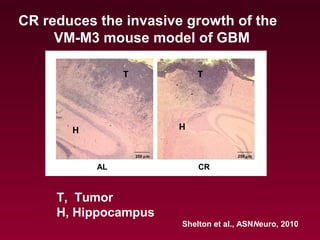
H
TT
H
AL CR
250 µm 250 µm
CR reduces the invasive growth of the
VM-M3 mouse model of GBM
T, Tumor
H, Hippocampus
Shelton et al., ASNNeuro, 2010
Can a restricted ketogenic diet manage
brain cancer in mice?
Research Question
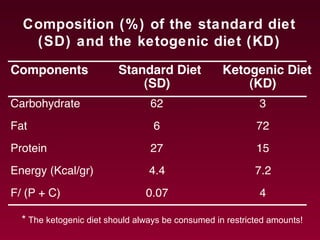
Composition (%) of the standard diet
(SD) and the ketogenic diet (KD)
* The ketogenic diet should always be consumed in restricted amounts!
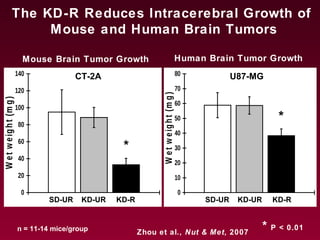
The KD-R Reduces Intracerebral Growth of
Mouse and Human Brain Tumors
0
20
40
60
80
100
120
140
1
Wetweight(mg)
SD-UR KD-UR KD-R
CT-2A
*
0
10
20
30
40
50
60
70
80
1
Wetweight(mg)
*
SD-UR KD-UR KD-R
U87-MG
*
n = 11-14 mice/group * P < 0.01
Mouse Brain Tumor Growth Human Brain Tumor Growth
Zhou et al., Nut & Met, 2007
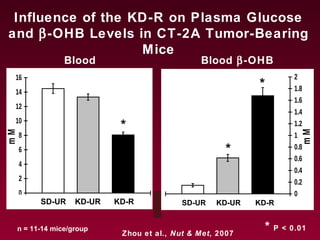
Influence of the KD-R on Plasma Glucose
and β-OHB Levels in CT-2A Tumor-Bearing
Mice
Blood
Glucose
Blood β-OHB
0
0.2
0.4
0.6
0.8
1
1.2
1.4
1.6
1.8
2
1
mM
*
*
SD-UR KD-UR KD-R
*
*
0
2
4
6
8
10
12
14
16
1
mM
*
SD-UR KD-UR KD-R
*
n = 11-14 mice/group * P < 0.01
Zhou et al., Nut & Met, 2007
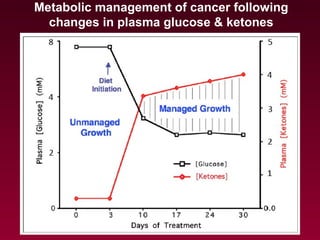
Metabolic management of cancer following
changes in plasma glucose & ketones
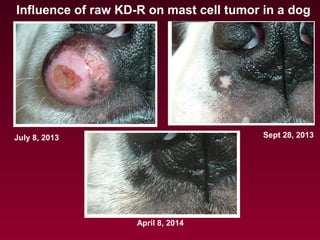
Influence of raw KD-R on mast cell tumor in a dog
July 8, 2013 Sept 28, 2013
April 8, 2014
Can the KD-R be effective for the
metabolic management of malignant
brain cancer in patients?
Clinical Question
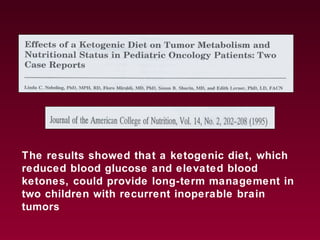
The results showed that a ketogenic diet, which
reduced blood glucose and elevated blood
ketones, could provide long-term management in
two children with recurrent inoperable brain
tumors
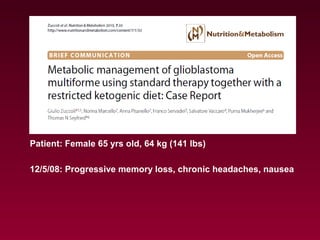
Patient: Female 65 yrs old, 64 kg (141 lbs)
12/5/08: Progressive memory loss, chronic headaches, nausea
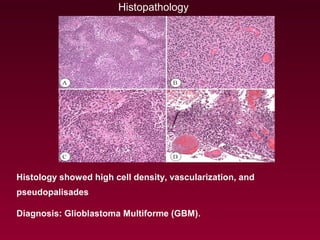
Histology showed high cell density, vascularization, and
pseudopalisades
Diagnosis: Glioblastoma Multiforme (GBM).
Histopathology
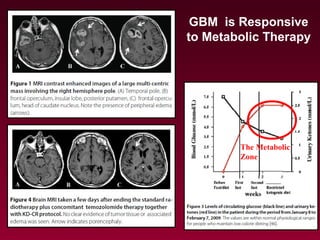
GBM is Responsive
to Metabolic Therapy
The Metabolic
Zone
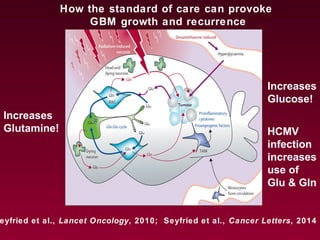
How the standard of care can provoke
GBM growth and recurrence
eyfried et al., Lancet Oncology, 2010; Seyfried et al., Cancer Letters, 2014
Increases
Glutamine!
Increases
Glucose!
HCMV
infection
increases
use of
Glu & Gln
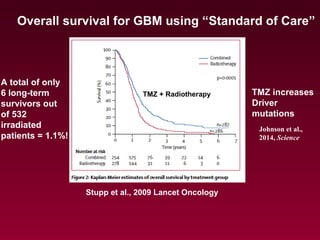
Overall survival for GBM using “Standard of Care”
Stupp et al., 2009 Lancet Oncology
A total of only
6 long-term
survivors out
of 532
irradiated
patients = 1.1%!
TMZ increases
Driver
mutations
Johnson et al.,
2014, Science
TMZ + Radiotherapy
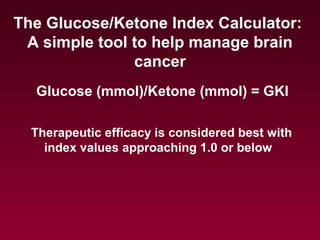
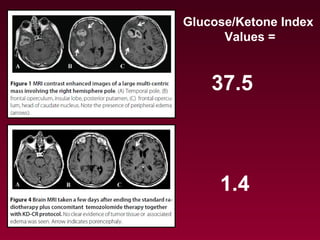
Glucose (mmol)/Ketone (mmol) = GKI
The Glucose/Ketone Index Calculator:
A simple tool to help manage brain
cancer
Therapeutic efficacy is considered best with
index values approaching 1.0 or below
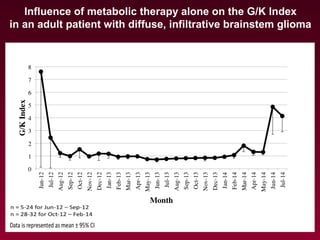
Influence of metabolic therapy alone on the G/K Index
in an adult patient with diffuse, infiltrative brainstem glioma
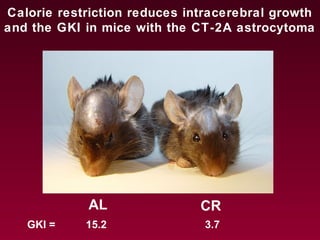
Calorie restriction reduces intracerebral growth
and the GKI in mice with the CT-2A astrocytoma
AL CR
GKI = 15.2 3.7
Glucose/Ketone Index
Values =
37.5
1.4
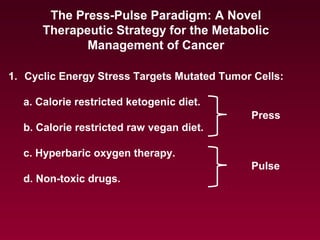
The Press-Pulse Paradigm: A Novel
Therapeutic Strategy for the Metabolic
Management of Cancer
1. Cyclic Energy Stress Targets Mutated Tumor Cells:
a. Calorie restricted ketogenic diet.
b. Calorie restricted raw vegan diet.
c. Hyperbaric oxygen therapy.
d. Non-toxic drugs.
Press
Pulse
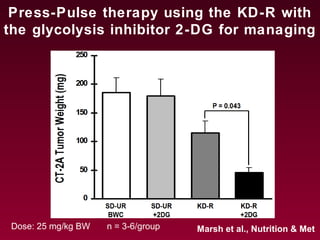
Press-Pulse therapy using the KD-R with
the glycolysis inhibitor 2-DG for managing
n = 3-6/groupDose: 25 mg/kg BW Marsh et al., Nutrition & Met
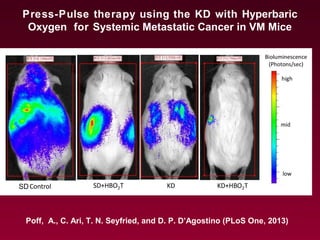
Press-Pulse therapy using the KD with Hyperbaric
Oxygen for Systemic Metastatic Cancer in VM Mice
Poff, A., C. Ari, T. N. Seyfried, and D. P. D’Agostino (PLoS One, 2013)
SD
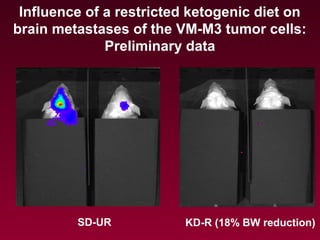
Influence of a restricted ketogenic diet on
brain metastases of the VM-M3 tumor cells:
Preliminary data
SD-UR KD-R (18% BW reduction)
Journal of Lipid Research, Sep;55(9):1815-7, 2014
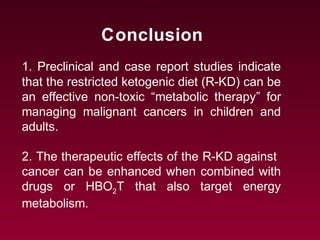
Conclusion
1. Preclinical and case report studies indicate
that the restricted ketogenic diet (R-KD) can be
an effective non-toxic “metabolic therapy” for
managing malignant cancers in children and
adults.
2. The therapeutic effects of the R-KD against
cancer can be enhanced when combined with
drugs or HBO2T that also target energy
metabolism.
Acknowledgements
Purna Mukherjee, Ph.D.
Michael Kiebish, Ph.D.
Todd Sanderson, MD
Jeremy Marsh, MD
Weihua Zhou, MS
Giulio Zuccoli, MD
Miguel Sena-Esteves, Ph.D.
Laura Shelton, Ph.D.
Richard McGowan, S.J.
Roberto Flores
Angela Poff, Ph.D
Dominic D’agostino, Ph.D.
Linh Ta
Josh Meidenbauer
Tiernan Mulrooney
Joseph Maroon, MD
Funding: Amer. Inst. Cancer Res.,
National Cancer Institute,
Boston College Research
Fund.

24 janvier CROQUER LA VIE - Dr Thomas Seyfried

  • 1.
    Cancer: A MetabolicDisease with Metabolic Solutions Thomas N. Seyfried Boston College
  • 2.
    Is the “Waron Cancer”going well? Data from American Cancer Society
  • 3.
    Is cancer anuclear genetic disease or a mitochondrial metabolic disease? Provocative Question
  • 4.
    Current Dogma: Cancer isa Genetic Disease Cancer cells are the foundation of the disease; they initiate tumors and drive tumor progression forward, carrying the oncogenic and tumor suppressor mutations that define cancer as a “Genetic Disease”. Cell 144, March 4, 2011
  • 5.
    Evidence that challengesthe somatic mutation theory of cancer
  • 6.
    Darlington, Brit. J.Cancer, 1948 “There can be no doubt that the cancer determinants arise as mutant particles in the cytoplasm--that is, as plasmagenes.” Findings are incompatible with the somatic mutation theory of cancer
  • 7.
    Tadpole cloned fromnucleus of frog renal cell tumor McKinnell et al Science 1969 Findings are incompatible with the somatic mutation theory of cancer
  • 8.
    The capacity ofembryonal carcinoma cells to form normally functioning adult tissues demonstrates that conversion to neoplasia does not involve structural changes in the nuclear genome. Findings are incompatible with the somatic mutation theory of cancer
  • 9.
    Findings are incompatible withthe somatic mutation theory of cancer. “Although medulloblastoma- derived embryos aborted, none exhibited uncontrolled proliferation resembling tumorigenesis”.
  • 10.
    The presence oftrisomy 8 and trisomy 11 in embryonic mice cloned from a tumor cell nucleus provide unequivocal genomic evidence that the R545-1 NT ES cell was cloned from a tumorigenic nucleus of the R545 tumor cell line. Genes Dev. 2004 18: 1875-1885 Findings are incompatible with the somatic mutation theory of cancer
  • 11.
    Role of thenucleus and mitochondria in the origin of tumors Seyfried, Cancer as a Metabolic Disease, 2012 John Wiley Press; Seyfried et al., 2014, Carcinogenesis
  • 12.
    Microarray analysis showedthat several oncogenic pathways observed in cybrids with cancer mitochondria are inhibited in cybrids with non-cancerous mitochondria. Findings are incompatible with the somatic mutation theory of cancer
  • 13.
    If somatic mutationsare not the origin of cancer, then how do cancer cells arise?
  • 14.
    Warburg Theory ofCancer 1. Cancer arises from damage to cellular respiration. 2. Energy through fermentation gradually compensates for insufficient respiration. 3. Cancer cells continue to ferment lactate in the presence of oxygen (Warburg effect). 4. Enhanced fermentation is the signature metabolic malady of all cancer cells. Otto Warburg (Science, 24 February,1956)
  • 15.
  • 16.
    Mitochondrial Morphology Arismendi-Morillo IntJ Biochem Cell Biol 41, 2062-68, 2009 cristolysis
  • 17.
    Cancer as aMitochondrial Metabolic Disease Seyfried, Cancer as a Metabolic Disease, 2012 John Wiley Press; Seyfried et al., 2014, Carcinogenesis
  • 18.
    If all cancersare a type of mitochondrial metabolic disease, then what therapies might be effective for managing tumors?
  • 19.
    Calorie Restriction (CR):A Metabolic Cancer Intervention • Involves a total dietary restriction • Differs from starvation • Maintains minerals and nutrients • Enhances mitochondrial biogenesis & OxPhos • CR in mice mimics water-only therapeutic fasting in humans
  • 20.
    β-Hydroxybutyrate (β-OHB) AcetoneAcetoacetate 2. Elevated BloodKetone Bodies Biomarkers for Calorie Restriction 1. Reduced Blood Glucose
  • 21.
    bnormal Energy Metabolismin Brain Tumor X X Seyfried and Mukherjee, 2005, Nutrition & Metabolism
  • 22.
    Calorie restriction reducesintracerebral growth of the CT-2A astrocytoma AL CR 40% CR initiated 3 days post-inoculation
  • 23.
    1. Anti-angiogenic Mukherjee etal., Clin. Cancer Res., 2004 2.Anti-inflammatory Mulrooney et al., PLOS One, 2011 3.Pro-apoptotic Mukherjee et al., Brit. J. Cancer 2002 Anti-Tumor Effects of Calorie Restriction
  • 24.
    AL CR CR is anti-angiogenicin the CT-2A astrocytoma Mukherjee et al, BJC 0 10 20 30 AL CR Vessels/hpf * 200 x Factor VIII microvessels
  • 25.
    CR is pro-apoptoticin the CT-2A astrocytoma AL CR 0 2.5 5 7.5 10 12.5 AL CR ApoptoticIndex(%) Mukherjee et al, BJC * 400 x * TUNEL Staining
  • 26.
    AL CR Nuclear p-NF-κB(p65) (S-536) Nuclear Histone H2B AL RelativeNuclearp-NF-κB expression CR 0.0 0.5 1.0 1.5 * Calorie restriction targets NF-κB-mediated inflammation Mulrooney et al., PLoS One (2011) CT-2A astrocytoma
  • 27.
    Glucose (mmol/L) 0 0.5 1 1.5 2 2.5 3 0 510 15 20 r2 = 0.598 0 50 100 150 0 5 10 15 20 r2 = 0.643 ß-OHB(mmol/L) Tumorweight(mg) Glucose (mmol/L) Plasma glucose predicts ketone body levels and CT-2A tumor growth Seyfried et al, Brit. J. Cancer, 2003
  • 28.
    Glucose (mmol/L) IGF-1(ng/ml) Plasma glucosepredicts serum IGF-1 levels in tumor-bearing mice Seyfried et al, Brit. J. Cancer, 2003
  • 29.
    Can CR influenceinvasion in the VM mouse model of GBM? Research Question
  • 30.
    H TT H AL CR 250 µm250 µm CR reduces the invasive growth of the VM-M3 mouse model of GBM T, Tumor H, Hippocampus Shelton et al., ASNNeuro, 2010
  • 31.
    Can a restrictedketogenic diet manage brain cancer in mice? Research Question
  • 32.
    Composition (%) ofthe standard diet (SD) and the ketogenic diet (KD) * The ketogenic diet should always be consumed in restricted amounts!
  • 33.
    The KD-R ReducesIntracerebral Growth of Mouse and Human Brain Tumors 0 20 40 60 80 100 120 140 1 Wetweight(mg) SD-UR KD-UR KD-R CT-2A * 0 10 20 30 40 50 60 70 80 1 Wetweight(mg) * SD-UR KD-UR KD-R U87-MG * n = 11-14 mice/group * P < 0.01 Mouse Brain Tumor Growth Human Brain Tumor Growth Zhou et al., Nut & Met, 2007
  • 34.
    Influence of theKD-R on Plasma Glucose and β-OHB Levels in CT-2A Tumor-Bearing Mice Blood Glucose Blood β-OHB 0 0.2 0.4 0.6 0.8 1 1.2 1.4 1.6 1.8 2 1 mM * * SD-UR KD-UR KD-R * * 0 2 4 6 8 10 12 14 16 1 mM * SD-UR KD-UR KD-R * n = 11-14 mice/group * P < 0.01 Zhou et al., Nut & Met, 2007
  • 35.
    Metabolic management ofcancer following changes in plasma glucose & ketones
  • 36.
    Influence of rawKD-R on mast cell tumor in a dog July 8, 2013 Sept 28, 2013 April 8, 2014
  • 37.
    Can the KD-Rbe effective for the metabolic management of malignant brain cancer in patients? Clinical Question
  • 38.
    The results showedthat a ketogenic diet, which reduced blood glucose and elevated blood ketones, could provide long-term management in two children with recurrent inoperable brain tumors
  • 39.
    Patient: Female 65yrs old, 64 kg (141 lbs) 12/5/08: Progressive memory loss, chronic headaches, nausea
  • 40.
    Histology showed highcell density, vascularization, and pseudopalisades Diagnosis: Glioblastoma Multiforme (GBM). Histopathology
  • 41.
    GBM is Responsive toMetabolic Therapy The Metabolic Zone
  • 42.
    How the standardof care can provoke GBM growth and recurrence eyfried et al., Lancet Oncology, 2010; Seyfried et al., Cancer Letters, 2014 Increases Glutamine! Increases Glucose! HCMV infection increases use of Glu & Gln
  • 43.
    Overall survival forGBM using “Standard of Care” Stupp et al., 2009 Lancet Oncology A total of only 6 long-term survivors out of 532 irradiated patients = 1.1%! TMZ increases Driver mutations Johnson et al., 2014, Science TMZ + Radiotherapy
  • 44.
    Glucose (mmol)/Ketone (mmol)= GKI The Glucose/Ketone Index Calculator: A simple tool to help manage brain cancer Therapeutic efficacy is considered best with index values approaching 1.0 or below
  • 45.
    Influence of metabolictherapy alone on the G/K Index in an adult patient with diffuse, infiltrative brainstem glioma
  • 46.
    Calorie restriction reducesintracerebral growth and the GKI in mice with the CT-2A astrocytoma AL CR GKI = 15.2 3.7
  • 47.
  • 48.
    The Press-Pulse Paradigm:A Novel Therapeutic Strategy for the Metabolic Management of Cancer 1. Cyclic Energy Stress Targets Mutated Tumor Cells: a. Calorie restricted ketogenic diet. b. Calorie restricted raw vegan diet. c. Hyperbaric oxygen therapy. d. Non-toxic drugs. Press Pulse
  • 49.
    Press-Pulse therapy usingthe KD-R with the glycolysis inhibitor 2-DG for managing n = 3-6/groupDose: 25 mg/kg BW Marsh et al., Nutrition & Met
  • 50.
    Press-Pulse therapy usingthe KD with Hyperbaric Oxygen for Systemic Metastatic Cancer in VM Mice Poff, A., C. Ari, T. N. Seyfried, and D. P. D’Agostino (PLoS One, 2013) SD
  • 51.
    Influence of arestricted ketogenic diet on brain metastases of the VM-M3 tumor cells: Preliminary data SD-UR KD-R (18% BW reduction)
  • 52.
    Journal of LipidResearch, Sep;55(9):1815-7, 2014
  • 55.
    Conclusion 1. Preclinical andcase report studies indicate that the restricted ketogenic diet (R-KD) can be an effective non-toxic “metabolic therapy” for managing malignant cancers in children and adults. 2. The therapeutic effects of the R-KD against cancer can be enhanced when combined with drugs or HBO2T that also target energy metabolism.
  • 56.
    Acknowledgements Purna Mukherjee, Ph.D. MichaelKiebish, Ph.D. Todd Sanderson, MD Jeremy Marsh, MD Weihua Zhou, MS Giulio Zuccoli, MD Miguel Sena-Esteves, Ph.D. Laura Shelton, Ph.D. Richard McGowan, S.J. Roberto Flores Angela Poff, Ph.D Dominic D’agostino, Ph.D. Linh Ta Josh Meidenbauer Tiernan Mulrooney Joseph Maroon, MD Funding: Amer. Inst. Cancer Res., National Cancer Institute, Boston College Research Fund.

Editor's Notes

  • #42 Zuccoli Gives details –
  • #48 Zuccoli Gives details –