Track I: Energy Policy and Planning
Driving Energy Policy Towards Sustainability
Presented on SETA 2016
Kraisi Karnasuta, Commissioner
Energy Regulatory Commission of Thailand
23 March 2016
1
2
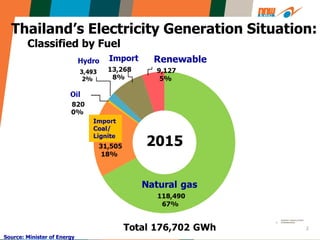
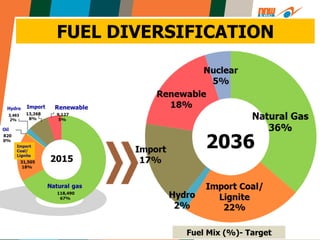
ก๊าซ
ธรรมชาติ
118,490
67%
ถ่านหิน
นาเข้า/
ลิกไนต์
31,505
18%
น้ามัน
820
0%
พลังน้า
3,493
2%
นาเข้า
13,268
8%
พลังงาน
หมุนเวียน
9,127
5%
Total 176,702 GWh
Oil
Hydro Import Renewable
Import
Coal/
Lignite
Natural gas
2015
Thailand’s Electricity Generation Situation:
Classified by Fuel
Source: Minister of Energy
3
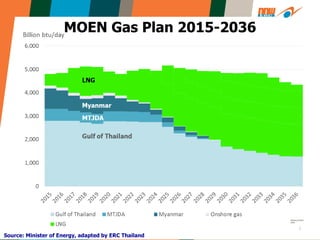
MOEN Gas Plan 2015-2036
Source: Minister of Energy, adapted by ERC Thailand
4
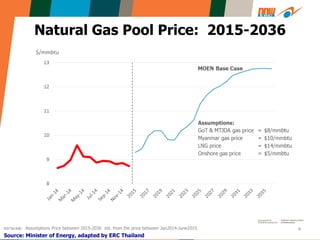
Natural Gas Pool Price: 2015-2036
Source: Minister of Energy, adapted by ERC Thailand
หมายเหตุ: Assumptions Price between 2015-2036 est. from the price between Jan2014-June2015
5
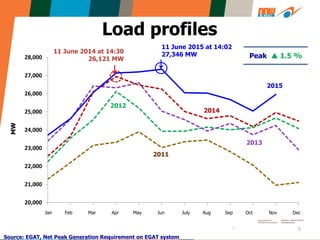
Load profiles
5
20,000
21,000
22,000
23,000
24,000
25,000
26,000
27,000
28,000
ม.ค. ก.พ. มี.ค. เม.ย. พ.ค. มิ.ย. ก.ค. ส.ค. ก.ย. ต.ค. พ.ย. ธ.ค.
MW
2014
2013
2012
2011
Jan Feb Mar Apr May Jun July Aug Sep Oct Nov Dec
11 June 2015 at 14:02
27,346 MW
2015
Peak  1.5 %
Source: EGAT, Net Peak Generation Requirement on EGAT system
11 June 2014 at 14:30
26,121 MW
6
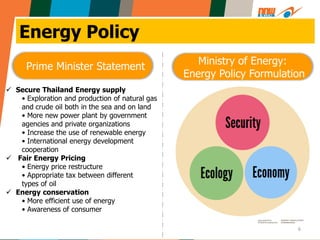
Energy Policy
 Secure Thailand Energy supply
• Exploration and production of natural gas
and crude oil both in the sea and on land
• More new power plant by government
agencies and private organizations
• Increase the use of renewable energy
• International energy development
cooperation
 Fair Energy Pricing
• Energy price restructure
• Appropriate tax between different
types of oil
 Energy conservation
• More efficient use of energy
• Awareness of consumer
Prime Minister Statement
Ministry of Energy:
Energy Policy Formulation
ASEAN and GMS
Interconnection
Social & Economic
Environmental
7
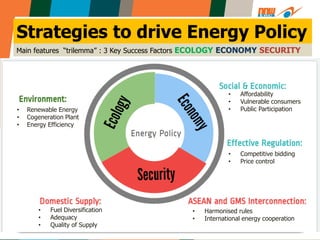
Strategies to drive Energy Policy
Main features “trilemma” : 3 Key Success Factors ECOLOGY ECONOMY SECURITY
Energy
Policy
Security
Effective Regulation
Domestic Supply
• Renewable Energy
• Cogeneration Plant
• Energy Efficiency
• Harmonised rules
• International energy cooperation
• Fuel Diversification
• Adequacy
• Quality of Supply
• Affordability
• Vulnerable consumers
• Public Participation
• Competitive bidding
• Price control
GOALS
8
9
Natural Gas
36%
Import Coal/
Lignite
22%
Hydro
2%
Import
17%
Renewable
18%
Nuclear
5%
2036
FUEL DIVERSIFICATION
Fuel Mix (%)- Target
10
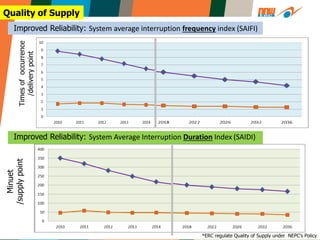
Improved Reliability: System average interruption frequency index (SAIFI)
Improved Reliability: System Average Interruption Duration Index (SAIDI)
Quality of Supply
*ERC regulate Quality of Supply under NEPC’s Policy
Timesofoccurrence
/deliverypoint
Minuet
/supplypoint
11
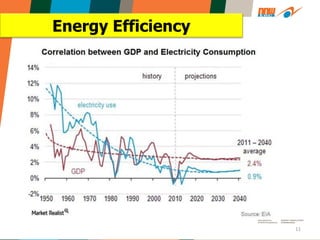
Energy Efficiency
12
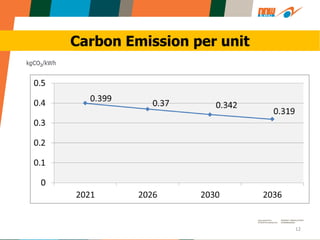
Carbon Emission per unit
1) Security –
to create stability for national energy need/demand
and support the National Economic and Social
Development Plan by distributing
fuel to reduce risk on depending
too much on a fuel’s kind
2) Economy –
to create reasonable energy cost for both people and
business, which will not be hurdle for long-term
national
development, including to promote energy efficiency
3) Ecology –
to reduce effects on
environment and community
13
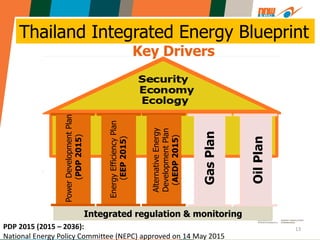
Thailand Integrated Energy Blueprint
PDP 2015 (2015 – 2036):
National Energy Policy Committee (NEPC) approved on 14 May 2015
Integrated regulation & monitoringGasPlan
OilPlan
PowerDevelopmentPlan
(PDP2015)
EnergyEfficiencyPlan
(EEP2015)
AlternativeEnergy
DevelopmentPlan
(AEDP2015)
Key Drivers
14
Power Development Plan
(PDP 2015)
15
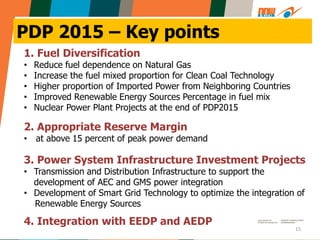
PDP 2015 – Key points
1. Fuel Diversification
• Reduce fuel dependence on Natural Gas
• Increase the fuel mixed proportion for Clean Coal Technology
• Higher proportion of Imported Power from Neighboring Countries
• Improved Renewable Energy Sources Percentage in fuel mix
• Nuclear Power Plant Projects at the end of PDP2015
2. Appropriate Reserve Margin
• at above 15 percent of peak power demand
3. Power System Infrastructure Investment Projects
• Transmission and Distribution Infrastructure to support the
development of AEC and GMS power integration
• Development of Smart Grid Technology to optimize the integration of
Renewable Energy Sources
4. Integration with EEDP and AEDP
16
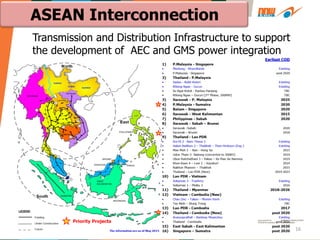
ASEAN Interconnection
Transmission and Distribution Infrastructure to support
the development of AEC and GMS power integration
17
Energy Efficiency Plan
(EEP 2015)
18
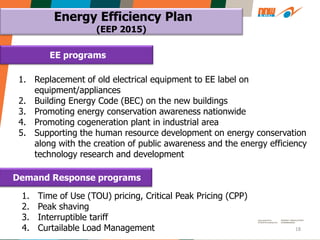
Energy Efficiency Plan
(EEP 2015)
EE programs
Demand Response programs
1. Replacement of old electrical equipment to EE label on
equipment/appliances
2. Building Energy Code (BEC) on the new buildings
3. Promoting energy conservation awareness nationwide
4. Promoting cogeneration plant in industrial area
5. Supporting the human resource development on energy conservation
along with the creation of public awareness and the energy efficiency
technology research and development
1. Time of Use (TOU) pricing, Critical Peak Pricing (CPP)
2. Peak shaving
3. Interruptible tariff
4. Curtailable Load Management
19
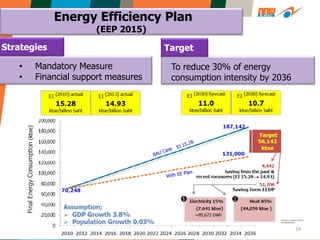
Energy Efficiency Plan
(EEP 2015)
• Mandatory Measure
• Financial support measures
Strategies
To reduce 30% of energy
consumption intensity by 2036
Target
20
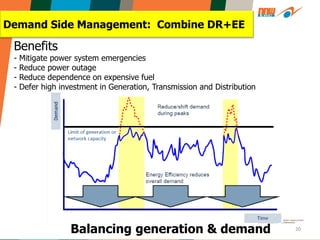
Demand Side Management: Combine DR+EE
Benefits
- Mitigate power system emergencies
- Reduce power outage
- Reduce dependence on expensive fuel
- Defer high investment in Generation, Transmission and Distribution
Balancing generation & demand
21
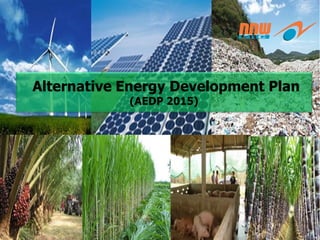
Alternative Energy Development Plan
(AEDP 2015)
22
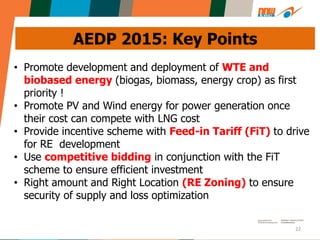
• Promote development and deployment of WTE and
biobased energy (biogas, biomass, energy crop) as first
priority !
• Promote PV and Wind energy for power generation once
their cost can compete with LNG cost
• Provide incentive scheme with Feed-in Tariff (FiT) to drive
for RE development
• Use competitive bidding in conjunction with the FiT
scheme to ensure efficient investment
• Right amount and Right Location (RE Zoning) to ensure
security of supply and loss optimization
AEDP 2015: Key Points
23
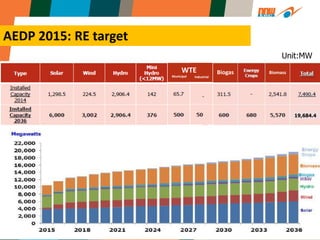
AEDP 2015: RE target
19,684.4
Unit:MW
BiomassBiogas
IndustrialMunicipal
WTE
24
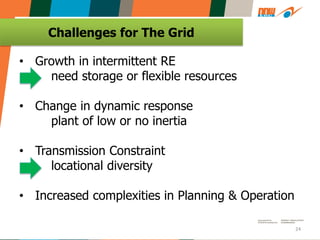
Challenges for The Grid
• Growth in intermittent RE
need storage or flexible resources
• Change in dynamic response
plant of low or no inertia
• Transmission Constraint
locational diversity
• Increased complexities in Planning & Operation
Integrated regulation and monitoring
25
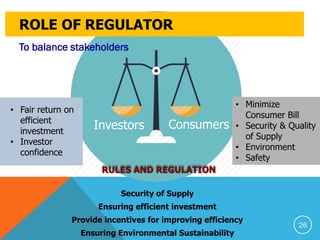
26
ROLE OF REGULATOR
Investors Consumers
• Minimize
Consumer Bill
• Security & Quality
of Supply
• Environment
• Safety
• Fair return on
efficient
investment
• Investor
confidence
Security of Supply
Ensuring efficient investment
Provide incentives for improving efficiency
Ensuring Environmental Sustainability
RULES AND REGULATION
To balance stakeholders
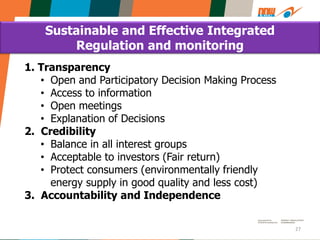
27
1. Transparency
• Open and Participatory Decision Making Process
• Access to information
• Open meetings
• Explanation of Decisions
2. Credibility
• Balance in all interest groups
• Acceptable to investors (Fair return)
• Protect consumers (environmentally friendly
energy supply in good quality and less cost)
3. Accountability and Independence
Sustainable and Effective Integrated
Regulation and monitoring
Thank you
28

Seta 2016 energy policy and planning

  • 1.
    Track I: EnergyPolicy and Planning Driving Energy Policy Towards Sustainability Presented on SETA 2016 Kraisi Karnasuta, Commissioner Energy Regulatory Commission of Thailand 23 March 2016 1
  • 2.
  • 3.
    3 MOEN Gas Plan2015-2036 Source: Minister of Energy, adapted by ERC Thailand
  • 4.
    4 Natural Gas PoolPrice: 2015-2036 Source: Minister of Energy, adapted by ERC Thailand หมายเหตุ: Assumptions Price between 2015-2036 est. from the price between Jan2014-June2015
  • 5.
    5 Load profiles 5 20,000 21,000 22,000 23,000 24,000 25,000 26,000 27,000 28,000 ม.ค. ก.พ.มี.ค. เม.ย. พ.ค. มิ.ย. ก.ค. ส.ค. ก.ย. ต.ค. พ.ย. ธ.ค. MW 2014 2013 2012 2011 Jan Feb Mar Apr May Jun July Aug Sep Oct Nov Dec 11 June 2015 at 14:02 27,346 MW 2015 Peak  1.5 % Source: EGAT, Net Peak Generation Requirement on EGAT system 11 June 2014 at 14:30 26,121 MW
  • 6.
    6 Energy Policy  SecureThailand Energy supply • Exploration and production of natural gas and crude oil both in the sea and on land • More new power plant by government agencies and private organizations • Increase the use of renewable energy • International energy development cooperation  Fair Energy Pricing • Energy price restructure • Appropriate tax between different types of oil  Energy conservation • More efficient use of energy • Awareness of consumer Prime Minister Statement Ministry of Energy: Energy Policy Formulation
  • 7.
    ASEAN and GMS Interconnection Social& Economic Environmental 7 Strategies to drive Energy Policy Main features “trilemma” : 3 Key Success Factors ECOLOGY ECONOMY SECURITY Energy Policy Security Effective Regulation Domestic Supply • Renewable Energy • Cogeneration Plant • Energy Efficiency • Harmonised rules • International energy cooperation • Fuel Diversification • Adequacy • Quality of Supply • Affordability • Vulnerable consumers • Public Participation • Competitive bidding • Price control
  • 8.
  • 9.
  • 10.
    10 Improved Reliability: Systemaverage interruption frequency index (SAIFI) Improved Reliability: System Average Interruption Duration Index (SAIDI) Quality of Supply *ERC regulate Quality of Supply under NEPC’s Policy Timesofoccurrence /deliverypoint Minuet /supplypoint
  • 11.
  • 12.
  • 13.
    1) Security – tocreate stability for national energy need/demand and support the National Economic and Social Development Plan by distributing fuel to reduce risk on depending too much on a fuel’s kind 2) Economy – to create reasonable energy cost for both people and business, which will not be hurdle for long-term national development, including to promote energy efficiency 3) Ecology – to reduce effects on environment and community 13 Thailand Integrated Energy Blueprint PDP 2015 (2015 – 2036): National Energy Policy Committee (NEPC) approved on 14 May 2015 Integrated regulation & monitoringGasPlan OilPlan PowerDevelopmentPlan (PDP2015) EnergyEfficiencyPlan (EEP2015) AlternativeEnergy DevelopmentPlan (AEDP2015) Key Drivers
  • 14.
  • 15.
    15 PDP 2015 –Key points 1. Fuel Diversification • Reduce fuel dependence on Natural Gas • Increase the fuel mixed proportion for Clean Coal Technology • Higher proportion of Imported Power from Neighboring Countries • Improved Renewable Energy Sources Percentage in fuel mix • Nuclear Power Plant Projects at the end of PDP2015 2. Appropriate Reserve Margin • at above 15 percent of peak power demand 3. Power System Infrastructure Investment Projects • Transmission and Distribution Infrastructure to support the development of AEC and GMS power integration • Development of Smart Grid Technology to optimize the integration of Renewable Energy Sources 4. Integration with EEDP and AEDP
  • 16.
    16 ASEAN Interconnection Transmission andDistribution Infrastructure to support the development of AEC and GMS power integration
  • 17.
  • 18.
    18 Energy Efficiency Plan (EEP2015) EE programs Demand Response programs 1. Replacement of old electrical equipment to EE label on equipment/appliances 2. Building Energy Code (BEC) on the new buildings 3. Promoting energy conservation awareness nationwide 4. Promoting cogeneration plant in industrial area 5. Supporting the human resource development on energy conservation along with the creation of public awareness and the energy efficiency technology research and development 1. Time of Use (TOU) pricing, Critical Peak Pricing (CPP) 2. Peak shaving 3. Interruptible tariff 4. Curtailable Load Management
  • 19.
    19 Energy Efficiency Plan (EEP2015) • Mandatory Measure • Financial support measures Strategies To reduce 30% of energy consumption intensity by 2036 Target
  • 20.
    20 Demand Side Management:Combine DR+EE Benefits - Mitigate power system emergencies - Reduce power outage - Reduce dependence on expensive fuel - Defer high investment in Generation, Transmission and Distribution Balancing generation & demand
  • 21.
  • 22.
    22 • Promote developmentand deployment of WTE and biobased energy (biogas, biomass, energy crop) as first priority ! • Promote PV and Wind energy for power generation once their cost can compete with LNG cost • Provide incentive scheme with Feed-in Tariff (FiT) to drive for RE development • Use competitive bidding in conjunction with the FiT scheme to ensure efficient investment • Right amount and Right Location (RE Zoning) to ensure security of supply and loss optimization AEDP 2015: Key Points
  • 23.
    23 AEDP 2015: REtarget 19,684.4 Unit:MW BiomassBiogas IndustrialMunicipal WTE
  • 24.
    24 Challenges for TheGrid • Growth in intermittent RE need storage or flexible resources • Change in dynamic response plant of low or no inertia • Transmission Constraint locational diversity • Increased complexities in Planning & Operation
  • 25.
  • 26.
    26 ROLE OF REGULATOR InvestorsConsumers • Minimize Consumer Bill • Security & Quality of Supply • Environment • Safety • Fair return on efficient investment • Investor confidence Security of Supply Ensuring efficient investment Provide incentives for improving efficiency Ensuring Environmental Sustainability RULES AND REGULATION To balance stakeholders
  • 27.
    27 1. Transparency • Openand Participatory Decision Making Process • Access to information • Open meetings • Explanation of Decisions 2. Credibility • Balance in all interest groups • Acceptable to investors (Fair return) • Protect consumers (environmentally friendly energy supply in good quality and less cost) 3. Accountability and Independence Sustainable and Effective Integrated Regulation and monitoring
  • 28.