Creating a set
Adding elements to set
Removing elements
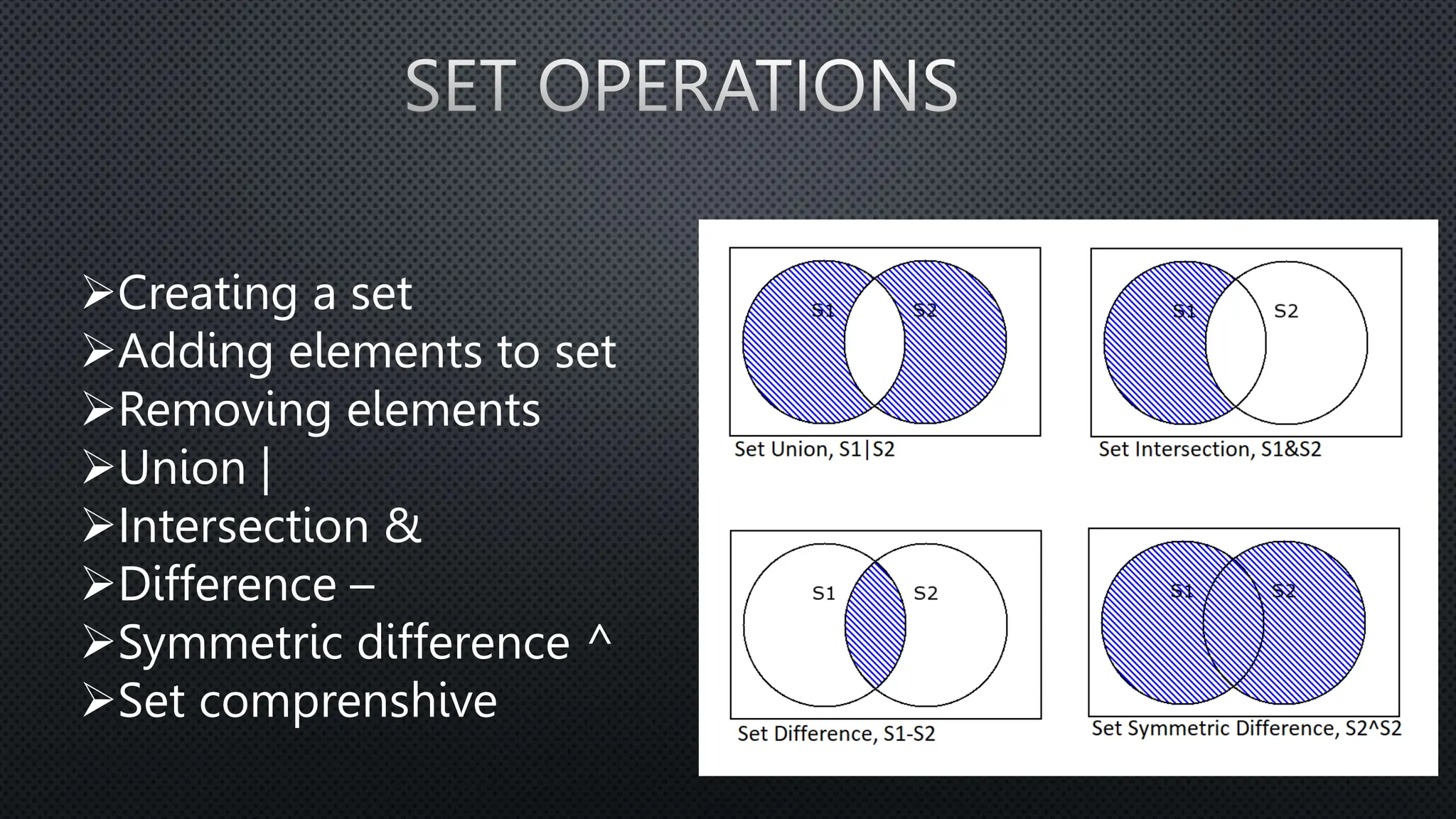
Union |
Intersection &
Difference –
Symmetric difference ^
Set comprenshive
Creating a set
• You can create a set using curly braces {} or the set() constructor.
• Sets are used to store multiple items in a single variable.
• It is a collection which is unordered, unchangeable*, and unindexed
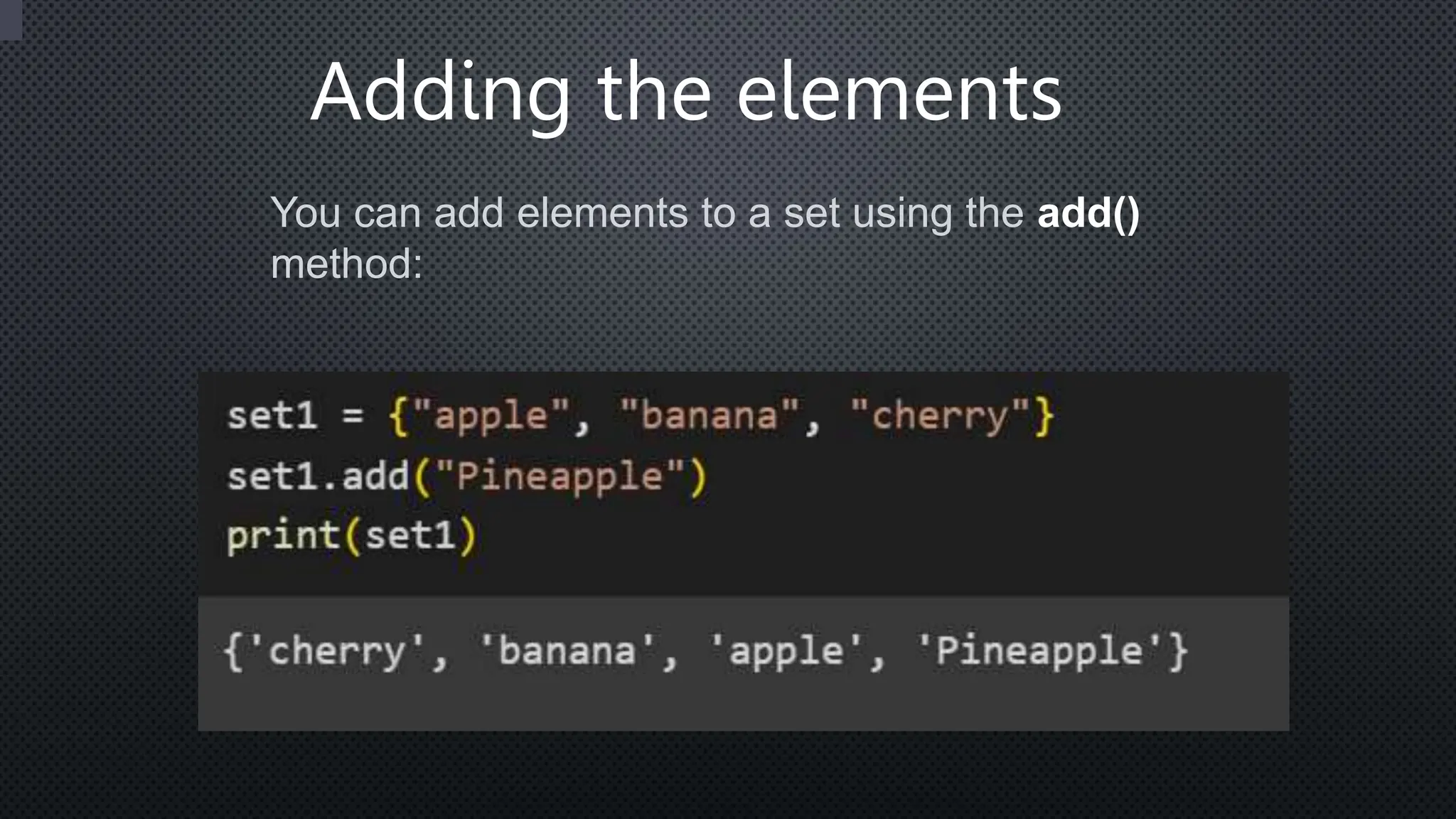
Adding the elements
You can add elements to a set using the add()
method:
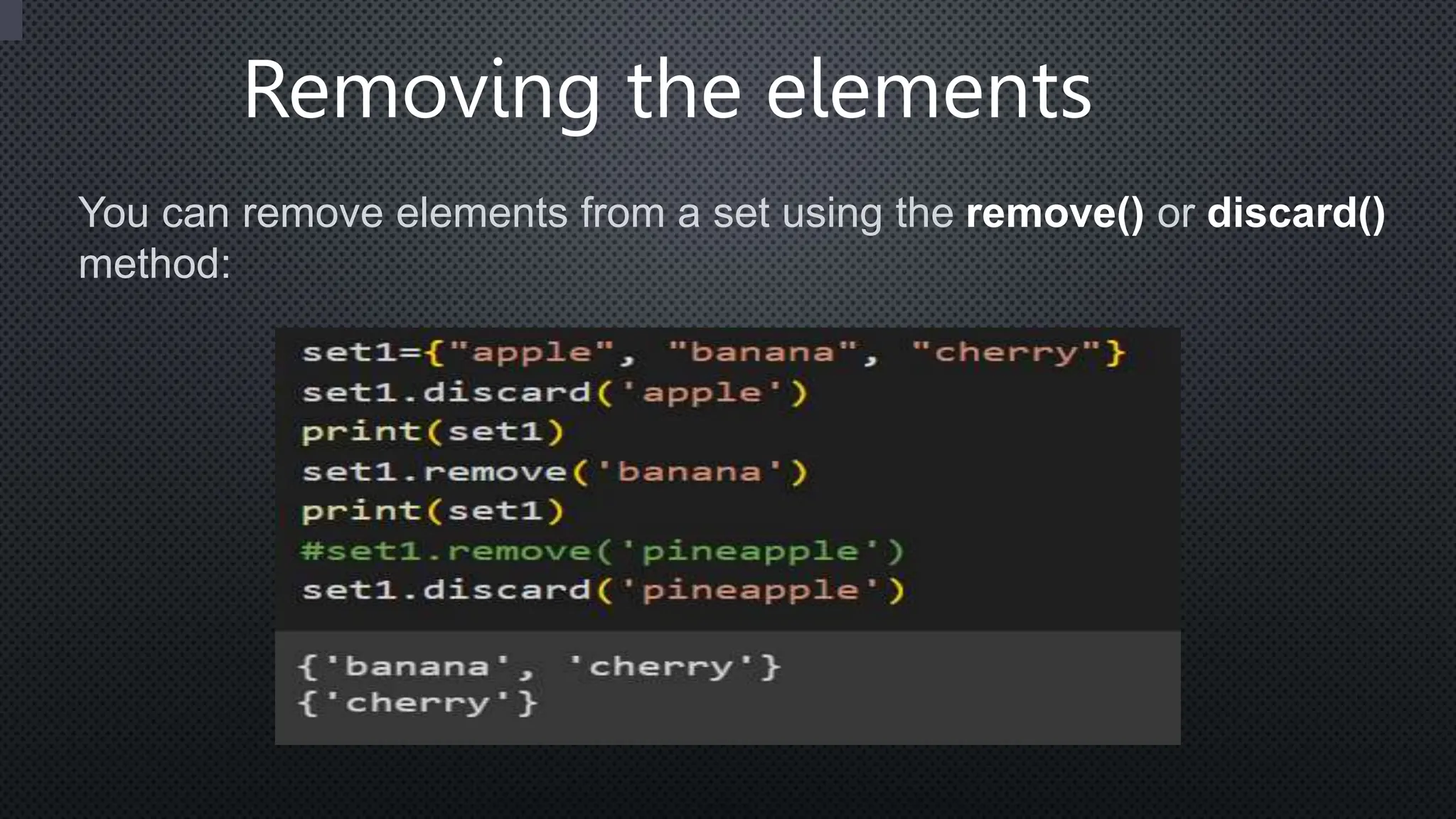
Removing the elements
You can remove elements from a set using the remove() or discard()
method:
Union (|)
You can perform a union operation to combine two sets into one, without
duplicates, using the union() method or the | operator:
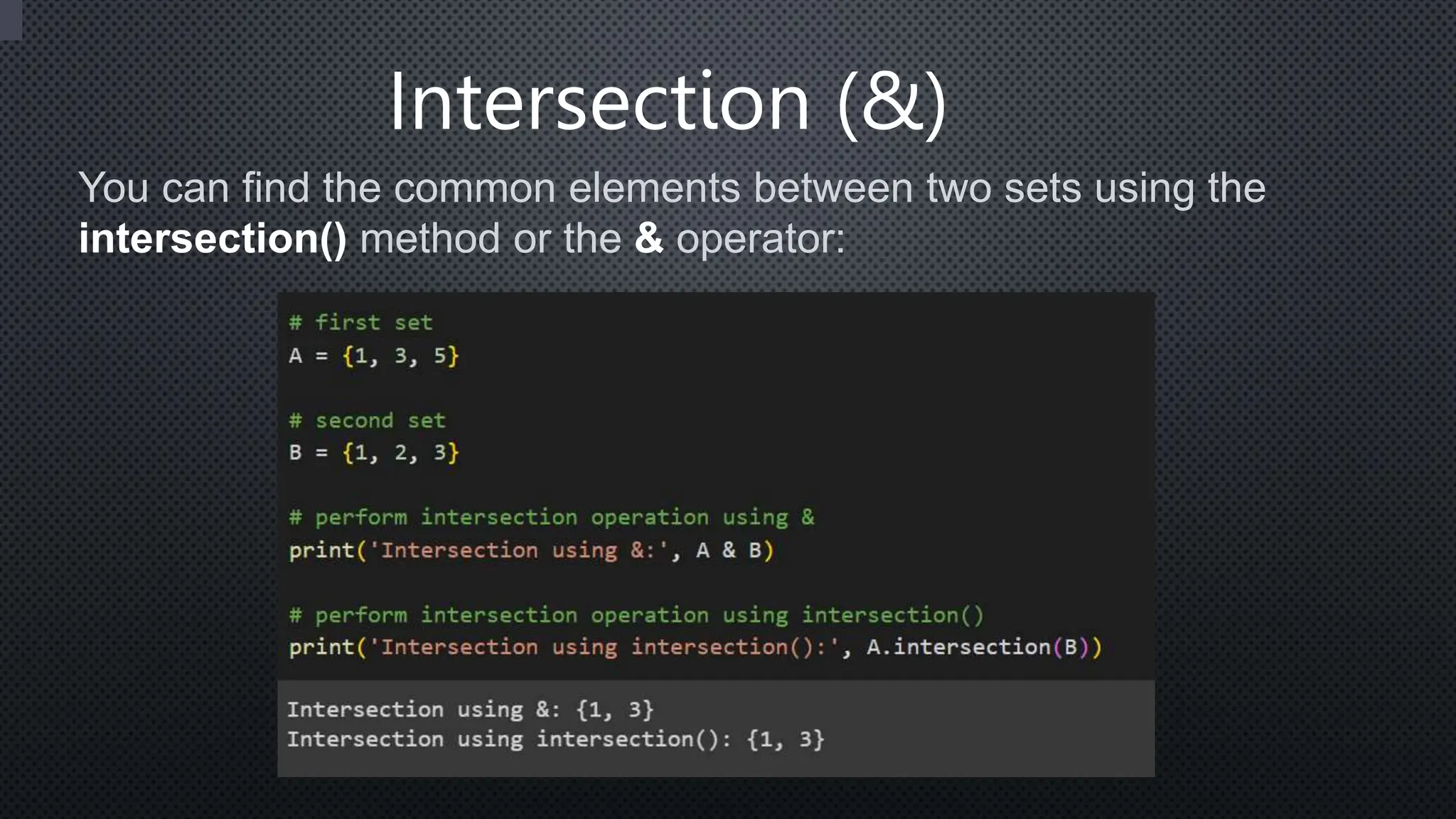
Intersection (&)
You can find the common elements between two sets using the
intersection() method or the & operator:
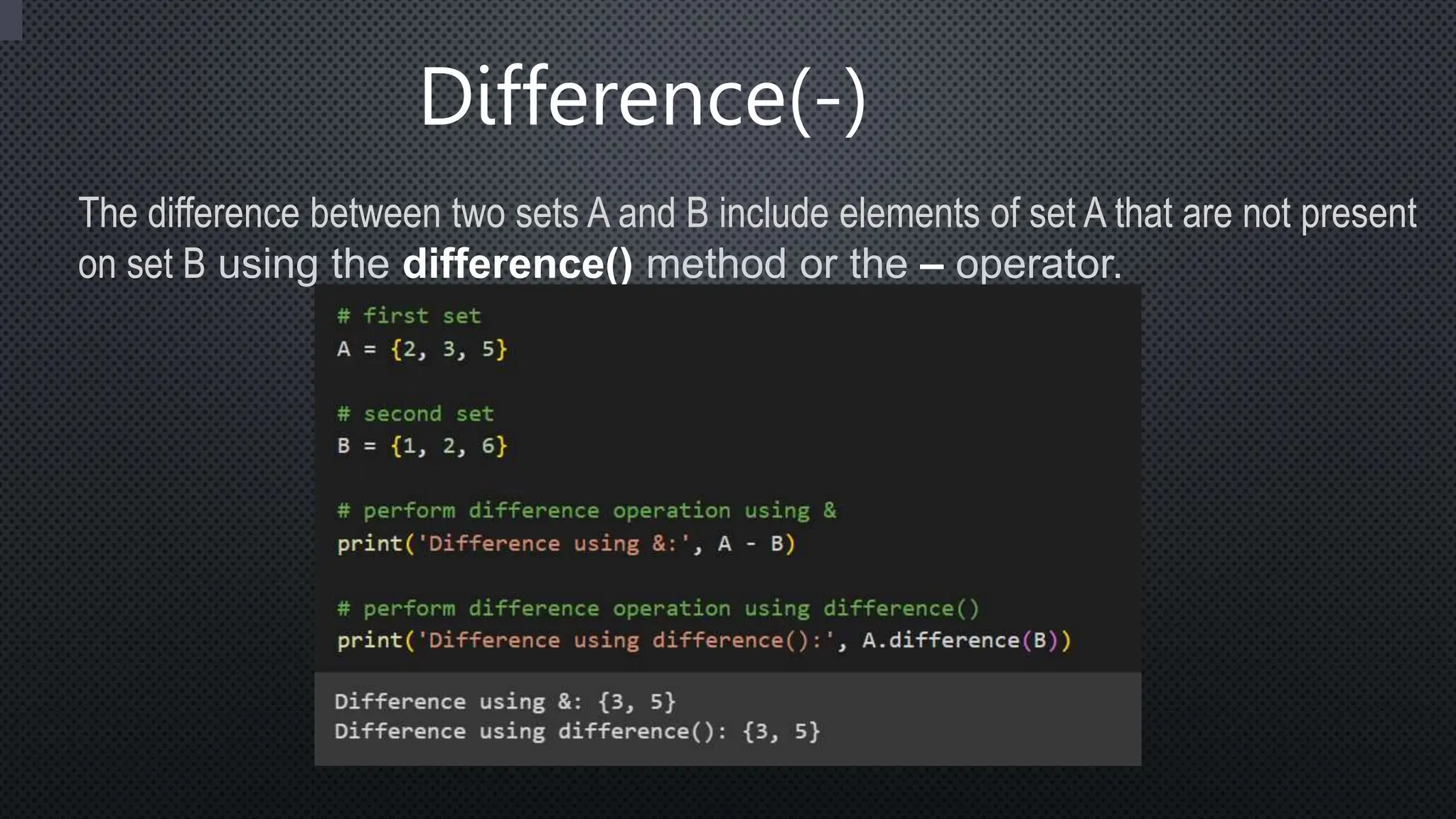
Difference(-)
The difference between two sets A and B include elements of set A that are not present
on set B using the difference() method or the – operator.
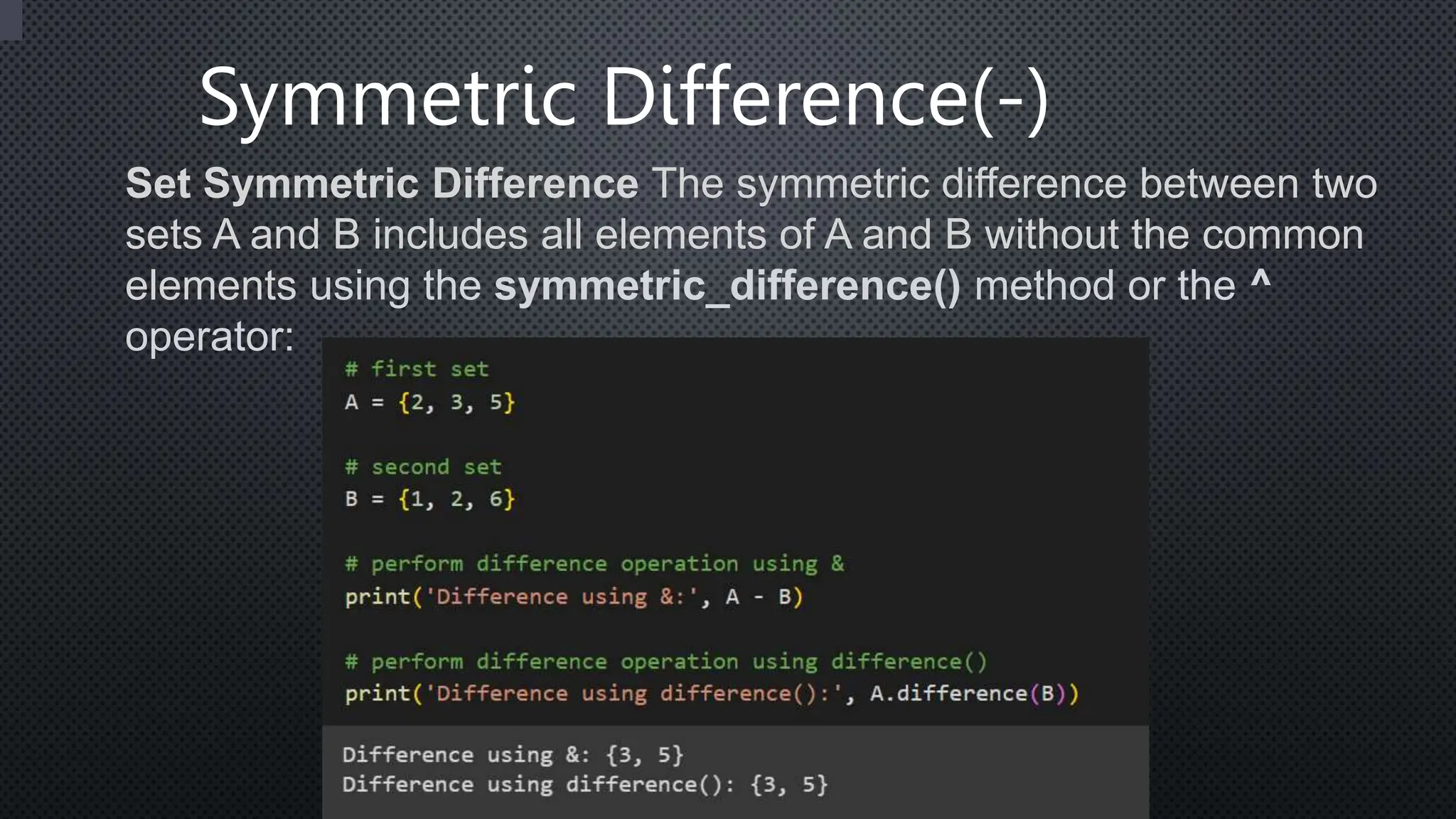
Symmetric Difference(-)
Set Symmetric Difference The symmetric difference between two
sets A and B includes all elements of A and B without the common
elements using the symmetric_difference() method or the ^
operator:
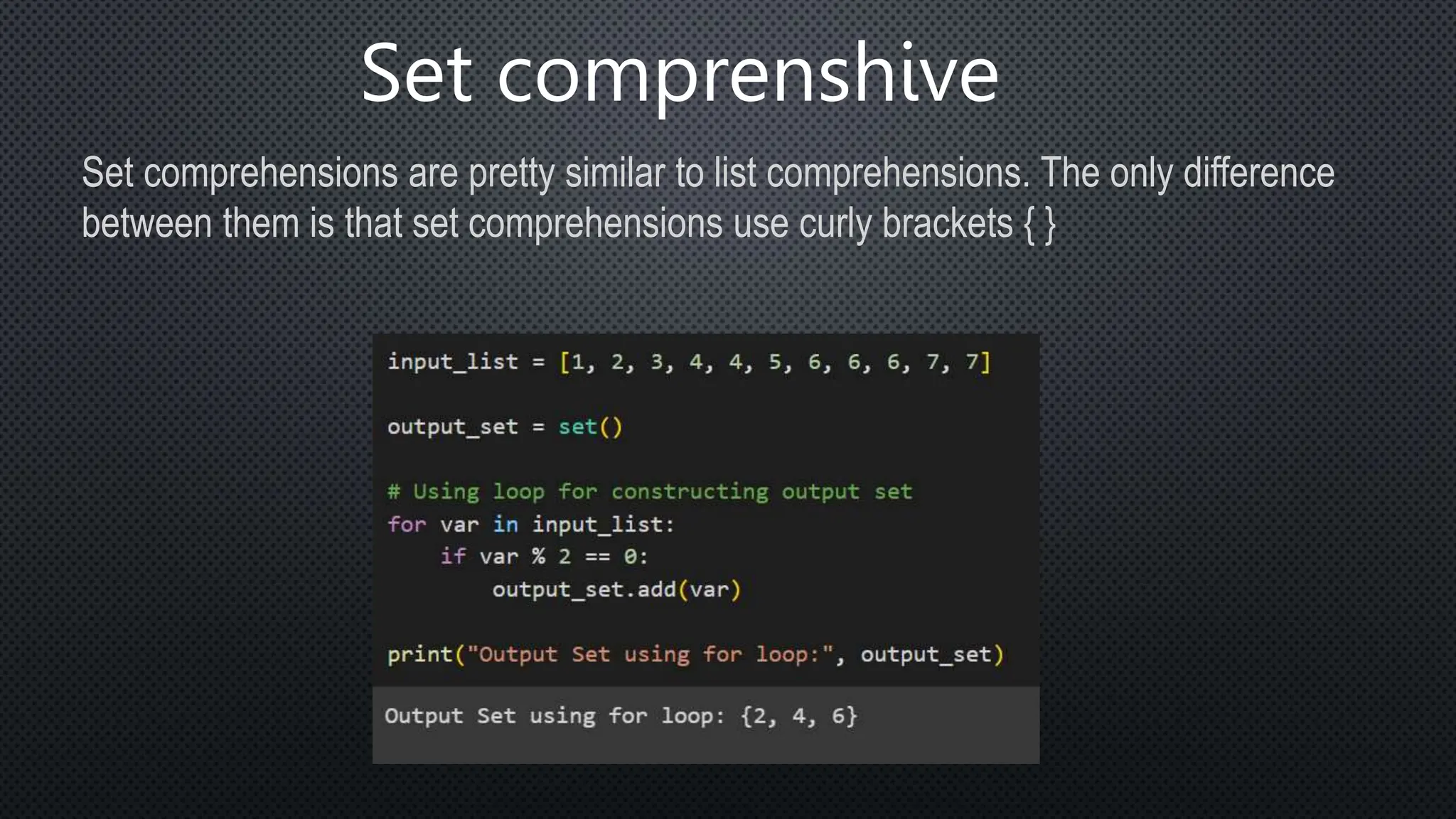
Set comprenshive
Set comprehensions are pretty similar to list comprehensions. The only difference
between them is that set comprehensions use curly brackets { }
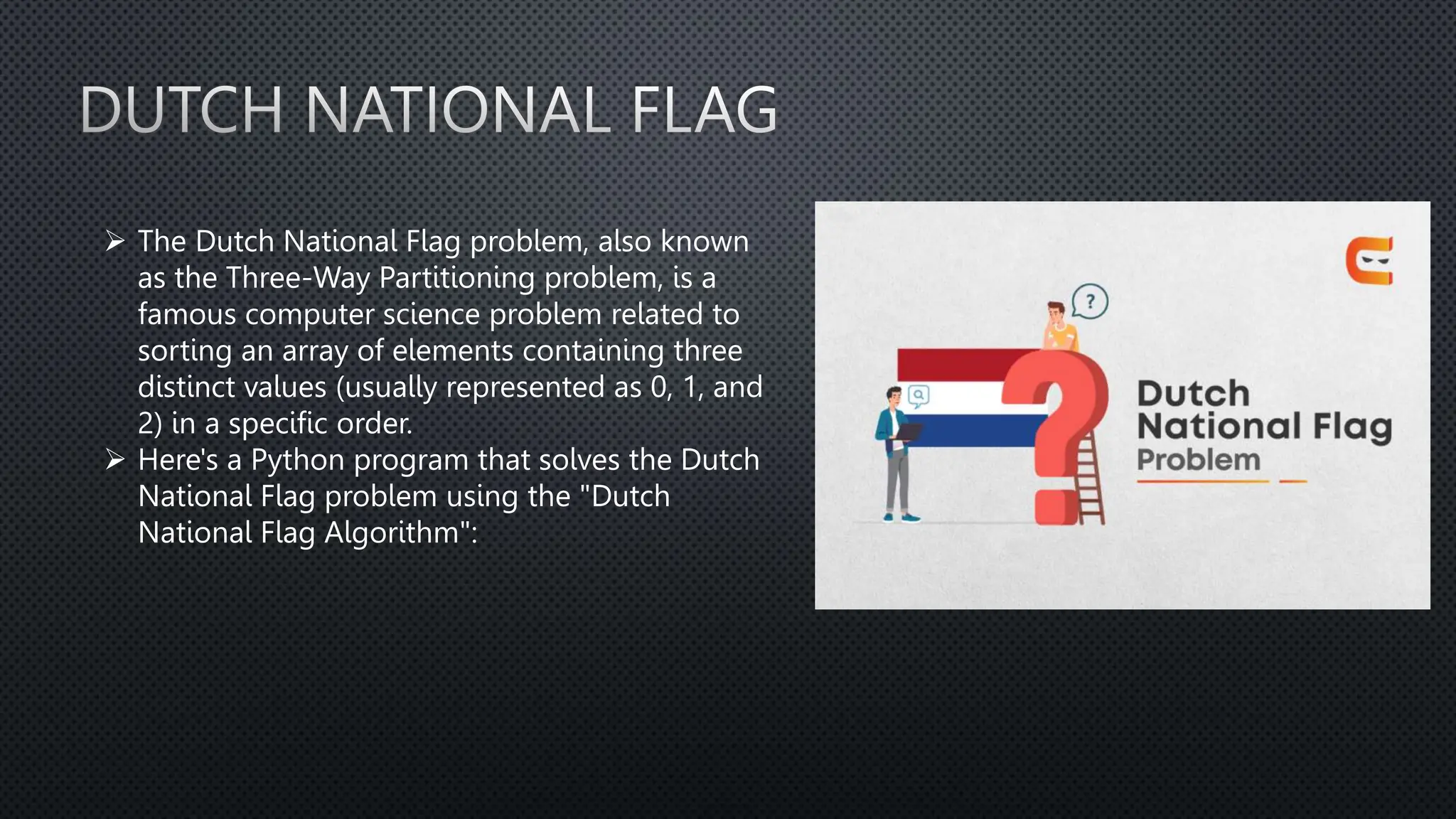
 The Dutch National Flag problem, also known
as the Three-Way Partitioning problem, is a
famous computer science problem related to
sorting an array of elements containing three
distinct values (usually represented as 0, 1, and
2) in a specific order.
 Here's a Python program that solves the Dutch
National Flag problem using the "Dutch
National Flag Algorithm":
Expected Output:
[0,0,1,1,2]
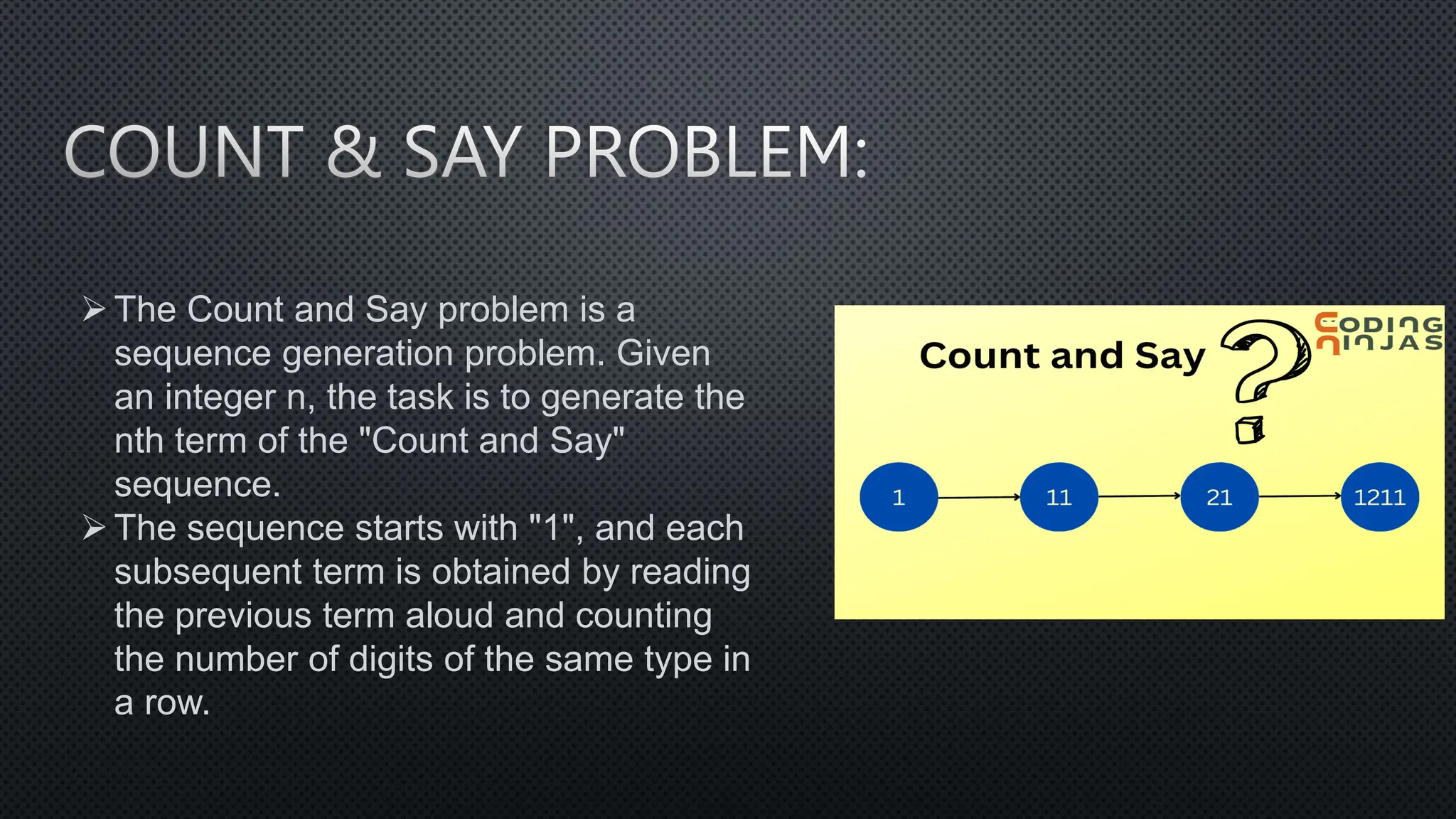
The Count and Say problem is a
sequence generation problem. Given
an integer n, the task is to generate the
nth term of the "Count and Say"
sequence.
The sequence starts with "1", and each
subsequent term is obtained by reading
the previous term aloud and counting
the number of digits of the same type in
a row.
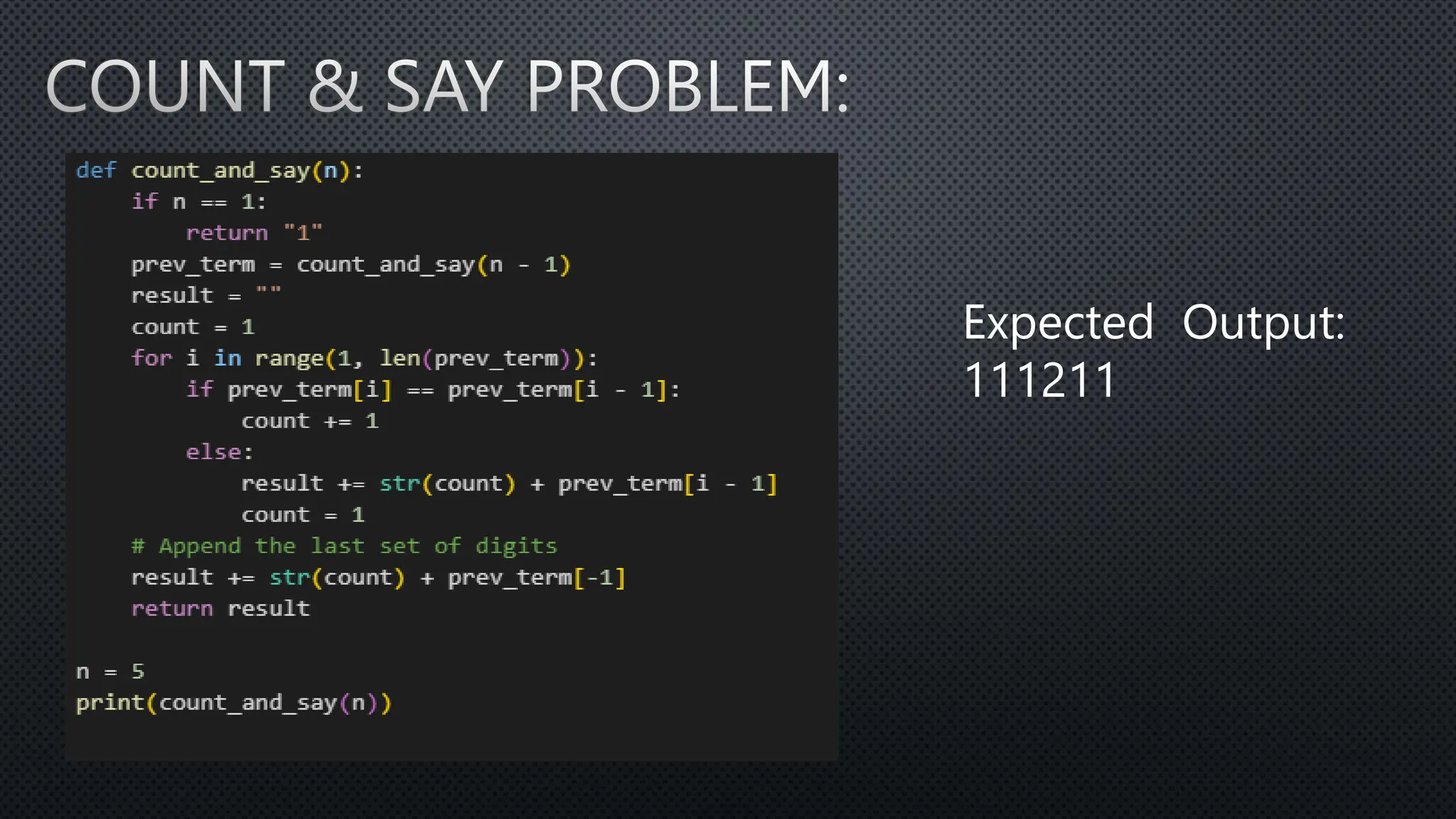
Expected Output:
111211
Set operations in python (Dutch national flag and count &say problem).pptx

Set operations in python (Dutch national flag and count &say problem).pptx

  • 2.
    Creating a set Addingelements to set Removing elements Union | Intersection & Difference – Symmetric difference ^ Set comprenshive
  • 3.
    Creating a set •You can create a set using curly braces {} or the set() constructor. • Sets are used to store multiple items in a single variable. • It is a collection which is unordered, unchangeable*, and unindexed
  • 4.
    Adding the elements Youcan add elements to a set using the add() method:
  • 5.
    Removing the elements Youcan remove elements from a set using the remove() or discard() method:
  • 6.
    Union (|) You canperform a union operation to combine two sets into one, without duplicates, using the union() method or the | operator:
  • 7.
    Intersection (&) You canfind the common elements between two sets using the intersection() method or the & operator:
  • 8.
    Difference(-) The difference betweentwo sets A and B include elements of set A that are not present on set B using the difference() method or the – operator.
  • 9.
    Symmetric Difference(-) Set SymmetricDifference The symmetric difference between two sets A and B includes all elements of A and B without the common elements using the symmetric_difference() method or the ^ operator:
  • 10.
    Set comprenshive Set comprehensionsare pretty similar to list comprehensions. The only difference between them is that set comprehensions use curly brackets { }
  • 11.
     The DutchNational Flag problem, also known as the Three-Way Partitioning problem, is a famous computer science problem related to sorting an array of elements containing three distinct values (usually represented as 0, 1, and 2) in a specific order.  Here's a Python program that solves the Dutch National Flag problem using the "Dutch National Flag Algorithm":
  • 12.
  • 13.
    The Count andSay problem is a sequence generation problem. Given an integer n, the task is to generate the nth term of the "Count and Say" sequence. The sequence starts with "1", and each subsequent term is obtained by reading the previous term aloud and counting the number of digits of the same type in a row.
  • 14.