Navigating Futures, 
Navigating Narratives 
Esther Eidinow 
University of Nottingham
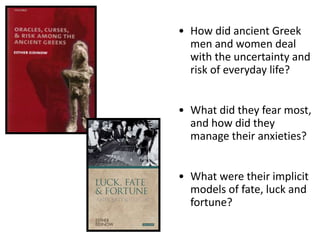
• How did ancient Greek 
men and women deal 
with the uncertainty and 
risk of everyday life? 
• What did they fear most, 
and how did they 
manage their anxieties? 
• What were their implicit 
models of fate, luck and 
fortune?
“The revolutionary idea that 
defines the boundary between 
modern times and the past is the 
mastery of risk: the notion that the 
future is more than the whim of 
the gods and that men and women 
are not passive before nature. Until 
human beings discovered a way 
across that boundary, the future 
was a mirror of the past or the 
murky domain of oracles and 
soothsayers who held a monopoly 
over knowledge of anticipated 
events.” 
Peter L. Bernstein, 
Against the Gods: The 
Remarkable Story of 
Risk (New York: John 
Wiley & Sons, Inc., 
1996), p. 1.
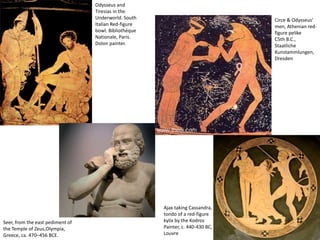
Circe & Odysseus' 
men, Athenian red-figure 
pelike 
C5th B.C., 
Staatliche 
Kunstammlungen, 
Dresden 
Seer, from the east pediment of 
the Temple of Zeus,Olympia, 
Greece, ca. 470–456 BCE. 
Odysseus and 
Tiresias in the 
Underworld. South 
Italian Red-figure 
bowl. Bibliothéque 
Nationale, Paris. 
Dolon painter. 
Ajax taking Cassandra, 
tondo of a red-figure 
kylix by the Kodros 
Painter, c. 440-430 BC, 
Louvre
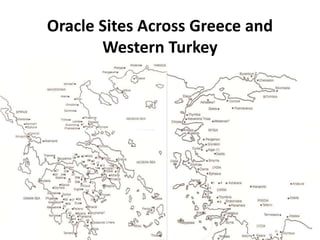
Oracle Sites Across Greece and 
Western Turkey
Sortes Astrampsychi 
Papyrus fragment, 
Oxyrychus, Egypt 
http://sortesastrampsychi.voila.net/ 
‘Pocket’ Oracles 
Faience polyhedron inscribed with 
letters of the Greek alphabet 
Roman, 2nd-3rd century AD; 
Metropolitan Museum of Art 
[Accession # 37.11.3] 
Black-figured amphora 
c.520 BCE. Inv. 100 
Chateau-Musee, Boulogne-sur- 
Mer, France
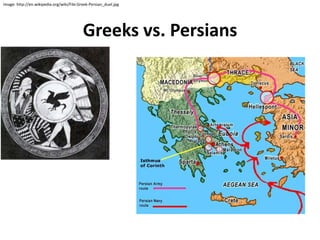
Image: http://en.wikipedia.org/wiki/File:Greek-Persian_duel.jpg 
Greeks vs. Persians
http://faculty.saintleo.edu/williamse/questforwisdom.htm 
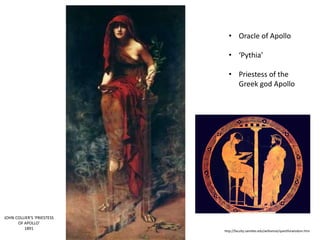
JOHN COLLIER’S ‘PRIESTESS 
OF APOLLO’ 
1891 
• Oracle of Apollo 
• ‘Pythia’ 
• Priestess of the 
Greek god Apollo
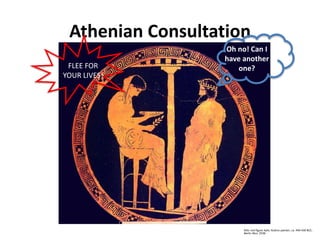
Athenian Consultation 
Oh no! Can I 
have another 
FLEE FOR one? 
YOUR LIVES! 
Attic red-figure kylix; Kodros painter; ca. 440-430 BCE; 
Berlin Mus. 2538
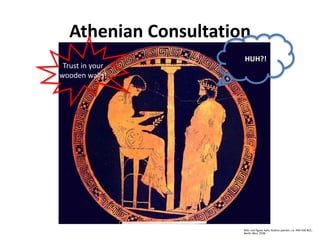
Athenian Consultation 
HUH?! 
Attic red-figure kylix; Kodros painter; ca. 440-430 BCE; 
Berlin Mus. 2538 
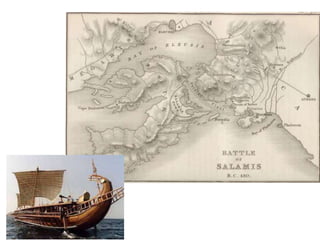
Trust in your 
wooden walls!
1. Oracles are not predictions, they offer 
alternative stories
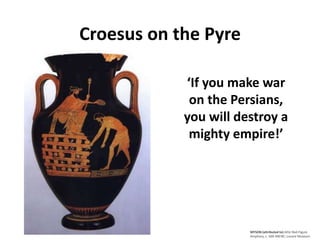
MYSON (attributed to) Attic Red-Figure 
Amphora, c. 500-490 BC; Louvre Museum 
Croesus on the Pyre 
‘If you make war 
on the Persians, 
you will destroy a 
mighty empire!’
1. Oracles are not predictions, they offer 
alternative stories 
2. Through a process of creating meaning, 
story-making creates motivation.
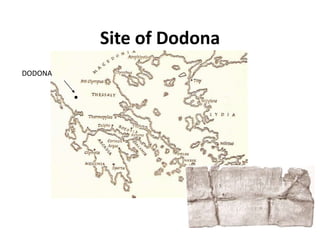
DODONA 
Site of Dodona
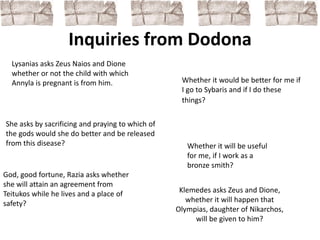
Inquiries from Dodona 
Whether it would be better for me if 
I go to Sybaris and if I do these 
things? 
Lysanias asks Zeus Naios and Dione 
whether or not the child with which 
Annyla is pregnant is from him. 
She asks by sacrificing and praying to which of 
the gods would she do better and be released 
from this disease? 
God, good fortune, Razia asks whether 
she will attain an agreement from 
Teitukos while he lives and a place of 
safety? 
Whether it will be useful 
for me, if I work as a 
bronze smith? 
Klemedes asks Zeus and Dione, 
whether it will happen that 
Olympias, daughter of Nikarchos, 
will be given to him?
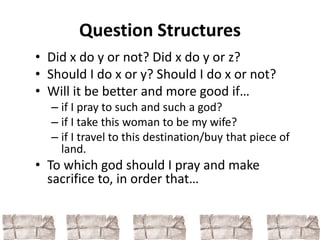
Question Structures 
• Did x do y or not? Did x do y or z? 
• Should I do x or y? Should I do x or not? 
• Will it be better and more good if… 
– if I pray to such and such a god? 
– if I take this woman to be my wife? 
– if I travel to this destination/buy that piece of 
land. 
• To which god should I pray and make 
sacrifice to, in order that…
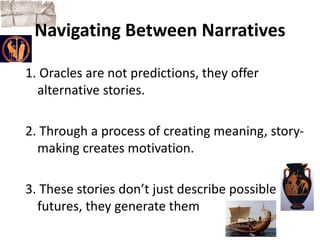
Navigating Between Narratives 
1. Oracles are not predictions, they offer 
alternative stories. 
2. Through a process of creating meaning, story-making 
creates motivation. 
3. These stories don’t just describe possible 
futures, they generate them

2014.12.01 - NAEC-Strategic Foresight Workshop_Session 2_Esther Eidinow

  • 1.
    Navigating Futures, NavigatingNarratives Esther Eidinow University of Nottingham
  • 3.
    • How didancient Greek men and women deal with the uncertainty and risk of everyday life? • What did they fear most, and how did they manage their anxieties? • What were their implicit models of fate, luck and fortune?
  • 4.
    “The revolutionary ideathat defines the boundary between modern times and the past is the mastery of risk: the notion that the future is more than the whim of the gods and that men and women are not passive before nature. Until human beings discovered a way across that boundary, the future was a mirror of the past or the murky domain of oracles and soothsayers who held a monopoly over knowledge of anticipated events.” Peter L. Bernstein, Against the Gods: The Remarkable Story of Risk (New York: John Wiley & Sons, Inc., 1996), p. 1.
  • 6.
    Circe & Odysseus' men, Athenian red-figure pelike C5th B.C., Staatliche Kunstammlungen, Dresden Seer, from the east pediment of the Temple of Zeus,Olympia, Greece, ca. 470–456 BCE. Odysseus and Tiresias in the Underworld. South Italian Red-figure bowl. Bibliothéque Nationale, Paris. Dolon painter. Ajax taking Cassandra, tondo of a red-figure kylix by the Kodros Painter, c. 440-430 BC, Louvre
  • 7.
    Oracle Sites AcrossGreece and Western Turkey
  • 8.
    Sortes Astrampsychi Papyrusfragment, Oxyrychus, Egypt http://sortesastrampsychi.voila.net/ ‘Pocket’ Oracles Faience polyhedron inscribed with letters of the Greek alphabet Roman, 2nd-3rd century AD; Metropolitan Museum of Art [Accession # 37.11.3] Black-figured amphora c.520 BCE. Inv. 100 Chateau-Musee, Boulogne-sur- Mer, France
  • 9.
  • 11.
    http://faculty.saintleo.edu/williamse/questforwisdom.htm JOHN COLLIER’S‘PRIESTESS OF APOLLO’ 1891 • Oracle of Apollo • ‘Pythia’ • Priestess of the Greek god Apollo
  • 12.
    Athenian Consultation Ohno! Can I have another FLEE FOR one? YOUR LIVES! Attic red-figure kylix; Kodros painter; ca. 440-430 BCE; Berlin Mus. 2538
  • 13.
    Athenian Consultation HUH?! Attic red-figure kylix; Kodros painter; ca. 440-430 BCE; Berlin Mus. 2538 Trust in your wooden walls!
  • 15.
    1. Oracles arenot predictions, they offer alternative stories
  • 16.
    MYSON (attributed to)Attic Red-Figure Amphora, c. 500-490 BC; Louvre Museum Croesus on the Pyre ‘If you make war on the Persians, you will destroy a mighty empire!’
  • 17.
    1. Oracles arenot predictions, they offer alternative stories 2. Through a process of creating meaning, story-making creates motivation.
  • 18.
  • 19.
    Inquiries from Dodona Whether it would be better for me if I go to Sybaris and if I do these things? Lysanias asks Zeus Naios and Dione whether or not the child with which Annyla is pregnant is from him. She asks by sacrificing and praying to which of the gods would she do better and be released from this disease? God, good fortune, Razia asks whether she will attain an agreement from Teitukos while he lives and a place of safety? Whether it will be useful for me, if I work as a bronze smith? Klemedes asks Zeus and Dione, whether it will happen that Olympias, daughter of Nikarchos, will be given to him?
  • 20.
    Question Structures •Did x do y or not? Did x do y or z? • Should I do x or y? Should I do x or not? • Will it be better and more good if… – if I pray to such and such a god? – if I take this woman to be my wife? – if I travel to this destination/buy that piece of land. • To which god should I pray and make sacrifice to, in order that…
  • 22.
    Navigating Between Narratives 1. Oracles are not predictions, they offer alternative stories. 2. Through a process of creating meaning, story-making creates motivation. 3. These stories don’t just describe possible futures, they generate them