










SESSION 6


CONSCIOUSNESS OF SELF
RECAP
         SESSIONS 1 TO 5
•   Leadership
•   Social Change (v/s charity, challenges)
•   Citizenship (Citoyenneté + Civisme)
•   Collaboration
•   Common Purpose
•   Controversy with Civility
Leadership


• Reading about Leadership v/s ‘Doing’
  Leadership
• We also need concrete experience
• Is experience enough? What else is
  required?
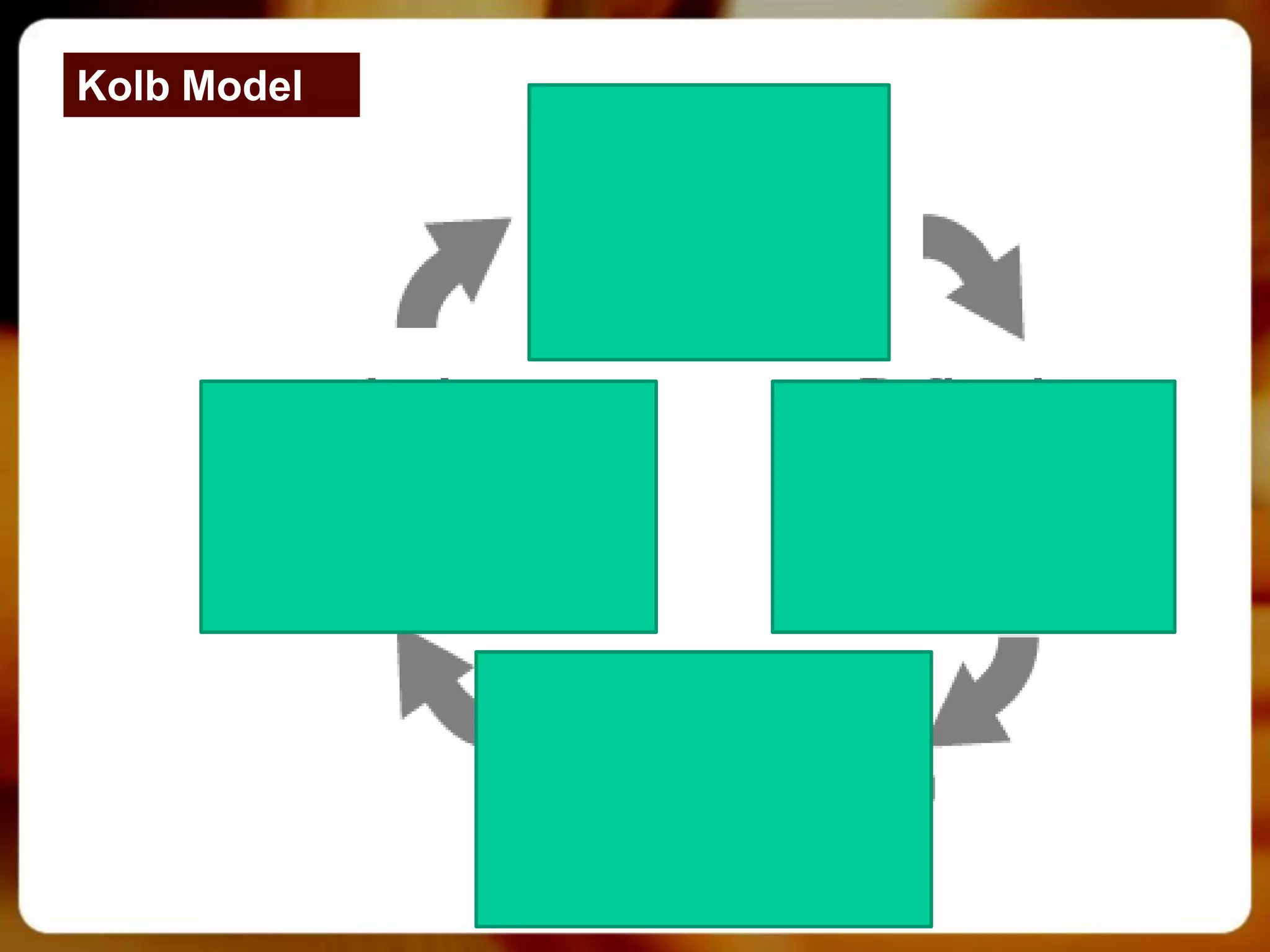
Kolb Model
What else do we need?

A comprehensive model
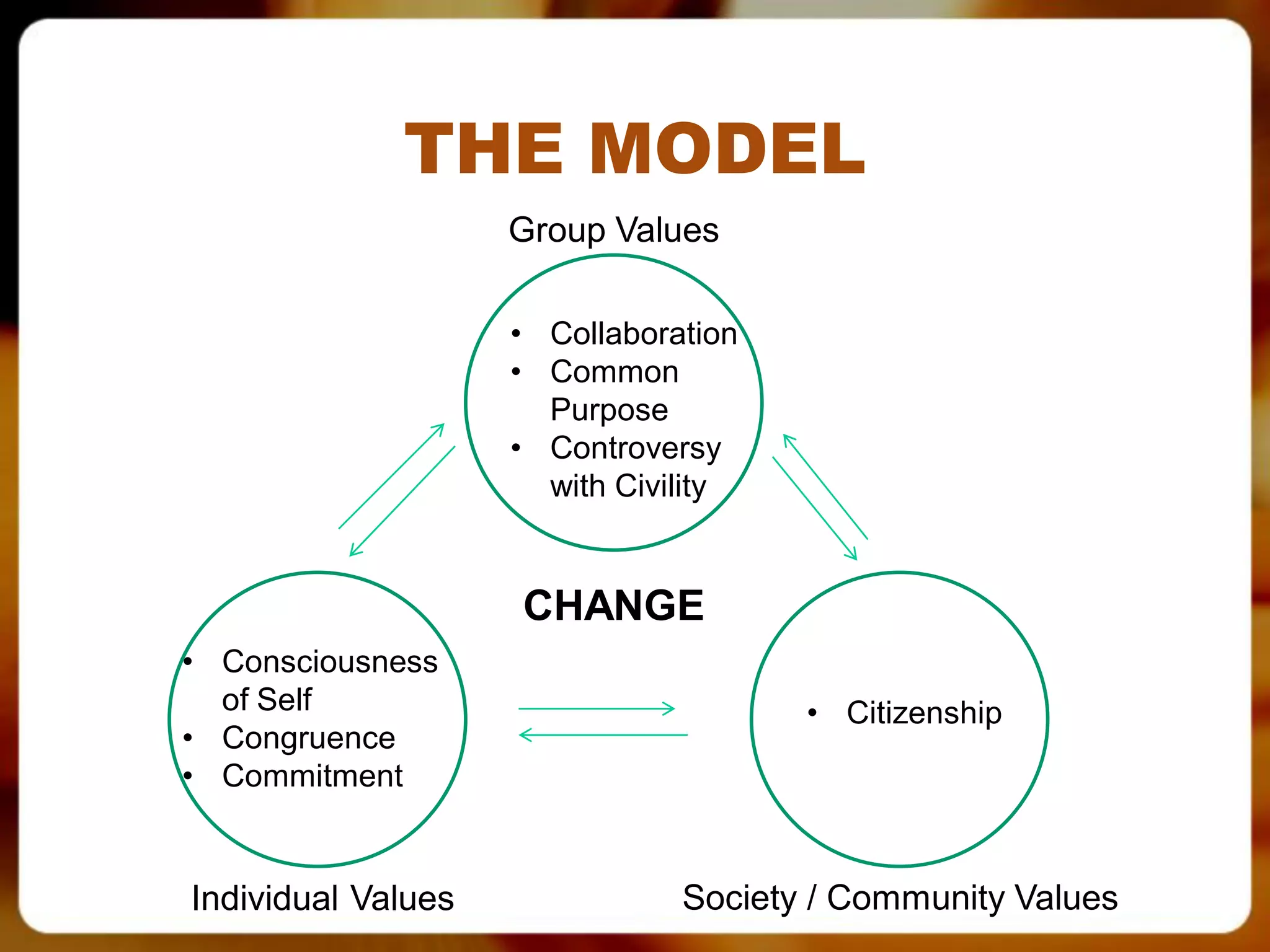
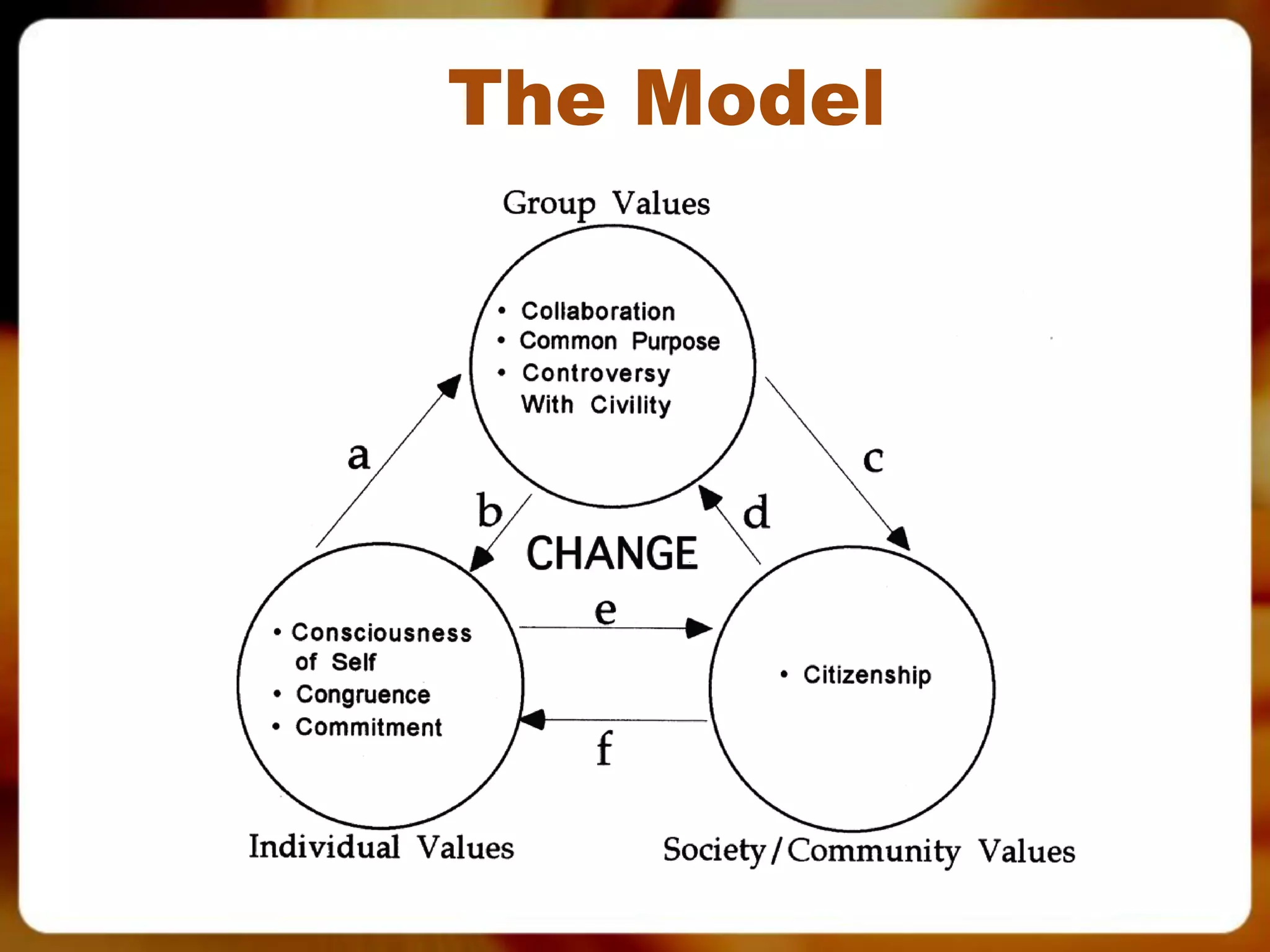
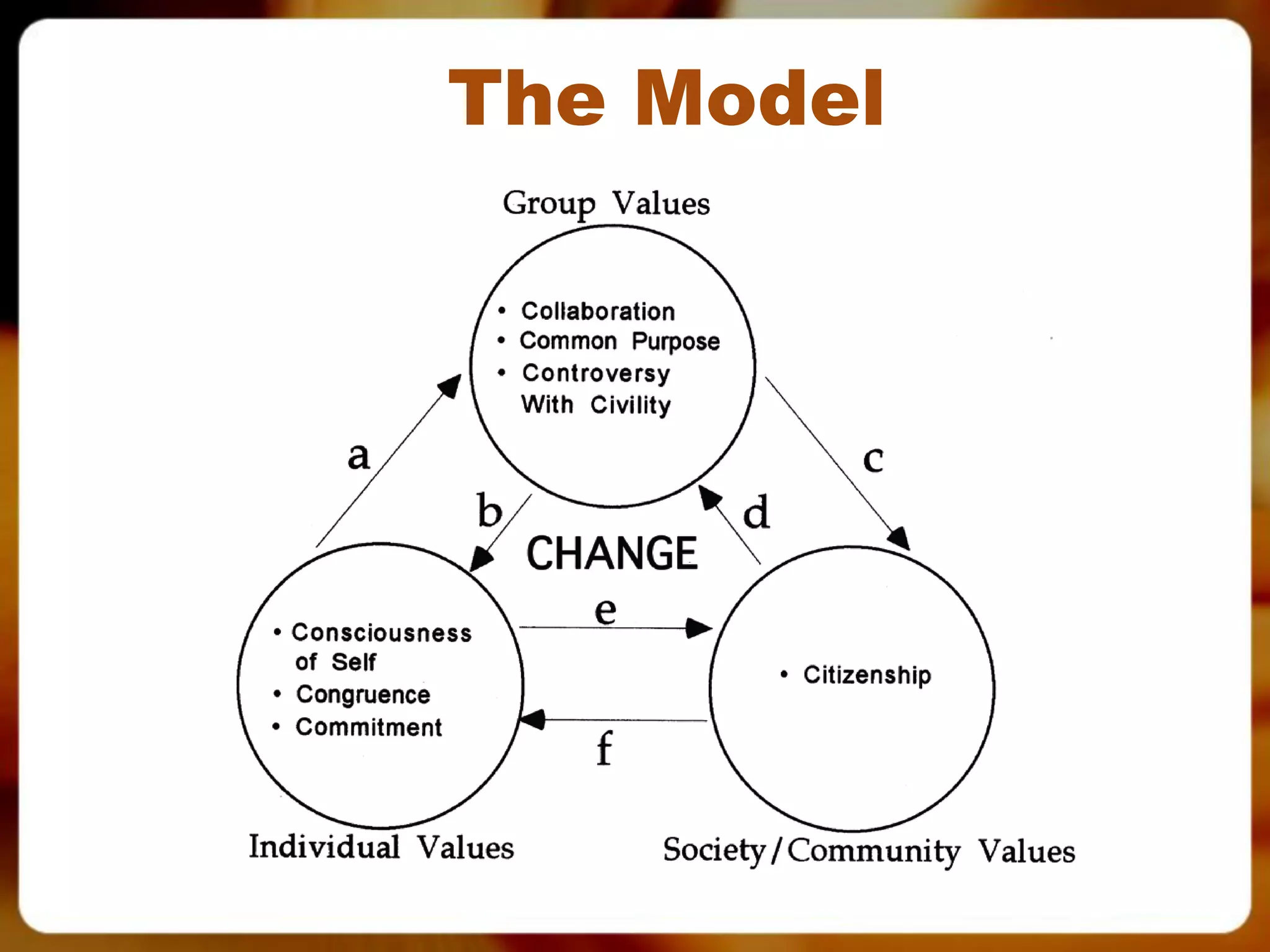
THE MODEL
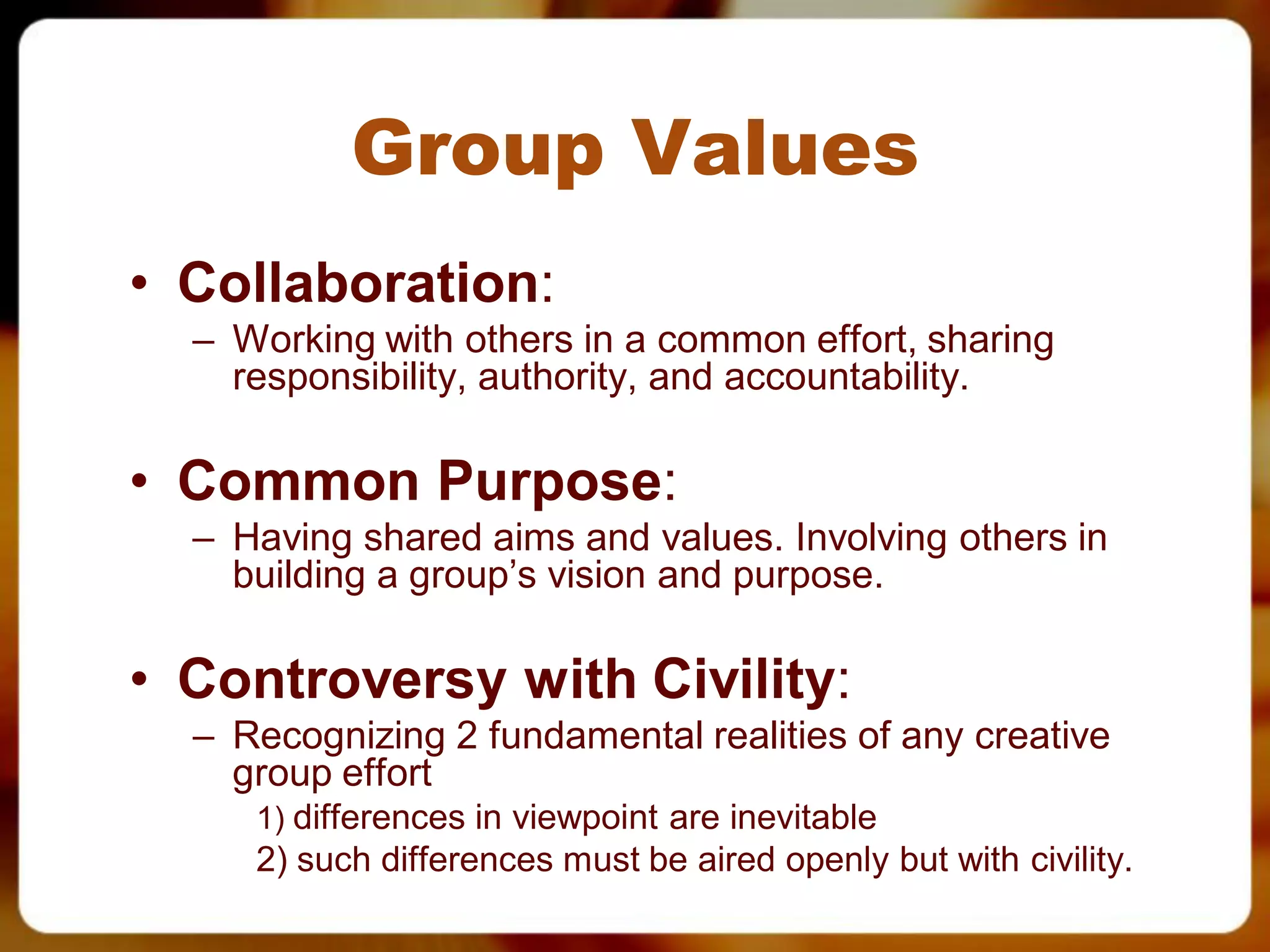
                    Group Values

                    • Collaboration
                    • Common
                      Purpose
                    • Controversy
                      with Civility


                    CHANGE
• Consciousness
  of Self                             • Citizenship
• Congruence
• Commitment


Individual Values              Society / Community Values
WHY DO WE NEED A
MODEL?
Why do we need a
          model?
• A guide
• A common understanding
• A yardstick
“If leaders are to be successful, they
  must first lead themselves.”
  (John Maxwell)
Leadership for social
            change
• Leadership is a process that is ultimately concerned with
  fostering positive change
• Change is the ultimate goal of the creative process of
  leadership – to make a better society / a better world
• Awareness / analysis of problems that affect not only
  others but also ourselves directly or indirectly
• Leadership implies intentionality – the change is not
  random
• Leadership is a purposive process that is inherently
  value-based
Transformational Leadership
• Transformational leadership espouses a relationship
  between leaders and followers in which each transforms the
  other.
   – Leaders transform followers, helping them to become
     leaders themselves
   – The aim of leadership
       • to transform leaders and followers into better, more
         self-actualized people
       • process involving leaders and followers raising one
         another to higher levels of motivation and morality
• Transactional leadership: power wielders involved in a
  politics of exchange – more interested in satisfying their
  own purposes than in the aspirations of their followers
Community Value

Citizenship
 A process whereby an individual and/or group
  becomes responsibly connected to the
  community and to society through some activity.

 Recognizing individuals and groups have
  responsibility for the welfare of others.
Connection with others
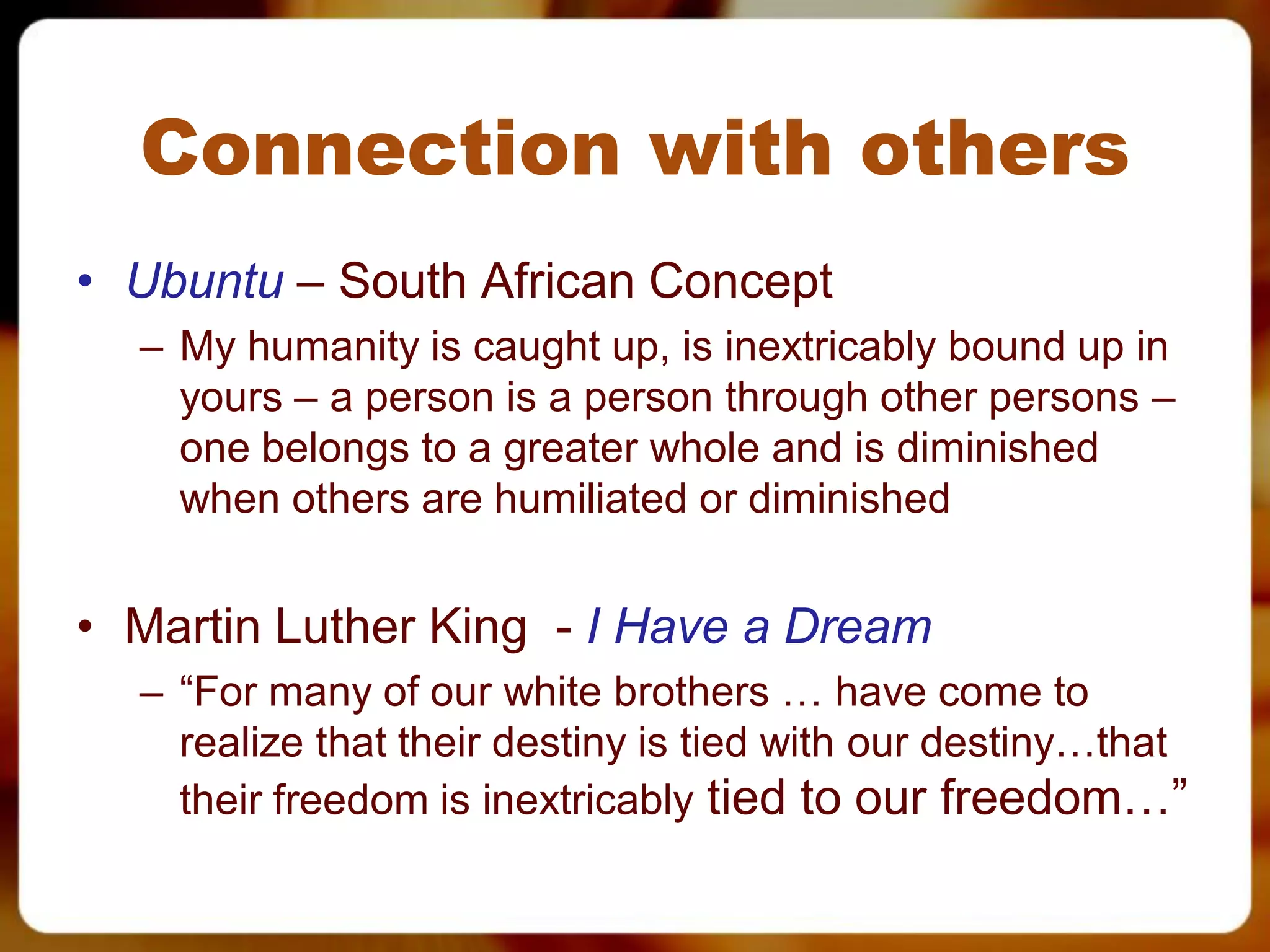
• Ubuntu – South African Concept
  – My humanity is caught up, is inextricably bound up in
    yours – a person is a person through other persons –
    one belongs to a greater whole and is diminished
    when others are humiliated or diminished


• Martin Luther King - I Have a Dream
  – “For many of our white brothers … have come to
    realize that their destiny is tied with our destiny…that
    their freedom is inextricably tied to our freedom…”
COLLABORATION
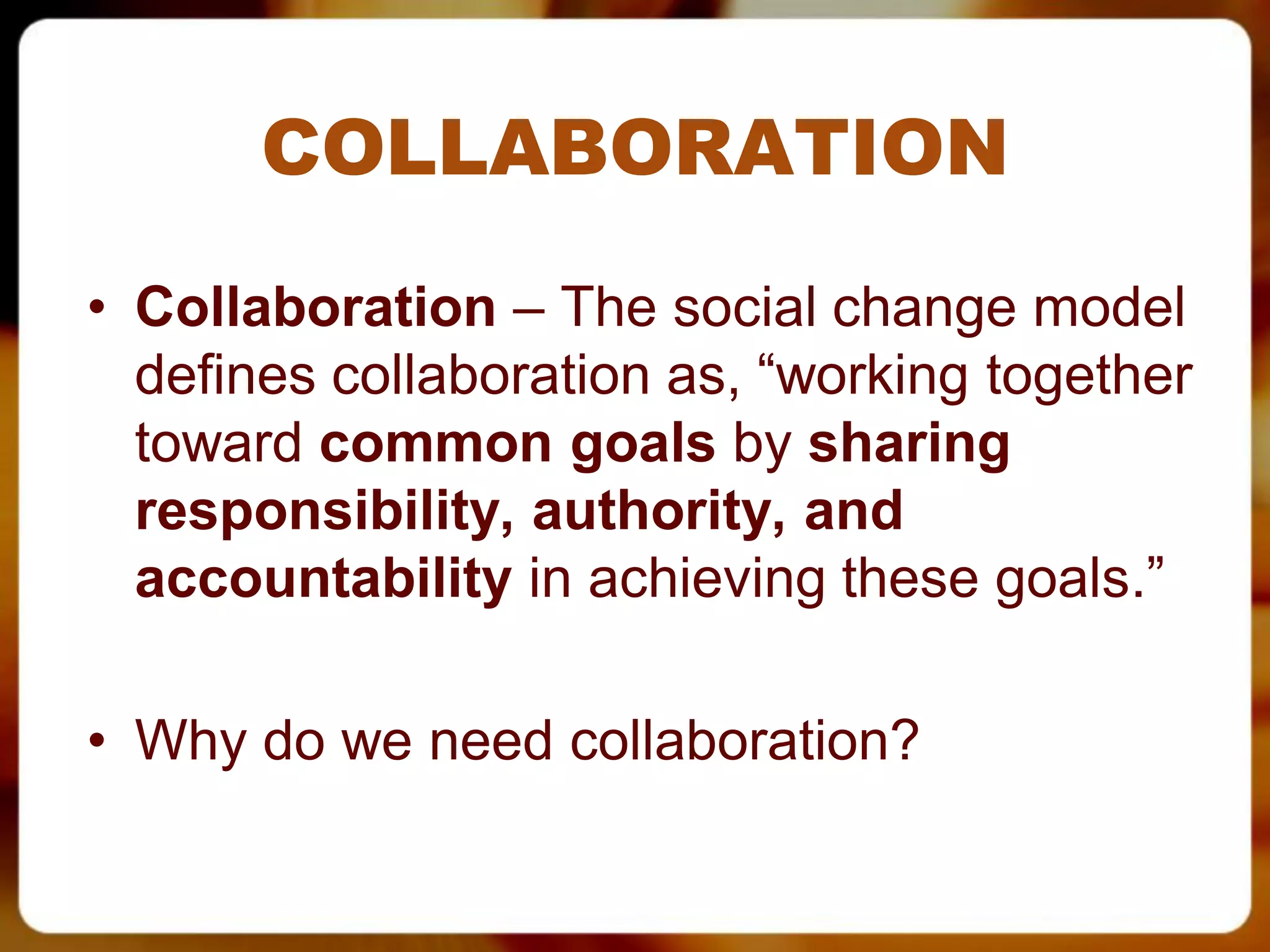
• Collaboration – The social change model
  defines collaboration as, “working together
  toward common goals by sharing
  responsibility, authority, and
  accountability in achieving these goals.”

• Why do we need collaboration?
COLLABORATION
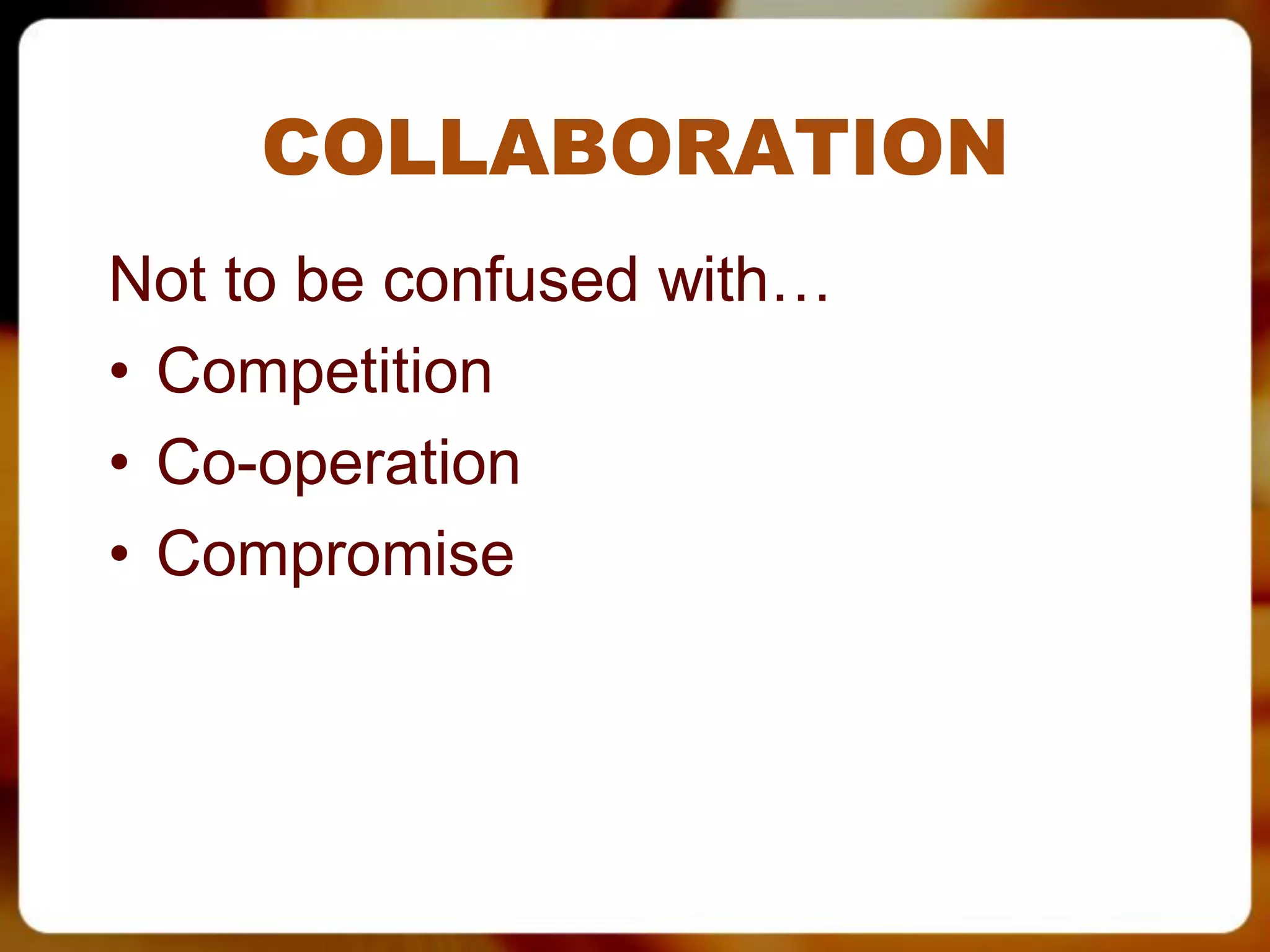
Not to be confused with…
• Competition
• Co-operation
• Compromise
COLLABORATION

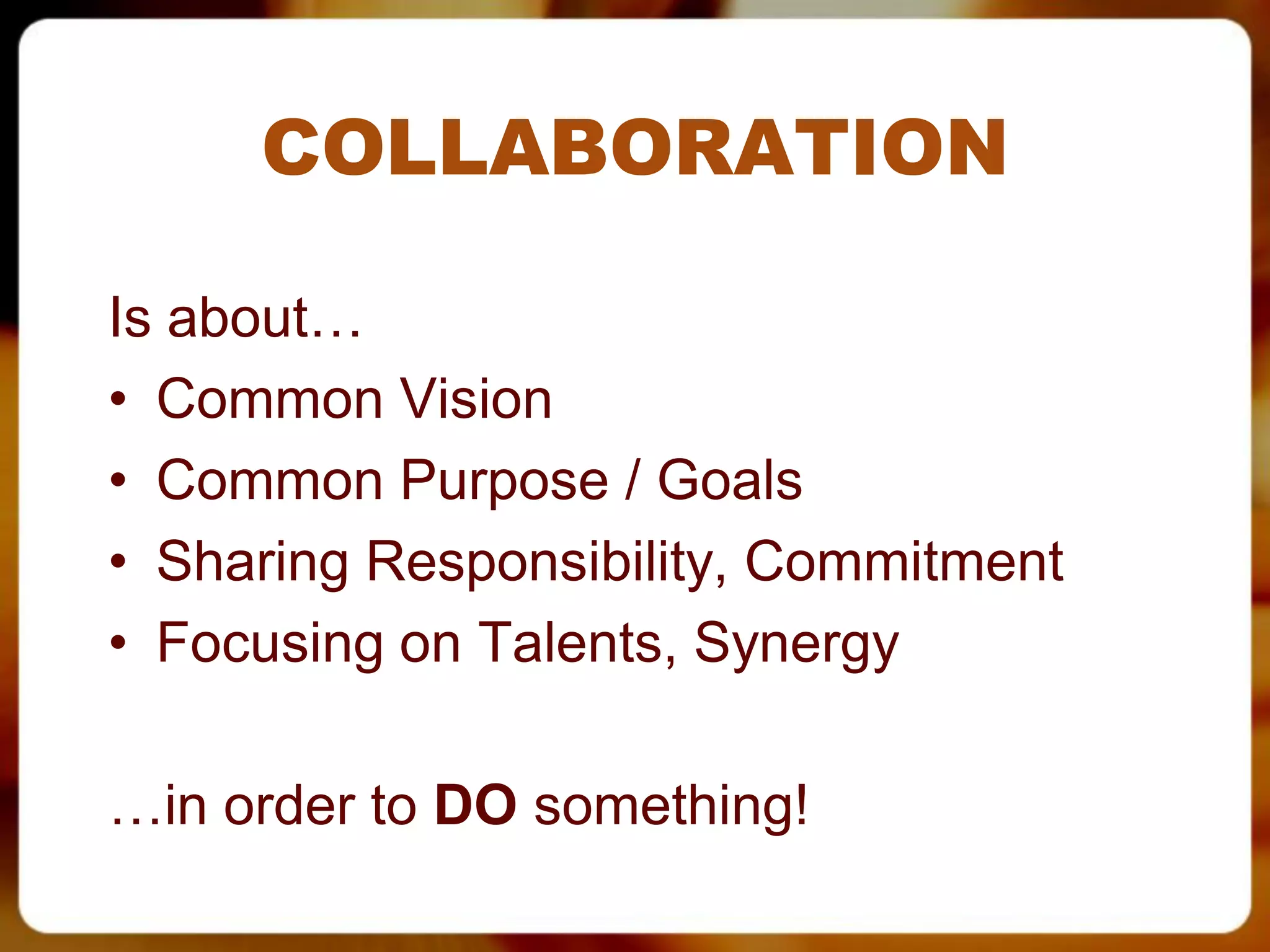
Is about…
• Common Vision
• Common Purpose / Goals
• Sharing Responsibility, Commitment
• Focusing on Talents, Synergy

…in order to DO something!
DIVERSITY

• Diversity is an essential part of
  collaboration and multiplies group
  effectiveness by taking advantage of
  multiple talents and points of view to
  generate innovative ideas and solutions.

• What challenges does diversity involve?
• How is diversity linked with the concept of
  ‘bridging’?
What differentiates a group
 from a mere gathering?
What is a Group?

– Groups strive to achieve a certain
  purpose or goal

– Groups involve some sort of interaction,
  collaboration, or commitment to the
  common goal
COMMON PURPOSE
• Common Purpose has 3 key components:
  – It occurs within groups
  – It is reflected in shared visions, and values
  – It involves working with others.
COMMON PURPOSE
Shared Vision, Mission, Values
• Vision: What is the group’s ideal future?
  – Being …
• Aims: Why does the group exist?
  – To do what?
• Values: How do group members agree
  to treat themselves and others
COMMON PURPOSE

Steadying and bonding force if
• it has truly originated from the group
• the group is truly invested in that
  common purpose
• it is fully embraced by all members of a
  group, not just its leaders.
The Model
Community Values
• Citizenship:
  – Recognizing individuals and groups have
    responsibility for the welfare of others.
  – A concern for others
  – Ubuntu
Group Values
• Collaboration:
  – Working with others in a common effort, sharing
    responsibility, authority, and accountability.

• Common Purpose:
  – Having shared aims and values. Involving others in
    building a group’s vision and purpose.

• Controversy with Civility:
  – Recognizing 2 fundamental realities of any creative
    group effort
     1) differences in viewpoint are inevitable
     2) such differences must be aired openly but with civility.
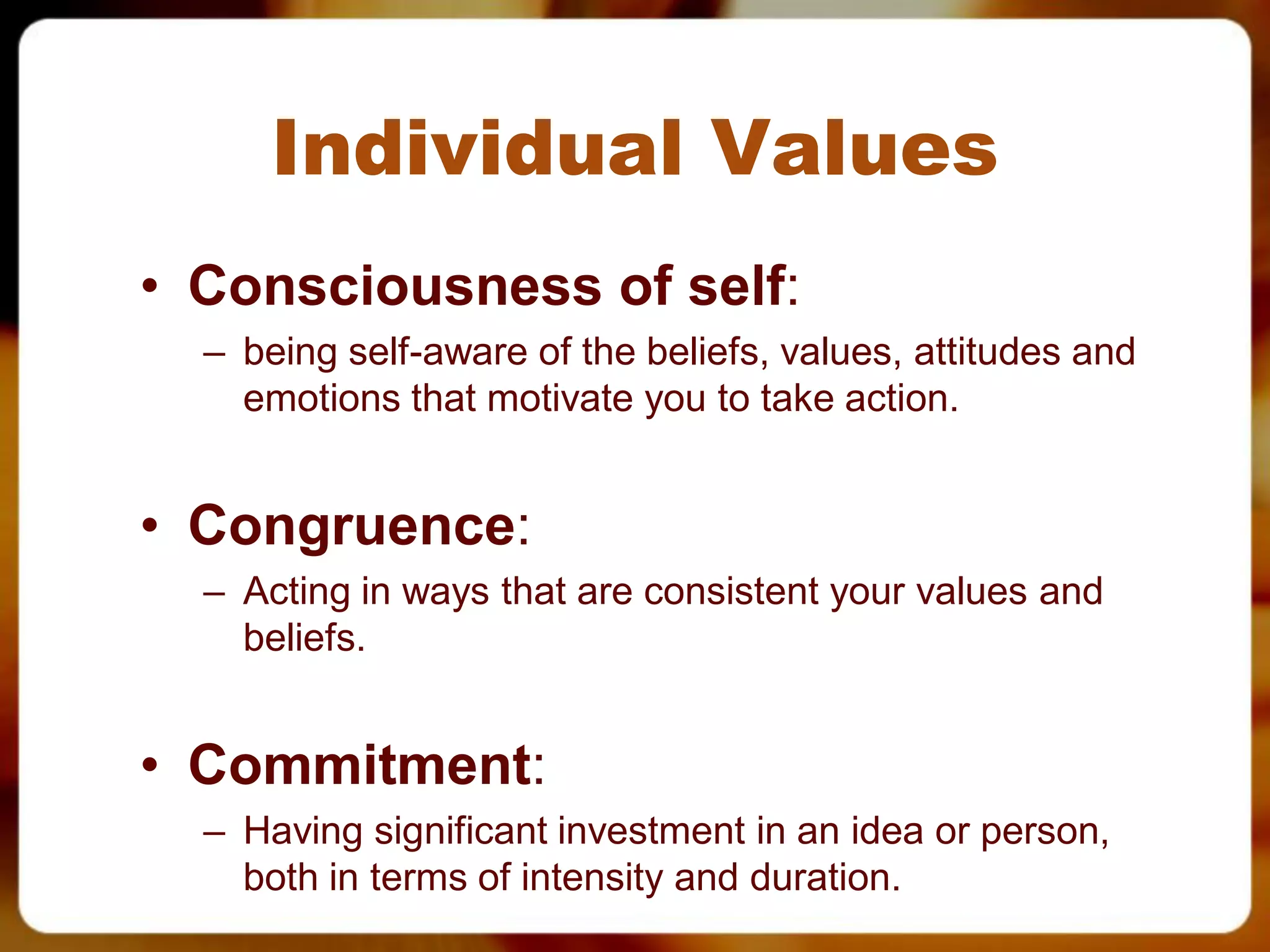
Individual Values
• Consciousness of self:
  – being self-aware of the beliefs, values, attitudes and
    emotions that motivate you to take action.


• Congruence:
  – Acting in ways that are consistent your values and
    beliefs.


• Commitment:
  – Having significant investment in an idea or person,
    both in terms of intensity and duration.
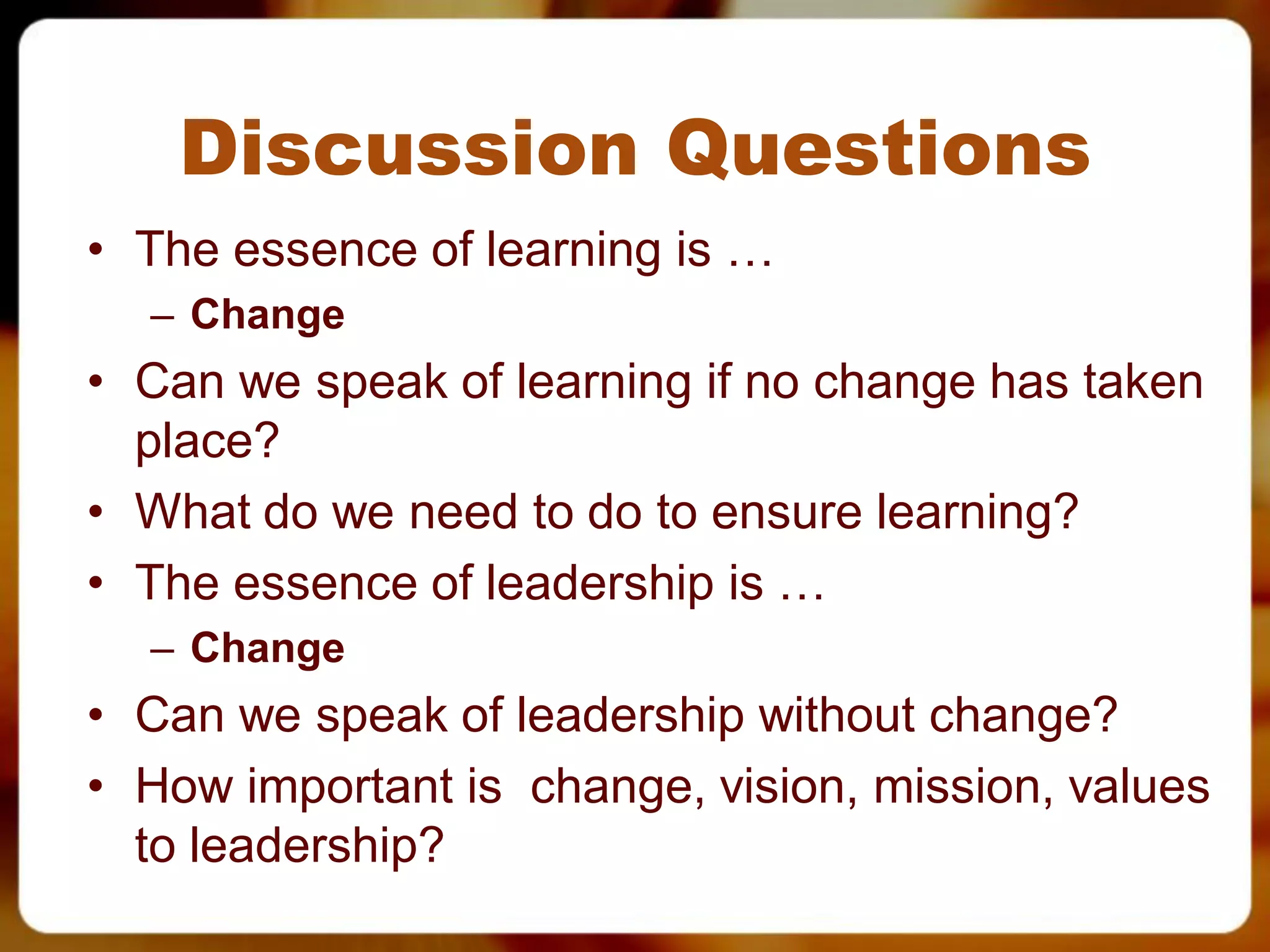
Discussion Questions
• The essence of learning is …
  – Change
• Can we speak of learning if no change has taken
  place?
• What do we need to do to ensure learning?
• The essence of leadership is …
  – Change
• Can we speak of leadership without change?
• How important is change, vision, mission, values
  to leadership?
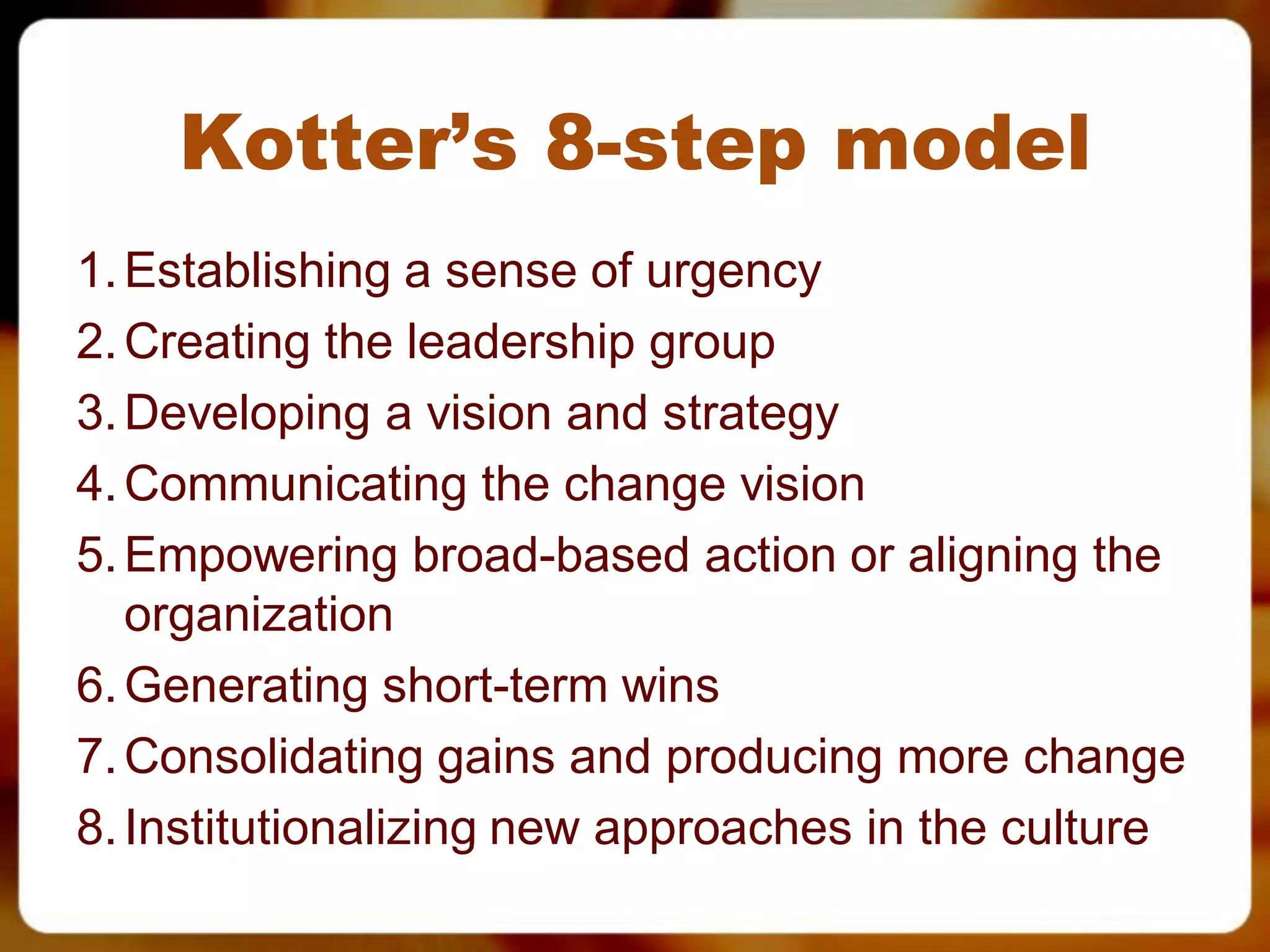
Kotter’s 8-step model
1. Establishing a sense of urgency
2. Creating the leadership group
3. Developing a vision and strategy
4. Communicating the change vision
5. Empowering broad-based action or aligning the
   organization
6. Generating short-term wins
7. Consolidating gains and producing more change
8. Institutionalizing new approaches in the culture
DISCUSSION QUESTIONS
• The yardstick
  – What is our evaluation of leadership among local
    public figures?
  – Are they transformational or transactional
    leaders?
  – Are they value-driven?
  – Does charismatic leadership empower followers?
  – What is our evaluation of our own leadership?
  – Is it improving?
  – In what ways?
SESSION 6

CONSCIOUSNESS OF SELF
OBJECTIVES OF SESSION 6
• By the end of this session, participants
  will be able to:
  – demonstrate a clearer meaning of
   ‘consciousness self’
  – demonstrate a better consciousness of
   themselves
  – understand the link between consciousness
   of self and leadership
WHAT IS CONSCIOUSNESS
       OF SELF?
What is consciousness
          of self?
• Consciousness of Self refers to an
  awareness of one’s own relatively stable
  personality traits, values, and strengths and
  being mindful of actions, feelings, and beliefs.

• It is not an end point that can be reached;
  instead, it is adopting a way of life that
  promotes constant learning about what is
  most important… it is an inner journey.
What is consciousness
          of self?
• Is being conscious of self the same as
  being self-conscious?
  – Being afraid to act because of what others will
    say …
Benefits of
   Consciousness of self
• It is important for leaders to understand
  their own inner sense of identity.

• This understanding helps building self-
  confidence while recognizing limitations.

• Individuals become aware of their
  motivation and consider new ways to
  contribute to groups and teams.
Aspects of Individual
          Identity
• There are multiple ways that individuals can
  differ.
• Our identity can by influenced by
  1. our values and principles, culture, faith, family,
     generational peers
  2. our personal style – timid aggressive, organized,
     optimistic, patient, easy-going
  3. our talents, skills and specialized knowledge
  4. our aspirations and dreams – how do we define
     success
  5. others’ perceptions of us.
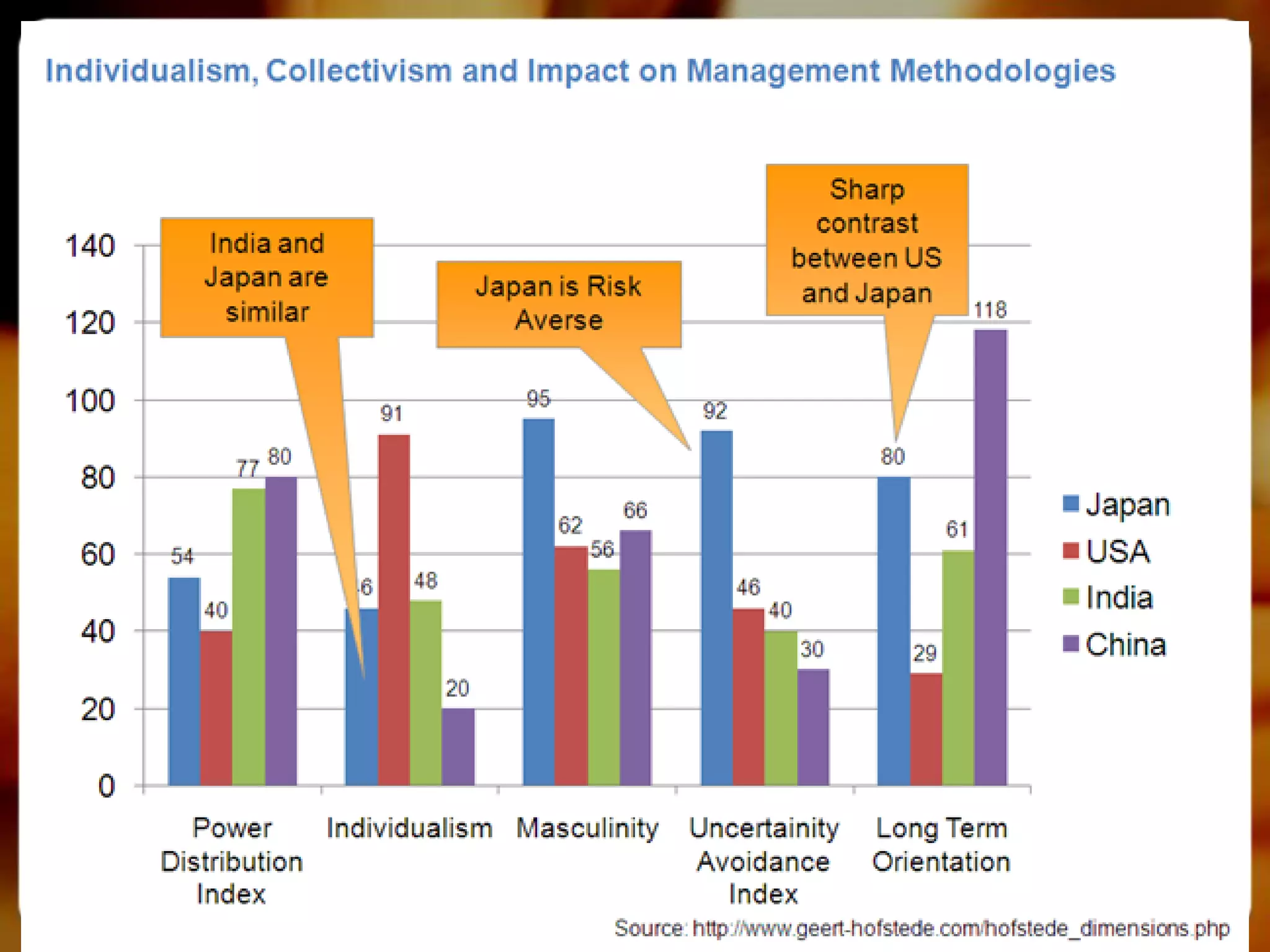
GEERT HOFSTEDE
Importance of introspection

• Constant ‘busyness’ does not let itself to
  consciousness of self
  – need to retreat from doing
  – introspection (not what should I do next BUT who
    am I, how would I describe myself? What are my
    values? Why am I here? What is the meaning of
    life? Making a career or making a difference?
• When you decide to go, it is a different going
  because you stopped. Stopping makes the
  going more vivid.
Leisure
What is this life if, full of care,
We have no time to stand and stare.

No time to stand beneath the boughs
And stare as long as sheep or cows.

No time to see, when woods we pass,
Where squirrels hide their nuts in grass.

No time to see, in broad daylight,
Streams full of stars, like skies at night.

No time to turn at Beauty's glance,
And watch her feet, how they can dance.

No time to wait till her mouth can
Enrich that smile her eyes began.

A poor life this is if, full of care,
We have no time to stand and stare.      William Henry Davies
Food for thought
• Sometimes a person’s greatest flaw is a
  positive style that has gone too far.

• How?

• Improvement on weaknesses is useful but
  the greatest room for growth is in areas of
  greatest strength – work on one’s talents
Becoming Conscious of
          Self
• Developing consciousness of self requires
  intentional actions.
• These include
1. a practice of reflection
2. openness to feedback
  – strength and weaknesses - non defensive, listen
    without interrupting, ask clarifying questions –
    does not imply accepting everything – should not
    take a toll on self-confidence and motivation,
    integrating advice of others
3. learning about the self through assessment.
Mindfulness
• Mindfulness focuses on more than simply
  understanding our personality.
• It is the ability to simultaneously act and
  observe our actions in the present
  moment.
• Being mindful allows us to choose how to
  respond in situations (Covey).
Metacognition
• Reflection on what and how we are learning

• Catching oneself in the act of learning – a voice of a
  wise observer looking over one’s shoulder and offering
  insight and raising questions for reflection

• Metacognition refers to a level of thinking that involves
  active control over the process of thinking that is used
  in learning situations

• Am I attentive? What am I thinking? Do I agree with
  what is being said? How does this relate to my current
  situation? Where can I apply this? What am I afraid
  of?
LINKS WITH THE 6 C’S
Consciousness of Self &
          7 Cs
• Becoming conscious of self lets us assess our
  readiness to engage in social change.
• It helps us be better aware of how issues affect us and
  others and enhances our citizenship
• It allows us to better collaborate and engage in
  valuable experiences with the group or team.
• It helps us clarify our values and agree on common
  purpose and understand how values affect our
  behavior and judgment
• Encourage seeing things from others perspective –
  empathy – and engage in controversy with civility
• It boosts self-confidence while highlighting limitations
Connection to
          the Other Cs
• Although all of the Cs are interrelated,
  Consciousness of Self directly affects
  Congruence and Commitment.
• Becoming more mindful of preferred ways
  of being makes it clear when actions are
  not Congruent with our inner truth.
• Also, reflection and other practices help
  create an improved sense of Commitment.
Consciousness of self -
      closing words
To develop intrapersonal intelligence and
form an accurate model of ourselves and be
able to use that model to operate effectively
in everyday life

To develop the awareness that new skills,
behaviors and approaches are needed
The Model
Questions
BREAK
INTERACTIVE SESSION
     The JOHARI window
The JOHARI window
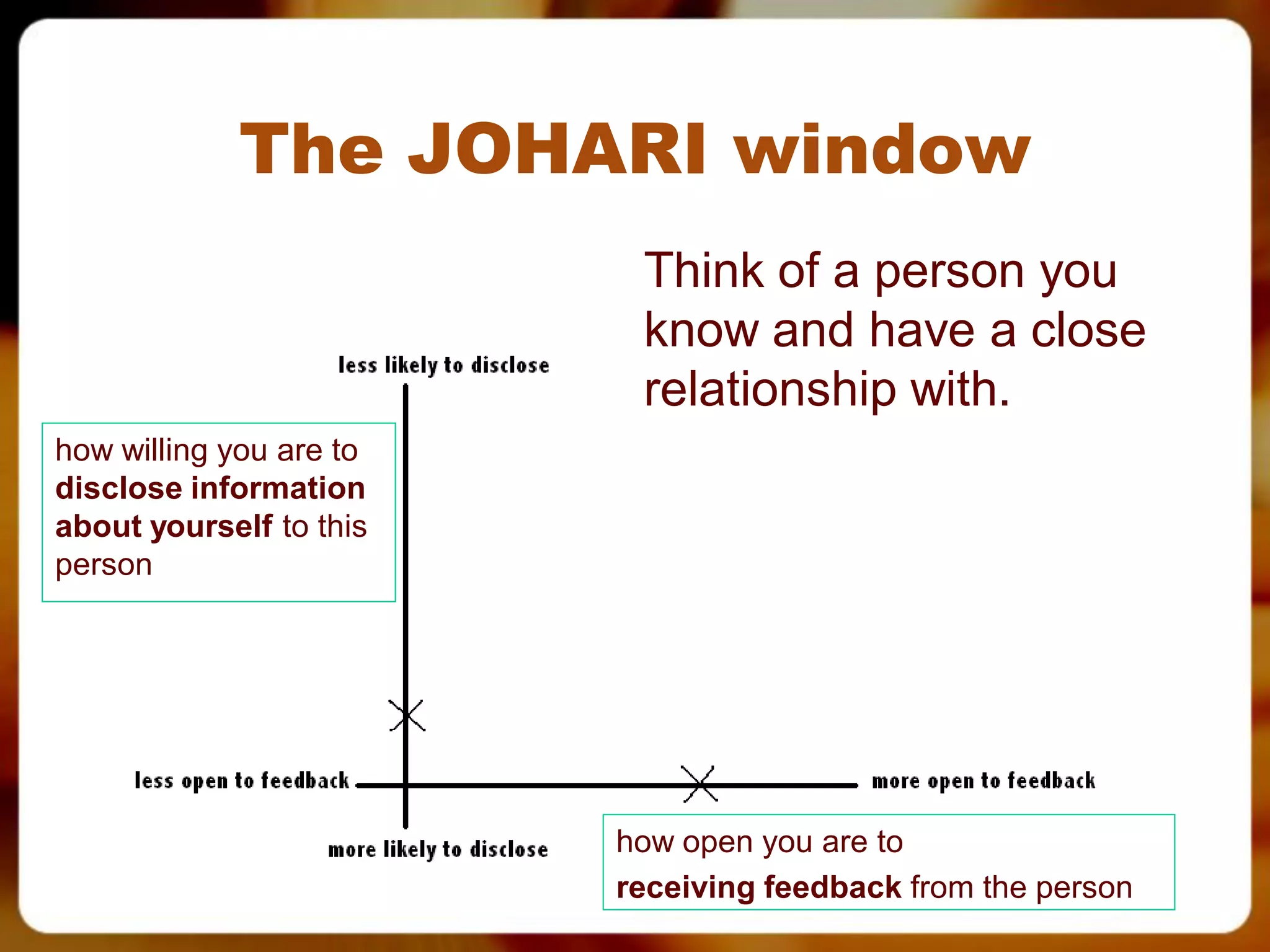
The JOHARI window
                          Think of a person you
                          know and have a close
                          relationship with.
how willing you are to
disclose information
about yourself to this
person


                         how open you are to
                         receiving feedback from the person
The JOHARI window
The JOHARI window
INTERACTIVE SESSION

   The Rokeach value survey
Becoming Conscious of
          Self
• Developing consciousness of self requires
  intentional actions.
• These include
1. a practice of reflection
2. openness to feedback
  – strength and weaknesses - non defensive, listen
    without interrupting, ask clarifying questions –
    does not imply accepting everything – should not
    take a toll on self-confidence and motivation,
    integrating advice of others
3. learning about the self through assessment.
Q&A
FEEDBACK

Session 6

  • 1.
  • 2.
    RECAP SESSIONS 1 TO 5 • Leadership • Social Change (v/s charity, challenges) • Citizenship (Citoyenneté + Civisme) • Collaboration • Common Purpose • Controversy with Civility
  • 3.
    Leadership • Reading aboutLeadership v/s ‘Doing’ Leadership • We also need concrete experience • Is experience enough? What else is required?
  • 4.
  • 5.
    What else dowe need? A comprehensive model
  • 6.
    THE MODEL Group Values • Collaboration • Common Purpose • Controversy with Civility CHANGE • Consciousness of Self • Citizenship • Congruence • Commitment Individual Values Society / Community Values
  • 7.
    WHY DO WENEED A MODEL?
  • 8.
    Why do weneed a model? • A guide • A common understanding • A yardstick
  • 9.
    “If leaders areto be successful, they must first lead themselves.” (John Maxwell)
  • 10.
    Leadership for social change • Leadership is a process that is ultimately concerned with fostering positive change • Change is the ultimate goal of the creative process of leadership – to make a better society / a better world • Awareness / analysis of problems that affect not only others but also ourselves directly or indirectly • Leadership implies intentionality – the change is not random • Leadership is a purposive process that is inherently value-based
  • 11.
    Transformational Leadership • Transformationalleadership espouses a relationship between leaders and followers in which each transforms the other. – Leaders transform followers, helping them to become leaders themselves – The aim of leadership • to transform leaders and followers into better, more self-actualized people • process involving leaders and followers raising one another to higher levels of motivation and morality • Transactional leadership: power wielders involved in a politics of exchange – more interested in satisfying their own purposes than in the aspirations of their followers
  • 12.
    Community Value Citizenship  Aprocess whereby an individual and/or group becomes responsibly connected to the community and to society through some activity.  Recognizing individuals and groups have responsibility for the welfare of others.
  • 13.
    Connection with others •Ubuntu – South African Concept – My humanity is caught up, is inextricably bound up in yours – a person is a person through other persons – one belongs to a greater whole and is diminished when others are humiliated or diminished • Martin Luther King - I Have a Dream – “For many of our white brothers … have come to realize that their destiny is tied with our destiny…that their freedom is inextricably tied to our freedom…”
  • 14.
    COLLABORATION • Collaboration –The social change model defines collaboration as, “working together toward common goals by sharing responsibility, authority, and accountability in achieving these goals.” • Why do we need collaboration?
  • 15.
    COLLABORATION Not to beconfused with… • Competition • Co-operation • Compromise
  • 16.
    COLLABORATION Is about… • CommonVision • Common Purpose / Goals • Sharing Responsibility, Commitment • Focusing on Talents, Synergy …in order to DO something!
  • 17.
    DIVERSITY • Diversity isan essential part of collaboration and multiplies group effectiveness by taking advantage of multiple talents and points of view to generate innovative ideas and solutions. • What challenges does diversity involve? • How is diversity linked with the concept of ‘bridging’?
  • 18.
    What differentiates agroup from a mere gathering?
  • 19.
    What is aGroup? – Groups strive to achieve a certain purpose or goal – Groups involve some sort of interaction, collaboration, or commitment to the common goal
  • 20.
    COMMON PURPOSE • CommonPurpose has 3 key components: – It occurs within groups – It is reflected in shared visions, and values – It involves working with others.
  • 21.
    COMMON PURPOSE Shared Vision,Mission, Values • Vision: What is the group’s ideal future? – Being … • Aims: Why does the group exist? – To do what? • Values: How do group members agree to treat themselves and others
  • 22.
    COMMON PURPOSE Steadying andbonding force if • it has truly originated from the group • the group is truly invested in that common purpose • it is fully embraced by all members of a group, not just its leaders.
  • 23.
  • 24.
    Community Values • Citizenship: – Recognizing individuals and groups have responsibility for the welfare of others. – A concern for others – Ubuntu
  • 25.
    Group Values • Collaboration: – Working with others in a common effort, sharing responsibility, authority, and accountability. • Common Purpose: – Having shared aims and values. Involving others in building a group’s vision and purpose. • Controversy with Civility: – Recognizing 2 fundamental realities of any creative group effort 1) differences in viewpoint are inevitable 2) such differences must be aired openly but with civility.
  • 26.
    Individual Values • Consciousnessof self: – being self-aware of the beliefs, values, attitudes and emotions that motivate you to take action. • Congruence: – Acting in ways that are consistent your values and beliefs. • Commitment: – Having significant investment in an idea or person, both in terms of intensity and duration.
  • 27.
    Discussion Questions • Theessence of learning is … – Change • Can we speak of learning if no change has taken place? • What do we need to do to ensure learning? • The essence of leadership is … – Change • Can we speak of leadership without change? • How important is change, vision, mission, values to leadership?
  • 28.
    Kotter’s 8-step model 1.Establishing a sense of urgency 2. Creating the leadership group 3. Developing a vision and strategy 4. Communicating the change vision 5. Empowering broad-based action or aligning the organization 6. Generating short-term wins 7. Consolidating gains and producing more change 8. Institutionalizing new approaches in the culture
  • 29.
    DISCUSSION QUESTIONS • Theyardstick – What is our evaluation of leadership among local public figures? – Are they transformational or transactional leaders? – Are they value-driven? – Does charismatic leadership empower followers? – What is our evaluation of our own leadership? – Is it improving? – In what ways?
  • 30.
  • 31.
    OBJECTIVES OF SESSION6 • By the end of this session, participants will be able to: – demonstrate a clearer meaning of ‘consciousness self’ – demonstrate a better consciousness of themselves – understand the link between consciousness of self and leadership
  • 32.
  • 34.
    What is consciousness of self? • Consciousness of Self refers to an awareness of one’s own relatively stable personality traits, values, and strengths and being mindful of actions, feelings, and beliefs. • It is not an end point that can be reached; instead, it is adopting a way of life that promotes constant learning about what is most important… it is an inner journey.
  • 35.
    What is consciousness of self? • Is being conscious of self the same as being self-conscious? – Being afraid to act because of what others will say …
  • 36.
    Benefits of Consciousness of self • It is important for leaders to understand their own inner sense of identity. • This understanding helps building self- confidence while recognizing limitations. • Individuals become aware of their motivation and consider new ways to contribute to groups and teams.
  • 37.
    Aspects of Individual Identity • There are multiple ways that individuals can differ. • Our identity can by influenced by 1. our values and principles, culture, faith, family, generational peers 2. our personal style – timid aggressive, organized, optimistic, patient, easy-going 3. our talents, skills and specialized knowledge 4. our aspirations and dreams – how do we define success 5. others’ perceptions of us.
  • 38.
  • 40.
    Importance of introspection •Constant ‘busyness’ does not let itself to consciousness of self – need to retreat from doing – introspection (not what should I do next BUT who am I, how would I describe myself? What are my values? Why am I here? What is the meaning of life? Making a career or making a difference? • When you decide to go, it is a different going because you stopped. Stopping makes the going more vivid.
  • 41.
    Leisure What is thislife if, full of care, We have no time to stand and stare. No time to stand beneath the boughs And stare as long as sheep or cows. No time to see, when woods we pass, Where squirrels hide their nuts in grass. No time to see, in broad daylight, Streams full of stars, like skies at night. No time to turn at Beauty's glance, And watch her feet, how they can dance. No time to wait till her mouth can Enrich that smile her eyes began. A poor life this is if, full of care, We have no time to stand and stare. William Henry Davies
  • 42.
    Food for thought •Sometimes a person’s greatest flaw is a positive style that has gone too far. • How? • Improvement on weaknesses is useful but the greatest room for growth is in areas of greatest strength – work on one’s talents
  • 43.
    Becoming Conscious of Self • Developing consciousness of self requires intentional actions. • These include 1. a practice of reflection 2. openness to feedback – strength and weaknesses - non defensive, listen without interrupting, ask clarifying questions – does not imply accepting everything – should not take a toll on self-confidence and motivation, integrating advice of others 3. learning about the self through assessment.
  • 44.
    Mindfulness • Mindfulness focuseson more than simply understanding our personality. • It is the ability to simultaneously act and observe our actions in the present moment. • Being mindful allows us to choose how to respond in situations (Covey).
  • 45.
    Metacognition • Reflection onwhat and how we are learning • Catching oneself in the act of learning – a voice of a wise observer looking over one’s shoulder and offering insight and raising questions for reflection • Metacognition refers to a level of thinking that involves active control over the process of thinking that is used in learning situations • Am I attentive? What am I thinking? Do I agree with what is being said? How does this relate to my current situation? Where can I apply this? What am I afraid of?
  • 46.
  • 47.
    Consciousness of Self& 7 Cs • Becoming conscious of self lets us assess our readiness to engage in social change. • It helps us be better aware of how issues affect us and others and enhances our citizenship • It allows us to better collaborate and engage in valuable experiences with the group or team. • It helps us clarify our values and agree on common purpose and understand how values affect our behavior and judgment • Encourage seeing things from others perspective – empathy – and engage in controversy with civility • It boosts self-confidence while highlighting limitations
  • 48.
    Connection to the Other Cs • Although all of the Cs are interrelated, Consciousness of Self directly affects Congruence and Commitment. • Becoming more mindful of preferred ways of being makes it clear when actions are not Congruent with our inner truth. • Also, reflection and other practices help create an improved sense of Commitment.
  • 49.
    Consciousness of self- closing words To develop intrapersonal intelligence and form an accurate model of ourselves and be able to use that model to operate effectively in everyday life To develop the awareness that new skills, behaviors and approaches are needed
  • 50.
  • 51.
  • 52.
  • 53.
    INTERACTIVE SESSION The JOHARI window
  • 55.
  • 56.
    The JOHARI window Think of a person you know and have a close relationship with. how willing you are to disclose information about yourself to this person how open you are to receiving feedback from the person
  • 57.
  • 58.
  • 59.
    INTERACTIVE SESSION The Rokeach value survey
  • 60.
    Becoming Conscious of Self • Developing consciousness of self requires intentional actions. • These include 1. a practice of reflection 2. openness to feedback – strength and weaknesses - non defensive, listen without interrupting, ask clarifying questions – does not imply accepting everything – should not take a toll on self-confidence and motivation, integrating advice of others 3. learning about the self through assessment.
  • 61.