Attitudes and Job
Satisfaction
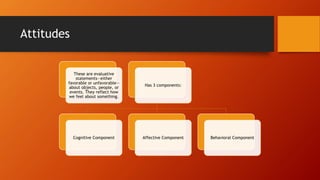
Attitudes
These are evaluative
statements—either
favorable or unfavorable—
about objects, people, or
events. They reflect how
we feel about something.
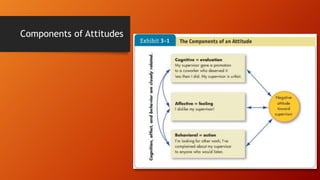
Has 3 components:
Cognitive Component Affective Component Behavioral Component
Components of Attitudes
Attitudes and Behavior
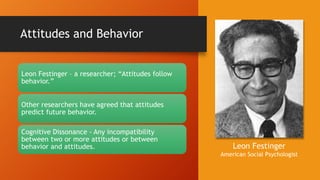
Leon Festinger – a researcher; “Attitudes follow
behavior.”
Other researchers have agreed that attitudes
predict future behavior.
Cognitive Dissonance - Any incompatibility
between two or more attitudes or between
behavior and attitudes. Leon Festinger
American Social Psychologist
Attitudes and Behavior
The desire to reduce dissonance depends on three factors:
• The importance of the elements creating dissonance
• The degree of influence we believe we have over the elements.
• The rewards of dissonance
The most powerful moderators of the attitudes relationship are:
• Importance
• Correspondence to behavior
• Accessibility
• Social pressures
• Direct experience
Job Attitudes
Job Satisfaction - A positive feeling about
one’s job resulting from an evaluation of
its characteristics.
• A person with high job satisfaction holds positive
feelings about the work, while a person with low
satisfaction holds negative feelings.
Job Involvement - The degree to which a
person identifies with a job, actively
participates in it, and considers
performance important to self-worth.
• Employees with high job involvement strongly
identify with and really care about the kind of work
they do.
Job Attitudes
Psychological Empowerment - Employees’ belief
in the degree to which they affect their work
environment, their competence, the
meaningfulness of their job, and their perceived
autonomy in their work.
Organizational Commitment - The degree to
which an employee identifies with a particular
organization and its goals and wishes to maintain
membership in the organization.
• Emotional attachment to an organization and
belief in its values
Job Attitudes
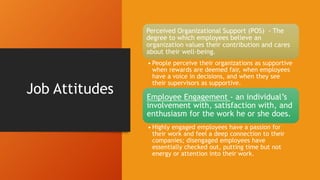
Perceived Organizational Support (POS) - The
degree to which employees believe an
organization values their contribution and cares
about their well-being.
• People perceive their organizations as supportive
when rewards are deemed fair, when employees
have a voice in decisions, and when they see
their supervisors as supportive.
Employee Engagement - an individual’s
involvement with, satisfaction with, and
enthusiasm for the work he or she does.
• Highly engaged employees have a passion for
their work and feel a deep connection to their
companies; disengaged employees have
essentially checked out, putting time but not
energy or attention into their work.
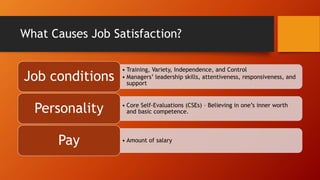
What Causes Job Satisfaction?
• Training, Variety, Independence, and Control
• Managers’ leadership skills, attentiveness, responsiveness, and
support
Job conditions
• Core Self-Evaluations (CSEs) – Believing in one’s inner worth
and basic competence.
Personality
• Amount of salary
Pay
What Causes Job Satisfaction?
• Corporate Social Responsibility (CSR) - An organization’s self-
regulated actions to benefit society or the environment beyond
what is required by law.
• Issues need to be addressed:
• Not all projects are equally meaningful for every person’s job satisfaction, yet
participation for all employees is sometimes expected
• Some organizations require employees to contribute in a prescribed manner.
• CSR measures can seem disconnected from the employee’s actual work,
providing no increase to job satisfaction.
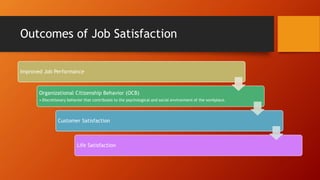
Outcomes of Job Satisfaction
Improved Job Performance
Organizational Citizenship Behavior (OCB)
• Discretionary behavior that contributes to the psychological and social environment of the workplace.
Customer Satisfaction
Life Satisfaction
The Impact of
Job
Dissatisfaction
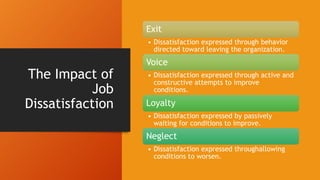
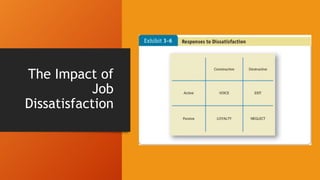
Exit
• Dissatisfaction expressed through behavior
directed toward leaving the organization.
Voice
• Dissatisfaction expressed through active and
constructive attempts to improve
conditions.
Loyalty
• Dissatisfaction expressed by passively
waiting for conditions to improve.
Neglect
• Dissatisfaction expressed throughallowing
conditions to worsen.
The Impact of
Job
Dissatisfaction
The Impact of
Job
Dissatisfaction
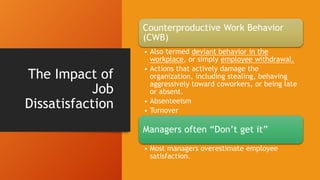
Counterproductive Work Behavior
(CWB)
• Also termed deviant behavior in the
workplace, or simply employee withdrawal.
• Actions that actively damage the
organization, including stealing, behaving
aggressively toward coworkers, or being late
or absent.
• Absenteeism
• Turnover
Managers often “Don’t get it”
• Most managers overestimate employee
satisfaction.
Implications
for Managers
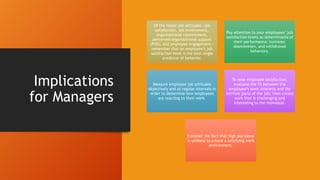
Of the major job attitudes—job
satisfaction, job involvement,
organizational commitment,
perceived organizational support
(POS), and employee engagement—
remember that an employee’s job
satisfaction level is the best single
predictor of behavior.
Pay attention to your employees’ job
satisfaction levels as determinants of
their performance, turnover,
absenteeism, and withdrawal
behaviors.
Measure employee job attitudes
objectively and at regular intervals in
order to determine how employees
are reacting to their work.
To raise employee satisfaction,
evaluate the fit between the
employee’s work interests and the
intrinsic parts of the job; then create
work that is challenging and
interesting to the individual.
Consider the fact that high pay alone
is unlikely to create a satisfying work
environment.
Thank you for listening!
End of presentation

Chapter 3 - Attitudes and Job Satisfaction.pptx

  • 1.
  • 2.
    Attitudes These are evaluative statements—either favorableor unfavorable— about objects, people, or events. They reflect how we feel about something. Has 3 components: Cognitive Component Affective Component Behavioral Component
  • 3.
  • 4.
    Attitudes and Behavior LeonFestinger – a researcher; “Attitudes follow behavior.” Other researchers have agreed that attitudes predict future behavior. Cognitive Dissonance - Any incompatibility between two or more attitudes or between behavior and attitudes. Leon Festinger American Social Psychologist
  • 5.
    Attitudes and Behavior Thedesire to reduce dissonance depends on three factors: • The importance of the elements creating dissonance • The degree of influence we believe we have over the elements. • The rewards of dissonance The most powerful moderators of the attitudes relationship are: • Importance • Correspondence to behavior • Accessibility • Social pressures • Direct experience
  • 6.
    Job Attitudes Job Satisfaction- A positive feeling about one’s job resulting from an evaluation of its characteristics. • A person with high job satisfaction holds positive feelings about the work, while a person with low satisfaction holds negative feelings. Job Involvement - The degree to which a person identifies with a job, actively participates in it, and considers performance important to self-worth. • Employees with high job involvement strongly identify with and really care about the kind of work they do.
  • 7.
    Job Attitudes Psychological Empowerment- Employees’ belief in the degree to which they affect their work environment, their competence, the meaningfulness of their job, and their perceived autonomy in their work. Organizational Commitment - The degree to which an employee identifies with a particular organization and its goals and wishes to maintain membership in the organization. • Emotional attachment to an organization and belief in its values
  • 8.
    Job Attitudes Perceived OrganizationalSupport (POS) - The degree to which employees believe an organization values their contribution and cares about their well-being. • People perceive their organizations as supportive when rewards are deemed fair, when employees have a voice in decisions, and when they see their supervisors as supportive. Employee Engagement - an individual’s involvement with, satisfaction with, and enthusiasm for the work he or she does. • Highly engaged employees have a passion for their work and feel a deep connection to their companies; disengaged employees have essentially checked out, putting time but not energy or attention into their work.
  • 9.
    What Causes JobSatisfaction? • Training, Variety, Independence, and Control • Managers’ leadership skills, attentiveness, responsiveness, and support Job conditions • Core Self-Evaluations (CSEs) – Believing in one’s inner worth and basic competence. Personality • Amount of salary Pay
  • 10.
    What Causes JobSatisfaction? • Corporate Social Responsibility (CSR) - An organization’s self- regulated actions to benefit society or the environment beyond what is required by law. • Issues need to be addressed: • Not all projects are equally meaningful for every person’s job satisfaction, yet participation for all employees is sometimes expected • Some organizations require employees to contribute in a prescribed manner. • CSR measures can seem disconnected from the employee’s actual work, providing no increase to job satisfaction.
  • 11.
    Outcomes of JobSatisfaction Improved Job Performance Organizational Citizenship Behavior (OCB) • Discretionary behavior that contributes to the psychological and social environment of the workplace. Customer Satisfaction Life Satisfaction
  • 12.
    The Impact of Job Dissatisfaction Exit •Dissatisfaction expressed through behavior directed toward leaving the organization. Voice • Dissatisfaction expressed through active and constructive attempts to improve conditions. Loyalty • Dissatisfaction expressed by passively waiting for conditions to improve. Neglect • Dissatisfaction expressed throughallowing conditions to worsen.
  • 13.
  • 14.
    The Impact of Job Dissatisfaction CounterproductiveWork Behavior (CWB) • Also termed deviant behavior in the workplace, or simply employee withdrawal. • Actions that actively damage the organization, including stealing, behaving aggressively toward coworkers, or being late or absent. • Absenteeism • Turnover Managers often “Don’t get it” • Most managers overestimate employee satisfaction.
  • 15.
    Implications for Managers Of themajor job attitudes—job satisfaction, job involvement, organizational commitment, perceived organizational support (POS), and employee engagement— remember that an employee’s job satisfaction level is the best single predictor of behavior. Pay attention to your employees’ job satisfaction levels as determinants of their performance, turnover, absenteeism, and withdrawal behaviors. Measure employee job attitudes objectively and at regular intervals in order to determine how employees are reacting to their work. To raise employee satisfaction, evaluate the fit between the employee’s work interests and the intrinsic parts of the job; then create work that is challenging and interesting to the individual. Consider the fact that high pay alone is unlikely to create a satisfying work environment.
  • 16.
    Thank you forlistening! End of presentation