NETWORK OF PUBLIC INTEREST LAWYERS (NETPIL)
Improving Board processes
By end of the session participants will be;
To understand how to be effective in
conducting Board business.
To facilitate improved Board processes
during Board Meetings, Board Meeting
Agenda, Board Papers, Chairperson's
agenda; management succession
planning, Director Orientation etc.
2
Improving Meeting Agenda
 Prepared with the input of Board Chair and staff, with
consideration of current issues, member needs and
pending business.
 If you have items you would like to see added to the
agenda, provide to Board Chair or CEO/Executive
Director/Coordinator at least two weeks in advance.
 Agendas mailed two weeks before meeting.
3
Board papers
 Develop an agenda in accordance with the purpose of the
meeting
 Prepare meeting papers and dispatch to participants before the
meeting, where appropriate, and within appropriate timeframes.
 Previous minutes and action papers
 Prepare presentations of CEO, Board Committees, policies, resolutions
 Prepare background notes
 Arrange Equipment
 Computers, Printers, Scanners, Photocopiers, Telephones,
Teleconference equipment or Video conference equipment.
 Data Projector and screen, Audi Speakers, Internet connection
or ‘wifi’, Microphone (cordless or fixed), Microphone stand and
speakers or Whiteboards and electronic whiteboards etc
4
Chairperson's agenda
 To ensure that all meeting participants understand, accept and respect the goals
of the meeting and conduct that is to be expected.
 Establish ground rules: Four simple ground rules are:
 Allow people to participate
 Focus on the topic
 Maintain momentum
 Try to reach closure.
 Communicating ground rules:
 List your primary ground rules on the agenda
 Review them periodically or when new participants come to meetings
 Keep the ground rules posted on documents.
 Appropriate behavior for members be constantly reminded to;
 Listening effectively and actively to others
 Being open to other’s suggestions
 Ensuring that everybody is clear about what is being said and expected
 Mediating to ensure that amicable solutions are reached
 Negotiating issues so that all participants feel a consensus has been reached.
5
Management succession planning,
 A systematic approach to building replacement workers to
ensure continuity, by identifying potential successors in critical
work processes.
 Institutionalize the process and capture stakeholder support
 Conduct assessments of organizational needs
 Develop the succession planning model
 Implement succession planning strategies
 Continuously measure, evaluate, and adapt
6
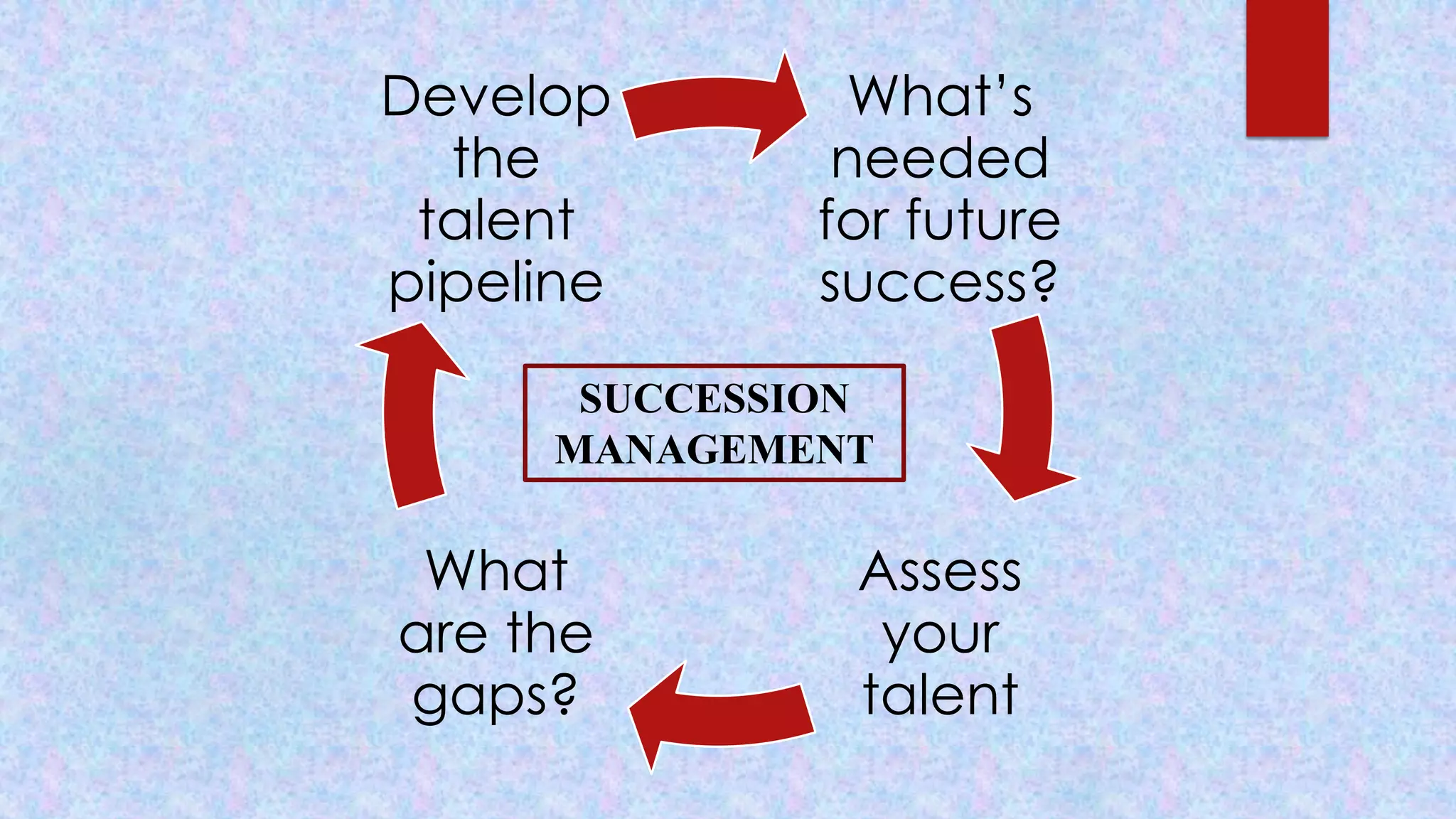
What’s
needed
for future
success?
Assess
your
talent
What
are the
gaps?
Develop
the
talent
pipeline
SUCCESSION
MANAGEMENT
Director Orientation
 A board orientation sets the tone and expectation for the board
member-organization relationship.
 A Board manual is a reference guide for a new board member.
 Mission statement
 History of organization
 Program description
 Meeting schedule
 Board contact list
 Board committee list
 Job descriptions
 By-laws
 Policies
 Articles of Incorporation and Memorandum of Association
 Annual budget and list of funders
 Staff list
8
Improving Board meetings
 Have a productive agenda: Balanced and timely start
 Consent agenda: Use it but don’t abuse it
 Preparation is key: All eyes on chair and secretary
 Taking records of the board meeting: Minutes are a legal
record but don’t retain audio
 Be forward looking: Don’t look back, think outside box
 Make connections: Its personal, drawing near to work
 Social events: One is fun for networking and know each
other
 Don’t loss hope: just give its scope, despite divergences
9
To Whom is a Board Member
Responsible?
The public
Licensees (potential)
Board and staff
Core Responsibilities or Duties of
Board Members
Duty of care
Duty of loyalty
Duty of obedience
Duty of Care = Unity of Accountability
Legislative mandate for
public protection
Finance
Organizational well-being
Duty of Loyalty = Unity of Direction
Vision
One Voice
• Majority speaks
• Achieve consensus where possible
• Accept decisions made by Board
Conflict of interest
Duty of Obedience = Unity of
Command
Statute
Bylaws
Rules of order
Code of conduct
Key Behaviors of Board Members
 Know your role
Professional member
Public and other members
 Know your board
Statutes and regulations
Governance structure
Current issues
Relationships
Personalities
Key Behaviors of Board Members
(Continued)
 Know your duties
Apply qualifications for entry
Administer examinations
Promulgate rules and regulations
Carry out disciplinary actions
Care for the organization
 Attend
 Listen
 Ask probing questions (respectfully)
Key Behaviors of Board Members (Continued)
Be objective
Respect confidentiality
Declare conflicts of interest
Speak with one voice
Stay out of operations
Demand excellence
Go the Extra Mile
 Build interest in board affairs among non-
traditional constituencies (church groups,
Charities, Vulnerable populations, etc.)
 Seek out public speaking opportunities
 Write letters to local newspapers to solicit input on
board affairs and issues
 Write a general interest article for a local
newspaper
 Get to know your state legislators
Evaluating Board Performance
Meeting evaluation
Annual Board evaluation
Self evaluation
Peer evaluation
Focal Points for Board Evaluation
Measuring performance
Achieving strategic goals
Public reporting
Adherence to statute, bylaws,
policies
Summary
Responsible to many
Governance not operations
Strive for excellence
Build public trust
Evaluate to improve
22
Session 10 - Improving Board processes.pdf

Session 10 - Improving Board processes.pdf

  • 1.
    NETWORK OF PUBLICINTEREST LAWYERS (NETPIL) Improving Board processes
  • 2.
    By end ofthe session participants will be; To understand how to be effective in conducting Board business. To facilitate improved Board processes during Board Meetings, Board Meeting Agenda, Board Papers, Chairperson's agenda; management succession planning, Director Orientation etc. 2
  • 3.
    Improving Meeting Agenda Prepared with the input of Board Chair and staff, with consideration of current issues, member needs and pending business.  If you have items you would like to see added to the agenda, provide to Board Chair or CEO/Executive Director/Coordinator at least two weeks in advance.  Agendas mailed two weeks before meeting. 3
  • 4.
    Board papers  Developan agenda in accordance with the purpose of the meeting  Prepare meeting papers and dispatch to participants before the meeting, where appropriate, and within appropriate timeframes.  Previous minutes and action papers  Prepare presentations of CEO, Board Committees, policies, resolutions  Prepare background notes  Arrange Equipment  Computers, Printers, Scanners, Photocopiers, Telephones, Teleconference equipment or Video conference equipment.  Data Projector and screen, Audi Speakers, Internet connection or ‘wifi’, Microphone (cordless or fixed), Microphone stand and speakers or Whiteboards and electronic whiteboards etc 4
  • 5.
    Chairperson's agenda  Toensure that all meeting participants understand, accept and respect the goals of the meeting and conduct that is to be expected.  Establish ground rules: Four simple ground rules are:  Allow people to participate  Focus on the topic  Maintain momentum  Try to reach closure.  Communicating ground rules:  List your primary ground rules on the agenda  Review them periodically or when new participants come to meetings  Keep the ground rules posted on documents.  Appropriate behavior for members be constantly reminded to;  Listening effectively and actively to others  Being open to other’s suggestions  Ensuring that everybody is clear about what is being said and expected  Mediating to ensure that amicable solutions are reached  Negotiating issues so that all participants feel a consensus has been reached. 5
  • 6.
    Management succession planning, A systematic approach to building replacement workers to ensure continuity, by identifying potential successors in critical work processes.  Institutionalize the process and capture stakeholder support  Conduct assessments of organizational needs  Develop the succession planning model  Implement succession planning strategies  Continuously measure, evaluate, and adapt 6
  • 7.
  • 8.
    Director Orientation  Aboard orientation sets the tone and expectation for the board member-organization relationship.  A Board manual is a reference guide for a new board member.  Mission statement  History of organization  Program description  Meeting schedule  Board contact list  Board committee list  Job descriptions  By-laws  Policies  Articles of Incorporation and Memorandum of Association  Annual budget and list of funders  Staff list 8
  • 9.
    Improving Board meetings Have a productive agenda: Balanced and timely start  Consent agenda: Use it but don’t abuse it  Preparation is key: All eyes on chair and secretary  Taking records of the board meeting: Minutes are a legal record but don’t retain audio  Be forward looking: Don’t look back, think outside box  Make connections: Its personal, drawing near to work  Social events: One is fun for networking and know each other  Don’t loss hope: just give its scope, despite divergences 9
  • 10.
    To Whom isa Board Member Responsible? The public Licensees (potential) Board and staff
  • 11.
    Core Responsibilities orDuties of Board Members Duty of care Duty of loyalty Duty of obedience
  • 12.
    Duty of Care= Unity of Accountability Legislative mandate for public protection Finance Organizational well-being
  • 13.
    Duty of Loyalty= Unity of Direction Vision One Voice • Majority speaks • Achieve consensus where possible • Accept decisions made by Board Conflict of interest
  • 14.
    Duty of Obedience= Unity of Command Statute Bylaws Rules of order Code of conduct
  • 15.
    Key Behaviors ofBoard Members  Know your role Professional member Public and other members  Know your board Statutes and regulations Governance structure Current issues Relationships Personalities
  • 16.
    Key Behaviors ofBoard Members (Continued)  Know your duties Apply qualifications for entry Administer examinations Promulgate rules and regulations Carry out disciplinary actions Care for the organization  Attend  Listen  Ask probing questions (respectfully)
  • 17.
    Key Behaviors ofBoard Members (Continued) Be objective Respect confidentiality Declare conflicts of interest Speak with one voice Stay out of operations Demand excellence
  • 18.
    Go the ExtraMile  Build interest in board affairs among non- traditional constituencies (church groups, Charities, Vulnerable populations, etc.)  Seek out public speaking opportunities  Write letters to local newspapers to solicit input on board affairs and issues  Write a general interest article for a local newspaper  Get to know your state legislators
  • 19.
    Evaluating Board Performance Meetingevaluation Annual Board evaluation Self evaluation Peer evaluation
  • 20.
    Focal Points forBoard Evaluation Measuring performance Achieving strategic goals Public reporting Adherence to statute, bylaws, policies
  • 21.
    Summary Responsible to many Governancenot operations Strive for excellence Build public trust Evaluate to improve
  • 22.