helpdesk@construction-productivity.co.uk
htt://www.construction-productivity.co.uk
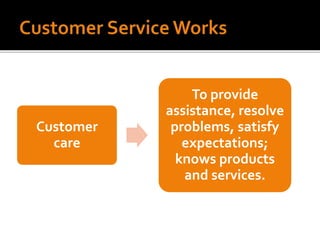
Customer
care
To provide
assistance, resolve
problems, satisfy
expectations;
knows products
and services.
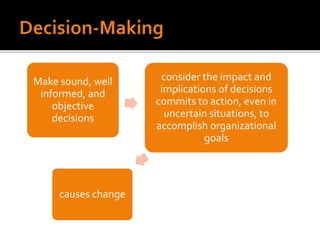
Make sound, well
informed, and
objective
decisions
consider the impact and
implications of decisions
commits to action, even in
uncertain situations, to
accomplish organizational
goals
causes change
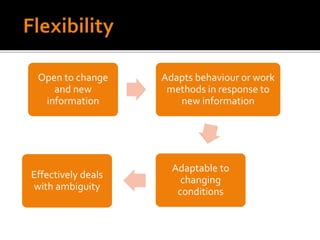
Open to change
and new
information
Adapts behaviour or work
methods in response to
new information
Adaptable to
changing
conditions
Effectively deals
with ambiguity
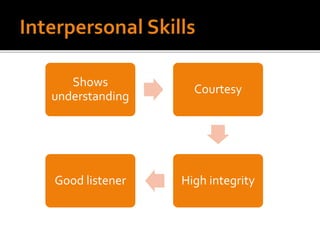
Shows
understanding
Courtesy
High integrityGood listener
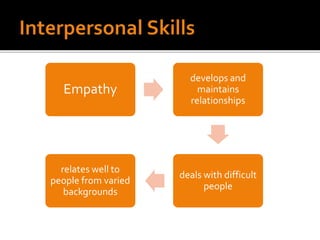
Empathy
develops and
maintains
relationships
deals with difficult
people
relates well to
people from varied
backgrounds
Be sensitive to
individual
differences
Balance
temperament
1. motivates, and challenges others
2. adapts leadership styles to a variety of
situations.
Legal issue
1. Government and Knowledge of laws
2. legal codes
3. court procedure
4. precedents
5. legal practices and documents
6. Government regulations, Local Authorities
regulation, BS standards and European
standards etc.
 Expresses information to individuals or
groups effectively
 taking into account the audience and
nature of the information
 makes clear and convincing presentations,
listens to others
 Knows the organization’s mission and
functions, and how its social, political, and
technological systems work and operates
effectively within them
 this includes the programs, policies,
procedures, rules, and regulations of the
organization.
 Anticipates, identifies and diagnoses
problems
 determines accuracy and relevance of
information
 uses sound judgment to generate and
evaluate alternatives
 selects from alternative courses of action
 makes recommendations, and takes action
from developed contingency plans.
 identifies rules, principles, or relationships
that explain facts, data or other information
 analyzes information and makes correct
inferences or accurate conclusions.
 Inspires, motivates, and guides others toward
goal accomplishments
 Consistently develops and sustains cooperative
working relationships
 Encourages and facilitates cooperation within
the organization and with customer groups
 fosters commitment, team spirit, pride, trust.
 Develops leadership in others through coaching,
mentoring, rewarding and guiding employees.
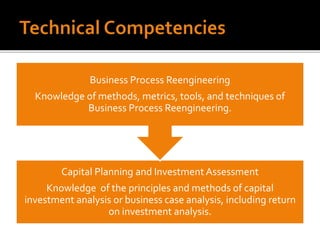
Capital Planning and Investment Assessment
Knowledge of the principles and methods of capital
investment analysis or business case analysis, including return
on investment analysis.
Business Process Reengineering
Knowledge of methods, metrics, tools, and techniques of
Business Process Reengineering.
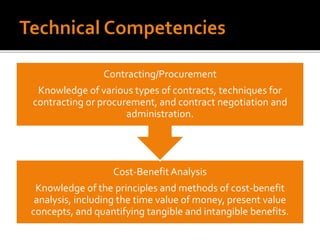
Cost-BenefitAnalysis
Knowledge of the principles and methods of cost-benefit
analysis, including the time value of money, present value
concepts, and quantifying tangible and intangible benefits.
Contracting/Procurement
Knowledge of various types of contracts, techniques for
contracting or procurement, and contract negotiation and
administration.
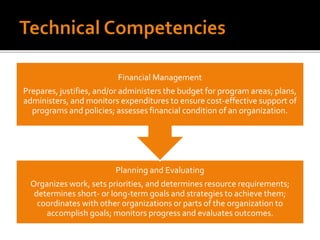
Planning and Evaluating
Organizes work, sets priorities, and determines resource requirements;
determines short- or long-term goals and strategies to achieve them;
coordinates with other organizations or parts of the organization to
accomplish goals; monitors progress and evaluates outcomes.
Financial Management
Prepares, justifies, and/or administers the budget for program areas; plans,
administers, and monitors expenditures to ensure cost-effective support of
programs and policies; assesses financial condition of an organization.
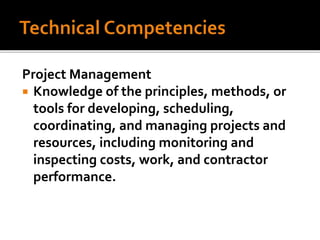
Project Management
 Knowledge of the principles, methods, or
tools for developing, scheduling,
coordinating, and managing projects and
resources, including monitoring and
inspecting costs, work, and contractor
performance.
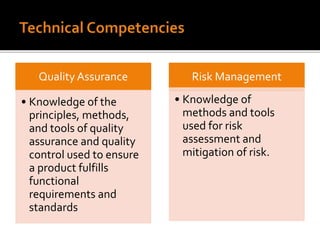
Quality Assurance
• Knowledge of the
principles, methods,
and tools of quality
assurance and quality
control used to ensure
a product fulfills
functional
requirements and
standards
Risk Management
• Knowledge of
methods and tools
used for risk
assessment and
mitigation of risk.
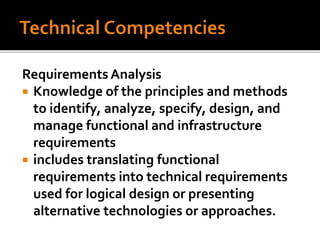
Requirements Analysis
 Knowledge of the principles and methods
to identify, analyze, specify, design, and
manage functional and infrastructure
requirements
 includes translating functional
requirements into technical requirements
used for logical design or presenting
alternative technologies or approaches.

019 competencies-managers

  • 1.
  • 3.
    Customer care To provide assistance, resolve problems,satisfy expectations; knows products and services.
  • 4.
    Make sound, well informed,and objective decisions consider the impact and implications of decisions commits to action, even in uncertain situations, to accomplish organizational goals causes change
  • 5.
    Open to change andnew information Adapts behaviour or work methods in response to new information Adaptable to changing conditions Effectively deals with ambiguity
  • 6.
  • 7.
    Empathy develops and maintains relationships deals withdifficult people relates well to people from varied backgrounds
  • 8.
  • 9.
    1. motivates, andchallenges others 2. adapts leadership styles to a variety of situations. Legal issue 1. Government and Knowledge of laws 2. legal codes 3. court procedure 4. precedents 5. legal practices and documents 6. Government regulations, Local Authorities regulation, BS standards and European standards etc.
  • 10.
     Expresses informationto individuals or groups effectively  taking into account the audience and nature of the information  makes clear and convincing presentations, listens to others
  • 11.
     Knows theorganization’s mission and functions, and how its social, political, and technological systems work and operates effectively within them  this includes the programs, policies, procedures, rules, and regulations of the organization.
  • 12.
     Anticipates, identifiesand diagnoses problems  determines accuracy and relevance of information  uses sound judgment to generate and evaluate alternatives  selects from alternative courses of action  makes recommendations, and takes action from developed contingency plans.
  • 13.
     identifies rules,principles, or relationships that explain facts, data or other information  analyzes information and makes correct inferences or accurate conclusions.
  • 14.
     Inspires, motivates,and guides others toward goal accomplishments  Consistently develops and sustains cooperative working relationships  Encourages and facilitates cooperation within the organization and with customer groups  fosters commitment, team spirit, pride, trust.  Develops leadership in others through coaching, mentoring, rewarding and guiding employees.
  • 15.
    Capital Planning andInvestment Assessment Knowledge of the principles and methods of capital investment analysis or business case analysis, including return on investment analysis. Business Process Reengineering Knowledge of methods, metrics, tools, and techniques of Business Process Reengineering.
  • 16.
    Cost-BenefitAnalysis Knowledge of theprinciples and methods of cost-benefit analysis, including the time value of money, present value concepts, and quantifying tangible and intangible benefits. Contracting/Procurement Knowledge of various types of contracts, techniques for contracting or procurement, and contract negotiation and administration.
  • 17.
    Planning and Evaluating Organizeswork, sets priorities, and determines resource requirements; determines short- or long-term goals and strategies to achieve them; coordinates with other organizations or parts of the organization to accomplish goals; monitors progress and evaluates outcomes. Financial Management Prepares, justifies, and/or administers the budget for program areas; plans, administers, and monitors expenditures to ensure cost-effective support of programs and policies; assesses financial condition of an organization.
  • 18.
    Project Management  Knowledgeof the principles, methods, or tools for developing, scheduling, coordinating, and managing projects and resources, including monitoring and inspecting costs, work, and contractor performance.
  • 19.
    Quality Assurance • Knowledgeof the principles, methods, and tools of quality assurance and quality control used to ensure a product fulfills functional requirements and standards Risk Management • Knowledge of methods and tools used for risk assessment and mitigation of risk.
  • 20.
    Requirements Analysis  Knowledgeof the principles and methods to identify, analyze, specify, design, and manage functional and infrastructure requirements  includes translating functional requirements into technical requirements used for logical design or presenting alternative technologies or approaches.