PLASMA CELL DISORDERS:NEW STRATEGIES FOR  SCREENING , DIAGNOSIS, PROGNOSIS AND MONITORINGParameswaranHari, M.D. Howard S. Robin, M.D.March 3, 2010
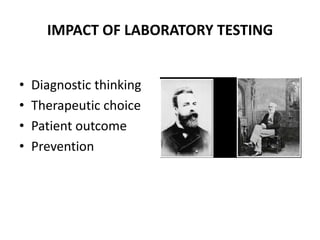
IMPACT OF LABORATORY TESTINGDiagnostic thinkingTherapeutic choicePatient outcomePrevention
 BENCE JONES PROTEINThe First Tumor MarkerOSSEOUS MALADIESMultiple MyelomaBence-Jones, Henry (1813-1873), British nephrologist and clinical pathologist. In 1848 Bence-Jones published an article announcing his discovery of a special protein in the urine of patients suffering from softening of the bones. The first physician to note the occurrence of xanthine in urine, Bence-Jones was also a recognized authority on diseases of the stomach and kidneys.
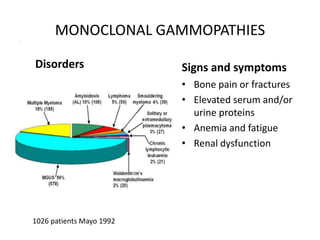
MONOCLONAL GAMMOPATHIES.DisordersSigns and symptomsBone pain or fracturesElevated serum and/or urine proteinsAnemia and fatigueRenal dysfunction1026 patients Mayo 1992
OBJECTIVES1. Develop new strategies to screen for and diagnose monoclonal plasma cell gammopathies.2. Evalulate new effective strategies for monitoring relapse and response to therapy of patients with plasma cell disorders.3. Acquire knowledge regarding the prognostic value of current tests for monoclonal gammopathies.
CASE 1Previously healthy 75 yr old manPhysically active – runs 3 miles /dayExertional dyspnea while runningGave up running after a monthChest discomfort & increasing SOBCardiopulmonary Tests:Stress test – No inducible ischemiaCatheterization – 40% LAD stenosisCT chest – No Pulmonary embolismEchocardiogram – Left Ventricular Hypertrophy
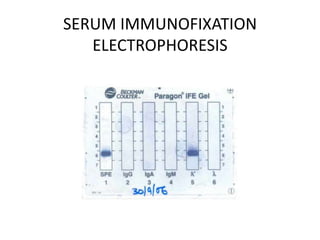
DYSPNEA OF UNKNOWN ORIGINClinical picture of increasing right heart failureElevated NT Pro BNP of 1500Repeat echocardiogramDiastolic dysfunction and worsening septal hypertrophyDifferential diagnosis Restrictive cardiomyopathyCardiac amyloidosisReferral to hematology clinicSerum Protein Electrophoresis (SPEP)Immunofixation (IFE)Urine Protein Electrophoresis (UPEP) – 24 hr urine All Negative for Monoclonal Spike
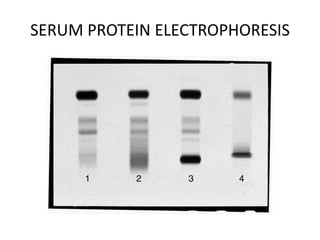
SERUM PROTEIN ELECTROPHORESIS
SERUM IMMUNOFIXATIONELECTROPHORESIS
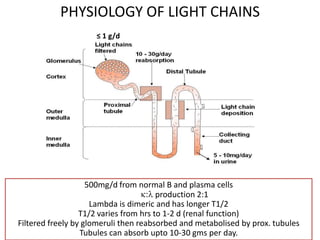
PHYSIOLOGY OF LIGHT CHAINS ≤ 1 g/d500mg/d from normal B and plasma cellsk:l production 2:1Lambda is dimeric and has longer T1/2T1/2 varies from hrs to 1-2 d (renal function)Filtered freely by glomeruli then reabsorbed and metabolised by prox. tubules Tubules can absorb upto 10-30 gms per day.
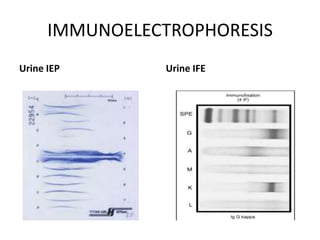
IMMUNOELECTROPHORESISUrine IEPUrine IFE
TOOLS FOR EVALUATION OF MONOCLONAL GAMMOPATHIESSPEPImmunofixationUPEP on 24-hour urineSerum free light chain assay
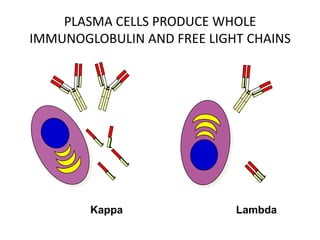
PLASMA CELLS PRODUCE WHOLE IMMUNOGLOBULIN AND FREE LIGHT CHAINSKappaLambda
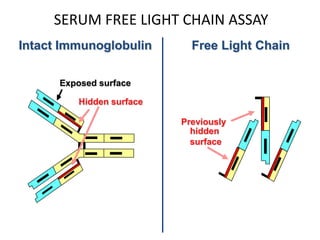
Free Light ChainKappaExposed surfaceHidden surfacePreviouslyhidden surfaceSERUM FREE LIGHT CHAIN ASSAYIntact Immunoglobulin
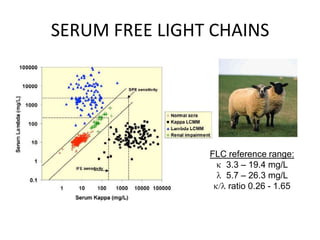
SERUM FREE LIGHT CHAINSFLC reference range:k  3.3 – 19.4 mg/L l  5.7 – 26.3 mg/L k/l ratio 0.26 - 1.65
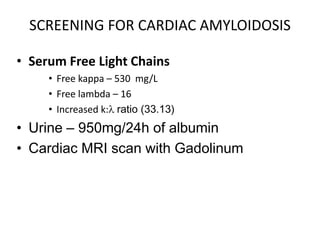
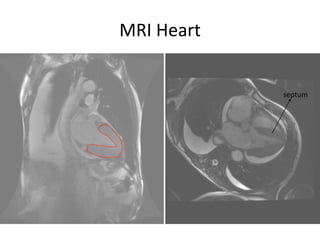
SCREENING FOR CARDIAC AMYLOIDOSISSerum Free Light ChainsFree kappa – 530  mg/LFree lambda – 16Increased k:l ratio (33.13)Urine – 950mg/24h of albumin Cardiac MRI scan with Gadolinum
MRI Heartseptum
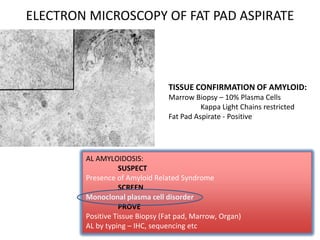
ELECTRON MICROSCOPY OF FAT PAD ASPIRATETISSUE CONFIRMATION OF AMYLOID:Marrow Biopsy – 10% Plasma Cells 	Kappa Light Chains restrictedFat Pad Aspirate - PositiveAL AMYLOIDOSIS:SUSPECTPresence of Amyloid Related Syndrome SCREENMonoclonal plasma cell disorder PROVEPositive Tissue Biopsy (Fat pad, Marrow, Organ) AL by typing – IHC, sequencing etc
SCREENING & DIAGNOSIS OF PLASMA CELL DISORDERSPlasma Cell Disorders  are a spectrum of illnesses:Myeloma (MM) AL AmyloidosisLight Chain DepositionMGUS (Monoclonal Gammopathy of Unknown Significance)Smoldering MMPlasmacytomaPlasma Cell Leukemia
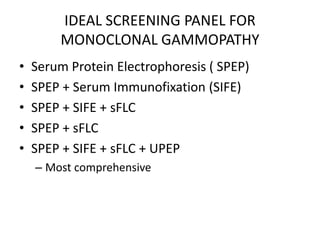
IDEAL SCREENING PANEL FOR MONOCLONAL GAMMOPATHYSerum Protein Electrophoresis ( SPEP) SPEP + Serum Immunofixation (SIFE)SPEP + SIFE + sFLCSPEP + sFLCSPEP + SIFE + sFLC+ UPEP Most comprehensive
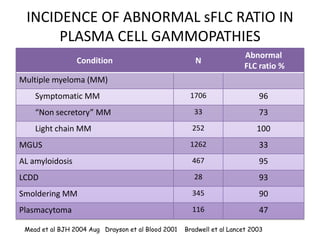
INCIDENCE OF ABNORMAL sFLC RATIO IN PLASMA CELL GAMMOPATHIESMead et al BJH 2004 Aug   Draysonet al Blood 2001    Bradwellet al Lancet 2003
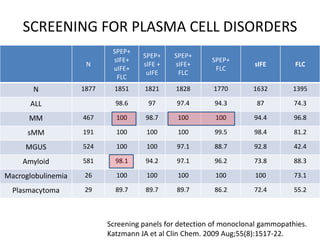
SCREENING FOR PLASMA CELL DISORDERSScreening panels for detection of monoclonal gammopathies.Katzmann JA et al Clin Chem. 2009 Aug;55(8):1517-22.
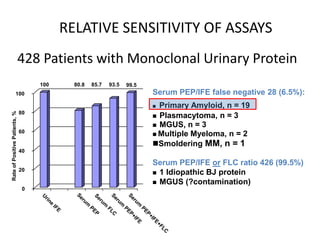
10080.885.793.599.51008060Rate of Positive Patients, %40200Urine IFESerum PEPSerum FLCSerum PEP+IFESerum PEP+IFE+FLCRELATIVE SENSITIVITY OF ASSAYS 428 Patients with Monoclonal Urinary ProteinSerum PEP/IFE false negative 28 (6.5%):Primary Amyloid, n = 19  Plasmacytoma, n = 3  MGUS, n = 3 Multiple Myeloma, n = 2SmolderingMM, n = 1Serum PEP/IFE or FLC ratio 426 (99.5%)  1 Idiopathic BJ protein  MGUS (?contamination)
SERUM FREE LIGHT CHAIN ASSAYSerum assayEliminates need to collect urine specimenMore sensitive than SPEP or SIFEIndications:Diagnosis of Plasma Cell DisordersPrognosis & Risk StratificationResponse Assessment on therapyDisease Monitoring on follow up
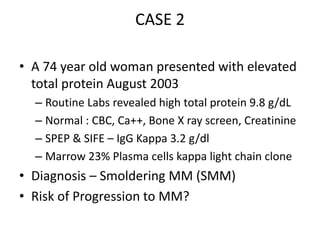
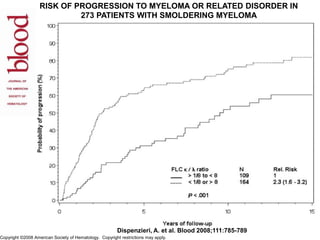
CASE 2A 74 year old woman presented with elevated total protein August 2003Routine Labs revealed high total protein 9.8 g/dLNormal : CBC, Ca++, Bone X ray screen, CreatinineSPEP & SIFE – IgG Kappa 3.2 g/dlMarrow 23% Plasma cells kappa light chain cloneDiagnosis – Smoldering MM (SMM)Risk of Progression to MM?
RISK OF PROGRESSION TO MYELOMA OR RELATED DISORDER IN 273 PATIENTS WITH SMOLDERING MYELOMADispenzieri, A. et al. Blood 2008;111:785-789Copyright ©2008 American Society of Hematology.  Copyright restrictions may apply.
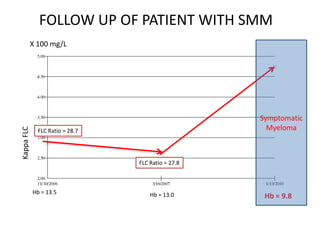
FOLLOW UP OF PATIENT WITH SMMX 100 mg/LSymptomatic MyelomaFLC Ratio = 28.7Kappa FLCFLC Ratio = 27.8Hb = 13.5Hb = 13.0Hb = 9.8
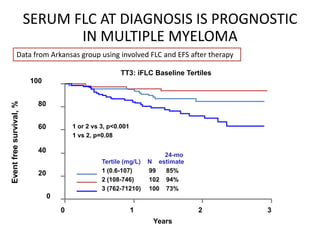
TT3: iFLC Baseline Tertiles100801 or 2 vs 3, p<0.0011 vs 2, p=0.0860Event free survival, %4024-moTertile (mg/L)    N    estimate1 (0.6-107)	   99      85% 2 (108-746)	   102    94%3 (762-71210)	   100    73%2000123YearsSERUM FLC AT DIAGNOSIS IS PROGNOSTIC IN MULTIPLE MYELOMAData from Arkansas group using involved FLC and EFS after therapy
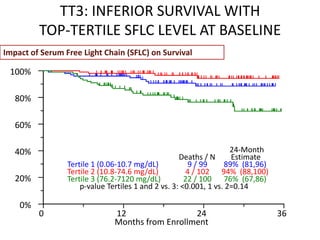
TT3: INFERIOR SURVIVAL WITH TOP-TERTILE SFLC LEVEL AT BASELINE100%80%60%24-Month40%Deaths / NEstimateTertile 1 (0.06-10.7 mg/dL)9 / 9989%  (81,96)Tertile 2 (10.8-74.6 mg/dL)4 / 10294%  (88,100)20%Tertile 3 (76.2-7120 mg/dL)22 / 10076%  (67,86)p-value Tertiles 1 and 2 vs. 3: <0.001, 1 vs. 2=0.140%0122436Months from EnrollmentImpact of Serum Free Light Chain (SFLC) on Survival
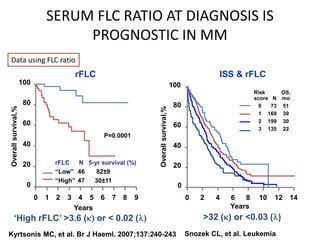
ISS & rFLC100Risk		OS,score   N	mo   0	     73	51   1	   169	39   2	   199	30   3	   135	2280012345678960Overall survival,%4020002468101214Years>32 (k) or <0.03 (l) Snozek CL, et al. LeukemiaSERUM FLC RATIO AT DIAGNOSIS IS PROGNOSTIC IN MMData using FLC ratiorFLC1008060Overall survival,%P=0.000140rFLC	N	   5-yr survival (%)“Low” 	46	82±9	“High” 	47	30±11	200Years‘High rFLC’ >3.6 (k) or < 0.02 (l)Kyrtsonis MC, et al. Br J Haeml. 2007;137:240-243
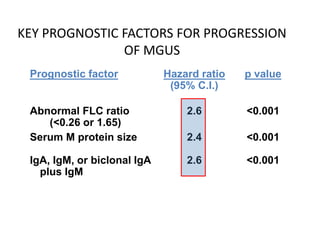
KEY PROGNOSTIC FACTORS FOR PROGRESSION OF MGUS
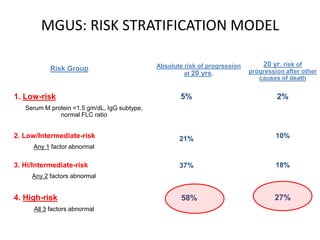
20 yr. risk of progression after other causes of death2%10%18%27%MGUS: RISK STRATIFICATION MODELAbsolute risk of progression at 20 yrs.Risk Group5%1. Low-riskSerum M protein <1.5 gm/dL, IgG subtype, normal FLC ratio 2. Low/Intermediate-risk Any 1 factor abnormal21%3. Hi/Intermediate-riskAny 2 factors abnormal37%4. High-riskAll 3 factors abnormal58%
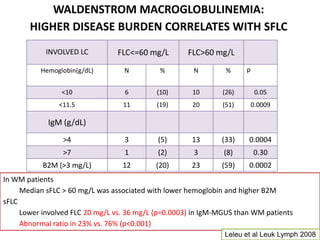
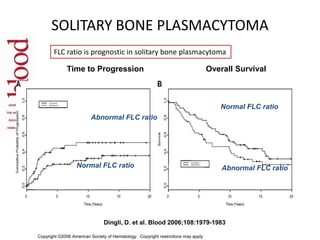
SOLITARY BONE PLASMACYTOMAFLC ratio is prognostic in solitary bone plasmacytomaTime to ProgressionOverall SurvivalNormal FLC ratioAbnormal FLC ratioNormal FLC ratioAbnormal FLC ratioDingli, D. et al. Blood 2006;108:1979-1983Copyright ©2006 American Society of Hematology.  Copyright restrictions may apply.
WALDENSTROM MACROGLOBULINEMIA:HIGHER DISEASE BURDEN CORRELATES WITH SFLCIn WM patientsMedian sFLC > 60 mg/L was associated with lower hemoglobin and higher B2MsFLCLower involved FLC 20 mg/L vs. 36 mg/L (p=0.0003) in IgM-MGUS than WM patients Abnormal ratio in 23% vs. 76% (p<0.001) Leleuet al LeukLymph 2008
PROGNOSTIC USES IN OTHER SITUATIONSRecovery of renal function in MMWhere monitoring for Light Chain elevation is crucialAfter renal transplant for Light chain deposition disease in remission Sensitive marker for NHL risk in HIV infection  2 -5 years prior to actualLandgren et al J Clin Oncol. 2010 Feb 10;28(5):773-9
SERUM FREE LIGHT CHAIN ASSAY:IMPORTANT PROGNOSTIC MARKERMyeloma Smoldering MMMGUSAmyloidosisPlasmacytomaWaldenstromMacroglobulinemia
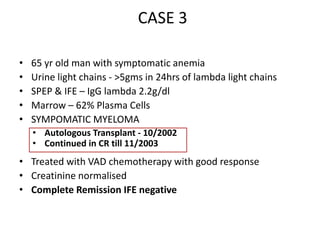
CASE 365 yr old man with symptomatic anemiaUrine light chains - >5gms in 24hrs of lambda light chainsSPEP & IFE – IgG lambda 2.2g/dlMarrow – 62% Plasma CellsSYMPOMATIC MYELOMATreated with VAD chemotherapy with good responseCreatinine normalisedComplete Remission IFE negativeAutologous Transplant - 10/2002
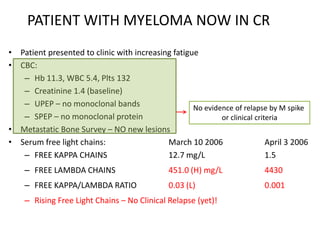
Continued in CR till 11/2003PATIENT WITH MYELOMA NOW IN CRPatient presented to clinic with increasing fatigueCBC:Hb 11.3, WBC 5.4, Plts 132Creatinine 1.4 (baseline)UPEP – no monoclonal bandsSPEP – no monoclonal proteinMetastatic Bone Survey – NO new lesionsSerum free light chains:		March 10 2006		April 3 2006FREE KAPPA CHAINS 		12.7 mg/L 		1.5FREE LAMBDA CHAINS 		451.0 (H) mg/L 		4430FREE KAPPA/LAMBDA RATIO 	0.03 (L)			0.001Rising Free Light Chains – No Clinical Relapse (yet)!No evidence of relapse by M spike or clinical criteria
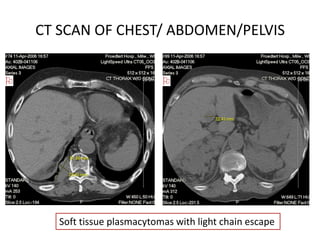
CT Scan of Abdomen and PelvisCT SCAN OF CHEST/ ABDOMEN/PELVISSoft tissue plasmacytomas with light chain escape
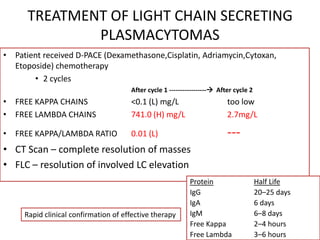
TREATMENT OF LIGHT CHAIN SECRETING PLASMACYTOMASPatient received D-PACE (Dexamethasone,Cisplatin, Adriamycin,Cytoxan, Etoposide) chemotherapy2 cycles  After cycle 1 -----------------  After cycle 2 FREE KAPPA CHAINS 		<0.1 (L) mg/L 		too lowFREE LAMBDA CHAINS 		741.0 (H) mg/L 		2.7mg/LFREE KAPPA/LAMBDA RATIO 	0.01 (L)	---CT Scan – complete resolution of massesFLC – resolution of involved LC elevationProteinHalf LifeIgG			20–25 daysIgA			6 daysIgM		6–8 daysFree Kappa	2–4 hoursFree Lambda	3–6 hoursRapid clinical confirmation of effective therapy
FREE LIGHT CHAIN AS A MARKER OF RESPONSE IN MMStored samples from a mature ECOG clinical trial (E9486) dataAssess serum FLC at baseline and after 2 months of alkylator based therapy in 399 patients  FLC response after 2 months of therapy Superior to early M-protein measurement to predict overall response, but did not predict for survival endpointsDispenzieri A et al.Blood. 2008;111:4908-4915.
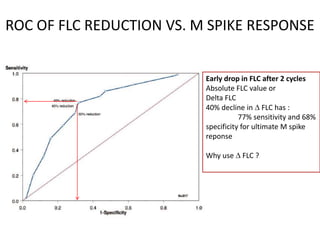
ROC OF FLC REDUCTION VS. M SPIKE RESPONSEEarly drop in FLC after 2 cyclesAbsolute FLC value orDelta FLC 40% decline in D FLC has : 	77% sensitivity and 68% specificity for ultimate M spike reponseWhy use D FLC ?
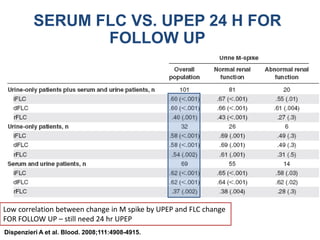
SERUM FLC VS. UPEP 24 H FOR FOLLOW UPLow correlation between change in M spike by UPEP and FLC changeFOR FOLLOW UP – still need 24 hr UPEP Dispenzieri A et al.Blood. 2008;111:4908-4915.
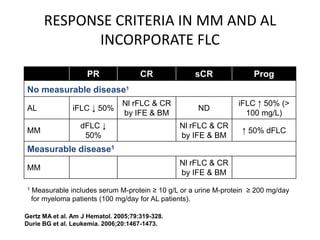
1 Measurable includes serum M-protein ≥ 10 g/L or a urine M-protein ≥ 200 mg/day  for myeloma patients (100 mg/day for AL patients).   Gertz MA et al. Am J Hematol. 2005;79:319-328.Durie BG et al. Leukemia. 2006;20:1467-1473.RESPONSE CRITERIA IN MM AND AL INCORPORATE FLC
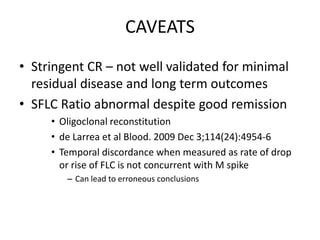
CAVEATSStringent CR – not well validated for minimal residual disease and long term outcomesSFLC Ratio abnormal despite good remissionOligoclonal reconstitutionde Larrea et al Blood. 2009 Dec 3;114(24):4954-6Temporal discordance when measured as rate of drop or rise of FLC is not concurrent with M spikeCan lead to erroneous conclusions
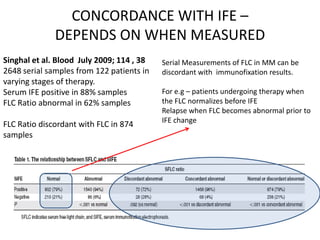
CONCORDANCE WITH IFE – DEPENDS ON WHEN MEASUREDSinghal et al. Blood  July 2009; 114 , 382648 serial samples from 122 patients in varying stages of therapy.Serum IFE positive in 88% samplesFLC Ratio abnormal in 62% samplesFLC Ratio discordant with FLC in 874 samplesSerial Measurements of FLC in MM can be discordant with  immunofixation results.For e.g – patients undergoing therapy when the FLC normalizes before IFERelapse when FLC becomes abnormal prior to IFE change
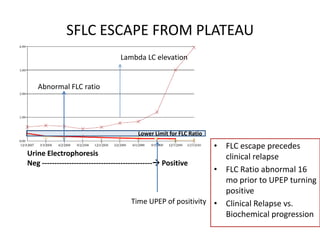
Abnormal FLC ratio Lower Limit for FLC RatioUrine ElectrophoresisNeg --------------------------------------------- PositiveSFLC ESCAPE FROM PLATEAULambda LC elevationFLC escape precedes clinical relapseFLC Ratio abnormal 16 mo prior to UPEP turning positiveClinical Relapse vs. Biochemical progressionTime UPEP of positivity
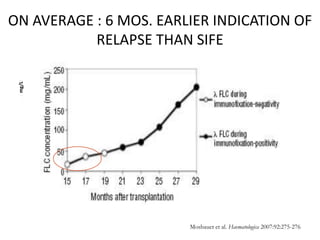
ON AVERAGE : 6 MOS. EARLIER INDICATION OF RELAPSE THAN SIFE,  ( mg/L)6-mo Earlier Indication of RelapseMosbauer et al. Haematologica 2007:92:275-276
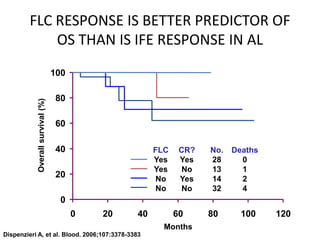
Overall survival (%)FLC	CR?	No.	Deaths	Yes	Yes	28	0	Yes	No	13	1	No	Yes	14	2	No	No	32	4MonthsCP1312670-3FLC RESPONSE IS BETTER PREDICTOR OF OS THAN IS IFE RESPONSE IN ALDispenzieri A, et al. Blood. 2006;107:3378-3383
SERUM SFLC ASSAYSCREENING for PLASMA CELL DISORDERSDIAGNOSIS of PLASMA CELL DISORDERS PROGNOSTIC VALUEMonoclonal gammopathy of undermined significanceSmoldering myelomaSymptomatic myelomaPlasmacytomaAL amyloidosis HEMATOLOGIC RESPONSEAL amyloidosis“Non-secretory” myelomaStringent complete response in multiple myeloma ( not fully validated)Light chain deposition diseaseEARLY RESPONSE TO THERAPYRARE SITUATIONS Free Light Chain escape HIV and  NHLWaldenstrom
SERUM FLC ASSAY RATIONALESimple testPredicts outcomePredicts response to therapyCorrelates with current prognostic markersCompatible with practice
CLINICIAN’S PERSPECTIVE ON LABORATORY TESTINGScreeningDiagnosisPrognosisPredictiveMonitoring
GOALS OF PLASMA CELL DYSCRASIA TESTING Improve predictive value of screeningIdentify candidates for biopsyIdentify candidates to treatDetermine optimal therapyPredict response to therapy

Serum Free Light Chains

  • 1.
    PLASMA CELL DISORDERS:NEWSTRATEGIES FOR SCREENING , DIAGNOSIS, PROGNOSIS AND MONITORINGParameswaranHari, M.D. Howard S. Robin, M.D.March 3, 2010
  • 2.
    IMPACT OF LABORATORYTESTINGDiagnostic thinkingTherapeutic choicePatient outcomePrevention
  • 3.
    BENCE JONESPROTEINThe First Tumor MarkerOSSEOUS MALADIESMultiple MyelomaBence-Jones, Henry (1813-1873), British nephrologist and clinical pathologist. In 1848 Bence-Jones published an article announcing his discovery of a special protein in the urine of patients suffering from softening of the bones. The first physician to note the occurrence of xanthine in urine, Bence-Jones was also a recognized authority on diseases of the stomach and kidneys.
  • 4.
    MONOCLONAL GAMMOPATHIES.DisordersSigns andsymptomsBone pain or fracturesElevated serum and/or urine proteinsAnemia and fatigueRenal dysfunction1026 patients Mayo 1992
  • 5.
    OBJECTIVES1. Develop newstrategies to screen for and diagnose monoclonal plasma cell gammopathies.2. Evalulate new effective strategies for monitoring relapse and response to therapy of patients with plasma cell disorders.3. Acquire knowledge regarding the prognostic value of current tests for monoclonal gammopathies.
  • 6.
    CASE 1Previously healthy75 yr old manPhysically active – runs 3 miles /dayExertional dyspnea while runningGave up running after a monthChest discomfort & increasing SOBCardiopulmonary Tests:Stress test – No inducible ischemiaCatheterization – 40% LAD stenosisCT chest – No Pulmonary embolismEchocardiogram – Left Ventricular Hypertrophy
  • 7.
    DYSPNEA OF UNKNOWNORIGINClinical picture of increasing right heart failureElevated NT Pro BNP of 1500Repeat echocardiogramDiastolic dysfunction and worsening septal hypertrophyDifferential diagnosis Restrictive cardiomyopathyCardiac amyloidosisReferral to hematology clinicSerum Protein Electrophoresis (SPEP)Immunofixation (IFE)Urine Protein Electrophoresis (UPEP) – 24 hr urine All Negative for Monoclonal Spike
  • 8.
  • 9.
  • 10.
    PHYSIOLOGY OF LIGHTCHAINS ≤ 1 g/d500mg/d from normal B and plasma cellsk:l production 2:1Lambda is dimeric and has longer T1/2T1/2 varies from hrs to 1-2 d (renal function)Filtered freely by glomeruli then reabsorbed and metabolised by prox. tubules Tubules can absorb upto 10-30 gms per day.
  • 11.
  • 12.
    TOOLS FOR EVALUATIONOF MONOCLONAL GAMMOPATHIESSPEPImmunofixationUPEP on 24-hour urineSerum free light chain assay
  • 13.
    PLASMA CELLS PRODUCEWHOLE IMMUNOGLOBULIN AND FREE LIGHT CHAINSKappaLambda
  • 14.
    Free Light ChainKappaExposedsurfaceHidden surfacePreviouslyhidden surfaceSERUM FREE LIGHT CHAIN ASSAYIntact Immunoglobulin
  • 15.
    SERUM FREE LIGHTCHAINSFLC reference range:k 3.3 – 19.4 mg/L l 5.7 – 26.3 mg/L k/l ratio 0.26 - 1.65
  • 16.
    SCREENING FOR CARDIACAMYLOIDOSISSerum Free Light ChainsFree kappa – 530 mg/LFree lambda – 16Increased k:l ratio (33.13)Urine – 950mg/24h of albumin Cardiac MRI scan with Gadolinum
  • 17.
  • 18.
    ELECTRON MICROSCOPY OFFAT PAD ASPIRATETISSUE CONFIRMATION OF AMYLOID:Marrow Biopsy – 10% Plasma Cells Kappa Light Chains restrictedFat Pad Aspirate - PositiveAL AMYLOIDOSIS:SUSPECTPresence of Amyloid Related Syndrome SCREENMonoclonal plasma cell disorder PROVEPositive Tissue Biopsy (Fat pad, Marrow, Organ) AL by typing – IHC, sequencing etc
  • 19.
    SCREENING & DIAGNOSISOF PLASMA CELL DISORDERSPlasma Cell Disorders are a spectrum of illnesses:Myeloma (MM) AL AmyloidosisLight Chain DepositionMGUS (Monoclonal Gammopathy of Unknown Significance)Smoldering MMPlasmacytomaPlasma Cell Leukemia
  • 20.
    IDEAL SCREENING PANELFOR MONOCLONAL GAMMOPATHYSerum Protein Electrophoresis ( SPEP) SPEP + Serum Immunofixation (SIFE)SPEP + SIFE + sFLCSPEP + sFLCSPEP + SIFE + sFLC+ UPEP Most comprehensive
  • 21.
    INCIDENCE OF ABNORMALsFLC RATIO IN PLASMA CELL GAMMOPATHIESMead et al BJH 2004 Aug Draysonet al Blood 2001 Bradwellet al Lancet 2003
  • 22.
    SCREENING FOR PLASMACELL DISORDERSScreening panels for detection of monoclonal gammopathies.Katzmann JA et al Clin Chem. 2009 Aug;55(8):1517-22.
  • 23.
    10080.885.793.599.51008060Rate of PositivePatients, %40200Urine IFESerum PEPSerum FLCSerum PEP+IFESerum PEP+IFE+FLCRELATIVE SENSITIVITY OF ASSAYS 428 Patients with Monoclonal Urinary ProteinSerum PEP/IFE false negative 28 (6.5%):Primary Amyloid, n = 19 Plasmacytoma, n = 3 MGUS, n = 3 Multiple Myeloma, n = 2SmolderingMM, n = 1Serum PEP/IFE or FLC ratio 426 (99.5%) 1 Idiopathic BJ protein MGUS (?contamination)
  • 24.
    SERUM FREE LIGHTCHAIN ASSAYSerum assayEliminates need to collect urine specimenMore sensitive than SPEP or SIFEIndications:Diagnosis of Plasma Cell DisordersPrognosis & Risk StratificationResponse Assessment on therapyDisease Monitoring on follow up
  • 25.
    CASE 2A 74year old woman presented with elevated total protein August 2003Routine Labs revealed high total protein 9.8 g/dLNormal : CBC, Ca++, Bone X ray screen, CreatinineSPEP & SIFE – IgG Kappa 3.2 g/dlMarrow 23% Plasma cells kappa light chain cloneDiagnosis – Smoldering MM (SMM)Risk of Progression to MM?
  • 26.
    RISK OF PROGRESSIONTO MYELOMA OR RELATED DISORDER IN 273 PATIENTS WITH SMOLDERING MYELOMADispenzieri, A. et al. Blood 2008;111:785-789Copyright ©2008 American Society of Hematology. Copyright restrictions may apply.
  • 27.
    FOLLOW UP OFPATIENT WITH SMMX 100 mg/LSymptomatic MyelomaFLC Ratio = 28.7Kappa FLCFLC Ratio = 27.8Hb = 13.5Hb = 13.0Hb = 9.8
  • 28.
    TT3: iFLC BaselineTertiles100801 or 2 vs 3, p<0.0011 vs 2, p=0.0860Event free survival, %4024-moTertile (mg/L) N estimate1 (0.6-107) 99 85% 2 (108-746) 102 94%3 (762-71210) 100 73%2000123YearsSERUM FLC AT DIAGNOSIS IS PROGNOSTIC IN MULTIPLE MYELOMAData from Arkansas group using involved FLC and EFS after therapy
  • 29.
    TT3: INFERIOR SURVIVALWITH TOP-TERTILE SFLC LEVEL AT BASELINE100%80%60%24-Month40%Deaths / NEstimateTertile 1 (0.06-10.7 mg/dL)9 / 9989% (81,96)Tertile 2 (10.8-74.6 mg/dL)4 / 10294% (88,100)20%Tertile 3 (76.2-7120 mg/dL)22 / 10076% (67,86)p-value Tertiles 1 and 2 vs. 3: <0.001, 1 vs. 2=0.140%0122436Months from EnrollmentImpact of Serum Free Light Chain (SFLC) on Survival
  • 30.
    ISS & rFLC100Risk OS,score N mo 0 73 51 1 169 39 2 199 30 3 135 2280012345678960Overall survival,%4020002468101214Years>32 (k) or <0.03 (l) Snozek CL, et al. LeukemiaSERUM FLC RATIO AT DIAGNOSIS IS PROGNOSTIC IN MMData using FLC ratiorFLC1008060Overall survival,%P=0.000140rFLC N 5-yr survival (%)“Low” 46 82±9 “High” 47 30±11 200Years‘High rFLC’ >3.6 (k) or < 0.02 (l)Kyrtsonis MC, et al. Br J Haeml. 2007;137:240-243
  • 31.
    KEY PROGNOSTIC FACTORSFOR PROGRESSION OF MGUS
  • 32.
    20 yr. riskof progression after other causes of death2%10%18%27%MGUS: RISK STRATIFICATION MODELAbsolute risk of progression at 20 yrs.Risk Group5%1. Low-riskSerum M protein <1.5 gm/dL, IgG subtype, normal FLC ratio 2. Low/Intermediate-risk Any 1 factor abnormal21%3. Hi/Intermediate-riskAny 2 factors abnormal37%4. High-riskAll 3 factors abnormal58%
  • 33.
    SOLITARY BONE PLASMACYTOMAFLCratio is prognostic in solitary bone plasmacytomaTime to ProgressionOverall SurvivalNormal FLC ratioAbnormal FLC ratioNormal FLC ratioAbnormal FLC ratioDingli, D. et al. Blood 2006;108:1979-1983Copyright ©2006 American Society of Hematology. Copyright restrictions may apply.
  • 34.
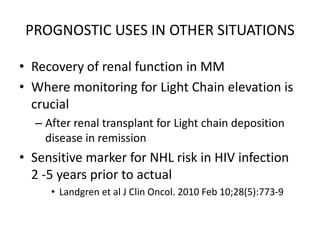
    WALDENSTROM MACROGLOBULINEMIA:HIGHER DISEASEBURDEN CORRELATES WITH SFLCIn WM patientsMedian sFLC > 60 mg/L was associated with lower hemoglobin and higher B2MsFLCLower involved FLC 20 mg/L vs. 36 mg/L (p=0.0003) in IgM-MGUS than WM patients Abnormal ratio in 23% vs. 76% (p<0.001) Leleuet al LeukLymph 2008
  • 35.
    PROGNOSTIC USES INOTHER SITUATIONSRecovery of renal function in MMWhere monitoring for Light Chain elevation is crucialAfter renal transplant for Light chain deposition disease in remission Sensitive marker for NHL risk in HIV infection 2 -5 years prior to actualLandgren et al J Clin Oncol. 2010 Feb 10;28(5):773-9
  • 36.
    SERUM FREE LIGHTCHAIN ASSAY:IMPORTANT PROGNOSTIC MARKERMyeloma Smoldering MMMGUSAmyloidosisPlasmacytomaWaldenstromMacroglobulinemia
  • 37.
    CASE 365 yrold man with symptomatic anemiaUrine light chains - >5gms in 24hrs of lambda light chainsSPEP & IFE – IgG lambda 2.2g/dlMarrow – 62% Plasma CellsSYMPOMATIC MYELOMATreated with VAD chemotherapy with good responseCreatinine normalisedComplete Remission IFE negativeAutologous Transplant - 10/2002
  • 38.
    Continued in CRtill 11/2003PATIENT WITH MYELOMA NOW IN CRPatient presented to clinic with increasing fatigueCBC:Hb 11.3, WBC 5.4, Plts 132Creatinine 1.4 (baseline)UPEP – no monoclonal bandsSPEP – no monoclonal proteinMetastatic Bone Survey – NO new lesionsSerum free light chains: March 10 2006 April 3 2006FREE KAPPA CHAINS 12.7 mg/L 1.5FREE LAMBDA CHAINS 451.0 (H) mg/L 4430FREE KAPPA/LAMBDA RATIO 0.03 (L) 0.001Rising Free Light Chains – No Clinical Relapse (yet)!No evidence of relapse by M spike or clinical criteria
  • 39.
    CT Scan ofAbdomen and PelvisCT SCAN OF CHEST/ ABDOMEN/PELVISSoft tissue plasmacytomas with light chain escape
  • 40.
    TREATMENT OF LIGHTCHAIN SECRETING PLASMACYTOMASPatient received D-PACE (Dexamethasone,Cisplatin, Adriamycin,Cytoxan, Etoposide) chemotherapy2 cycles After cycle 1 ----------------- After cycle 2 FREE KAPPA CHAINS <0.1 (L) mg/L too lowFREE LAMBDA CHAINS 741.0 (H) mg/L 2.7mg/LFREE KAPPA/LAMBDA RATIO 0.01 (L) ---CT Scan – complete resolution of massesFLC – resolution of involved LC elevationProteinHalf LifeIgG 20–25 daysIgA 6 daysIgM 6–8 daysFree Kappa 2–4 hoursFree Lambda 3–6 hoursRapid clinical confirmation of effective therapy
  • 41.
    FREE LIGHT CHAINAS A MARKER OF RESPONSE IN MMStored samples from a mature ECOG clinical trial (E9486) dataAssess serum FLC at baseline and after 2 months of alkylator based therapy in 399 patients FLC response after 2 months of therapy Superior to early M-protein measurement to predict overall response, but did not predict for survival endpointsDispenzieri A et al.Blood. 2008;111:4908-4915.
  • 42.
    ROC OF FLCREDUCTION VS. M SPIKE RESPONSEEarly drop in FLC after 2 cyclesAbsolute FLC value orDelta FLC 40% decline in D FLC has : 77% sensitivity and 68% specificity for ultimate M spike reponseWhy use D FLC ?
  • 43.
    SERUM FLC VS.UPEP 24 H FOR FOLLOW UPLow correlation between change in M spike by UPEP and FLC changeFOR FOLLOW UP – still need 24 hr UPEP Dispenzieri A et al.Blood. 2008;111:4908-4915.
  • 44.
    1 Measurable includesserum M-protein ≥ 10 g/L or a urine M-protein ≥ 200 mg/day for myeloma patients (100 mg/day for AL patients). Gertz MA et al. Am J Hematol. 2005;79:319-328.Durie BG et al. Leukemia. 2006;20:1467-1473.RESPONSE CRITERIA IN MM AND AL INCORPORATE FLC
  • 45.
    CAVEATSStringent CR –not well validated for minimal residual disease and long term outcomesSFLC Ratio abnormal despite good remissionOligoclonal reconstitutionde Larrea et al Blood. 2009 Dec 3;114(24):4954-6Temporal discordance when measured as rate of drop or rise of FLC is not concurrent with M spikeCan lead to erroneous conclusions
  • 46.
    CONCORDANCE WITH IFE– DEPENDS ON WHEN MEASUREDSinghal et al. Blood July 2009; 114 , 382648 serial samples from 122 patients in varying stages of therapy.Serum IFE positive in 88% samplesFLC Ratio abnormal in 62% samplesFLC Ratio discordant with FLC in 874 samplesSerial Measurements of FLC in MM can be discordant with immunofixation results.For e.g – patients undergoing therapy when the FLC normalizes before IFERelapse when FLC becomes abnormal prior to IFE change
  • 47.
    Abnormal FLC ratioLower Limit for FLC RatioUrine ElectrophoresisNeg --------------------------------------------- PositiveSFLC ESCAPE FROM PLATEAULambda LC elevationFLC escape precedes clinical relapseFLC Ratio abnormal 16 mo prior to UPEP turning positiveClinical Relapse vs. Biochemical progressionTime UPEP of positivity
  • 48.
    ON AVERAGE :6 MOS. EARLIER INDICATION OF RELAPSE THAN SIFE, ( mg/L)6-mo Earlier Indication of RelapseMosbauer et al. Haematologica 2007:92:275-276
  • 49.
    Overall survival (%)FLC CR? No. Deaths Yes Yes 28 0 Yes No 13 1 No Yes 14 2 No No 32 4MonthsCP1312670-3FLCRESPONSE IS BETTER PREDICTOR OF OS THAN IS IFE RESPONSE IN ALDispenzieri A, et al. Blood. 2006;107:3378-3383
  • 50.
    SERUM SFLC ASSAYSCREENINGfor PLASMA CELL DISORDERSDIAGNOSIS of PLASMA CELL DISORDERS PROGNOSTIC VALUEMonoclonal gammopathy of undermined significanceSmoldering myelomaSymptomatic myelomaPlasmacytomaAL amyloidosis HEMATOLOGIC RESPONSEAL amyloidosis“Non-secretory” myelomaStringent complete response in multiple myeloma ( not fully validated)Light chain deposition diseaseEARLY RESPONSE TO THERAPYRARE SITUATIONS Free Light Chain escape HIV and NHLWaldenstrom
  • 51.
    SERUM FLC ASSAYRATIONALESimple testPredicts outcomePredicts response to therapyCorrelates with current prognostic markersCompatible with practice
  • 52.
    CLINICIAN’S PERSPECTIVE ONLABORATORY TESTINGScreeningDiagnosisPrognosisPredictiveMonitoring
  • 53.
    GOALS OF PLASMACELL DYSCRASIA TESTING Improve predictive value of screeningIdentify candidates for biopsyIdentify candidates to treatDetermine optimal therapyPredict response to therapy

Editor's Notes

  • #9 Protein electrophoresis strip showing (1) normal plasma, (2) polyclonal hypergammaglobulinaemia, (3) serum M protein, and (4) urine M protein (Bence Jones proteinuria) and albuminuria.