Plasma Cell
Neoplasms/Dyscrasias:
Myelomatosis
BY
DR SALEH YUGUDA
HAEMATOLOGY DEPARTMENT
GOMBE STATE UNIVERSITY.
DECEMBER 11, 2017 1
Lecture Outline
• Introduction
• Epidemiology
• Pathogenesis
• Classification
• Clinical Features
• Lab Diagnosis
• Staging
• Management
2
Plasma Cells
Dyscrasias/Paraproteinaemias
• Heterogeneous group of disorders characterised by deranged
proliferation of a single clone of plasma cells or B lymphocytes
and usually associated with detectable monoclonal
immunoglobulin (paraprotein or M-protein) in serum and/or
urine.
 They are invariably fatal chronic clonal B cell malignancy
characterised by a progressive clinical course lasting some 3–
6.5 yr from diagnosis
 In the USA, the estimated 5-year survival rate is about 40%
 Survival is higher in younger patients than in the elderly
3
Introduction
• They are generally characterised by:
• proliferation of clonal neoplastic plasma cells in the bone marrow,
and sometimes in the extramedullary tissues.
• synthesis of immunologically incompetent myeloma (M-) or
paraproteins (with identical heavy chain and light chain) into the
serum and/or urine resulting in renal failure and bone
disease (pathological fractures, wedge compression
fracture of the vertebrae & cord compression spinal)
• Suppression of normal Ig production and high susceptibility of
patients to chronic bacterial infections including encapsulated
organisms: S. pneumoniae, H.influenzae and N. meningitides
4
Pathogenesis
• Plasma cells are terminally differentiated B- lymphocytes that
secret antibodies.
• In immunocompetent individuals, antibody synthesis and B-
cell proliferation are tightly controlled.
• The control is lost when there is a genetic accident due to
translocation of a promoter gene to another chromosome
where it stimulates an antibody gene to overproduction.
• Such genetic accidents eventually lead to malignant
transformation and development of malignancies as in
myeloma
5
Pathogenesis contnd
 Pathogenetically, myeloma arises from a primary chromosomal
translocation between the immunoglobulin heavy chain (IgH)
gene on chromosome 14 (locus q32) and an oncogene (more
often: 11q13, 6p21, 4p16 & 16q23).
 The mutation causes dysregulation of the oncogene, with
resultant malignant transformation and development of
multiple myeloma.
6
Pathogenesis contnd
 Adhesion of myeloma cells to bone marrow stromal cells
induces the cells to secret osteoclast-activating factors such as
interleukin IL-6, IL-1β, TNF-β and RANK-ligand that are
responsible for the myeloma related end organ damage and
tissue impairment.
 The microenvironment created by the cytokines also enhances
angiogenesis, which allows the malignant plasma cells thrive
 The antibodies (paraproteins) produced by the malignant
clonal plasma cells are deposited in various organs, leading to
renal failure, polyneuropathy and various other myeloma-
associated symptoms
7
Pathogenesis contnd
• BM infiltration causes anaemia.
• Suppression of normal Ig production predisposes to infection.
• Physicochemical properties of paraprotein determine amyloid
deposition, renal damage and hyperviscosity (IgA and IgG).
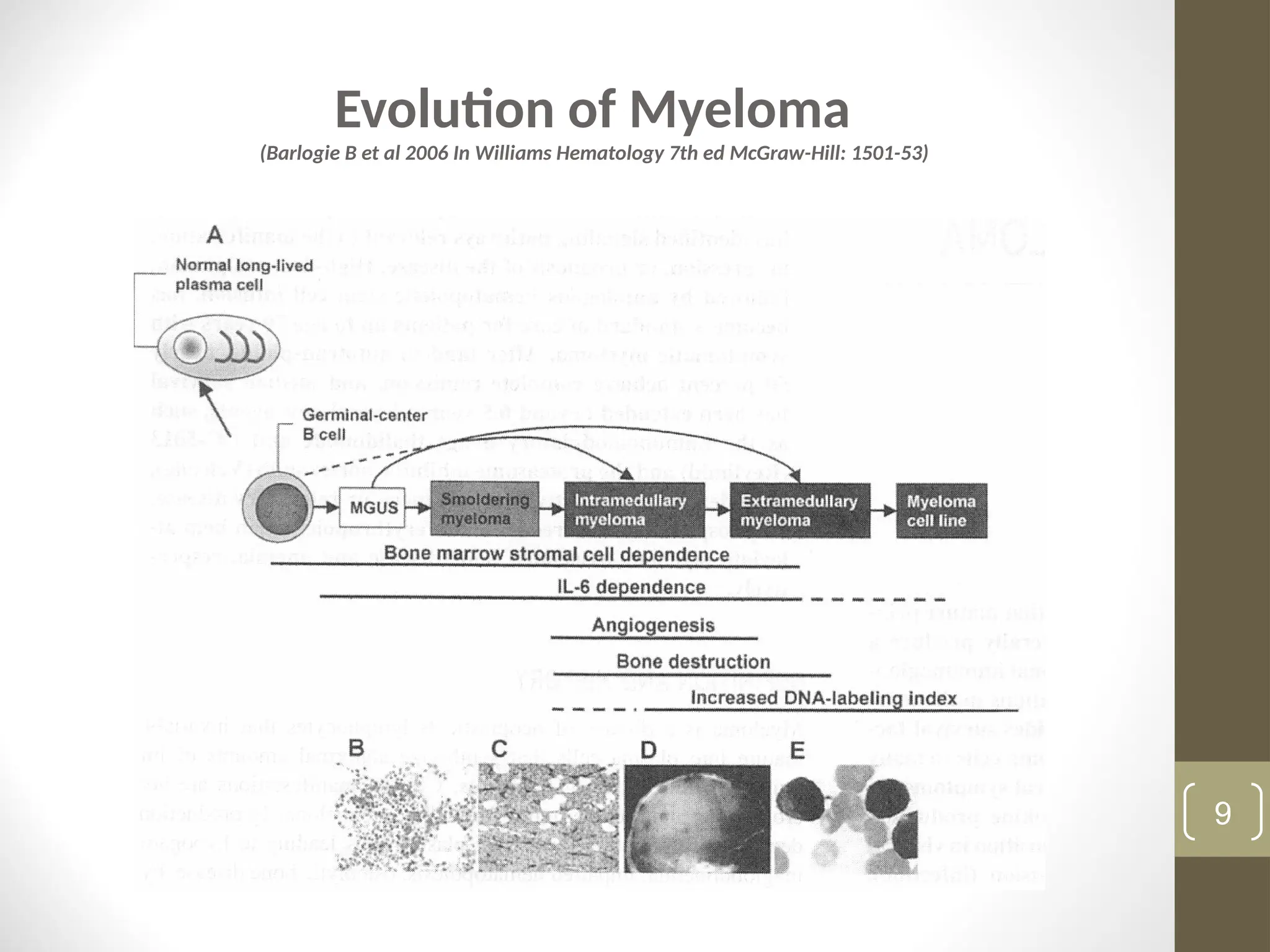
Evolution of Myeloma
(Barlogie B et al 2006 In Williams Hematology 7th ed McGraw-Hill: 1501-53)
9
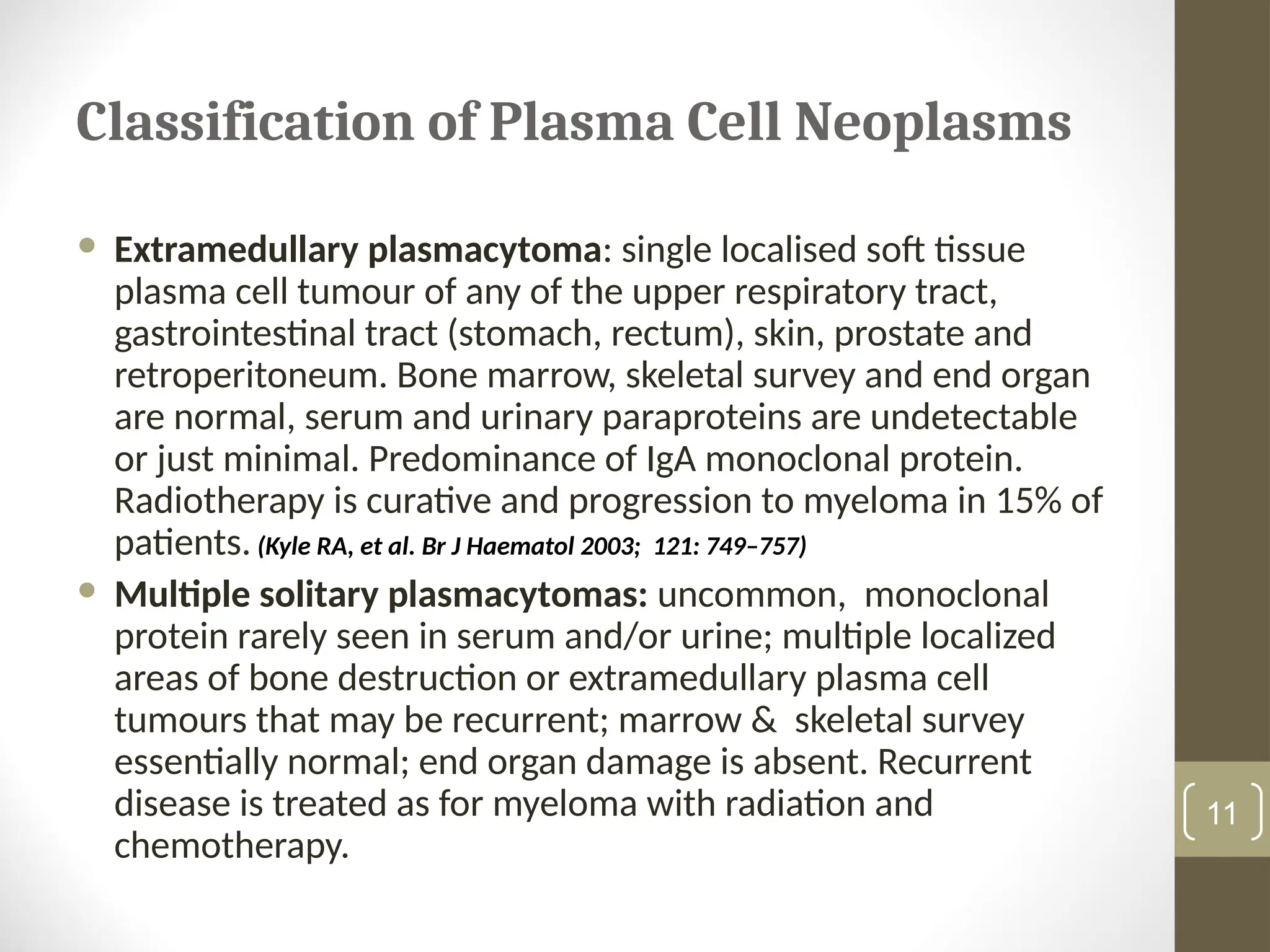
Classification of Plasma Cell Neoplasms
 Multiple myeloma (myelomatosis)
 Monoclonal gammopathy of undetermined significance
(MGUS)
 Smouldering myeloma (about 20% of plasma cell tumours):
monoclonal gammopathy with atypical plasma cells in the
bone marrow, but without anaemia, bone diseases, or renal
failure.
 Solitary plasmacytoma of bone: localised single tumour of
bones such as the vertebral column, pelvis, femur or the
humerus; marrow not diagnostic of myeloma; normal skeletal
survey; absence of end organ damage; absent or minimal M-
protein in serum and/or urine. Progression to myeloma occurs
in 50% of patients within 3-4 yrs, 10-yr disease-free survival is
25-40%; local radiotherapy is curative 10
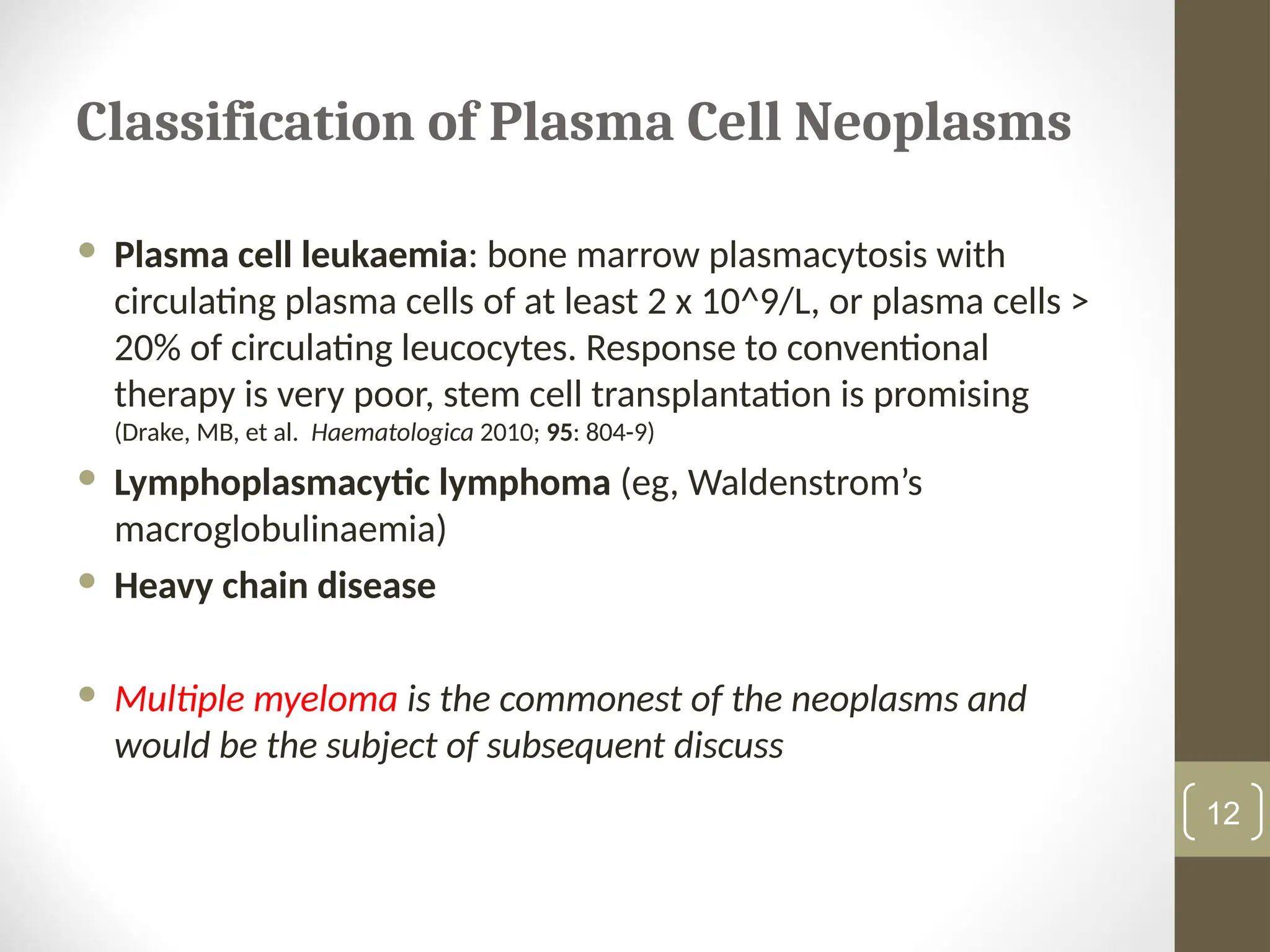
Classification of Plasma Cell Neoplasms
 Extramedullary plasmacytoma: single localised soft tissue
plasma cell tumour of any of the upper respiratory tract,
gastrointestinal tract (stomach, rectum), skin, prostate and
retroperitoneum. Bone marrow, skeletal survey and end organ
are normal, serum and urinary paraproteins are undetectable
or just minimal. Predominance of IgA monoclonal protein.
Radiotherapy is curative and progression to myeloma in 15% of
patients. (Kyle RA, et al. Br J Haematol 2003; 121: 749–757)
 Multiple solitary plasmacytomas: uncommon, monoclonal
protein rarely seen in serum and/or urine; multiple localized
areas of bone destruction or extramedullary plasma cell
tumours that may be recurrent; marrow & skeletal survey
essentially normal; end organ damage is absent. Recurrent
disease is treated as for myeloma with radiation and
chemotherapy.
11
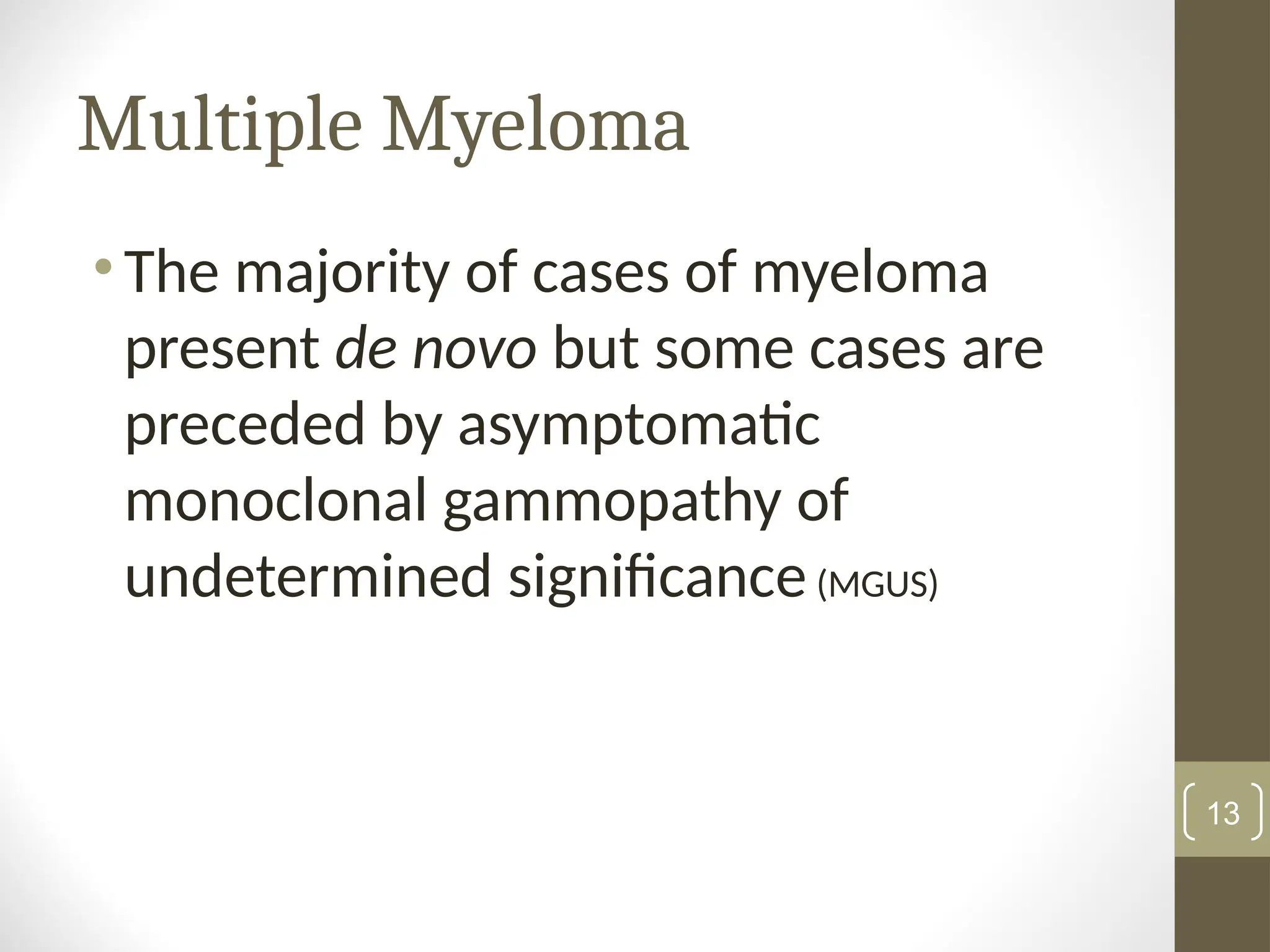
Classification of Plasma Cell Neoplasms
 Plasma cell leukaemia: bone marrow plasmacytosis with
circulating plasma cells of at least 2 x 10^9/L, or plasma cells >
20% of circulating leucocytes. Response to conventional
therapy is very poor, stem cell transplantation is promising
(Drake, MB, et al. Haematologica 2010; 95: 804-9)
 Lymphoplasmacytic lymphoma (eg, Waldenstrom’s
macroglobulinaemia)
 Heavy chain disease
 Multiple myeloma is the commonest of the neoplasms and
would be the subject of subsequent discuss
12
Multiple Myeloma
• The majority of cases of myeloma
present de novo but some cases are
preceded by asymptomatic
monoclonal gammopathy of
undetermined significance(MGUS)
13
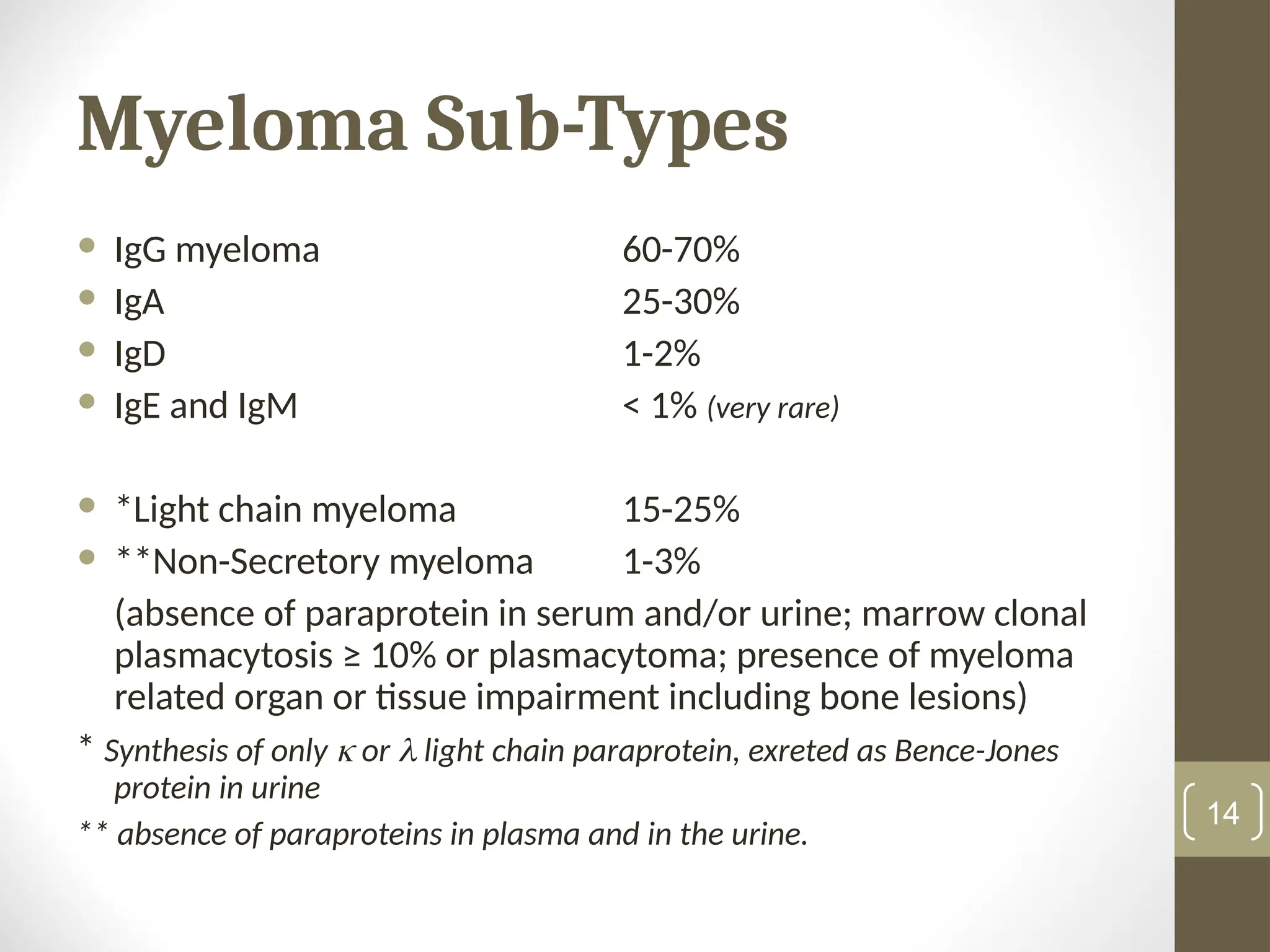
Myeloma Sub-Types
 IgG myeloma 60-70%
 IgA 25-30%
 IgD 1-2%
 IgE and IgM < 1% (very rare)
 *Light chain myeloma 15-25%
 **Non-Secretory myeloma 1-3%
(absence of paraprotein in serum and/or urine; marrow clonal
plasmacytosis ≥ 10% or plasmacytoma; presence of myeloma
related organ or tissue impairment including bone lesions)
* Synthesis of only  or  light chain paraprotein, exreted as Bence-Jones
protein in urine
** absence of paraproteins in plasma and in the urine.
14
Epidemiology
• Incidence 4-7 x 10⁻⁵
with the lowest incidence in Asians and
the highest in blacks.
• Essentially a disease of the elderly, median age at diagnosis is
between 63 and 70 years in Europe and north America,
compared to 50-60 years in sub-Sahara Africa.
• Slight male predominance in all populations, 1.7-2:1
15
Clinical Features
• Spectrum from asymptomatic paraproteinaemia
detected on routine testing (~20%) to rapidly
progressive illness with extensive, destructive bony
disease.
• Bone disease (~75%): Most present with bone
(usually back) pain or pathological fracture; kyphosis
and loss of height may occur from vertebral
compression fractures.
• Weakness and fatigue (>50%)
• Recurrent infection (10%)
• Renal impairment (~10%)
16
Clinical Features..
• Other less common features:
• Acute hypercalcaemia
• Symptomatic hyperviscosity – mental slowing,
visual upset, purpura, haemorrhage
• Neuropathy
• Spinal cord compression
• Amyloidosis
• Coagulopathy
17
Diagnostic tests
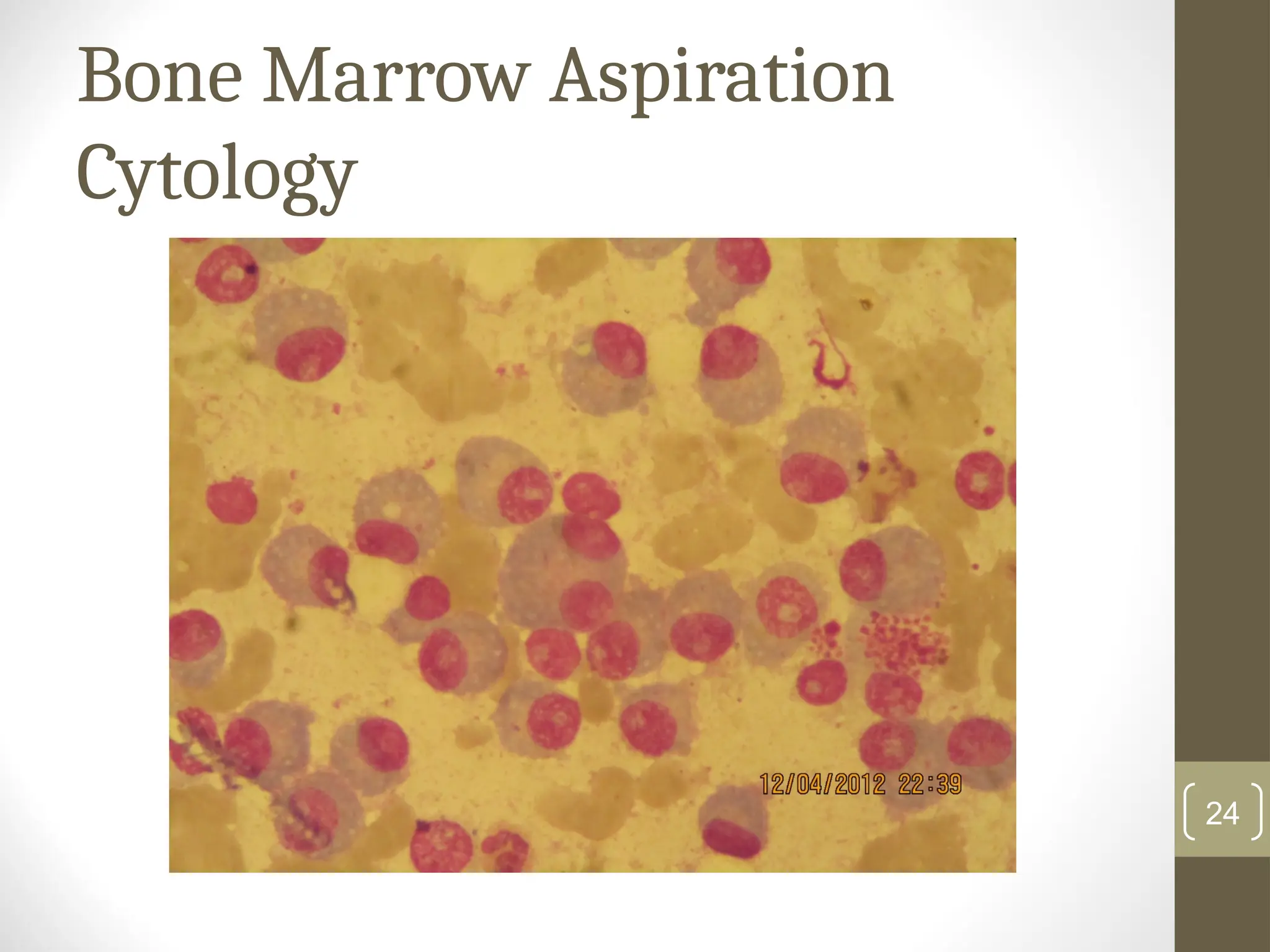
• BM aspiration – Demonstrates plasma cell infiltration
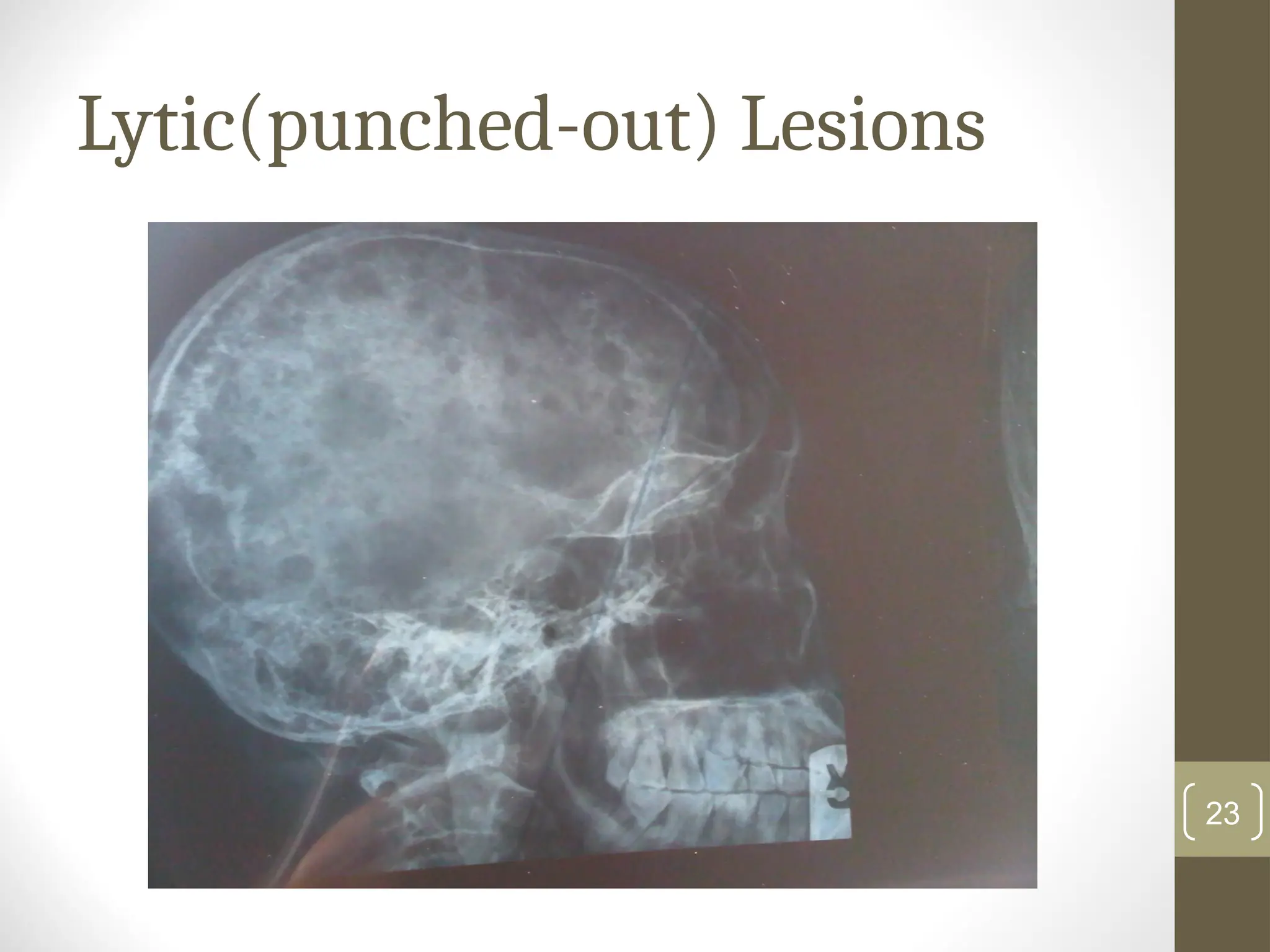
• Radiological skeletal survey – Identifies lytic bone lesions,
fractures and osteoporosis (80%; 5–10% osteoporosis only;
20% normal)
• Paraprotein immunofixation – Characterises and quantifies
paraprotein;
• IgG ~55%
• IgA ~22%
• IgD ~2%
• IgM 0.5%
• IgE <0.01%; LC ~22%;
• Note: serum & urine EPS –ve in NS ~1% 18
Other Supportive Tests
• FBC and film
• ESR
• Serum electrolytes, urea & creatinine/uric acid
• Low serum albumin
• Hypercalcaemia (~20%)
• Serum immunoglobulins
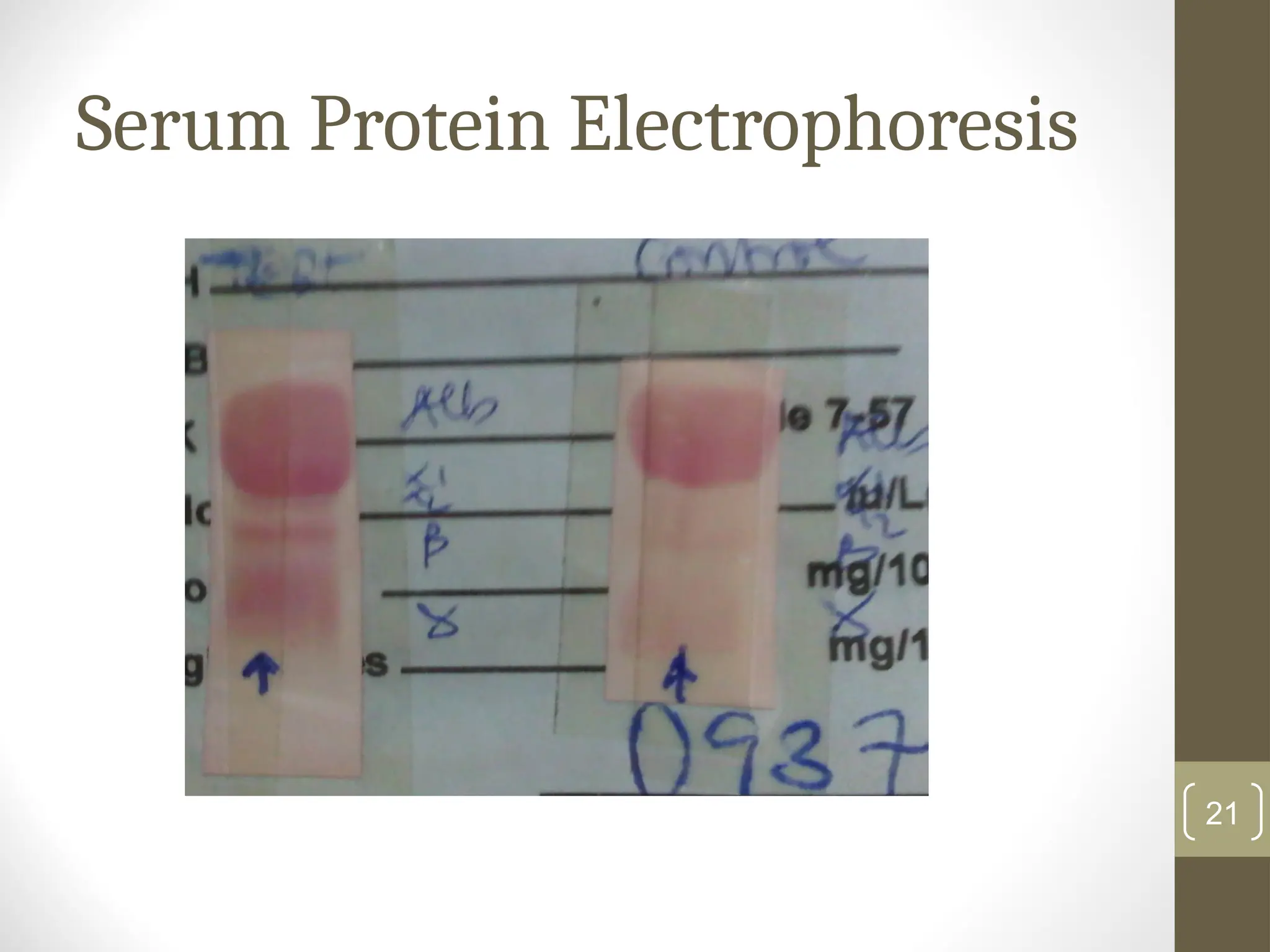
• Serum protein electrophoresis
• Routine urinalysis may detect proteinuria (~70%)
• Urinary Bence Jones proteinuria
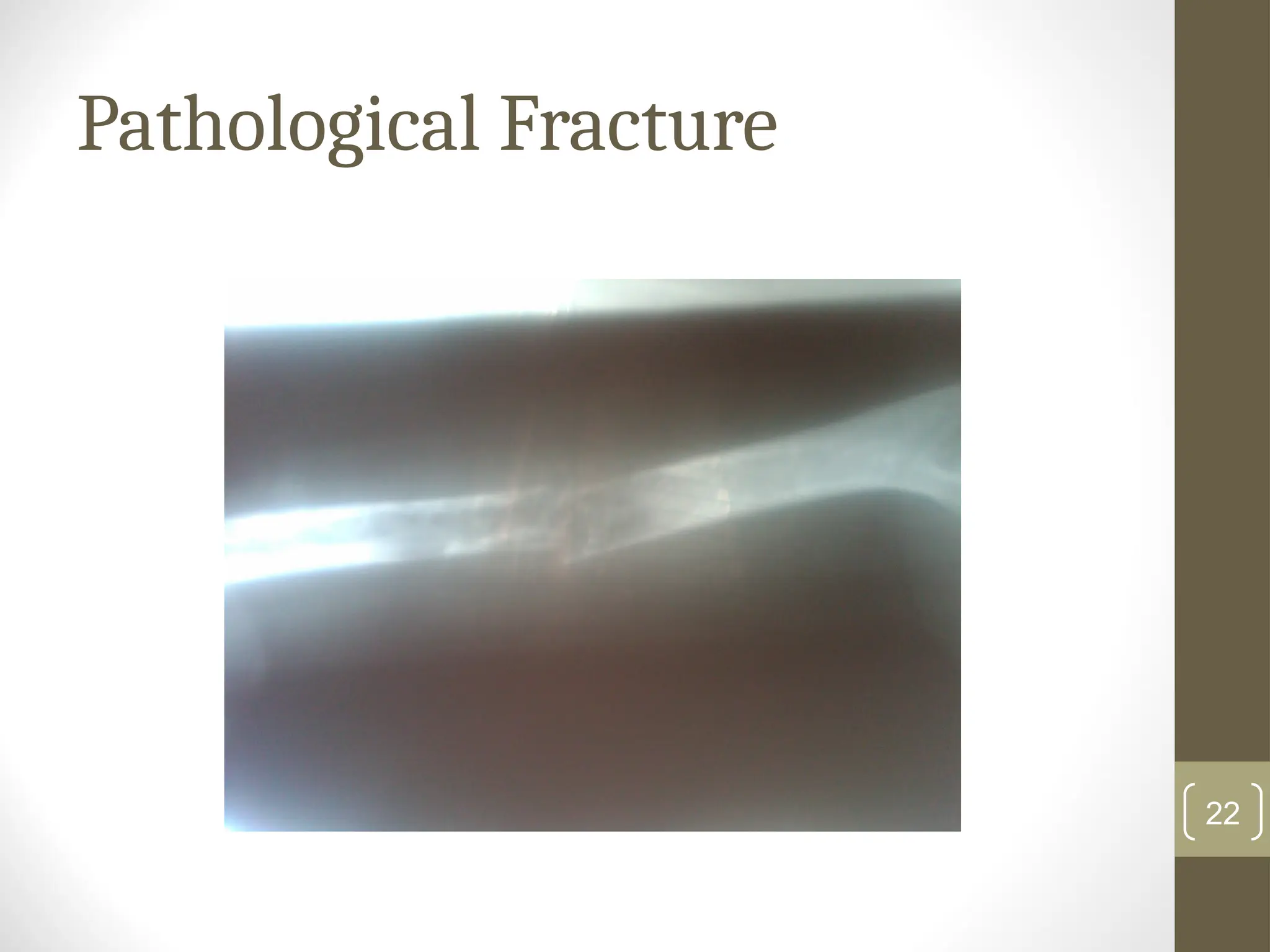
• X-ray sites of bone pain – pathological fracture(s) or lytic
lesion(s) 19
Other Tests
• Immunophenotypic Characteristics:
• Strong expression of CD38, CD138, a single class of cytoplasmic
immunoglobulin (cIg). The
• Expression of CD40 and CD56 by a majority of myeloma cells
Myeloma
• Expression of CD20 by the minority of patients with the t(11;14)
translocation.
• Myeloma cells are negative for CD5, CD19, and surface Ig (sIg)
expression.
20
Serum Protein Electrophoresis
21
Pathological Fracture
22
Lytic(punched-out) Lesions
23
Bone Marrow Aspiration
Cytology
24
Usefulness of the Biological
tests
•These tests are useful for
differentiation of Symptomatic
myeloma, Smouldering (or
indolent) myeloma and MGUS,
and therefore treatment
approach 25
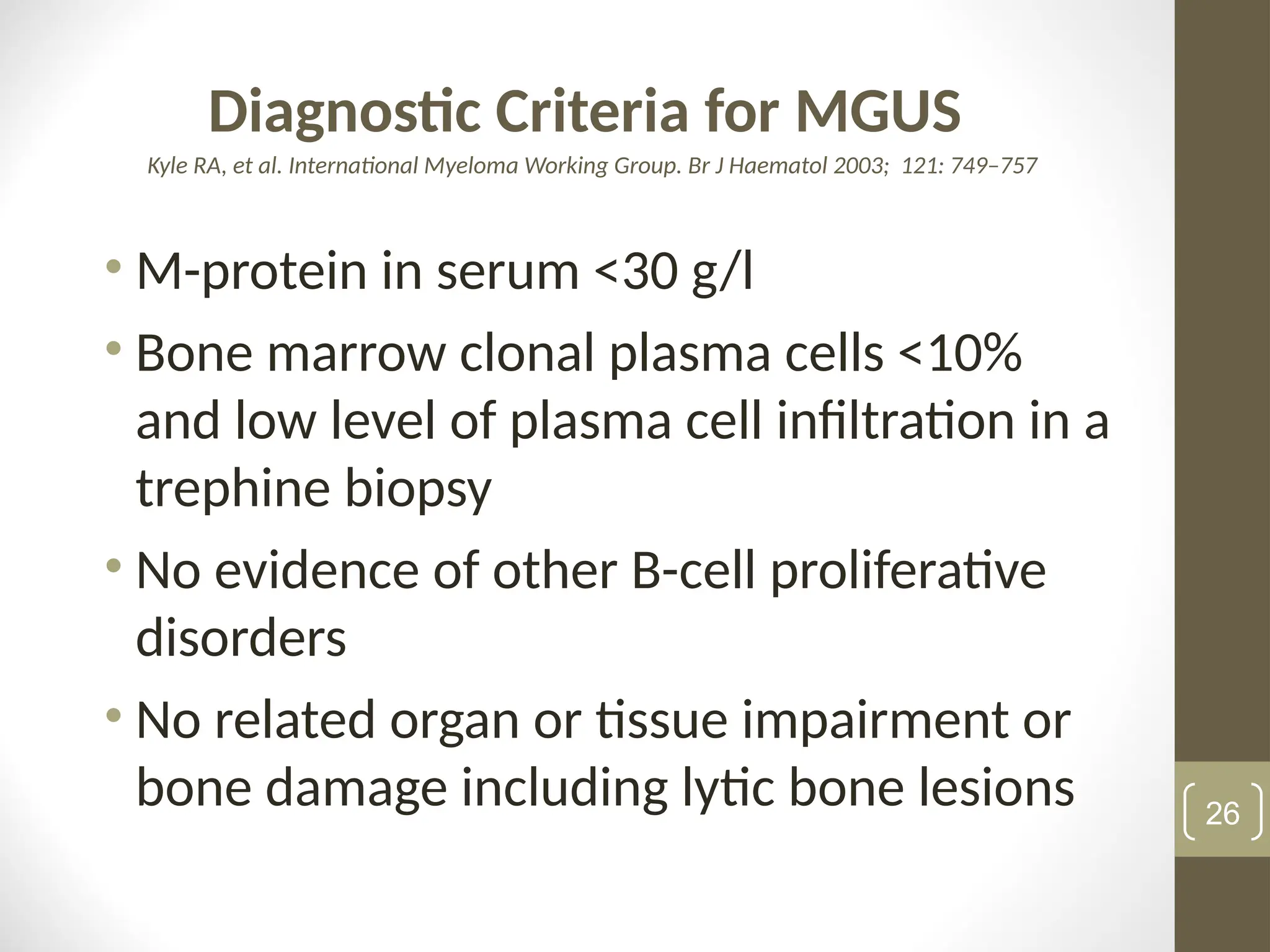
Diagnostic Criteria for MGUS
Kyle RA, et al. International Myeloma Working Group. Br J Haematol 2003; 121: 749–757
• M-protein in serum <30 g/l
• Bone marrow clonal plasma cells <10%
and low level of plasma cell infiltration in a
trephine biopsy
• No evidence of other B-cell proliferative
disorders
• No related organ or tissue impairment or
bone damage including lytic bone lesions 26
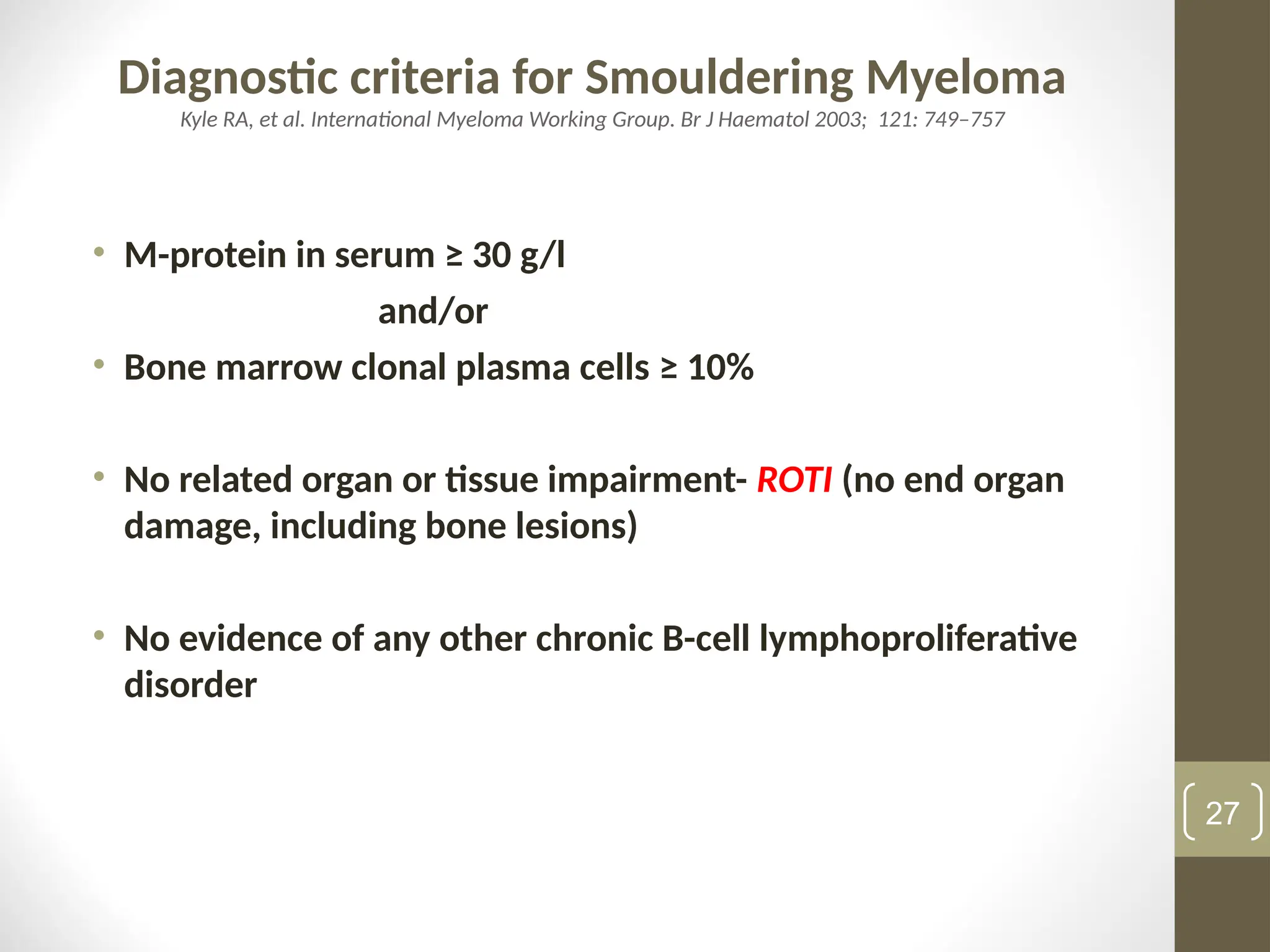
Diagnostic criteria for Smouldering Myeloma
Kyle RA, et al. International Myeloma Working Group. Br J Haematol 2003; 121: 749–757
• M-protein in serum ≥ 30 g/l
and/or
• Bone marrow clonal plasma cells ≥ 10%
• No related organ or tissue impairment- ROTI (no end organ
damage, including bone lesions)
• No evidence of any other chronic B-cell lymphoproliferative
disorder
27
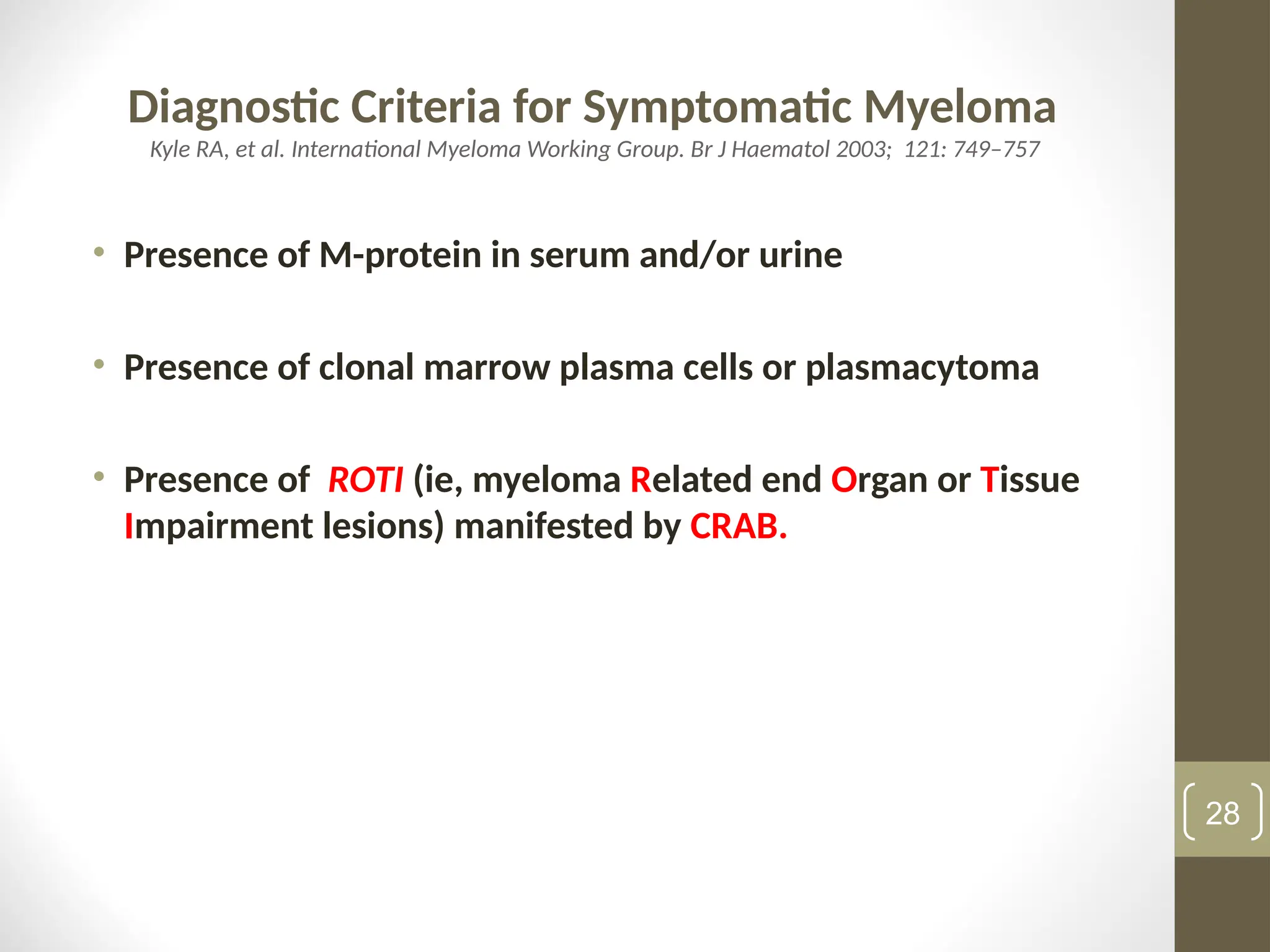
Diagnostic Criteria for Symptomatic Myeloma
Kyle RA, et al. International Myeloma Working Group. Br J Haematol 2003; 121: 749–757
• Presence of M-protein in serum and/or urine
• Presence of clonal marrow plasma cells or plasmacytoma
• Presence of ROTI (ie, myeloma Related end Organ or Tissue
Impairment lesions) manifested by CRAB.
28
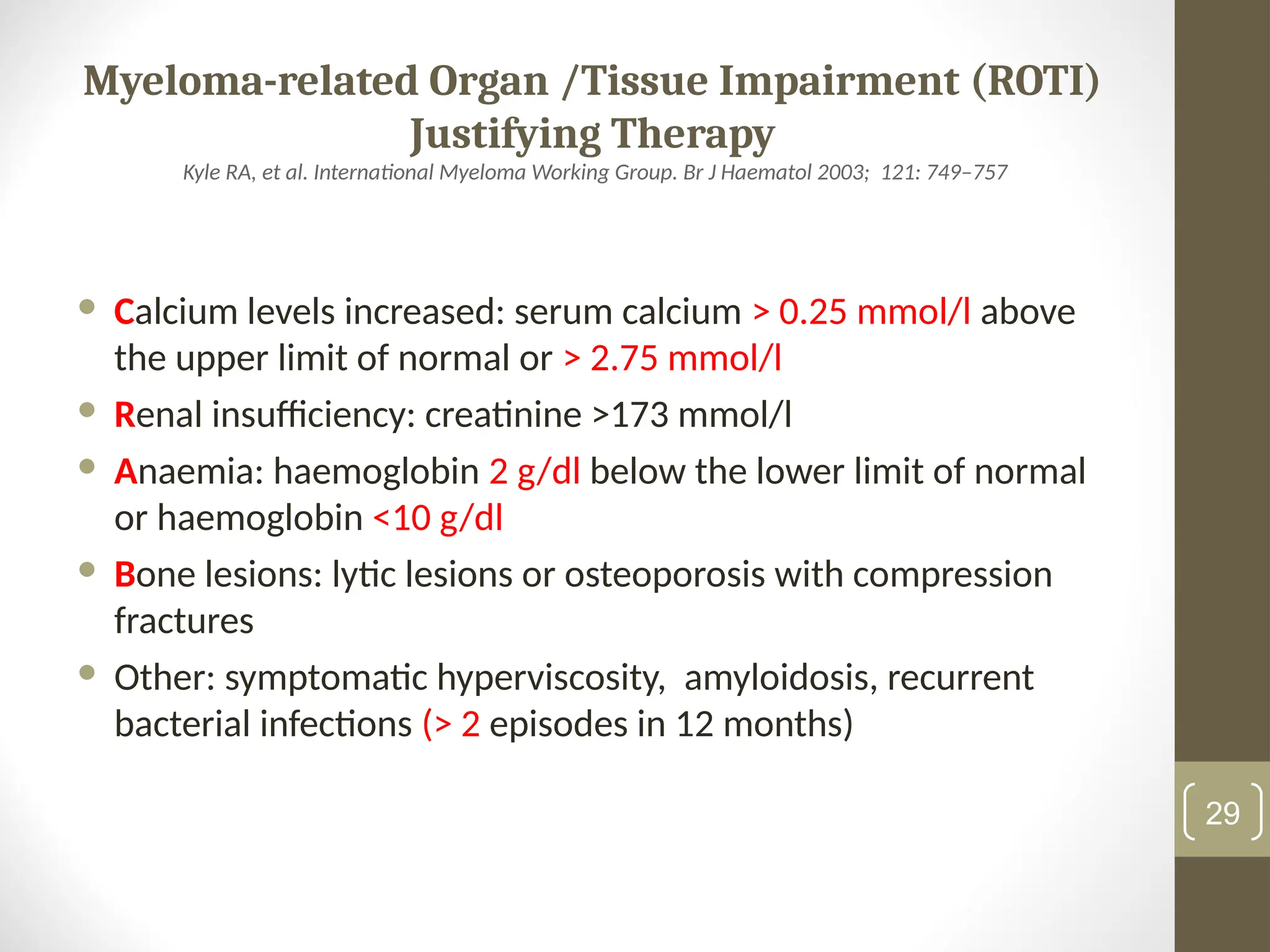
Myeloma-related Organ /Tissue Impairment (ROTI)
Justifying Therapy
Kyle RA, et al. International Myeloma Working Group. Br J Haematol 2003; 121: 749–757
 Calcium levels increased: serum calcium > 0.25 mmol/l above
the upper limit of normal or > 2.75 mmol/l
 Renal insufficiency: creatinine >173 mmol/l
 Anaemia: haemoglobin 2 g/dl below the lower limit of normal
or haemoglobin <10 g/dl
 Bone lesions: lytic lesions or osteoporosis with compression
fractures
 Other: symptomatic hyperviscosity, amyloidosis, recurrent
bacterial infections (> 2 episodes in 12 months)
29
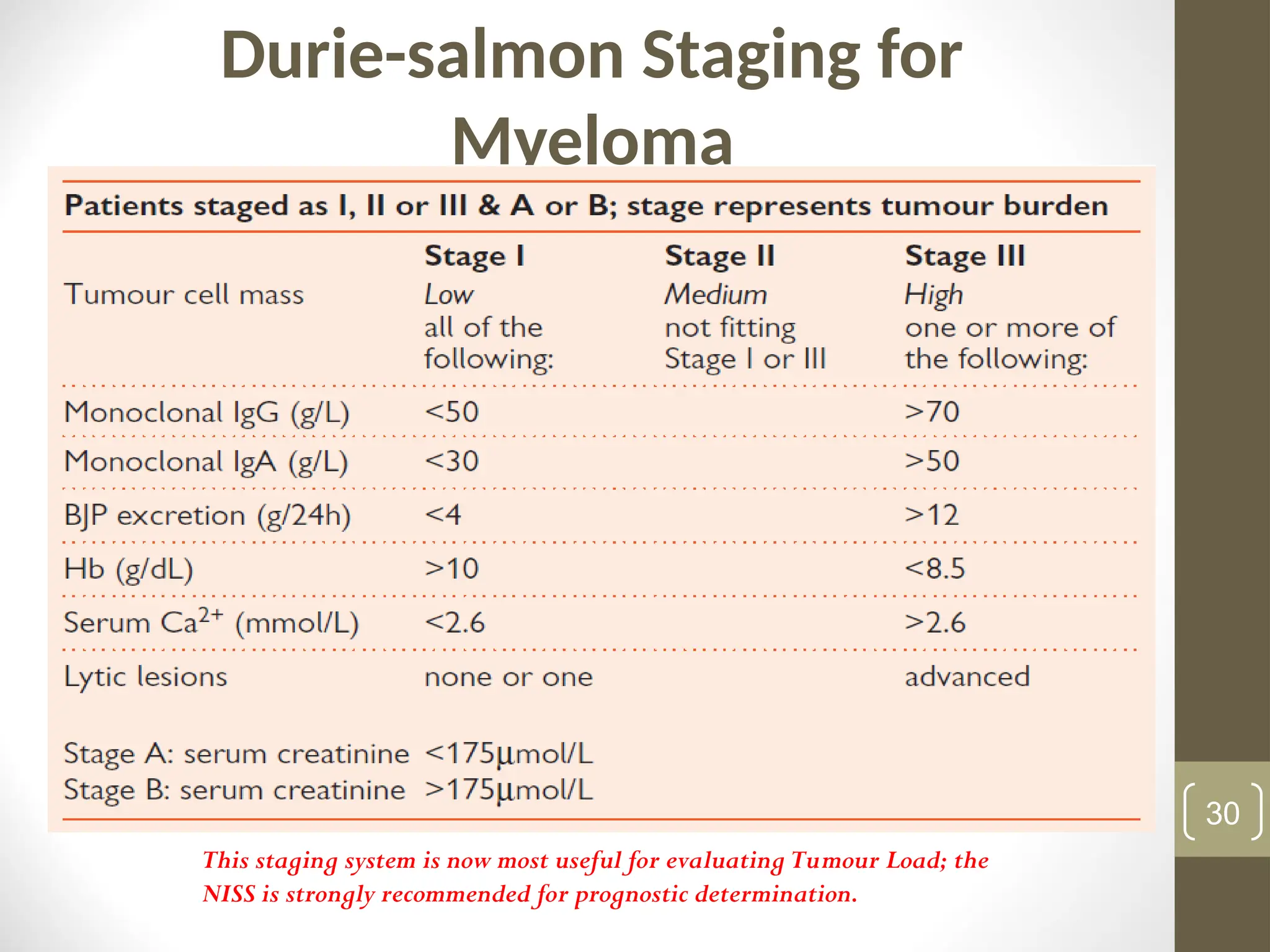
Durie-salmon Staging for
Myeloma
(Modified by Harousseau JL & Dreyling M. Ann Oncol 2010; 21 (Suppl 5): v155–v157)
30
This staging system is now most useful for evaluating Tumour Load; the
NISS is strongly recommended for prognostic determination.
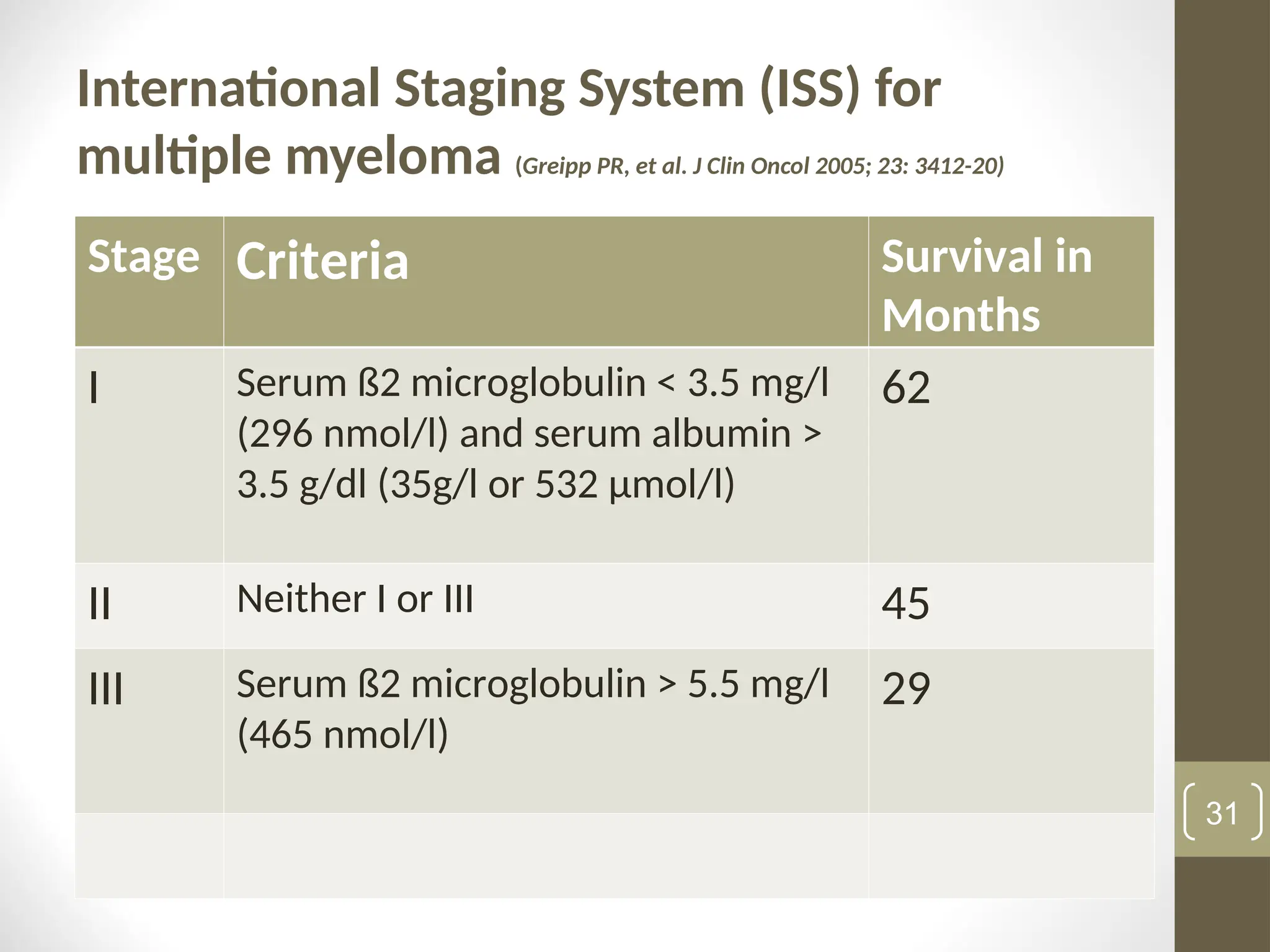
International Staging System (ISS) for
multiple myeloma (Greipp PR, et al. J Clin Oncol 2005; 23: 3412-20)
Stage Criteria Survival in
Months
I Serum ß2 microglobulin < 3.5 mg/l
(296 nmol/l) and serum albumin >
3.5 g/dl (35g/l or 532 μmol/l)
62
II Neither I or III 45
III Serum ß2 microglobulin > 5.5 mg/l
(465 nmol/l)
29
31
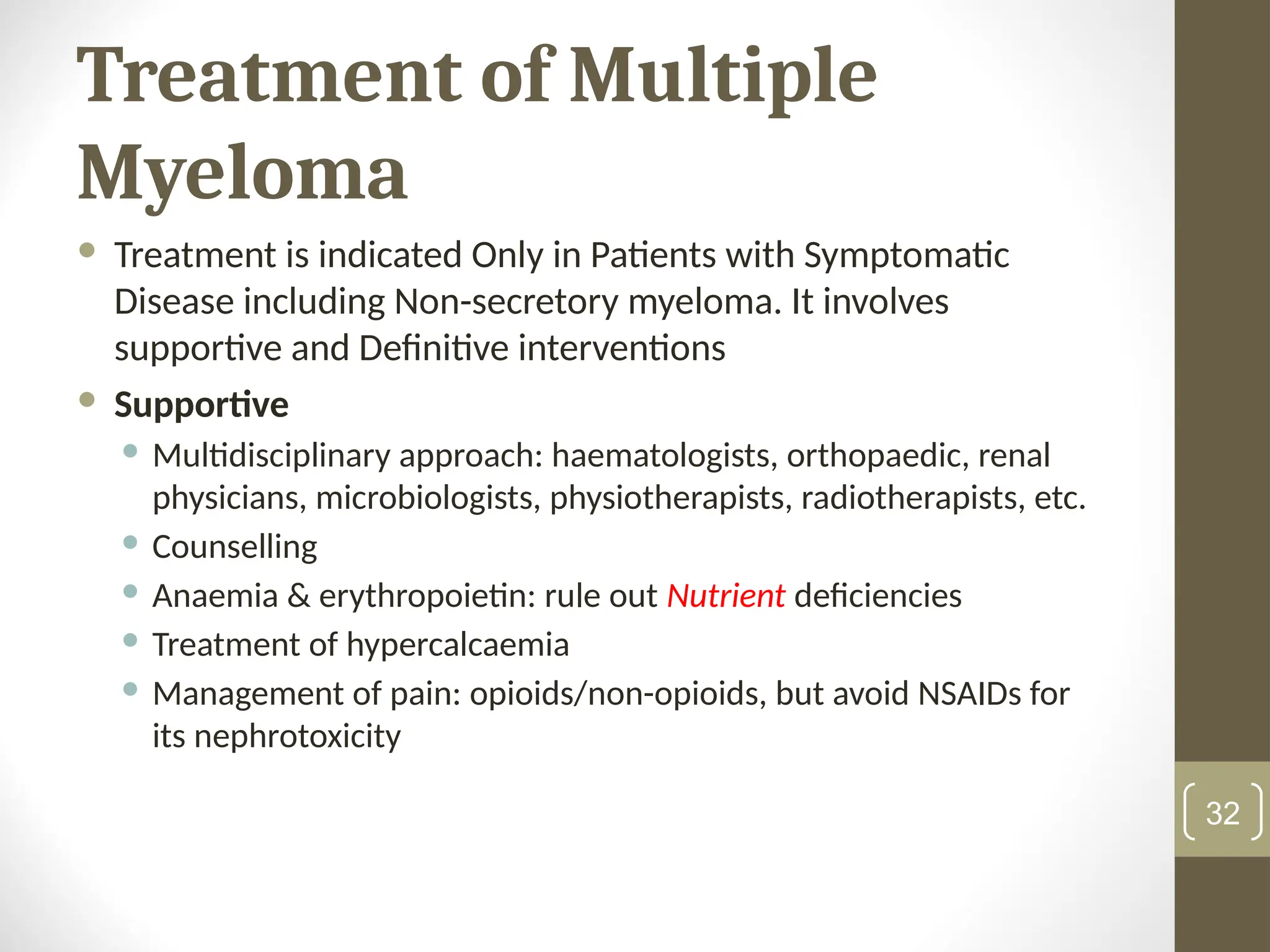
Treatment of Multiple
Myeloma
 Treatment is indicated Only in Patients with Symptomatic
Disease including Non-secretory myeloma. It involves
supportive and Definitive interventions
 Supportive
 Multidisciplinary approach: haematologists, orthopaedic, renal
physicians, microbiologists, physiotherapists, radiotherapists, etc.
 Counselling
 Anaemia & erythropoietin: rule out Nutrient deficiencies
 Treatment of hypercalcaemia
 Management of pain: opioids/non-opioids, but avoid NSAIDs for
its nephrotoxicity
32
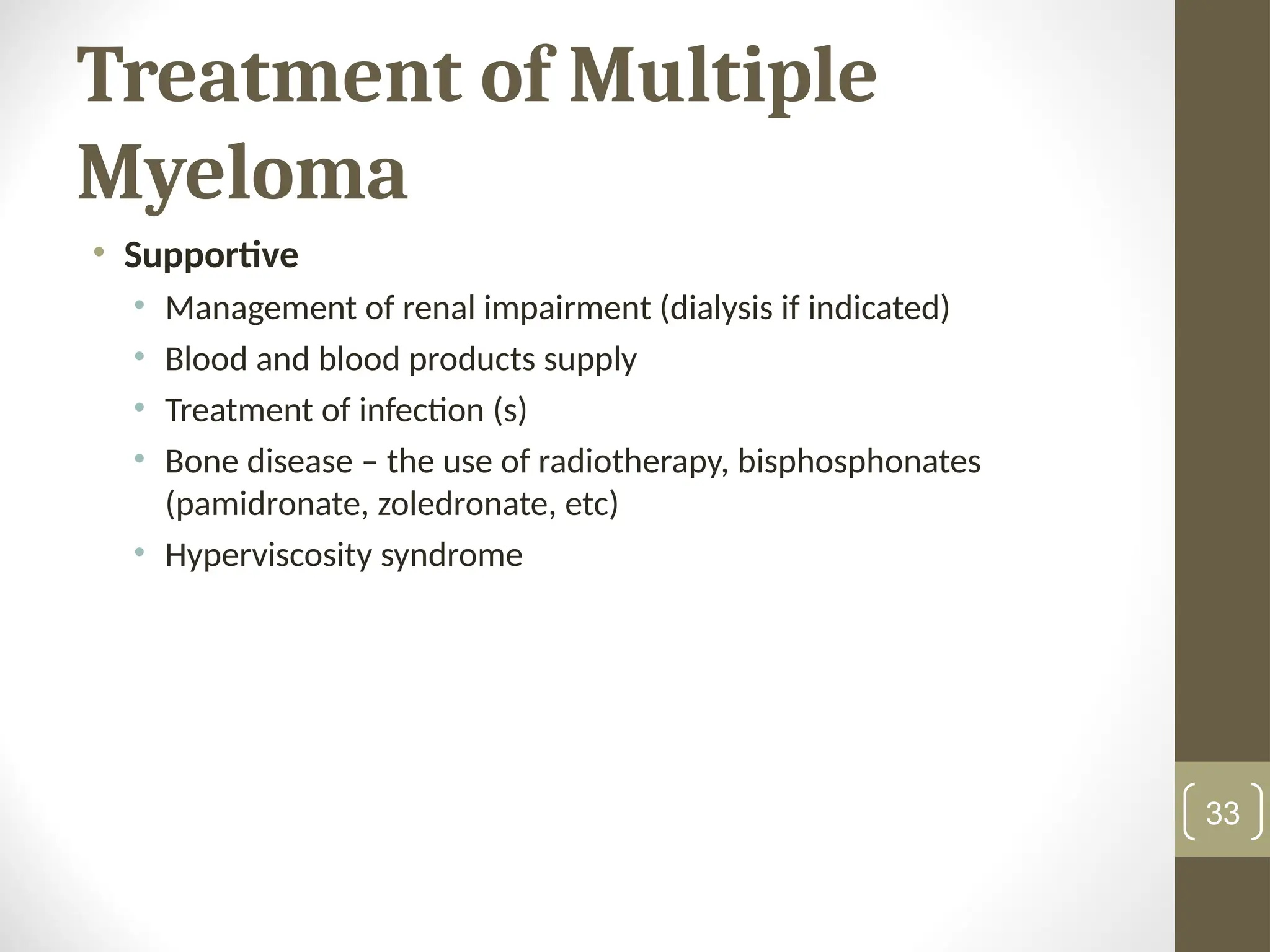
Treatment of Multiple
Myeloma
• Supportive
• Management of renal impairment (dialysis if indicated)
• Blood and blood products supply
• Treatment of infection (s)
• Bone disease – the use of radiotherapy, bisphosphonates
(pamidronate, zoledronate, etc)
• Hyperviscosity syndrome
33
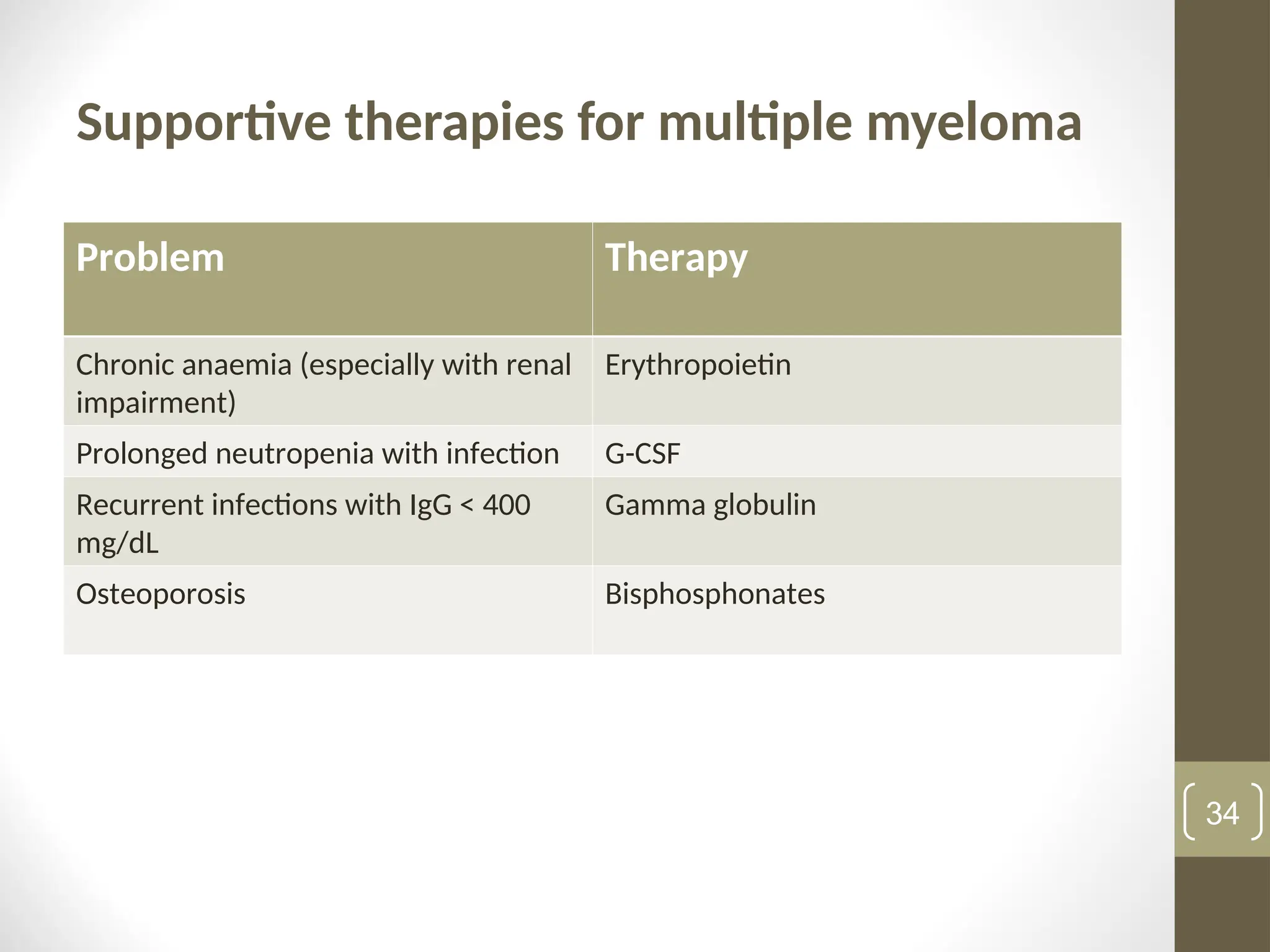
Supportive therapies for multiple myeloma
Problem Therapy
Chronic anaemia (especially with renal
impairment)
Erythropoietin
Prolonged neutropenia with infection G-CSF
Recurrent infections with IgG < 400
mg/dL
Gamma globulin
Osteoporosis Bisphosphonates
34
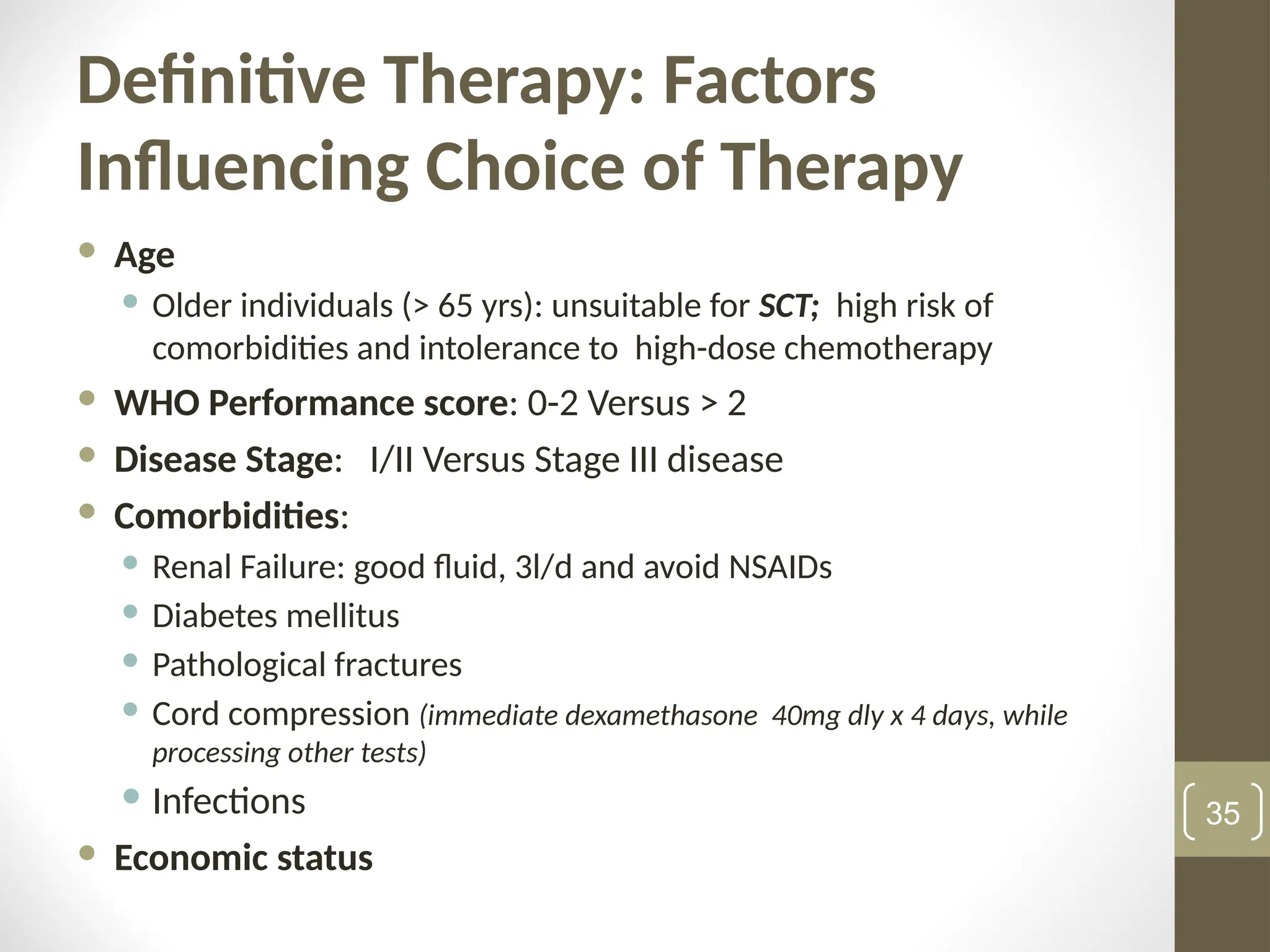
Definitive Therapy: Factors
Influencing Choice of Therapy
 Age
 Older individuals (> 65 yrs): unsuitable for SCT; high risk of
comorbidities and intolerance to high-dose chemotherapy
 WHO Performance score: 0-2 Versus > 2
 Disease Stage: I/II Versus Stage III disease
 Comorbidities:
 Renal Failure: good fluid, 3l/d and avoid NSAIDs
 Diabetes mellitus
 Pathological fractures
 Cord compression (immediate dexamethasone 40mg dly x 4 days, while
processing other tests)
 Infections
 Economic status
35
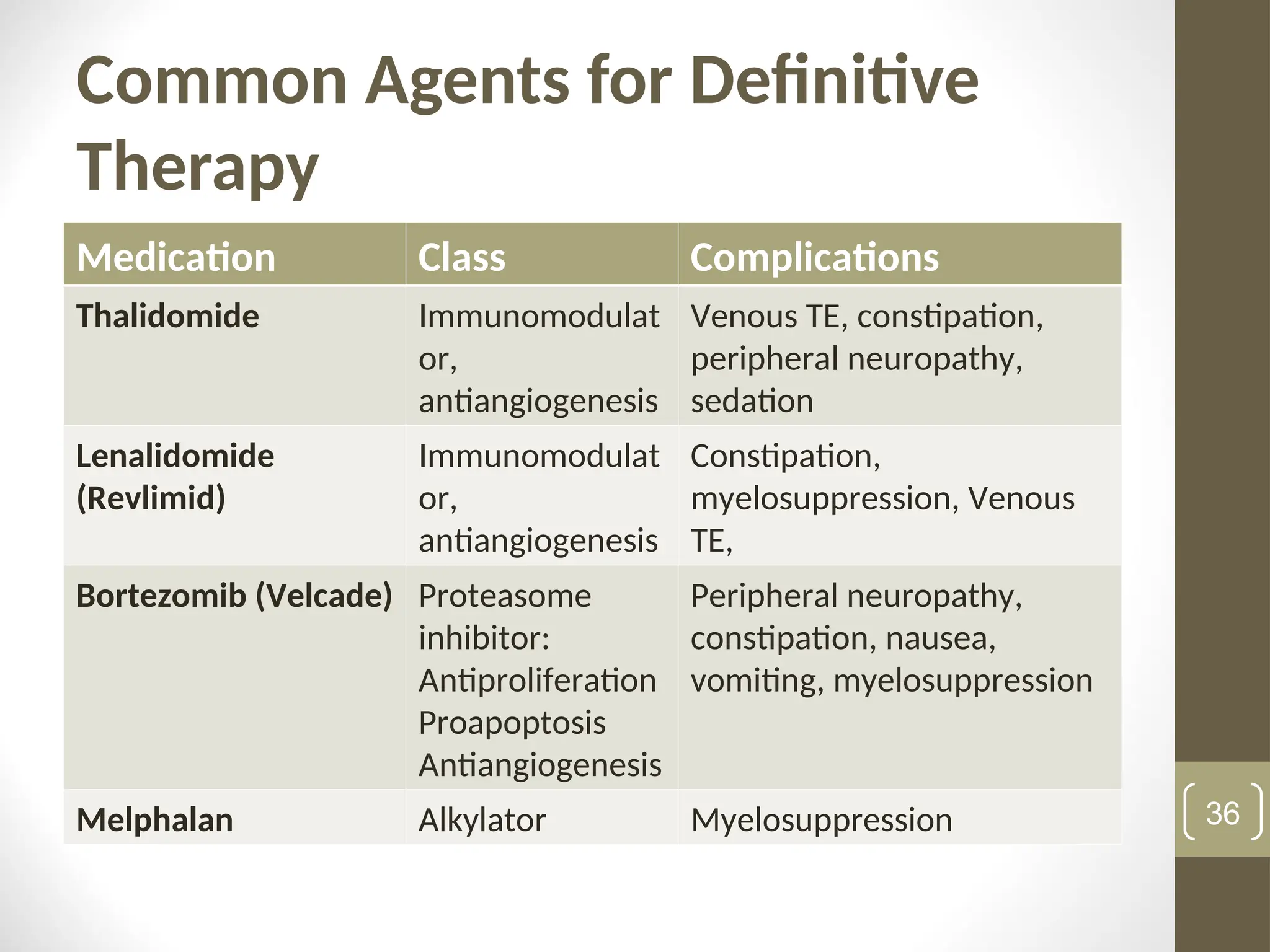
Common Agents for Definitive
Therapy
Medication Class Complications
Thalidomide Immunomodulat
or,
antiangiogenesis
Venous TE, constipation,
peripheral neuropathy,
sedation
Lenalidomide
(Revlimid)
Immunomodulat
or,
antiangiogenesis
Constipation,
myelosuppression, Venous
TE,
Bortezomib (Velcade) Proteasome
inhibitor:
Antiproliferation
Proapoptosis
Antiangiogenesis
Peripheral neuropathy,
constipation, nausea,
vomiting, myelosuppression
Melphalan Alkylator Myelosuppression 36
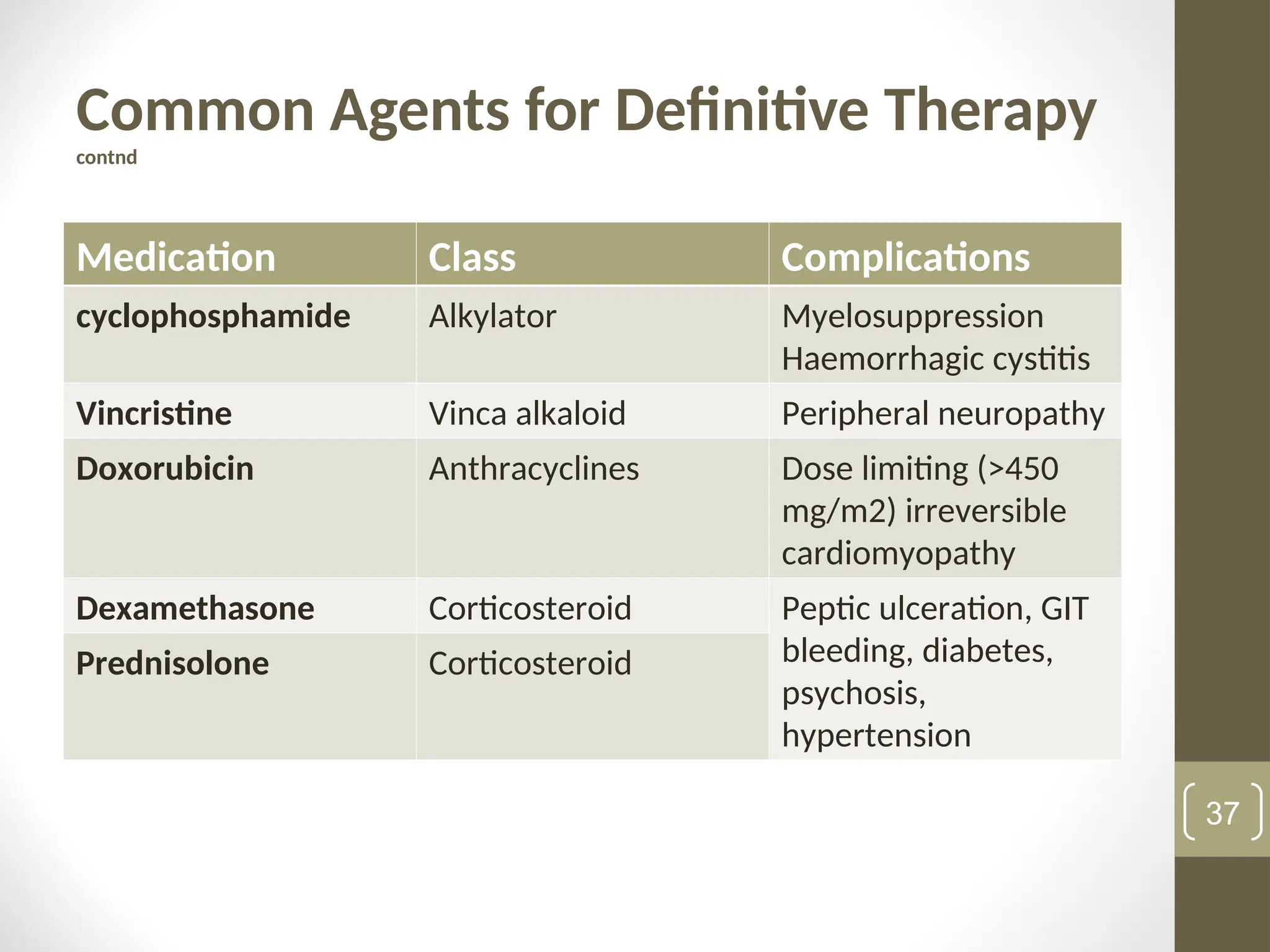
Common Agents for Definitive Therapy
contnd
Medication Class Complications
cyclophosphamide Alkylator Myelosuppression
Haemorrhagic cystitis
Vincristine Vinca alkaloid Peripheral neuropathy
Doxorubicin Anthracyclines Dose limiting (>450
mg/m2) irreversible
cardiomyopathy
Dexamethasone Corticosteroid Peptic ulceration, GIT
bleeding, diabetes,
psychosis,
hypertension
Prednisolone Corticosteroid
37
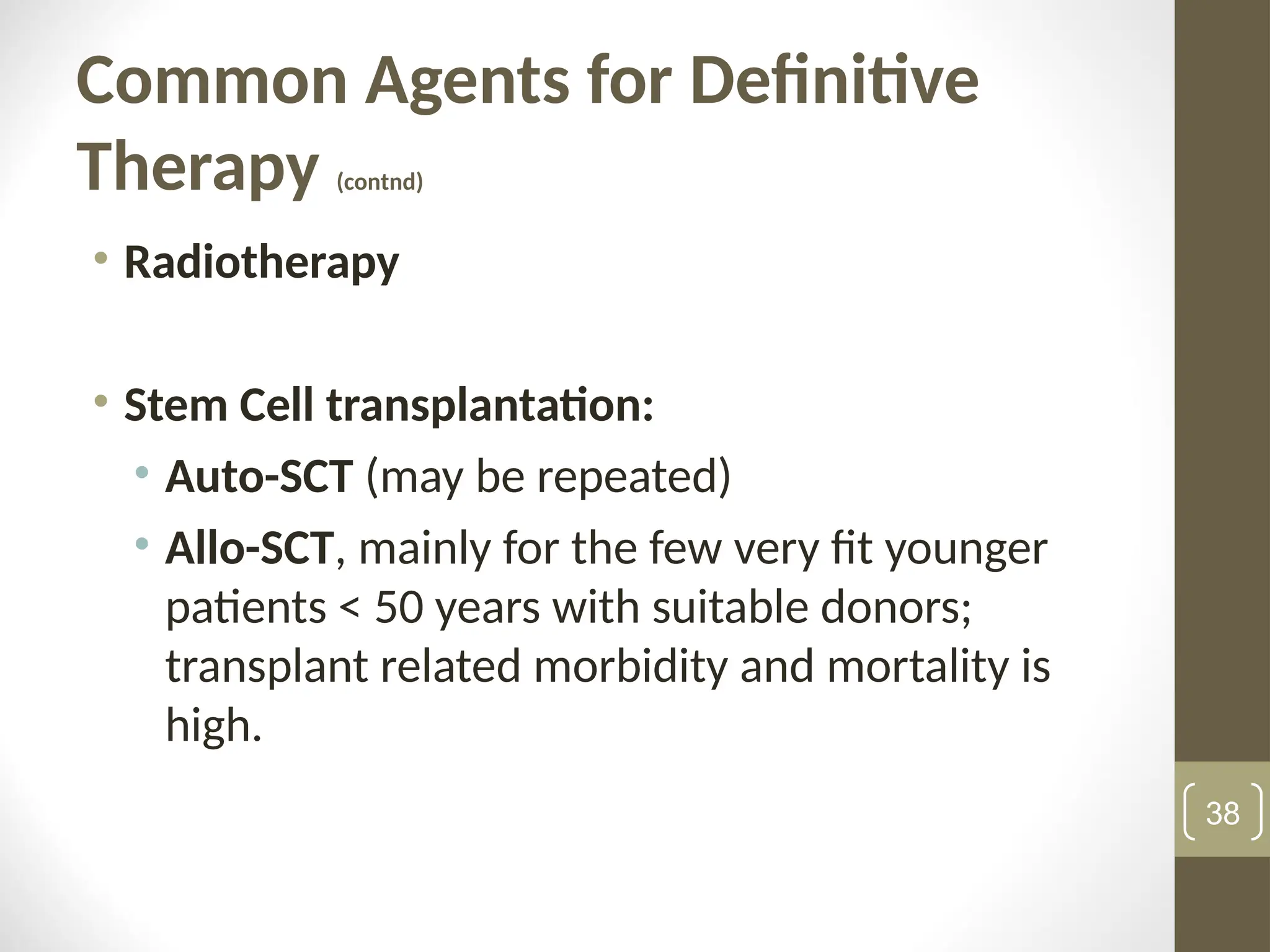
Common Agents for Definitive
Therapy (contnd)
• Radiotherapy
• Stem Cell transplantation:
• Auto-SCT (may be repeated)
• Allo-SCT, mainly for the few very fit younger
patients < 50 years with suitable donors;
transplant related morbidity and mortality is
high.
38
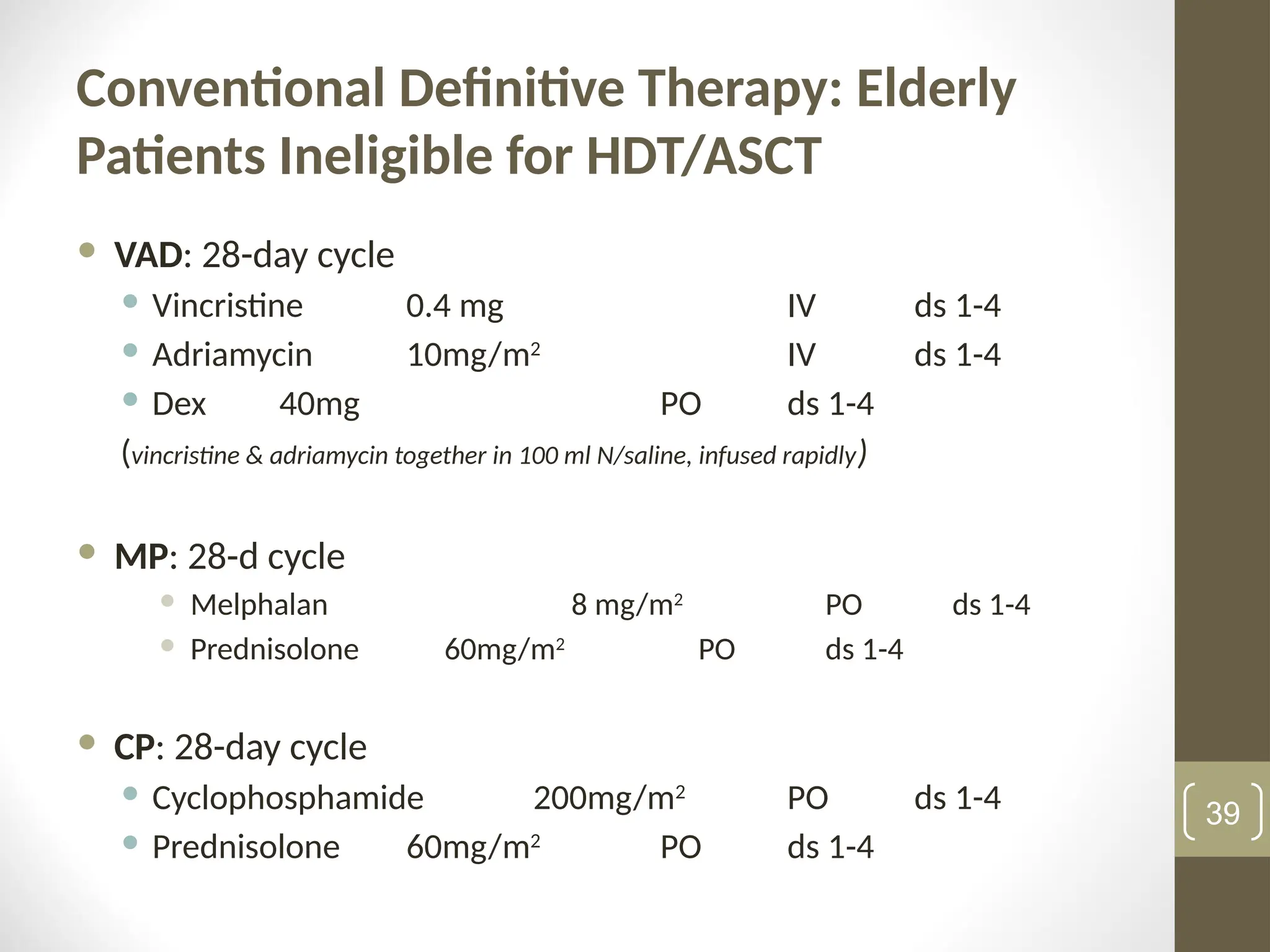
Conventional Definitive Therapy: Elderly
Patients Ineligible for HDT/ASCT
 VAD: 28-day cycle
 Vincristine 0.4 mg IV ds 1-4
 Adriamycin 10mg/m2
IV ds 1-4
 Dex 40mg PO ds 1-4
(vincristine & adriamycin together in 100 ml N/saline, infused rapidly)
 MP: 28-d cycle
 Melphalan 8 mg/m2
PO ds 1-4
 Prednisolone 60mg/m2
PO ds 1-4
 CP: 28-day cycle
 Cyclophosphamide 200mg/m2
PO ds 1-4
 Prednisolone 60mg/m2
PO ds 1-4
39
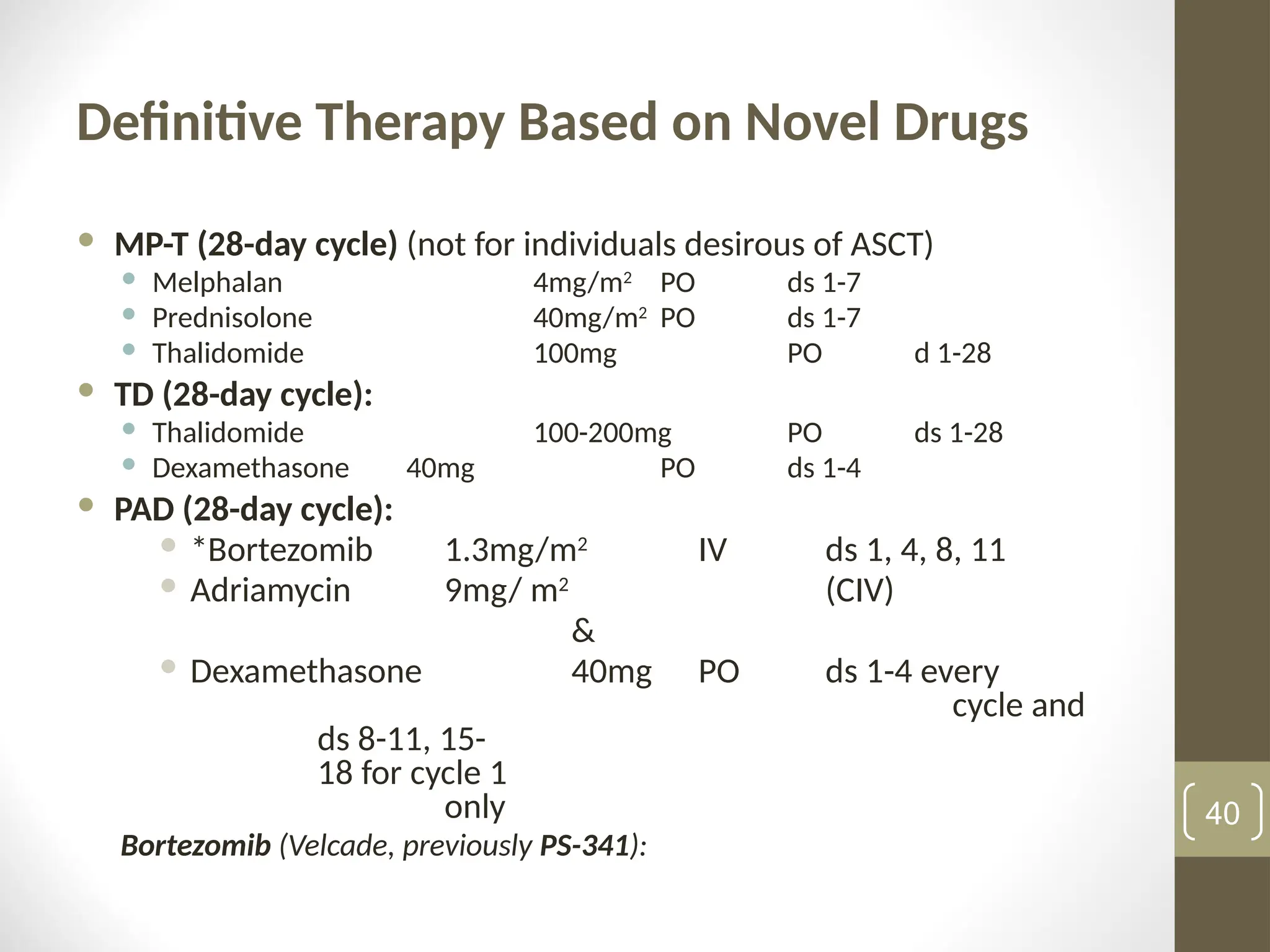
Definitive Therapy Based on Novel Drugs
 MP-T (28-day cycle) (not for individuals desirous of ASCT)
 Melphalan 4mg/m2
PO ds 1-7
 Prednisolone 40mg/m2
PO ds 1-7
 Thalidomide 100mg PO d 1-28
 TD (28-day cycle):
 Thalidomide 100-200mg PO ds 1-28
 Dexamethasone 40mg PO ds 1-4
 PAD (28-day cycle):
 *Bortezomib 1.3mg/m2
IV ds 1, 4, 8, 11
 Adriamycin 9mg/ m2
(CIV)
&
 Dexamethasone 40mg PO ds 1-4 every
cycle and
ds 8-11, 15-
18 for cycle 1
only
Bortezomib (Velcade, previously PS-341):
40
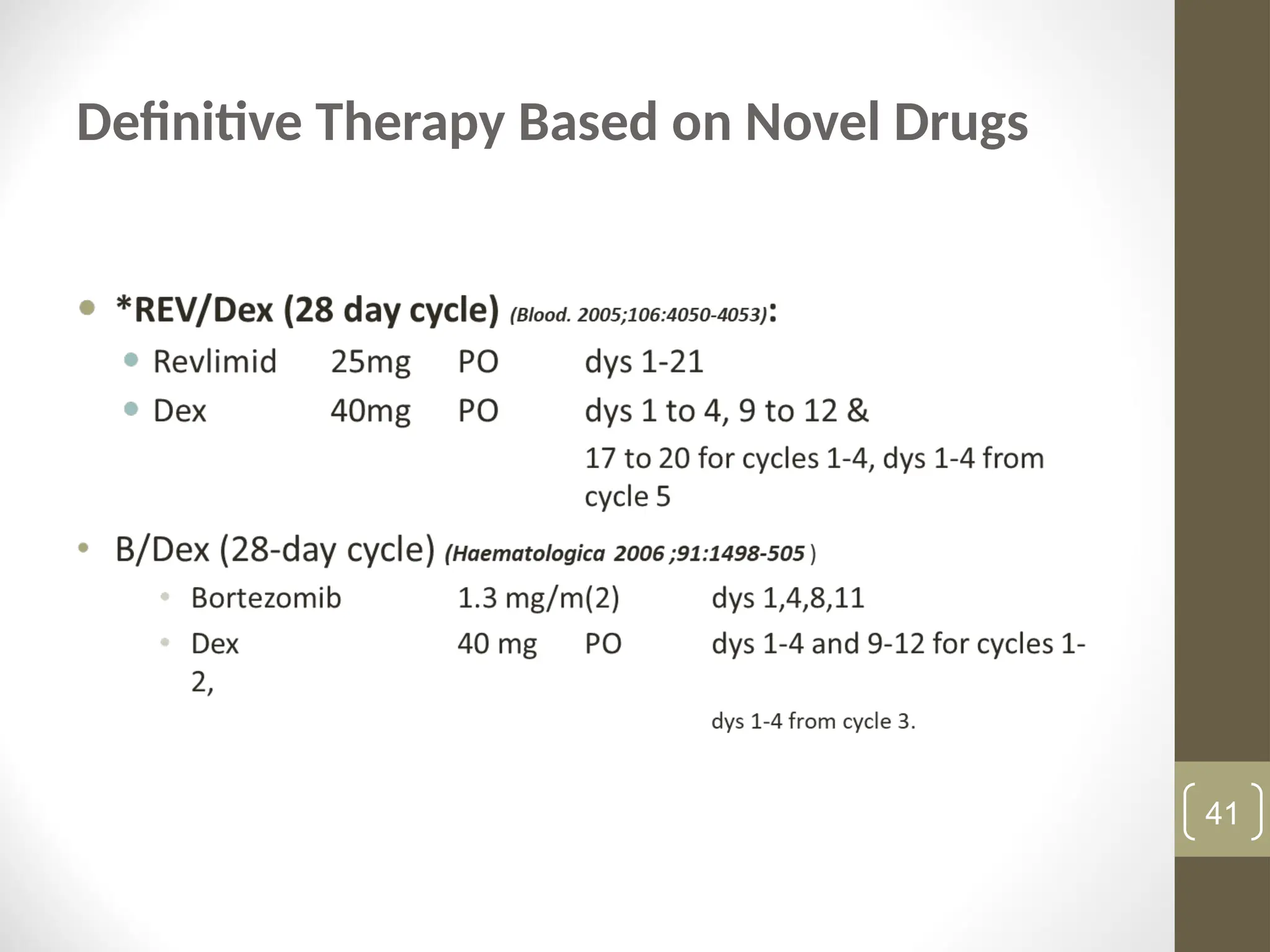
Definitive Therapy Based on Novel Drugs
41
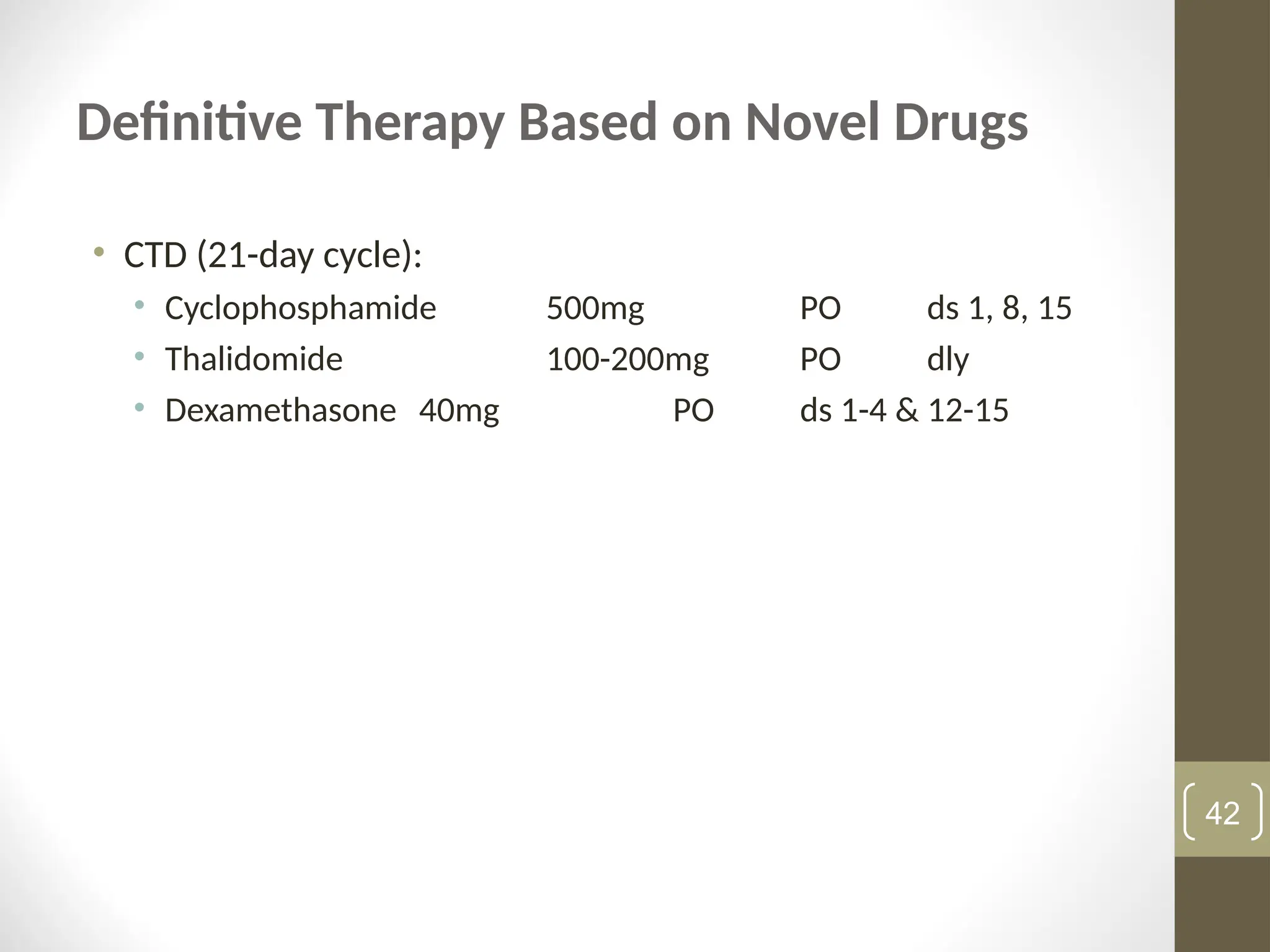
Definitive Therapy Based on Novel Drugs
• CTD (21-day cycle):
• Cyclophosphamide 500mg PO ds 1, 8, 15
• Thalidomide 100-200mg PO dly
• Dexamethasone 40mg PO ds 1-4 & 12-15
42
Relapsed/Refractory
• Note duration of initial remission, if long, re-try the initial
induction regimen; if short change to new regimen, eg if
immunomodulator was the 1st approach, try protease inhibitor
• Local radiotherapy: individuals with local relapse such as spinal
plasmacytoma, with little evidence of active disease elsewhere
43
Response Evaluation
Harousseau JL & Dreyling M. Ann Oncol 2010; 21 (Suppl 5): v155–v157)
• Based on serum and urine electrophoresis.
• Complete remission (CR): Negative immunofixation on the serum
and urine; < 5% marrow plasma cells, no soft tissue
plasmacytoma
• Very good partial remission: ≥90% reduction of the serum M-
protein; detectable serum and urine M-protein on
immunofixation but by electrophoresis; < 100mg per 24 hours;
absent soft-tissue plasmacytoma
• Partial response: ≥ 50% reduction of the serum M-protein;
reduction in 24-h urine M-protein by ≥90% reduction of the
serum M-protein; ≥50% reduction in soft tissue plasmacytoma
44
THANK YOU 45

Multiple myeloma, aetiology, pathogenesis, and management.ppt

  • 1.
    Plasma Cell Neoplasms/Dyscrasias: Myelomatosis BY DR SALEHYUGUDA HAEMATOLOGY DEPARTMENT GOMBE STATE UNIVERSITY. DECEMBER 11, 2017 1
  • 2.
    Lecture Outline • Introduction •Epidemiology • Pathogenesis • Classification • Clinical Features • Lab Diagnosis • Staging • Management 2
  • 3.
    Plasma Cells Dyscrasias/Paraproteinaemias • Heterogeneousgroup of disorders characterised by deranged proliferation of a single clone of plasma cells or B lymphocytes and usually associated with detectable monoclonal immunoglobulin (paraprotein or M-protein) in serum and/or urine.  They are invariably fatal chronic clonal B cell malignancy characterised by a progressive clinical course lasting some 3– 6.5 yr from diagnosis  In the USA, the estimated 5-year survival rate is about 40%  Survival is higher in younger patients than in the elderly 3
  • 4.
    Introduction • They aregenerally characterised by: • proliferation of clonal neoplastic plasma cells in the bone marrow, and sometimes in the extramedullary tissues. • synthesis of immunologically incompetent myeloma (M-) or paraproteins (with identical heavy chain and light chain) into the serum and/or urine resulting in renal failure and bone disease (pathological fractures, wedge compression fracture of the vertebrae & cord compression spinal) • Suppression of normal Ig production and high susceptibility of patients to chronic bacterial infections including encapsulated organisms: S. pneumoniae, H.influenzae and N. meningitides 4
  • 5.
    Pathogenesis • Plasma cellsare terminally differentiated B- lymphocytes that secret antibodies. • In immunocompetent individuals, antibody synthesis and B- cell proliferation are tightly controlled. • The control is lost when there is a genetic accident due to translocation of a promoter gene to another chromosome where it stimulates an antibody gene to overproduction. • Such genetic accidents eventually lead to malignant transformation and development of malignancies as in myeloma 5
  • 6.
    Pathogenesis contnd  Pathogenetically,myeloma arises from a primary chromosomal translocation between the immunoglobulin heavy chain (IgH) gene on chromosome 14 (locus q32) and an oncogene (more often: 11q13, 6p21, 4p16 & 16q23).  The mutation causes dysregulation of the oncogene, with resultant malignant transformation and development of multiple myeloma. 6
  • 7.
    Pathogenesis contnd  Adhesionof myeloma cells to bone marrow stromal cells induces the cells to secret osteoclast-activating factors such as interleukin IL-6, IL-1β, TNF-β and RANK-ligand that are responsible for the myeloma related end organ damage and tissue impairment.  The microenvironment created by the cytokines also enhances angiogenesis, which allows the malignant plasma cells thrive  The antibodies (paraproteins) produced by the malignant clonal plasma cells are deposited in various organs, leading to renal failure, polyneuropathy and various other myeloma- associated symptoms 7
  • 8.
    Pathogenesis contnd • BMinfiltration causes anaemia. • Suppression of normal Ig production predisposes to infection. • Physicochemical properties of paraprotein determine amyloid deposition, renal damage and hyperviscosity (IgA and IgG).
  • 9.
    Evolution of Myeloma (BarlogieB et al 2006 In Williams Hematology 7th ed McGraw-Hill: 1501-53) 9
  • 10.
    Classification of PlasmaCell Neoplasms  Multiple myeloma (myelomatosis)  Monoclonal gammopathy of undetermined significance (MGUS)  Smouldering myeloma (about 20% of plasma cell tumours): monoclonal gammopathy with atypical plasma cells in the bone marrow, but without anaemia, bone diseases, or renal failure.  Solitary plasmacytoma of bone: localised single tumour of bones such as the vertebral column, pelvis, femur or the humerus; marrow not diagnostic of myeloma; normal skeletal survey; absence of end organ damage; absent or minimal M- protein in serum and/or urine. Progression to myeloma occurs in 50% of patients within 3-4 yrs, 10-yr disease-free survival is 25-40%; local radiotherapy is curative 10
  • 11.
    Classification of PlasmaCell Neoplasms  Extramedullary plasmacytoma: single localised soft tissue plasma cell tumour of any of the upper respiratory tract, gastrointestinal tract (stomach, rectum), skin, prostate and retroperitoneum. Bone marrow, skeletal survey and end organ are normal, serum and urinary paraproteins are undetectable or just minimal. Predominance of IgA monoclonal protein. Radiotherapy is curative and progression to myeloma in 15% of patients. (Kyle RA, et al. Br J Haematol 2003; 121: 749–757)  Multiple solitary plasmacytomas: uncommon, monoclonal protein rarely seen in serum and/or urine; multiple localized areas of bone destruction or extramedullary plasma cell tumours that may be recurrent; marrow & skeletal survey essentially normal; end organ damage is absent. Recurrent disease is treated as for myeloma with radiation and chemotherapy. 11
  • 12.
    Classification of PlasmaCell Neoplasms  Plasma cell leukaemia: bone marrow plasmacytosis with circulating plasma cells of at least 2 x 10^9/L, or plasma cells > 20% of circulating leucocytes. Response to conventional therapy is very poor, stem cell transplantation is promising (Drake, MB, et al. Haematologica 2010; 95: 804-9)  Lymphoplasmacytic lymphoma (eg, Waldenstrom’s macroglobulinaemia)  Heavy chain disease  Multiple myeloma is the commonest of the neoplasms and would be the subject of subsequent discuss 12
  • 13.
    Multiple Myeloma • Themajority of cases of myeloma present de novo but some cases are preceded by asymptomatic monoclonal gammopathy of undetermined significance(MGUS) 13
  • 14.
    Myeloma Sub-Types  IgGmyeloma 60-70%  IgA 25-30%  IgD 1-2%  IgE and IgM < 1% (very rare)  *Light chain myeloma 15-25%  **Non-Secretory myeloma 1-3% (absence of paraprotein in serum and/or urine; marrow clonal plasmacytosis ≥ 10% or plasmacytoma; presence of myeloma related organ or tissue impairment including bone lesions) * Synthesis of only  or  light chain paraprotein, exreted as Bence-Jones protein in urine ** absence of paraproteins in plasma and in the urine. 14
  • 15.
    Epidemiology • Incidence 4-7x 10⁻⁵ with the lowest incidence in Asians and the highest in blacks. • Essentially a disease of the elderly, median age at diagnosis is between 63 and 70 years in Europe and north America, compared to 50-60 years in sub-Sahara Africa. • Slight male predominance in all populations, 1.7-2:1 15
  • 16.
    Clinical Features • Spectrumfrom asymptomatic paraproteinaemia detected on routine testing (~20%) to rapidly progressive illness with extensive, destructive bony disease. • Bone disease (~75%): Most present with bone (usually back) pain or pathological fracture; kyphosis and loss of height may occur from vertebral compression fractures. • Weakness and fatigue (>50%) • Recurrent infection (10%) • Renal impairment (~10%) 16
  • 17.
    Clinical Features.. • Otherless common features: • Acute hypercalcaemia • Symptomatic hyperviscosity – mental slowing, visual upset, purpura, haemorrhage • Neuropathy • Spinal cord compression • Amyloidosis • Coagulopathy 17
  • 18.
    Diagnostic tests • BMaspiration – Demonstrates plasma cell infiltration • Radiological skeletal survey – Identifies lytic bone lesions, fractures and osteoporosis (80%; 5–10% osteoporosis only; 20% normal) • Paraprotein immunofixation – Characterises and quantifies paraprotein; • IgG ~55% • IgA ~22% • IgD ~2% • IgM 0.5% • IgE <0.01%; LC ~22%; • Note: serum & urine EPS –ve in NS ~1% 18
  • 19.
    Other Supportive Tests •FBC and film • ESR • Serum electrolytes, urea & creatinine/uric acid • Low serum albumin • Hypercalcaemia (~20%) • Serum immunoglobulins • Serum protein electrophoresis • Routine urinalysis may detect proteinuria (~70%) • Urinary Bence Jones proteinuria • X-ray sites of bone pain – pathological fracture(s) or lytic lesion(s) 19
  • 20.
    Other Tests • ImmunophenotypicCharacteristics: • Strong expression of CD38, CD138, a single class of cytoplasmic immunoglobulin (cIg). The • Expression of CD40 and CD56 by a majority of myeloma cells Myeloma • Expression of CD20 by the minority of patients with the t(11;14) translocation. • Myeloma cells are negative for CD5, CD19, and surface Ig (sIg) expression. 20
  • 21.
  • 22.
  • 23.
  • 24.
  • 25.
    Usefulness of theBiological tests •These tests are useful for differentiation of Symptomatic myeloma, Smouldering (or indolent) myeloma and MGUS, and therefore treatment approach 25
  • 26.
    Diagnostic Criteria forMGUS Kyle RA, et al. International Myeloma Working Group. Br J Haematol 2003; 121: 749–757 • M-protein in serum <30 g/l • Bone marrow clonal plasma cells <10% and low level of plasma cell infiltration in a trephine biopsy • No evidence of other B-cell proliferative disorders • No related organ or tissue impairment or bone damage including lytic bone lesions 26
  • 27.
    Diagnostic criteria forSmouldering Myeloma Kyle RA, et al. International Myeloma Working Group. Br J Haematol 2003; 121: 749–757 • M-protein in serum ≥ 30 g/l and/or • Bone marrow clonal plasma cells ≥ 10% • No related organ or tissue impairment- ROTI (no end organ damage, including bone lesions) • No evidence of any other chronic B-cell lymphoproliferative disorder 27
  • 28.
    Diagnostic Criteria forSymptomatic Myeloma Kyle RA, et al. International Myeloma Working Group. Br J Haematol 2003; 121: 749–757 • Presence of M-protein in serum and/or urine • Presence of clonal marrow plasma cells or plasmacytoma • Presence of ROTI (ie, myeloma Related end Organ or Tissue Impairment lesions) manifested by CRAB. 28
  • 29.
    Myeloma-related Organ /TissueImpairment (ROTI) Justifying Therapy Kyle RA, et al. International Myeloma Working Group. Br J Haematol 2003; 121: 749–757  Calcium levels increased: serum calcium > 0.25 mmol/l above the upper limit of normal or > 2.75 mmol/l  Renal insufficiency: creatinine >173 mmol/l  Anaemia: haemoglobin 2 g/dl below the lower limit of normal or haemoglobin <10 g/dl  Bone lesions: lytic lesions or osteoporosis with compression fractures  Other: symptomatic hyperviscosity, amyloidosis, recurrent bacterial infections (> 2 episodes in 12 months) 29
  • 30.
    Durie-salmon Staging for Myeloma (Modifiedby Harousseau JL & Dreyling M. Ann Oncol 2010; 21 (Suppl 5): v155–v157) 30 This staging system is now most useful for evaluating Tumour Load; the NISS is strongly recommended for prognostic determination.
  • 31.
    International Staging System(ISS) for multiple myeloma (Greipp PR, et al. J Clin Oncol 2005; 23: 3412-20) Stage Criteria Survival in Months I Serum ß2 microglobulin < 3.5 mg/l (296 nmol/l) and serum albumin > 3.5 g/dl (35g/l or 532 μmol/l) 62 II Neither I or III 45 III Serum ß2 microglobulin > 5.5 mg/l (465 nmol/l) 29 31
  • 32.
    Treatment of Multiple Myeloma Treatment is indicated Only in Patients with Symptomatic Disease including Non-secretory myeloma. It involves supportive and Definitive interventions  Supportive  Multidisciplinary approach: haematologists, orthopaedic, renal physicians, microbiologists, physiotherapists, radiotherapists, etc.  Counselling  Anaemia & erythropoietin: rule out Nutrient deficiencies  Treatment of hypercalcaemia  Management of pain: opioids/non-opioids, but avoid NSAIDs for its nephrotoxicity 32
  • 33.
    Treatment of Multiple Myeloma •Supportive • Management of renal impairment (dialysis if indicated) • Blood and blood products supply • Treatment of infection (s) • Bone disease – the use of radiotherapy, bisphosphonates (pamidronate, zoledronate, etc) • Hyperviscosity syndrome 33
  • 34.
    Supportive therapies formultiple myeloma Problem Therapy Chronic anaemia (especially with renal impairment) Erythropoietin Prolonged neutropenia with infection G-CSF Recurrent infections with IgG < 400 mg/dL Gamma globulin Osteoporosis Bisphosphonates 34
  • 35.
    Definitive Therapy: Factors InfluencingChoice of Therapy  Age  Older individuals (> 65 yrs): unsuitable for SCT; high risk of comorbidities and intolerance to high-dose chemotherapy  WHO Performance score: 0-2 Versus > 2  Disease Stage: I/II Versus Stage III disease  Comorbidities:  Renal Failure: good fluid, 3l/d and avoid NSAIDs  Diabetes mellitus  Pathological fractures  Cord compression (immediate dexamethasone 40mg dly x 4 days, while processing other tests)  Infections  Economic status 35
  • 36.
    Common Agents forDefinitive Therapy Medication Class Complications Thalidomide Immunomodulat or, antiangiogenesis Venous TE, constipation, peripheral neuropathy, sedation Lenalidomide (Revlimid) Immunomodulat or, antiangiogenesis Constipation, myelosuppression, Venous TE, Bortezomib (Velcade) Proteasome inhibitor: Antiproliferation Proapoptosis Antiangiogenesis Peripheral neuropathy, constipation, nausea, vomiting, myelosuppression Melphalan Alkylator Myelosuppression 36
  • 37.
    Common Agents forDefinitive Therapy contnd Medication Class Complications cyclophosphamide Alkylator Myelosuppression Haemorrhagic cystitis Vincristine Vinca alkaloid Peripheral neuropathy Doxorubicin Anthracyclines Dose limiting (>450 mg/m2) irreversible cardiomyopathy Dexamethasone Corticosteroid Peptic ulceration, GIT bleeding, diabetes, psychosis, hypertension Prednisolone Corticosteroid 37
  • 38.
    Common Agents forDefinitive Therapy (contnd) • Radiotherapy • Stem Cell transplantation: • Auto-SCT (may be repeated) • Allo-SCT, mainly for the few very fit younger patients < 50 years with suitable donors; transplant related morbidity and mortality is high. 38
  • 39.
    Conventional Definitive Therapy:Elderly Patients Ineligible for HDT/ASCT  VAD: 28-day cycle  Vincristine 0.4 mg IV ds 1-4  Adriamycin 10mg/m2 IV ds 1-4  Dex 40mg PO ds 1-4 (vincristine & adriamycin together in 100 ml N/saline, infused rapidly)  MP: 28-d cycle  Melphalan 8 mg/m2 PO ds 1-4  Prednisolone 60mg/m2 PO ds 1-4  CP: 28-day cycle  Cyclophosphamide 200mg/m2 PO ds 1-4  Prednisolone 60mg/m2 PO ds 1-4 39
  • 40.
    Definitive Therapy Basedon Novel Drugs  MP-T (28-day cycle) (not for individuals desirous of ASCT)  Melphalan 4mg/m2 PO ds 1-7  Prednisolone 40mg/m2 PO ds 1-7  Thalidomide 100mg PO d 1-28  TD (28-day cycle):  Thalidomide 100-200mg PO ds 1-28  Dexamethasone 40mg PO ds 1-4  PAD (28-day cycle):  *Bortezomib 1.3mg/m2 IV ds 1, 4, 8, 11  Adriamycin 9mg/ m2 (CIV) &  Dexamethasone 40mg PO ds 1-4 every cycle and ds 8-11, 15- 18 for cycle 1 only Bortezomib (Velcade, previously PS-341): 40
  • 41.
    Definitive Therapy Basedon Novel Drugs 41
  • 42.
    Definitive Therapy Basedon Novel Drugs • CTD (21-day cycle): • Cyclophosphamide 500mg PO ds 1, 8, 15 • Thalidomide 100-200mg PO dly • Dexamethasone 40mg PO ds 1-4 & 12-15 42
  • 43.
    Relapsed/Refractory • Note durationof initial remission, if long, re-try the initial induction regimen; if short change to new regimen, eg if immunomodulator was the 1st approach, try protease inhibitor • Local radiotherapy: individuals with local relapse such as spinal plasmacytoma, with little evidence of active disease elsewhere 43
  • 44.
    Response Evaluation Harousseau JL& Dreyling M. Ann Oncol 2010; 21 (Suppl 5): v155–v157) • Based on serum and urine electrophoresis. • Complete remission (CR): Negative immunofixation on the serum and urine; < 5% marrow plasma cells, no soft tissue plasmacytoma • Very good partial remission: ≥90% reduction of the serum M- protein; detectable serum and urine M-protein on immunofixation but by electrophoresis; < 100mg per 24 hours; absent soft-tissue plasmacytoma • Partial response: ≥ 50% reduction of the serum M-protein; reduction in 24-h urine M-protein by ≥90% reduction of the serum M-protein; ≥50% reduction in soft tissue plasmacytoma 44

  • 45.