On Open Source Mobile 
Sensing 
Dmitry Namiot Lomonosov Moscow State University 
dnamiot@gmail.com 
Manfred Sneps-Sneppe ZNIIS, M2M Competence Center 
manfreds.sneps@gmail.com 
ruSMART 2014
About 
Phone as a sensor model. 
• Smart phones as an ideal platform for collecting 
and processing context-related data. 
• Computational social science, crowdsensing 
• An an attempt to describe and categorize existing 
open source libraries for mobile sensing, 
• Describe architecture and design patterns 
• Discover directions for the future development.
Contents 
Introduction 
On challenges for mobile phone sensing 
Open source libraries for mobile phone sensing 
The model and patterns 
Conclusion
Introduction 
• Rich sensing capabilities for smart phones 
• Collecting data about people’s social behavior 
(computational social science – e.g., Reality 
Mining) 
• Crowd-sensing for business-related tasks (e.g. 
OpenSignal) 
• Balance between energy efficiency, data 
collection, storage, and transmission procedures
Challenges 
• Batteries as a major challenge in achieving 
social sensing 
• Sensors power consumption: GPS vs. 
accelerometer 
• Context-aware data collecting. E.g. reuse 
location for phone on the table, SD card vs. 
cloud storage, etc. 
• High level of diversification in mobile sensors
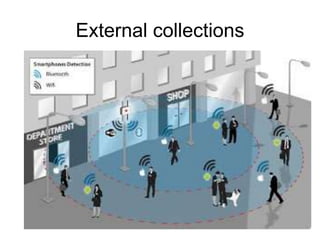
External collections
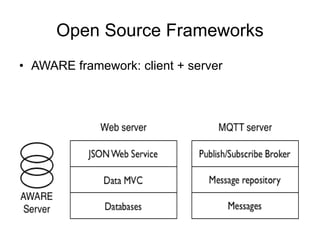
Open Source Frameworks 
• AWARE framework: client + server
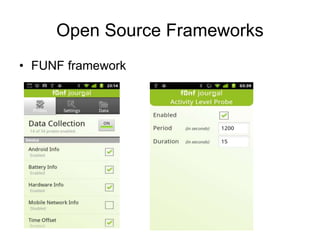
Open Source Frameworks 
• FUNF framework
Open Source Frameworks 
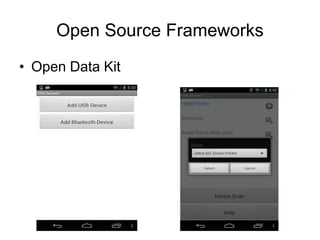
• Open Data Kit
Challenges for Open Source 
Frameworks. 
• Context-aware data collecting. How to 
reduce measurements and data 
transmission 
• A flexible data management. SD-card vs. 
Cloud 
• Portable (common) data formats 
• Built-in data processing
API vs. DPI 
• Traditionally: mobile OS presents API for 
built-in sensors 
• APIs used by mobile applications 
• The standard approach for crowd-sensing 
is to split data collecting and data 
processing 
• So, we have to switch to DPI – Data 
Programming Interfaces
Conclusion 
• A survey of the Open Source tools 
for mobile sensing. 
• Existing projects 
• Directions for the future research 
• The prediction: we will see mobile sensing as a part 
of mobile OS 
• An existing example: iBeacons в iOS
About us 
International team: Russia - Latvia (Moscow – 
Riga – Ventspils). Big history of developing 
innovative telecom and software services, 
international contests awards 
Research areas are: 
open API for telecom, 
web access for telecom data, 
Smart Cities, 
M2M applications, context-aware computing.

Sensing

  • 1.
    On Open SourceMobile Sensing Dmitry Namiot Lomonosov Moscow State University dnamiot@gmail.com Manfred Sneps-Sneppe ZNIIS, M2M Competence Center manfreds.sneps@gmail.com ruSMART 2014
  • 2.
    About Phone asa sensor model. • Smart phones as an ideal platform for collecting and processing context-related data. • Computational social science, crowdsensing • An an attempt to describe and categorize existing open source libraries for mobile sensing, • Describe architecture and design patterns • Discover directions for the future development.
  • 3.
    Contents Introduction Onchallenges for mobile phone sensing Open source libraries for mobile phone sensing The model and patterns Conclusion
  • 4.
    Introduction • Richsensing capabilities for smart phones • Collecting data about people’s social behavior (computational social science – e.g., Reality Mining) • Crowd-sensing for business-related tasks (e.g. OpenSignal) • Balance between energy efficiency, data collection, storage, and transmission procedures
  • 5.
    Challenges • Batteriesas a major challenge in achieving social sensing • Sensors power consumption: GPS vs. accelerometer • Context-aware data collecting. E.g. reuse location for phone on the table, SD card vs. cloud storage, etc. • High level of diversification in mobile sensors
  • 6.
  • 7.
    Open Source Frameworks • AWARE framework: client + server
  • 8.
    Open Source Frameworks • FUNF framework
  • 9.
    Open Source Frameworks • Open Data Kit
  • 10.
    Challenges for OpenSource Frameworks. • Context-aware data collecting. How to reduce measurements and data transmission • A flexible data management. SD-card vs. Cloud • Portable (common) data formats • Built-in data processing
  • 11.
    API vs. DPI • Traditionally: mobile OS presents API for built-in sensors • APIs used by mobile applications • The standard approach for crowd-sensing is to split data collecting and data processing • So, we have to switch to DPI – Data Programming Interfaces
  • 12.
    Conclusion • Asurvey of the Open Source tools for mobile sensing. • Existing projects • Directions for the future research • The prediction: we will see mobile sensing as a part of mobile OS • An existing example: iBeacons в iOS
  • 13.
    About us Internationalteam: Russia - Latvia (Moscow – Riga – Ventspils). Big history of developing innovative telecom and software services, international contests awards Research areas are: open API for telecom, web access for telecom data, Smart Cities, M2M applications, context-aware computing.