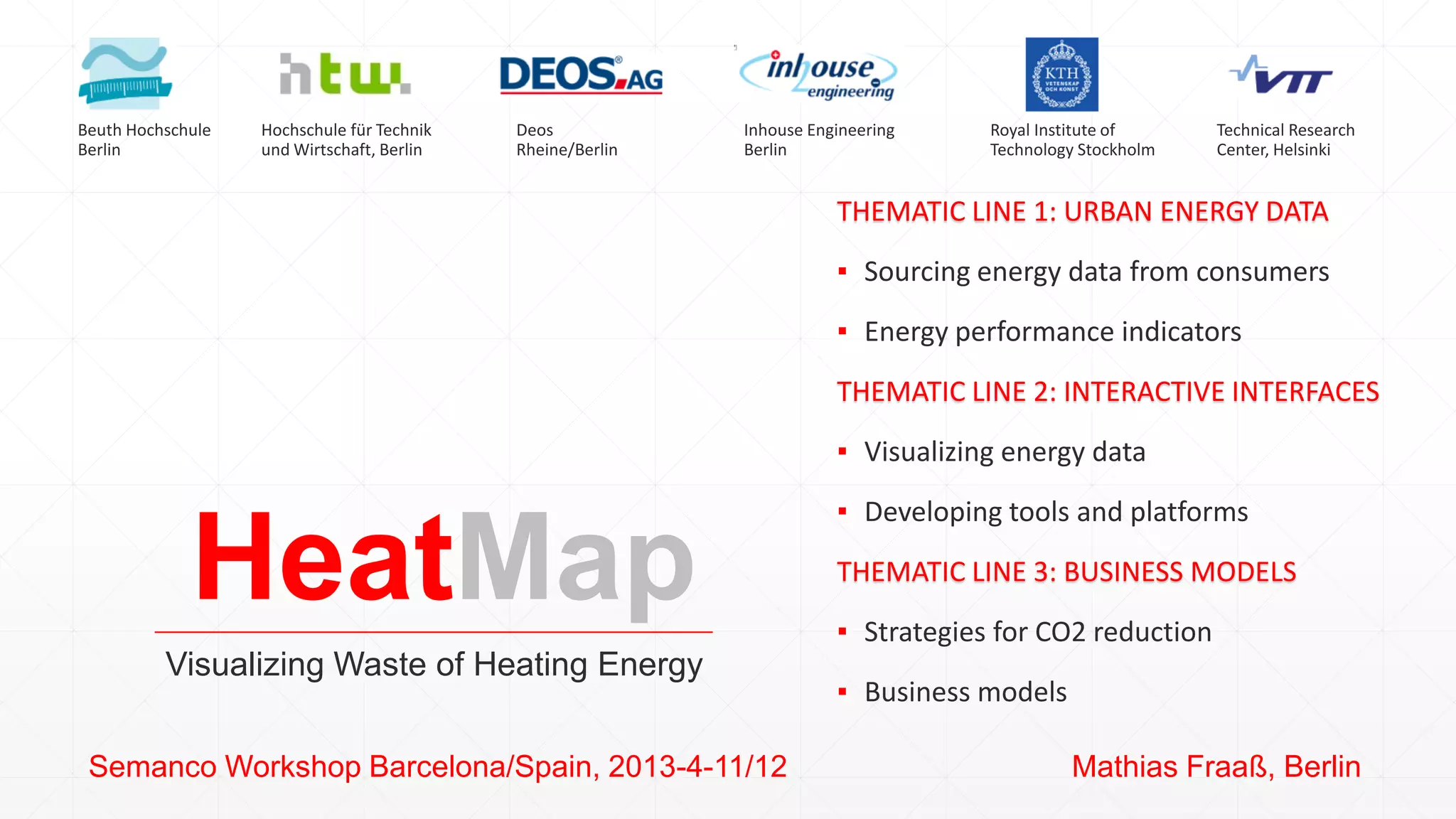
Beuth Hochschule   Hochschule für Technik   Deos            Inhouse Engineering    Royal Institute of     Technical Research
Berlin             und Wirtschaft, Berlin   Rheine/Berlin   Berlin                 Technology Stockholm   Center, Helsinki


                                                                       THEMATIC LINE 1: URBAN ENERGY DATA
                                                                       ▪ Sourcing energy data from consumers
                                                                       ▪ Energy performance indicators
                                                                       THEMATIC LINE 2: INTERACTIVE INTERFACES
                                                                       ▪ Visualizing energy data
                                                                       ▪ Developing tools and platforms

             HeatMap                                                   THEMATIC LINE 3: BUSINESS MODELS
                                                                       ▪ Strategies for CO2 reduction
          Visualizing Waste of Heating Energy
                                                                       ▪ Business models

 Semanco Workshop Barcelona/Spain, 2013-4-11/12                                             Mathias Fraaß, Berlin
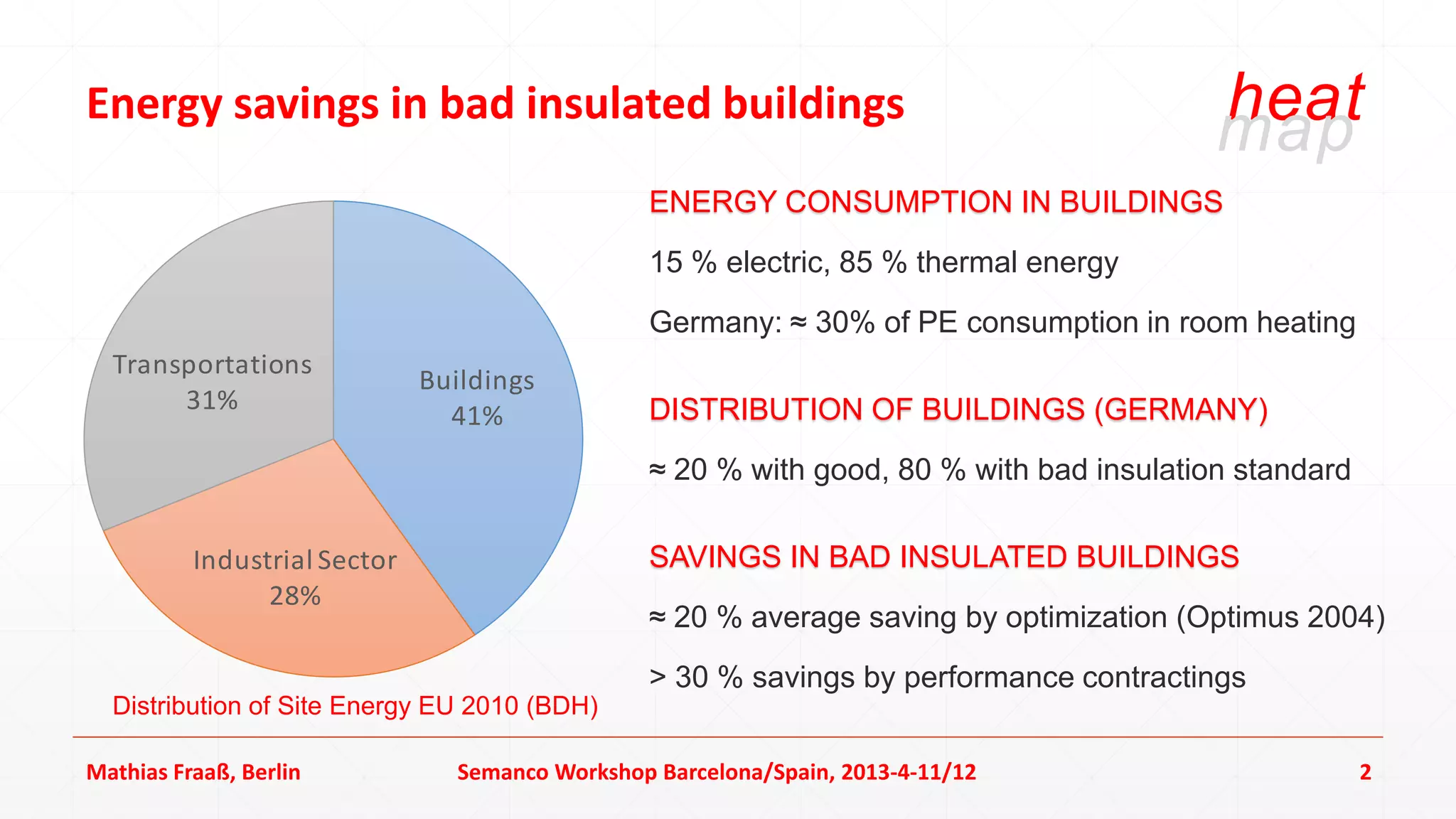
Energy savings in bad insulated buildings                                                heat
                                                                                         map
                                                ENERGY CONSUMPTION IN BUILDINGS
                                                15 % electric, 85 % thermal energy
                                                Germany: ≈ 30% of PE consumption in room heating
  Transportations
                              Buildings
       31%                                      DISTRIBUTION OF BUILDINGS (GERMANY)
                                41%
                                                ≈ 20 % with good, 80 % with bad insulation standard

          Industrial Sector                     SAVINGS IN BAD INSULATED BUILDINGS
                28%
                                                ≈ 20 % average saving by optimization (Optimus 2004)
                                                > 30 % savings by performance contractings
  Distribution of Site Energy EU 2010 (BDH)

Mathias Fraaß, Berlin           Semanco Workshop Barcelona/Spain, 2013-4-11/12                        2
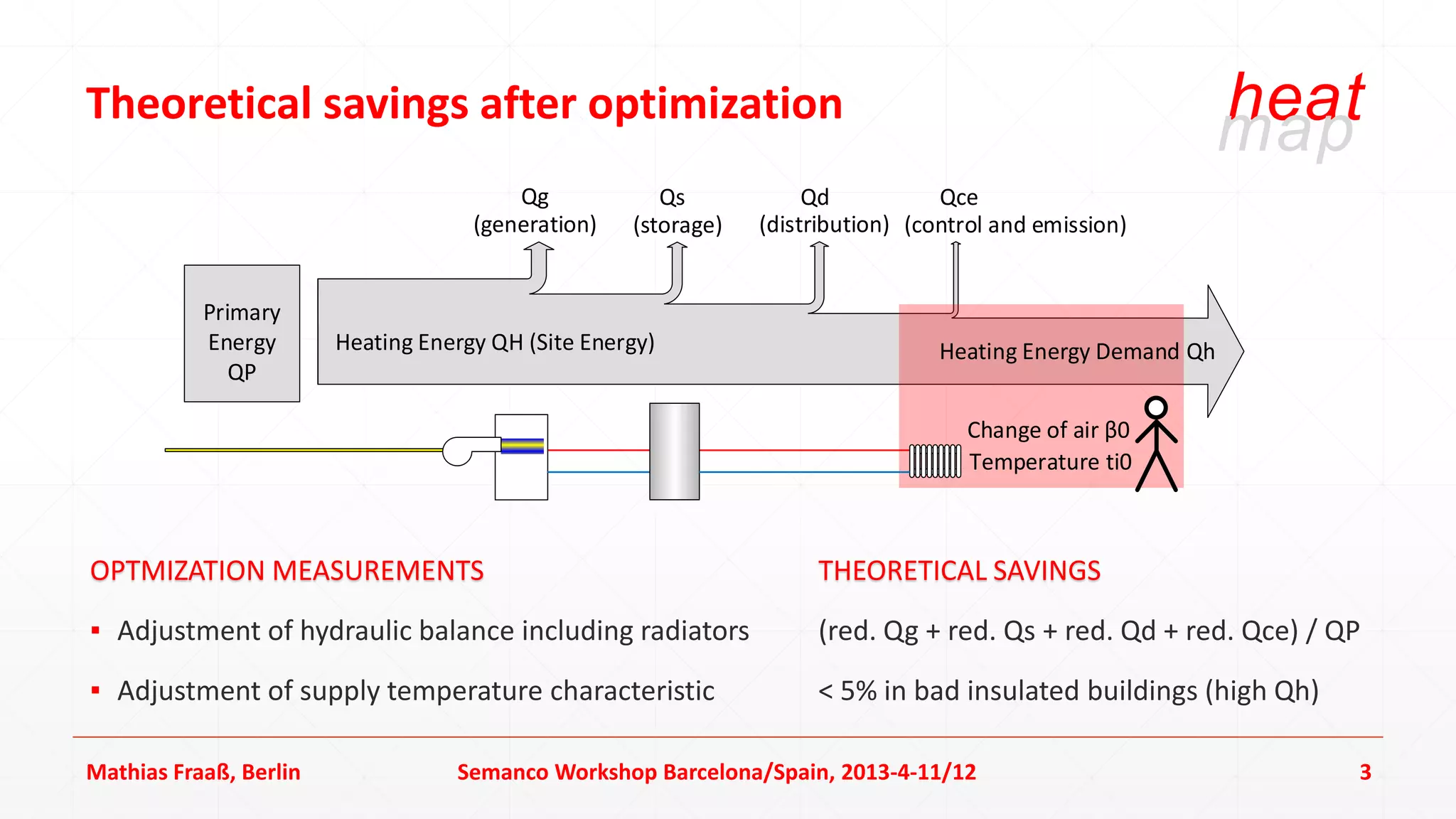
Theoretical savings after optimization                                                                       heat
                                                                                                             map
                                         Qg            Qs            Qd           Qce
                                     (generation)   (storage)   (distribution) (control and emission)


           Primary
           Energy       Heating Energy QH (Site Energy)                           Heating Energy Demand Qh
              QP

                                                                                    Change of air β0
                                                                                    Temperature ti0


OPTMIZATION MEASUREMENTS                                             THEORETICAL SAVINGS
▪ Adjustment of hydraulic balance including radiators                (red. Qg + red. Qs + red. Qd + red. Qce) / QP
▪ Adjustment of supply temperature characteristic                    < 5% in bad insulated buildings (high Qh)

Mathias Fraaß, Berlin              Semanco Workshop Barcelona/Spain, 2013-4-11/12                                3
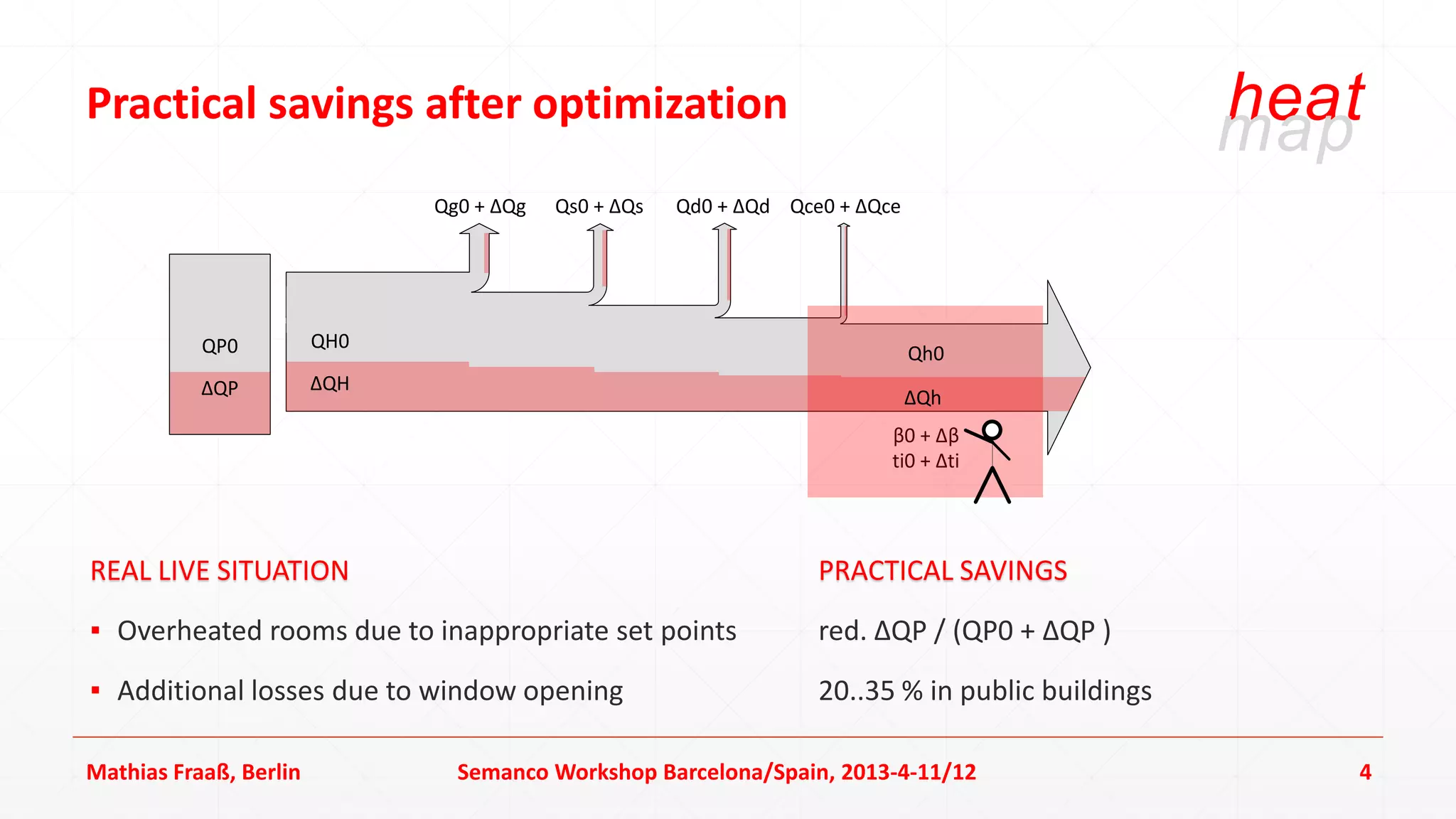
Practical savings after optimization                                                                      heat
                                                                                                          map
                                   Qg0 + ΔQg      Qs0 + ΔQs   Qd0 + ΔQd Qce0 + ΔQce


         Primär-
         energie    Heizenergie QH (Endenergie)
            Qp
          QP0        QH0
                                                                                      Qh0
           ΔQP          ΔQH
                                                                                      ΔQh
                                                                                  β0 + Δβ
                                                                                  ti0 + Δti


REAL LIVE SITUATION                                                        PRACTICAL SAVINGS
▪ Overheated rooms due to inappropriate set points                         red. ΔQP / (QP0 + ΔQP )
▪ Additional losses due to window opening                                  20..35 % in public buildings

Mathias Fraaß, Berlin                Semanco Workshop Barcelona/Spain, 2013-4-11/12                          4
Improving the distribution of energy waste                                                heat
                                                                                          map
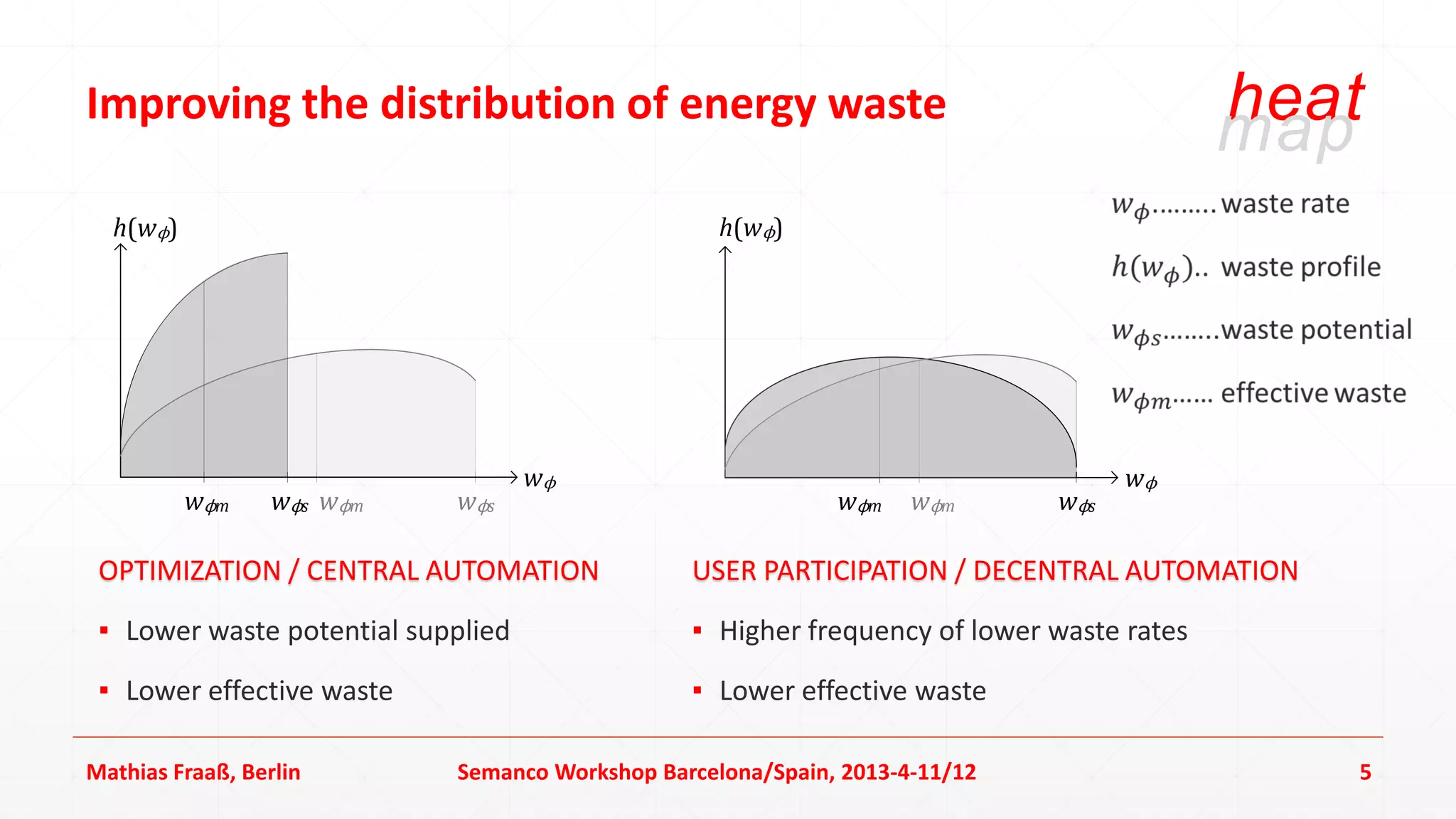
  h(wϕ)                                            h(wϕ)


                                    wϕ                                             wϕ
          wϕm     wϕs wϕm   wϕs                              wϕm    wϕm      wϕs

 OPTIMIZATION / CENTRAL AUTOMATION              USER PARTICIPATION / DECENTRAL AUTOMATION
 ▪ Lower waste potential supplied               ▪ Higher frequency of lower waste rates
 ▪ Lower effective waste                        ▪ Lower effective waste

Mathias Fraaß, Berlin       Semanco Workshop Barcelona/Spain, 2013-4-11/12                   5
Heatmap                                                                                 heat
                                                                                        map
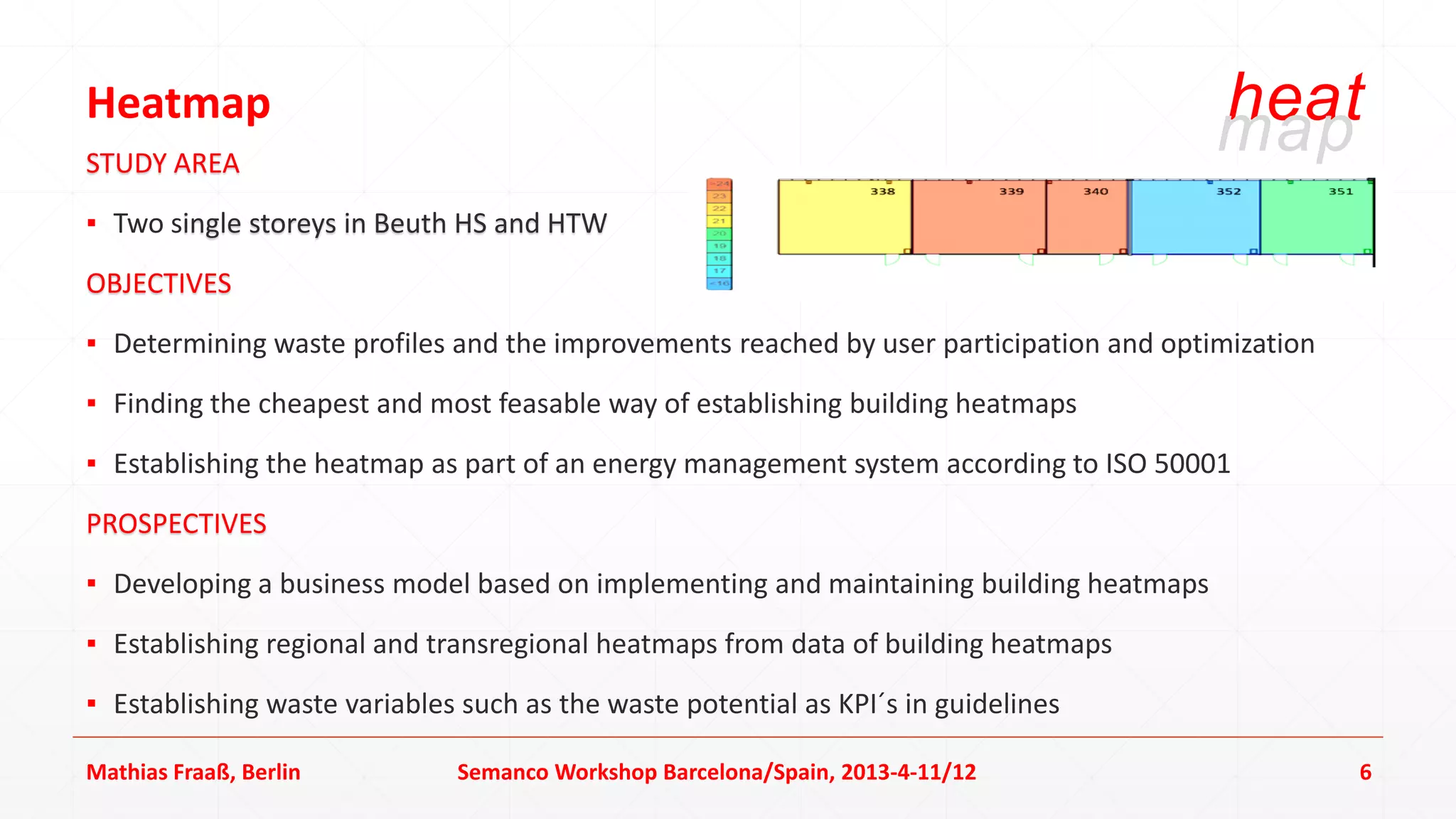
STUDY AREA
▪ Two single storeys in Beuth HS and HTW
OBJECTIVES
▪ Determining waste profiles and the improvements reached by user participation and optimization
▪ Finding the cheapest and most feasable way of establishing building heatmaps
▪ Establishing the heatmap as part of an energy management system according to ISO 50001
PROSPECTIVES
▪ Developing a business model based on implementing and maintaining building heatmaps
▪ Establishing regional and transregional heatmaps from data of building heatmaps
▪ Establishing waste variables such as the waste potential as KPI´s in guidelines

Mathias Fraaß, Berlin         Semanco Workshop Barcelona/Spain, 2013-4-11/12                       6

Semanco workshop Theme3 - Heatmap

  • 1.
    Beuth Hochschule Hochschule für Technik Deos Inhouse Engineering Royal Institute of Technical Research Berlin und Wirtschaft, Berlin Rheine/Berlin Berlin Technology Stockholm Center, Helsinki THEMATIC LINE 1: URBAN ENERGY DATA ▪ Sourcing energy data from consumers ▪ Energy performance indicators THEMATIC LINE 2: INTERACTIVE INTERFACES ▪ Visualizing energy data ▪ Developing tools and platforms HeatMap THEMATIC LINE 3: BUSINESS MODELS ▪ Strategies for CO2 reduction Visualizing Waste of Heating Energy ▪ Business models Semanco Workshop Barcelona/Spain, 2013-4-11/12 Mathias Fraaß, Berlin
  • 2.
    Energy savings inbad insulated buildings heat map ENERGY CONSUMPTION IN BUILDINGS 15 % electric, 85 % thermal energy Germany: ≈ 30% of PE consumption in room heating Transportations Buildings 31% DISTRIBUTION OF BUILDINGS (GERMANY) 41% ≈ 20 % with good, 80 % with bad insulation standard Industrial Sector SAVINGS IN BAD INSULATED BUILDINGS 28% ≈ 20 % average saving by optimization (Optimus 2004) > 30 % savings by performance contractings Distribution of Site Energy EU 2010 (BDH) Mathias Fraaß, Berlin Semanco Workshop Barcelona/Spain, 2013-4-11/12 2
  • 3.
    Theoretical savings afteroptimization heat map Qg Qs Qd Qce (generation) (storage) (distribution) (control and emission) Primary Energy Heating Energy QH (Site Energy) Heating Energy Demand Qh QP Change of air β0 Temperature ti0 OPTMIZATION MEASUREMENTS THEORETICAL SAVINGS ▪ Adjustment of hydraulic balance including radiators (red. Qg + red. Qs + red. Qd + red. Qce) / QP ▪ Adjustment of supply temperature characteristic < 5% in bad insulated buildings (high Qh) Mathias Fraaß, Berlin Semanco Workshop Barcelona/Spain, 2013-4-11/12 3
  • 4.
    Practical savings afteroptimization heat map Qg0 + ΔQg Qs0 + ΔQs Qd0 + ΔQd Qce0 + ΔQce Primär- energie Heizenergie QH (Endenergie) Qp QP0 QH0 Qh0 ΔQP ΔQH ΔQh β0 + Δβ ti0 + Δti REAL LIVE SITUATION PRACTICAL SAVINGS ▪ Overheated rooms due to inappropriate set points red. ΔQP / (QP0 + ΔQP ) ▪ Additional losses due to window opening 20..35 % in public buildings Mathias Fraaß, Berlin Semanco Workshop Barcelona/Spain, 2013-4-11/12 4
  • 5.
    Improving the distributionof energy waste heat map h(wϕ) h(wϕ) wϕ wϕ wϕm wϕs wϕm wϕs wϕm wϕm wϕs OPTIMIZATION / CENTRAL AUTOMATION USER PARTICIPATION / DECENTRAL AUTOMATION ▪ Lower waste potential supplied ▪ Higher frequency of lower waste rates ▪ Lower effective waste ▪ Lower effective waste Mathias Fraaß, Berlin Semanco Workshop Barcelona/Spain, 2013-4-11/12 5
  • 6.
    Heatmap heat map STUDY AREA ▪ Two single storeys in Beuth HS and HTW OBJECTIVES ▪ Determining waste profiles and the improvements reached by user participation and optimization ▪ Finding the cheapest and most feasable way of establishing building heatmaps ▪ Establishing the heatmap as part of an energy management system according to ISO 50001 PROSPECTIVES ▪ Developing a business model based on implementing and maintaining building heatmaps ▪ Establishing regional and transregional heatmaps from data of building heatmaps ▪ Establishing waste variables such as the waste potential as KPI´s in guidelines Mathias Fraaß, Berlin Semanco Workshop Barcelona/Spain, 2013-4-11/12 6