SELF REFERENCIAL STRUCTURES
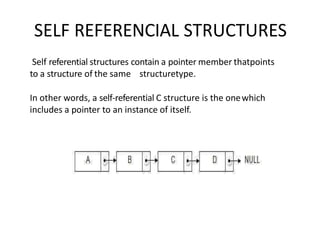
Self referential structures contain a pointer member thatpoints
to a structure of the same structuretype.
In other words, a self-referential C structure is the onewhich
includes a pointer to an instance of itself.
Syntax of Self-Referential Structure in C Programming
struct demo
{
Data_type member1, member2;
struct demo *ptr1,*ptr2;
}
struct student
{
int rollno;
char name[20];
struct student* link;
};
• As you can see in the syntax, link is a structure pointer that is
pointing to the structure student, so structure student is a self
referential structure.
• These types of data structures are helpful in implementing data
structures like linked lists and trees.
• It is an error to use a structure variableas a member of its own
struct type structure or union type union,respectively.
Self Referential Structure Example
struct student
{
int rollno;
char name[20];
struct student* link;
};
 Link
typeas
 is a pointer member that points to a structure ofthe same
the one being declared.
 is referred to as a link. Links can tie one node to another node.
The concept of linked lists,, stacks,queues, trees and manyothers
works on the principle of self-referentialstructures.
#include <stdio.h>
#include <conio.h>
#include<string.h>
struct student
{
int rollno;
char name[20];
struct student* link;
};
An example of Self-Referential Structure in C
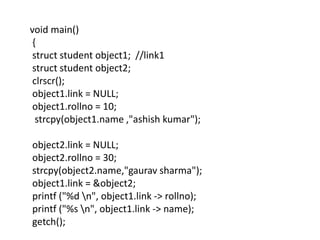
void main()
{
struct student object1; //link1
struct student object2;
clrscr();
object1.link = NULL;
object1.rollno = 10;
strcpy(object1.name ,"ashish kumar");
object2.link = NULL;
object2.rollno = 30;
strcpy(object2.name,"gaurav sharma");
object1.link = &object2;
printf ("%d n", object1.link -> rollno);
printf ("%s n", object1.link -> name);
getch();
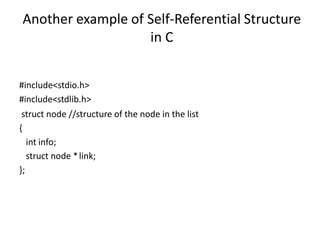
Another example of Self-Referential Structure
in C
#include<stdio.h>
#include<stdlib.h>
struct node //structure of the node in the list
{
int info;
struct node *link;
};
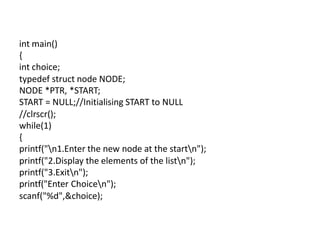
int main()
{
int choice;
typedef struct node NODE;
NODE *PTR, *START;
START = NULL;//Initialising START to NULL
//clrscr();
while(1)
{
printf("n1.Enter the new node at the startn");
printf("2.Display the elements of the listn");
printf("3.Exitn");
printf("Enter Choicen");
scanf("%d",&choice);
switch(choice)
{
case 1:PTR = (NODE*)malloc(sizeof(NODE));
//Allocating Memory to new node
printf("Enter the number you want to enter at the startn");
scanf("%d",&PTR->info);
if(START == NULL)
{
START = PTR;
PTR->link = NULL;
}
else
{
PTR->link = START;
START = PTR;
}
break;
case 2:PTR = START;
printf("The elements in the list are::n");
while(PTR->link != NULL)
{
printf("%dt",PTR->info);PTR = PTR->link;}
printf("%d",PTR->info);
break;
case 3:exit(1);
break;
default: printf("nEnter ValidChoice");
}
}
return 0;
}

self_refrential_structures.pptx

  • 1.
    SELF REFERENCIAL STRUCTURES Selfreferential structures contain a pointer member thatpoints to a structure of the same structuretype. In other words, a self-referential C structure is the onewhich includes a pointer to an instance of itself.
  • 2.
    Syntax of Self-ReferentialStructure in C Programming struct demo { Data_type member1, member2; struct demo *ptr1,*ptr2; } struct student { int rollno; char name[20]; struct student* link; };
  • 3.
    • As youcan see in the syntax, link is a structure pointer that is pointing to the structure student, so structure student is a self referential structure. • These types of data structures are helpful in implementing data structures like linked lists and trees. • It is an error to use a structure variableas a member of its own struct type structure or union type union,respectively.
  • 4.
    Self Referential StructureExample struct student { int rollno; char name[20]; struct student* link; };
  • 5.
     Link typeas  isa pointer member that points to a structure ofthe same the one being declared.  is referred to as a link. Links can tie one node to another node.
  • 6.
    The concept oflinked lists,, stacks,queues, trees and manyothers works on the principle of self-referentialstructures.
  • 7.
    #include <stdio.h> #include <conio.h> #include<string.h> structstudent { int rollno; char name[20]; struct student* link; }; An example of Self-Referential Structure in C
  • 8.
    void main() { struct studentobject1; //link1 struct student object2; clrscr(); object1.link = NULL; object1.rollno = 10; strcpy(object1.name ,"ashish kumar"); object2.link = NULL; object2.rollno = 30; strcpy(object2.name,"gaurav sharma"); object1.link = &object2; printf ("%d n", object1.link -> rollno); printf ("%s n", object1.link -> name); getch();
  • 9.
    Another example ofSelf-Referential Structure in C #include<stdio.h> #include<stdlib.h> struct node //structure of the node in the list { int info; struct node *link; };
  • 10.
    int main() { int choice; typedefstruct node NODE; NODE *PTR, *START; START = NULL;//Initialising START to NULL //clrscr(); while(1) { printf("n1.Enter the new node at the startn"); printf("2.Display the elements of the listn"); printf("3.Exitn"); printf("Enter Choicen"); scanf("%d",&choice);
  • 11.
    switch(choice) { case 1:PTR =(NODE*)malloc(sizeof(NODE)); //Allocating Memory to new node printf("Enter the number you want to enter at the startn"); scanf("%d",&PTR->info); if(START == NULL) { START = PTR;
  • 12.
    PTR->link = NULL; } else { PTR->link= START; START = PTR; } break; case 2:PTR = START; printf("The elements in the list are::n"); while(PTR->link != NULL)
  • 13.
    { printf("%dt",PTR->info);PTR = PTR->link;} printf("%d",PTR->info); break; case3:exit(1); break; default: printf("nEnter ValidChoice"); } } return 0; }