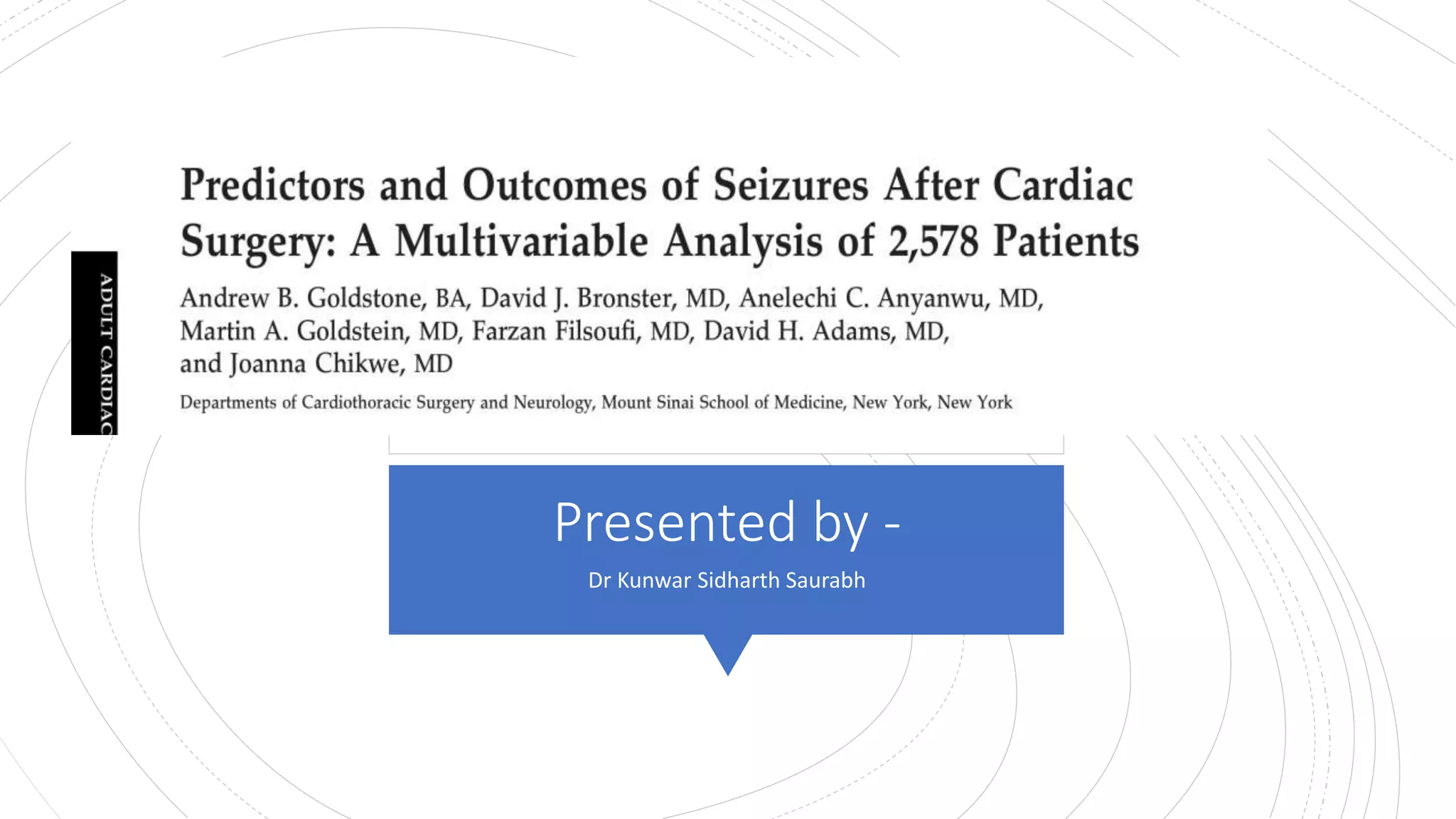
Presented by -
Dr Kunwar Sidharth Saurabh
AIM OF THE
STUDY
• TO DEFINE "PRE" OPERATIVE PREDICTORS OF
SEIZURES
• IMPACT ON POSTOPERATIVE OUTCOME I.e
morbidity, mortality and 1-year survival
INTRODUCTION
• Seizures occurring after cardiac surgery are thought to be result of -
• Cerebral ischemia from hypoperfusion
• Particulate emboli
• Air emboli
• Metabolic derangements
• Drug interactions
• Drug withdrawal (eg Alcohol)
PATIENT
POPULATION
AND DATA
• 2578 CONSECUTIVE PATIENTS
UNDERGOING CARDIAC PROCEDURES
BETWEEN APRIL 2007 TO DECEMBER
2009.
• RETROSPECTIVE DATABASE WAS ALSO
ADDED TO THE PROSPECTIVE
DATABASE
DEFINITIONS
• Critical preoperative states were defined as -
• Presence of VT or VF
• Preoperative cardiac massage
• Preoperative ventilation
• Preoperative requirement of ionotropes
• Preoperative requirement of IABP
DEFINITIONS (contd)
• SEIZURE WAS DEFINED AS -
Sudden episode of transient neurologic symptoms
featuring involuntary motor movements OR by
EEG in patients with non-conclusive seizures.
Status epilepticus was defined as continuous
seizures or intermittent seizure WITHOUT return
of consciousness lasting longer than 30 minutes.
• SEIZURES WERE CLASSIFIED BY ATTENDING
NEUROLOGIST BASED ON CLINICAL HISTORY AND
EXAMINATION , REVERSING SEDATION AND
PARALYSIS IN ALL PATIENTS.
Contd..
CT scans are currently performed for
ALL seizures, with the protocol
evolving during the study period.
EARLY PROTOCOL WAS NOT TO PERFORM
SCANS FOR ISOLATED SEIZURES THAT
RESOLVED SPONTANEOUSLY WITH NO
NEUROLOGICAL DEFICIT AFTER 24 HOURS.
MRI was performed in non-concluding CT reports, if the patient was non
ionotropic dependent.
OPERATIVE MORTALITY was defined as death within the index
hospitalization or within 30 days of operation , REGARDLESS of the cause
SURGICAL TECHNIQUES
General pattern were noted as
per institutional preferred
practices.
All patients had TEE for
evaluation of thoracic aorta for
evaluation of atheroma
Routine EPIAORTIC USG to
identify optimal cannulation
sites.
All patients except those with
known prothrombotic states
received aminocaproic acid at a
dose of 150mg/kg over 30 min,
the 25mg/kg/hr for the
duration of case.
APROTININ and TRANEMAXIC
acid were not used.
Contd..
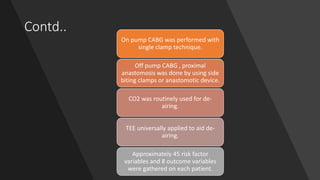
On pump CABG was performed with
single clamp technique.
Off pump CABG , proximal
anastomosis was done by using side
biting clamps or anastomotic device.
CO2 was routinely used for de-
airing.
TEE universally applied to aid de-
airing.
Approximately 45 risk factor
variables and 8 outcome variables
were gathered on each patient.
RESULTS
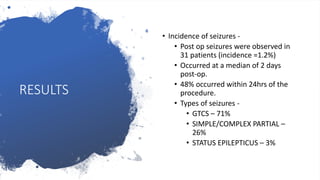
• Incidence of seizures -
• Post op seizures were observed in
31 patients (incidence =1.2%)
• Occurred at a median of 2 days
post-op.
• 48% occurred within 24hrs of the
procedure.
• Types of seizures -
• GTCS – 71%
• SIMPLE/COMPLEX PARTIAL –
26%
• STATUS EPILEPTICUS – 3%
Contd..
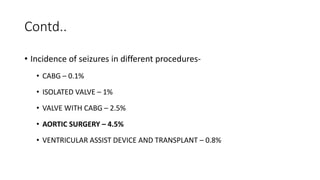
• Incidence of seizures in different procedures-
• CABG – 0.1%
• ISOLATED VALVE – 1%
• VALVE WITH CABG – 2.5%
• AORTIC SURGERY – 4.5%
• VENTRICULAR ASSIST DEVICE AND TRANSPLANT – 0.8%
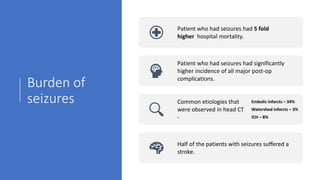
Burden of
seizures
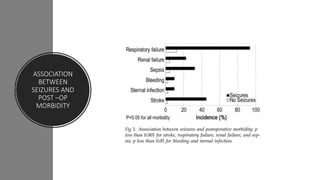
Patient who had seizures had 5 fold
higher hospital mortality.
Patient who had seizures had significantly
higher incidence of all major post-op
complications.
Common etiologies that
were observed in head CT
-
Embolic infarcts – 34%
Watershed infarcts – 3%
ICH – 8%
Half of the patients with seizures suffered a
stroke.
Contd ..
• 22 of 31 patients who suffered seizures survived to discharge.
• 60% were discharged without neurological deficit.
• Lower 1 year survival rate for patients having seizures (53% v/s 84%)
ASSOCIATION
BETWEEN
SEIZURES AND
POST –OP
MORBIDITY
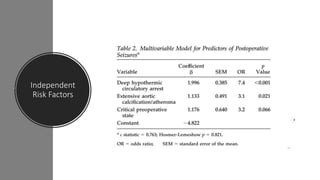
Independent
Risk Factors
DISCUSSION
• Incidence of seizures – 1.2%
• Seizures can be under estimated in the immediate postoperative
period when the patients are sedated and paralyzed.
• Retrospective studies showed Tranemaxic Acid as independent
predictor of seizures, hence it was not used in this study.
• Seizures are considered as markers of both focal and global cerebral
injury.
• Increased risk were observed in operations which required opening of
chambers suggesting role of air and particulate embolism.
Contd..
• Risks not included in this study were -
• Inadequate cerebral protection
• Drug withdrawal
• Early CT may help in treating reversible causes
• MRI is not a specific test with aprrox 5% patients have diffusion defect
even before cardiac surgery and 45% have changes post cardiac
surgery with NO study co-relating the incidence of seizures and MRI
changes.
• MRI can be precluded in patients having EPIOCARDIAL pacing wires.
THANKS

Seizures post cardiac surgery

  • 1.
    Presented by - DrKunwar Sidharth Saurabh
  • 2.
    AIM OF THE STUDY •TO DEFINE "PRE" OPERATIVE PREDICTORS OF SEIZURES • IMPACT ON POSTOPERATIVE OUTCOME I.e morbidity, mortality and 1-year survival
  • 3.
    INTRODUCTION • Seizures occurringafter cardiac surgery are thought to be result of - • Cerebral ischemia from hypoperfusion • Particulate emboli • Air emboli • Metabolic derangements • Drug interactions • Drug withdrawal (eg Alcohol)
  • 4.
    PATIENT POPULATION AND DATA • 2578CONSECUTIVE PATIENTS UNDERGOING CARDIAC PROCEDURES BETWEEN APRIL 2007 TO DECEMBER 2009. • RETROSPECTIVE DATABASE WAS ALSO ADDED TO THE PROSPECTIVE DATABASE
  • 5.
    DEFINITIONS • Critical preoperativestates were defined as - • Presence of VT or VF • Preoperative cardiac massage • Preoperative ventilation • Preoperative requirement of ionotropes • Preoperative requirement of IABP
  • 6.
    DEFINITIONS (contd) • SEIZUREWAS DEFINED AS - Sudden episode of transient neurologic symptoms featuring involuntary motor movements OR by EEG in patients with non-conclusive seizures. Status epilepticus was defined as continuous seizures or intermittent seizure WITHOUT return of consciousness lasting longer than 30 minutes. • SEIZURES WERE CLASSIFIED BY ATTENDING NEUROLOGIST BASED ON CLINICAL HISTORY AND EXAMINATION , REVERSING SEDATION AND PARALYSIS IN ALL PATIENTS.
  • 7.
    Contd.. CT scans arecurrently performed for ALL seizures, with the protocol evolving during the study period. EARLY PROTOCOL WAS NOT TO PERFORM SCANS FOR ISOLATED SEIZURES THAT RESOLVED SPONTANEOUSLY WITH NO NEUROLOGICAL DEFICIT AFTER 24 HOURS. MRI was performed in non-concluding CT reports, if the patient was non ionotropic dependent. OPERATIVE MORTALITY was defined as death within the index hospitalization or within 30 days of operation , REGARDLESS of the cause
  • 8.
    SURGICAL TECHNIQUES General patternwere noted as per institutional preferred practices. All patients had TEE for evaluation of thoracic aorta for evaluation of atheroma Routine EPIAORTIC USG to identify optimal cannulation sites. All patients except those with known prothrombotic states received aminocaproic acid at a dose of 150mg/kg over 30 min, the 25mg/kg/hr for the duration of case. APROTININ and TRANEMAXIC acid were not used.
  • 9.
    Contd.. On pump CABGwas performed with single clamp technique. Off pump CABG , proximal anastomosis was done by using side biting clamps or anastomotic device. CO2 was routinely used for de- airing. TEE universally applied to aid de- airing. Approximately 45 risk factor variables and 8 outcome variables were gathered on each patient.
  • 10.
    RESULTS • Incidence ofseizures - • Post op seizures were observed in 31 patients (incidence =1.2%) • Occurred at a median of 2 days post-op. • 48% occurred within 24hrs of the procedure. • Types of seizures - • GTCS – 71% • SIMPLE/COMPLEX PARTIAL – 26% • STATUS EPILEPTICUS – 3%
  • 11.
    Contd.. • Incidence ofseizures in different procedures- • CABG – 0.1% • ISOLATED VALVE – 1% • VALVE WITH CABG – 2.5% • AORTIC SURGERY – 4.5% • VENTRICULAR ASSIST DEVICE AND TRANSPLANT – 0.8%
  • 12.
    Burden of seizures Patient whohad seizures had 5 fold higher hospital mortality. Patient who had seizures had significantly higher incidence of all major post-op complications. Common etiologies that were observed in head CT - Embolic infarcts – 34% Watershed infarcts – 3% ICH – 8% Half of the patients with seizures suffered a stroke.
  • 13.
    Contd .. • 22of 31 patients who suffered seizures survived to discharge. • 60% were discharged without neurological deficit. • Lower 1 year survival rate for patients having seizures (53% v/s 84%)
  • 14.
  • 16.
  • 17.
    DISCUSSION • Incidence ofseizures – 1.2% • Seizures can be under estimated in the immediate postoperative period when the patients are sedated and paralyzed. • Retrospective studies showed Tranemaxic Acid as independent predictor of seizures, hence it was not used in this study. • Seizures are considered as markers of both focal and global cerebral injury. • Increased risk were observed in operations which required opening of chambers suggesting role of air and particulate embolism.
  • 18.
    Contd.. • Risks notincluded in this study were - • Inadequate cerebral protection • Drug withdrawal • Early CT may help in treating reversible causes • MRI is not a specific test with aprrox 5% patients have diffusion defect even before cardiac surgery and 45% have changes post cardiac surgery with NO study co-relating the incidence of seizures and MRI changes. • MRI can be precluded in patients having EPIOCARDIAL pacing wires.
  • 19.