Department Of Seed Science & Technology
Topic:- Seed Sampling
SUBMITTED TO: SUBMITTED BY :
Mrs.Gyanika Shukla Dharmendra Yadav
M.Sc.(Ag.) Seed Science & Tech.
3nd Sem.
contents
Introduction.
The Seed Lot.
Sample.
Seed Sampling.
Objectives of Sampling.
Types of Sampling .
Sampling methods.
Sampling intensity.
Sampling equipments.
Precautions of Sampling.
Introduction
In a laboratory, only a small portion (quantity) of a seed lot
can be examined.
It is therefore important that this small portion is
representative of the seed lot.
Drawing of a representative sample is fundamental in order
to obtain uniform, accurate and reproducible results.
The Seed Lot
 A seed lot is a specific, identified quantity of seed whose
purity and quality is homogenous throughout entire lot.
The maximum size of seed lot prescribed for agricultural
and horticultural seed is 20,000 kg.
Sample
• It is the representative of homogenous seed lot and
used for seed quality analysis in the seed testing
laboratory.
• It ensures that the small size of sample should truly
represent all the constituents of seed lot in same
proportion.
• Sampling refers to Drawing a small quantity of
seeds from various portions of a seed lot in such a
way that the sample should contain the same
constituents as that of entire seed lot.
Seed Sampling
The process of obtaining a seed sample of a size
suitable for test in which the same constituents are
present as in the seed lot and in the same
proportions.
Objectives of Sampling
The objective of sampling is to obtain a sample of a
size suitable for tests, in which the probability of a
constituent being present is determined only by its
level of occurrence in the seed lot.
Types of Sampling
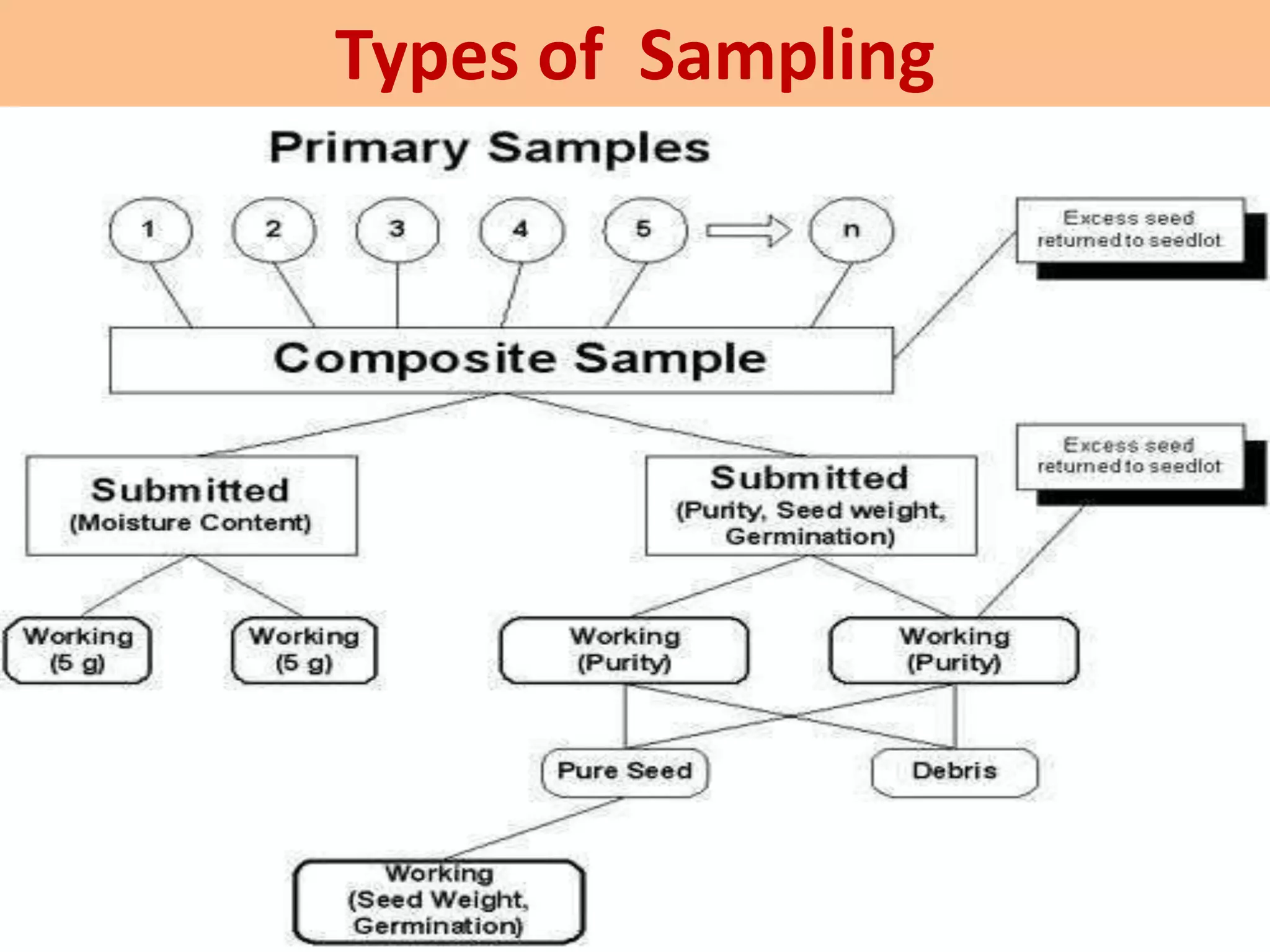
• Primary sample: A primary sample is a small portion taken from one
point in the lot or container or bag.
• Composite sample: The composite sample is formed by combination
and mixing all the primary samples taken from the lot or container or
bag.
• Submitted sample: A submitted sample is a sample submitted to testing
station. It must be of at least the size specified in the International Seed
testing Association (ISTA) rule for submitted sample and may comprise
either the whole or a sub-sample of the composite sample.
• Working sample: The working sample is a sub-sample taken from the
submitted sample in the laboratory, on which one of the seed qualities
is done.
• Sub-sample: A sub-sample is the portion of a sample obtained by
reducing the sample using one of the sampling methods for sampling in
the laboratory.
Types of Sampling
Sampling methods.
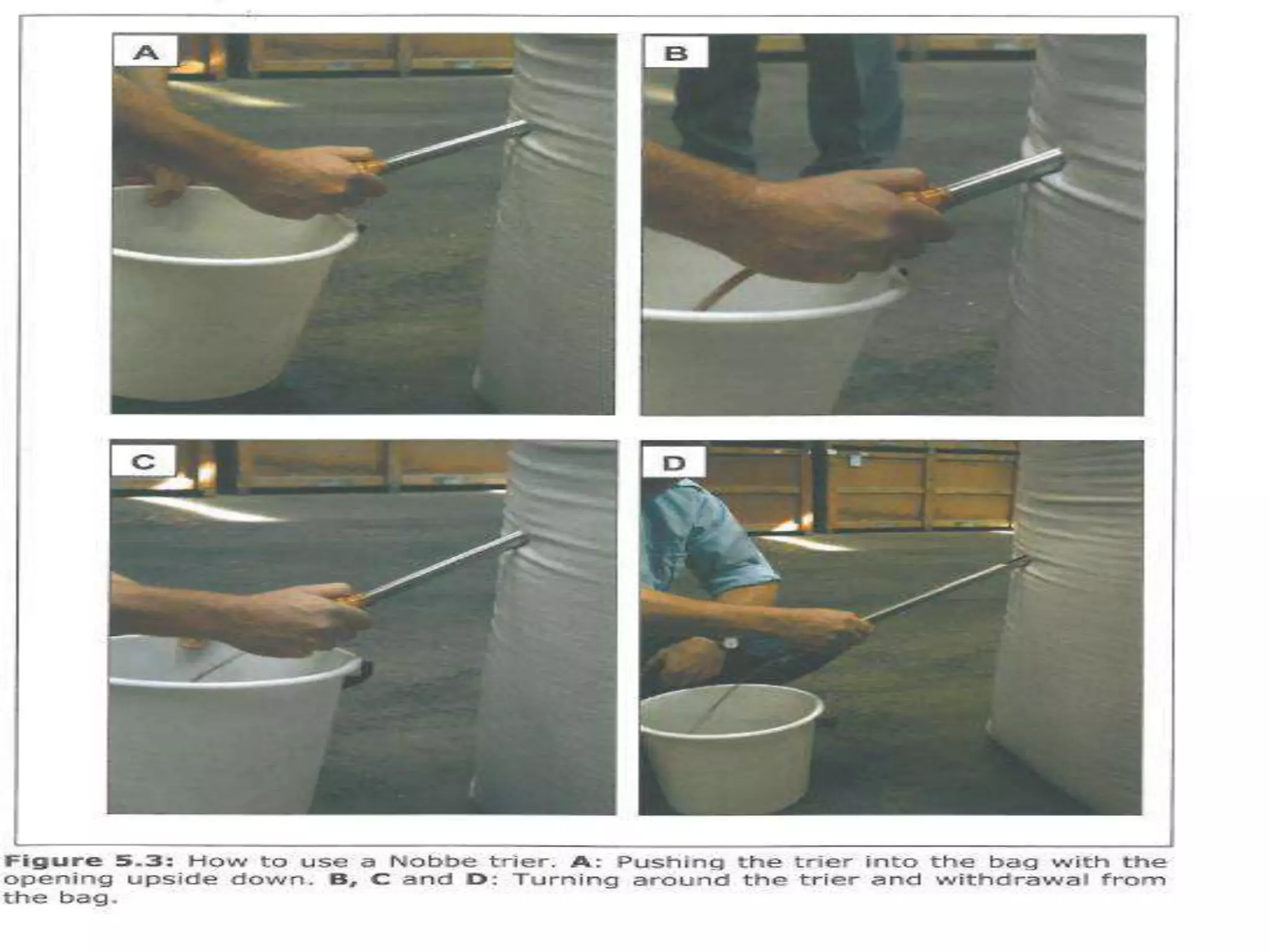
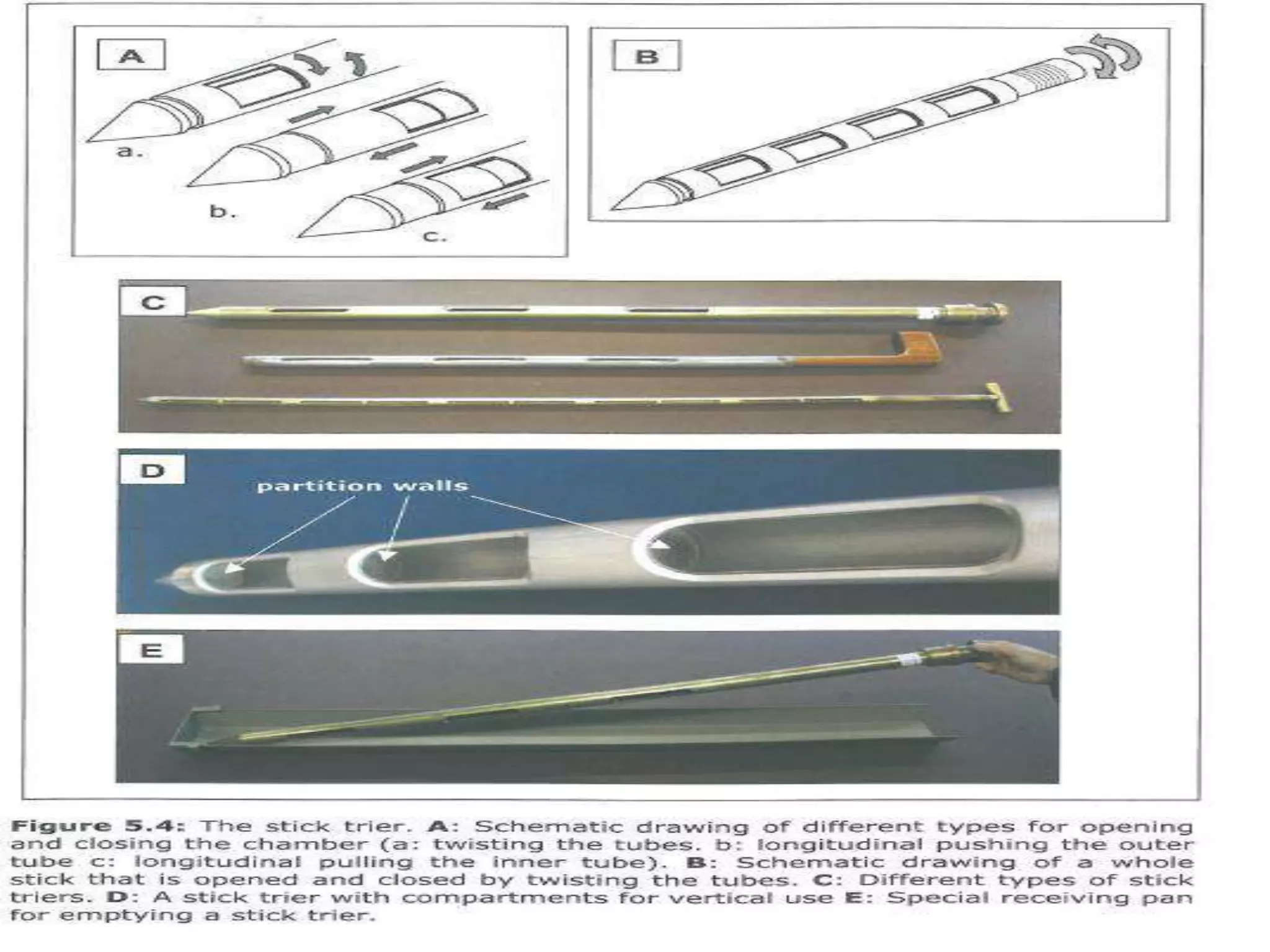
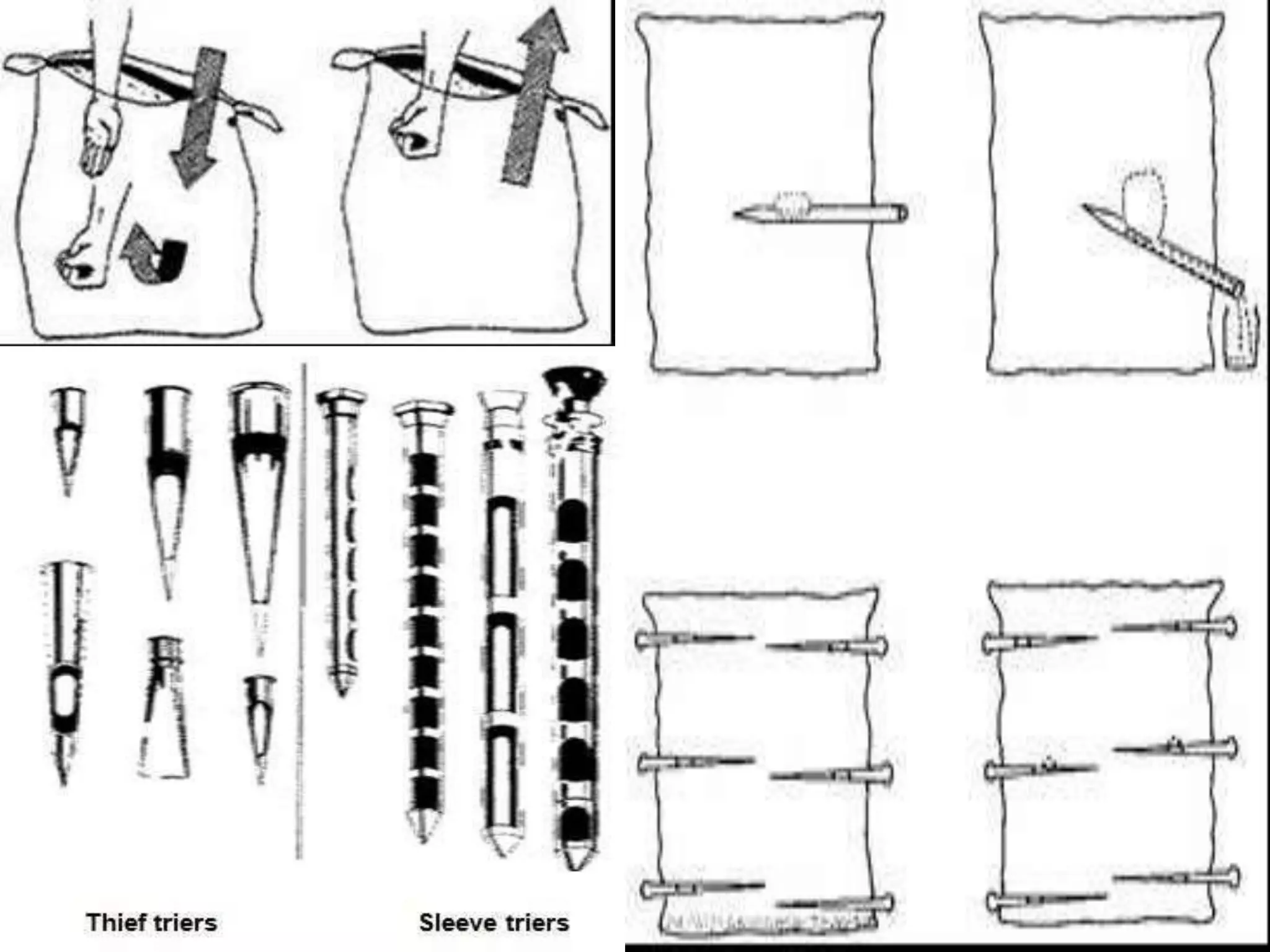
1.Mechanical sampling: It is a sampling technique followed
using the various equipments such as Nobbe trier, sleeve
type trier or stick trier (with compartments or without
compartments),thief trier, cargo sampler, pelican sampler,
automatic sampler, etc.,
2. Hand sampling: This method is applicable for non- free
flowing or extremely chaffy seeds like grass seeds, cotton
(fuzzy) seeds, Andropogan spp, Cenchrus spp., Dichanthium
spp, Stylosanthes and other genera of tree and shrub seeds
like, Acer, Ailanthus, Cedrela, Fraxinus,Quercus, Juglans,
Populus and Tectona. The major disadvantages in hand
sampling are (i) time consuming and (ii) not possible beyond
30-40 cm depth.
Sampling intensity
• Sampling intensity in the ISTA Rules has been
established to meet statistical requirements.
• Minimum numbers of primary samples have been
defined for three different situations:
-containers between 15 and 100 kg
-containers smaller than 15 kg
-containers larger than 100 kg (or streams of seed
entering containers).
Sampling equipments
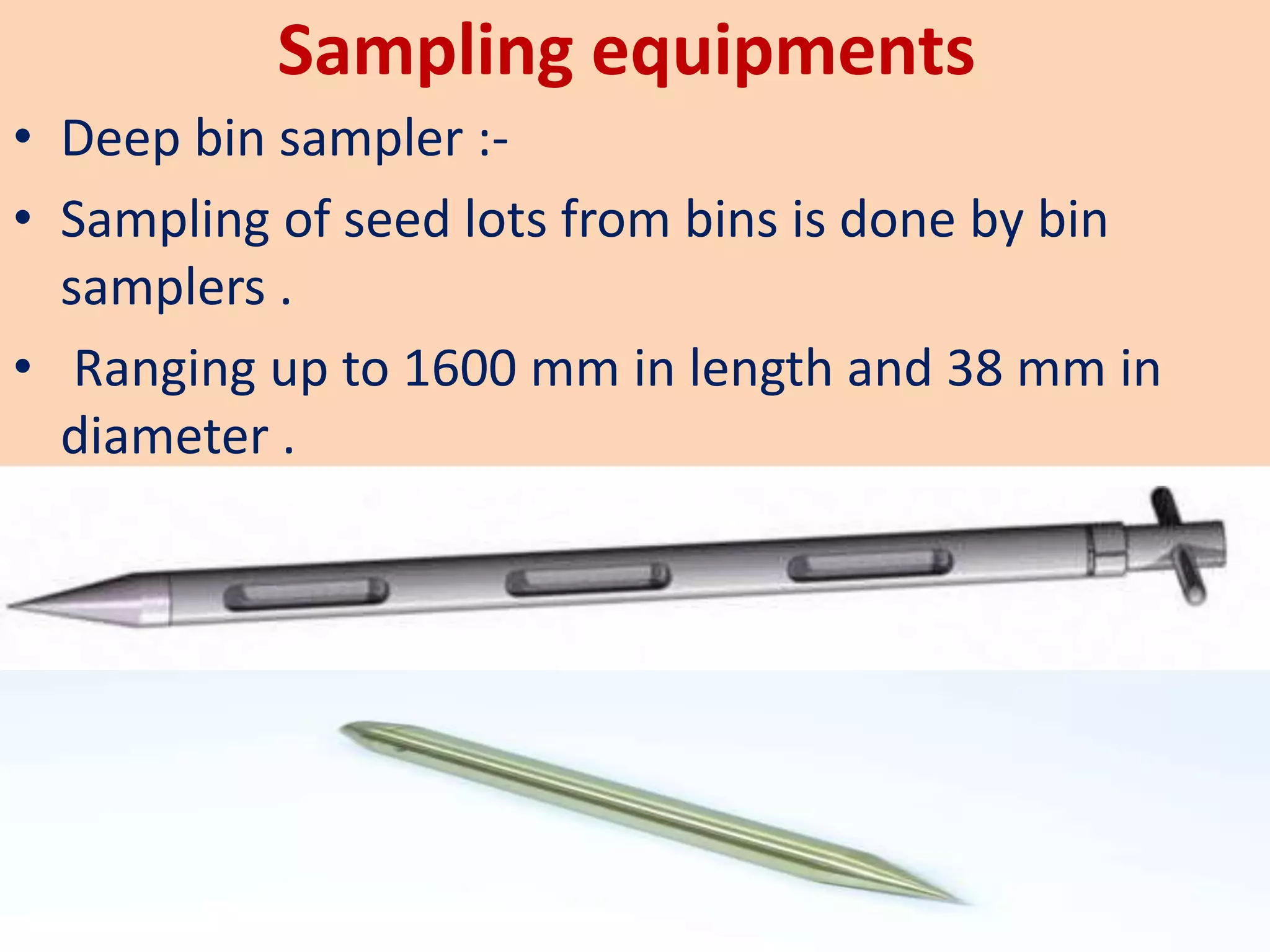
• Deep bin sampler :-
• Sampling of seed lots from bins is done by bin
samplers .
• Ranging up to 1600 mm in length and 38 mm in
diameter .
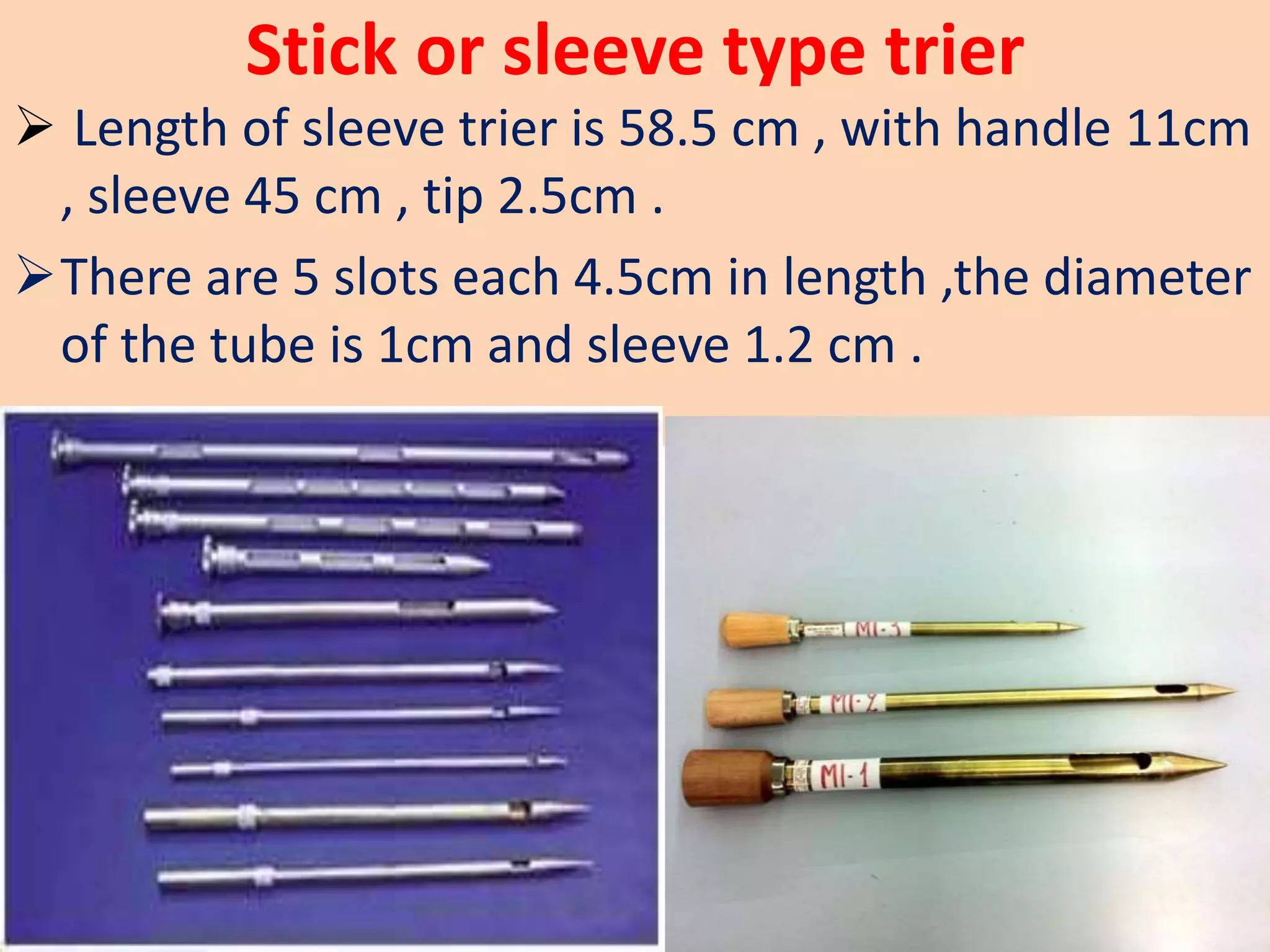
Stick or sleeve type trier
 Length of sleeve trier is 58.5 cm , with handle 11cm
, sleeve 45 cm , tip 2.5cm .
There are 5 slots each 4.5cm in length ,the diameter
of the tube is 1cm and sleeve 1.2 cm .
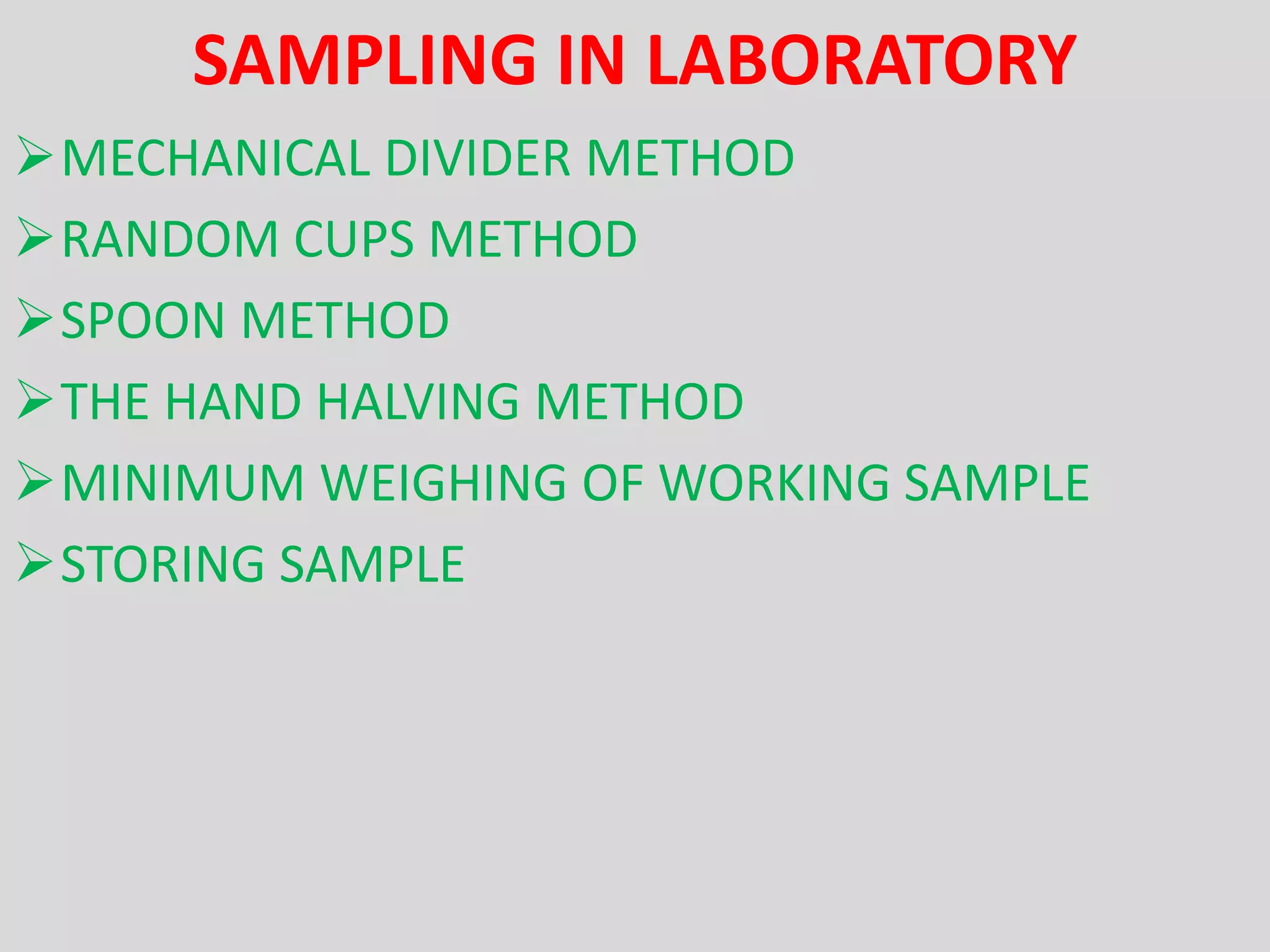
SAMPLING IN LABORATORY
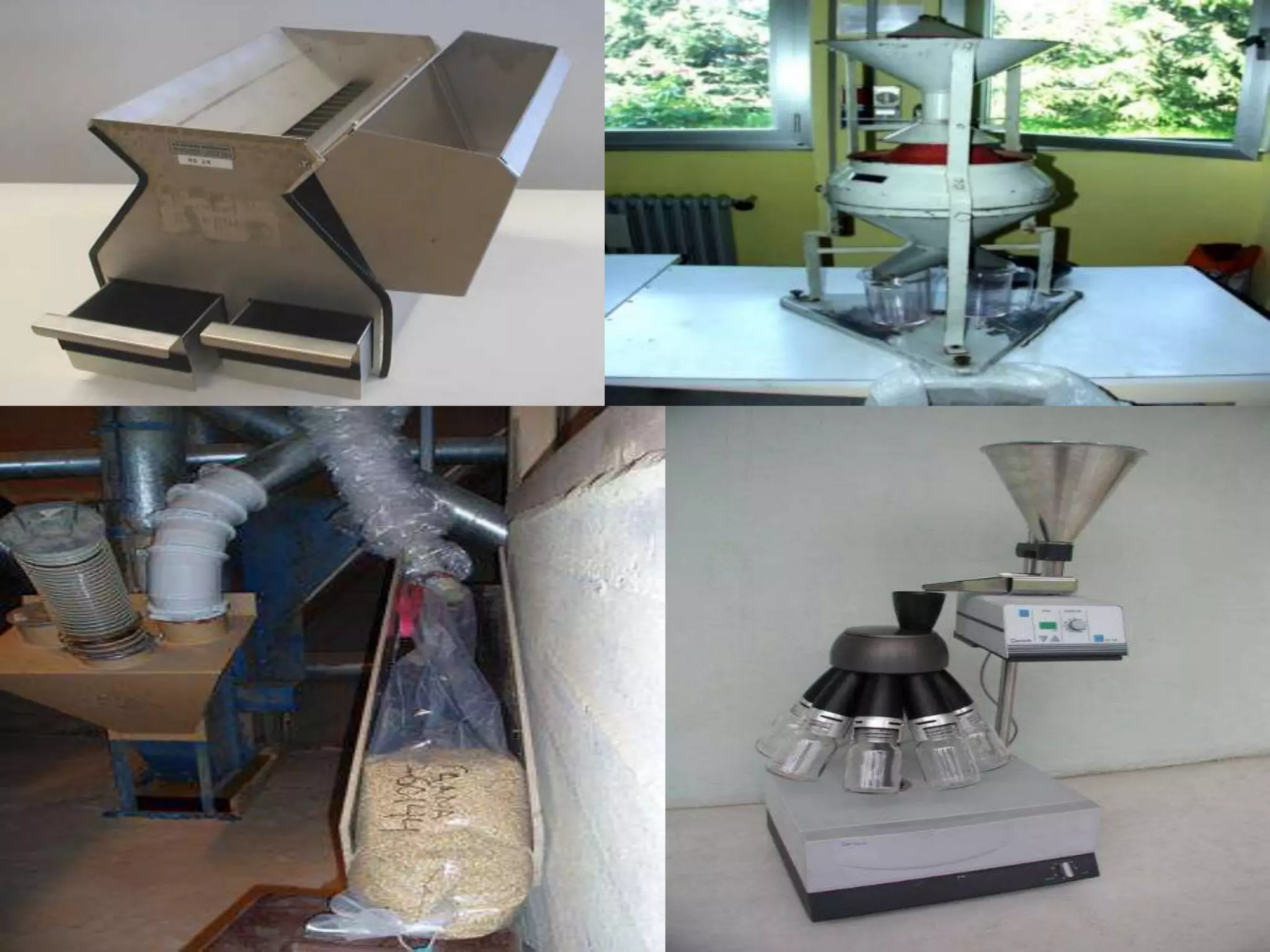
MECHANICAL DIVIDER METHOD
RANDOM CUPS METHOD
SPOON METHOD
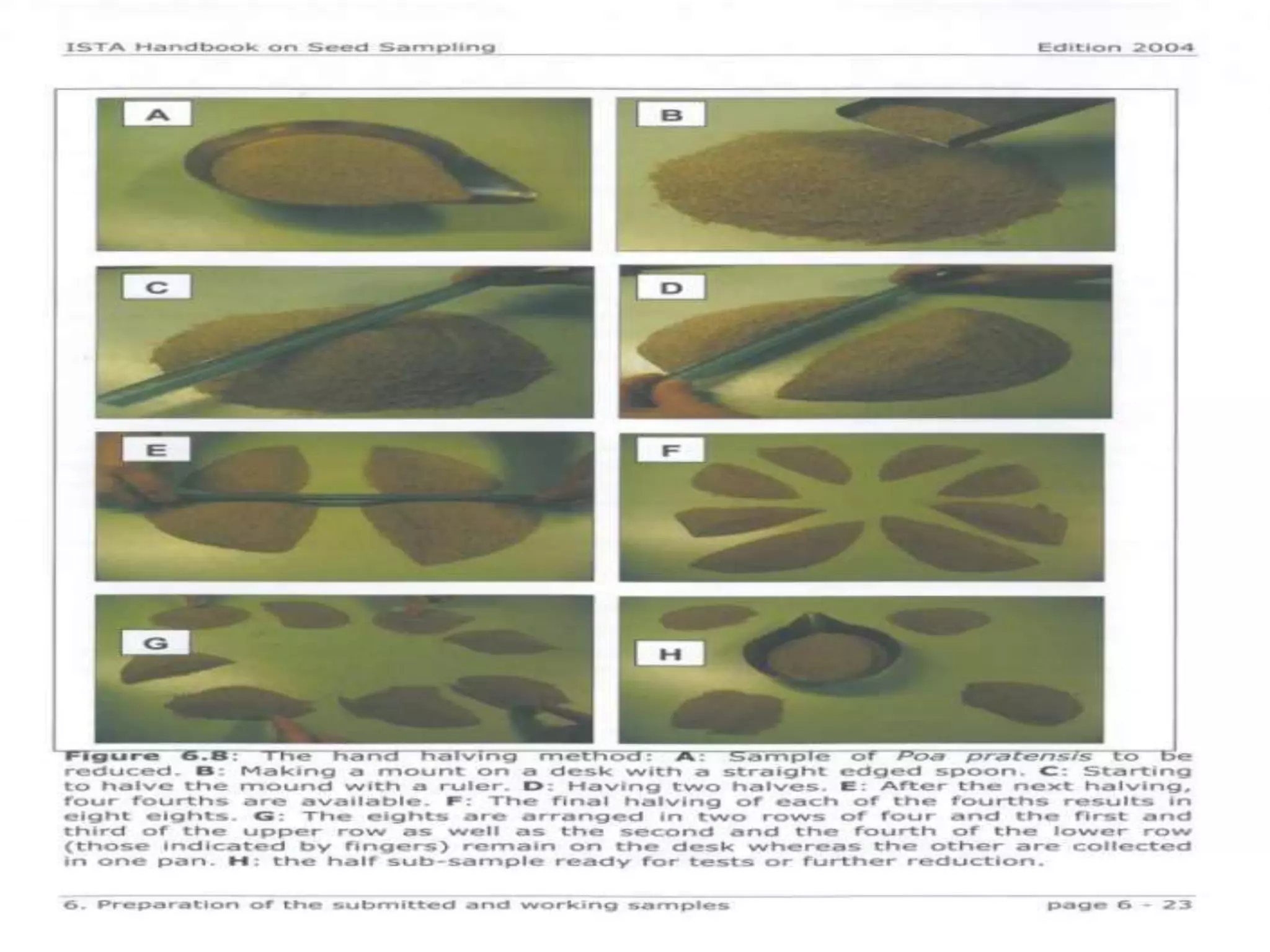
THE HAND HALVING METHOD
MINIMUM WEIGHING OF WORKING SAMPLE
STORING SAMPLE
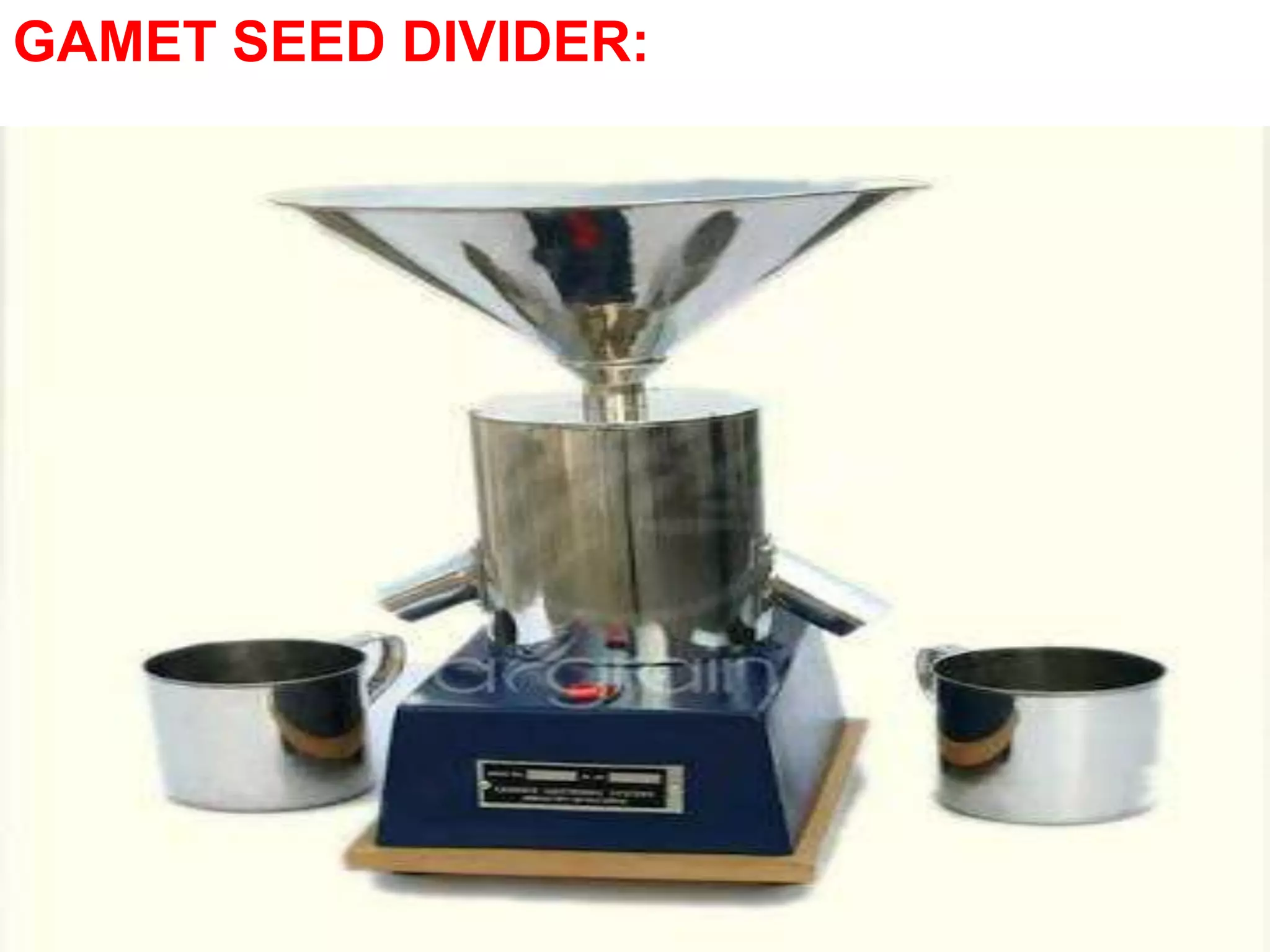
GAMET SEED DIVIDER:
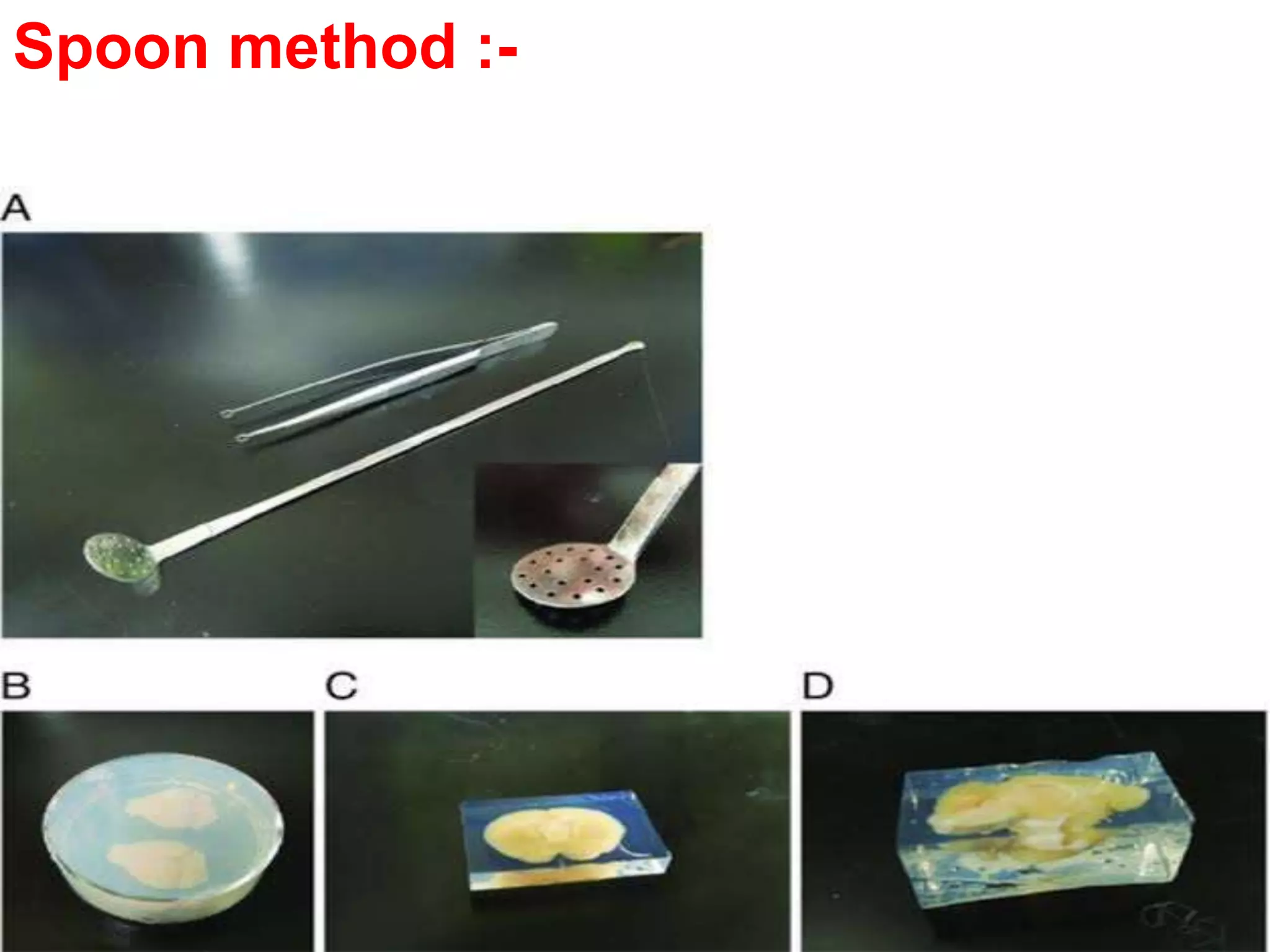
Spoon method :-
Precautions of sampling
 Sampling should be done by technical persons.
Samples should be of appropriate size and taken from
different depth and layer of the seed lot.
Sampling should be unbiased.
Sampled seeds from each lot should be maintained
separately.
Composite samples should be splitted carefully to
produce two similar portions.

Seed Sampling

  • 1.
    Department Of SeedScience & Technology Topic:- Seed Sampling SUBMITTED TO: SUBMITTED BY : Mrs.Gyanika Shukla Dharmendra Yadav M.Sc.(Ag.) Seed Science & Tech. 3nd Sem.
  • 2.
    contents Introduction. The Seed Lot. Sample. SeedSampling. Objectives of Sampling. Types of Sampling . Sampling methods. Sampling intensity. Sampling equipments. Precautions of Sampling.
  • 3.
    Introduction In a laboratory,only a small portion (quantity) of a seed lot can be examined. It is therefore important that this small portion is representative of the seed lot. Drawing of a representative sample is fundamental in order to obtain uniform, accurate and reproducible results. The Seed Lot  A seed lot is a specific, identified quantity of seed whose purity and quality is homogenous throughout entire lot. The maximum size of seed lot prescribed for agricultural and horticultural seed is 20,000 kg.
  • 4.
    Sample • It isthe representative of homogenous seed lot and used for seed quality analysis in the seed testing laboratory. • It ensures that the small size of sample should truly represent all the constituents of seed lot in same proportion. • Sampling refers to Drawing a small quantity of seeds from various portions of a seed lot in such a way that the sample should contain the same constituents as that of entire seed lot.
  • 5.
    Seed Sampling The processof obtaining a seed sample of a size suitable for test in which the same constituents are present as in the seed lot and in the same proportions. Objectives of Sampling The objective of sampling is to obtain a sample of a size suitable for tests, in which the probability of a constituent being present is determined only by its level of occurrence in the seed lot.
  • 6.
    Types of Sampling •Primary sample: A primary sample is a small portion taken from one point in the lot or container or bag. • Composite sample: The composite sample is formed by combination and mixing all the primary samples taken from the lot or container or bag. • Submitted sample: A submitted sample is a sample submitted to testing station. It must be of at least the size specified in the International Seed testing Association (ISTA) rule for submitted sample and may comprise either the whole or a sub-sample of the composite sample. • Working sample: The working sample is a sub-sample taken from the submitted sample in the laboratory, on which one of the seed qualities is done. • Sub-sample: A sub-sample is the portion of a sample obtained by reducing the sample using one of the sampling methods for sampling in the laboratory.
  • 7.
  • 8.
    Sampling methods. 1.Mechanical sampling:It is a sampling technique followed using the various equipments such as Nobbe trier, sleeve type trier or stick trier (with compartments or without compartments),thief trier, cargo sampler, pelican sampler, automatic sampler, etc., 2. Hand sampling: This method is applicable for non- free flowing or extremely chaffy seeds like grass seeds, cotton (fuzzy) seeds, Andropogan spp, Cenchrus spp., Dichanthium spp, Stylosanthes and other genera of tree and shrub seeds like, Acer, Ailanthus, Cedrela, Fraxinus,Quercus, Juglans, Populus and Tectona. The major disadvantages in hand sampling are (i) time consuming and (ii) not possible beyond 30-40 cm depth.
  • 9.
    Sampling intensity • Samplingintensity in the ISTA Rules has been established to meet statistical requirements. • Minimum numbers of primary samples have been defined for three different situations: -containers between 15 and 100 kg -containers smaller than 15 kg -containers larger than 100 kg (or streams of seed entering containers).
  • 11.
    Sampling equipments • Deepbin sampler :- • Sampling of seed lots from bins is done by bin samplers . • Ranging up to 1600 mm in length and 38 mm in diameter .
  • 12.
    Stick or sleevetype trier  Length of sleeve trier is 58.5 cm , with handle 11cm , sleeve 45 cm , tip 2.5cm . There are 5 slots each 4.5cm in length ,the diameter of the tube is 1cm and sleeve 1.2 cm .
  • 16.
    SAMPLING IN LABORATORY MECHANICALDIVIDER METHOD RANDOM CUPS METHOD SPOON METHOD THE HAND HALVING METHOD MINIMUM WEIGHING OF WORKING SAMPLE STORING SAMPLE
  • 17.
  • 18.
  • 21.
    Precautions of sampling Sampling should be done by technical persons. Samples should be of appropriate size and taken from different depth and layer of the seed lot. Sampling should be unbiased. Sampled seeds from each lot should be maintained separately. Composite samples should be splitted carefully to produce two similar portions.