INDIRA GANDHI KRISHI VISHWAVIDYALAYA
COLLEGE OF AGRICULTURE RAIPUR
Assignment topic- Seed production Technology
Course title- Current Trends in Agronomy
Course code- AGRON-601
Credit- (3+0)
SUBMITTED TO-
DR. AMBIKA TONDON
Professor
Deptt. of Agronomy
SUBMITTED BY-
Darshana Sidar
PhD Previous Year
Dept. of Soil science and
Agricultural chemistry
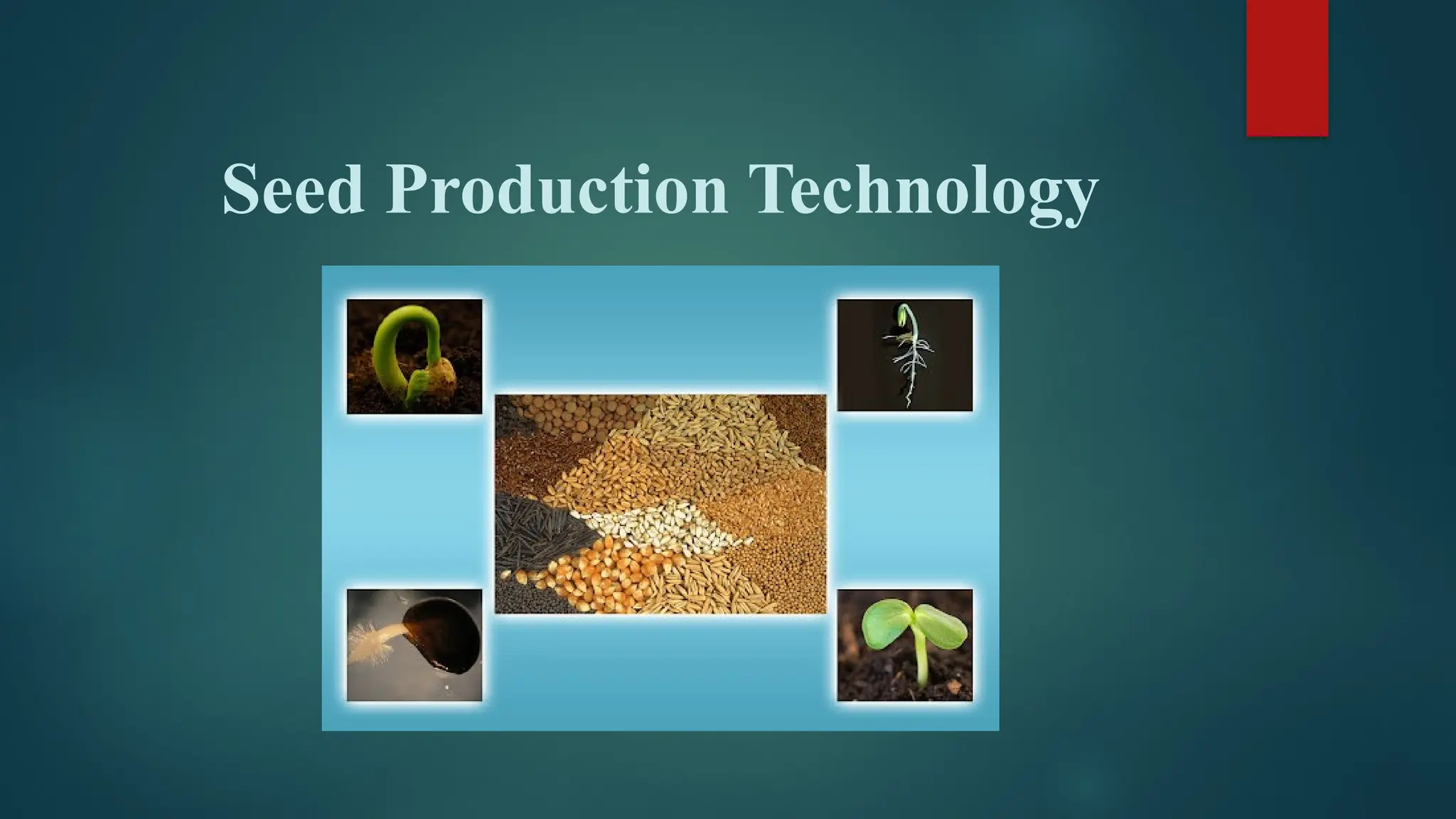
Seed Production Technology
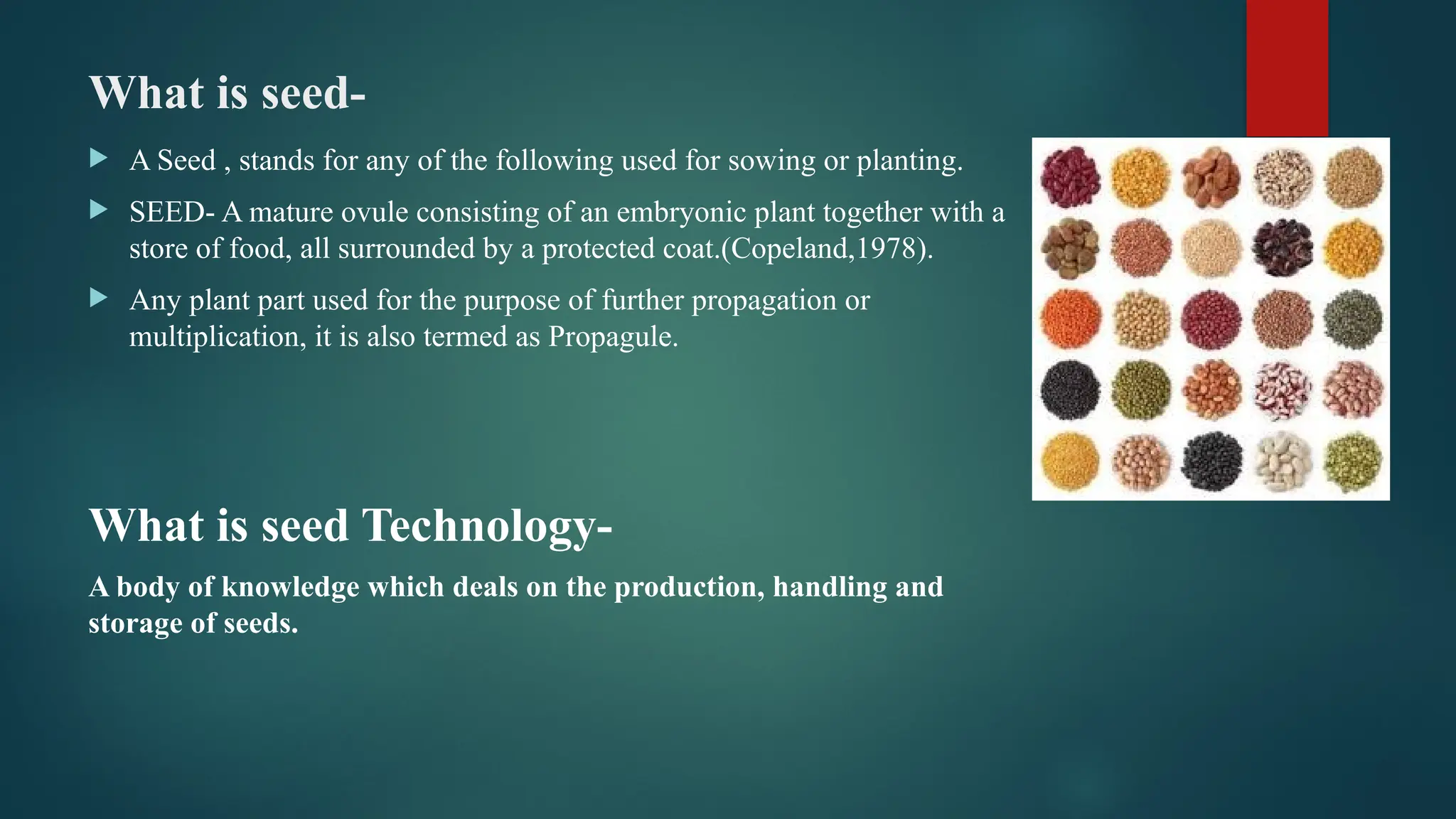
What is seed-
 A Seed , stands for any of the following used for sowing or planting.
 SEED- A mature ovule consisting of an embryonic plant together with a
store of food, all surrounded by a protected coat.(Copeland,1978).
 Any plant part used for the purpose of further propagation or
multiplication, it is also termed as Propagule.
What is seed Technology-
A body of knowledge which deals on the production, handling and
storage of seeds.
Seed production technology is multidisciplinary science that involves the
production, processing, storage, and certification of seeds.it also includes
research an seed physiology, handling and production.
Here are some key aspects of seed production technology-
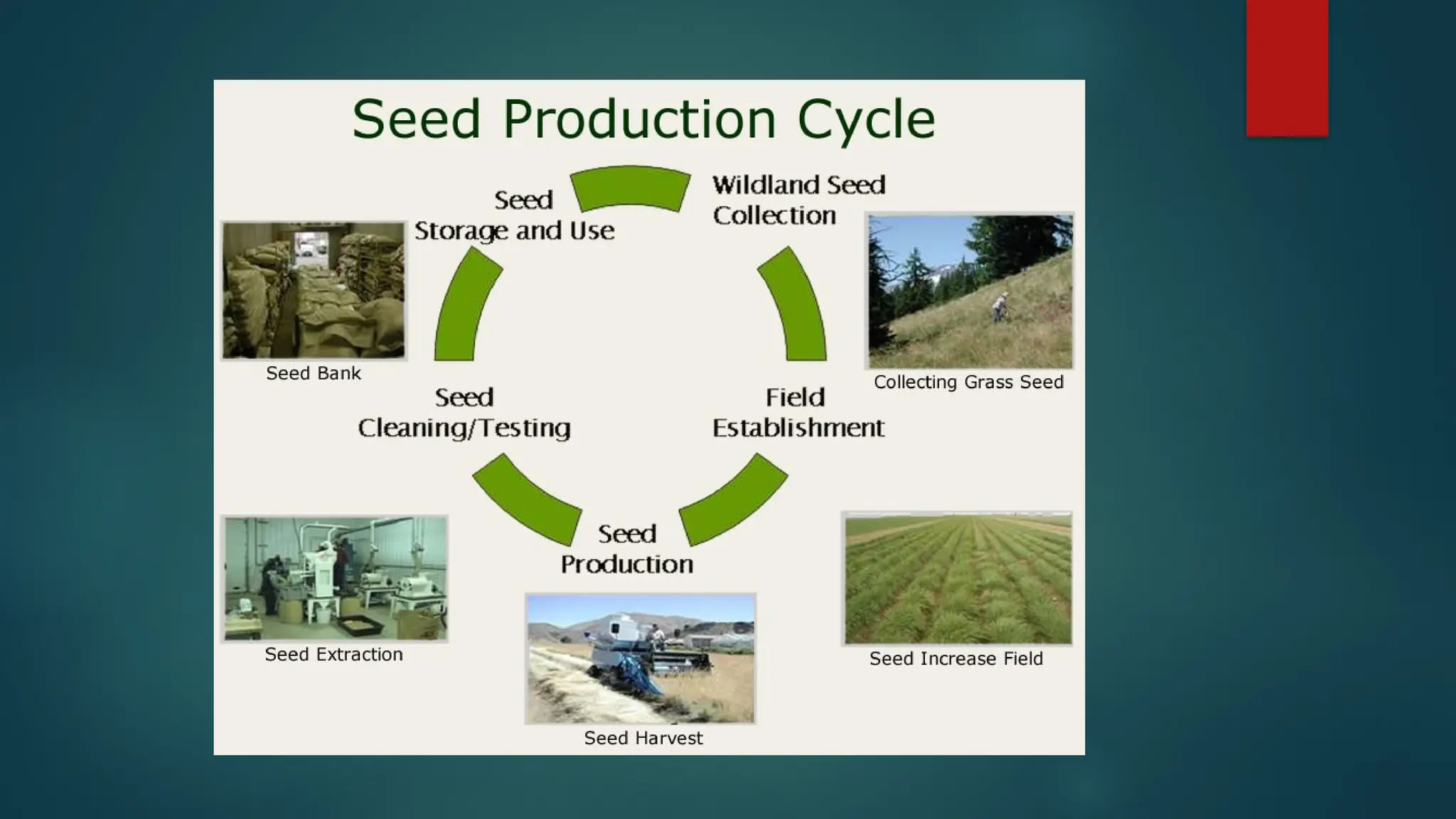
 SEED PRODUCTION-
Involves growing and harvesting seeds from crop using standardized procedures. Factors to consider
includes crop selection, isolation distance, and roguing.
 SEED PROCESSING-
Involves cleaning, grading, treating, drying , and preparing seeds for storage . The goal is to remove
impurities and broken seeds while protecting the seeds from pests and diseases.
 SEED TESTING-
Involves checking the seeds viability, purity, moisture content, and germination capacity. These tests
help determine the seeds quality and eligibility for commercial use.
 SEED STORAGE-
Involves maintaining the seeds viability and storage vigor by controlling factors like
temperature, moisture, and packaging. Refrigerated storage is common for seeds with
orthodox storage behavior.
 SEED CERTIFICATION-
Involves certifying seeds based on prescribed standards of quality and genetic purity. Only
certified seeds are allowed for commercial production.
Some other techniques and equipment used in seed production
include:
 Winnowing and Drying-Threshed produce is cleaned and winnowed to remove dirt
and other unwanted materials. Seeds are dried to 13% moisture for better storage.
 Pre-cleaning-Involves removing large foreign materials like stones, sticks, and others
debris. Air screen seed cleaning or air seed cleaning machines are often used for this
purpose.
What is the importance of seed technology to crop
production-
 Seeds are the easiest and fastest means of plant
multiplication.
 Therefore, knowledge in producing, handling and storing
high quality seeds is necessary for successful crop
production.
 Seeds remain to be the most important form of germplasm.
 As such maintaining the viability of seeds under storage
ensures the availability of genetic material which could be
used for crop improvement.
Principles of seed production
GENETIC PRINCIPLES
1. Deterioration of varieties: Genetic purity (Truness to type) of a variety can deteriorate due to
several factor during production cycles. The important factors of apparent and real deterioration
of varieties) are as follows:
2. Developmental variation: When the seed crops are grown in difficult environment, under
different soil and fertility conditions, or different climate conditions, or under different
photoperiods, or at different elevation for several consecutive generations, the developmental
variation may arise some times as differential growth response. To minimize the opportunity for
such shifts to occur in varieties it is advisable to grow them in their areas of adaptation and
growing seasons.
3.Mechanical mixtures: This is the most important source of variety deterioration
during seed production. Mechanical mixtures may often take place at the time of
sowing, if more than one variety is sown with same seed drill; through volunteer
plants of the same crop in the seed field; or through different varieties grown in
adjacent fields. Often the seed produce of all the varieties are kept on same threshing
floor, resulting in considerable varietal mixture. To avoid this sort mechanical
contamination it would be necessary to rogue the seed fields, and practice the utmost
care during the seed production, harvesting, threshing and further handling
4.Mutations: This is not a serious factor of varietal deterioration. In the majority of
the cases it is difficult to identify or detect minor mutation.
5.Natural crossing: In sexually propagated crops, natural crossing is another most
important source of varietal deterioration due to introgression to genes from unrelated
stocks which can only be solved by prevention
Agronomic principles
1.Selection of a Agro-climatic Region
A crop variety to be grown for seed production in an area must be adapted to the photoperiod and
temperature conditions prevailing in that area.
2.Selection of seed plot
The plot selected for seed crop must be free from volunteer plants, weed plants and have good soil
texture and fertility The soil of the seed plot should be compatively free from soil borne diseases and
insects pests.
3. Isolation of Seed crops
The seed crop must be isolated from other nearby fields of the same crops and the other
contaminating crops as per requirement of the certification standards.
4.Preparation of Land
Good land preparation helps in improved germination, good stand establishment and destruction of
potential weeds. It also aids in water management and good uniform irrigation.
5. Selection of variety
The variety of seed production must be carefully selected, should possess disease resistance,
earliness, grain quality, a higher yielder, and adapted to the agroclimatic conditions of the region.
6. Seed treatment:
Depending upon the requirement the following seed treatment may be given
a) Chemical seed treatment.
b) Bacterial inoculation for the legumes.
c) Seed treatment for breaking dormancy.
To collect a uniform and true representative sample from a seed lot.
It is essential that the samples be prepared in accordance to ISTA rules to ensure that the small
size sample should represent truly and in the same proportion all constituents of seed lot.
Methods of sampling-
 1. Hand sampling-
This is followed in the non free flowing seeds or chaffy and fuzzy seeds of crops such as cotton, tomato, grass
seeds etc. In this method, it is very difficult to take samples from the deeper layers of bag. To overcome this, bags
are emptied completely or partly and then seed samples are taken. While removing the samples from the
containers, care should be taken to close the fingers tightly so that no seeds escape.
 2. Sampling with triers/probe-
By using appropriate triers, samples can be taken from bags or from bulk. The triers are used for taking free
flowing seed samples.
a) Bin samplers Used for drawing samples from the lots stored in the bins.
b) Nobbe trier
The name was given after the father of seed testing Fredrick Nobbe. This trier is made in different dimensions to
suit various kinds of seeds. It has a pointed tube long enough to reach the centre of the bag with an oval slot near
the pointed end. The length is very small. This is suitable for sampling seeds in bag not in bulk.
 c) Sleeve type triers or stick triers
It is the most commonly used trier for sampling: There are two types viz.,
1. with compartments
2. without compartments.
It consists of a hollow brass tube inside with a closely fitting outer sleeve or
jacket which has a solid pointed end. Both the inner tube as well as the outer
tube has been provided with openings or slots on their walls. When the inner
tube is turned, the slots in the tube and the sleeve are in line. The inner tube
may or may not have partitions .These triers may be used horizontally or
vertically. It is diagonally inserted at an angle of 30°C in the closed position till
it reaches the centre of the bag. Then the slots are opened by giving a half turn
in clockwise direction and gently agitated with inward push and jerk, so that the
seeds will fill each compartment through the openings from different layers of
the bag, then it is again closed and withdrawn and emptied in a plastic bucket.
Types of Samples-
 1. Primary sample
Each probe or handful of sample taken either in bag or in bulk is called primary sample.
 2. Composite sample
All the primary samples drawn are combined together in suitable container to form a
composite sample.
 3. Submitted sample
When the composite sample is properly reduced to the required size that to be submitted to the
seed testing laboratory, it is called submitted sample. Submitted sample of requisite weight or
more is obtained by repeated halving or by abstracting and subsequently combining small random
portions.
 4. Working sample
It is the reduced sample with required weight obtained from the submitted sample after repeated
mixing and dividing with which the seed quality tests are conducted in seed testing laboratory.
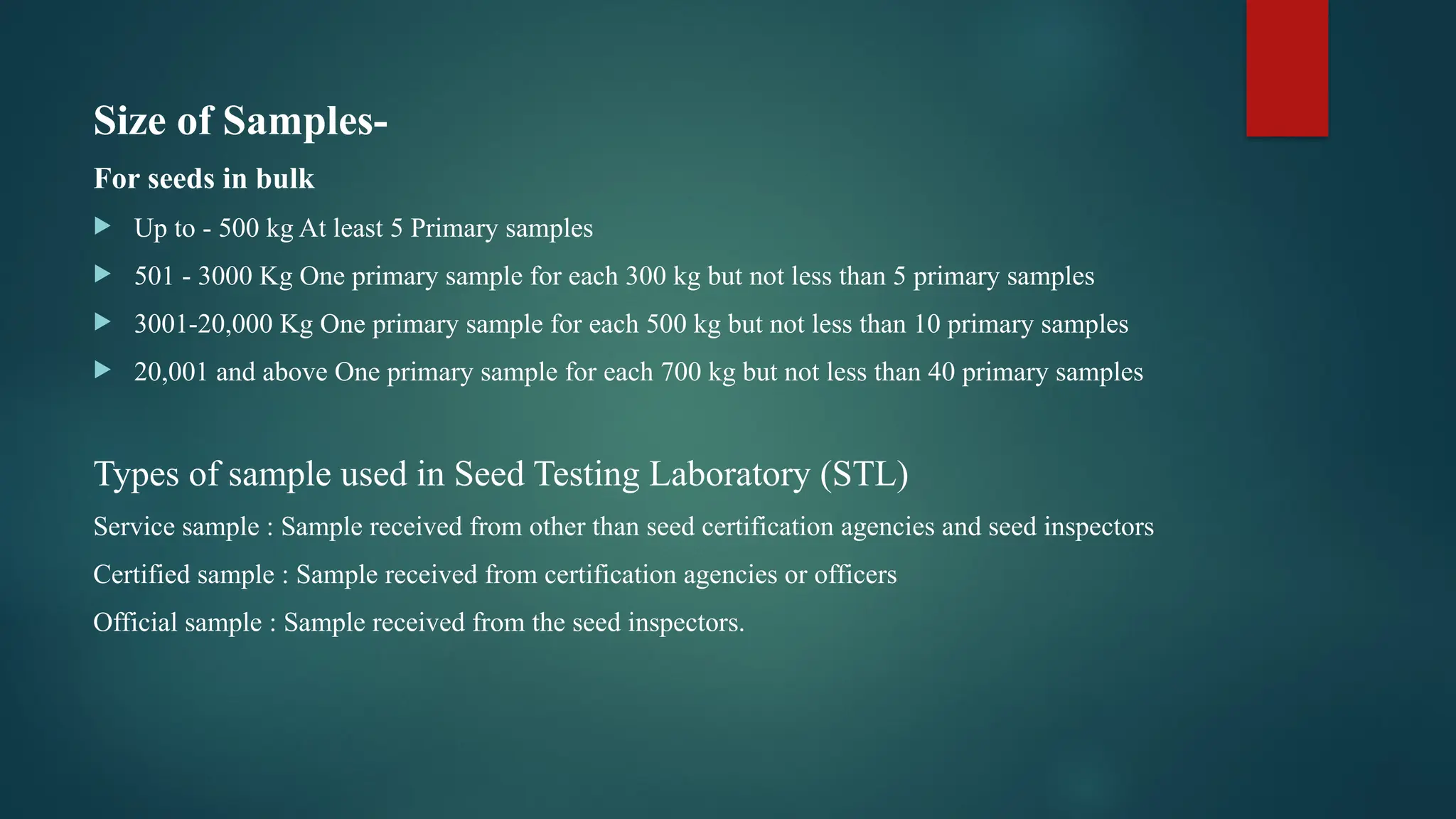
Size of Samples-
For seeds in bulk
 Up to - 500 kg At least 5 Primary samples
 501 - 3000 Kg One primary sample for each 300 kg but not less than 5 primary samples
 3001-20,000 Kg One primary sample for each 500 kg but not less than 10 primary samples
 20,001 and above One primary sample for each 700 kg but not less than 40 primary samples
Types of sample used in Seed Testing Laboratory (STL)
Service sample : Sample received from other than seed certification agencies and seed inspectors
Certified sample : Sample received from certification agencies or officers
Official sample : Sample received from the seed inspectors.
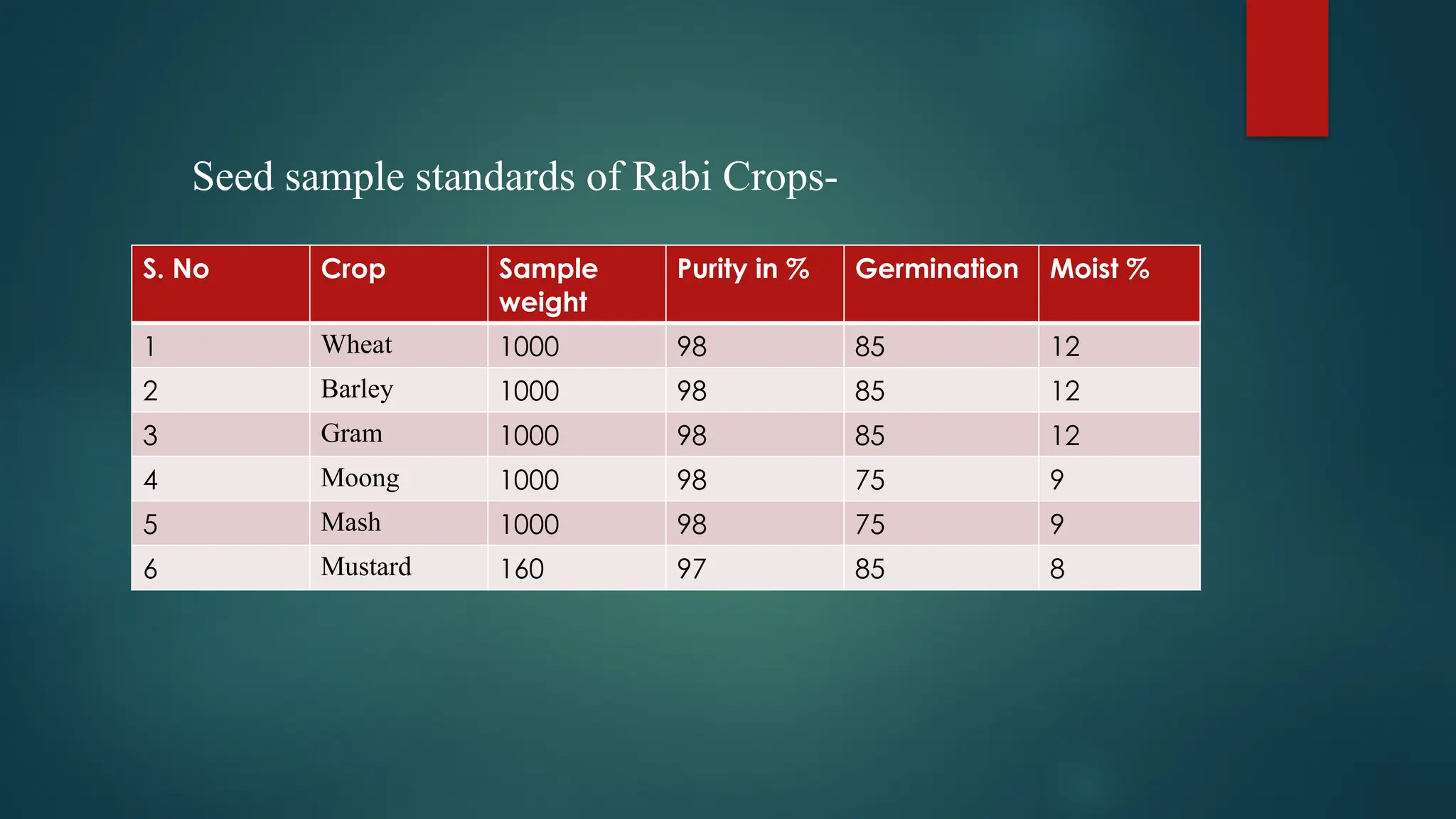
S. No Crop Sample
weight
Purity in % Germination Moist %
1 Wheat 1000 98 85 12
2 Barley 1000 98 85 12
3 Gram 1000 98 85 12
4 Moong 1000 98 75 9
5 Mash 1000 98 75 9
6 Mustard 160 97 85 8
Seed sample standards of Rabi Crops-
Some special things r-elated to seed production technology-
 Seed production requires special care.
 For seed production , farmers have to purchase seeds from Chhattisgarh
state seed and Agriculture Development Corporation, Agriculture
College, or a recognized institute.
 For seed production, the crop has to be submitted to Chhattisgarh state
seed Certification state seed Certification institute within the prescribed
fee and time limit.
 In seed production, seed crops are grown in a generational cycle to
maintain genetic purity.
 Through seed technology, seed standards are determined by seed testing.
 Seed testing laboratory is the centre of seed quality control.
 Seeds need water and oxygen to grow.
The seeds are evolved, tested and if found good they are multiplied and distributed to the farmers for commercial
production of the crop. Therefore, according to the nature and precaution with which the seeds are produced, they are
classified into the following groups:
1. Breeder’s seed or nucleus seed
These seeds are produced at breeder’s level as a result of hybridization, selection and mutation. When these seeds
possess all the required genetic characters they are named as breeder’s or nucleus seeds. For testing the genetic
purity, yield potentials, disease reaction and adaptability the seed has to go for testing under a number of trials in
different agroclimatic conditions or zones of the country. Each breeder’s seed has to be tested in initial evaluation
trial, National trial, Uniform Regional Trial, District Trial and finally under Mini-Kit programme. The varieties
which qualify in all the trials are further produced. These seeds are of high genetic value and being very little in
quantity are often costly.
2. Foundation seed
The foundation seed is a second grade seed in order of its genetic purity because there may be slight degeneration
during the process of multiplication of nucleus seeds. The foundation seed is always produced by certain
organizations viz. National Seed Corporation, Tarai Development Corporation and State Seed Corporation. A strict
Seed plot technique which includes inspection, rouging, weed control, isolation etc is adopted during seed
production process. The foundation seed is relatively less pure compared to the breeder’s or nucleus seed.
1. Certified seed
The certified seeds are produced from foundation seeds mostly in two ways: in the first
way the seed is produced at the seed farms of the National Seed Corporation or State Seed
Farms. In the second way the seed is produced by certified farmers under growers’
programme. During the production of seed the field is inspected by the seed inspector and
the seed thus produced is processed, bagged and tagged in the presence of the seed
technicians deputed by seed certifying agency. After proper labeling, the seed is sold to the
farmers for commercial cultivation. The certified seed is relatively less pure compared to
the previous two seed categories.
Basic Concepts of Seed Production
In order to produce seed which is true to type, one must become knowledgeable in the variety’s
reproductive process, as well as, the techniques used for maintaining genetic diversity and identity, seed
harvesting, seed cleaning and seed storage.
Plants can be broken down into 2 main reproductive categories…Self-Pollinating and Cross-Pollinating.
• Self-Pollinating Plants (“selfers”): transfer of pollen from the male anther to the female stigma
within the same flower or on the same plant.
These plants usually require smaller minimum population sizes (minimum number of plants needed
to ensure genetic diversity) and shorter isolation distances (distance needed between same species
varieties to ensure no crossing) than crossers.
Examples: beans, tomatoes, barley, lentil, oat, rice, soybean, wheat.
• Cross-Pollinating Plants (“crossers”): transfer pollen from the anther of one plant to the stigma of
another plant. This process is usually accomplished naturally by wind and insects or can also be
accomplished manually by hand-pollination.
Cross-pollinating plants evolve under conditions of constant gene recombination and suffer from
“inbreeding depression” ( symptoms of decreased vigor and the appearance of negative
recessivegenes when inbred).
Examples of cross-pollinated: onion, beets, corn, cucumber, cole crops, squash, radish,
celery, rye, and buckwheat.

Annual Crops: Annual crops require only one growing season to produce seed and complete their
lifecycle. But because you are growing the crop for seed rather than fruit, you may have to plant the
crop earlier than usual and harvest much later.
Biennial Crops: Biennial crops require 2 growing seasons to produce seed and complete their lifecycle
Genetic Integrity: To prevent varieties from crossing, seed producers must use some means of
isolation (cages, distance isolation, time isolation, or hand pollination) during periods when pollination
can occur. Genetic diversity within a variety is maintained by including a minimum number of
randomly selected parents into the breeding population. This number will vary by crop species.
Ways to protect a varieties genetic integrity:
1.Control of seed source:
Multiplication of seed material from an appropriate class viz. breeder’s, foundation, registered and certified
procured from an appropriate source is essential.
2.Nature of preceding crop:
In order to maintain genetic purity of the seed there are certain requirements pertaining to the nature of
preceding crop which may not deteriorate the seed quality and help in growing healthy seed crop.
3.Isolation:
isolation is an effective distance upto which the pollens may be carried by various agencies like wind, insect etc.
from commercial crop to the seed crop and result into natural crossing or cross pollination. The seed crop must
be grown beyond this distance.
4.Rouging:
A rogue is a plant which is “off-type” ( different from the variety) or is otherwise undesirable. Presence of off
type plants causes a potential threat to genetic contamination, purity, however, removal of these plants before
flowering or before heading may not jeopardize the genetic purity of the seed.
5. Seed certification:
To ensure good quality pedigree seed it has to be certified by any registered seed certifying agency
like NSC, TDC, state Seed Corporations etc.
6. Adoption of appropriate agronomic practices:
These practices include selection of suitable agro-climatic zone, selection of well leveled fertile
plots free from water logging, hardpan in sub-soil zone and excessive salt; seed treatment, efficient
water and nutrient management, use of all preventive measures against diseases and insect-pests
and other cultural practices, timely harvesting, threshing, drying, grading, bagging , storage under
regulated moisture and fumigated conditions. These practices help in raising a healthy seed crop
for onward distribution to the cultivators for raising a good crop of higher productivity.
Seed production of major field crops: Cereals
Rice
Rice is a self pollinated crop but sometimes or rarely cross pollination is also reported. The extent of cross-
pollination ranges between 0.1 to 4%. Therefore, an isolation distance of about 3.0 metres between commercial
and seed crop is sufficient.
Raising of seedlings
To avoid varietal admixture one should choose a site for nursery where rice was not grown in the
previous year. Sowing of seed should be done between 25th May to 10th
of June for long duration
varieties and between 10th
to 25th June for short duration varieties. About 50-60 beds of 6 m x 1.5 m size
are required for raising seedlings to transplant one hectare area. About 450 g of single super phosphate
and 20 g of zinc sulphate/bed should be mixed into the soil at the time of final tillage operation in the
beds. Seeds of required grade or type viz. nucleus/breeders/foundation should be taken after approval
from the certification agency. A seed rate of 25-30 kg/ha for fine rice varieties (about 400-500 g/bed)
should be treated with ceresin/agrosan G.N./bavistin at the rate of 2.5 g/kg ofseed, soaked and sprouted
and then sown in the beds either by broadcasting or by line sowing. Proper weed and water management
practices should be adopted for obtaining healthy seedlings. They should be uprooted carefully and
transplanted at the age of three weeks in early varieties. Weak, diseased or phenotypically different
seedlings should be discarded.
Post-planting care
Like commercial crop the seed crop should also be fertilized with recommended dose of NPK and
Zn. The field should be well puddle before transplanting. Two-three healthy seedlings should be
transplanted in row at 20 cm x 15 cm in case of early and medium varieties and 20 cm x 20 cm or 30
cm x 20 cm in case of long duration ones. Tow-three weedings or application of butachlor or other
herbicide, as in case of commercial crop should be done to take care of weeds. Proper measures for
insect-pests (stem borer, brown plant hopper, Gandhi bug etc) and diseases (blast, bacterial leaf
blight, brown spot, seedling blight and foot rot etc) and micronutrient deficiency (khaira disease)
should be taken.
Roguing
Roguing of wild rice plants, disease affected plants especially those infected with tungro virus and
false smut and off-types thrice – once at panicle initiation, next at flowering and final near maturity
keep seed free of admixtures.
Harvesting and threshing
The seed crop should be harvested when the seeds are at about 20% moisture. Threshing
should be done over thoroughly cleaned floor. The grains should be winnowed and dried to
about 10-12% moisture for storage.
Seed certification
Seed certification is a process designed to secure, maintain and make available high quality seed and
propagating materials of superior crop plant varieties so grown and distributed as to ensure desirable
standards of genetic identity, physical purity, seed conditions and quality. Certification of seed is
performed in following four phases:
1. In all the cases, where the fields are under foundation or certified seed production, the individual
who has taken up the production must submit documentary evidence including the certification
tag, purchase records etc. to the certifying agency when demanded.
2. This is done in order to verify conformity to prescribe field standards. The objective of field
inspection is to ensure that necessary steps to overcome genetic and physical contamination have
been taken in time to make them effective.
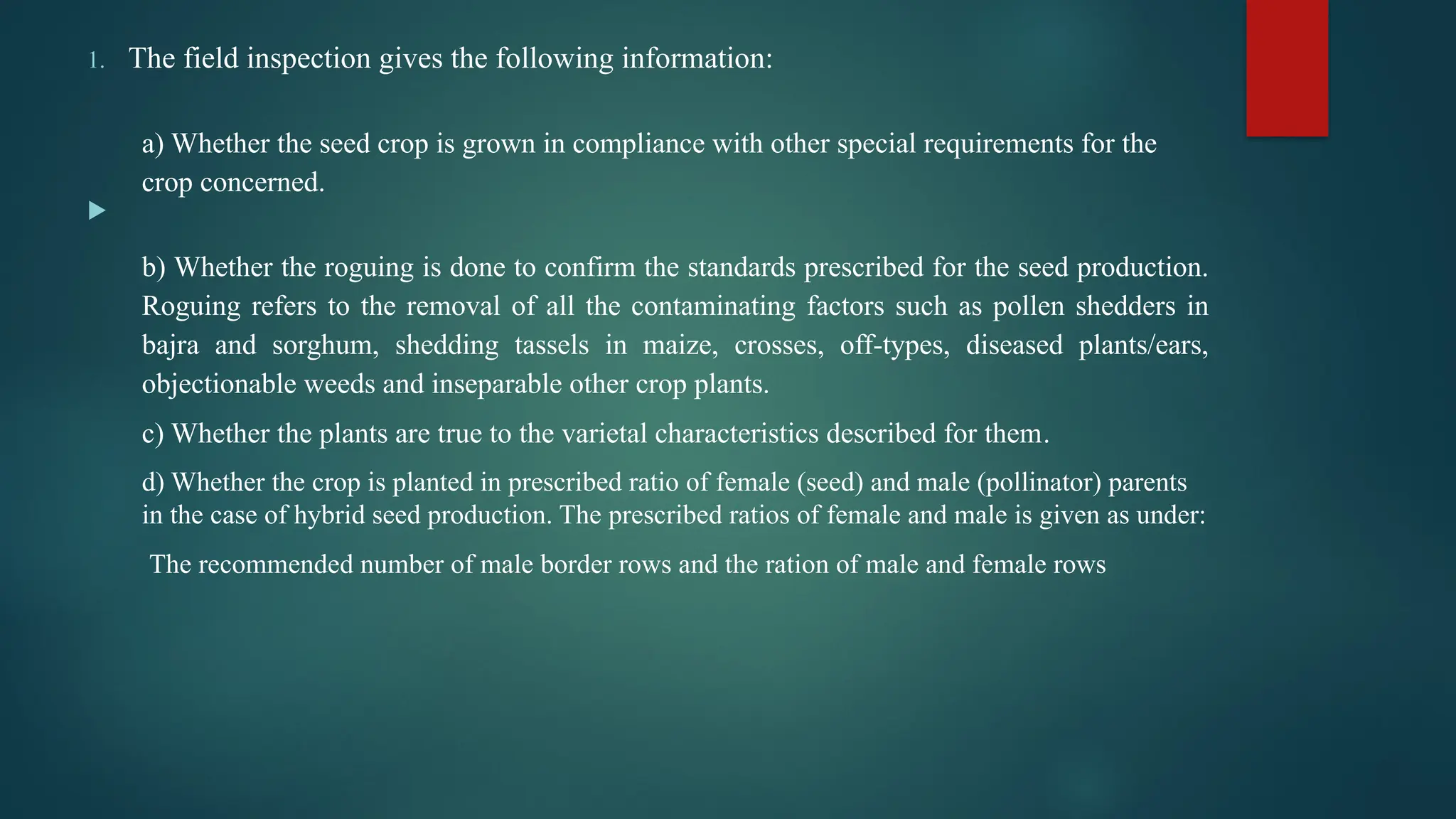
1. The field inspection gives the following information:
a) Whether the seed crop is grown in compliance with other special requirements for the
crop concerned.

b) Whether the roguing is done to confirm the standards prescribed for the seed production.
Roguing refers to the removal of all the contaminating factors such as pollen shedders in
bajra and sorghum, shedding tassels in maize, crosses, off-types, diseased plants/ears,
objectionable weeds and inseparable other crop plants.
c) Whether the plants are true to the varietal characteristics described for them.
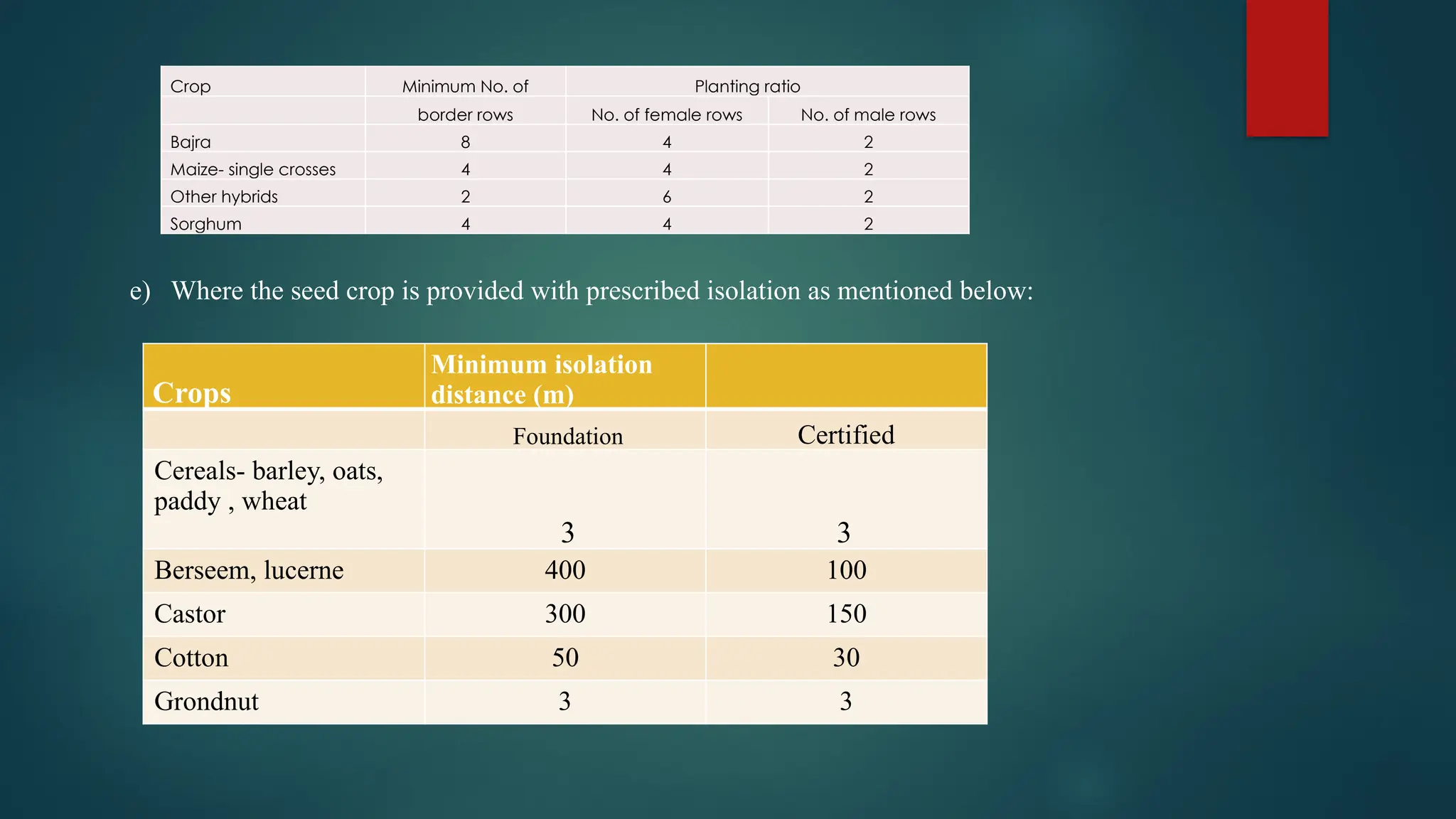
d) Whether the crop is planted in prescribed ratio of female (seed) and male (pollinator) parents
in the case of hybrid seed production. The prescribed ratios of female and male is given as under:
The recommended number of male border rows and the ration of male and female rows
Crop Minimum No. of Planting ratio
border rows No. of female rows No. of male rows
Bajra 8 4 2
Maize- single crosses 4 4 2
Other hybrids 2 6 2
Sorghum 4 4 2
e) Where the seed crop is provided with prescribed isolation as mentioned below:
Crops
Minimum isolation
distance (m)
Foundation Certified
Cereals- barley, oats,
paddy , wheat
3 3
Berseem, lucerne 400 100
Castor 300 150
Cotton 50 30
Grondnut 3 3
Conclusion
Seed is the decisive input for sustained agriculture production and is paramount for
realizing the potential of all other inputs without which the investment on inputs such as
fertilizer, water, and pesticides will not pay desired dividends to the farmers . Use of
quality seeds alone could increase productivity by 15-20% indicate the critical role of
seed in agriculture.
As Indian economy is basically agrarian due to sheer number of people directly or
indirectly dependent on agriculture, the role of seed in India’s context is far greater
significant .
Whatever the share of Indian seed market, is from organized sector that accounts for only
30-35%, which opens a window for enormous possibilities.
SEED PRODUCTION TECHNOLOGY.pptx  SEED PRODUCTION

SEED PRODUCTION TECHNOLOGY.pptx SEED PRODUCTION

  • 1.
    INDIRA GANDHI KRISHIVISHWAVIDYALAYA COLLEGE OF AGRICULTURE RAIPUR Assignment topic- Seed production Technology Course title- Current Trends in Agronomy Course code- AGRON-601 Credit- (3+0) SUBMITTED TO- DR. AMBIKA TONDON Professor Deptt. of Agronomy SUBMITTED BY- Darshana Sidar PhD Previous Year Dept. of Soil science and Agricultural chemistry
  • 2.
  • 3.
    What is seed- A Seed , stands for any of the following used for sowing or planting.  SEED- A mature ovule consisting of an embryonic plant together with a store of food, all surrounded by a protected coat.(Copeland,1978).  Any plant part used for the purpose of further propagation or multiplication, it is also termed as Propagule. What is seed Technology- A body of knowledge which deals on the production, handling and storage of seeds.
  • 4.
    Seed production technologyis multidisciplinary science that involves the production, processing, storage, and certification of seeds.it also includes research an seed physiology, handling and production. Here are some key aspects of seed production technology-  SEED PRODUCTION- Involves growing and harvesting seeds from crop using standardized procedures. Factors to consider includes crop selection, isolation distance, and roguing.  SEED PROCESSING- Involves cleaning, grading, treating, drying , and preparing seeds for storage . The goal is to remove impurities and broken seeds while protecting the seeds from pests and diseases.  SEED TESTING- Involves checking the seeds viability, purity, moisture content, and germination capacity. These tests help determine the seeds quality and eligibility for commercial use.
  • 5.
     SEED STORAGE- Involvesmaintaining the seeds viability and storage vigor by controlling factors like temperature, moisture, and packaging. Refrigerated storage is common for seeds with orthodox storage behavior.  SEED CERTIFICATION- Involves certifying seeds based on prescribed standards of quality and genetic purity. Only certified seeds are allowed for commercial production. Some other techniques and equipment used in seed production include:  Winnowing and Drying-Threshed produce is cleaned and winnowed to remove dirt and other unwanted materials. Seeds are dried to 13% moisture for better storage.  Pre-cleaning-Involves removing large foreign materials like stones, sticks, and others debris. Air screen seed cleaning or air seed cleaning machines are often used for this purpose.
  • 6.
    What is theimportance of seed technology to crop production-  Seeds are the easiest and fastest means of plant multiplication.  Therefore, knowledge in producing, handling and storing high quality seeds is necessary for successful crop production.  Seeds remain to be the most important form of germplasm.  As such maintaining the viability of seeds under storage ensures the availability of genetic material which could be used for crop improvement.
  • 8.
    Principles of seedproduction GENETIC PRINCIPLES 1. Deterioration of varieties: Genetic purity (Truness to type) of a variety can deteriorate due to several factor during production cycles. The important factors of apparent and real deterioration of varieties) are as follows: 2. Developmental variation: When the seed crops are grown in difficult environment, under different soil and fertility conditions, or different climate conditions, or under different photoperiods, or at different elevation for several consecutive generations, the developmental variation may arise some times as differential growth response. To minimize the opportunity for such shifts to occur in varieties it is advisable to grow them in their areas of adaptation and growing seasons.
  • 9.
    3.Mechanical mixtures: Thisis the most important source of variety deterioration during seed production. Mechanical mixtures may often take place at the time of sowing, if more than one variety is sown with same seed drill; through volunteer plants of the same crop in the seed field; or through different varieties grown in adjacent fields. Often the seed produce of all the varieties are kept on same threshing floor, resulting in considerable varietal mixture. To avoid this sort mechanical contamination it would be necessary to rogue the seed fields, and practice the utmost care during the seed production, harvesting, threshing and further handling 4.Mutations: This is not a serious factor of varietal deterioration. In the majority of the cases it is difficult to identify or detect minor mutation. 5.Natural crossing: In sexually propagated crops, natural crossing is another most important source of varietal deterioration due to introgression to genes from unrelated stocks which can only be solved by prevention
  • 10.
    Agronomic principles 1.Selection ofa Agro-climatic Region A crop variety to be grown for seed production in an area must be adapted to the photoperiod and temperature conditions prevailing in that area. 2.Selection of seed plot The plot selected for seed crop must be free from volunteer plants, weed plants and have good soil texture and fertility The soil of the seed plot should be compatively free from soil borne diseases and insects pests. 3. Isolation of Seed crops The seed crop must be isolated from other nearby fields of the same crops and the other contaminating crops as per requirement of the certification standards. 4.Preparation of Land Good land preparation helps in improved germination, good stand establishment and destruction of potential weeds. It also aids in water management and good uniform irrigation.
  • 11.
    5. Selection ofvariety The variety of seed production must be carefully selected, should possess disease resistance, earliness, grain quality, a higher yielder, and adapted to the agroclimatic conditions of the region. 6. Seed treatment: Depending upon the requirement the following seed treatment may be given a) Chemical seed treatment. b) Bacterial inoculation for the legumes. c) Seed treatment for breaking dormancy.
  • 12.
    To collect auniform and true representative sample from a seed lot. It is essential that the samples be prepared in accordance to ISTA rules to ensure that the small size sample should represent truly and in the same proportion all constituents of seed lot. Methods of sampling-  1. Hand sampling- This is followed in the non free flowing seeds or chaffy and fuzzy seeds of crops such as cotton, tomato, grass seeds etc. In this method, it is very difficult to take samples from the deeper layers of bag. To overcome this, bags are emptied completely or partly and then seed samples are taken. While removing the samples from the containers, care should be taken to close the fingers tightly so that no seeds escape.  2. Sampling with triers/probe- By using appropriate triers, samples can be taken from bags or from bulk. The triers are used for taking free flowing seed samples. a) Bin samplers Used for drawing samples from the lots stored in the bins. b) Nobbe trier The name was given after the father of seed testing Fredrick Nobbe. This trier is made in different dimensions to suit various kinds of seeds. It has a pointed tube long enough to reach the centre of the bag with an oval slot near the pointed end. The length is very small. This is suitable for sampling seeds in bag not in bulk.
  • 13.
     c) Sleevetype triers or stick triers It is the most commonly used trier for sampling: There are two types viz., 1. with compartments 2. without compartments. It consists of a hollow brass tube inside with a closely fitting outer sleeve or jacket which has a solid pointed end. Both the inner tube as well as the outer tube has been provided with openings or slots on their walls. When the inner tube is turned, the slots in the tube and the sleeve are in line. The inner tube may or may not have partitions .These triers may be used horizontally or vertically. It is diagonally inserted at an angle of 30°C in the closed position till it reaches the centre of the bag. Then the slots are opened by giving a half turn in clockwise direction and gently agitated with inward push and jerk, so that the seeds will fill each compartment through the openings from different layers of the bag, then it is again closed and withdrawn and emptied in a plastic bucket.
  • 14.
    Types of Samples- 1. Primary sample Each probe or handful of sample taken either in bag or in bulk is called primary sample.  2. Composite sample All the primary samples drawn are combined together in suitable container to form a composite sample.  3. Submitted sample When the composite sample is properly reduced to the required size that to be submitted to the seed testing laboratory, it is called submitted sample. Submitted sample of requisite weight or more is obtained by repeated halving or by abstracting and subsequently combining small random portions.  4. Working sample It is the reduced sample with required weight obtained from the submitted sample after repeated mixing and dividing with which the seed quality tests are conducted in seed testing laboratory.
  • 15.
    Size of Samples- Forseeds in bulk  Up to - 500 kg At least 5 Primary samples  501 - 3000 Kg One primary sample for each 300 kg but not less than 5 primary samples  3001-20,000 Kg One primary sample for each 500 kg but not less than 10 primary samples  20,001 and above One primary sample for each 700 kg but not less than 40 primary samples Types of sample used in Seed Testing Laboratory (STL) Service sample : Sample received from other than seed certification agencies and seed inspectors Certified sample : Sample received from certification agencies or officers Official sample : Sample received from the seed inspectors.
  • 16.
    S. No CropSample weight Purity in % Germination Moist % 1 Wheat 1000 98 85 12 2 Barley 1000 98 85 12 3 Gram 1000 98 85 12 4 Moong 1000 98 75 9 5 Mash 1000 98 75 9 6 Mustard 160 97 85 8 Seed sample standards of Rabi Crops-
  • 17.
    Some special thingsr-elated to seed production technology-  Seed production requires special care.  For seed production , farmers have to purchase seeds from Chhattisgarh state seed and Agriculture Development Corporation, Agriculture College, or a recognized institute.  For seed production, the crop has to be submitted to Chhattisgarh state seed Certification state seed Certification institute within the prescribed fee and time limit.  In seed production, seed crops are grown in a generational cycle to maintain genetic purity.  Through seed technology, seed standards are determined by seed testing.  Seed testing laboratory is the centre of seed quality control.  Seeds need water and oxygen to grow.
  • 18.
    The seeds areevolved, tested and if found good they are multiplied and distributed to the farmers for commercial production of the crop. Therefore, according to the nature and precaution with which the seeds are produced, they are classified into the following groups: 1. Breeder’s seed or nucleus seed These seeds are produced at breeder’s level as a result of hybridization, selection and mutation. When these seeds possess all the required genetic characters they are named as breeder’s or nucleus seeds. For testing the genetic purity, yield potentials, disease reaction and adaptability the seed has to go for testing under a number of trials in different agroclimatic conditions or zones of the country. Each breeder’s seed has to be tested in initial evaluation trial, National trial, Uniform Regional Trial, District Trial and finally under Mini-Kit programme. The varieties which qualify in all the trials are further produced. These seeds are of high genetic value and being very little in quantity are often costly. 2. Foundation seed The foundation seed is a second grade seed in order of its genetic purity because there may be slight degeneration during the process of multiplication of nucleus seeds. The foundation seed is always produced by certain organizations viz. National Seed Corporation, Tarai Development Corporation and State Seed Corporation. A strict Seed plot technique which includes inspection, rouging, weed control, isolation etc is adopted during seed production process. The foundation seed is relatively less pure compared to the breeder’s or nucleus seed.
  • 19.
    1. Certified seed Thecertified seeds are produced from foundation seeds mostly in two ways: in the first way the seed is produced at the seed farms of the National Seed Corporation or State Seed Farms. In the second way the seed is produced by certified farmers under growers’ programme. During the production of seed the field is inspected by the seed inspector and the seed thus produced is processed, bagged and tagged in the presence of the seed technicians deputed by seed certifying agency. After proper labeling, the seed is sold to the farmers for commercial cultivation. The certified seed is relatively less pure compared to the previous two seed categories.
  • 20.
    Basic Concepts ofSeed Production In order to produce seed which is true to type, one must become knowledgeable in the variety’s reproductive process, as well as, the techniques used for maintaining genetic diversity and identity, seed harvesting, seed cleaning and seed storage. Plants can be broken down into 2 main reproductive categories…Self-Pollinating and Cross-Pollinating. • Self-Pollinating Plants (“selfers”): transfer of pollen from the male anther to the female stigma within the same flower or on the same plant. These plants usually require smaller minimum population sizes (minimum number of plants needed to ensure genetic diversity) and shorter isolation distances (distance needed between same species varieties to ensure no crossing) than crossers. Examples: beans, tomatoes, barley, lentil, oat, rice, soybean, wheat. • Cross-Pollinating Plants (“crossers”): transfer pollen from the anther of one plant to the stigma of another plant. This process is usually accomplished naturally by wind and insects or can also be accomplished manually by hand-pollination. Cross-pollinating plants evolve under conditions of constant gene recombination and suffer from “inbreeding depression” ( symptoms of decreased vigor and the appearance of negative recessivegenes when inbred). Examples of cross-pollinated: onion, beets, corn, cucumber, cole crops, squash, radish, celery, rye, and buckwheat. 
  • 21.
    Annual Crops: Annualcrops require only one growing season to produce seed and complete their lifecycle. But because you are growing the crop for seed rather than fruit, you may have to plant the crop earlier than usual and harvest much later. Biennial Crops: Biennial crops require 2 growing seasons to produce seed and complete their lifecycle Genetic Integrity: To prevent varieties from crossing, seed producers must use some means of isolation (cages, distance isolation, time isolation, or hand pollination) during periods when pollination can occur. Genetic diversity within a variety is maintained by including a minimum number of randomly selected parents into the breeding population. This number will vary by crop species.
  • 22.
    Ways to protecta varieties genetic integrity: 1.Control of seed source: Multiplication of seed material from an appropriate class viz. breeder’s, foundation, registered and certified procured from an appropriate source is essential. 2.Nature of preceding crop: In order to maintain genetic purity of the seed there are certain requirements pertaining to the nature of preceding crop which may not deteriorate the seed quality and help in growing healthy seed crop. 3.Isolation: isolation is an effective distance upto which the pollens may be carried by various agencies like wind, insect etc. from commercial crop to the seed crop and result into natural crossing or cross pollination. The seed crop must be grown beyond this distance. 4.Rouging: A rogue is a plant which is “off-type” ( different from the variety) or is otherwise undesirable. Presence of off type plants causes a potential threat to genetic contamination, purity, however, removal of these plants before flowering or before heading may not jeopardize the genetic purity of the seed.
  • 23.
    5. Seed certification: Toensure good quality pedigree seed it has to be certified by any registered seed certifying agency like NSC, TDC, state Seed Corporations etc. 6. Adoption of appropriate agronomic practices: These practices include selection of suitable agro-climatic zone, selection of well leveled fertile plots free from water logging, hardpan in sub-soil zone and excessive salt; seed treatment, efficient water and nutrient management, use of all preventive measures against diseases and insect-pests and other cultural practices, timely harvesting, threshing, drying, grading, bagging , storage under regulated moisture and fumigated conditions. These practices help in raising a healthy seed crop for onward distribution to the cultivators for raising a good crop of higher productivity.
  • 24.
    Seed production ofmajor field crops: Cereals Rice Rice is a self pollinated crop but sometimes or rarely cross pollination is also reported. The extent of cross- pollination ranges between 0.1 to 4%. Therefore, an isolation distance of about 3.0 metres between commercial and seed crop is sufficient. Raising of seedlings To avoid varietal admixture one should choose a site for nursery where rice was not grown in the previous year. Sowing of seed should be done between 25th May to 10th of June for long duration varieties and between 10th to 25th June for short duration varieties. About 50-60 beds of 6 m x 1.5 m size are required for raising seedlings to transplant one hectare area. About 450 g of single super phosphate and 20 g of zinc sulphate/bed should be mixed into the soil at the time of final tillage operation in the beds. Seeds of required grade or type viz. nucleus/breeders/foundation should be taken after approval from the certification agency. A seed rate of 25-30 kg/ha for fine rice varieties (about 400-500 g/bed) should be treated with ceresin/agrosan G.N./bavistin at the rate of 2.5 g/kg ofseed, soaked and sprouted and then sown in the beds either by broadcasting or by line sowing. Proper weed and water management practices should be adopted for obtaining healthy seedlings. They should be uprooted carefully and transplanted at the age of three weeks in early varieties. Weak, diseased or phenotypically different seedlings should be discarded.
  • 25.
    Post-planting care Like commercialcrop the seed crop should also be fertilized with recommended dose of NPK and Zn. The field should be well puddle before transplanting. Two-three healthy seedlings should be transplanted in row at 20 cm x 15 cm in case of early and medium varieties and 20 cm x 20 cm or 30 cm x 20 cm in case of long duration ones. Tow-three weedings or application of butachlor or other herbicide, as in case of commercial crop should be done to take care of weeds. Proper measures for insect-pests (stem borer, brown plant hopper, Gandhi bug etc) and diseases (blast, bacterial leaf blight, brown spot, seedling blight and foot rot etc) and micronutrient deficiency (khaira disease) should be taken. Roguing Roguing of wild rice plants, disease affected plants especially those infected with tungro virus and false smut and off-types thrice – once at panicle initiation, next at flowering and final near maturity keep seed free of admixtures.
  • 26.
    Harvesting and threshing Theseed crop should be harvested when the seeds are at about 20% moisture. Threshing should be done over thoroughly cleaned floor. The grains should be winnowed and dried to about 10-12% moisture for storage. Seed certification Seed certification is a process designed to secure, maintain and make available high quality seed and propagating materials of superior crop plant varieties so grown and distributed as to ensure desirable standards of genetic identity, physical purity, seed conditions and quality. Certification of seed is performed in following four phases: 1. In all the cases, where the fields are under foundation or certified seed production, the individual who has taken up the production must submit documentary evidence including the certification tag, purchase records etc. to the certifying agency when demanded. 2. This is done in order to verify conformity to prescribe field standards. The objective of field inspection is to ensure that necessary steps to overcome genetic and physical contamination have been taken in time to make them effective.
  • 27.
    1. The fieldinspection gives the following information: a) Whether the seed crop is grown in compliance with other special requirements for the crop concerned.  b) Whether the roguing is done to confirm the standards prescribed for the seed production. Roguing refers to the removal of all the contaminating factors such as pollen shedders in bajra and sorghum, shedding tassels in maize, crosses, off-types, diseased plants/ears, objectionable weeds and inseparable other crop plants. c) Whether the plants are true to the varietal characteristics described for them. d) Whether the crop is planted in prescribed ratio of female (seed) and male (pollinator) parents in the case of hybrid seed production. The prescribed ratios of female and male is given as under: The recommended number of male border rows and the ration of male and female rows
  • 28.
    Crop Minimum No.of Planting ratio border rows No. of female rows No. of male rows Bajra 8 4 2 Maize- single crosses 4 4 2 Other hybrids 2 6 2 Sorghum 4 4 2 e) Where the seed crop is provided with prescribed isolation as mentioned below: Crops Minimum isolation distance (m) Foundation Certified Cereals- barley, oats, paddy , wheat 3 3 Berseem, lucerne 400 100 Castor 300 150 Cotton 50 30 Grondnut 3 3
  • 29.
    Conclusion Seed is thedecisive input for sustained agriculture production and is paramount for realizing the potential of all other inputs without which the investment on inputs such as fertilizer, water, and pesticides will not pay desired dividends to the farmers . Use of quality seeds alone could increase productivity by 15-20% indicate the critical role of seed in agriculture. As Indian economy is basically agrarian due to sheer number of people directly or indirectly dependent on agriculture, the role of seed in India’s context is far greater significant . Whatever the share of Indian seed market, is from organized sector that accounts for only 30-35%, which opens a window for enormous possibilities.