S.Periyakaruppan
 Introduction
 Types  of SIEM
 SIEM Vs SEM Vs SIM
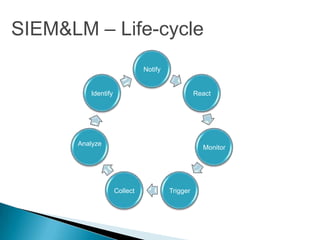
 Life Cycle
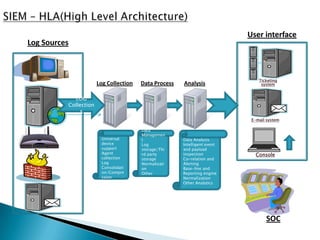
 High level architecture
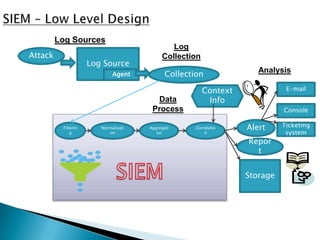
 Low level design
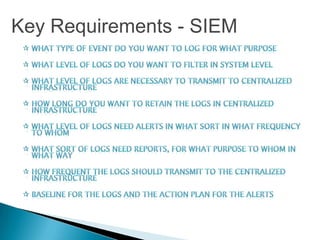
 Key Requirements
 Security Log analysis
 Security Log monitoring
 NIST Guidelines
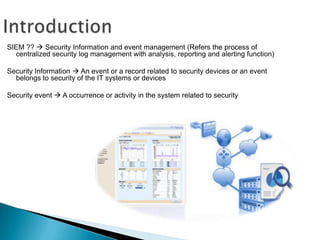
SIEM ??  Security Information and event management (Refers the process of
  centralized security log management with analysis, reporting and alerting function)

Security Information  An event or a record related to security devices or an event
  belongs to security of the IT systems or devices

Security event  A occurrence or activity in the system related to security
Introduction - contd
Why SIEM ???

To improve log analysis

To support Incident analysis

To improve incident response

To support forensic investigations

To support regulatory compliance

To support internal process adherence and audit requirements
Introduction - contd
Why Log Management is important ???

To generate logs for what is worth

To support operation maintenance & Troubleshooting

To transmit filtered logs in a secured fashion

To what and how long logs should be stored  Log retention

To store logs for appropriate, in a secured fashion

To ensure relevant security metrics as triggered appropriate logs

To enhance the threat discovery
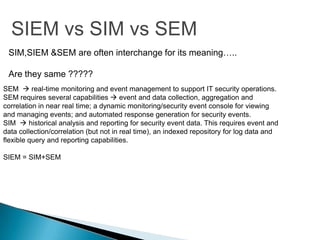
SIEM vs SIM vs SEM
 SIM,SIEM &SEM are often interchange for its meaning…..

 Are they same ?????
SEM  real-time monitoring and event management to support IT security operations.
SEM requires several capabilities  event and data collection, aggregation and
correlation in near real time; a dynamic monitoring/security event console for viewing
and managing events; and automated response generation for security events.
SIM  historical analysis and reporting for security event data. This requires event and
data collection/correlation (but not in real time), an indexed repository for log data and
flexible query and reporting capabilities.

SIEM = SIM+SEM
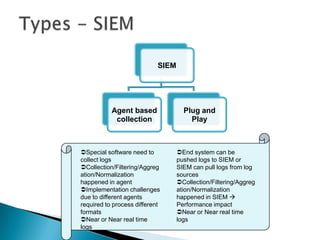
SIEM


           Agent based               Plug and
            collection                 Play


Special software need to          End system can be
collect logs                       pushed logs to SIEM or
Collection/Filtering/Aggreg       SIEM can pull logs from log
ation/Normalization                sources
happened in agent                  Collection/Filtering/Aggreg
Implementation challenges         ation/Normalization
due to different agents            happened in SIEM 
required to process different      Performance impact
formats                            Near or Near real time
Near or Near real time            logs
logs
SIEM&LM – Life-cycle
                              Notify


         Identify                                React


      Analyze
                                                   Monitor


                    Collect            Trigger
Key Requirements - SIEM
User interface
Log Sources


                                                                               Ticketing
                       Log Collection   Data Process   Analysis                 system


            LOG
          Collection
               s
                                                                            E-mail system

                                        Data
                                        Managemen
                        Universal       t              Data Analysis
                        device          Log            Intelligent event
                        support         storage/Thi    and payload
                        Agent           rd party       inspection             Console
                        collection      storage        Co-relation and
                        Log             Normalizati    Alerting
                        Consolidati     on             Base-line and
                        on/Compre       Other          Reporting engine
                        ssion           Analytics      Normalization
                                                       Other Analytics


                                                                                  SOC
Log Sources
                                              Log
Attack                                     Collection
                     Log Source
                             Agent           Collection              Analysis

                                                        Context              E-mail
                                        Data             Info
                                       Process                              Console

          Filterin      Normalizati   Aggregati      Correlatio   Alert     Ticketing
              g            on            on              n                   system
                                                                  Repor
                                                                    t


                                                                  Storage
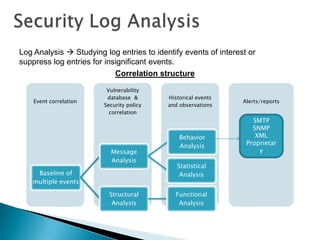
Log Analysis  Studying log entries to identify events of interest or
suppress log entries for insignificant events.
                            Correlation structure

                         Vulnerability
                         database &        Historical events
    Event correlation                                            Alerts/reports
                        Security policy    and observations
                          correlation
                                                                    SMTP
                                                                    SNMP
                                               Behavior              XML
                                               Analysis           Proprietar
                          Message                                     y
                          Analysis
                                              Statistical
    Baseline of                                Analysis
   multiple events

                          Structural         Functional
                           Analysis           Analysis
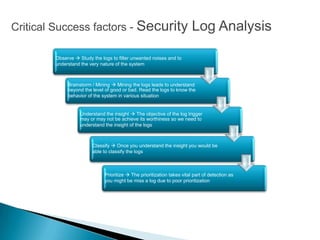
Critical Success factors - Security                                      Log Analysis

        Observe  Study the logs to filter unwanted noises and to
        understand the very nature of the system


             Brainstorm / Mining  Mining the logs leads to understand
             beyond the level of good or bad. Read the logs to know the
             behavior of the system in various situation


                   Understand the insight  The objective of the log trigger
                   may or may not be achieve its worthiness so we need to
                   understand the insight of the logs


                        Classify  Once you understand the insight you would be
                        able to classify the logs


                              Prioritize  The prioritization takes vital part of detection as
                              you might be miss a log due to poor prioritization
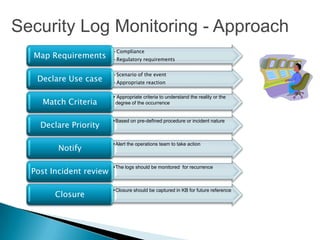
Security Log Monitoring - Approach
                         •Compliance
  Map Requirements       •Regulatory requirements


                         •Scenario of the event
   Declare Use case      •Appropriate reaction

                         • Appropriate criteria to understand the reality or the
    Match Criteria        degree of the occurrence


                         •Based on pre-defined procedure or incident nature
    Declare Priority

                         •Alert the operations team to take action
         Notify

                         •The logs should be monitored for recurrence
  Post Incident review

                         •Closure should be captured in KB for future reference
        Closure
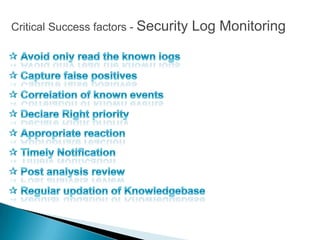
Critical Success factors - Security   Log Monitoring
NIST Guidelines  Security Log management

To establish and maintain successful log management infrastructures,
an organization should perform significant planning and other preparatory
actions for performing log management.

This is important for creating consistent, reliable, and efficient log management
practices that meet the organization’s needs and requirements and also
provide additional value


SECURITY IS PROCESS NOT PRODUCT !!!!!!!!!!!
http://csrc.nist.gov/publications/nistpubs/800-92/SP800-92

Security Information and Event Managemen

  • 1.
  • 2.
     Introduction  Types of SIEM  SIEM Vs SEM Vs SIM  Life Cycle  High level architecture  Low level design  Key Requirements  Security Log analysis  Security Log monitoring  NIST Guidelines
  • 3.
    SIEM ?? Security Information and event management (Refers the process of centralized security log management with analysis, reporting and alerting function) Security Information  An event or a record related to security devices or an event belongs to security of the IT systems or devices Security event  A occurrence or activity in the system related to security
  • 4.
    Introduction - contd WhySIEM ??? To improve log analysis To support Incident analysis To improve incident response To support forensic investigations To support regulatory compliance To support internal process adherence and audit requirements
  • 5.
    Introduction - contd WhyLog Management is important ??? To generate logs for what is worth To support operation maintenance & Troubleshooting To transmit filtered logs in a secured fashion To what and how long logs should be stored  Log retention To store logs for appropriate, in a secured fashion To ensure relevant security metrics as triggered appropriate logs To enhance the threat discovery
  • 6.
    SIEM vs SIMvs SEM SIM,SIEM &SEM are often interchange for its meaning….. Are they same ????? SEM  real-time monitoring and event management to support IT security operations. SEM requires several capabilities  event and data collection, aggregation and correlation in near real time; a dynamic monitoring/security event console for viewing and managing events; and automated response generation for security events. SIM  historical analysis and reporting for security event data. This requires event and data collection/correlation (but not in real time), an indexed repository for log data and flexible query and reporting capabilities. SIEM = SIM+SEM
  • 7.
    SIEM Agent based Plug and collection Play Special software need to End system can be collect logs pushed logs to SIEM or Collection/Filtering/Aggreg SIEM can pull logs from log ation/Normalization sources happened in agent Collection/Filtering/Aggreg Implementation challenges ation/Normalization due to different agents happened in SIEM  required to process different Performance impact formats Near or Near real time Near or Near real time logs logs
  • 8.
    SIEM&LM – Life-cycle Notify Identify React Analyze Monitor Collect Trigger
  • 9.
  • 10.
    User interface Log Sources Ticketing Log Collection Data Process Analysis system LOG Collection s E-mail system Data Managemen Universal t Data Analysis device Log Intelligent event support storage/Thi and payload Agent rd party inspection Console collection storage Co-relation and Log Normalizati Alerting Consolidati on Base-line and on/Compre Other Reporting engine ssion Analytics Normalization Other Analytics SOC
  • 11.
    Log Sources Log Attack Collection Log Source Agent Collection Analysis Context E-mail Data Info Process Console Filterin Normalizati Aggregati Correlatio Alert Ticketing g on on n system Repor t Storage
  • 12.
    Log Analysis Studying log entries to identify events of interest or suppress log entries for insignificant events. Correlation structure Vulnerability database & Historical events Event correlation Alerts/reports Security policy and observations correlation SMTP SNMP Behavior XML Analysis Proprietar Message y Analysis Statistical Baseline of Analysis multiple events Structural Functional Analysis Analysis
  • 13.
    Critical Success factors- Security Log Analysis Observe  Study the logs to filter unwanted noises and to understand the very nature of the system Brainstorm / Mining  Mining the logs leads to understand beyond the level of good or bad. Read the logs to know the behavior of the system in various situation Understand the insight  The objective of the log trigger may or may not be achieve its worthiness so we need to understand the insight of the logs Classify  Once you understand the insight you would be able to classify the logs Prioritize  The prioritization takes vital part of detection as you might be miss a log due to poor prioritization
  • 14.
    Security Log Monitoring- Approach •Compliance Map Requirements •Regulatory requirements •Scenario of the event Declare Use case •Appropriate reaction • Appropriate criteria to understand the reality or the Match Criteria degree of the occurrence •Based on pre-defined procedure or incident nature Declare Priority •Alert the operations team to take action Notify •The logs should be monitored for recurrence Post Incident review •Closure should be captured in KB for future reference Closure
  • 15.
    Critical Success factors- Security Log Monitoring
  • 16.
    NIST Guidelines Security Log management To establish and maintain successful log management infrastructures, an organization should perform significant planning and other preparatory actions for performing log management. This is important for creating consistent, reliable, and efficient log management practices that meet the organization’s needs and requirements and also provide additional value SECURITY IS PROCESS NOT PRODUCT !!!!!!!!!!! http://csrc.nist.gov/publications/nistpubs/800-92/SP800-92