SECURE DATA RETRIEVAL FOR 
DECENTRALIZED 
DISRUPTION-TOLERANT 
MILITARY NETWORKS 
Junbeom Hur and Kyungtae Kang, Member, IEEE, 
ACM
Mobile nodes in military environments such as a battlefield or a hostile region are likely to 
suffer from intermittent network connectivity and frequent partitions. Disruption-tolerant 
network (DTN) technologies are becoming successful solutions that allow wireless devices 
carried by soldiers to communicate with each other and access the confidential information 
or command reliably by exploiting external storage nodes. Some of the most challenging 
issues in this scenario are the enforcement of authorization policies and the policies update 
for secure data retrieval. Ciphertext-policy attribute-based encryption (CP-ABE) is a 
promising cryptographic solution to the access control issues. However, the problem of 
applying CP-ABE in decentralized DTNs introduces several security and privacy challenges 
with regard to the attribute revocation, key escrow, and coordination of attributes issued 
from different authorities. In this paper, we propose a secure data retrieval scheme using 
CP-ABE for decentralized DTNs where multiple key authorities manage their attributes 
independently. We demonstrate how to apply the proposed mechanism to securely and 
efficiently manage the confidential data distributed in the disruption-tolerant military 
network. 
ABSTRACT
The concept of attribute-based encryption (ABE) is a promising approach that fulfills 
the requirements for secure data retrieval in DTNs. ABE features a mechanism that 
enables an access control over encrypted data using access policies and ascribed 
attributes among private keys and ciphertexts. the problem of applying the ABE to 
DTNs introduces several security and privacy challenges. Since some users may change 
their associated attributes at some point (for example, moving their region), or some 
private keys might be compromised, key revocation (or update) for each attribute is 
necessary in order to make systems secure. This implies that revocation of any attribute 
or any single user in an attribute group would affect the other users in the group. For 
example, if a user joins or leaves an attribute group, the associated attribute key should 
be changed and redistributed to all the other members in the same group for backward 
or forward secrecy. It may result in bottleneck during rekeying procedure, or security 
degradation due to the windows of vulnerability if the previous attribute key is not 
updated immediately. 
EXISTING SYSTEM
 Many military applications require increased protection of confidential 
data including access control methods that are cryptographically 
enforced. 
 If the key authority is compromised by adversaries when deployed in 
the hostile environments, this could be a potential threat to the data 
confidentiality or privacy especially when the data is highly sensitive. 
 When multiple authorities manage and issue attribute keys to users 
independently with their own master secrets, it is very hard to define 
fine-grained access policies over attributes issued from different 
authorities. 
DISADVANTAGES OF EXISTING SYSTEM
Especially, cipher text-policy ABE (CP-ABE) provides a scalable way of encrypting data 
such that the encrypter defines the attribute set that the decrypter needs to possess in 
order to decrypt the cipher text. Thus, different users are allowed to decrypt different 
pieces of data per the security policy. In CP-ABE, the key authority generates private 
keys of users by applying the authority’s master secret keys to users’ associated set of 
attributes. Thus, the key authority can decrypt every cipher text addressed to specific 
users by generating their attribute keys. If the key authority is compromised by 
adversaries when deployed in the hostile environments, this could be a potential threat 
to the data confidentiality or privacy especially when the data is highly sensitive. The 
key escrow is an inherent problem even in the multiple-authority systems as long as 
each key authority has the whole privilege to generate their own attribute keys with 
their own master secrets. Since such a key generation mechanism based on the single 
master secret is the basic method for most of the asymmetric encryption systems such 
as the attribute- based or identity-based encryption protocols, removing escrow in 
single or multiple-authority CP-ABE is a pivotal open problem. 
PROPOSED SYSTEM
 Immediate attribute revocation enhances backward/forward secrecy of 
confidential data by reducing the windows of vulnerability. 
 Encryptors can define a fine-grained access policy using any monotone 
access structure under attributes issued from any chosen set of 
authorities. 
 The key escrow problem is resolved by an escrow-free key issuing 
protocol that exploits the characteristic of the decentralized DTN (Delay 
Tolerant Network) architecture. 
ADVANTAGES OF PROPOSED SYSTEM
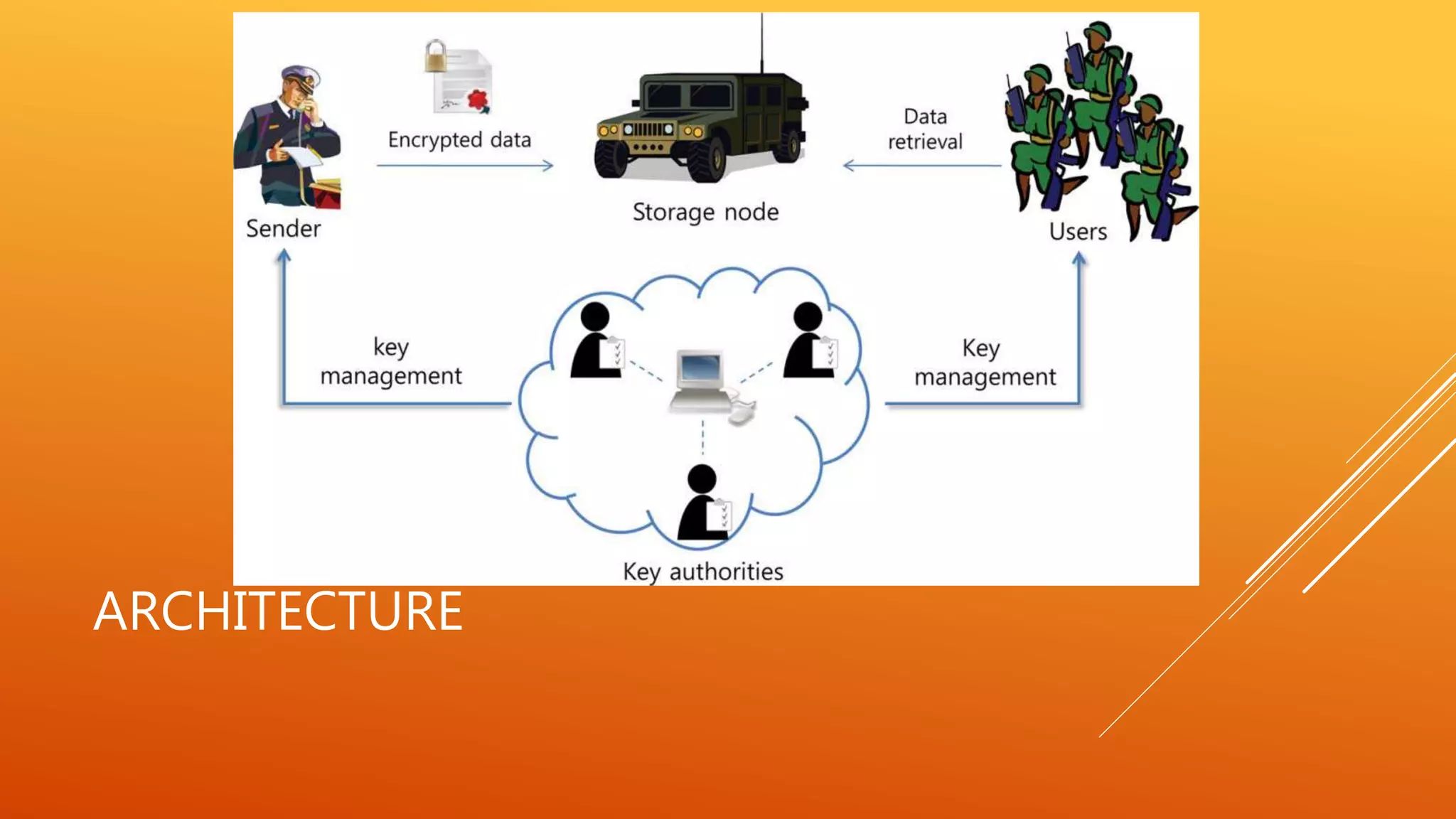
ARCHITECTURE
The proposed system has the following modules: 
 Key Authorities 
 Storage node 
 Sender 
 Soldier (User) 
 CP-ABE Method 
MODULES
 Key Authorities 
They are key generation centers that generate public/secret parameters for CP-ABE. The 
key authorities consist of a central authority and multiple local authorities. We assume 
that there are secure and reliable communication channels between a central authority 
and each local authority during the initial key setup and generation phase. Each local 
authority manages different attributes and issues corresponding attribute keys to users. 
They grant differential access rights to individual users based on the users’ attributes. 
The key authorities are assumed to be honest-but-curious. That is, they will honestly 
execute the assigned tasks in the system, however they would like to learn information 
of encrypted contents as much as possible. 
MODULE DESCRIPTION
This is an entity that stores data from senders and provide corresponding 
access to users. It may be mobile or static. Similar to the previous 
schemes, we also assume the storage node to be semi-trusted, that is 
honest-but-curious. 
 STORAGE NODE
This is an entity who owns confidential messages or data (e.g., a 
commander) and wishes to store them into the external data storage node 
for ease of sharing or for reliable delivery to users in the extreme 
networking environments. A sender is responsible for defining (attribute 
based) access policy and enforcing it on its own data by encrypting the 
data under the policy before storing it to the storage node. 
 SENDER
This is a mobile node who wants to access the data stored at the storage 
node (e.g., a soldier). If a user possesses a set of attributes satisfying the 
access policy of the encrypted data defined by the sender, and is not 
revoked in any of the attributes, then he will be able to decrypt the 
ciphertext and obtain the data. 
 SOLDIER (USER)
In Ciphertext Policy Attribute based Encryption scheme, the encryptor can fix 
the policy, who can decrypt the encrypted message. The policy can be formed 
with the help of attributes. In CP-ABE, access policy is sent along with the 
ciphertext. We propose a method in which the access policy need not be sent 
along with the ciphertext, by which we are able to preserve the privacy of the 
encryptor. This techniques encrypted data can be kept confidential even if the 
storage server is untrusted; moreover, our methods are secure against 
collusion attacks. Previous Attribute- Based Encryption systems used attributes 
to describe the encrypted data and built policies into user's keys; while in our 
system attributes are used to describe a user's credentials, and a party 
encrypting data determines a policy for who can decrypt. 
 CP-ABE METHOD
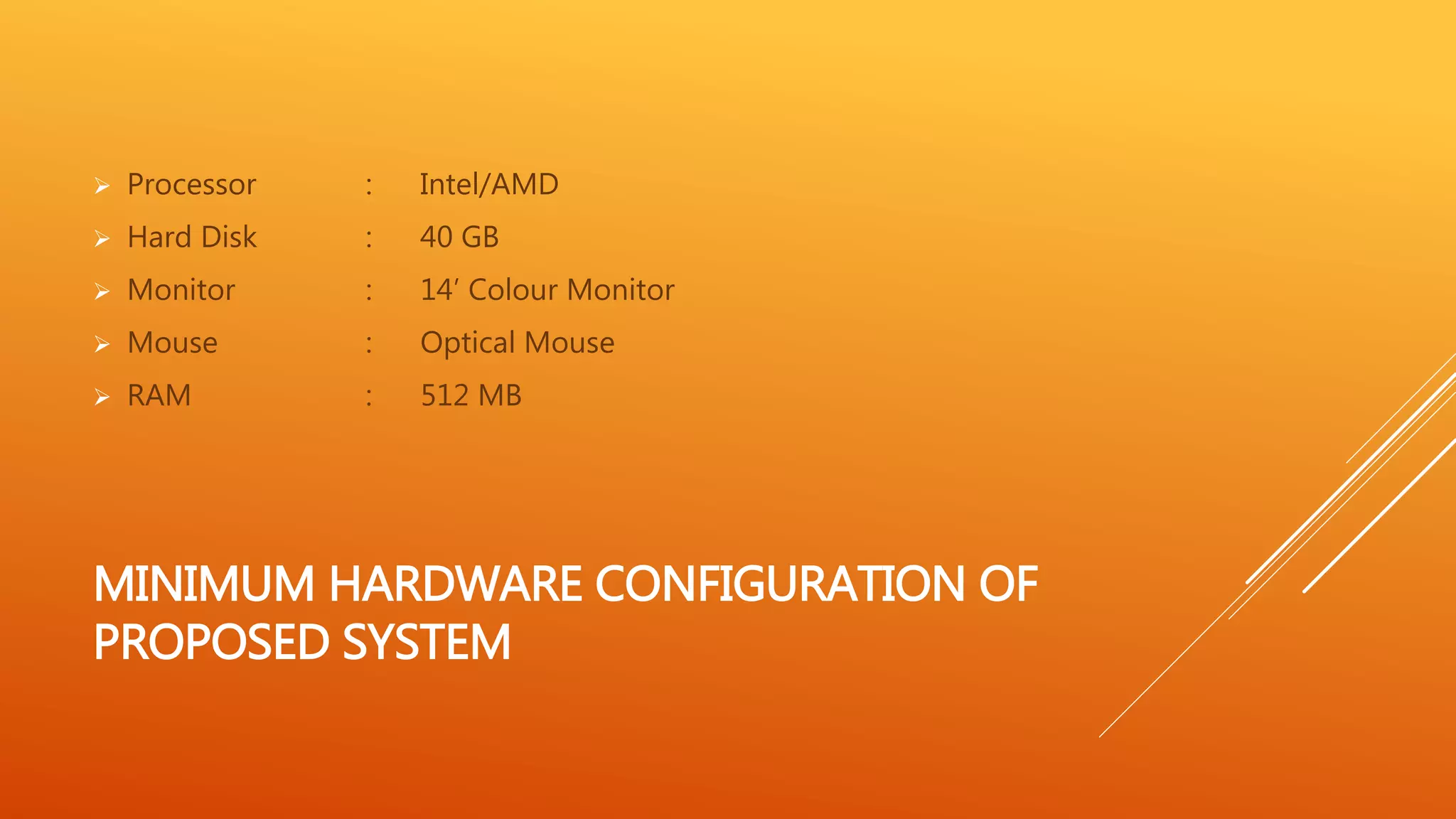
 Processor : Intel/AMD 
 Hard Disk : 40 GB 
 Monitor : 14’ Colour Monitor 
 Mouse : Optical Mouse 
 RAM : 512 MB 
MINIMUM HARDWARE CONFIGURATION OF 
PROPOSED SYSTEM
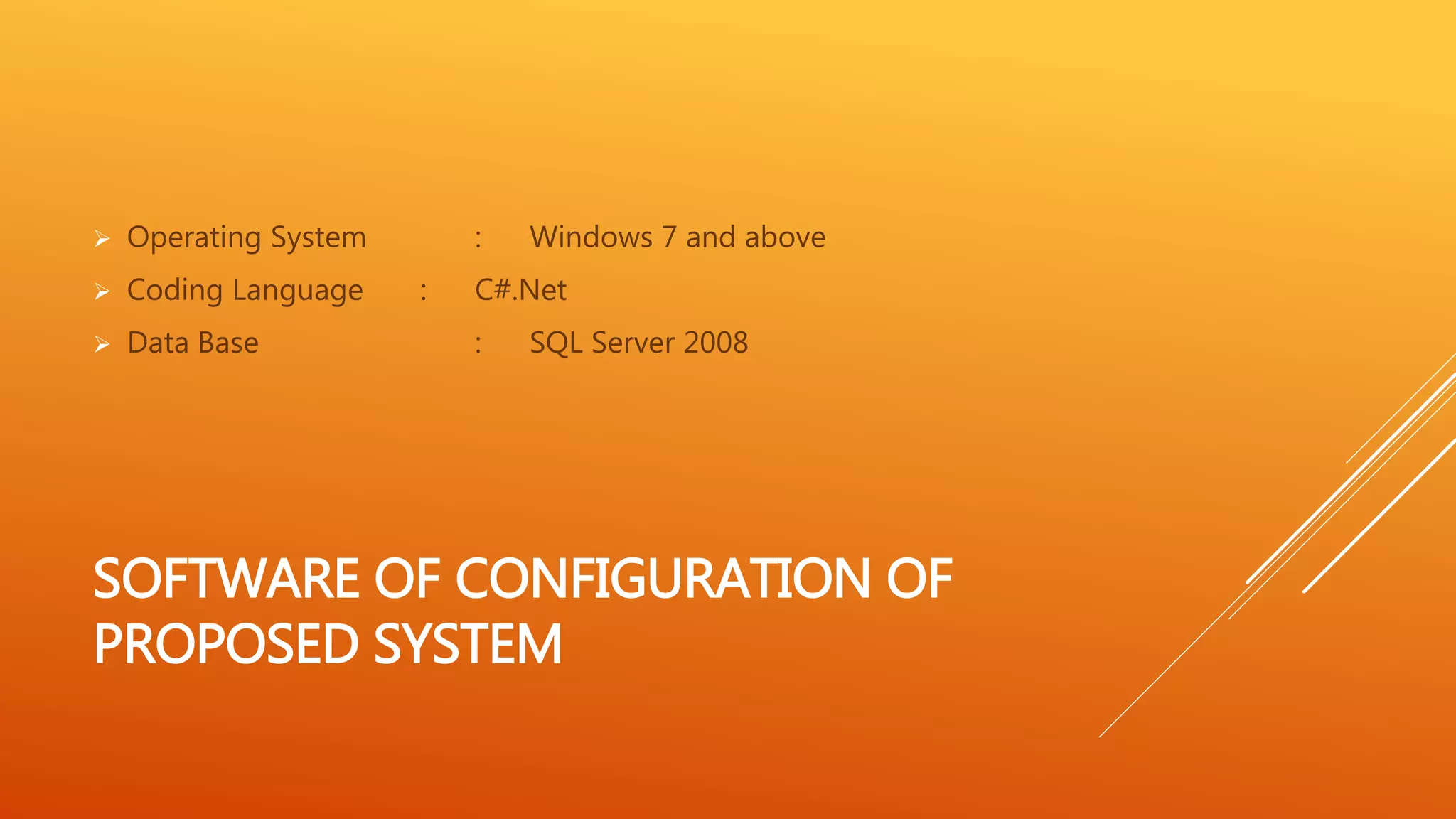
 Operating System : Windows 7 and above 
 Coding Language : C#.Net 
 Data Base : SQL Server 2008 
SOFTWARE OF CONFIGURATION OF 
PROPOSED SYSTEM
 J. Burgess, B. Gallagher, D. Jensen, and B. N. Levine, “Maxprop: Routing for vehicle-based 
disruption tolerant networks,” in Proc. IEEE INFOCOM, 2006, pp. 1–11. 
 M. Chuah and P. Yang, “Node density-based adaptive routing scheme for disruption 
tolerant networks,” in Proc. IEEE MILCOM, 2006, pp. 1–6. 
 M. M. B. Tariq, M. Ammar, and E. Zequra, “Mesage ferry route design for sparse ad 
hoc networks with mobile nodes,” in Proc. ACM MobiHoc, 2006, pp. 37–48. 
 S. Roy and M. Chuah, “Secure data retrieval based on ciphertext policy attribute-based 
encryption (CP-ABE) system for the DTNs,” Lehigh CSE Tech. Rep., 2009. 
 M. Chuah and P. Yang, “Performance evaluation of content-based information 
retrieval schemes for DTNs,” in Proc. IEEE MILCOM, 2007, pp. 1–7. 
REFERENCES

Secure data retrieval for decentralized disruption tolerant military networks

  • 1.
    SECURE DATA RETRIEVALFOR DECENTRALIZED DISRUPTION-TOLERANT MILITARY NETWORKS Junbeom Hur and Kyungtae Kang, Member, IEEE, ACM
  • 2.
    Mobile nodes inmilitary environments such as a battlefield or a hostile region are likely to suffer from intermittent network connectivity and frequent partitions. Disruption-tolerant network (DTN) technologies are becoming successful solutions that allow wireless devices carried by soldiers to communicate with each other and access the confidential information or command reliably by exploiting external storage nodes. Some of the most challenging issues in this scenario are the enforcement of authorization policies and the policies update for secure data retrieval. Ciphertext-policy attribute-based encryption (CP-ABE) is a promising cryptographic solution to the access control issues. However, the problem of applying CP-ABE in decentralized DTNs introduces several security and privacy challenges with regard to the attribute revocation, key escrow, and coordination of attributes issued from different authorities. In this paper, we propose a secure data retrieval scheme using CP-ABE for decentralized DTNs where multiple key authorities manage their attributes independently. We demonstrate how to apply the proposed mechanism to securely and efficiently manage the confidential data distributed in the disruption-tolerant military network. ABSTRACT
  • 3.
    The concept ofattribute-based encryption (ABE) is a promising approach that fulfills the requirements for secure data retrieval in DTNs. ABE features a mechanism that enables an access control over encrypted data using access policies and ascribed attributes among private keys and ciphertexts. the problem of applying the ABE to DTNs introduces several security and privacy challenges. Since some users may change their associated attributes at some point (for example, moving their region), or some private keys might be compromised, key revocation (or update) for each attribute is necessary in order to make systems secure. This implies that revocation of any attribute or any single user in an attribute group would affect the other users in the group. For example, if a user joins or leaves an attribute group, the associated attribute key should be changed and redistributed to all the other members in the same group for backward or forward secrecy. It may result in bottleneck during rekeying procedure, or security degradation due to the windows of vulnerability if the previous attribute key is not updated immediately. EXISTING SYSTEM
  • 4.
     Many militaryapplications require increased protection of confidential data including access control methods that are cryptographically enforced.  If the key authority is compromised by adversaries when deployed in the hostile environments, this could be a potential threat to the data confidentiality or privacy especially when the data is highly sensitive.  When multiple authorities manage and issue attribute keys to users independently with their own master secrets, it is very hard to define fine-grained access policies over attributes issued from different authorities. DISADVANTAGES OF EXISTING SYSTEM
  • 5.
    Especially, cipher text-policyABE (CP-ABE) provides a scalable way of encrypting data such that the encrypter defines the attribute set that the decrypter needs to possess in order to decrypt the cipher text. Thus, different users are allowed to decrypt different pieces of data per the security policy. In CP-ABE, the key authority generates private keys of users by applying the authority’s master secret keys to users’ associated set of attributes. Thus, the key authority can decrypt every cipher text addressed to specific users by generating their attribute keys. If the key authority is compromised by adversaries when deployed in the hostile environments, this could be a potential threat to the data confidentiality or privacy especially when the data is highly sensitive. The key escrow is an inherent problem even in the multiple-authority systems as long as each key authority has the whole privilege to generate their own attribute keys with their own master secrets. Since such a key generation mechanism based on the single master secret is the basic method for most of the asymmetric encryption systems such as the attribute- based or identity-based encryption protocols, removing escrow in single or multiple-authority CP-ABE is a pivotal open problem. PROPOSED SYSTEM
  • 6.
     Immediate attributerevocation enhances backward/forward secrecy of confidential data by reducing the windows of vulnerability.  Encryptors can define a fine-grained access policy using any monotone access structure under attributes issued from any chosen set of authorities.  The key escrow problem is resolved by an escrow-free key issuing protocol that exploits the characteristic of the decentralized DTN (Delay Tolerant Network) architecture. ADVANTAGES OF PROPOSED SYSTEM
  • 7.
  • 8.
    The proposed systemhas the following modules:  Key Authorities  Storage node  Sender  Soldier (User)  CP-ABE Method MODULES
  • 9.
     Key Authorities They are key generation centers that generate public/secret parameters for CP-ABE. The key authorities consist of a central authority and multiple local authorities. We assume that there are secure and reliable communication channels between a central authority and each local authority during the initial key setup and generation phase. Each local authority manages different attributes and issues corresponding attribute keys to users. They grant differential access rights to individual users based on the users’ attributes. The key authorities are assumed to be honest-but-curious. That is, they will honestly execute the assigned tasks in the system, however they would like to learn information of encrypted contents as much as possible. MODULE DESCRIPTION
  • 10.
    This is anentity that stores data from senders and provide corresponding access to users. It may be mobile or static. Similar to the previous schemes, we also assume the storage node to be semi-trusted, that is honest-but-curious.  STORAGE NODE
  • 11.
    This is anentity who owns confidential messages or data (e.g., a commander) and wishes to store them into the external data storage node for ease of sharing or for reliable delivery to users in the extreme networking environments. A sender is responsible for defining (attribute based) access policy and enforcing it on its own data by encrypting the data under the policy before storing it to the storage node.  SENDER
  • 12.
    This is amobile node who wants to access the data stored at the storage node (e.g., a soldier). If a user possesses a set of attributes satisfying the access policy of the encrypted data defined by the sender, and is not revoked in any of the attributes, then he will be able to decrypt the ciphertext and obtain the data.  SOLDIER (USER)
  • 13.
    In Ciphertext PolicyAttribute based Encryption scheme, the encryptor can fix the policy, who can decrypt the encrypted message. The policy can be formed with the help of attributes. In CP-ABE, access policy is sent along with the ciphertext. We propose a method in which the access policy need not be sent along with the ciphertext, by which we are able to preserve the privacy of the encryptor. This techniques encrypted data can be kept confidential even if the storage server is untrusted; moreover, our methods are secure against collusion attacks. Previous Attribute- Based Encryption systems used attributes to describe the encrypted data and built policies into user's keys; while in our system attributes are used to describe a user's credentials, and a party encrypting data determines a policy for who can decrypt.  CP-ABE METHOD
  • 14.
     Processor :Intel/AMD  Hard Disk : 40 GB  Monitor : 14’ Colour Monitor  Mouse : Optical Mouse  RAM : 512 MB MINIMUM HARDWARE CONFIGURATION OF PROPOSED SYSTEM
  • 15.
     Operating System: Windows 7 and above  Coding Language : C#.Net  Data Base : SQL Server 2008 SOFTWARE OF CONFIGURATION OF PROPOSED SYSTEM
  • 16.
     J. Burgess,B. Gallagher, D. Jensen, and B. N. Levine, “Maxprop: Routing for vehicle-based disruption tolerant networks,” in Proc. IEEE INFOCOM, 2006, pp. 1–11.  M. Chuah and P. Yang, “Node density-based adaptive routing scheme for disruption tolerant networks,” in Proc. IEEE MILCOM, 2006, pp. 1–6.  M. M. B. Tariq, M. Ammar, and E. Zequra, “Mesage ferry route design for sparse ad hoc networks with mobile nodes,” in Proc. ACM MobiHoc, 2006, pp. 37–48.  S. Roy and M. Chuah, “Secure data retrieval based on ciphertext policy attribute-based encryption (CP-ABE) system for the DTNs,” Lehigh CSE Tech. Rep., 2009.  M. Chuah and P. Yang, “Performance evaluation of content-based information retrieval schemes for DTNs,” in Proc. IEEE MILCOM, 2007, pp. 1–7. REFERENCES