P.KIRAN KUMAR REDDY   S.SUMEGANA
11731A05A5            11731A05B1
TOPICS TO BE COVERED
 What is a search engine?
 Purpose of search engines?
 How search engine opererates?
 How we can improve use of search
  engines?
 Advantages of search engines
 Disadvantages of search engines
 Conclusion
Search Engines


   Search engines are programes that
    allow the user to enter keywords that
    are used to search a database of web
    page
     Each search engine searches in a
    different way and searches different
    sites. That is why doing a search in
    one search engine will produce
    different results than doing the same
Purpose of search engines
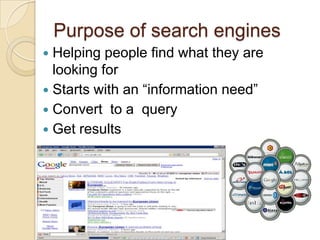
 Helping people find what they are
  looking for
 Starts with an “information need”
 Convert to a query
 Get results
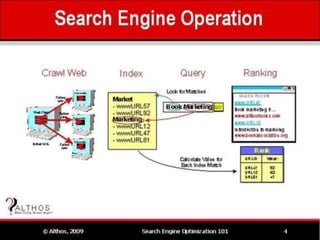
How search engine operates?

 Crawling the web, following links to
  find pages
 Indexing the pages to create an index
  from word every place it occurs
 Ranking the pages so the best one
  shows first
 Displaying the results that in a way
  that is easy for the user to understand
How we can improve use of search
engines
 You can get better results from an
  Internet search engine if you know
  how to use:
 1. wildcards
 2. Boolean operators
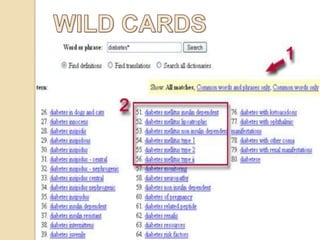
Wild Cards
•A wild card is a special character which can
be appended to the root of a word so that you
can
 •" Wildcards possible to search
search for all allow youendings to that root.
 simultaneously for several words with the
 same stem.

•Example: "educat*“, "smok*"
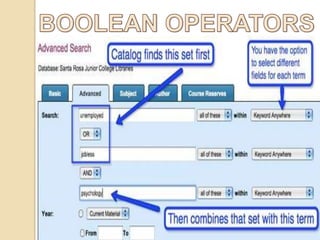
Boolean operators
 1.AND
 2.OR
 3.NOT
AND
• Using the boolean operator “AND", it is possible to
narrow a search so that you get quite a limited set of
results.
OR
•The boolean operator “OR" has the opposite effect of
expanding a search.
NOT
•Another common operator is “NOT" which acts to limit a
search as well.
Advantages of search
s
    The indexes of search engines are usually vast,
    representing a significant proportions on the internet.

    The large number of variety of search engines enriches
    the internet, making it least appear to organiszed.

     The growing sophistication of search engine software
    enables us to presicely describethe information that we
    seek.
Disadvantages of search
engines
    They do not crawl on the web in the“realtime”.

     If a site is not linked it may not be accesible.

   Not every page of a site is searchable.
   Special tools are needed for the Invisible or
   Deep web.
   Few search engines search the full text of
   web pages
Conclusion

The primary goal of search engine is to provide high
quality search results over a rapidly growing world
wide web.

Search tools like Google search engine employs a
number of techniques to improve search quality
including page rank, anchor text, and proximity
information.

As the technology advances at an unimaginable
pace, it is not unwise expecting an efficient search
engine, which addresses all the needs.
Search engines
Search engines

Search engines

  • 2.
    P.KIRAN KUMAR REDDY S.SUMEGANA 11731A05A5 11731A05B1
  • 3.
    TOPICS TO BECOVERED  What is a search engine?  Purpose of search engines?  How search engine opererates?  How we can improve use of search engines?  Advantages of search engines  Disadvantages of search engines  Conclusion
  • 4.
    Search Engines  Search engines are programes that allow the user to enter keywords that are used to search a database of web page Each search engine searches in a different way and searches different sites. That is why doing a search in one search engine will produce different results than doing the same
  • 5.
    Purpose of searchengines  Helping people find what they are looking for  Starts with an “information need”  Convert to a query  Get results
  • 6.
    How search engineoperates?  Crawling the web, following links to find pages  Indexing the pages to create an index from word every place it occurs  Ranking the pages so the best one shows first  Displaying the results that in a way that is easy for the user to understand
  • 8.
    How we canimprove use of search engines  You can get better results from an Internet search engine if you know how to use:  1. wildcards  2. Boolean operators
  • 9.
    Wild Cards •A wildcard is a special character which can be appended to the root of a word so that you can •" Wildcards possible to search search for all allow youendings to that root. simultaneously for several words with the same stem. •Example: "educat*“, "smok*"
  • 11.
    Boolean operators 1.AND 2.OR 3.NOT AND • Using the boolean operator “AND", it is possible to narrow a search so that you get quite a limited set of results. OR •The boolean operator “OR" has the opposite effect of expanding a search. NOT •Another common operator is “NOT" which acts to limit a search as well.
  • 13.
    Advantages of search s The indexes of search engines are usually vast, representing a significant proportions on the internet. The large number of variety of search engines enriches the internet, making it least appear to organiszed.  The growing sophistication of search engine software enables us to presicely describethe information that we seek.
  • 14.
    Disadvantages of search engines  They do not crawl on the web in the“realtime”.  If a site is not linked it may not be accesible. Not every page of a site is searchable. Special tools are needed for the Invisible or Deep web. Few search engines search the full text of web pages
  • 15.
    Conclusion The primary goalof search engine is to provide high quality search results over a rapidly growing world wide web. Search tools like Google search engine employs a number of techniques to improve search quality including page rank, anchor text, and proximity information. As the technology advances at an unimaginable pace, it is not unwise expecting an efficient search engine, which addresses all the needs.