RUCHIR KUMAR GUPTA
BTECH FINAL YEAR(I.T.)
0701013084
CONTENTS
INTRODUCTION
HISTORY
WORKING
TYPES OF SERCH ENGINE
ADVANTAGES
CONCLUSION
INTRODUCTION
Search engine is a software program that
searches for sites based on the words that you
designate as search terms.
Search engines look through their own
databases of information in order to find what
it is that you are looking for.
“Search engine” is the popular term for an
Information Retrieval (IR) system.
HISTORY
Archie – First search tool for the Internet
Gopher – indexed plain text documents
Jughead – searched the files stored in Gopher
index system.
Wandex – first Web search engine
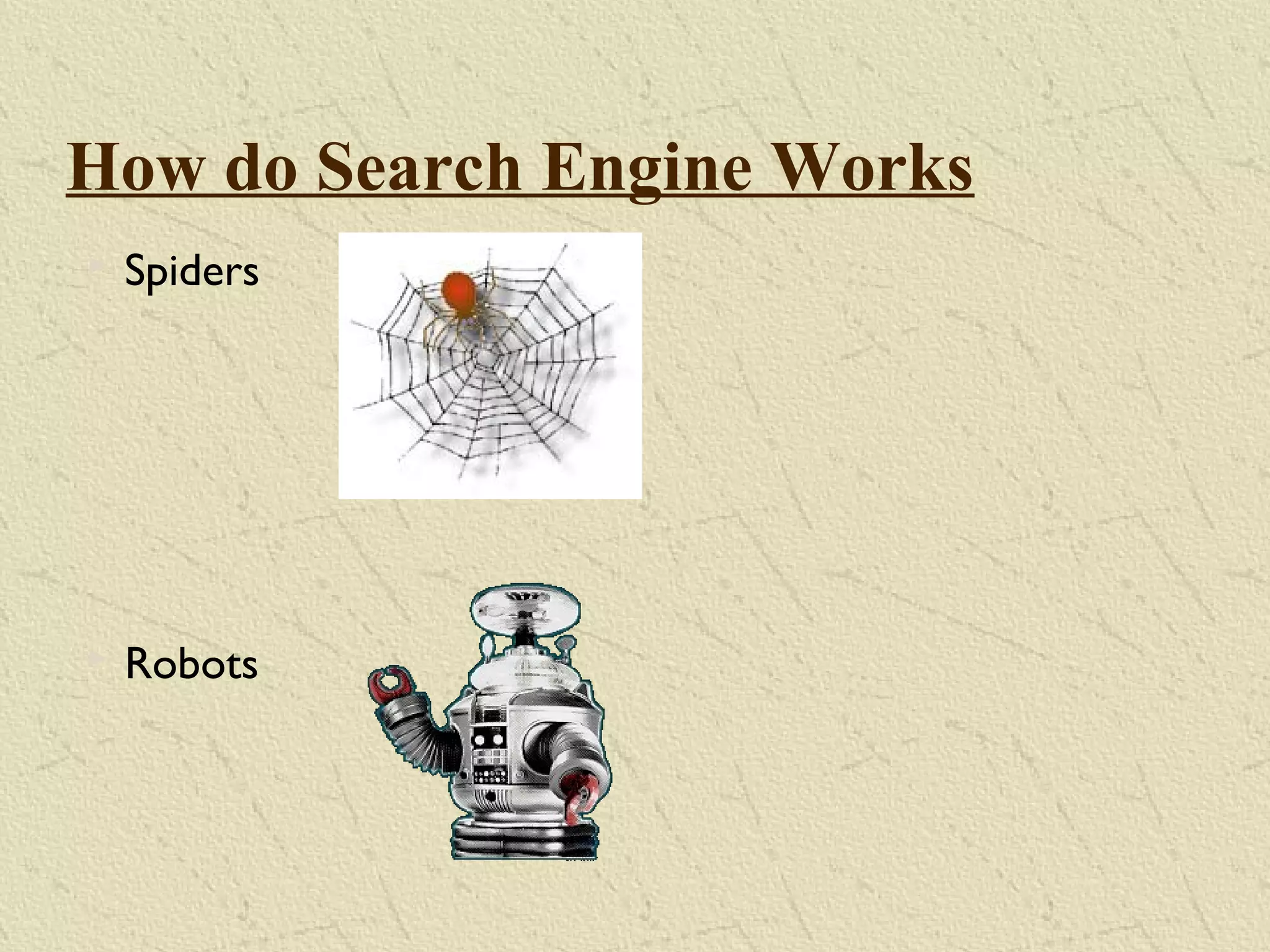
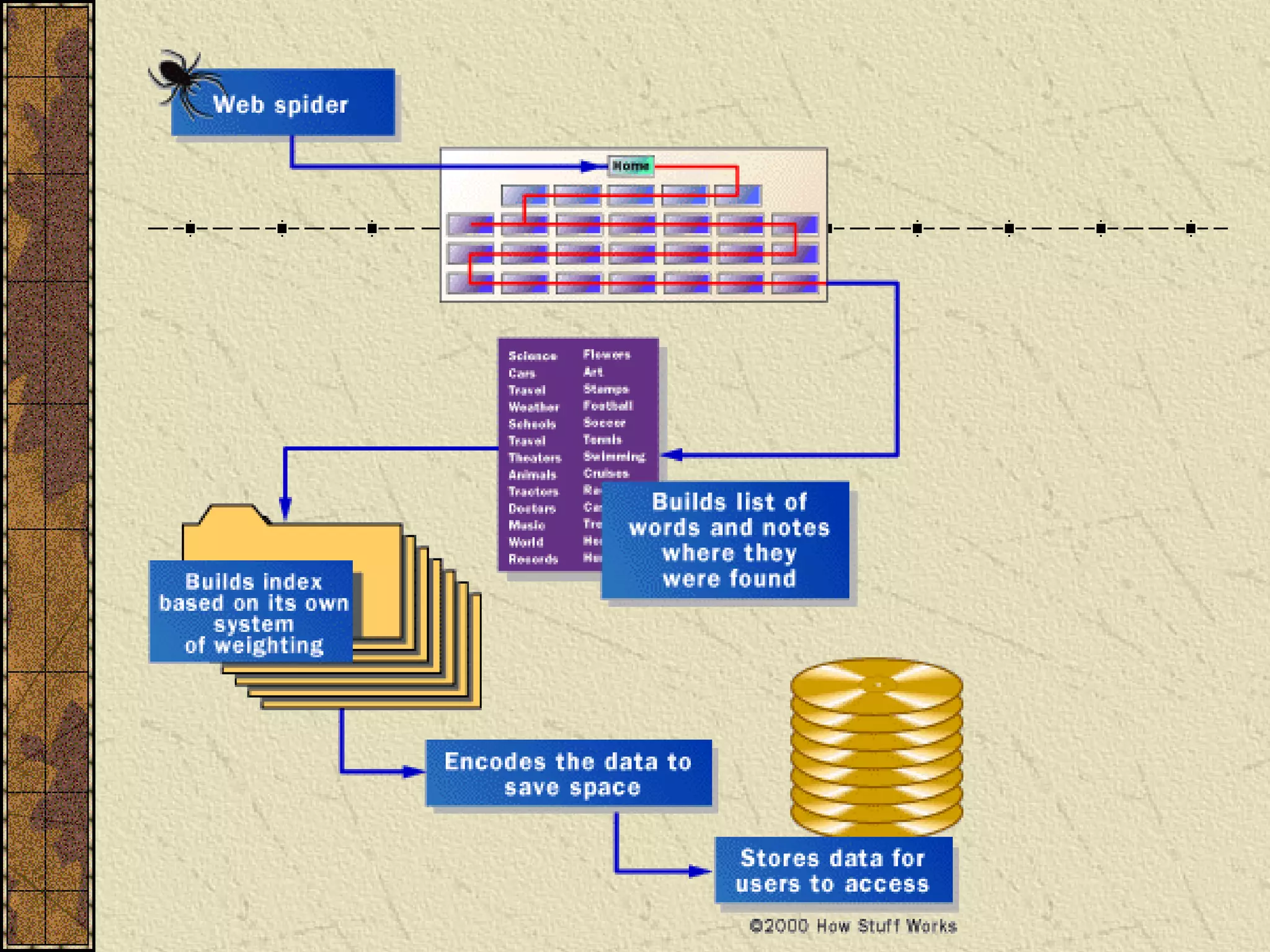
How do Search Engine Works
 Spiders
 Robots
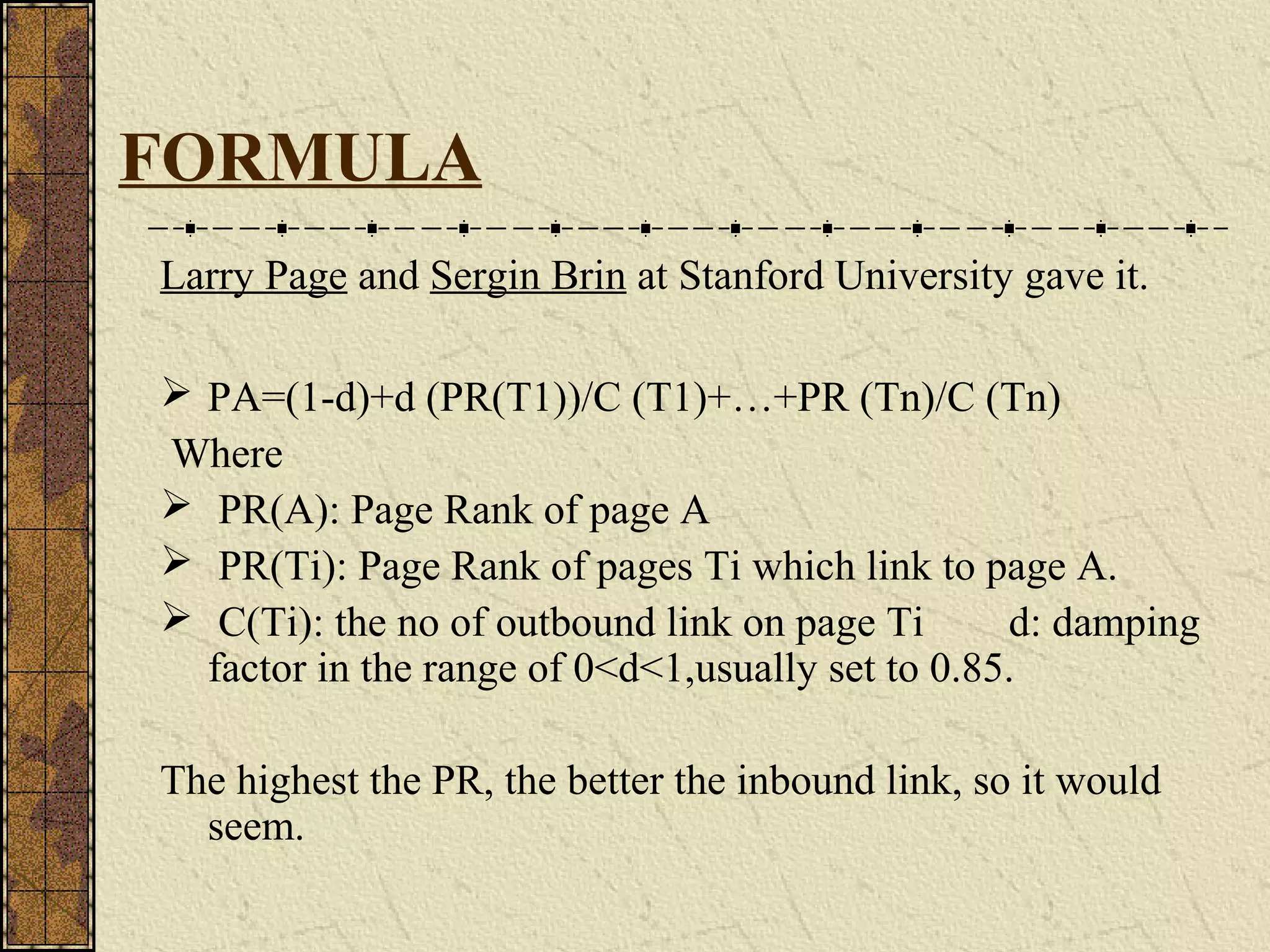
FORMULA
Larry Page and Sergin Brin at Stanford University gave it.
 PA=(1-d)+d (PR(T1))/C (T1)+…+PR (Tn)/C (Tn)
Where
 PR(A): Page Rank of page A
 PR(Ti): Page Rank of pages Ti which link to page A.
 C(Ti): the no of outbound link on page Ti d: damping
factor in the range of 0<d<1,usually set to 0.85.
The highest the PR, the better the inbound link, so it would
seem.
APPROXIMATING
RELEVANCE
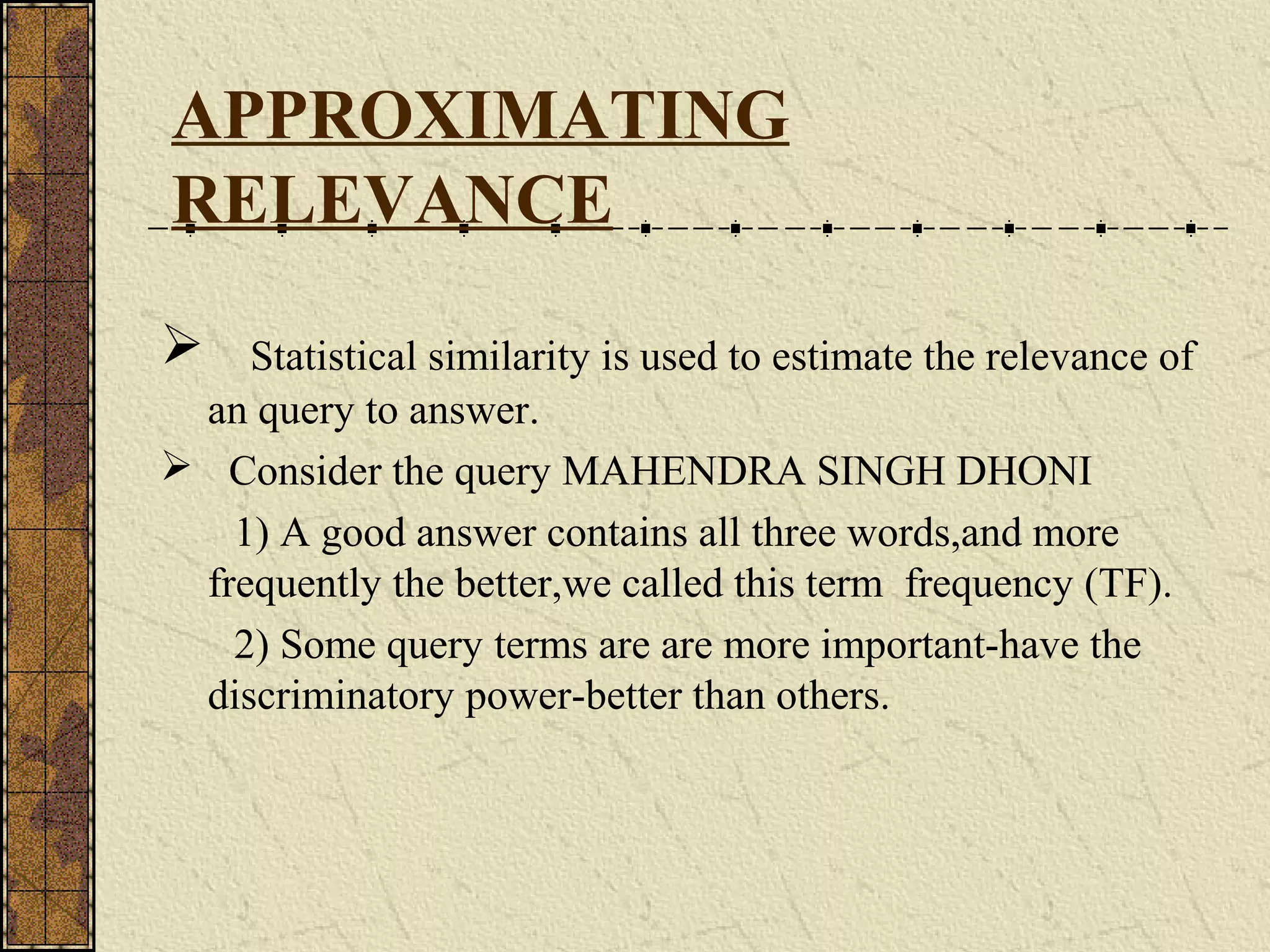
 Statistical similarity is used to estimate the relevance of
an query to answer.
 Consider the query MAHENDRA SINGH DHONI
1) A good answer contains all three words,and more
frequently the better,we called this term frequency (TF).
2) Some query terms are are more important-have the
discriminatory power-better than others.
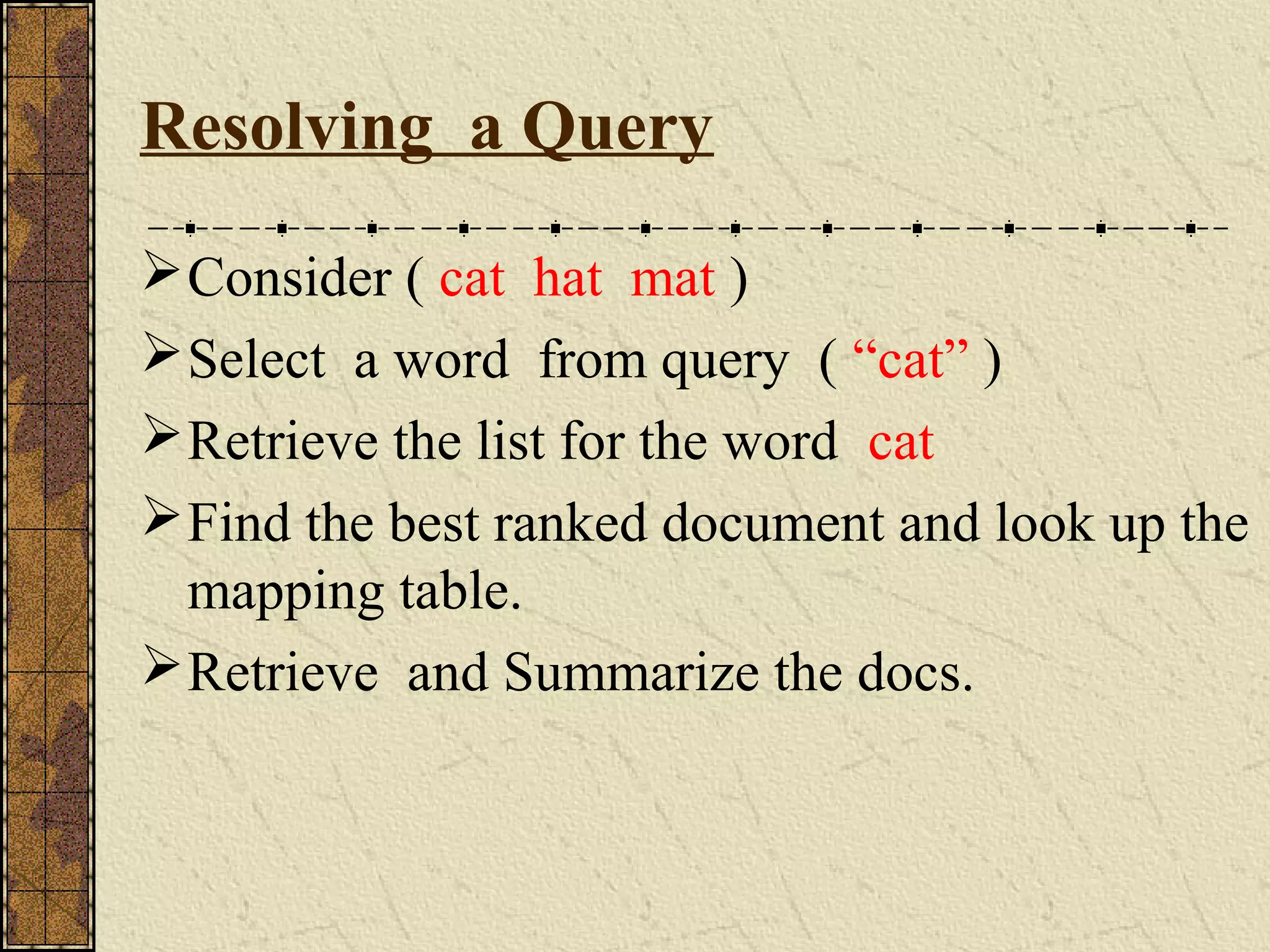
Resolving a Query
Consider ( cat hat mat )
Select a word from query ( “cat” )
Retrieve the list for the word cat
Find the best ranked document and look up the
mapping table.
Retrieve and Summarize the docs.
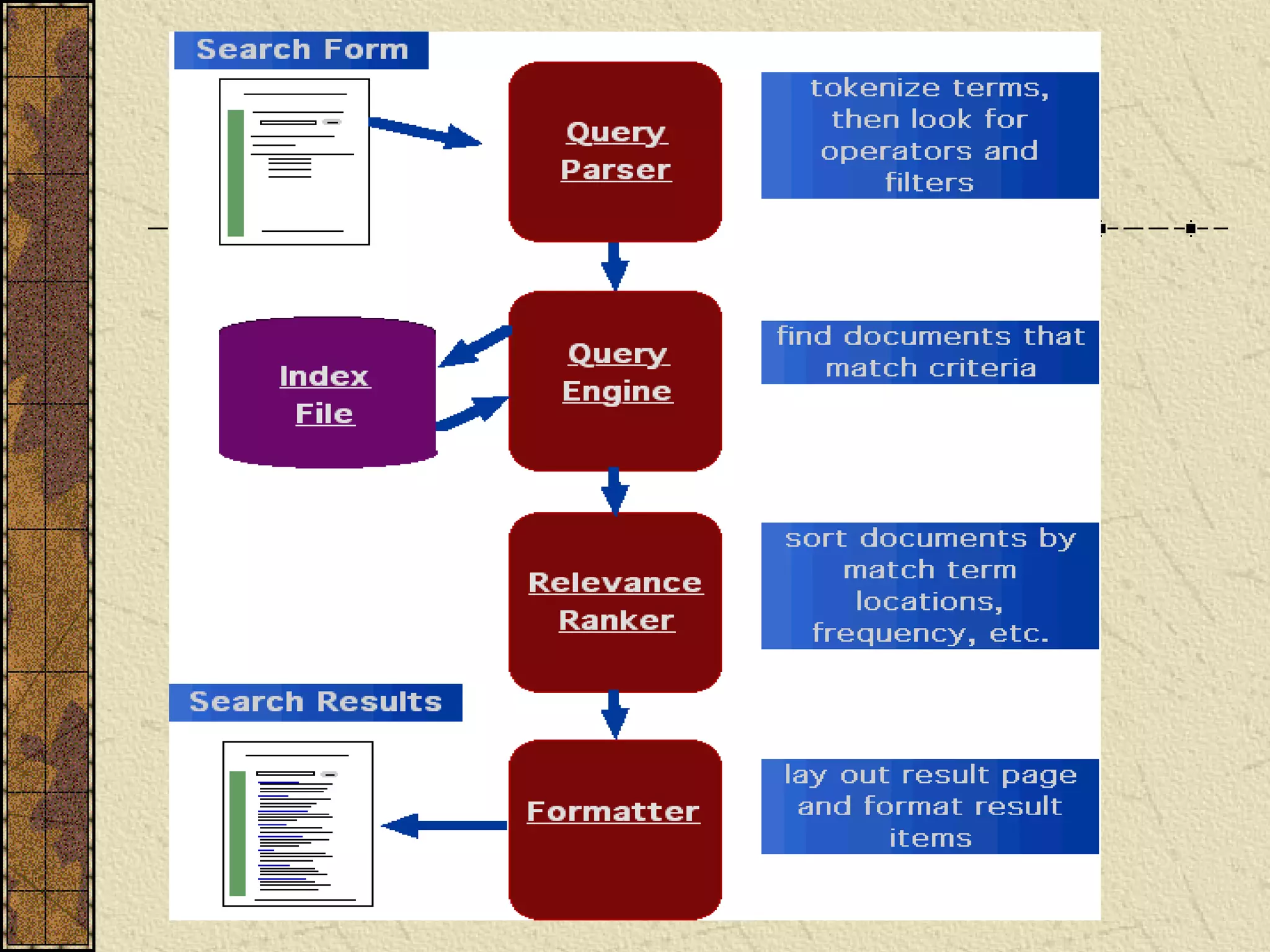
Search Engine Modules :
A document processor
A query processor
A search and matching function
A ranking capability
 Summarizing and Presenting documents.
TYPES OF SEARCH ENGINE
Crawler-Based Search Engines
Human-Powered Directories
Hybrid Search Engines" Or Mixed Results
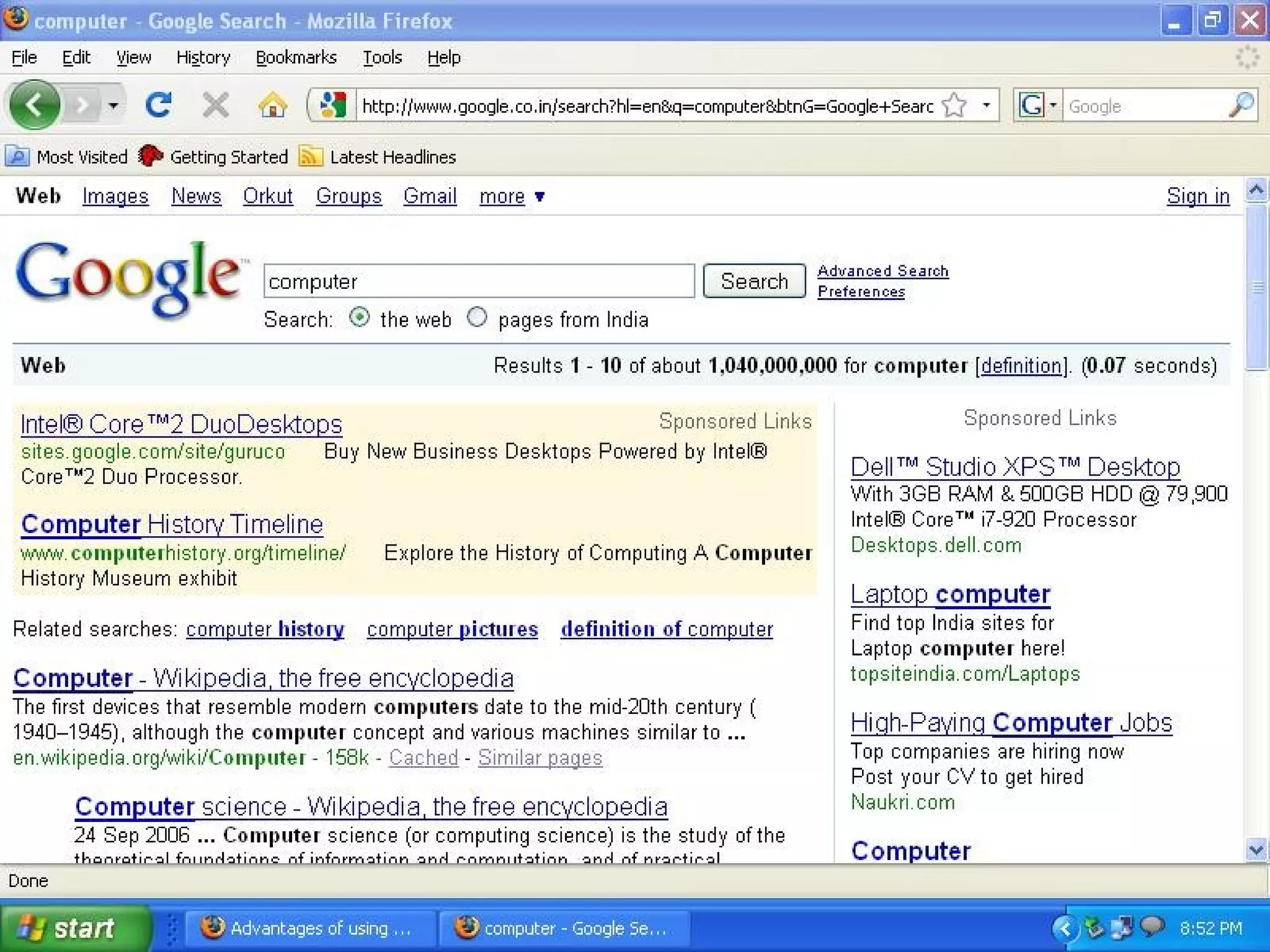
Google use spiders
Large index of keywords.
Google’s PAGE RANK .
1.frequency and location of keywords
within the Web page
2. Web page history.
3. number of other Web pages that link
to the page in question
ADVANTAGES
 It organizes the world ‘s information.
 It makes the information universally accessible.
 It makes the information useful.
 Helps people to interact one another.
 Helps to know about the products and goods.
 Helps the people to know about the society.
 Any information can be gathered from google.
CONCLUSION
Search engine plays important role in
accessing the content over the internet, it
fetches the pages requested by the user.
 It made the internet and accessing the
information just a click away.
The need for better search engines only
increases
The search engine sites are among the most
popular websites.
how google works

how google works

  • 1.
    RUCHIR KUMAR GUPTA BTECHFINAL YEAR(I.T.) 0701013084
  • 2.
  • 3.
    INTRODUCTION Search engine isa software program that searches for sites based on the words that you designate as search terms. Search engines look through their own databases of information in order to find what it is that you are looking for. “Search engine” is the popular term for an Information Retrieval (IR) system.
  • 4.
    HISTORY Archie – Firstsearch tool for the Internet Gopher – indexed plain text documents Jughead – searched the files stored in Gopher index system. Wandex – first Web search engine
  • 5.
    How do SearchEngine Works  Spiders  Robots
  • 6.
    FORMULA Larry Page andSergin Brin at Stanford University gave it.  PA=(1-d)+d (PR(T1))/C (T1)+…+PR (Tn)/C (Tn) Where  PR(A): Page Rank of page A  PR(Ti): Page Rank of pages Ti which link to page A.  C(Ti): the no of outbound link on page Ti d: damping factor in the range of 0<d<1,usually set to 0.85. The highest the PR, the better the inbound link, so it would seem.
  • 11.
    APPROXIMATING RELEVANCE  Statistical similarityis used to estimate the relevance of an query to answer.  Consider the query MAHENDRA SINGH DHONI 1) A good answer contains all three words,and more frequently the better,we called this term frequency (TF). 2) Some query terms are are more important-have the discriminatory power-better than others.
  • 12.
    Resolving a Query Consider( cat hat mat ) Select a word from query ( “cat” ) Retrieve the list for the word cat Find the best ranked document and look up the mapping table. Retrieve and Summarize the docs.
  • 13.
    Search Engine Modules: A document processor A query processor A search and matching function A ranking capability  Summarizing and Presenting documents.
  • 14.
    TYPES OF SEARCHENGINE Crawler-Based Search Engines Human-Powered Directories Hybrid Search Engines" Or Mixed Results
  • 15.
    Google use spiders Largeindex of keywords. Google’s PAGE RANK . 1.frequency and location of keywords within the Web page 2. Web page history. 3. number of other Web pages that link to the page in question
  • 16.
    ADVANTAGES  It organizesthe world ‘s information.  It makes the information universally accessible.  It makes the information useful.  Helps people to interact one another.  Helps to know about the products and goods.  Helps the people to know about the society.  Any information can be gathered from google.
  • 17.
    CONCLUSION Search engine playsimportant role in accessing the content over the internet, it fetches the pages requested by the user.  It made the internet and accessing the information just a click away. The need for better search engines only increases The search engine sites are among the most popular websites.