Present by Bilal Bhatti
 RAD Model
 Incremental Model
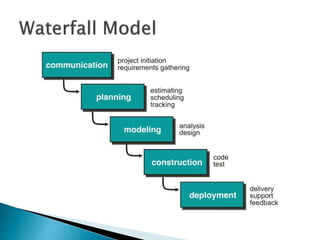
 Waterfall Model
 Was developed by IBM in 1980
 Also known as Rapid application model
 Type of incremental model
 Need software quickly
 Software can be divided into modules
 Need more people
 People should be high skilled
 User should be involved all through the life cycle
 Short span of time (2-3 months)
 High cost
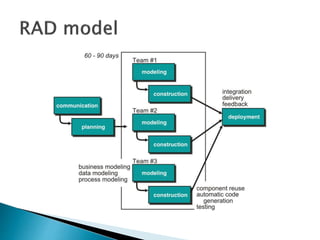
 Communication
Collect Information or requirements from user
 Planning
Creating of a set of plans to help guide your team
 Modeling
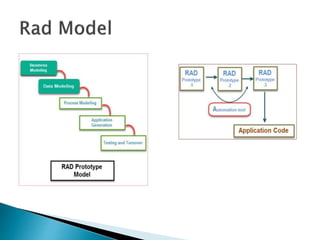
 Business Modeling
On basis of the flow of information and distribution between
various business channels, the product is designed.
 Data Modeling
The information collected from business modeling is refined
into a set of data objects that are significant for the business.
 Process Modeling
The data object that is declared in the data modeling phase
is transformed to achieve the information flow necessary to
implement a business function
 Application Generation
Automated tools are used for the construction of the software, to
convert process and data models into prototypes.
 Testing and Turnover
As prototypes are individually tested during every iteration, the
overall testing time is reduced in RAD
 Contruction
it highlighting the use of pre-existing software component.
 Deployment
Deliver to user
 Flexible and adaptable to changes
 Due to code generators and code reuse, there is a
reduction of manual coding

Due to prototyping in nature, there is a possibility
of lesser defects
 It is useful when you have to reduce the overall
project risk
 It can't be used for smaller projects
 If developers are not committed to delivering
software on time, RAD projects can fail
 Requires highly skilled designers or developers
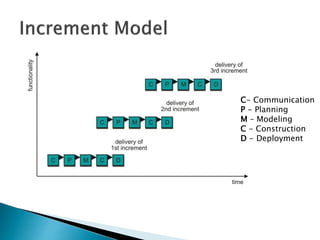
C- Communication
P - Planning
M – Modeling
C - Construction
D - Deployment
 Requirements are broken down into multiple standalone
modules
 Incremental development is done in steps from analysis
design, implementation, testing/verification,
maintenance.
 The system is put into production when the first
increment is delivered.
 The first increment is often a core product where the
basic requirements are addressed.
 Supplementary features are added in the next
increments.
 Once the core product is analyzed by the client, there is
plan development for the next increment.
 Customer feed back is received after the delivery of each
component
 Risk of requirement changes is reduced
 More flexible
 Easy to test and debug
 Give quick result
 Needs proper plan to integrate the components
 Needs proper design to integrate the components
 More expensive as compared to waterfall model
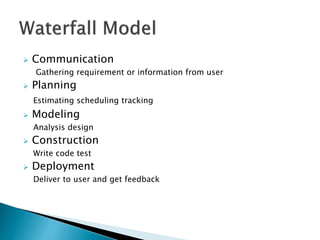
 Communication
Gathering requirement or information from user
 Planning
Estimating scheduling tracking
 Modeling
Analysis design
 Construction
Write code test
 Deployment
Deliver to user and get feedback
 Simple and easy to understand and use
 Easy to manage due to the rigidity of the model. Each phase has
specific deliverables and a review process.
 Phases are processed and completed one at a time.
 Works well for smaller projects where requirements are very well
understood.
 Clearly defined stages.
 Well understood milestones.
 Easy to arrange tasks.
 Process and results are well documented.
 Difficult for the customer to state all the requirement explicitly
 Assumes patience from customer - working version of program will
not available until programs not getting change fully.
 Real projects are rarely follow the sequential model.
 Not a good model for complex and object-oriented projects.
Thanks

SDLC Models in Software Engineering

  • 1.
  • 2.
     RAD Model Incremental Model  Waterfall Model
  • 3.
     Was developedby IBM in 1980  Also known as Rapid application model  Type of incremental model  Need software quickly  Software can be divided into modules  Need more people  People should be high skilled  User should be involved all through the life cycle  Short span of time (2-3 months)  High cost
  • 5.
     Communication Collect Informationor requirements from user  Planning Creating of a set of plans to help guide your team  Modeling  Business Modeling On basis of the flow of information and distribution between various business channels, the product is designed.  Data Modeling The information collected from business modeling is refined into a set of data objects that are significant for the business.
  • 6.
     Process Modeling Thedata object that is declared in the data modeling phase is transformed to achieve the information flow necessary to implement a business function  Application Generation Automated tools are used for the construction of the software, to convert process and data models into prototypes.  Testing and Turnover As prototypes are individually tested during every iteration, the overall testing time is reduced in RAD  Contruction it highlighting the use of pre-existing software component.  Deployment Deliver to user
  • 8.
     Flexible andadaptable to changes  Due to code generators and code reuse, there is a reduction of manual coding  Due to prototyping in nature, there is a possibility of lesser defects  It is useful when you have to reduce the overall project risk
  • 9.
     It can'tbe used for smaller projects  If developers are not committed to delivering software on time, RAD projects can fail  Requires highly skilled designers or developers
  • 10.
    C- Communication P -Planning M – Modeling C - Construction D - Deployment
  • 11.
     Requirements arebroken down into multiple standalone modules  Incremental development is done in steps from analysis design, implementation, testing/verification, maintenance.  The system is put into production when the first increment is delivered.  The first increment is often a core product where the basic requirements are addressed.  Supplementary features are added in the next increments.  Once the core product is analyzed by the client, there is plan development for the next increment.
  • 12.
     Customer feedback is received after the delivery of each component  Risk of requirement changes is reduced  More flexible  Easy to test and debug  Give quick result
  • 13.
     Needs properplan to integrate the components  Needs proper design to integrate the components  More expensive as compared to waterfall model
  • 15.
     Communication Gathering requirementor information from user  Planning Estimating scheduling tracking  Modeling Analysis design  Construction Write code test  Deployment Deliver to user and get feedback
  • 16.
     Simple andeasy to understand and use  Easy to manage due to the rigidity of the model. Each phase has specific deliverables and a review process.  Phases are processed and completed one at a time.  Works well for smaller projects where requirements are very well understood.  Clearly defined stages.  Well understood milestones.  Easy to arrange tasks.  Process and results are well documented.
  • 17.
     Difficult forthe customer to state all the requirement explicitly  Assumes patience from customer - working version of program will not available until programs not getting change fully.  Real projects are rarely follow the sequential model.  Not a good model for complex and object-oriented projects.
  • 18.