Dealing with it all!
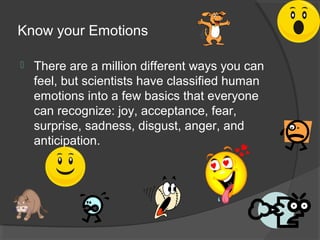
Know your Emotions
 There are a million different ways you can
feel, but scientists have classified human
emotions into a few basics that everyone
can recognize: joy, acceptance, fear,
surprise, sadness, disgust, anger, and
anticipation.
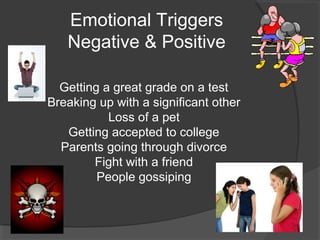
Emotional Triggers
Negative & Positive
Getting a great grade on a test
Breaking up with a significant other
Loss of a pet
Getting accepted to college
Parents going through divorce
Fight with a friend
People gossiping
Recognize that emotions don't just
appear mysteriously out of nowhere
 Recognize your emotions & feelings right away.
 The last thing you want to do is ignore or repress
your feelings, because if you do they tend to get
worse and erupt later. Ask yourself throughout
the day: "How am I feeling right now?"
What’s Going On?
 Notice what was going through your
mind when the emotion appeared.
 Stop and analyze what you were
thinking about, until you find what
thought was causing that emotion.
Perspective- Check out what is
really happening!
 Ask yourself, "What is another
way to look at the situation that is
more rational and more balanced
than the way I was looking at it
before.
Consider Your Options
 Always at least 2 different ways to
respond!
 Your emotions control you when you
assume there's only one way to react,
but you always have a choice.
Make a Choice
 When deciding what to do, it's important
to make sure it's a conscious choice, not
a reaction to another, competing
emotion.
TIPS
 Acknowledge your EMOTIONS. Denying or
repressing will make it worse later.
 Learn your triggers. What set’s you off?
 Know what makes you feel calm or happy
and use those things to help you when you
are feeling negative emotions.
Try this!
Be honest with yourself.
Talk to somebody about your
feelings.
Don’t ignore your emotions,
they are telling you something.
If you are having an unpleasant feeling, think
of something you can do that will help, and
then do it.
Try This
Find positive ways to express anger
that are not hurtful to others.
Remember, whatever you are feeling, you're not
alone.
Try not to get overwhelmed, things usually
improve.
If you do get overwhelmed—ask for help.
WARNING
 It is important to control your emotions, but
suppressing them or denying that they
exist is entirely different. Suppressing your
emotions can cause physical disorders and
more emotional symptoms.
 Some emotional problems are so complex
they require the additional professional
assistance. If you have thoughts of hurting
yourself or others please get help.
WARNING
 Depression, hurting yourself,
even suicidal thoughts can be
the result of emotional issues.
GET HELP!

SD2 T E

  • 1.
  • 2.
    Know your Emotions There are a million different ways you can feel, but scientists have classified human emotions into a few basics that everyone can recognize: joy, acceptance, fear, surprise, sadness, disgust, anger, and anticipation.
  • 3.
    Emotional Triggers Negative &Positive Getting a great grade on a test Breaking up with a significant other Loss of a pet Getting accepted to college Parents going through divorce Fight with a friend People gossiping
  • 4.
    Recognize that emotionsdon't just appear mysteriously out of nowhere  Recognize your emotions & feelings right away.  The last thing you want to do is ignore or repress your feelings, because if you do they tend to get worse and erupt later. Ask yourself throughout the day: "How am I feeling right now?"
  • 5.
    What’s Going On? Notice what was going through your mind when the emotion appeared.  Stop and analyze what you were thinking about, until you find what thought was causing that emotion.
  • 6.
    Perspective- Check outwhat is really happening!  Ask yourself, "What is another way to look at the situation that is more rational and more balanced than the way I was looking at it before.
  • 7.
    Consider Your Options Always at least 2 different ways to respond!  Your emotions control you when you assume there's only one way to react, but you always have a choice.
  • 8.
    Make a Choice When deciding what to do, it's important to make sure it's a conscious choice, not a reaction to another, competing emotion.
  • 9.
    TIPS  Acknowledge yourEMOTIONS. Denying or repressing will make it worse later.  Learn your triggers. What set’s you off?  Know what makes you feel calm or happy and use those things to help you when you are feeling negative emotions.
  • 10.
    Try this! Be honestwith yourself. Talk to somebody about your feelings. Don’t ignore your emotions, they are telling you something. If you are having an unpleasant feeling, think of something you can do that will help, and then do it.
  • 11.
    Try This Find positiveways to express anger that are not hurtful to others. Remember, whatever you are feeling, you're not alone. Try not to get overwhelmed, things usually improve. If you do get overwhelmed—ask for help.
  • 12.
    WARNING  It isimportant to control your emotions, but suppressing them or denying that they exist is entirely different. Suppressing your emotions can cause physical disorders and more emotional symptoms.  Some emotional problems are so complex they require the additional professional assistance. If you have thoughts of hurting yourself or others please get help.
  • 13.
    WARNING  Depression, hurtingyourself, even suicidal thoughts can be the result of emotional issues. GET HELP!