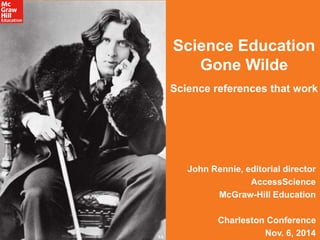
Science Education 
Gone Wilde 
Science references that work 
John Rennie, editorial director 
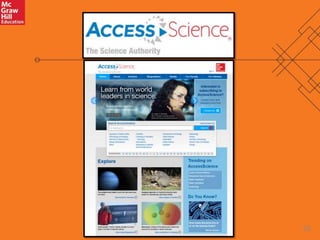
AccessScience 
McGraw-Hill Education 
Charleston Conference 
1 
Nov. 6, 2014
2
3 
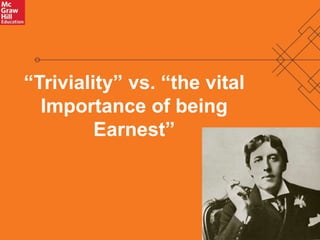
“Triviality” vs. “the vital 
Importance of being 
Earnest”
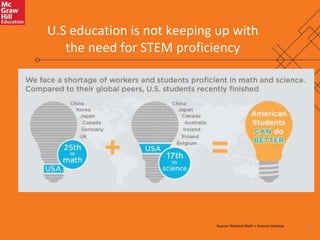
U.S education is not keeping up with 
the need for STEM proficiency 
4 Source: National Math + Science Initiative
5 Source: CDC
6 
“Fortunately, in England, 
at any rate, education 
produces no effect 
whatsoever.”
7 
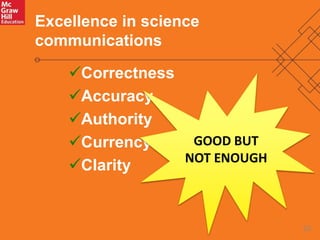
Excellence in science 
communications 
Correctness 
Accuracy 
Authority 
Currency 
Clarity
8
9 
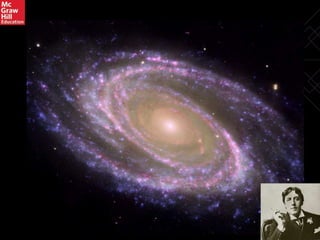
“If I am occasionally a little 
over-dressed, I make up for it 
by being always immensely 
over-educated.”
10 
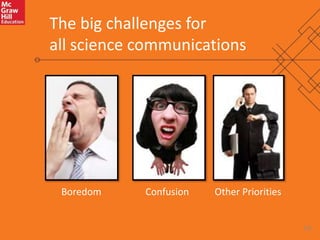
The big challenges for 
all science communications 
Boredom Confusion Other Priorities
11 
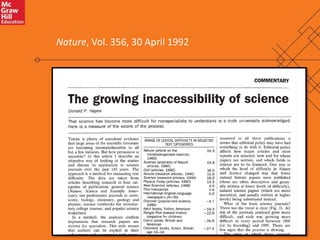
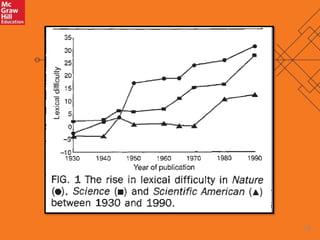
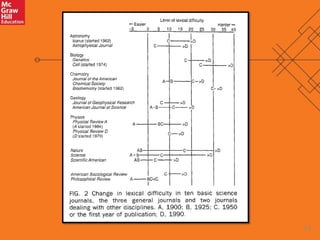
Nature, Vol. 356, 30 April 1992
12
13
14 
“The truth is rarely pure 
and never simple.”
15 
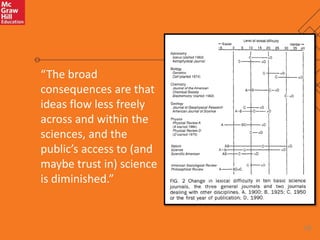
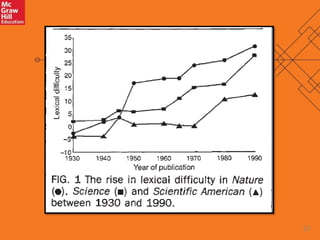
“The broad 
consequences are that 
ideas flow less freely 
across and within the 
sciences, and the 
public’s access to (and 
maybe trust in) science 
is diminished.”
16
17
18
19 
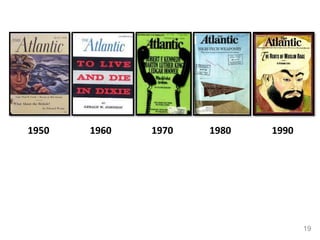
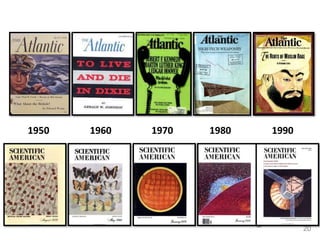
1950 1960 1970 1980 1990
20 
1950 1960 1970 1980 1990
21
22
23 
Excellence in science 
communications 
Correctness 
Accuracy 
Authority 
Currency 
Clarity 
GOOD BUT 
NOT ENOUGH
24 
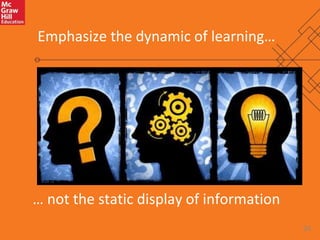
Emphasize the dynamic of learning… 
… not the static display of information
25 
Know Your Audience
26 
Anticipate users’ needs 
and expectations
27 
Context 
Relevance
28 
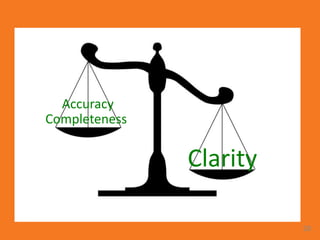
Clarity 
Accuracy 
Completeness
29
30
31
32
33 
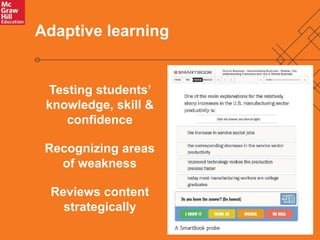
Adaptive learning 
Testing students’ 
knowledge, skill & 
confidence 
Recognizing areas 
of weakness 
Reviews content 
strategically
34 
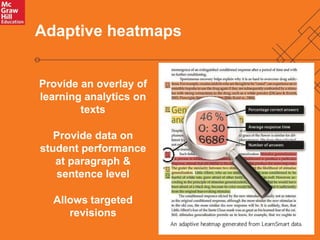
Adaptive heatmaps 
Provide an overlay of 
learning analytics on 
texts 
Provide data on 
student performance 
at paragraph & 
sentence level 
Allows targeted 
revisions
35
36
37 
“Perception 
paves 
progress.” 
Danielle N. Lee
38

Science Education Gone Wilde: Creating Science References that Work