Electronics
Principles & Applications
Sixth Edition
Chapter 8
Large-Signal Amplifiers
©2003 Glencoe/McGraw-Hill
Charles A. Schuler
• Amplifier Class
• Class A
• Class B
• Class AB
• Class C
• Class D
INTRODUCTION
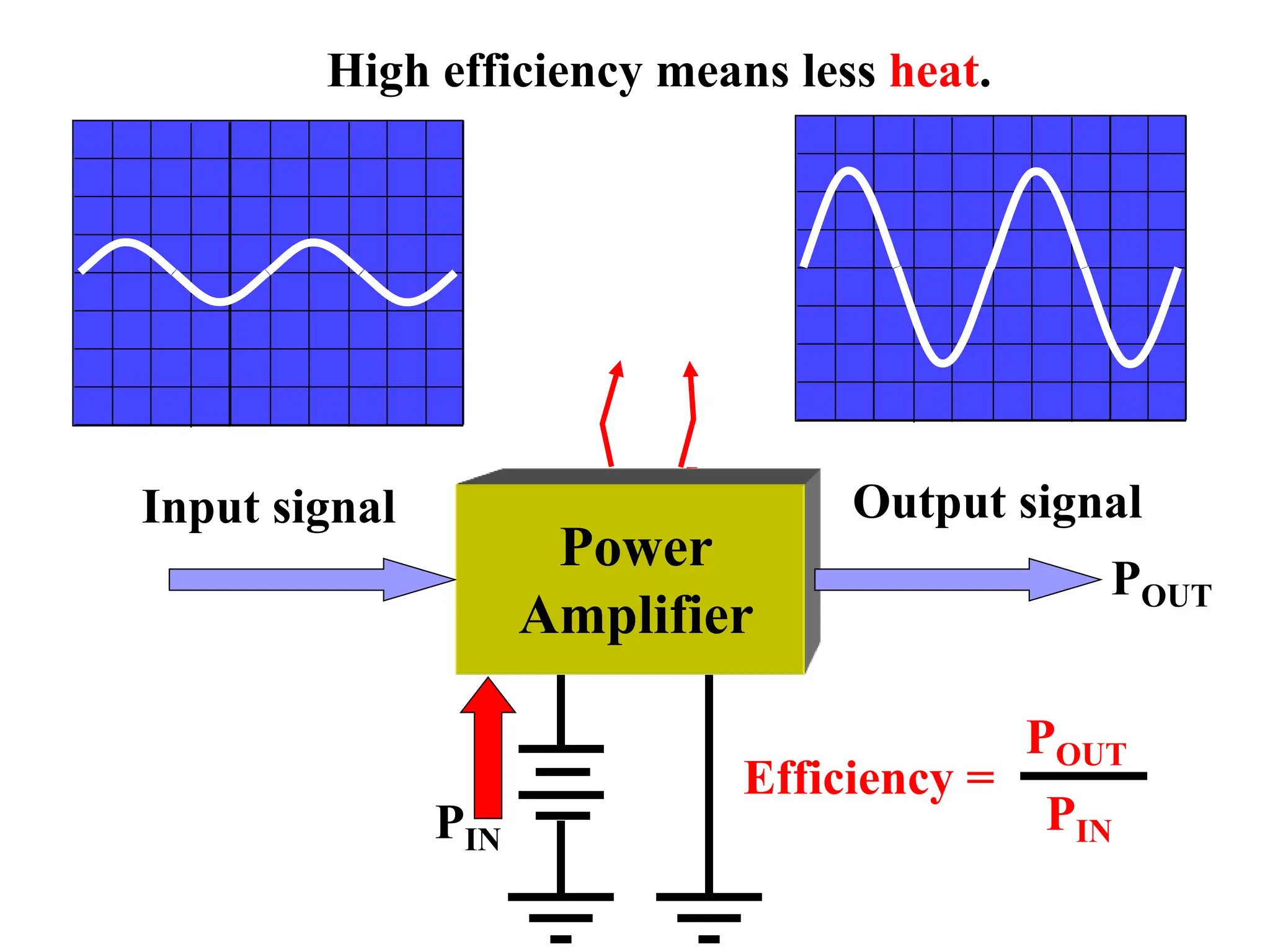
Power
Amplifier
PIN
Efficiency =
Input signal
POUT
POUT
PIN
Output signal
HEAT = PIN - POUT
High efficiency means less heat.
Efficiency
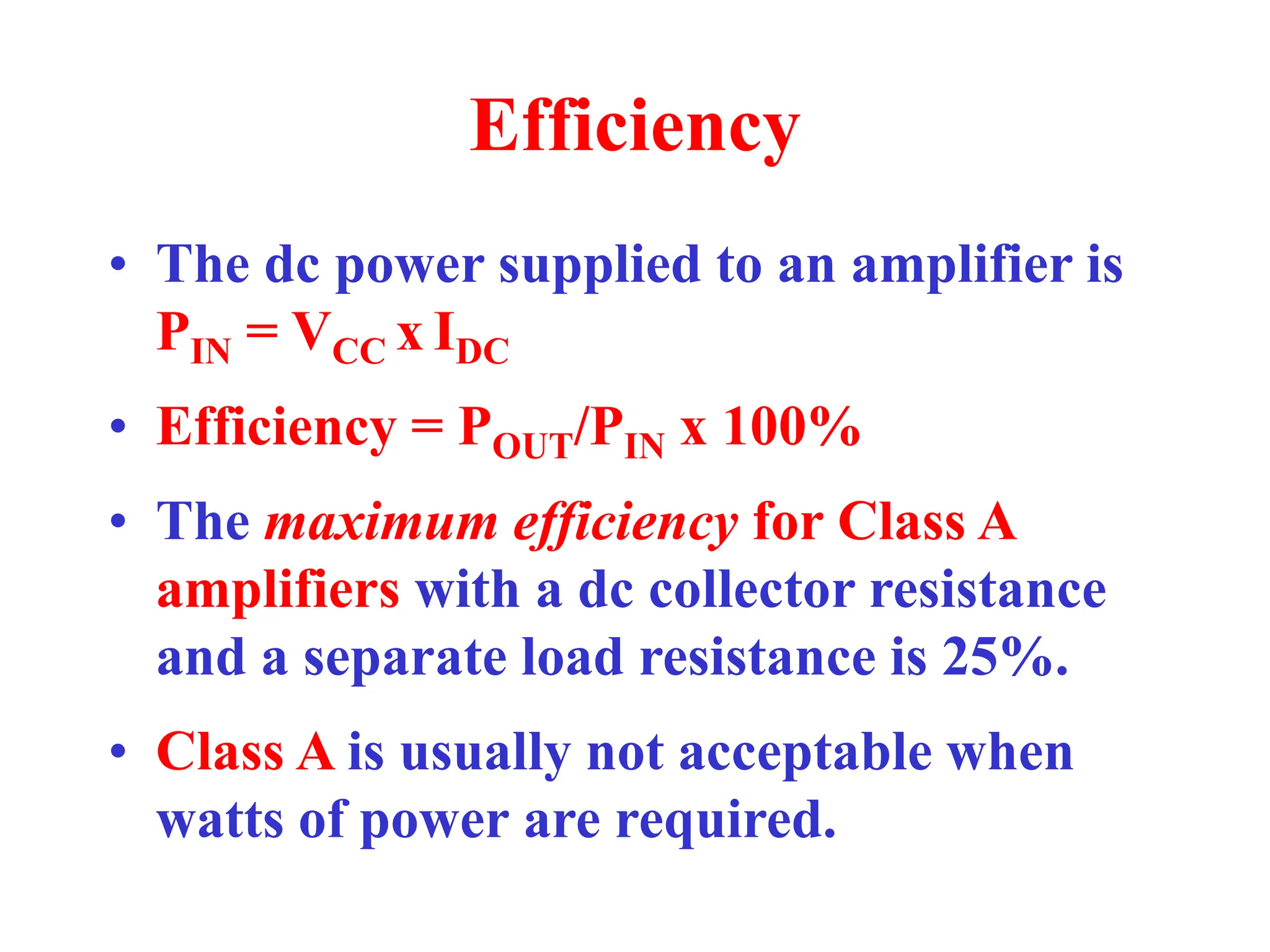
• The dc power supplied to an amplifier is
PIN = VCC x IDC
• Efficiency = POUT/PIN x 100%
• The maximum efficiency for Class A
amplifiers with a dc collector resistance
and a separate load resistance is 25%.
• Class A is usually not acceptable when
watts of power are required.
t
IC
t
IC
t
IC
t
IC
ISAT
A B
C D
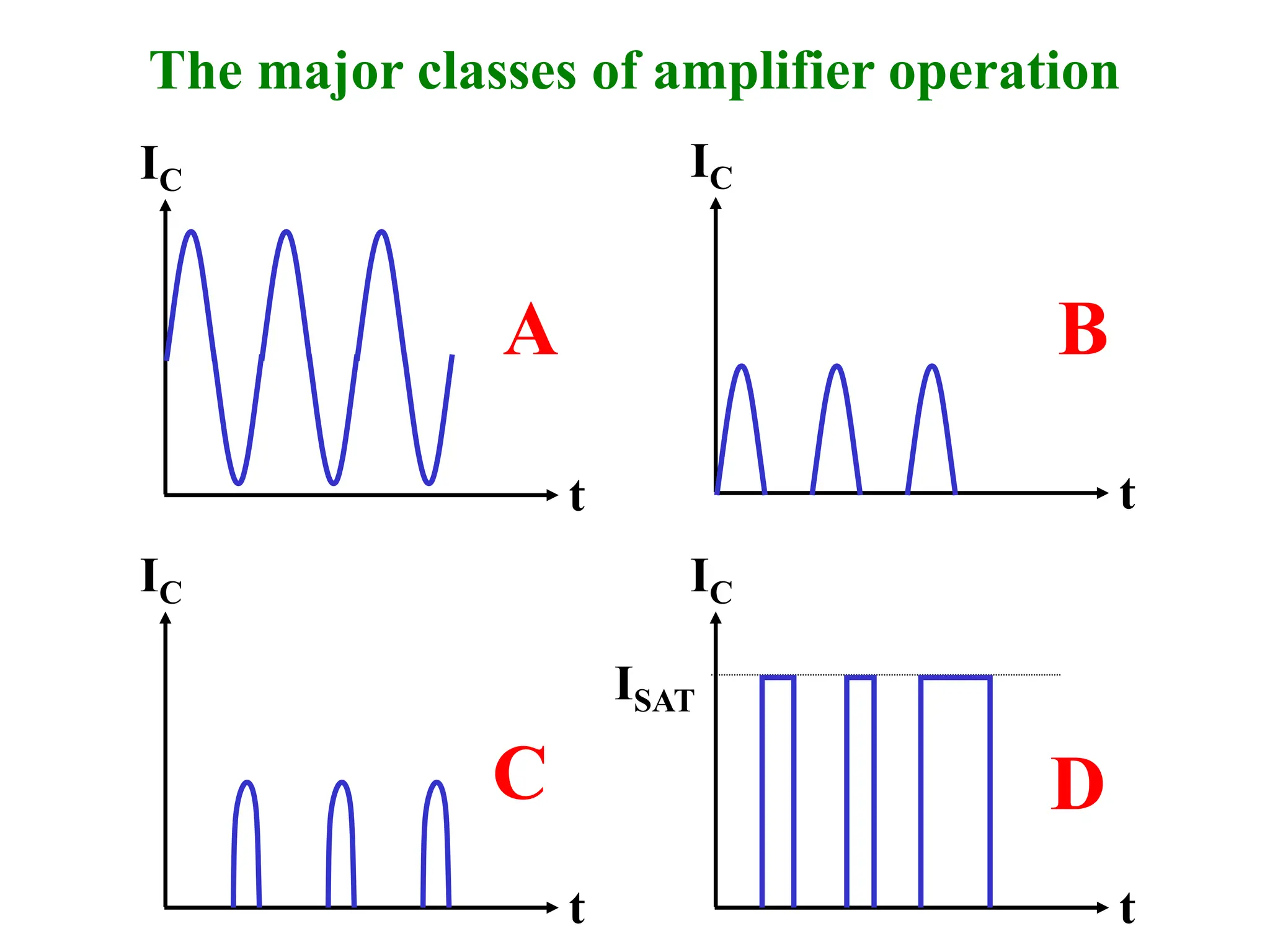
The major classes of amplifier operation
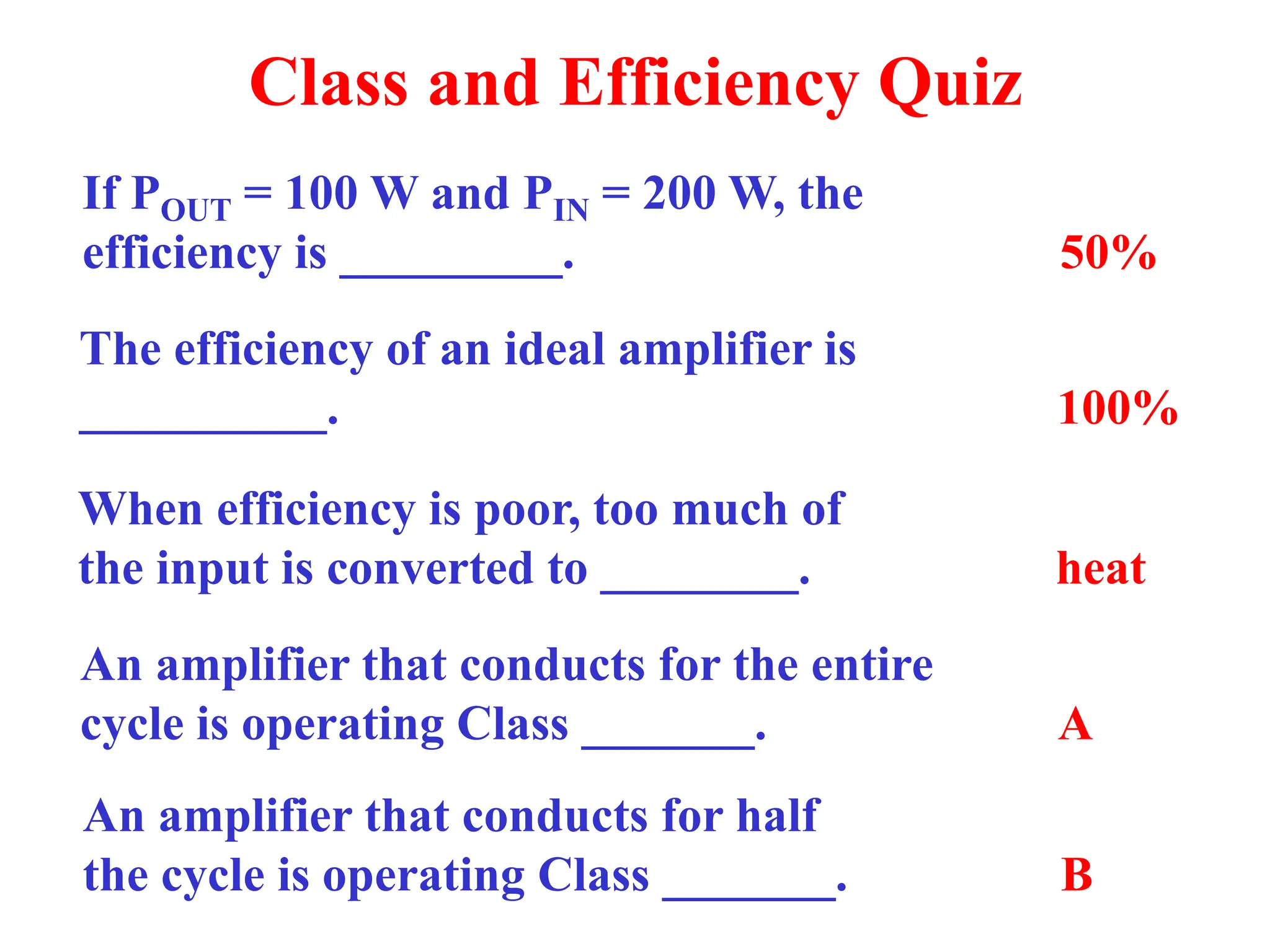
Class and Efficiency Quiz
If POUT = 100 W and PIN = 200 W, the
efficiency is _________. 50%
The efficiency of an ideal amplifier is
__________. 100%
When efficiency is poor, too much of
the input is converted to ________. heat
An amplifier that conducts for the entire
cycle is operating Class _______. A
An amplifier that conducts for half
the cycle is operating Class _______. B
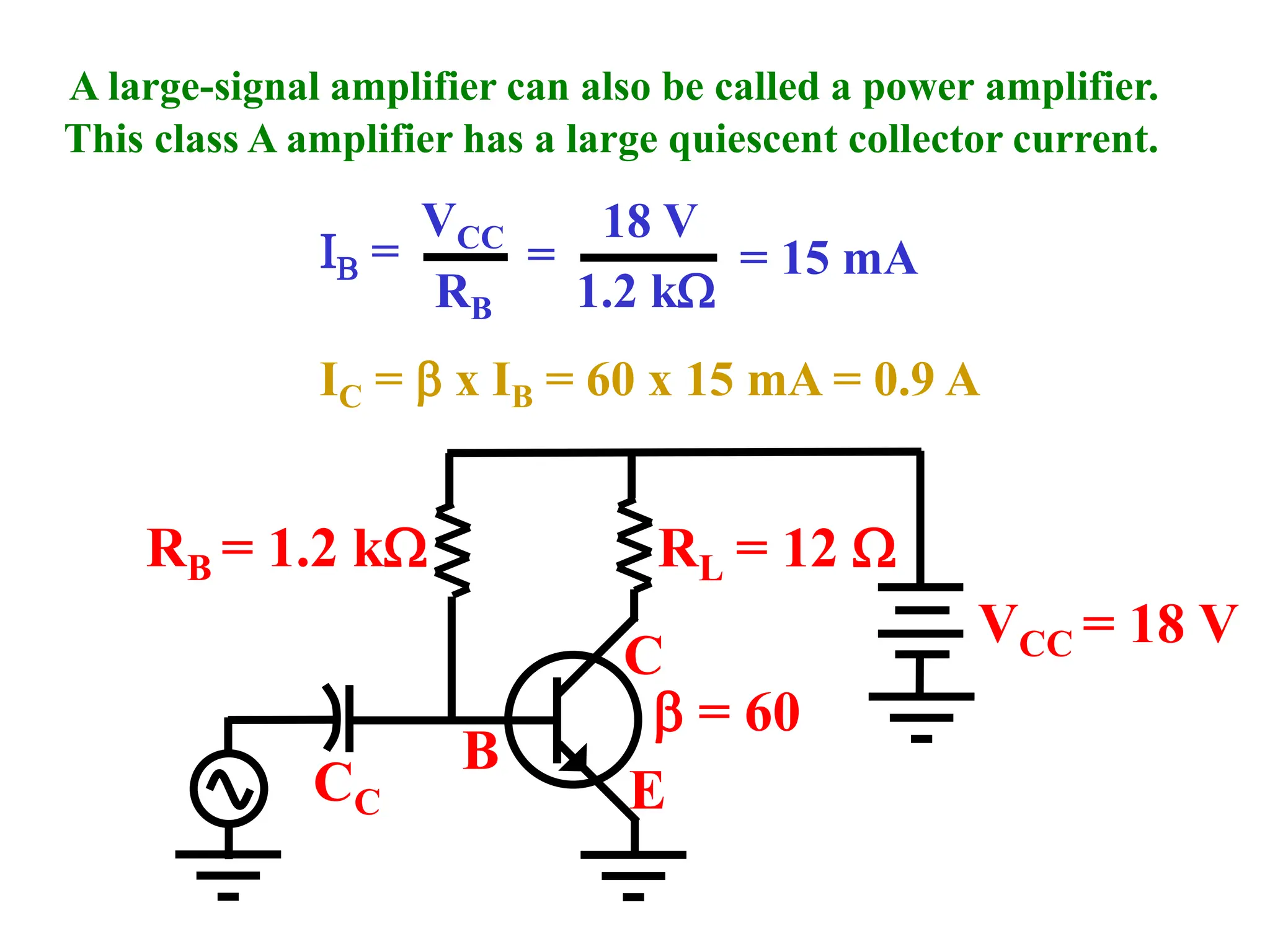
A large-signal amplifier can also be called a power amplifier.
This class A amplifier has a large quiescent collector current.
C
B
E
VCC = 18 V
RL = 12 W
RB = 1.2 kW
CC
b = 60
IB =
VCC
RB
18 V
1.2 kW
= = 15 mA
IC = b x IB = 60 x 15 mA = 0.9 A
0 2 4 6 8 10 12 14 16 18
0.2
0.4
0.6
0.8
1.0
1.2
1.4
VCE in Volts
IC in A
5 mA
0 mA
25 mA
20 mA
15 mA
10 mA
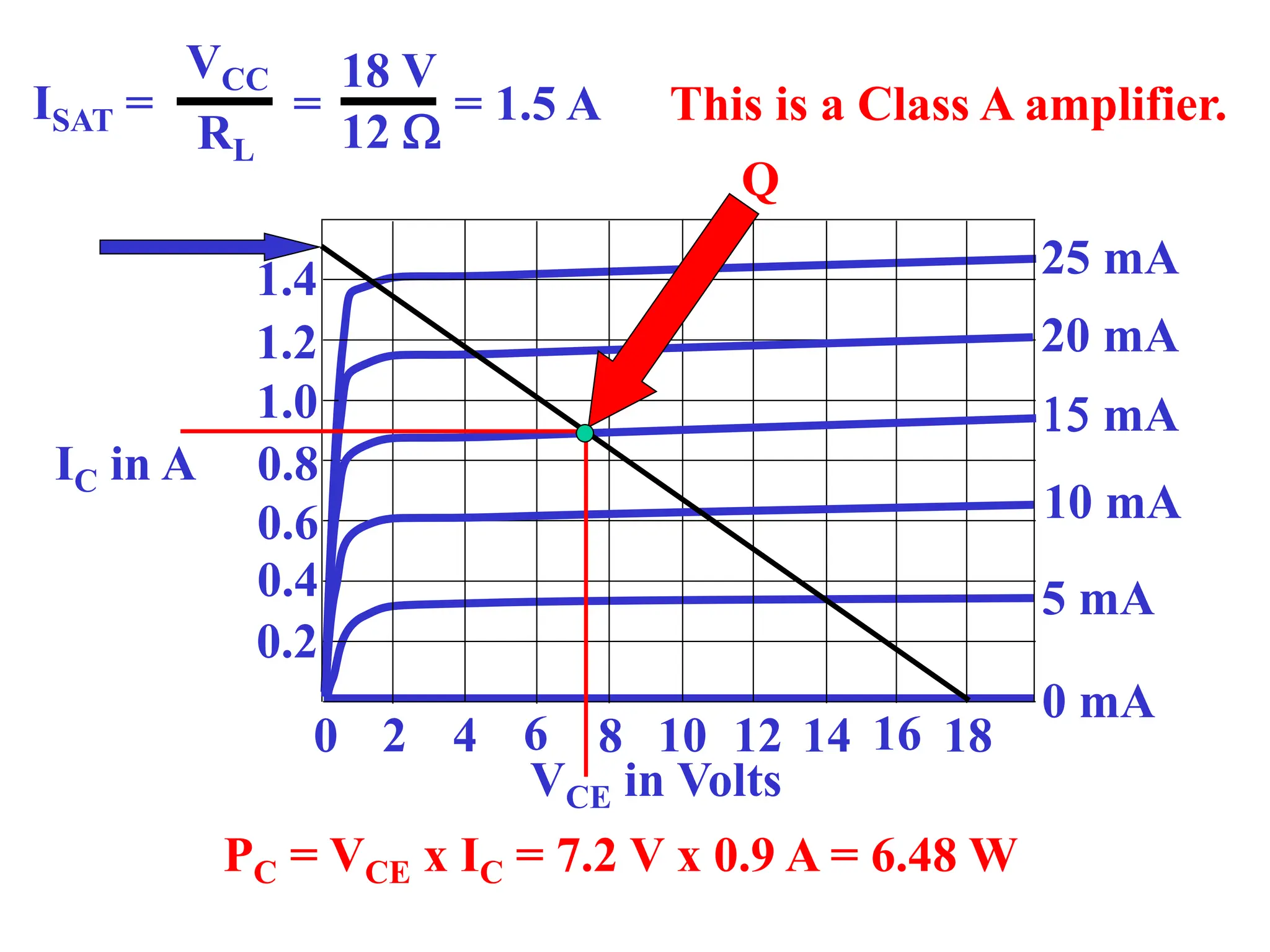
ISAT =
VCC
RL
18 V
12 W
= = 1.5 A
Q
This is a Class A amplifier.
PC = VCE x IC = 7.2 V x 0.9 A = 6.48 W
0 2 4 6 8 10 12 14 16 18
0.2
0.4
0.6
0.8
1.0
1.2
1.4
VCE in Volts
IC in A
5 mA
0 mA
25 mA
20 mA
15 mA
10 mA
Q
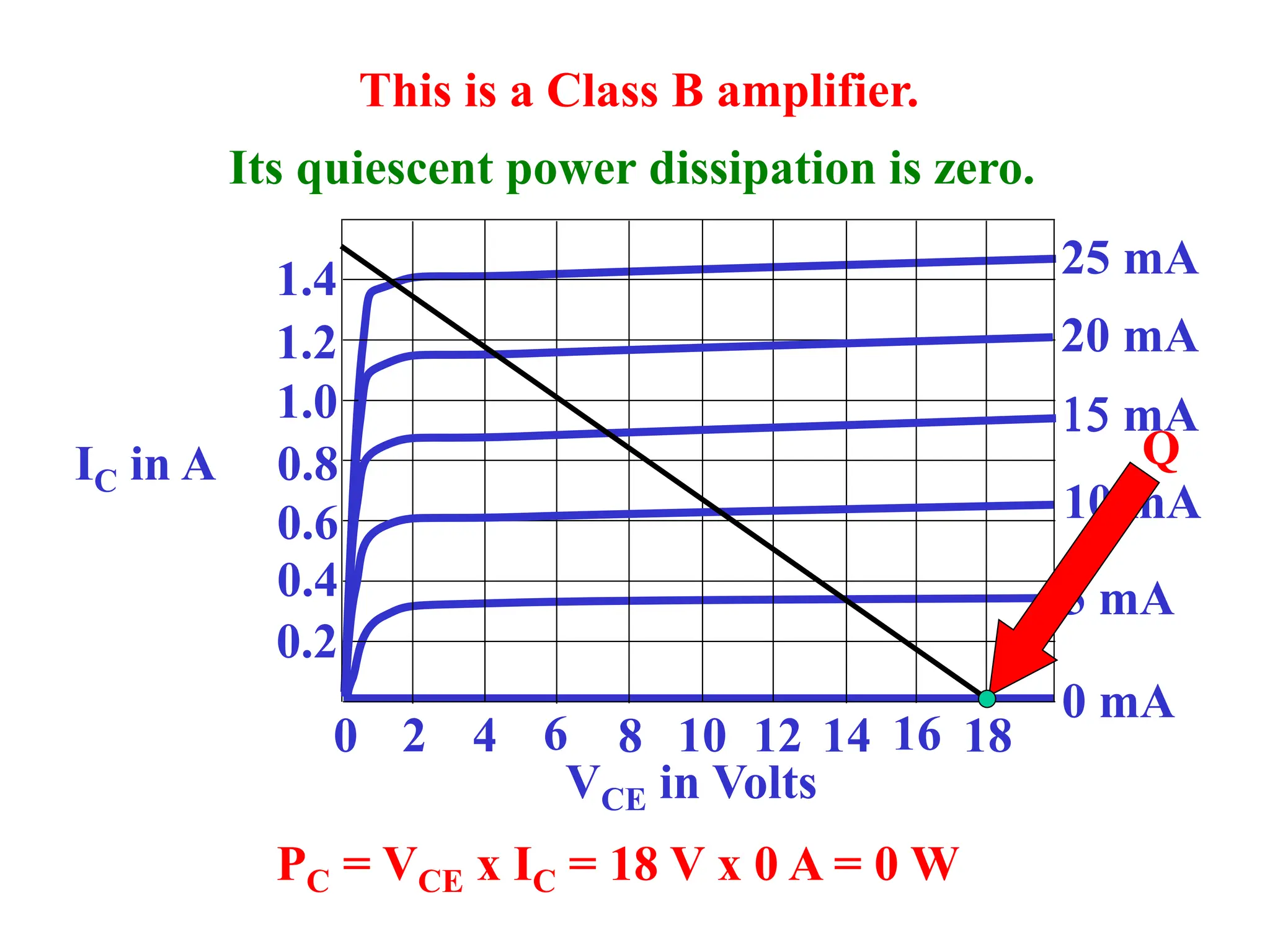
This is a Class B amplifier.
PC = VCE x IC = 18 V x 0 A = 0 W
Its quiescent power dissipation is zero.
0 2 4 6 8 10 12 14 16
0.2
0.4
0.6
0.8
1.0
1.2
1.4
5 mA
0 mA
25 mA
20 mA
15 mA
10 mA
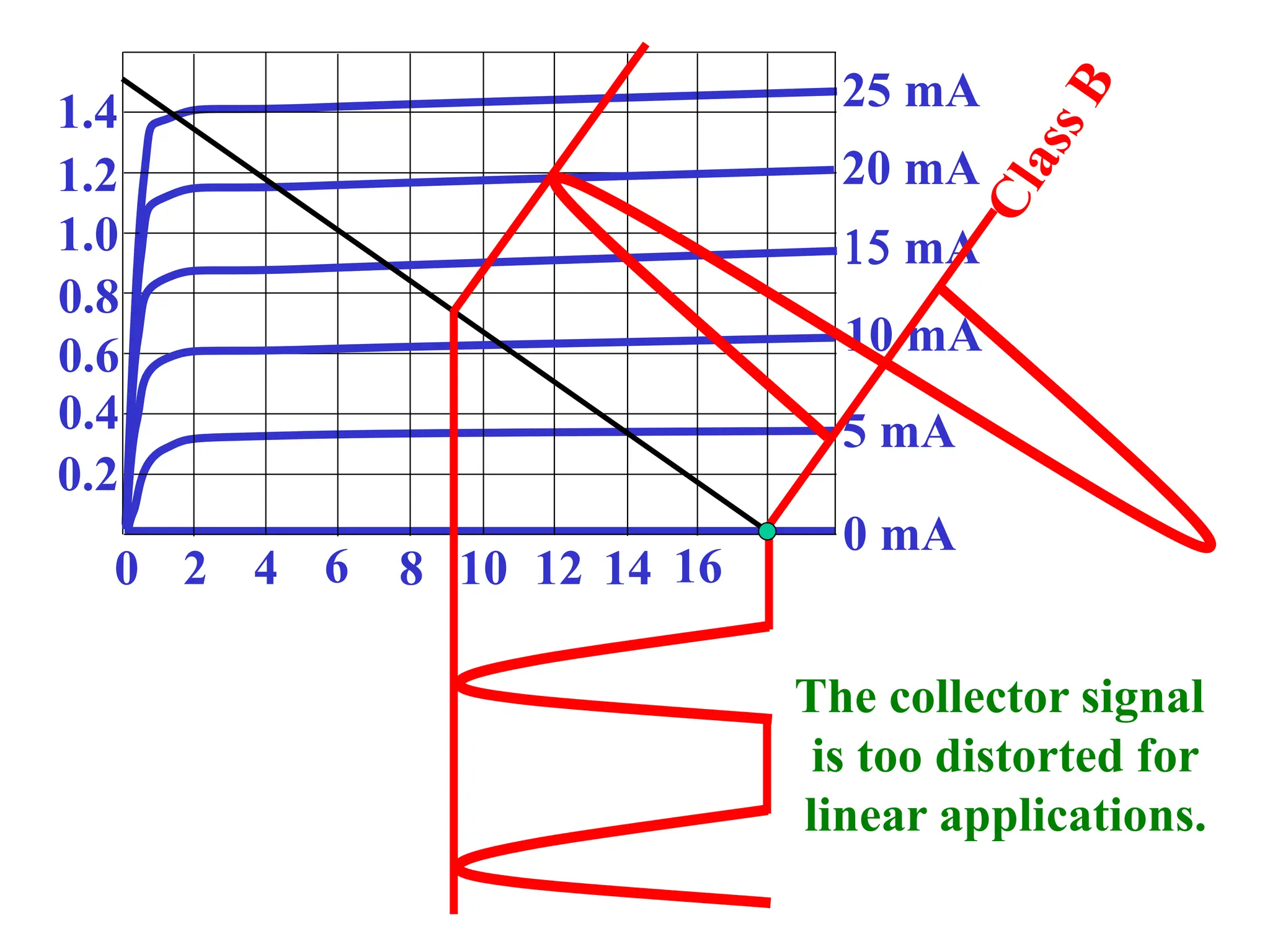
The collector signal
is too distorted for
linear applications.
C
B
C
B
E
E
+VCC
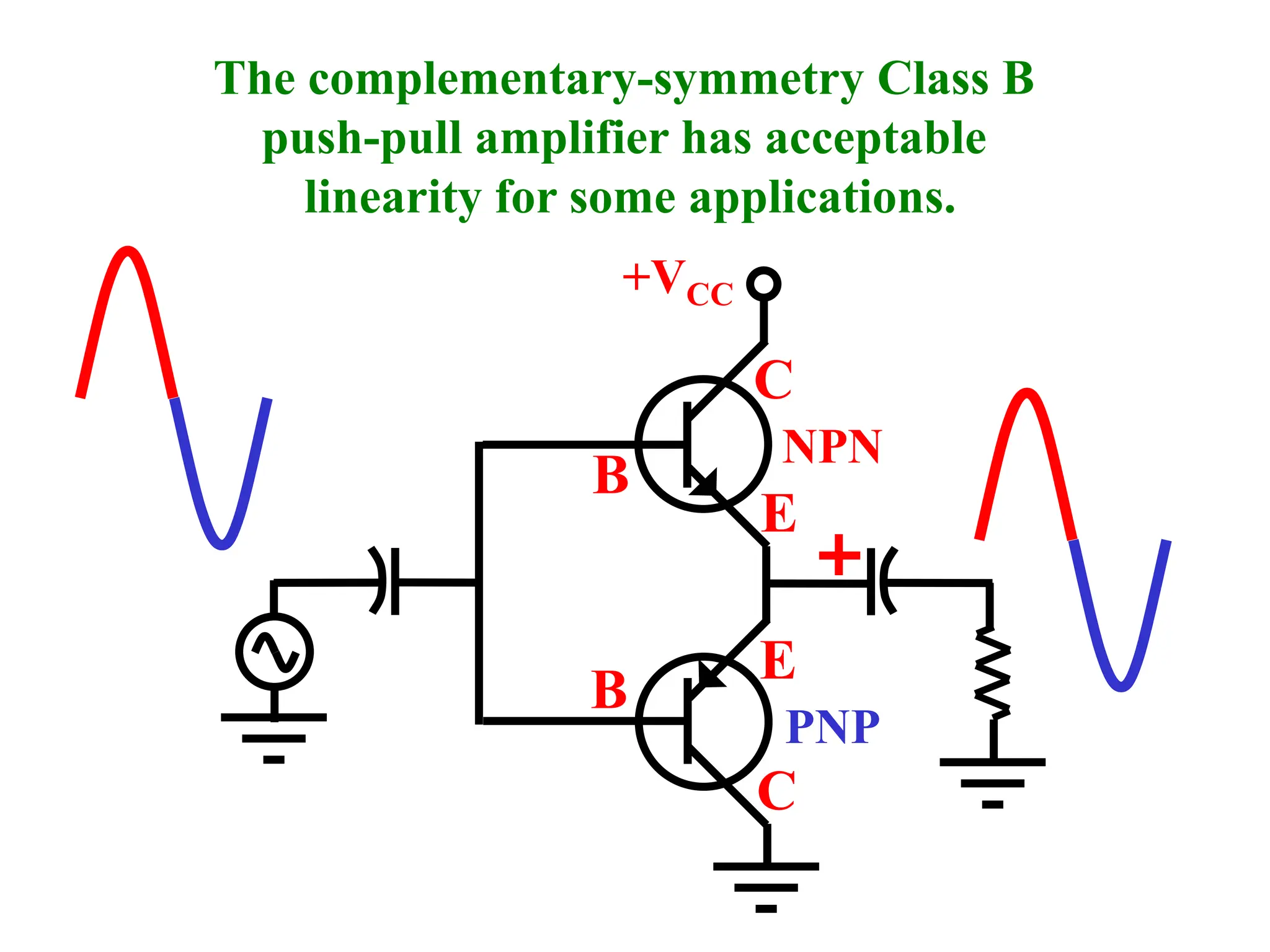
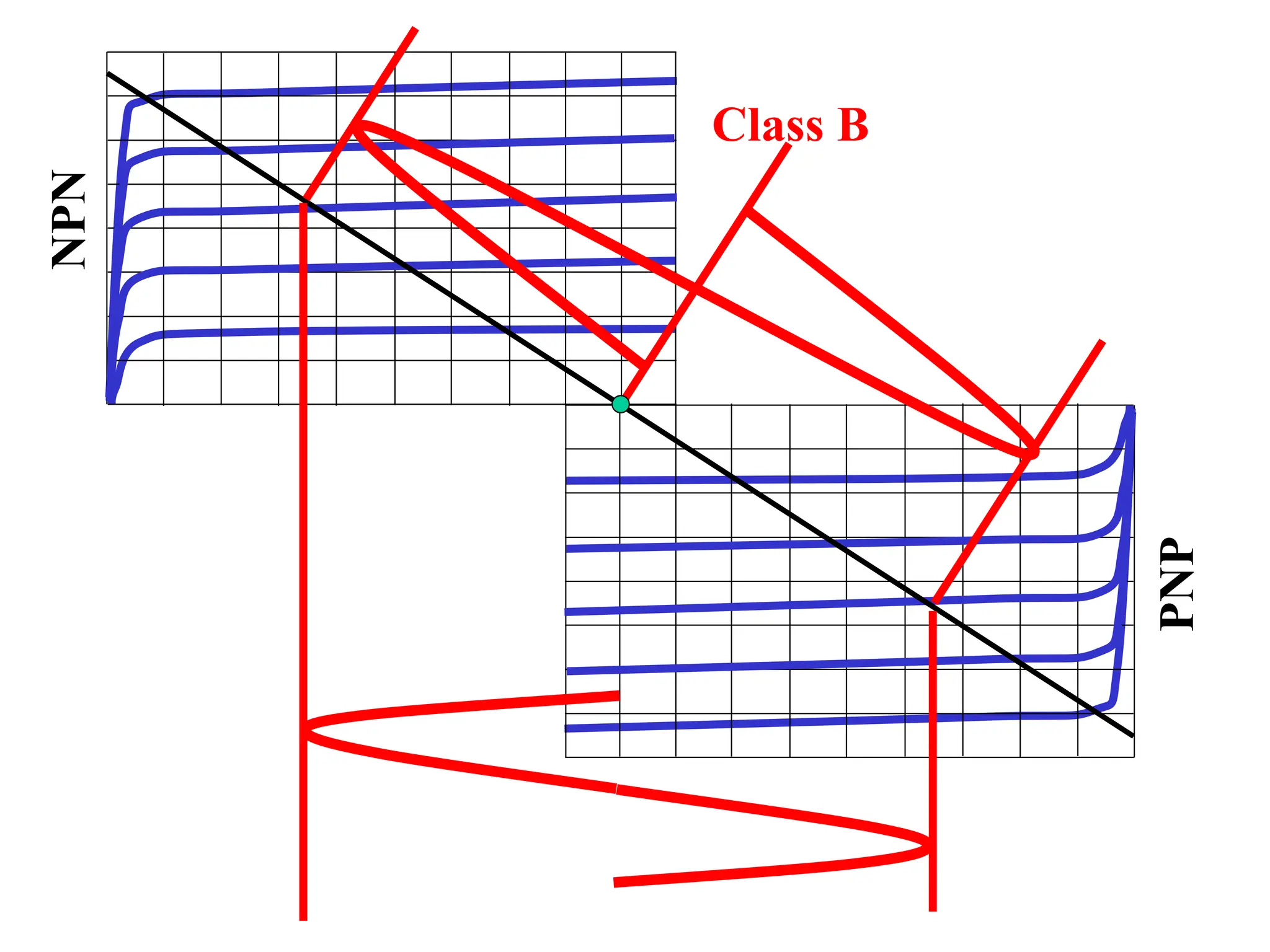
The complementary-symmetry Class B
push-pull amplifier has acceptable
linearity for some applications.
NPN
PNP
NPN
PNP
Class B
C
B
C
B
E
E
+VCC
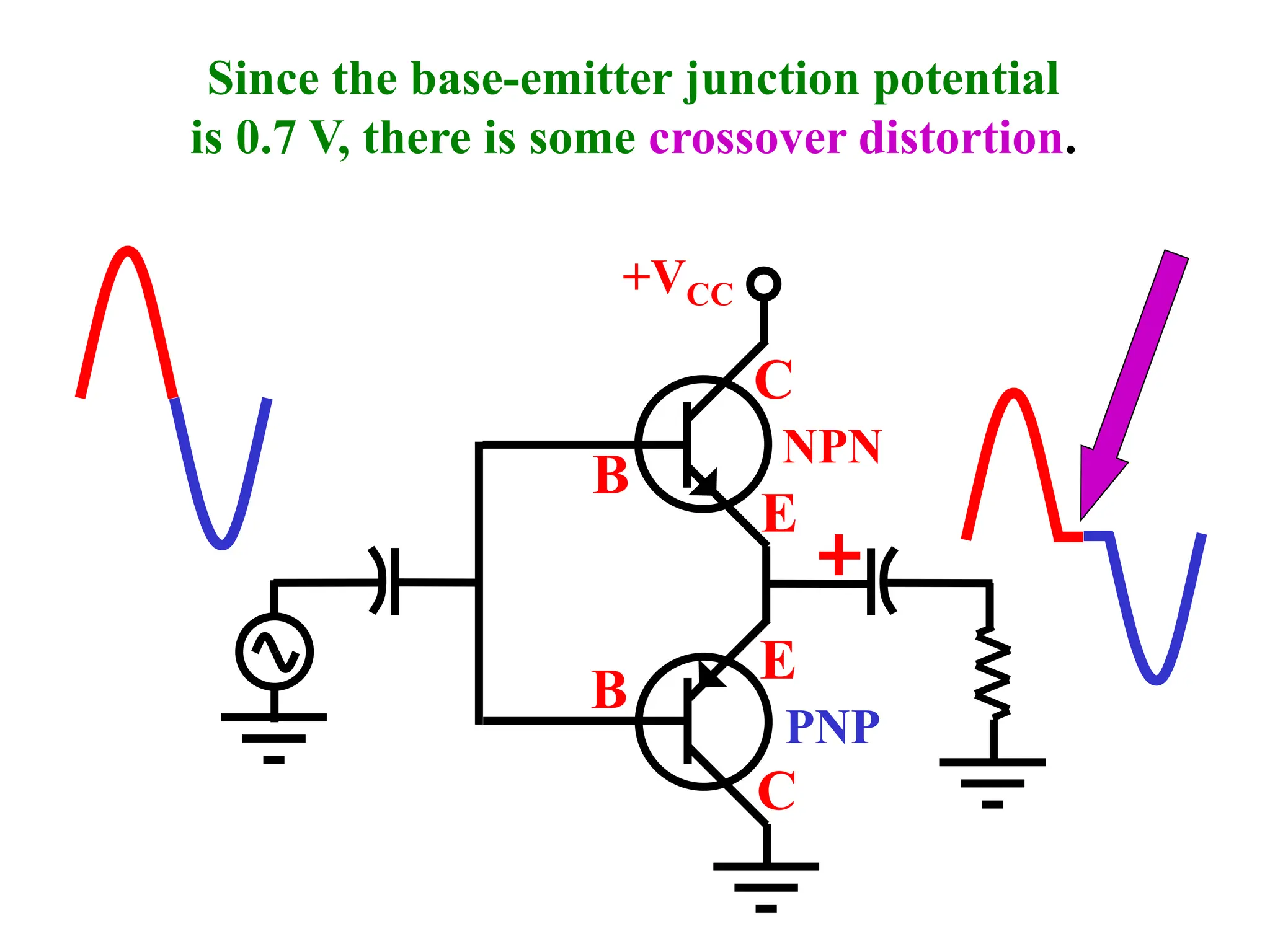
Since the base-emitter junction potential
is 0.7 V, there is some crossover distortion.
NPN
PNP
C
B
C
B
E
E
+VCC
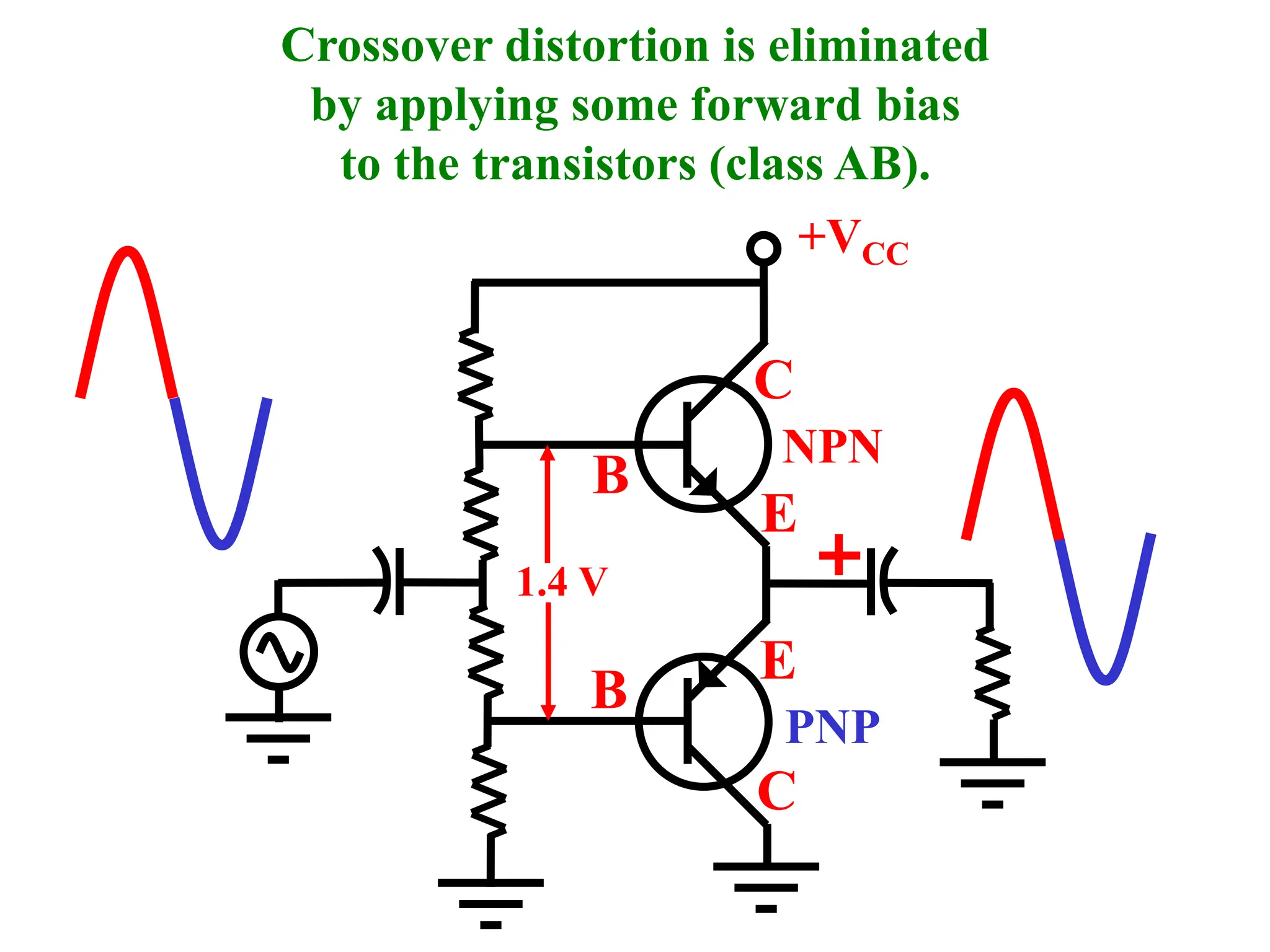
Crossover distortion is eliminated
by applying some forward bias
to the transistors (class AB).
NPN
PNP
1.4 V
0 2 4 6 8 10 12 14 16 18
0.2
0.4
0.6
0.8
1.0
1.2
1.4
VCE in Volts
IC in A
Q
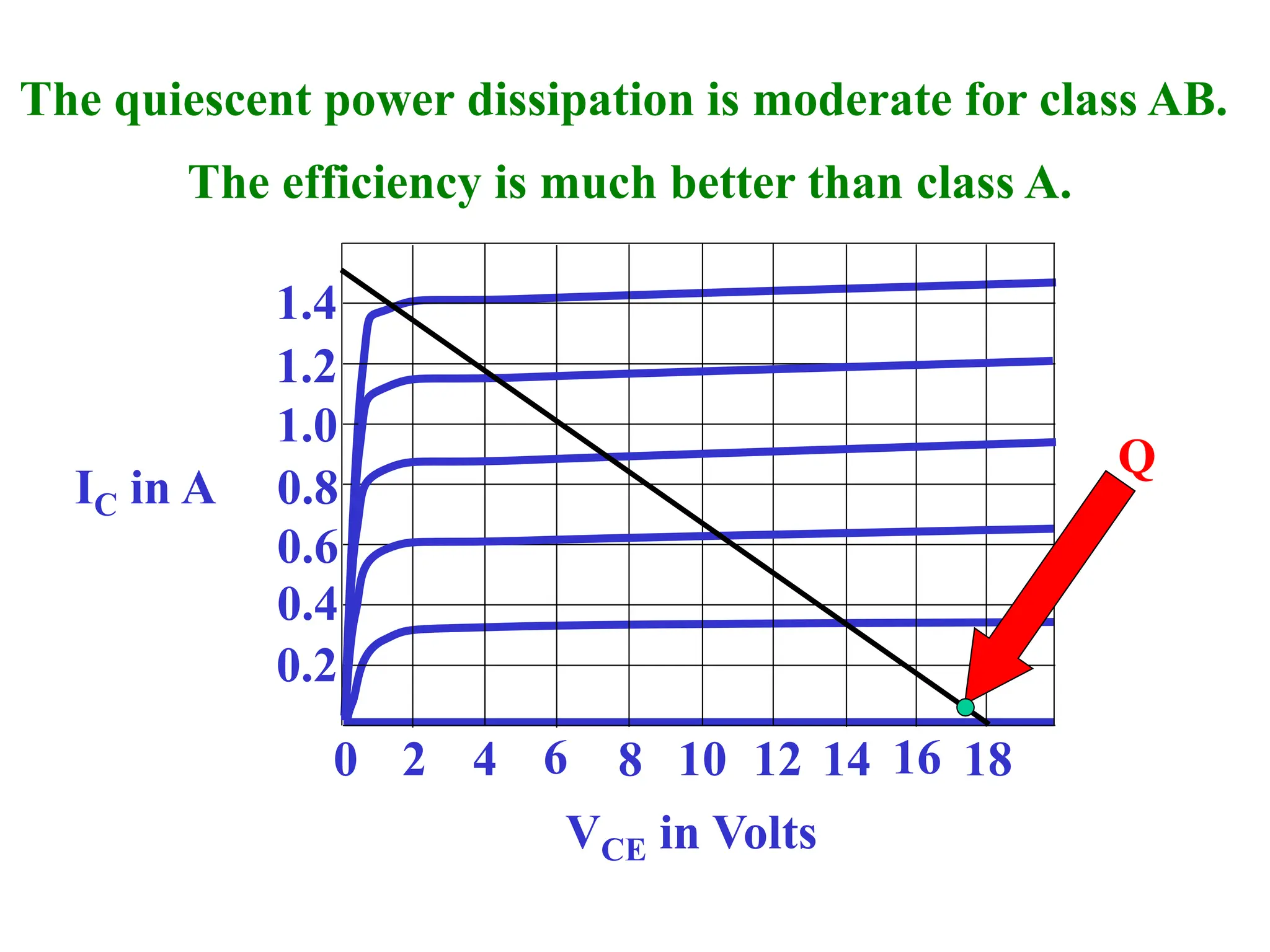
The quiescent power dissipation is moderate for class AB.
The efficiency is much better than class A.
Cap. required
+VCC
RL
RL
+VCC
Single-ended amplifier
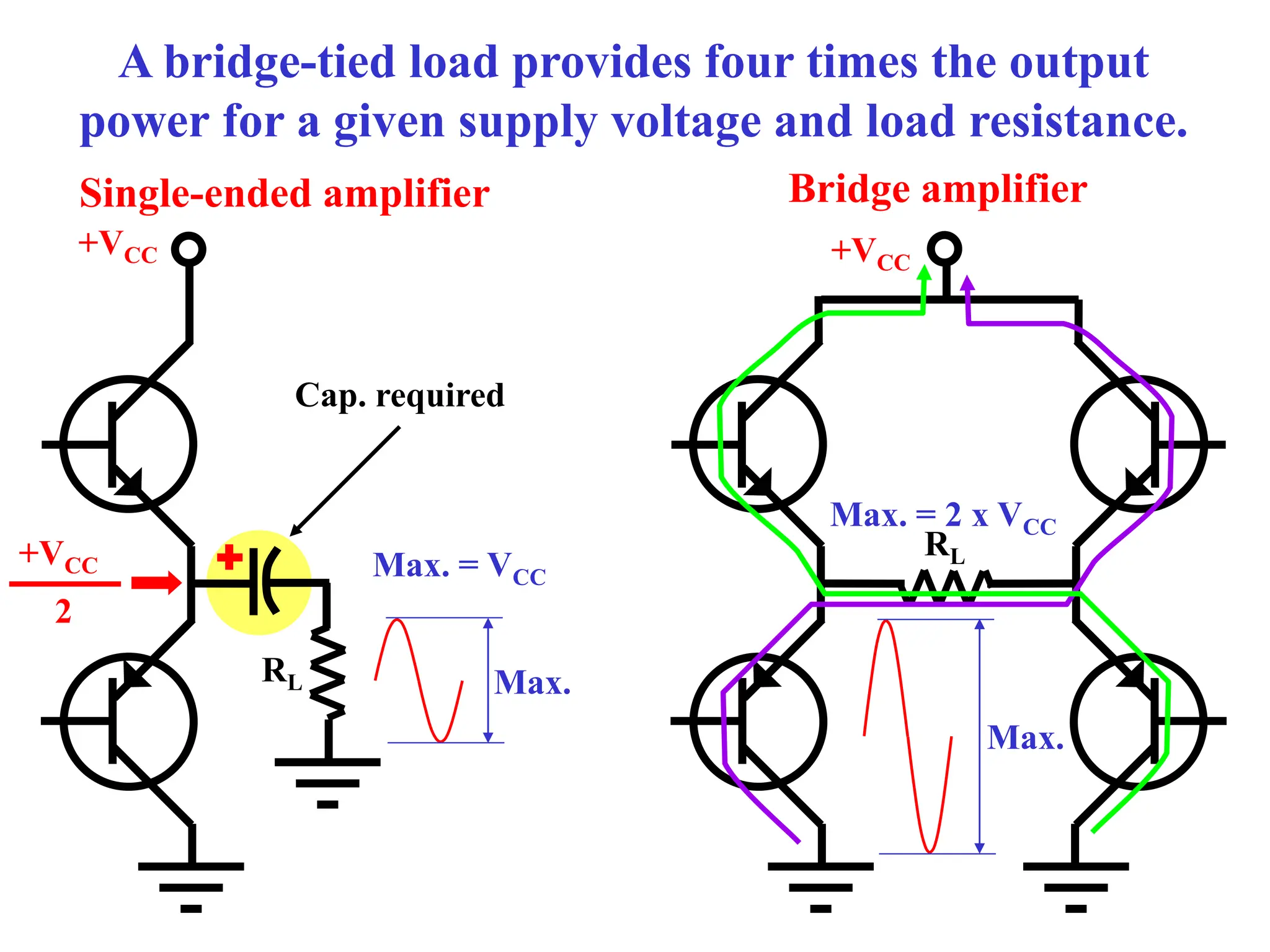
A bridge-tied load provides four times the output
power for a given supply voltage and load resistance.
+VCC
2
Max.
Max. = VCC
Bridge amplifier
Max. = 2 x VCC
Max.
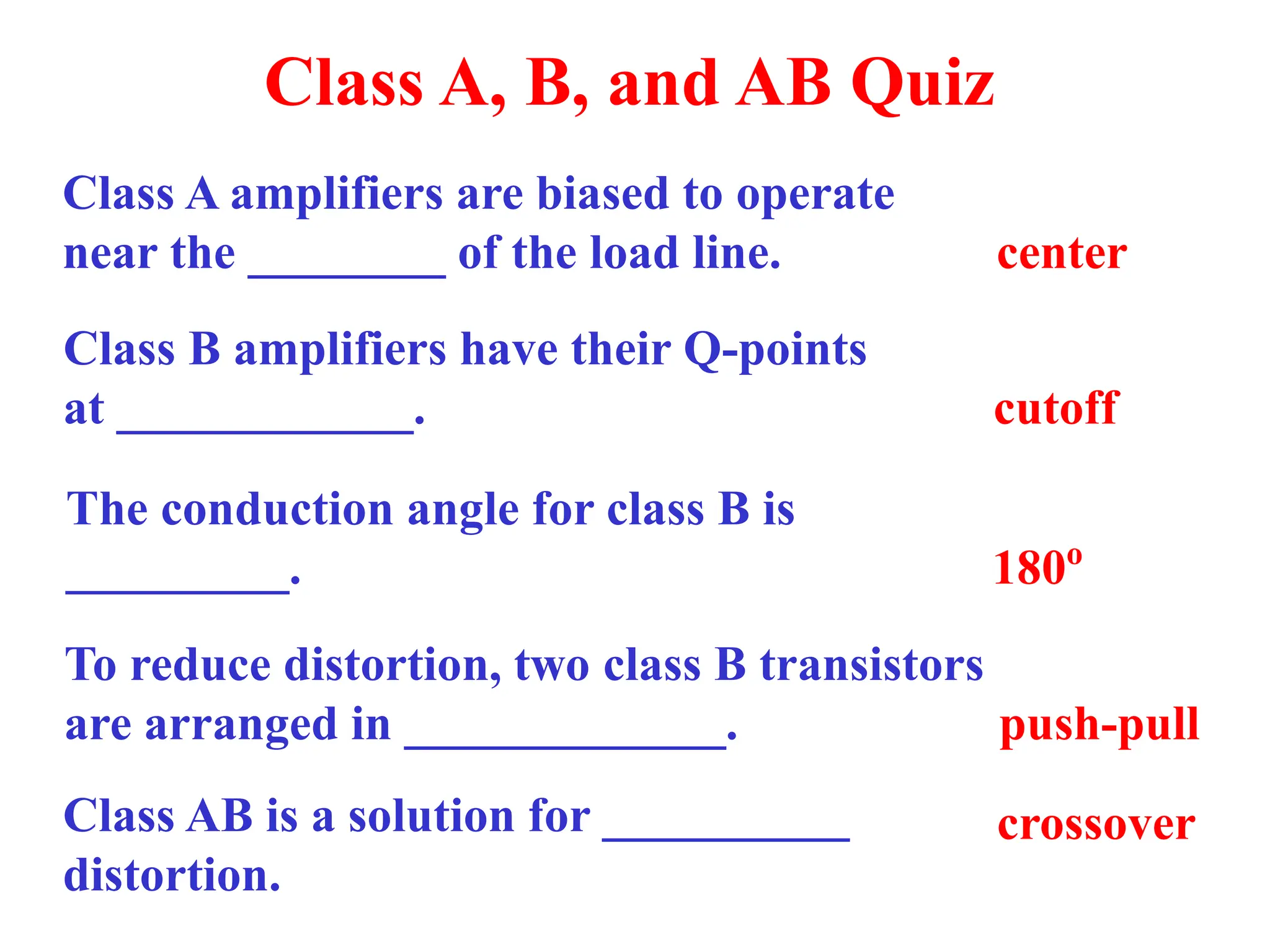
Class A, B, and AB Quiz
Class A amplifiers are biased to operate
near the ________ of the load line. center
Class B amplifiers have their Q-points
at ____________. cutoff
The conduction angle for class B is
_________. 180o
To reduce distortion, two class B transistors
are arranged in _____________. push-pull
Class AB is a solution for __________
distortion.
crossover
0 2 4 6 8 10 12 14 16 18
0.2
0.4
0.6
0.8
1.0
1.2
1.4
A
B
C
AB
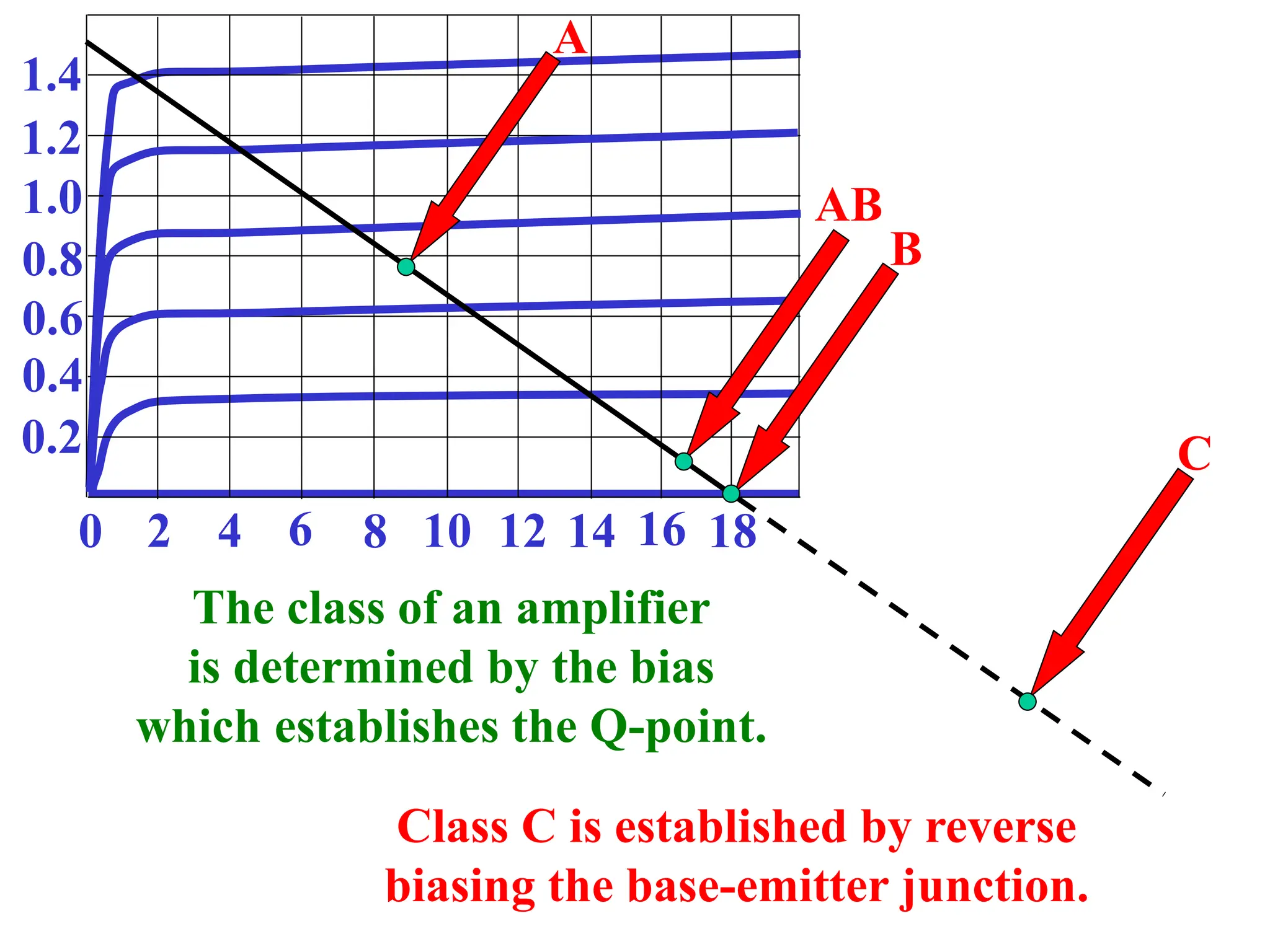
The class of an amplifier
is determined by the bias
which establishes the Q-point.
Class C is established by reverse
biasing the base-emitter junction.
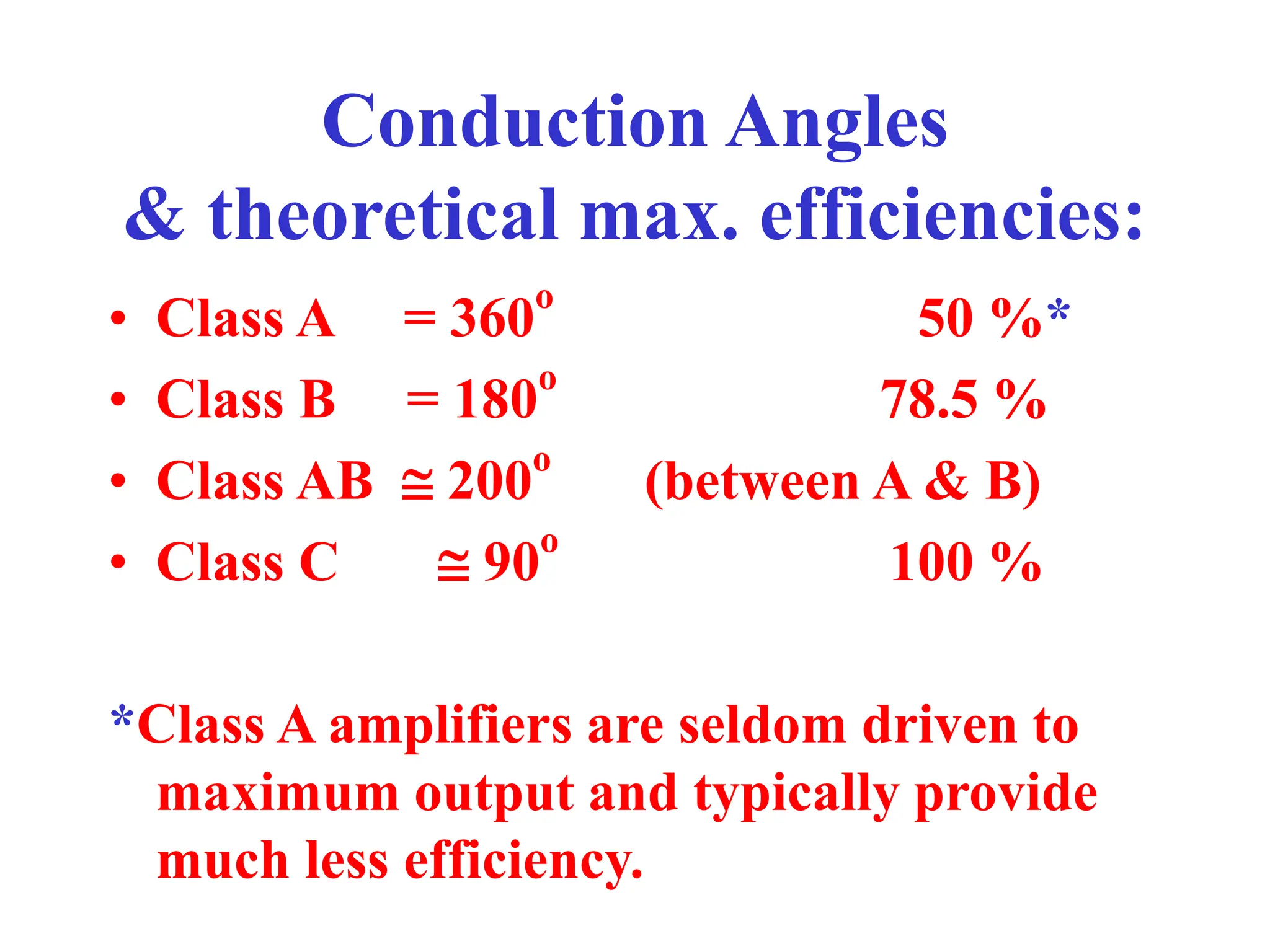
Conduction Angles
& theoretical max. efficiencies:
• Class A = 360o
50 %*
• Class B = 180o
78.5 %
• Class AB @ 200o
(between A & B)
• Class C @ 90o
100 %
*Class A amplifiers are seldom driven to
maximum output and typically provide
much less efficiency.
C
B
E
VCC
RB
CC
VBB
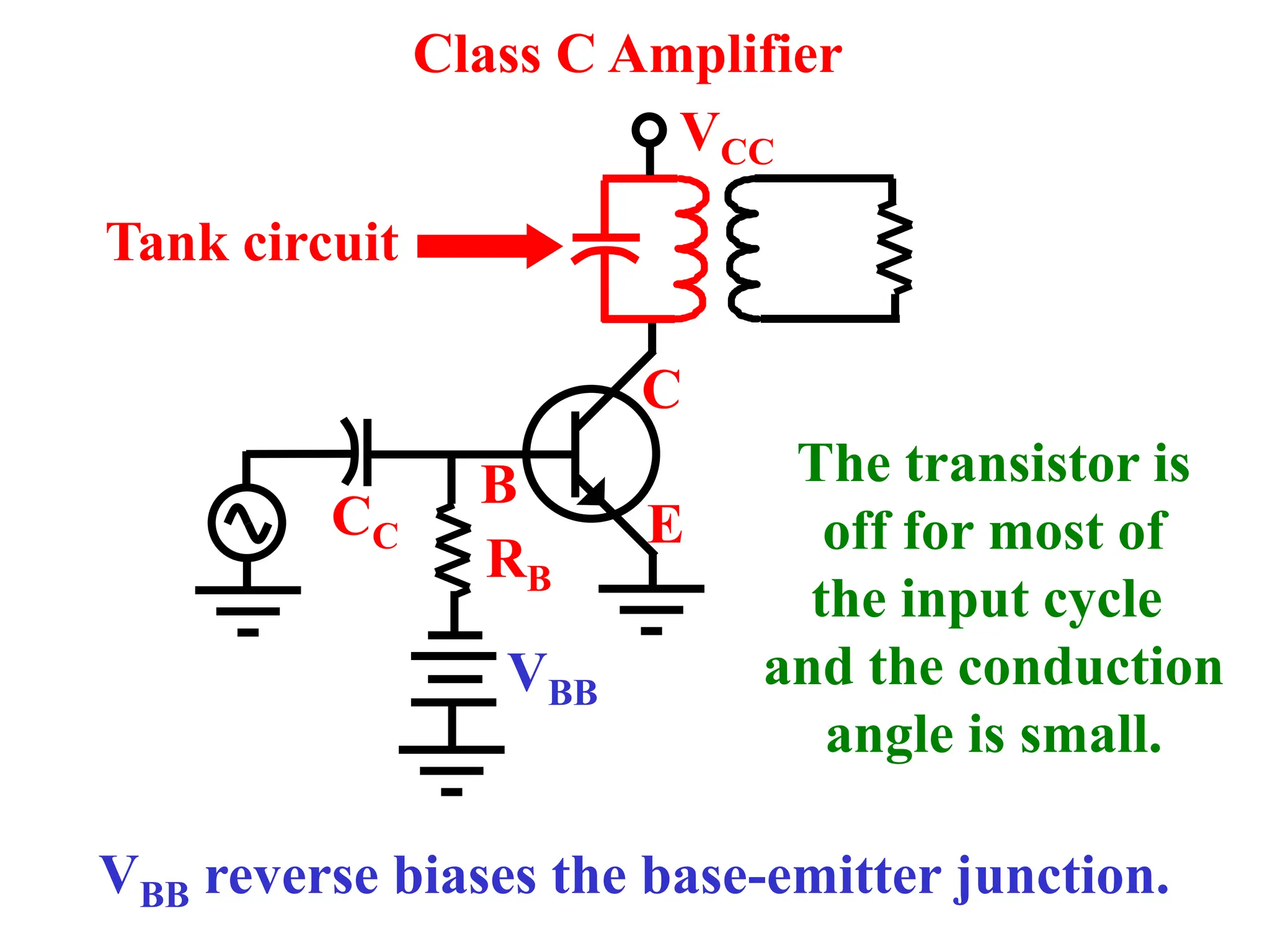
Class C Amplifier
Tank circuit
The transistor is
off for most of
the input cycle
and the conduction
angle is small.
VBB reverse biases the base-emitter junction.
VBB
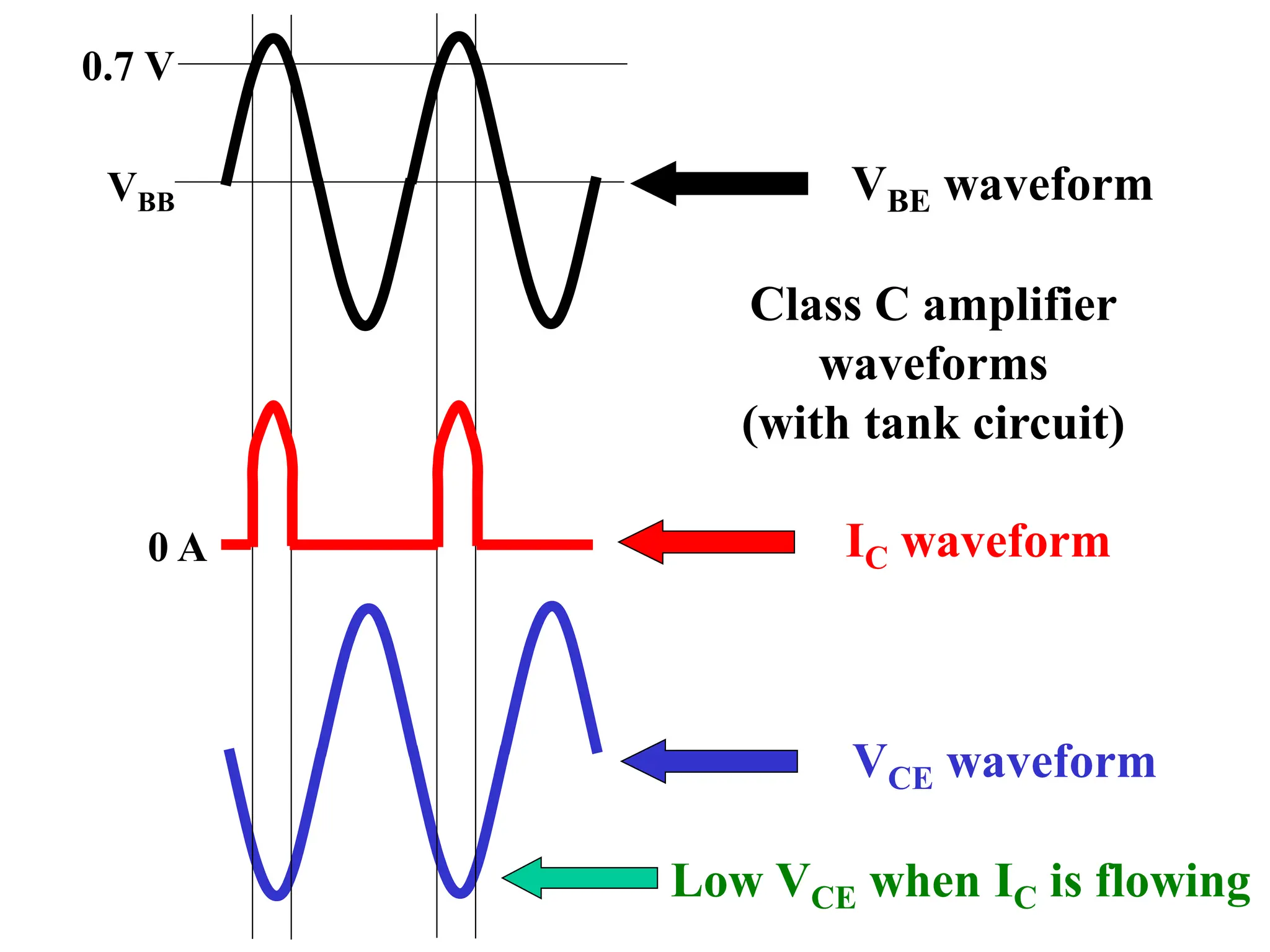
0.7 V
0 A
VBE waveform
IC waveform
VCE waveform
Class C amplifier
waveforms
(with tank circuit)
Low VCE when IC is flowing
C
B
E
VCC
RB
CC
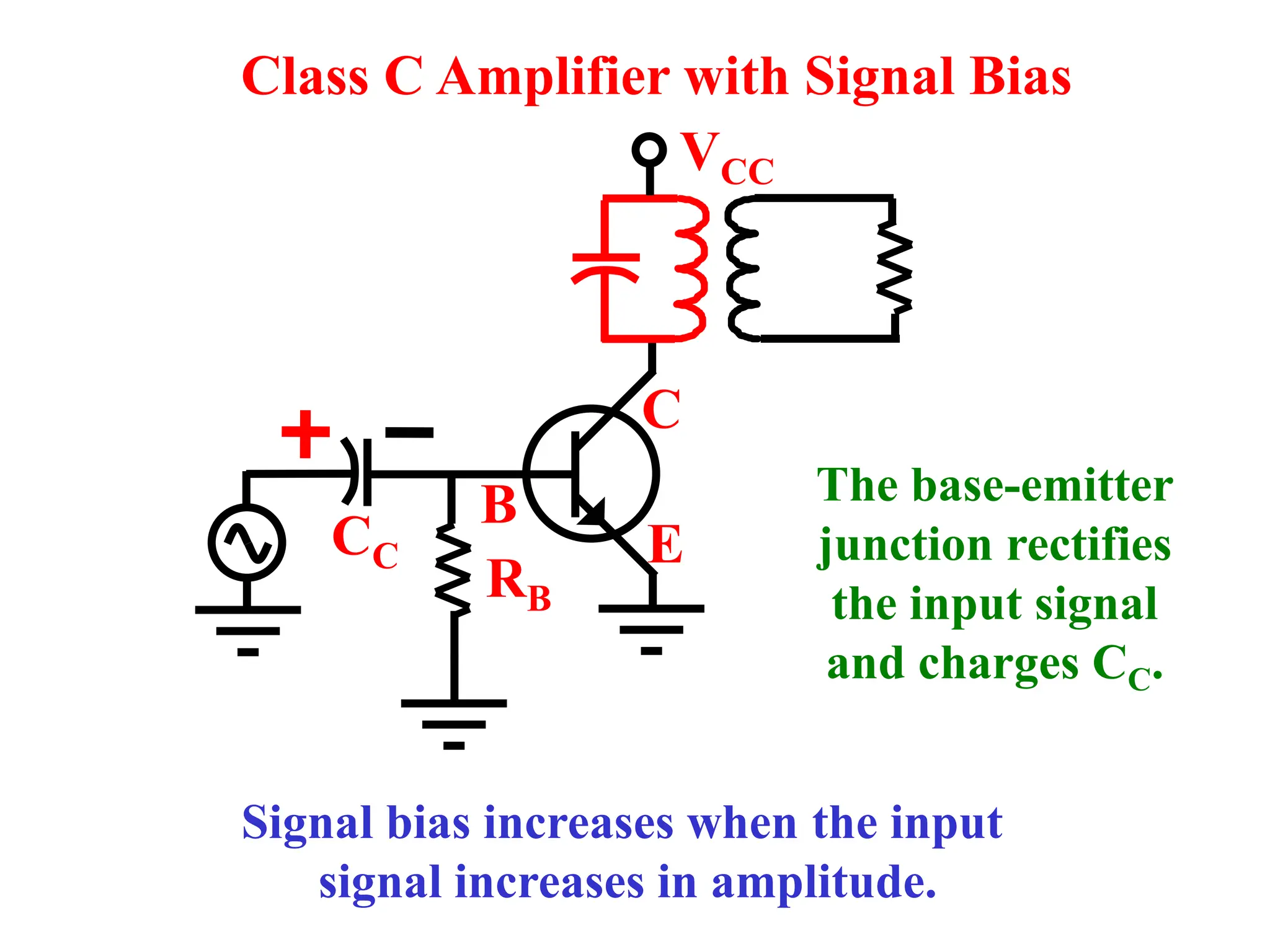
Class C Amplifier with Signal Bias
The base-emitter
junction rectifies
the input signal
and charges CC.
Signal bias increases when the input
signal increases in amplitude.
IB >> 0
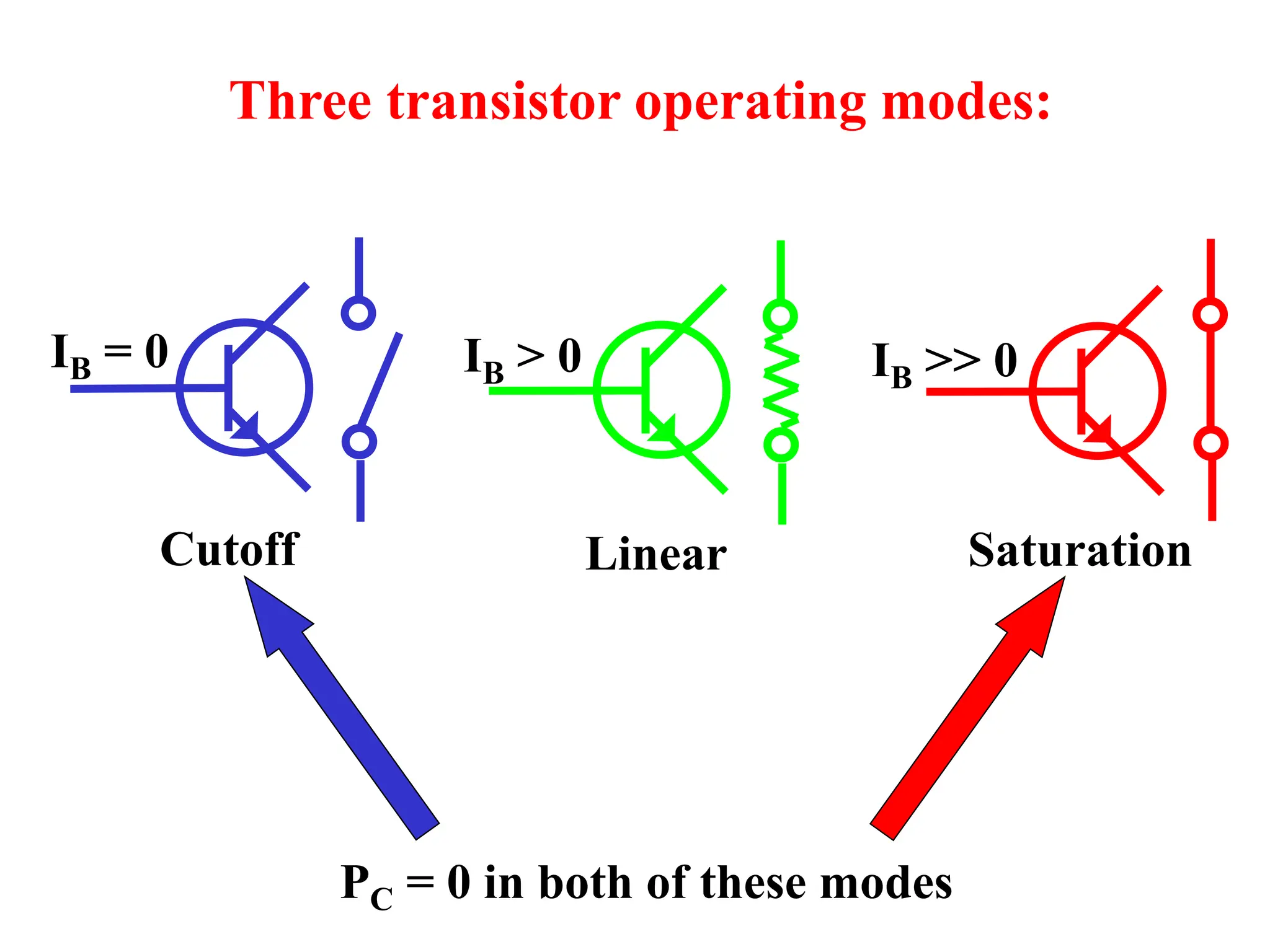
Three transistor operating modes:
IB = 0 IB > 0
Cutoff Linear Saturation
PC = 0 in both of these modes
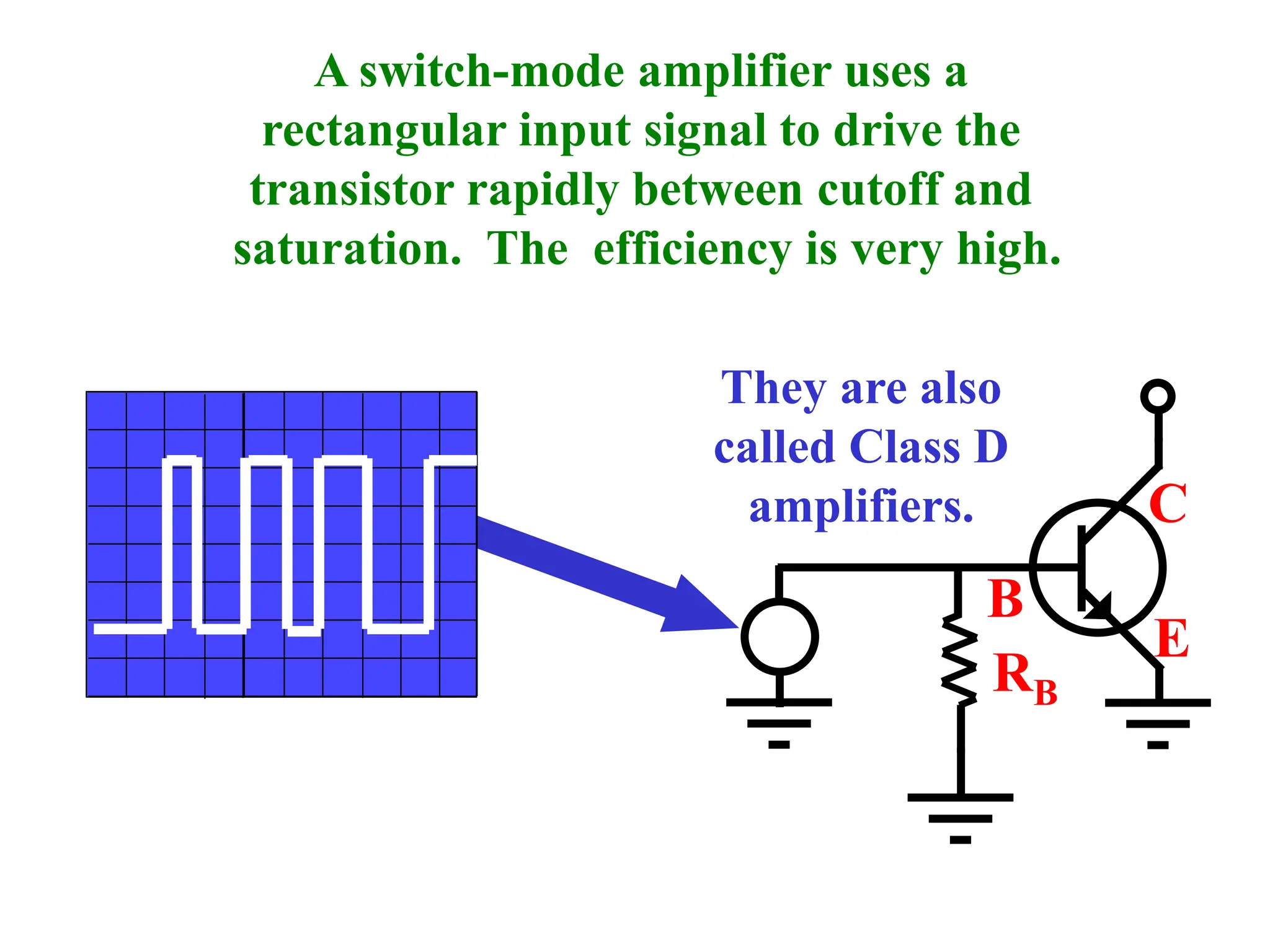
A switch-mode amplifier uses a
rectangular input signal to drive the
transistor rapidly between cutoff and
saturation. The efficiency is very high.
C
B
E
RB
They are also
called Class D
amplifiers.
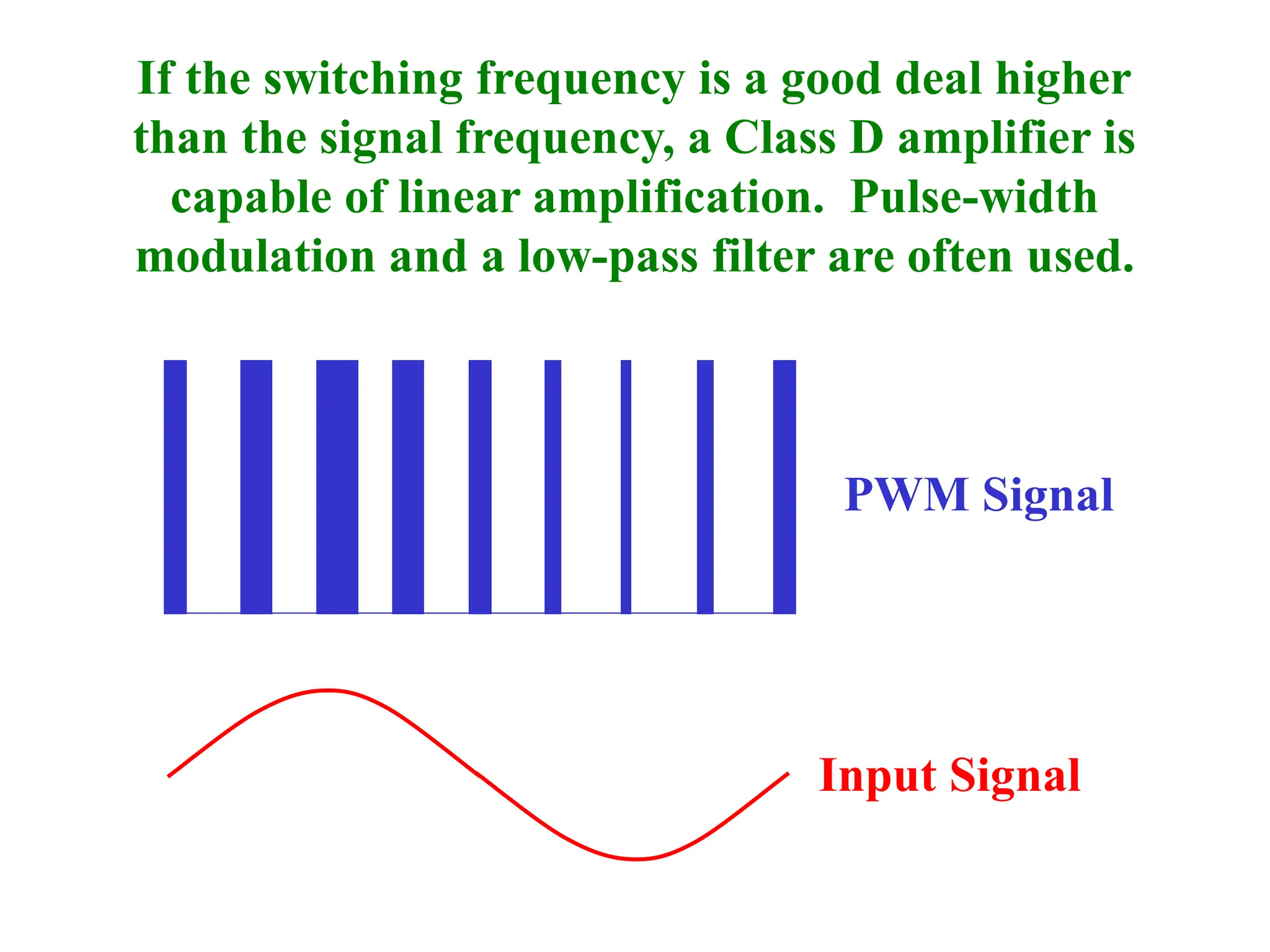
If the switching frequency is a good deal higher
than the signal frequency, a Class D amplifier is
capable of linear amplification. Pulse-width
modulation and a low-pass filter are often used.
PWM Signal
Input Signal
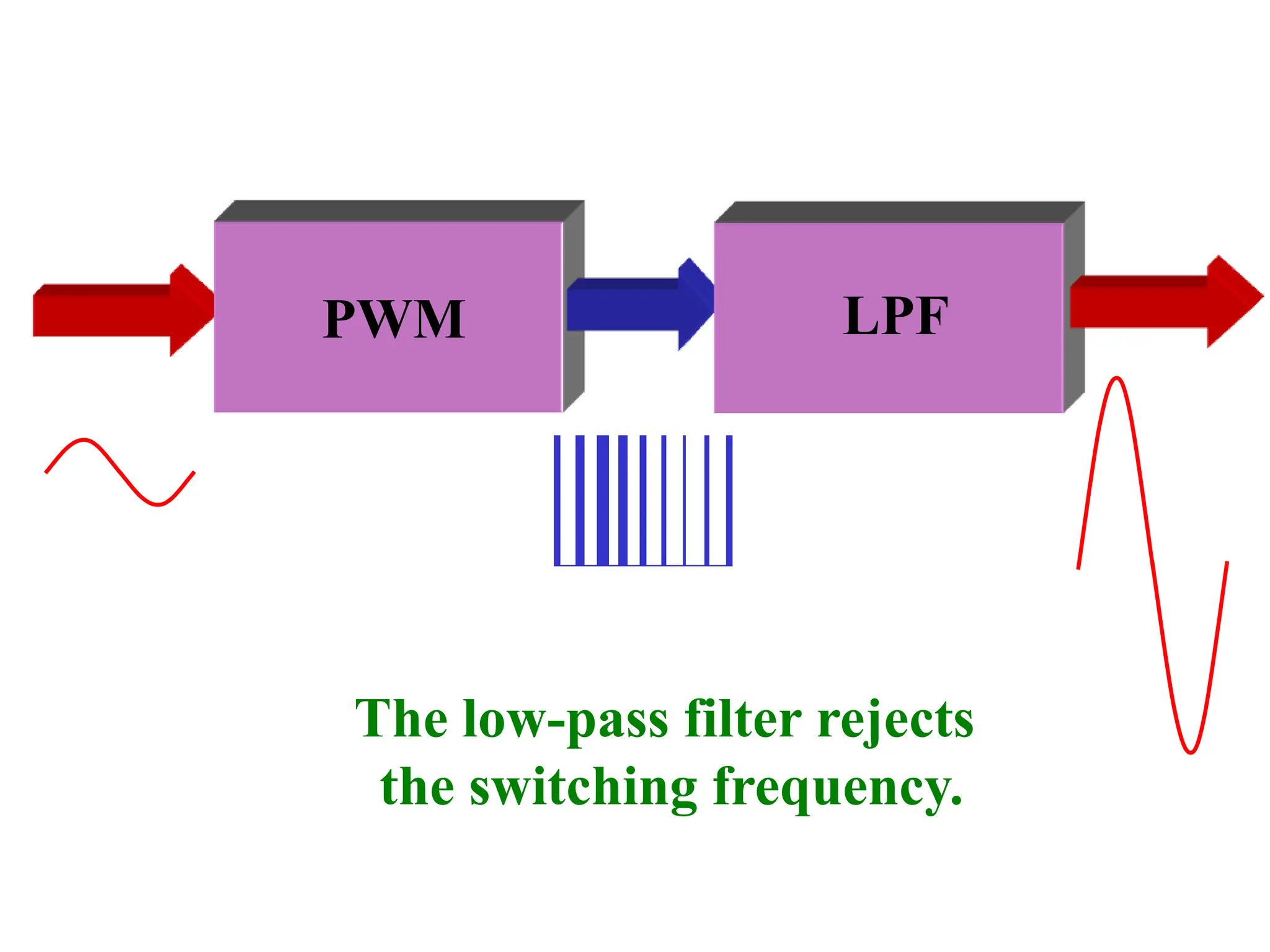
PWM LPF
The low-pass filter rejects
the switching frequency.
Class C and D Quiz
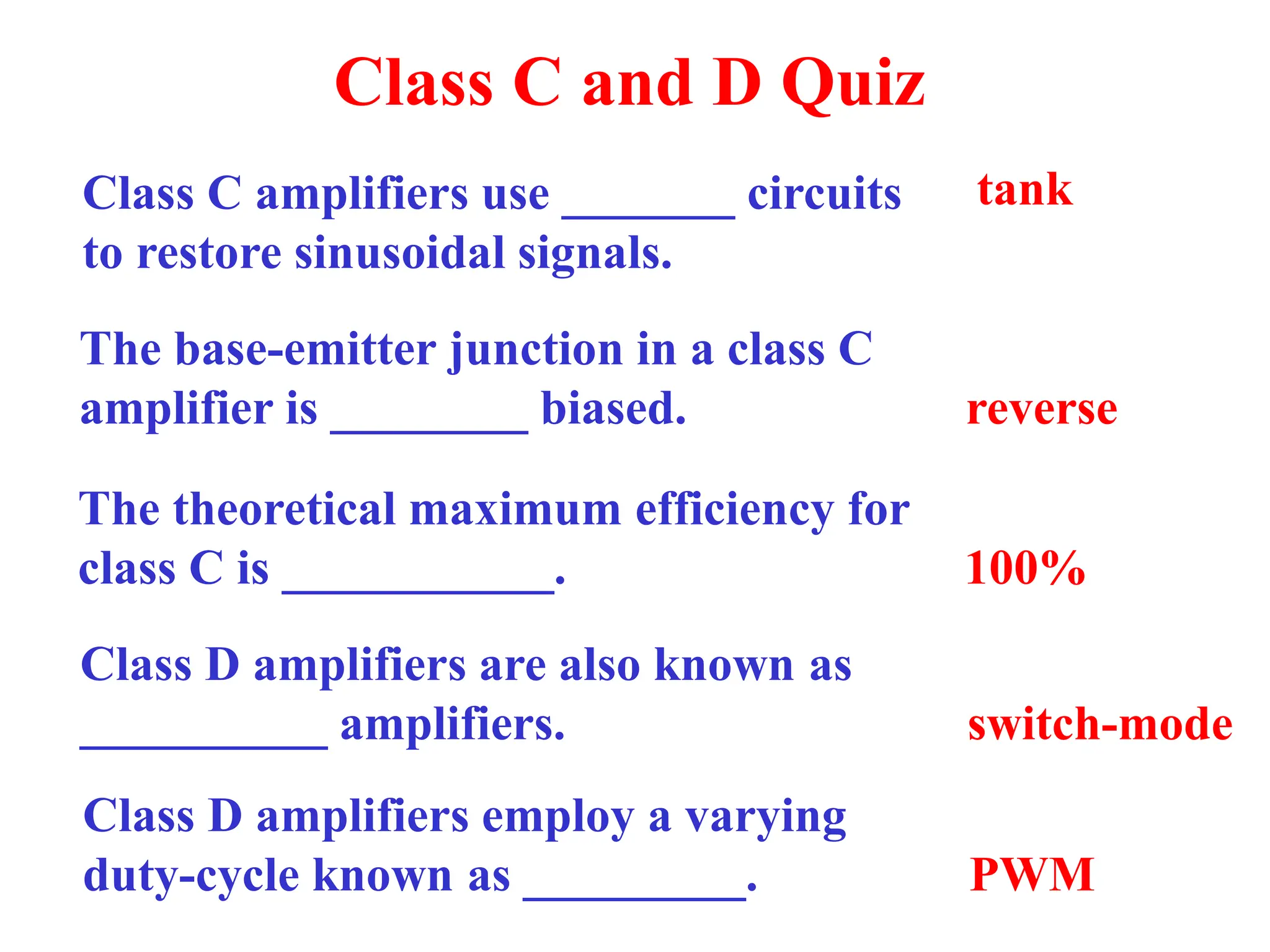
Class C amplifiers use _______ circuits
to restore sinusoidal signals.
tank
The base-emitter junction in a class C
amplifier is ________ biased. reverse
The theoretical maximum efficiency for
class C is ___________. 100%
Class D amplifiers are also known as
__________ amplifiers. switch-mode
Class D amplifiers employ a varying
duty-cycle known as _________. PWM
REVIEW
• Amplifier Class
• Class A
• Class B
• Class AB
• Class C
• Class D

Schuler Electronics Instructor CH08 amplifiers part 3.ppt

  • 1.
    Electronics Principles & Applications SixthEdition Chapter 8 Large-Signal Amplifiers ©2003 Glencoe/McGraw-Hill Charles A. Schuler
  • 2.
    • Amplifier Class •Class A • Class B • Class AB • Class C • Class D INTRODUCTION
  • 3.
    Power Amplifier PIN Efficiency = Input signal POUT POUT PIN Outputsignal HEAT = PIN - POUT High efficiency means less heat.
  • 4.
    Efficiency • The dcpower supplied to an amplifier is PIN = VCC x IDC • Efficiency = POUT/PIN x 100% • The maximum efficiency for Class A amplifiers with a dc collector resistance and a separate load resistance is 25%. • Class A is usually not acceptable when watts of power are required.
  • 5.
    t IC t IC t IC t IC ISAT A B C D Themajor classes of amplifier operation
  • 6.
    Class and EfficiencyQuiz If POUT = 100 W and PIN = 200 W, the efficiency is _________. 50% The efficiency of an ideal amplifier is __________. 100% When efficiency is poor, too much of the input is converted to ________. heat An amplifier that conducts for the entire cycle is operating Class _______. A An amplifier that conducts for half the cycle is operating Class _______. B
  • 7.
    A large-signal amplifiercan also be called a power amplifier. This class A amplifier has a large quiescent collector current. C B E VCC = 18 V RL = 12 W RB = 1.2 kW CC b = 60 IB = VCC RB 18 V 1.2 kW = = 15 mA IC = b x IB = 60 x 15 mA = 0.9 A
  • 8.
    0 2 46 8 10 12 14 16 18 0.2 0.4 0.6 0.8 1.0 1.2 1.4 VCE in Volts IC in A 5 mA 0 mA 25 mA 20 mA 15 mA 10 mA ISAT = VCC RL 18 V 12 W = = 1.5 A Q This is a Class A amplifier. PC = VCE x IC = 7.2 V x 0.9 A = 6.48 W
  • 9.
    0 2 46 8 10 12 14 16 18 0.2 0.4 0.6 0.8 1.0 1.2 1.4 VCE in Volts IC in A 5 mA 0 mA 25 mA 20 mA 15 mA 10 mA Q This is a Class B amplifier. PC = VCE x IC = 18 V x 0 A = 0 W Its quiescent power dissipation is zero.
  • 10.
    0 2 46 8 10 12 14 16 0.2 0.4 0.6 0.8 1.0 1.2 1.4 5 mA 0 mA 25 mA 20 mA 15 mA 10 mA The collector signal is too distorted for linear applications.
  • 11.
    C B C B E E +VCC The complementary-symmetry ClassB push-pull amplifier has acceptable linearity for some applications. NPN PNP
  • 12.
  • 13.
    C B C B E E +VCC Since the base-emitterjunction potential is 0.7 V, there is some crossover distortion. NPN PNP
  • 14.
    C B C B E E +VCC Crossover distortion iseliminated by applying some forward bias to the transistors (class AB). NPN PNP 1.4 V
  • 15.
    0 2 46 8 10 12 14 16 18 0.2 0.4 0.6 0.8 1.0 1.2 1.4 VCE in Volts IC in A Q The quiescent power dissipation is moderate for class AB. The efficiency is much better than class A.
  • 16.
    Cap. required +VCC RL RL +VCC Single-ended amplifier Abridge-tied load provides four times the output power for a given supply voltage and load resistance. +VCC 2 Max. Max. = VCC Bridge amplifier Max. = 2 x VCC Max.
  • 17.
    Class A, B,and AB Quiz Class A amplifiers are biased to operate near the ________ of the load line. center Class B amplifiers have their Q-points at ____________. cutoff The conduction angle for class B is _________. 180o To reduce distortion, two class B transistors are arranged in _____________. push-pull Class AB is a solution for __________ distortion. crossover
  • 18.
    0 2 46 8 10 12 14 16 18 0.2 0.4 0.6 0.8 1.0 1.2 1.4 A B C AB The class of an amplifier is determined by the bias which establishes the Q-point. Class C is established by reverse biasing the base-emitter junction.
  • 19.
    Conduction Angles & theoreticalmax. efficiencies: • Class A = 360o 50 %* • Class B = 180o 78.5 % • Class AB @ 200o (between A & B) • Class C @ 90o 100 % *Class A amplifiers are seldom driven to maximum output and typically provide much less efficiency.
  • 20.
    C B E VCC RB CC VBB Class C Amplifier Tankcircuit The transistor is off for most of the input cycle and the conduction angle is small. VBB reverse biases the base-emitter junction.
  • 21.
    VBB 0.7 V 0 A VBEwaveform IC waveform VCE waveform Class C amplifier waveforms (with tank circuit) Low VCE when IC is flowing
  • 22.
    C B E VCC RB CC Class C Amplifierwith Signal Bias The base-emitter junction rectifies the input signal and charges CC. Signal bias increases when the input signal increases in amplitude.
  • 23.
    IB >> 0 Threetransistor operating modes: IB = 0 IB > 0 Cutoff Linear Saturation PC = 0 in both of these modes
  • 24.
    A switch-mode amplifieruses a rectangular input signal to drive the transistor rapidly between cutoff and saturation. The efficiency is very high. C B E RB They are also called Class D amplifiers.
  • 25.
    If the switchingfrequency is a good deal higher than the signal frequency, a Class D amplifier is capable of linear amplification. Pulse-width modulation and a low-pass filter are often used. PWM Signal Input Signal
  • 26.
    PWM LPF The low-passfilter rejects the switching frequency.
  • 27.
    Class C andD Quiz Class C amplifiers use _______ circuits to restore sinusoidal signals. tank The base-emitter junction in a class C amplifier is ________ biased. reverse The theoretical maximum efficiency for class C is ___________. 100% Class D amplifiers are also known as __________ amplifiers. switch-mode Class D amplifiers employ a varying duty-cycle known as _________. PWM
  • 28.
    REVIEW • Amplifier Class •Class A • Class B • Class AB • Class C • Class D